
Amid heightened tensions in the Middle East, U.S. CPI rose year-over-year to a high of 4.2%, with energy inflation particularly severe. While headline inflation increased, core CPI unexpectedly slowed, sending a positive signal that the war-related inflation peak may have already passed…
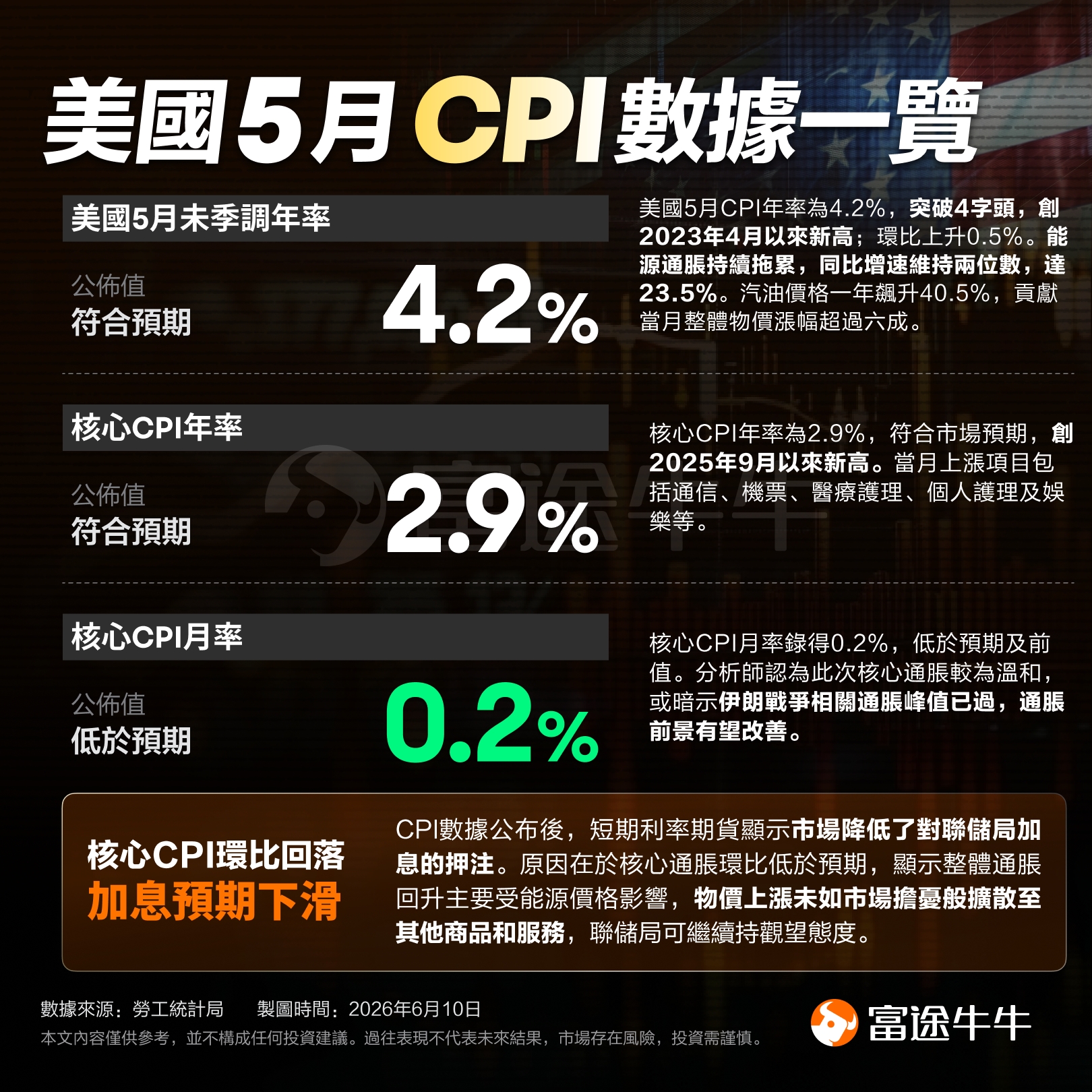
The latest data released Wednesday by the U.S. Department of Labor showed that the U.S. Consumer Price Index (CPI) rose 4.2% year-over-year in May, marking the largest increase since April 2023. On a month-over-month basis, prices climbed 0.5%, following a 0.6% gain in April.
In contrast to the surge in headline inflation, the core CPI—excluding food and energy—showed greater resilience. Core CPI increased by just 0.2% month-over-month in May, below market expectations of 0.3% and a notable deceleration from the previous reading of 0.4%. This pushed the 12-month core CPI annual rate up to 2.9%.
 Nick Timiraos, often dubbed the 'Fed whisperer,' noted that this marks the first time since December 2022 that the annual core CPI rate has risen above its year-earlier level.
Following the CPI release, the U.S. Dollar Index fluctuated by approximately 10 points in the short term, while WTI and Brent crude oil prices remained largely unchanged; spot gold and silver prices edged higher briefly. Short-term interest rate futures indicated that markets reduced their bets on a Federal Reserve rate hike.
CPI has now risen sharply for the third consecutive month, underscoring mounting pressure on households as signs emerge that more consumers are tapping into savings to cover expenses.
Moreover, inflation has outpaced wage growth for the second straight month, which could adversely affect overall economic growth. Meanwhile, the sharp rise in the cost of living poses a significant political burden for Trump and his party as they seek to retain control of Congress in the November midterm elections.
Since geopolitical tensions escalated in February, energy commodity prices have trended upward. Data show that energy inflation in the U.S. rose 3.9% month-over-month in May, with a year-over-year increase soaring to 23.5%. Gasoline prices climbed 7% month-over-month, while fuel oil prices surged an astonishing 58.9% year-over-year.
Ongoing disruptions to tanker traffic through the Strait of Hormuz have kept global energy supply chains strained, directly driving up consumers’ fuel bills and significantly eroding profit margins for small businesses. According to a survey by the National Federation of Independent Business (NFIB), about one-third of small business owners plan to raise prices soon to offset rising costs.
John Briggs, Head of North American Rates Strategy at Natixis, pointed out that the moderate trajectory of core inflation supports a key argument: the peak of inflation directly tied to the war may already be behind us. Provided oil prices remain relatively stable going forward, the outlook for domestic price improvements in the U.S. remains promising.
Today’s CPI data, along with tomorrow’s Producer Price Index (PPI), are expected to influence the Federal Reserve’s policy stance, which will be announced at the Fed meeting chaired by Waller for the first time next week.
According to CME FedWatch, prior to the release of CPI inflation data, markets had already priced in a 70% probability of a Federal Reserve rate hike by the end of 2026. However, markets consider a rate hike at the Fed’s upcoming meeting next week nearly impossible, with only a 13% chance of an increase at the July meeting.
The near-term focus is on whether the Federal Reserve will explicitly shift from its current dovish-leaning stance to a neutral or hawkish-leaning stance at its upcoming meeting.
Brian Jacobsen, Chief Economist at Annex Wealth Management, stated that headline inflation data has not shown much evidence that rising energy commodity prices are feeding through into core prices. Whether by force or through a ceasefire, the clock is ticking loudly on reopening the Strait of Hormuz. The Fed will not speculate on when this might happen, so Trump needs to provide them with certainty before their meeting.
 Stay ahead on major financial events and discover investment opportunities early! Open Futubull > Market > US Stocks >Financial Calendar/selected macroeconomic data, seize the investment opportunity!
Editor/Lambor