
South Korea’s National Pension Service (NPS) has suspended portfolio rebalancing, unexpectedly amplifying volatility in the country’s equity and foreign exchange markets. According to Barclays’ estimates, while this move has pushed domestic equity returns up to 21.7%, it has weakened the market-stabilizing role of the NPS, exacerbating sharp swings in the KOSPI index and boosting demand for the U.S. dollar, thereby weighing on the Korean won. With the scheduled resumption of rebalancing in July approaching, the extent of NPS implementation will become a key variable driving South Korean equity and currency market trends.
The National Pension Service (NPS) of Korea's decision to suspend portfolio rebalancing is becoming a significant driver of heightened volatility in both the Korean equity and foreign exchange markets.
In a recent research report, Barclays economist Bum Ki Son noted that while the NPS’s suspension of its rebalancing rule generated excess returns for the fund, it came at the cost of significantly amplifying market volatility. "Pension funds are typically viewed as stabilizers in financial markets, yet the NPS’s adjustment to its operational rules has instead turned it into an amplifier of volatility," he wrote.
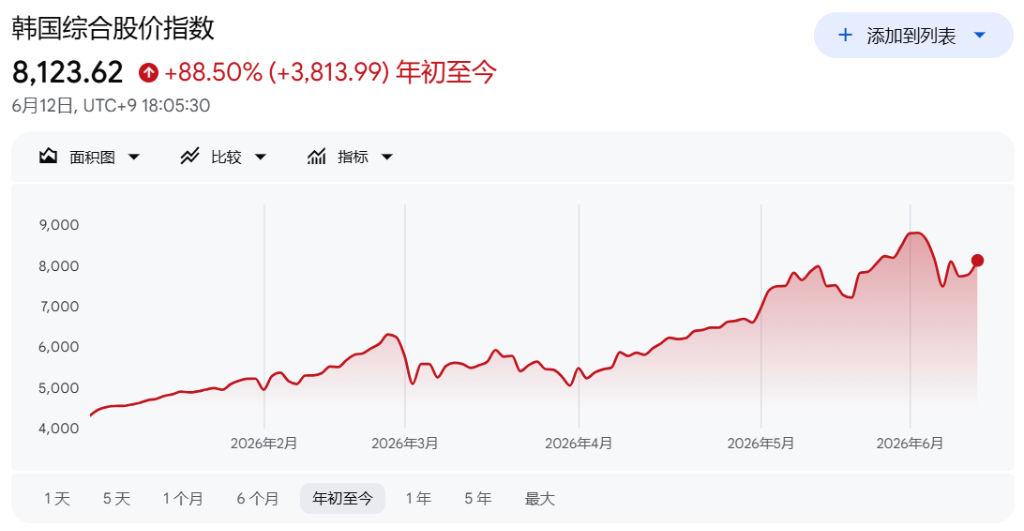
 This warning comes as the gauge of KOSPI 200 volatility hit a record high earlier this week, with Korean equities swinging violently between extreme market moves.
In response to a Bloomberg inquiry, the Ministry of Health and Welfare—the supervisory authority of the NPS—stated that the fund management committee’s prior decision was aimed at enhancing the fund’s profitability and stability, taking into account ongoing efforts to strengthen the fundamentals of Korea’s capital markets. The ministry also remarked, "The Barclays report relies heavily on excessive assumptions, and its analysis of causality has not been sufficiently validated."
NPS Suspends Rebalancing: Volatility Costs Behind Excess Returns
The NPS is Korea’s largest pension fund and the single biggest shareholder in the domestic equity market. In January this year, the fund temporarily waived the requirement to forcibly rebalance its portfolio whenever asset allocations deviated from preset ranges. At the time, the management committee warned that continuous rebalancing under highly volatile market conditions—particularly when domestic equities exceeded their target allocation—could exert excessive pressure on local equity and foreign exchange markets.
However, Barclays’ counterfactual analysis shows that the cost of this decision cannot be ignored. Bum Ki Son estimates that had the NPS maintained normal rebalancing operations, its domestic equity return would have stood at 11.1% as of the end of May this year, compared with an actual return of 21.7%—a substantial excess return accompanied by markedly higher portfolio volatility. He pointed out that because the NPS failed to sell during market overheating and did not buy during the selloffs in March and so far in June, its absence directly exacerbated KOSPI market volatility.
Official data show that the NPS posted a 21.7% return on domestic equities in the first quarter of this year, with total assets reaching KRW 1,526.1 trillion (approximately USD 1 trillion) as of March 31. Meanwhile, as the KOSPI has surged roughly 90% year-to-date—making it the world’s best-performing benchmark index—the NPS significantly raised its domestic equity allocation target last month, while simultaneously reducing its overseas equity target allocation.
Foreign Exchange Market Under Pressure: Absence of Rebalancing Triggers Surge in Dollar Demand
The Barclays report also reveals the profound impact of the NPS’s decision on the Korean won exchange rate. Bum Ki Son wrote that while the NPS initially cited foreign exchange market stress as one justification for suspending rebalancing, the decision itself ended up imposing “significant pressure” on the FX market.
"We believe that the National Pension Service's (NPS) rebalancing exemption effectively shifts its rebalancing requirements onto foreign investors, which in turn translates into excess U.S. dollar demand driven by equity outflows from Korea’s foreign exchange market," he wrote.
The data corroborates this assessment. So far this year, global funds have recorded net sales of USD 78.7 billion from South Korea's local equity market. Analysts attribute the bulk of this outflow to$Samsung Electronics (005930.KR)$and$SK Hynix (000660.KR)$forced selling triggered by fund holdings exceeding mandatory allocation limits following sharp rallies in market-leading stocks. The Korean won earlier this month fell to its lowest level since 2009, despite the government’s pledge to curb excessive volatility. Authorities announced plans this week to crack down on speculative foreign exchange trading, propelling the won to its largest single-week gain in over a year.
Rebalancing Resumes in July: Enforcement Rigor Becomes Key Variable
With the NPS scheduled to resume rebalancing operations in July, market attention has shifted to the rigor of its implementation. Bum Ki Son noted, "The extent to which the NPS strictly adheres to its rule-based rebalancing will be a critical factor influencing the Korean won’s trajectory."
However, the NPS has already signaled a softer enforcement stance—it has lowered its daily rebalancing cap. Barclays believes this could keep volatility in the domestic equity market and pressure on the won elevated.
Notably, the core drivers behind Korea’s record-breaking stock market rally this year—the artificial intelligence boom and the resulting surge in memory chip demand—remain intact. However, mounting margin debt and geopolitical shocks stemming from the Iran conflict have repeatedly triggered sharp volatility. The KOSPI surged 24% in January, setting a historical monthly record, only to break it again in April with a 31% monthly gain. Option premiums paid by investors to hedge against market swings have since climbed to all-time highs. Against this backdrop, whether the NPS rebalancing mechanism can genuinely return to normal will be a key indicator of market stability in Korea during the second half of the year.
Editor/Deng