
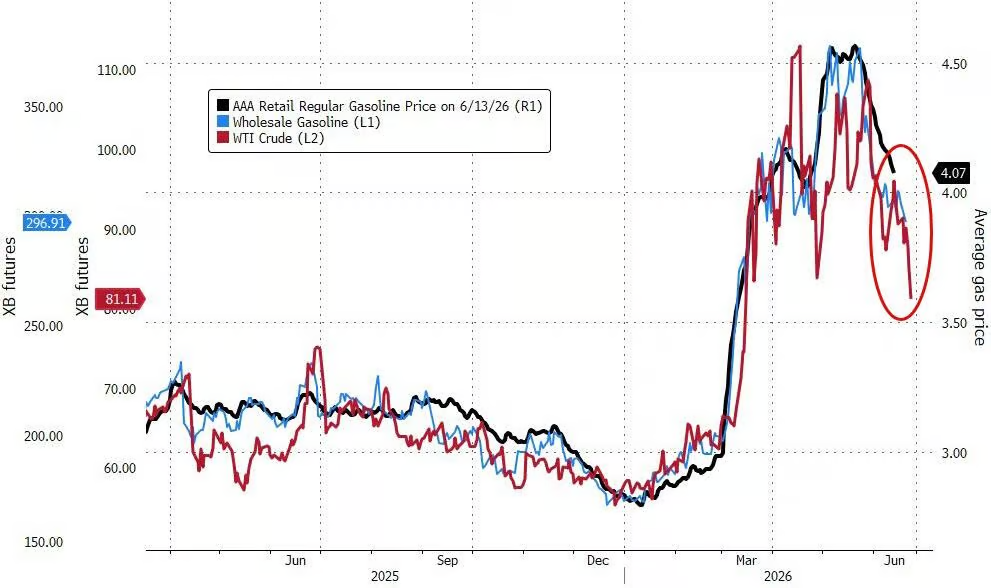
The average price of gasoline in the United States has remained above $4 per gallon for 76 consecutive days, continuing to weigh on consumers. A U.S.-Iran deal is nearing completion, and analysts expect gasoline prices to fall to $3.75 by July 4. Although there are signs of resumed navigation through the Strait, risks such as hurricanes and tight inventory levels persist, leaving oil price movements subject to uncertainty.
A peace agreement between the United States and Iran is nearing completion, significantly easing geopolitical risks in the Strait of Hormuz and triggering a sharp decline in international oil prices. For American consumers, the most immediate benefit is evident at the pump—the national average gasoline price is poised to fall below the psychologically significant threshold of $4 per gallon, offering a much-needed respite after months of elevated fuel costs.
Following Trump’s announcement of the deal, Patrick De Haan, petroleum analyst at GasBuddy, stated that the national average retail gasoline price could drop below $3.75 per gallon ahead of the July 4 Independence Day holiday. However, he cautioned that factors such as the hurricane season and tight global inventories remain significant variables, noting that a full recovery in global oil stocks could take several months or even longer.
 According to Xinhua News Agency, U.S. President Trump posted on social media at 6:14 p.m. Eastern Time on June 14, stating that the agreement with Iran was 'now complete' and that he had 'authorized' the Strait of Hormuz to be 'freely open,' instructing the U.S. Navy to immediately lift related blockades. Citing Iranian media reports, Xinhua added that Iran’s Supreme National Security Council issued a statement in the early hours of June 15 formally confirming the U.S.-Iran memorandum of understanding on cessation of hostilities.
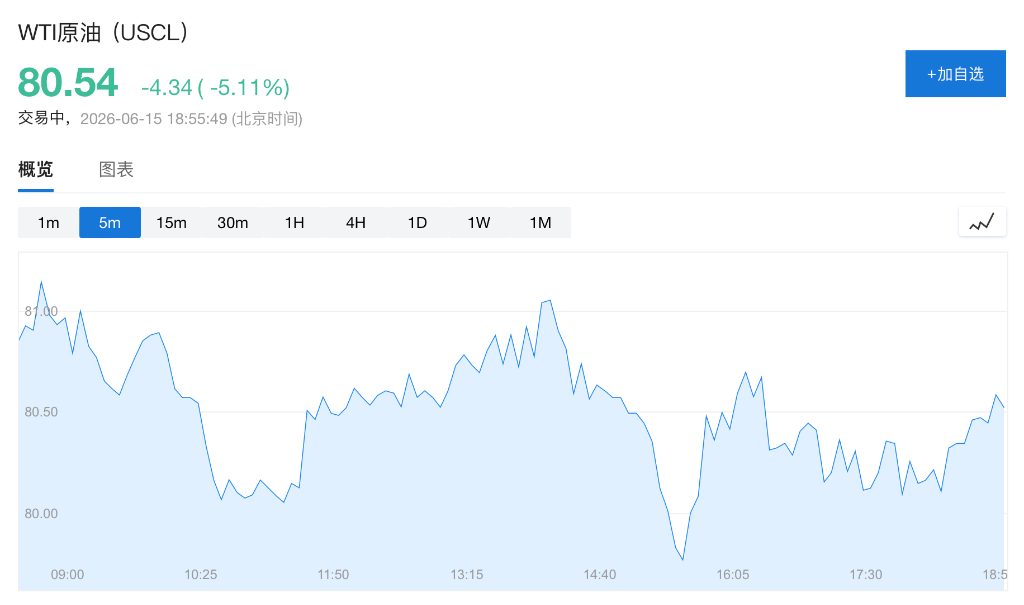
Buoyed by this news, both WTI and Brent crude prices plunged sharply, each falling by 5%. Markets have already begun pricing in the reopening of the Strait of Hormuz.
Soaring Oil Prices Hit Consumers Hard, Cracks Emerge in the Economy
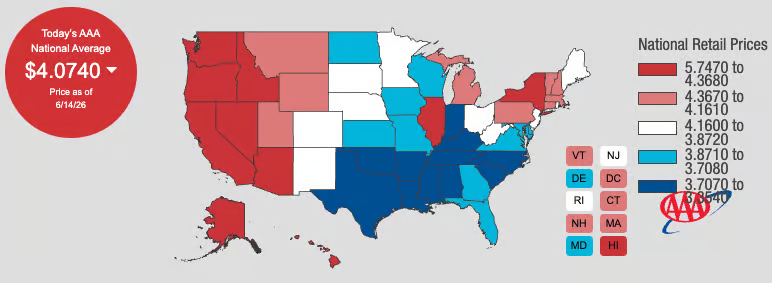
According to data from the American Automobile Association (AAA), as of Sunday local time, the national average price for regular-grade (87 octane) gasoline stood at approximately $4.074 per gallon—marking the 76th consecutive day above the critical psychological level of $4 per gallon.
The recent surge in oil prices stems from disrupted energy supplies in the Gulf region. Tightness in the spot market forced U.S. authorities to tap into the Strategic Petroleum Reserve for emergency relief. Persistently high fuel prices have severely burdened consumers, with working-class households feeling the pinch most acutely at gas stations.
Moreover, the combined impact of elevated fuel costs and the end of the tax refund season has begun exposing cracks in consumer-driven economic activity, disproportionately affecting low- and middle-income households. Specifically, consumption patterns across multiple categories have shifted: foot traffic at convenience stores, demand for beer, and sales of snack foods have all declined to varying degrees.
Positive Signals Emerge from the Strait, but Inventory and Hurricane Risks Remain
Patrick De Haan noted on social media that the coming days will be a critical observation window, as markets await confirmation that the agreement is implemented and that vessel traffic through the Strait of Hormuz truly returns to normal. He explicitly stated, 'Given so many obstacles in this situation, it would be unwise to assume the issue has been fully resolved.'
Currently, positive signals have emerged from the Strait region. According to Xinhua News Agency, vessel tracking data from the international shipping information platform 'MarineTraffic' shows that the liquefied natural gas (LNG) carrier 'Disha' passed through the Strait of Hormuz into the Gulf of Oman on the 15th. This is the first large-scale energy transport vessel to transit the Strait of Hormuz since the agreement between the United States and Iran.
However, De Haan also noted that even under an optimistic scenario, a full recovery of global oil inventories will still take several months or more, and the hurricane season remains a major source of uncertainty for the remainder of this summer. Tight global inventories imply that even if crude oil supply resumes, there will be a lag in the transmission of price changes downstream.
Editor/Deng