The FOMC’s discussion has completely reversed direction—from 'when to cut rates' to 'whether to resume rate hikes.' Markets have fully priced in an unchanged rate decision this time, shifting focus to three key themes: changes in the dot plot, debates over policy independence, and reforms to the communication framework.
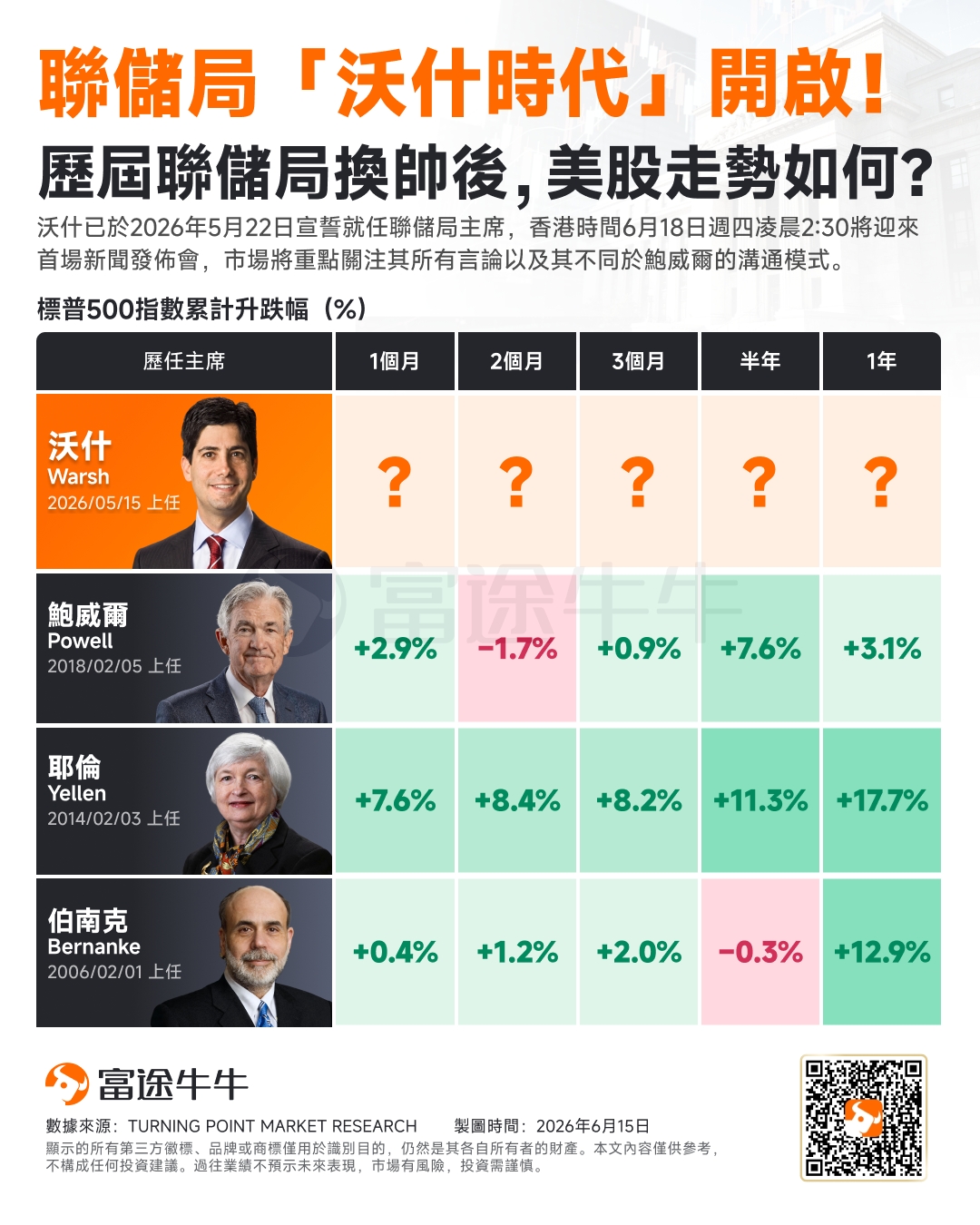
The Federal Reserve will announce its latest interest rate decision at 2:00 a.m. Beijing time on Thursday. Half an hour later, newly appointed Chair Kevin Warsh will hold his first press conference since taking office. Markets have fully priced in the expectation that the Fed will keep its benchmark interest rate unchanged at this meeting.
Market attention is not focused merely on potential rate adjustments but rather on three key themes: shifts in the dot plot and the interest rate path for the remainder of the year, debates over the Federal Reserve’s policy independence, and Warsh’s proposed comprehensive overhaul of the central bank’s communication framework. Market analysts are sharply divided in their views.
The dot plot faces significant uncertainty, with starkly divergent expectations emerging for the full-year interest rate trajectory.
 Markets expect the upcoming quarterly Summary of Economic Projections (SEP) dot plot to reflect a notably more hawkish stance, in sharp contrast to the March meeting just three months ago.
In March, the vast majority of Federal Reserve officials anticipated rate cuts within the year. This time, however, most policymakers are expected to project that rates will remain unchanged throughout the year, while a minority may signal rate hikes in the dot plot to guard against persistently high inflation becoming entrenched.
Persistent shifts in employment and inflation data have fundamentally altered the committee’s discussion focus—from debating when to cut rates to now considering whether rate hikes need to be restarted.
The dot plot will also incorporate updated economic forecasts. Michael Feroli, Chief U.S. Economist at JPMorgan, expects Fed officials to lower their year-end unemployment rate projection to 4.3%, aligning with the actual unemployment rate observed over the past three months, and to raise their core PCE inflation forecast to 2.9%. Some economists even anticipate this metric could surpass 3%, providing fundamental support for hawkish expectations.
Major institutions are deeply split on the full-year interest rate outlook. Economists at PGIM argue that three rate hikes will be necessary this year to contain inflation. In stark contrast, Citi, relying on assumptions of a U.S.-Iran ceasefire and falling oil prices, forecasts a weakening labor market and expects the Fed to deliver three rate cuts over the year.
Krishna Guha, analyst at Evercore ISI, noted that Warsh must strike a delicate balance this time: overly hawkish rhetoric would fuel expectations of rate hikes and weigh on equities, while excessively dovish comments would push up long-term yields and breakeven inflation rates—also negatively impacting risk assets.
Unknown factor: Will Warsh submit his own interest rate projections?
The biggest uncertainty surrounding this SEP is whether Waller himself will fill out and submit his personal interest rate projection. The market has four distinct expectations on this matter.
Richard Moody, chief economist at a regional bank, and analysts at TD Securities believe Waller will refrain from submitting a rate forecast to signal his disapproval of this guidance tool and thereby dilute the hawkish message inherently conveyed by the dot plot.
Feroli argues that Waller must submit a projection, as deliberately abstaining would be perceived as openly opposing the Committee.
Some analysts anticipate that Waller will participate in submitting a forecast but will subsequently initiate a comprehensive review of the Fed’s entire communication framework, potentially leading to the eventual discontinuation of the dot plot introduced in 2012.
Another possibility is that Waller, having served for only three weeks, may defer submitting a forecast citing insufficient familiarity with his new role.
Absence from the dot plot also carries political risk: Stephen Miran, a former Fed governor appointed by Trump who consistently held the most dovish rate expectation on the dot plot, has now stepped down. If Waller’s submitted projection fails to fill this dovish gap, markets will immediately conclude that his policy stance is significantly more hawkish than Trump would prefer.
The Federal Reserve’s independence is under scrutiny.
At the start of the year, markets collectively bet on rate cuts, but in recent weeks, rising inflation and energy prices have rapidly reignited expectations of hikes—directly contradicting the Trump administration’s calls for easing.
Kevin Grady, President of Phoenix Futures & Options, stated that Waller’s policy framework will continue Powell’s data-driven approach and will not be swayed by White House demands.
However, Darin Newsom, senior market analyst at Barchart.com, holds the opposite view, bluntly asserting that the Fed’s credibility has completely collapsed following Powell’s departure. Trump has publicly expressed support for higher inflation, sending a clear signal of intervention. Federal funds futures now price in a rate hike no sooner than December, with no tightening expected before the November midterm elections.
Newsom believes Walsh’s core mandate upon taking office is to implement White House directives, even if dissenting votes emerge within the FOMC, as Trump has already appointed numerous officials aligned with his stance to the committee. Walsh’s repeated emphasis on central bank independence during his press conference was dismissed by global investors as hollow rhetoric, which is a key reason why central banks worldwide continue to increase their gold reserves.
He stated that Trump cares more about the timing of policy adjustments than the actions themselves. Given that inflation concerns persist, near-term interest rate cuts are unlikely to materialize; thus, Walsh may simply maintain the status quo. Should inflation remain unresolved, any rate hike could be delayed until early 2027.
Daniel Pavilonis, Senior Commodities Broker at StoneX Group, noted that a U.S.-Iran peace agreement has become a critical external variable capable of reshaping both annual inflation dynamics and internal divisions within the Federal Reserve. If the agreement is successfully implemented and shipping through the Strait of Hormuz resumes, a flood of crude oil would enter the market, potentially driving prices down by more than anticipated. Historically, crude oil prices have plunged by $30 per barrel within four weeks; this geopolitical easing would rapidly reduce headline inflation readings.
Pavilonis expects that once inflation cools, the hawkish dissenting members of the committee who previously advocated for rate hikes will gradually adopt more neutral positions. He also anticipates that the Trump administration will introduce various measures to support equity markets ahead of the November midterm elections, aiming to sustain capital market momentum.
Weakening forward guidance risks exacerbating market volatility
Even before assuming office, Walsh repeatedly criticized the current communication framework during his congressional testimony and IMF speeches, arguing that the Fed discloses too much about its policy roadmap and that frequent public remarks by officials can trap the central bank in its own statements, limiting its flexibility to respond to evolving economic conditions and turning policymakers into 'prisoners of their own pronouncements.'
Former Fed Chair Bernanke once asserted that monetary policy relies 98% on communication and only 2% on actual operations. Walsh, however, seeks to overhaul this model entirely, with the core objective of significantly reducing forward guidance and scaling back the volume of public disclosures.
William English, Professor at Yale University and former FOMC Secretary, warned that sharply curtailing the communication mechanism carries substantial risks: a rapid decline in transparency could heighten financial market volatility, making policy shifts prone to exceeding market expectations.
Based on Walsh’s statements and simulations by multiple institutions, several implementation scenarios for communication reform are plausible:
Streamline the quarterly Summary of Economic Projections (SEP), potentially phasing out the dot plot altogether;
Significantly shorten the text of the FOMC post-meeting policy statement;
Reduce the number of press conferences following interest rate meetings, currently held eight times per year under a system introduced in 2011;
Limit the frequency of public speeches by Board officials; in recent years, annual speech volumes by Federal Reserve officials have increased by 20% compared to two decades ago.
Cindy Beaulieu, Chief Investment Officer for North America at Corning Asset Management (GLW), believes that eliminating the dot plot and reducing press conferences would significantly increase bond market volatility, causing markets to overreact to every economic data release.
Claudia Sahm, former Federal Reserve economist and now at New Century Consulting, noted that Waller’s push toward more ambiguous communication resembles the Greenspan era, when Alan Greenspan famously relied on deliberately vague statements as a hallmark of his communication strategy. However, even during Greenspan’s tenure, central bank transparency reforms had already begun. Events such as the 2013 taper tantrum demonstrated that overly opaque communication can trigger sharp market sell-offs. Today, most Fed watchers agree that moderate transparency better anchors expectations.
Former Federal Reserve Vice Chairman Don Kohn pointed out that once a central bank’s communication framework is altered, it is extremely difficult to reverse. If such reforms lead to persistent market turbulence, the cost of subsequent corrections would be very high; therefore, any adjustments require broad consensus among all FOMC members.
He stated that the Summary of Economic Projections (SEP), introduced in 2007, can be adjusted or discontinued without a formal Committee vote. However, to avoid expending consensus on secondary issues like the dot plot or forward guidance, Waller is unlikely to implement radical reforms all at once, and will instead proceed with gradual review and optimization.
Markets speculate on Waller’s policy guidance—will the long-term gold bull trend remain intact?
John Murillo, Chief Commercial Officer at B2BROKER, said the catalyst for this meeting’s market moves is not the interest rate decision itself, but rather the Fed’s policy guidance, with the key focus being whether Waller reinforces his view that tightening will persist until 2027.
He pointed out that if the dot plot and policy statement convey a more hawkish-than-expected signal, asset prices would follow a predictable transmission sequence: the U.S. Treasury market would react first, with rising real yields pushing up bond yields, and the short end of the curve experiencing the most pronounced volatility; stronger yields would support$USD (USDindex.FX)$on the upside and directly weigh on gold.
However, Murillo noted that short-term policy shocks from the Federal Reserve would not reverse gold's long-term upward trend. Three structural tailwinds continue to support the allocation value of precious metals: central banks' ongoing purchases of gold to diversify reserves and geopolitical tensions involving Iran sustainingsafe-haven assetsdemand, along with persistent U.S. fiscal deficits driving capital toward hard assets. Even if the meeting delivers a hawkish signal that temporarily weakens gold prices, such declines would only attract medium- to long-term buyers and are unlikely to trigger a sustained bear market. Over an extended horizon, structural demand remains the core driver of gold price movements.
 Stay ahead on major financial events and discover investment opportunities early! Open Futubull > Market > US Stocks >Financial Calendar/selected macroeconomic data, seize the investment opportunity!

Editor/Rocky