
Authors: Lin Yan, Wu Shuo
By mid-2026, the lingering supply-side shock from geopolitical conflicts and the internal divergence driven by the 'AI revolution' are converging to push the global economy into a transformative phase dominated by dual forces: mismatches between supply and demand, and structural imbalances.
The contraction in crude oil supply triggered by the U.S.-Iran conflict is far from over. Although the Strait of Hormuz is expected to gradually reopen, multiple lags—ranging from capacity maintenance and shipping route restoration to post-conflict insurance arrangements—have created a timing gap between recovering demand and restored supply. This implies that global crude inventories face further downside risks in the second half of the year, potentially slowing the pace of global economic recovery.
 This has temporarily reversed last year’s growth pattern of 'strong non-U.S., weak U.S.'—with Eurasian economies heavily reliant on crude imports seeing their growth momentum weaken first, while the U.S. economy, benefiting from energy self-sufficiency and AI-driven gains, has demonstrated relative resilience.
However, beneath the surface of apparent U.S. economic strength lies a deepening 'K-shaped' divergence: 'silicon-based' sectors are surging upward while 'carbon-based' industries decline. Behind AI-related capital expenditures propping up overall growth are underlying concerns—including weakening sentiment in traditional industries, declining labor income shares, and accumulating consumption and credit risks among low- and middle-income households. On the asset side, this manifests as the dominance of AI-related investments and a corresponding crowding-out effect on capital flows to other sectors.
With the midterm election window approaching, policy efforts to bridge socioeconomic and industrial divides are already emerging. This poses a significant test for Trump’s macroeconomic management capabilities in the second half of the year. However, lags in reshaping the monetary policy framework, limited fiscal space for economic support, and the inherent time required for policy transmission collectively ensure that correcting these structural imbalances will be a long and challenging process.
In summary, we believe that economic and asset-market divergences driven by 'K-shaped' structural imbalances will persist throughout the remainder of the year, serving as the central theme for both macroeconomic developments and financial markets.
1. The Global Economy After the U.S.-Iran Conflict: An Ongoing Supply Shock
The most significant black swan event in the global crude oil market in the first half of the year was undoubtedly the supply shock triggered by the U.S.-Iran conflict—a shock whose ripple effects will continue into the second half. Although recent U.S.-Iran negotiations have yielded positive signals, clearing some policy hurdles for reopening the Strait of Hormuz and lifting U.S. sanctions on Iranian oil shipments, restoring supply-side capacity and shipping order will not happen overnight. Multiple practical constraints are extending the recovery timeline:
On one hand, restoring crude production capacity and export shipping capabilities faces hard time constraints. Clearing naval mines from the main shipping channel of the Strait, repairing damaged Iranian oil and gas storage and transportation infrastructure, and rebuilding previously suspended cross-border shipping routes and crude distribution trade chains all entail inherent time lags, making it unlikely that Iranian crude exports will rebound quickly in the near term.
On the other hand, post-conflict reconstruction of shipping order in the Strait of Hormuz involves an even more complex process. According to the current bilateral U.S.-Iran agreement, the 60-day implementation window will likely prioritize clearing the backlog of stranded commercial vessels. Full normalization of routine shipping operations will require additional steps, including establishing a new insurance fee mechanism for Iranian Strait transit and rebuilding cross-border trade credit systems—processes that will take considerable time.
According to forecasts from major international energy organizations, global crude oil supply is expected to bottom out and begin recovering in the second quarter, but it will not return to pre-geopolitical-conflict levels until at least the end of this year or early next year.
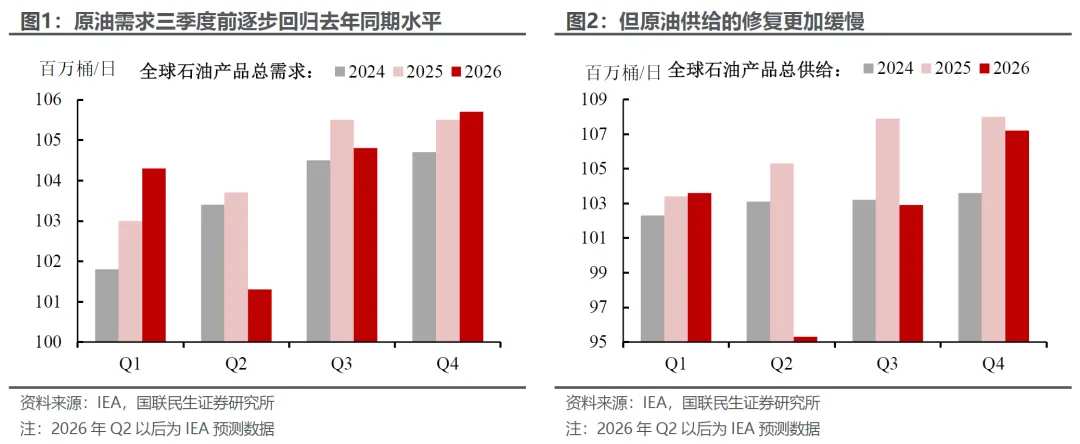
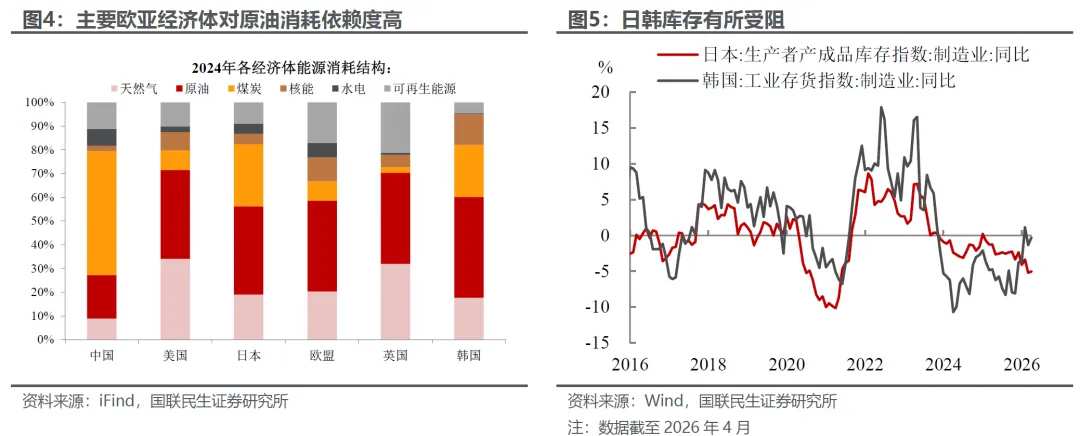
This highlights the core structural contradiction in today’s crude oil market: the pace of supply recovery in the near term is unlikely to match the steep upward trajectory of demand rebound. The latest forecasts from both the IEA and EIA confirm that although global crude supply will see marginal improvement in the third quarter, demand will still significantly outstrip supply. Once delayed tankers are gradually cleared and shipping resumes normal operations, refiners and traders may engage in concentrated restocking activities, which could further accelerate the drawdown of global crude inventories.
Considering the timing of supply-demand rebalancing, supply will likely only fully catch up with demand by year-end at the earliest. This implies continued downward pressure on crude inventories throughout the third and fourth quarters: inventory drawdowns are expected to be steepest in Q3, with a modest easing in the pace of destocking anticipated in Q4.
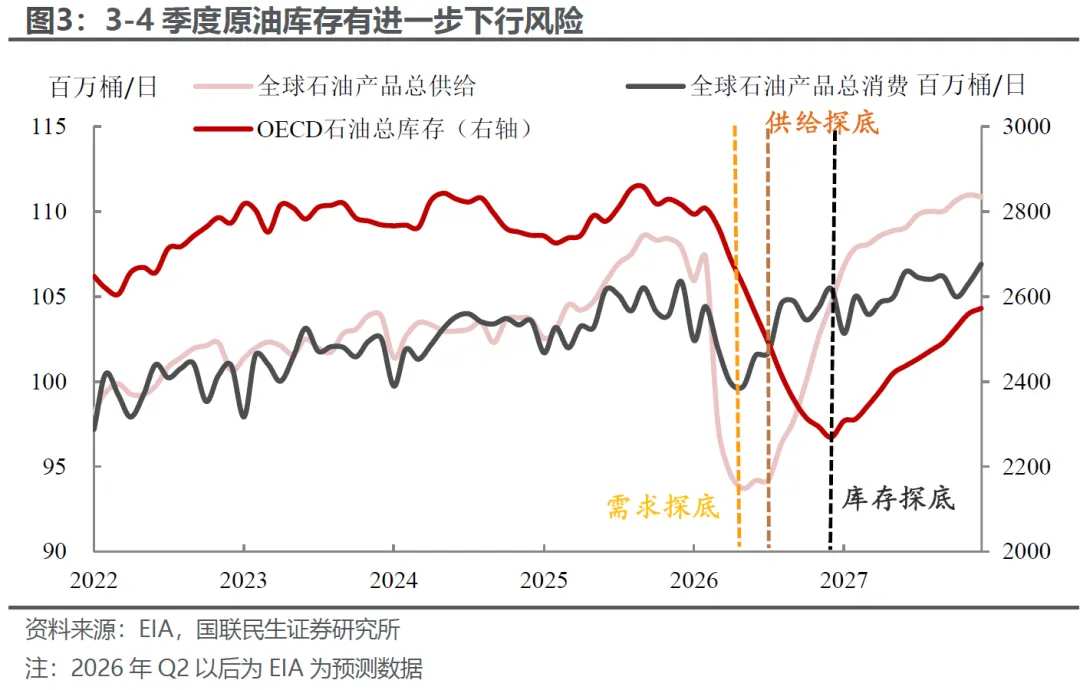
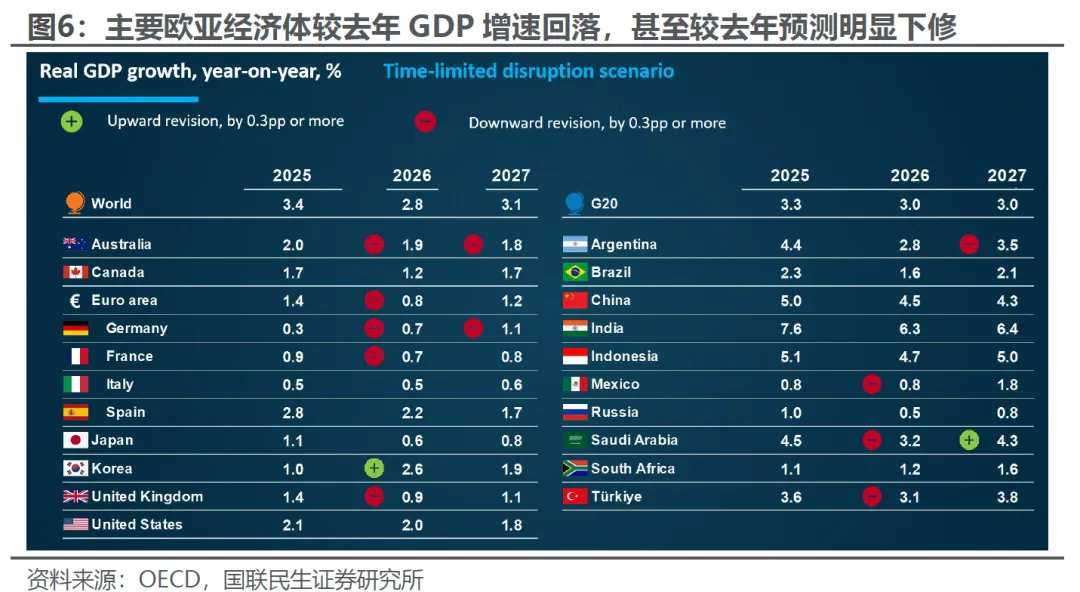
In summary, oil prices are unlikely to revert to their previous lows, and supply-side shocks in the second half of the year will continue to constrain the pace of global economic recovery. Economies outside the U.S., particularly in Europe and Asia—which are highly dependent on crude oil consumption—will be most adversely affected. Many regions, including Japan and Europe, exhibit high crude import dependency; tight supply conditions are suppressing operating rates, leading to sustained capacity contraction and hampering domestic economic recovery. The latest April inventory data corroborate this pressure: Japanese manufacturing inventories continue to decline, and Korean firms’ restocking activities have also been disrupted.
This has led to a clear reversal in the macroeconomic strength narrative compared to last year. The global economy has shifted from last year’s pattern of ‘strong non-U.S. economies and a relatively weak U.S.’ to ‘a strong U.S. and weakening non-U.S. economies,’ which is the key driver behind the recent dollar rebound. OECD projections show that growth rates across major European and Asian economies are broadly lower than last year, including Japan and the EU; European countries’ forecasts have been sharply revised downward from levels projected at the end of last year. The previously market-discussed fiscal recovery narrative for Europe has been significantly diluted by persistently rising supply-side costs. In contrast, the U.S., benefiting from its inherent energy self-sufficiency and sustained high-investment activity in AI, continues to demonstrate notable economic resilience.
2. U.S. Economy: An Uneven Recovery Amid Deepening K-Shaped Divergence
Even the U.S.—currently outperforming other major economies globally—exhibits underlying economic fundamentals far less robust than headline data suggest. While capital spending in the AI sector has indeed become a core pillar supporting U.S. growth, it may now be the sole remaining engine of expansion. A pronounced ‘K-shaped’ divergence within the U.S. economy continues to reshape the distribution of national factor income and has fueled the emergence of a ‘standalone rally’ in the technology segment of financial markets. We believe that this uneven recovery, driven by deepening K-shaped dynamics, will remain the central theme shaping U.S. macroeconomic and market developments in the second half of the year.
2.1 Macro Outlook: Silicon-Based Sectors Rising, Carbon-Based Sectors Declining
A closer examination of the U.S. economic structure reveals that this ‘K-shaped’ divergence permeates nearly every aspect of the economy:
In terms of economic growth, investment in AI has diverged sharply from traditional sectors such as consumption and real estate. Since 2026, the AI boom has continued to drive substantial expansion in capital expenditures. Based on a four-quarter moving average, AI-related investment now accounts for over 40% of U.S. GDP growth—a significant increase from previous levels. However, this tech-driven prosperity, rooted in optimistic expectations about total factor productivity, has not meaningfully spilled over into the broader real economy. Growth in traditional pillars like consumer spending continues to weaken, reinforcing a growing chasm in sectoral performance.
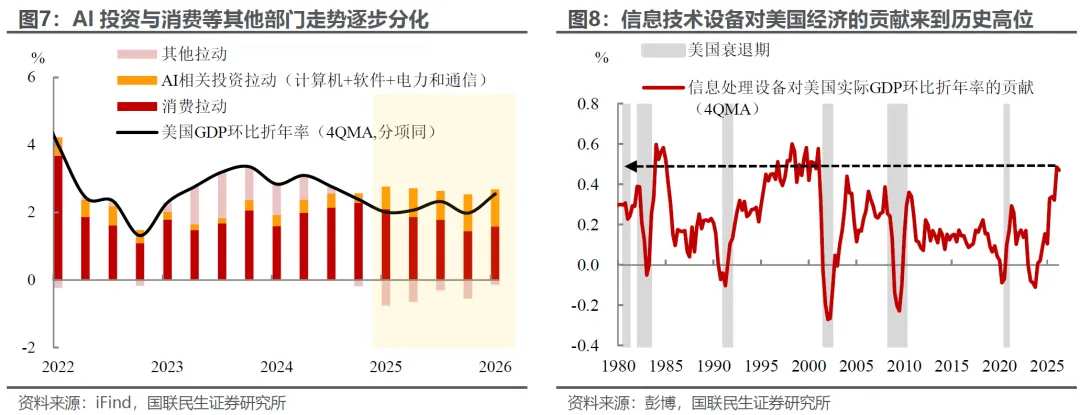
From the perspective of import composition, U.S. import demand exhibits a clear tilt toward technology products. As of April 2026, the 12-month rolling average growth rate for key AI-related categories—including semiconductors, telecommunications equipment, and computers—peaked above 50%. This robust growth has diverged sharply from the broader cooling trend in overall import demand, highlighting a structural imbalance in current trade patterns.
A pronounced divergence has also emerged between manufacturing and services. U.S. manufacturing has been supported by AI-related investment and rising commodity prices, sustaining an expansionary PMI; conversely, the services sector continues to face cost-side pressures from elevated oil prices, significantly increasing operational stress. The two sectors’ sentiment indicators have thus persistently moved in opposite directions.
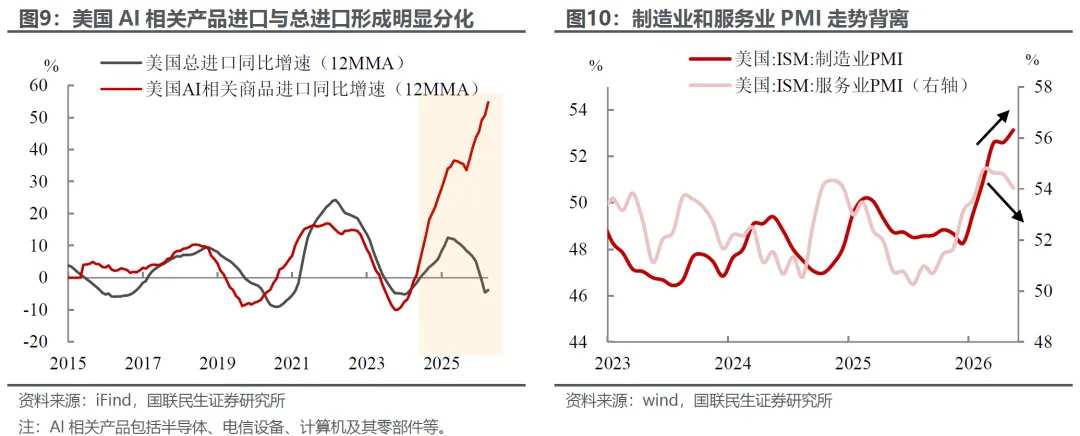
This dualistic pattern—'silicon-based sectors rising while carbon-based sectors decline'—actually explains many of the core contradictions observed this year across U.S. employment, inflation, and other domains. The localized economic resilience driven solely by AI-related sectors has failed to generate a broad-based trickle-down effect across society, rendering it insufficient to catalyze a comprehensive macroeconomic recovery. We have previously articulated this central thesis in multiple dedicated reports:
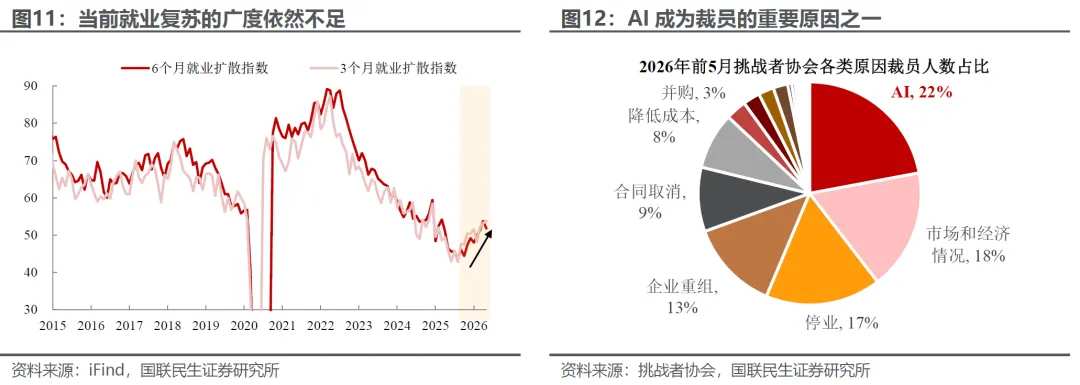
For instance, although total nonfarm payroll additions have shown temporary improvement, the underlying structure remains unbalanced. The breadth and inclusiveness of job recovery remain inadequate, and the central tendency of wage growth continues to trend downward. Moreover, AI has already begun displacing certain jobs, with employment levels contracting persistently in high-AI-exposure sectors such as information technology and finance. See report“U.S. Employment: A Tale of Two Realms—Silicon vs. Carbon”。
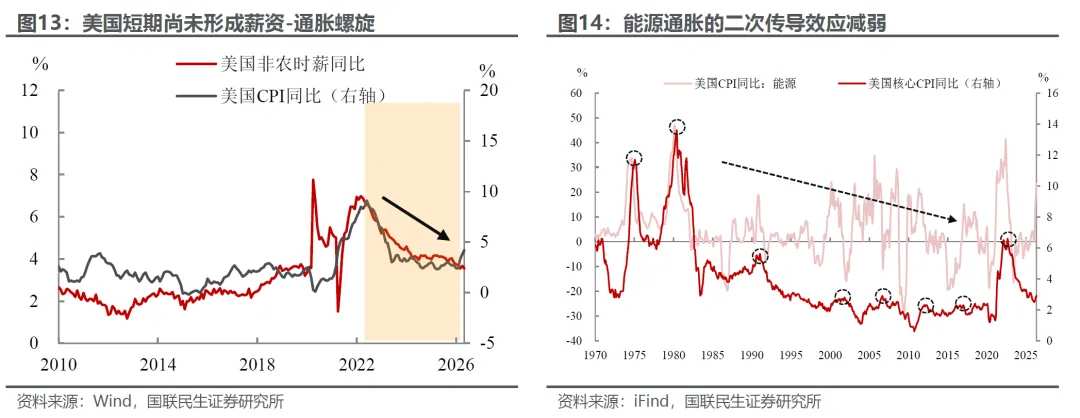
Similarly, while headline inflation in the U.S. has rebounded rapidly due to rising oil prices, core CPI growth remains tepid. Since inflation fundamentally reflects broad-based consumer demand, the absence of meaningful improvements in underlying consumer purchasing power means inflation lacks a sustainable microfoundation for sustained acceleration. See report“Does the U.S. Have the Fundamentals for Sustained Inflation Rebound?”。
This is also why we believe the Federal Reserve is highly unlikely to raise rates this year. Given the pronounced imbalance in the U.S. economic recovery, neither employment nor inflation data are likely to repeatedly set new highs in the second half of the year, leaving very limited room for policy maneuvering. The current policy baseline is to maintain rates unchanged. Although markets have already priced in a Fed rate hike this year, the bar for such action remains too high. See report“How High Is the Bar for a Fed Rate Hike?”。
2.2 Micro Perspective: Restructuring of Factor Allocation and Widening Inequality
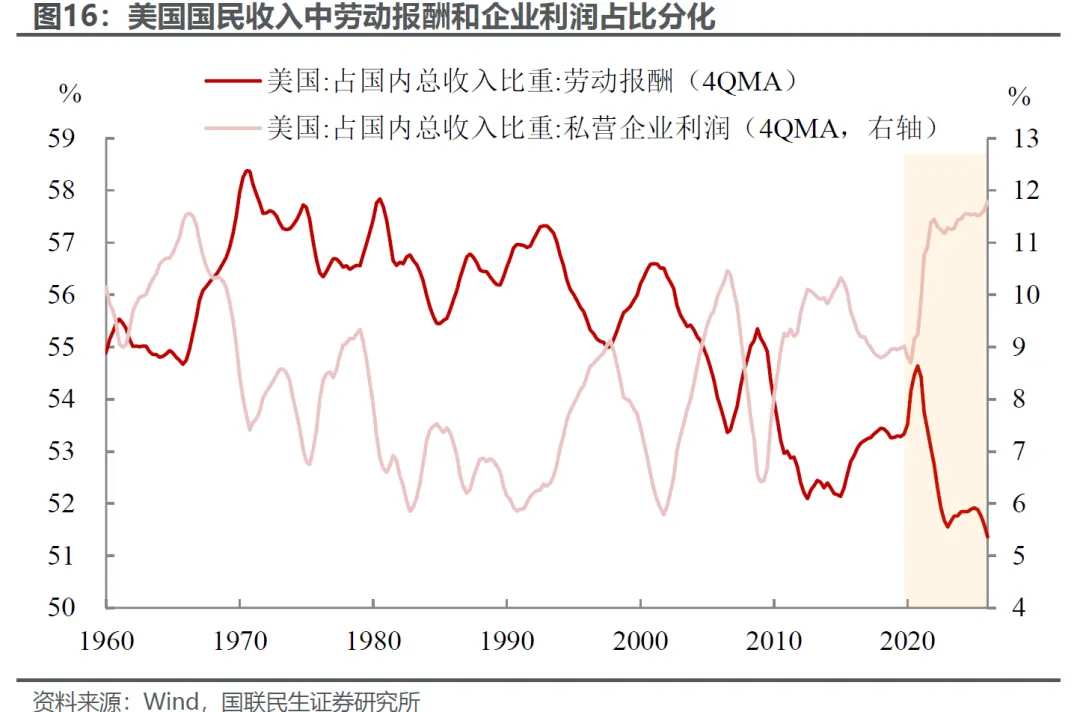
At the micro level, this 'K-shaped' divergence is directly reflected in a shift in the distribution of production factors. The current wave of AI-driven technological transformation has reshaped the marginal productivity and bargaining power of various production inputs, leading to an ongoing reallocation of income toward 'silicon-based' factors—such as computing capital, data assets, and technology patents—as well as a small segment of high-end technical human capital. In contrast, the share of traditional low- and mid-skilled labor in national income continues to shrink, ultimately resulting in a pronounced imbalance wherein capital income growth significantly outpaces labor compensation.
Consequently, we observe that in recent years, the labor share of U.S. national income has accelerated its decline, falling to around 50%. Correspondingly, the share of corporate profits in total national income has risen markedly in tandem.
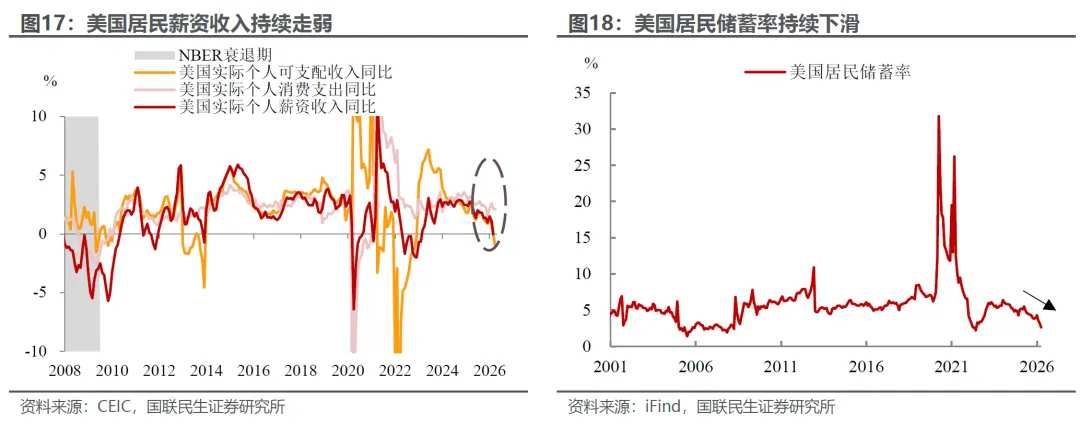
This divergence has further exacerbated the economic conditions and cost-of-living pressures faced by lower- and middle-income households in the United States. The impetus for consumption growth has become increasingly concentrated among high-income groups, while both the consumption capacity and willingness of the general population have weakened under mounting pressure—a trend vividly manifested in declining real incomes, rising credit risks, and persistently low consumer confidence:
On the income front: The foundation of U.S. household consumption continues to erode. Mid- and low-skilled workers engaged in standardized, repetitive tasks face not only job displacement due to AI substitution but also declining real purchasing power as wage growth lags behind inflation, further widening income inequality. As household income remains under sustained pressure, families are being forced to draw down savings and tap into emergency reserves just to cover essential daily expenses.
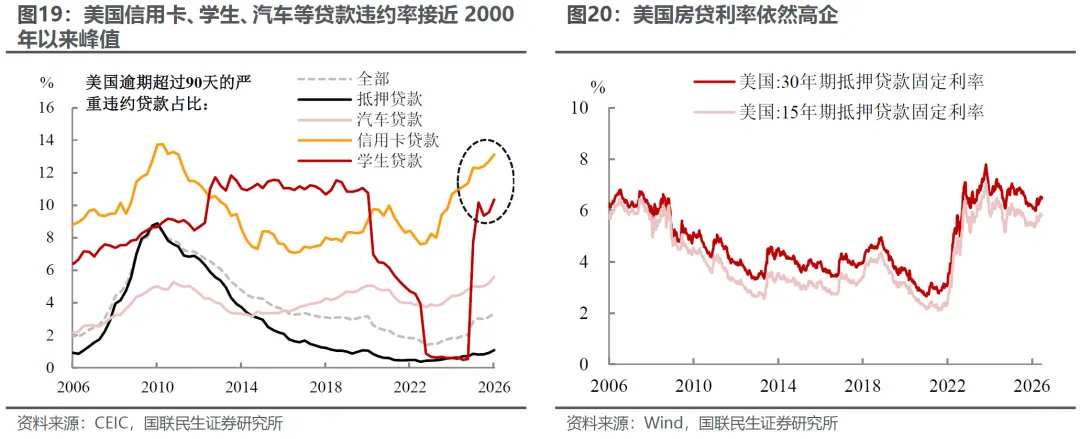
On the credit front: Persistently rising default rates among low- and middle-income borrowers have raised alarms in credit markets—delinquency rates on consumer credit such as credit cards, auto loans, and student loans have climbed to levels last seen during the subprime mortgage crisis. Compounded by persistently high medium- and long-term interest rates, debt burdens for these households continue to intensify, further squeezing their already limited room for consumption.
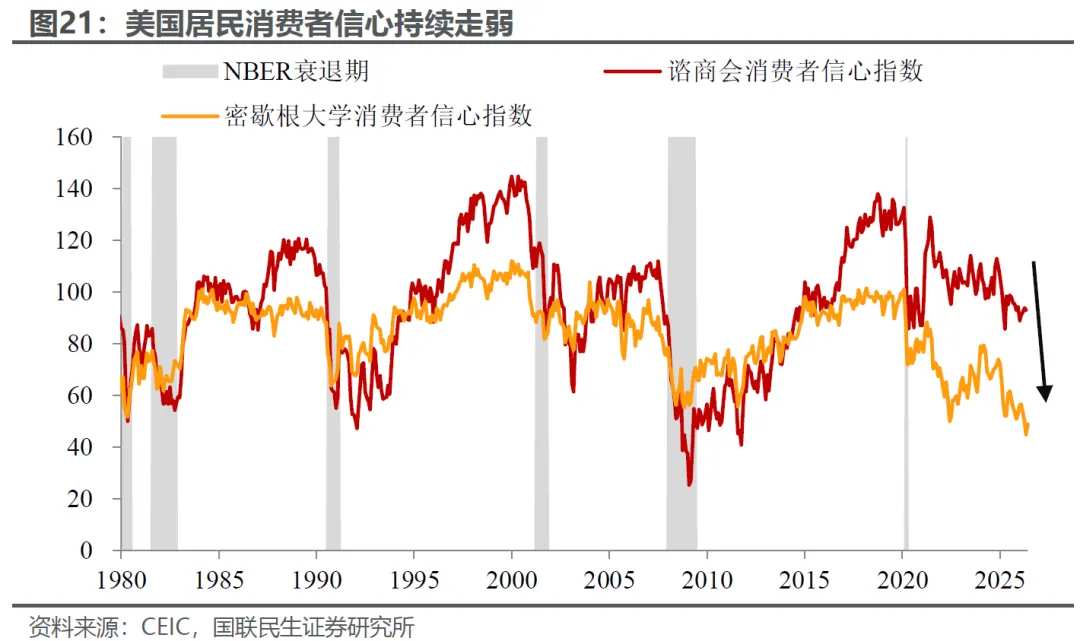
Regarding consumption sentiment: The persistent erosion of household purchasing power has directly dampened consumer confidence, with the University of Michigan’s Consumer Sentiment Index remaining depressed. In June, the index fell to 48.9, briefly dipping below its lowest level since April of last year amid trade tensions, reflecting growing public anxiety over future income prospects.
2.3 Assets: The Suction Effect of the AI Sector
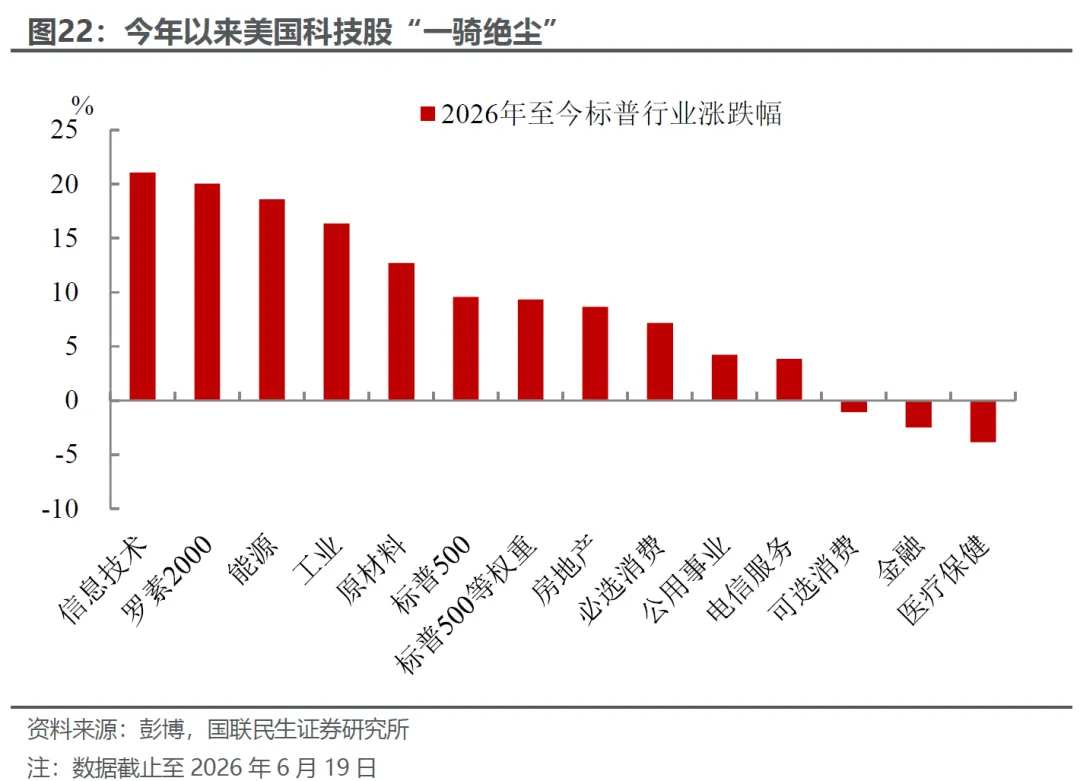
In terms of asset prices, today’s global 'K-shaped' market dynamics resemble those seen in the U.S. equity market during 1998–1999. At that time, the Asian financial crisis and emerging market debt crises triggered a global economic downturn, weighing heavily on non-technology sectors of the U.S. stock market due to declining earnings. Meanwhile, the technology sector, propelled by capital expenditure linked to the internet revolution, staged an independent bull run characterized by simultaneous gains in both valuation and earnings.
The current market environment bears some similarity: Geopolitical tensions and weak traditional demand are constraining the global economy, keeping earnings pressure on non-tech sectors persistent. In contrast, the AI-driven tech sector—fueled by rapidly expanding capital expenditures from major corporations—is simultaneously delivering earnings growth and valuation expansion, establishing itself as the dominant market theme.
There are typically two pathways through which such extreme market bifurcation could move toward equilibrium:
First, the AI sector is undergoing a phase of consolidation. Potential triggers include slowing revenue growth for large models, commercialization falling short of expectations, delayed earnings realization, or capital expenditure growth reaching a marginal peak—all of which could prompt the market to temporarily recalibrate its valuation of AI’s long-term potential.
Second, there are early signs of cyclical recovery in the traditional economy. If policy stimulus boosts aggregate demand and improves earnings expectations for traditional sectors, capital may rotate out of the crowded AI trade into cyclical and consumer sectors, facilitating a structural rebalancing.
Although both scenarios are plausible, the AI sector remains underpinned by relatively strong fundamentals in the near term, while the recovery of the traditional economy still hinges on further policy support; thus, market divergence is likely to persist for some time.
3. Navigating the midterm elections: Policy breakthroughs face significant hurdles
The U.S. economy’s ‘K-shaped’ divergence is not merely a narrative—it is highly likely to cause many classical macroeconomic relationships and the effects of aggregate policies to deviate from their historical trajectories, thereby influencing the pricing dynamics across major asset classes. More importantly, addressing the current K-shaped imbalance may carry greater political urgency than economic necessity.
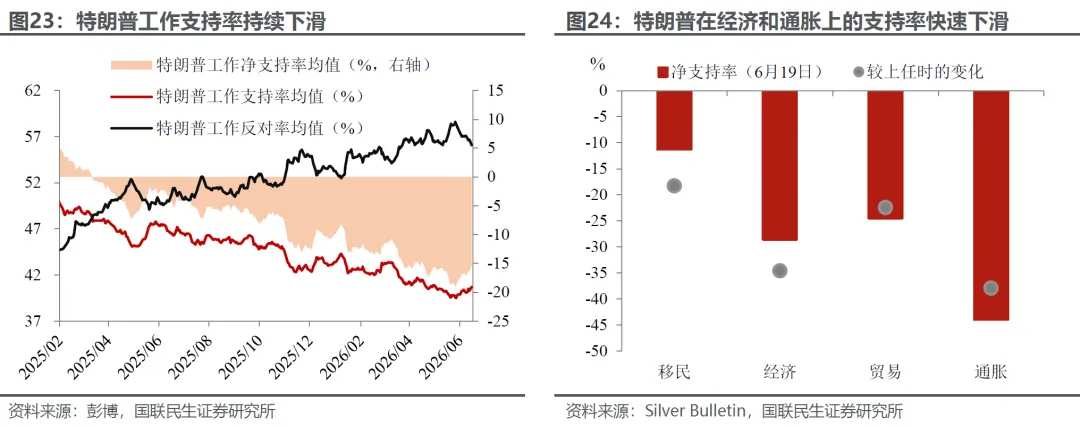
Trump’s public approval ratings have already fallen to a cyclical low. Since the start of his second term, his public support has steadily declined, with his net job approval rating hitting a new historical low this year—driven primarily by negative public sentiment regarding his handling of the economy and inflation.
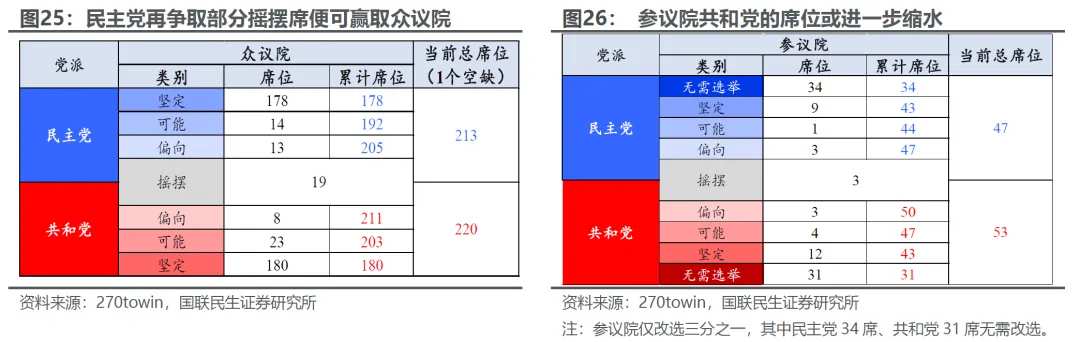
Persistently eroding public support has directly increased the political headwinds Trump faces ahead of next year’s midterm elections. Based on current polling data and seat dynamics, Republicans are still expected to retain control of the Senate as the baseline scenario, though their current margin is likely to narrow significantly. All House seats are up for re-election, and the battle between the two parties has intensified; the probability of Democrats gaining full control of the House has risen markedly.
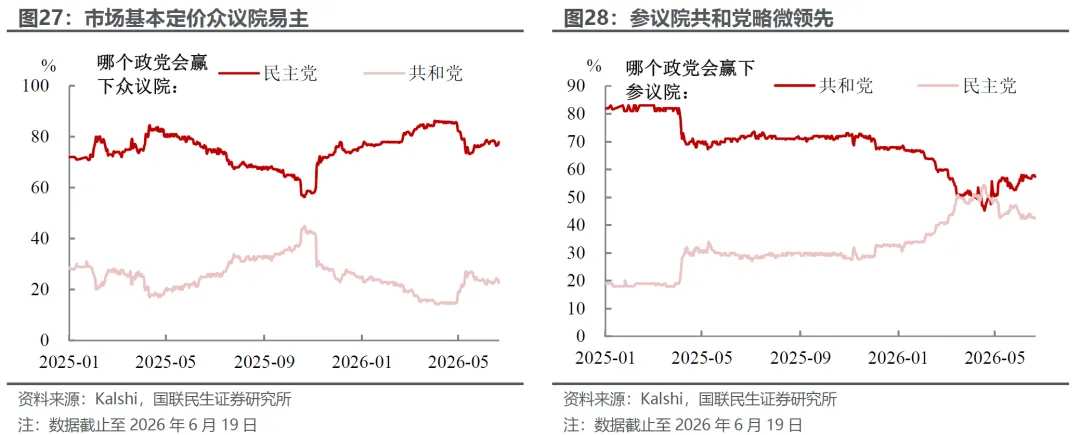
As the midterm elections draw closer and the competition for votes intensifies, short-term public sentiment will increasingly dominate Trump’s policy agenda. In particular, the widening wealth gap under K-shaped divergence continues to fuel discontent among lower-income groups, making frequent policy shifts highly likely—and thereby amplifying uncertainty for both the macroeconomic outlook and global financial markets. This is a critical challenge Trump must urgently address.
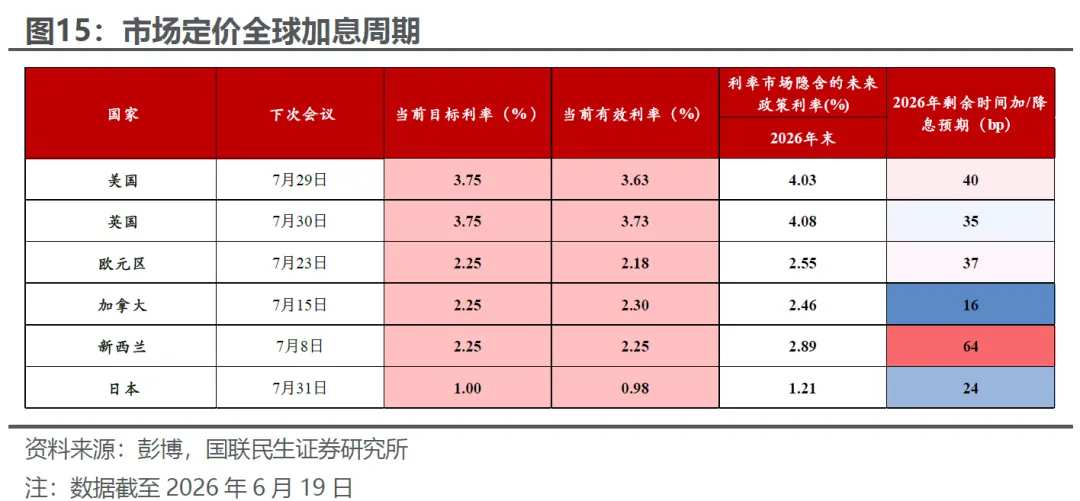
However, with the policy window rapidly closing, Trump has increasingly limited time to implement policies and fulfill campaign promises. At present, he appears to have two primary avenues to boost the economy and regain voter support: first, pushing for Federal Reserve Chair Volcker to deliver rate cuts, leveraging monetary easing to reduce borrowing costs for households and businesses; second, systematically addressing affordability challenges to ease cost-of-living pressures on middle- and low-income households.
Yet both approaches face unavoidable real-world constraints, significantly limiting the scope for policy implementation and undermining potential effectiveness:
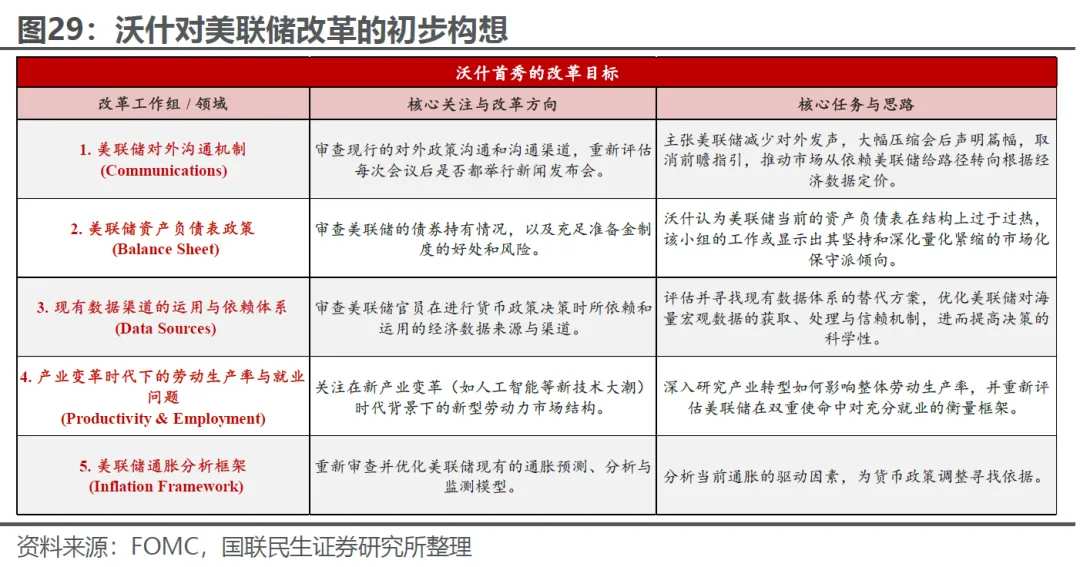
First, Walsh’s path toward Federal Reserve reform will not proceed too quickly. Judging from his debut performance at the June FOMC meeting, although the policy decision and dot plot maintained a generally hawkish stance with a significantly elevated priority on fighting inflation, Walsh preserved flexibility in his policy communication—for example, by highlighting that interest rates in the housing market remain overly tight. Simultaneously, he launched working groups covering five key areas: communication mechanisms, the inflation framework, data sources, AI, and employment—possibly seeking grounds to justify future monetary easing.
However, reshaping the policy framework requires building internal consensus and completing multiple rounds of deliberation; the earliest possible release of a final proposal would be in the fall. Until then, any monetary policy pivot lacks a clear institutional anchor. Not only does the U.S. currently lack the conditions for rate cuts, but even if Walsh ultimately identifies justification for easing, the timing of any rate cut is likely to be delayed and unlikely to deliver substantive accommodative benefits within the window of the midterm elections.
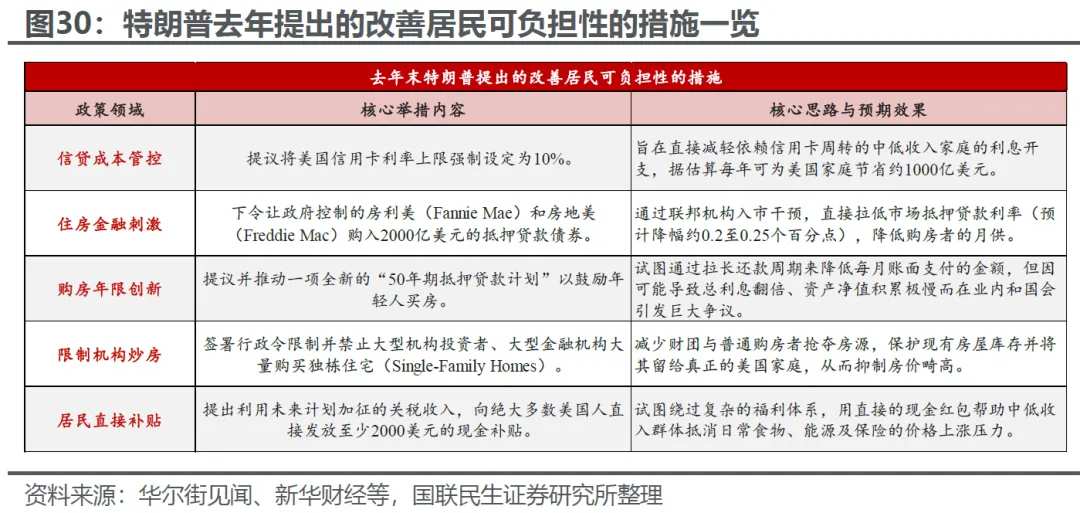
Regarding household affordability challenges, the Trump administration is highly likely to replicate its administrative intervention approach from late last year—directly alleviating cost-of-living pressures on middle- and low-income households through measures such as capping credit card interest rates, issuing targeted livelihood subsidies, and guiding mortgage rates lower. However, these measures remain inherently localized and short-term administrative backstops with limited long-term support capacity.
On one hand, administrative interventions involving interest rate controls would directly squeeze financial institutions’ profit margins, encountering industry resistance during implementation and raising compliance concerns due to conflicts between administrative directives and market-based pricing mechanisms. On the other hand, tariff revenues previously used to offset household expenditures have lost their incremental cushion, and the resulting contraction in fiscal maneuvering space will significantly constrain the coverage and effectiveness of subsidy policies.
Finally, even if policy signals are released as expected in the third quarter, there will inevitably be a lag between policy implementation and tangible economic recovery. Transmission of policy effects to the real economy typically takes three to six months. Therefore, even if a policy turning point occurs this year, cyclical economic recovery may not become clearly visible until year-end or even early 2027.
In summary, Trump faces significant obstacles in reversing the current 'K-shaped' economic divergence, making it unlikely to substantially bridge the growth gaps across income groups and sectors within the year. This implies that structural economic divergence—characterized by 'K-shaped' imbalances—and divergent pricing across major asset classes will persist throughout the remainder of the year, remaining the central macroeconomic and market theme.
Editor/melody