
In his first public statement since returning to work after recovering from illness, Kazuo Ueda indicated that if inflation continues moving steadily toward the 2% target and financial conditions remain accommodative, the central bank will raise interest rates further at an appropriate time. Despite the clear expectation of additional rate hikes, the yen remains weak, hovering near its lowest level in nearly 40 years, and market vigilance regarding potential official intervention remains elevated.
Bank of Japan Governor Kazuo Ueda, in his first public remarks since returning to work after recovering from illness, reiterated that risks of inflation exceeding the 2% target persist and that the central bank will proceed with further rate hikes at an appropriate time. The latest nationwide core consumer price index (CPI) in Japan currently stands at an annual rate of 1.4%.
In remarks delivered on Wednesday, Ueda stated that as underlying inflation moves closer to 2% and financial conditions remain accommodative, the Bank of Japan expects to continue raising interest rates and adjusting the degree of monetary easing in response to developments in economic activity, prices, and financial conditions. Due to Ueda’s prior hospitalization for a liver cyst infection, the speech was read on his behalf by Deputy Governor Ryozo Himino. Ueda returned to work on Tuesday.
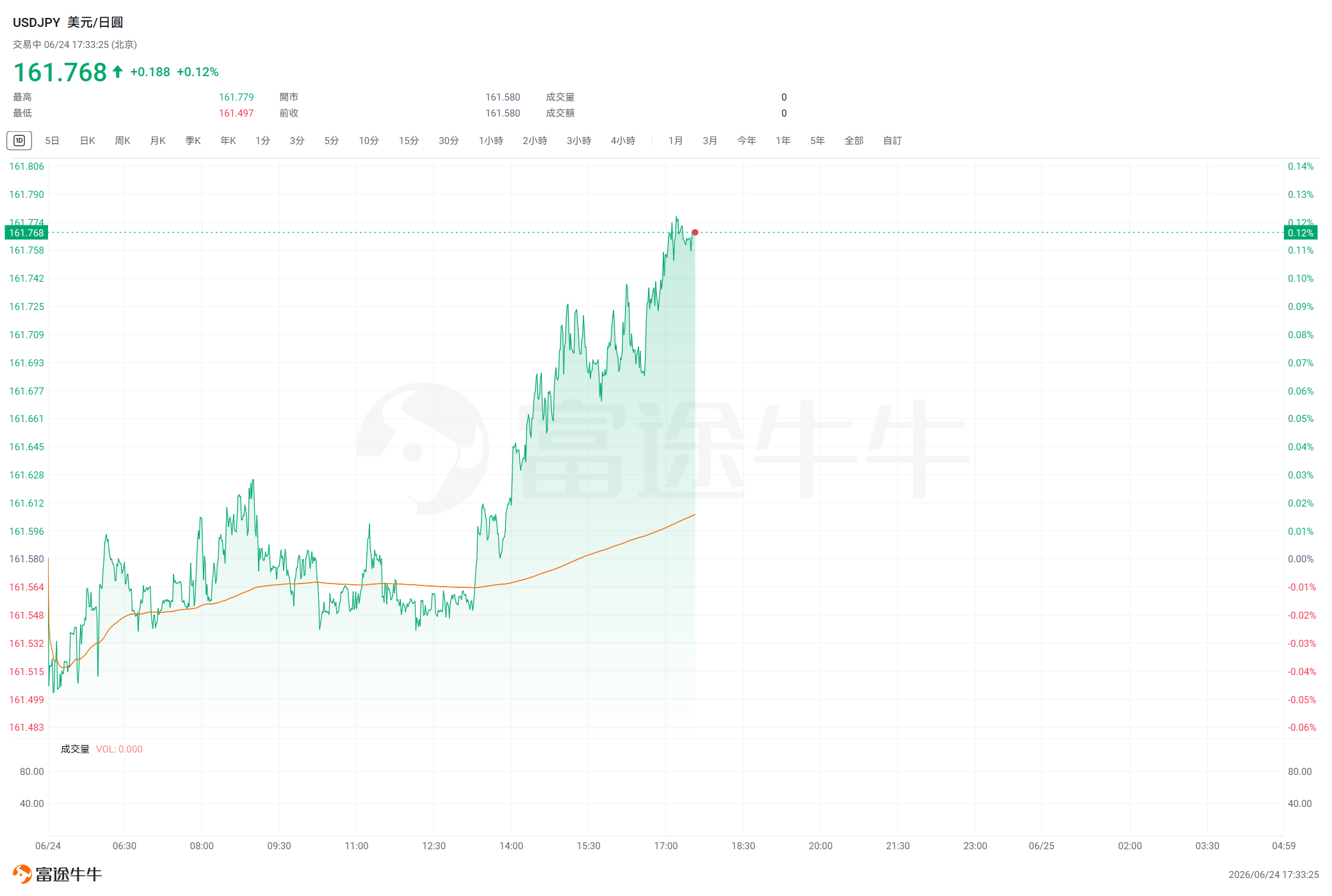
 These comments are consistent with the signals conveyed at the Bank of Japan’s policy meeting last week—held in Ueda’s absence—where the Policy Board voted 7–1 to raise the policy rate to 1%, the highest level since 1995. The summary of opinions released by the central bank on the same day also indicated that board members broadly agreed on the need for additional rate hikes. However, the realization of this tightening expectation has provided minimal support to the yen, which continues to hover near its lowest level in nearly 40 years, keeping foreign exchange market participants vigilant for signs of potential intervention by authorities.
First public remarks after illness reaffirm stance from last week’s meeting
In his remarks, Ueda reiterated the Bank of Japan’s consistent policy orientation without introducing any new signals, closely aligning with the official communication following last week’s interest rate decision.
He noted that the timing and pace of future rate hikes would depend on multiple factors, including the impact of the conflict in Iran—a rare public acknowledgment by a Bank of Japan official explicitly incorporating geopolitical risks into monetary policy considerations.
Last week, the Bank of Japan raised its policy rate to 1%, the highest level since 1995. The summary of opinions released the same day further reinforced market expectations for a continued hiking path, with several board members emphasizing the necessity of further monetary tightening.
Although the rate hike was widely anticipated by markets, it provided very limited support to the yen. The yen-dollar exchange rate remains volatile near its lowest level in nearly four decades, keeping foreign exchange traders highly alert for any signals that might trigger official intervention.
External risks, including the situation in Iran, constrain the policy path
Ueda specifically highlighted the uncertainty surrounding the conflict in Iran as a factor that could affect the pace of rate hikes, indicating that while the Bank of Japan is advancing its monetary policy normalization, it remains cautious about external shocks.
Currently, the central bank faces a core challenge: on one hand, underlying inflation continues to converge toward the 2% target, providing grounds for further rate hikes; on the other hand, geopolitical risks and persistent yen weakness are fueling imported inflationary pressures, complicating policy decisions. Markets will continue to closely monitor Kazuo Ueda’s upcoming remarks and signals from the central bank’s next policy meeting.
Editor/melody