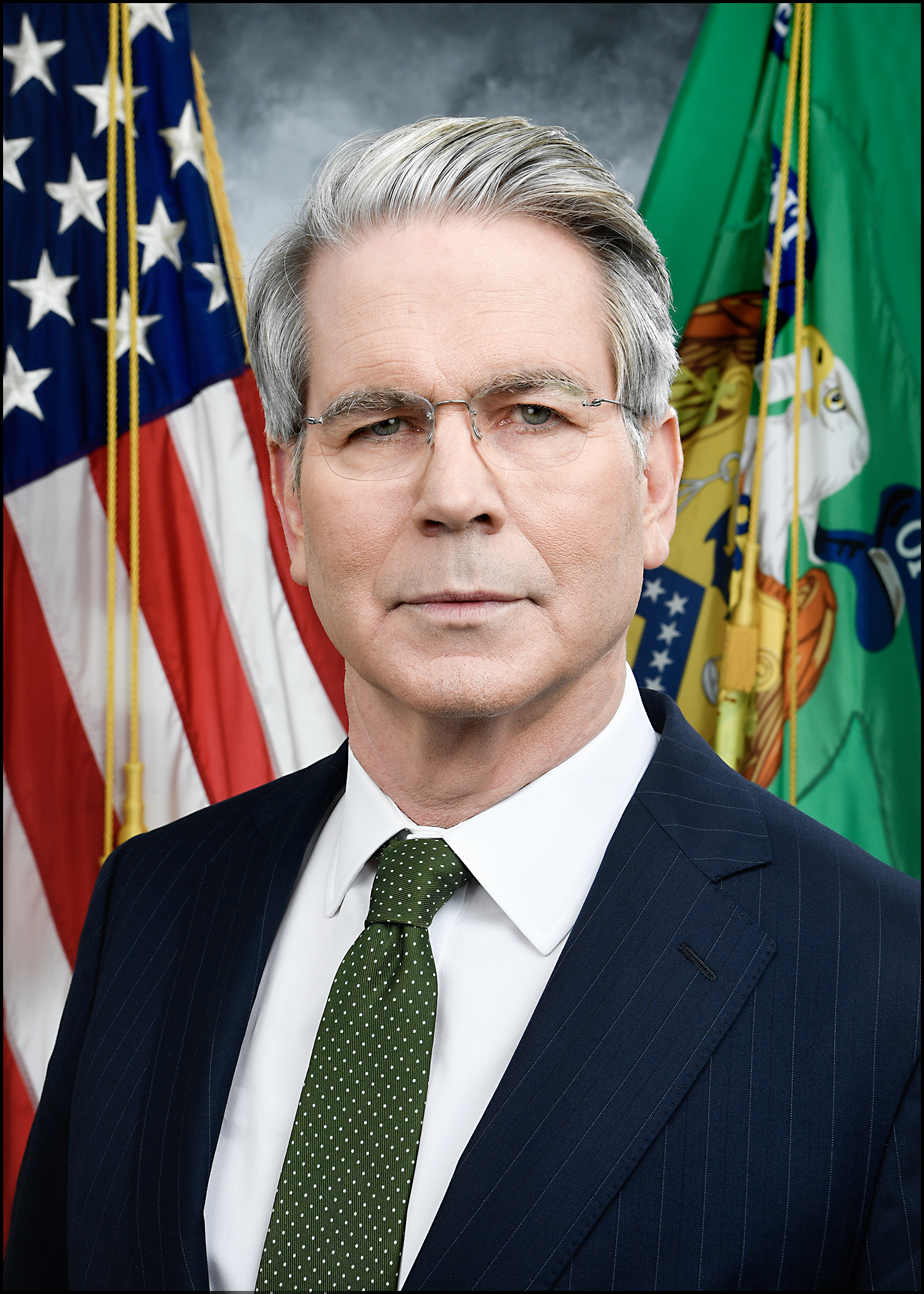
Bessent stated that negotiations with Iran, Venezuela, and Russia are bringing these countries back into the U.S. dollar settlement system, thereby reinforcing the dollar’s global dominance. He also expects U.S. GDP growth to return to 3% this year and insists that his '3-3-3' economic target remains within reach.
U.S. Treasury Secretary Bessent issued a series of strong signals on Wednesday, closely linking Iran ceasefire negotiations, the global dominance of the U.S. dollar, and domestic economic recovery objectives.
During an appearance on CNBC’s 'Squawk Box,' Bessent said that talks with Iran have already addressed pricing Iranian oil and gas exports in U.S. dollars, Venezuela is rejoining the dollar-based system, and Russia could return to dollar settlements after the conclusion of the Russia-Ukraine conflict. He characterized these developments as part of a broader effort to reshape and reinforce the dollar’s global dominance. Meanwhile, he forecast that U.S. GDP growth could rebound to 3% within the year and reaffirmed that his '3-3-3' economic goal remains attainable.
 Regarding the arrangement for Iran’s frozen assets, Bessent revealed that the Treasury Department will oversee the use of Iran’s released funds in the Middle East and require that a 'very substantial portion' be used to purchase U.S. agricultural products and pharmaceuticals. However, Iran has publicly rejected U.S. restrictions on how its funds may be used, highlighting a clear divergence in the two sides’ positions and leaving significant uncertainty around the agreement’s implementation mechanism.
These statements carry multi-layered potential implications for financial markets: policy-level support bolsters expectations of a stronger dollar; U.S. agricultural and pharmaceutical stocks may benefit from anticipated procurement demand; and the trajectory of Iran’s nuclear negotiations and progress on asset unfreezing remain key variables driving geopolitical risk.
Dollar Dominance: Iran, Venezuela, and Russia Come into Focus
Bessent identified strengthening the dollar’s dominance as a top current policy priority. 'Everything we’re doing is pushing the dollar forward,' he said.
On Iran, he indicated that negotiations already include provisions for Iran to price its oil exports in U.S. dollars. Regarding Venezuela, he noted that under prior sanctions targeting President Nicolás Maduro, Venezuela was 'not permitted' to transact in dollars or generate dollar-denominated revenues. Now, he said, 'the dollar will become central to Venezuela’s trade.'
Bessent also predicted that Russia could rejoin the dollar system following the end of the Russia-Ukraine conflict. He attributed the dollar’s global appeal to the United States’ market liquidity and the depth and breadth of its capital markets—'everyone wants to be part of it.'
GDP Growth Outlook: Rebounding from a Trough, the '3-3-3' Target Remains Within Reach
Bessent expressed optimism about a U.S. economic recovery, despite recent data showing clear signs of growth pressure. He stated that the 2026 GDP growth rate 'could be a number starting with three,' citing 'still-strong economic fundamentals' as justification.
Data show that GDP grew at an annualized rate of 1.6% in the first quarter of 2026, up from just 0.5% in the fourth quarter of 2025, with full-year growth for 2025 standing at 2.1%. Over the past two quarters, the U.S. economy has faced multiple pressures, including a resurgence of inflation, a cooling labor market, and the impact of Trump’s tariff policies. Bessent estimated that economic growth was around 4% in February, prior to the initiation of joint U.S.-Israeli military action against Iran.
He reiterated the '3-3-3' policy framework: achieving 3% economic growth, reducing the deficit-to-GDP ratio to 3%, and increasing domestic oil production by 3 million barrels per day. On the deficit target, he stated, 'By the end of the presidential term, we expect to see a deficit ratio starting with a three,' adding that only then could the government truly begin reducing the debt-to-GDP ratio.
As of the end of 2025, the deficit-to-GDP ratio stood at 5.8%, having exceeded 6% in both 2023 and 2024. In the first eight months of fiscal year 2026, the federal budget deficit totaled $1.25 trillion, down 9% from the same period a year earlier. High financing costs represent the second-largest budget expenditure item after Social Security.
Bessent stated that Trump has 'full confidence' in newly appointed Federal Reserve Chair Kevin Warsh’s ability to steer monetary policy, despite the Fed’s previous resistance to further interest rate cuts amid persistently high inflation.
Frozen Iranian Assets: Treasury Department Steps In to Oversee Implementation Amid Disputes Over Enforcement Mechanism
Regarding the arrangement to unfreeze Iranian assets, Bessent revealed that the Treasury Department will oversee the relevant funds in the Middle East and require that the money be used primarily to purchase U.S. agricultural products and pharmaceuticals, including corn, wheat, and soybeans. Trump also stated on Tuesday that the funds would be placed into an escrow account under U.S. control.
This arrangement reflects dual political considerations: it addresses criticism from congressional Republicans—who argue that Trump’s deal concedes too much to Iran—by imposing safeguards on fund usage, while simultaneously creating potential orders for domestic agricultural and pharmaceutical companies, thereby providing an economic rationale to bolster domestic support for the agreement.
However, significant ambiguities remain in the agreement’s details. Bessent did not clarify the total amount of funds, the location of the escrow account, Iran’s autonomy in procurement decisions, or the Treasury Department’s specific enforcement mechanisms.
More critically, Iranian officials have publicly rejected the U.S. position. On Tuesday, Iranian officials stated that any agricultural purchases would be based solely on price and quality, without being bound by U.S. conditions, and firmly opposed any intervention by Washington or its partners in determining how the funds are used. This disagreement cuts to the core unresolved issue of the deal: once the funds are unfrozen, will the U.S. Treasury possess direct legal control over their use, or will it rely only on indirect leverage through foreign banks, escrow accounts, and sanctions pressure? Vice President JD Vance emphasized last week that the United States will not transfer taxpayer funds to Iran, and Tehran will only receive economic benefits if it complies fully with the terms of the agreement.
Editor/melody