
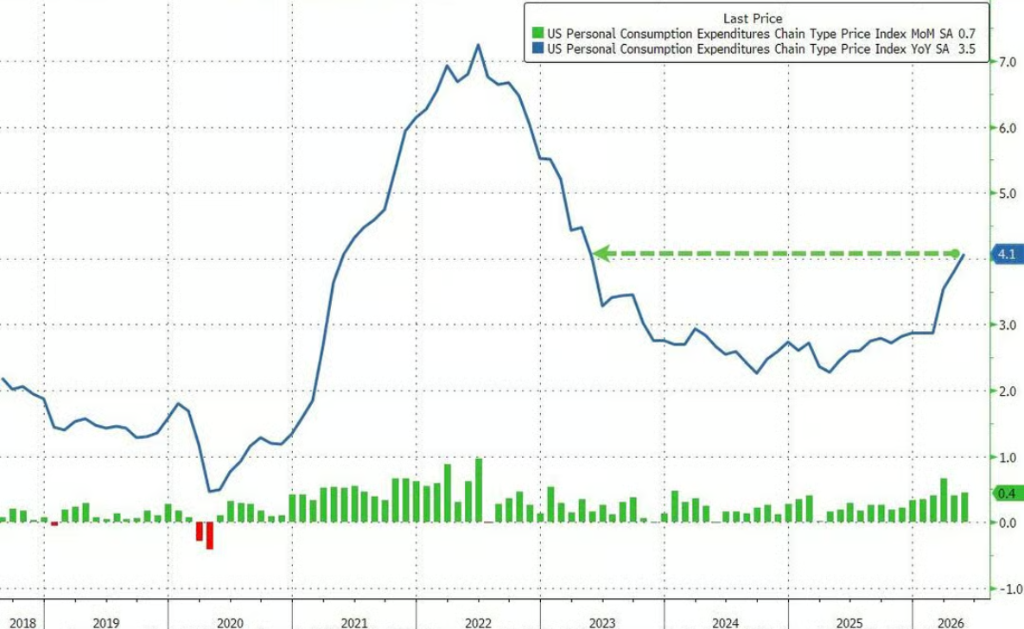
The Personal Consumption Expenditures (PCE) price index rose 4.1% year-over-year in May, marking its highest level since April 2023. Core PCE, which excludes food and energy, increased 3.4% year-over-year—the fastest pace since October 2023. Real, inflation-adjusted consumer spending rose 0.3% month-over-month, indicating that U.S. consumers maintained robust spending momentum despite elevated prices.
Persistently rising price pressures in the U.S., coupled with continued expansion in consumer spending, are complicating the Federal Reserve’s policy path.
On Thursday, data released by the Bureau of Economic Analysis at the U.S. Department of Commerce showed that the Personal Consumption Expenditures (PCE) price index rose 4.1% year-over-year in May—the highest reading since April 2023. Core PCE, excluding food and energy, climbed 3.4% year-over-year, reaching its highest level since October 2023 and broadly in line with expectations. The prior month’s figure was revised downward to 3.29% from 3.3%, while the monthly increase came in at 0.3%, up from 0.2% in the previous month.
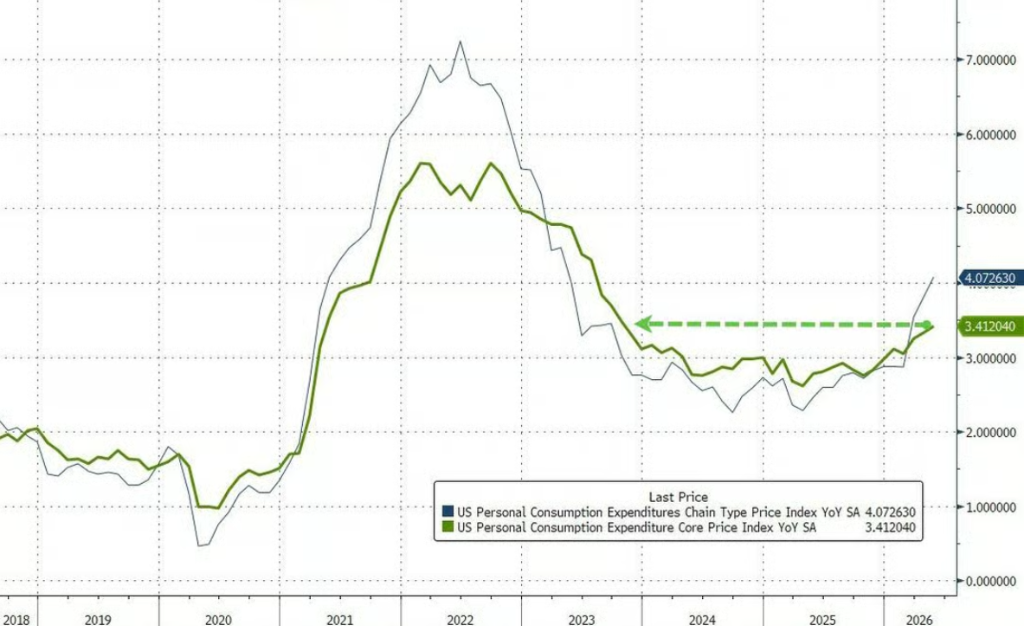
 Meanwhile, real, inflation-adjusted consumer spending rose 0.3% month-over-month, underscoring sustained consumer resilience amid high inflation. Additional data showed that U.S. first-quarter GDP growth was revised upward to an annualized rate of 2.1%, surpassing prior estimates.
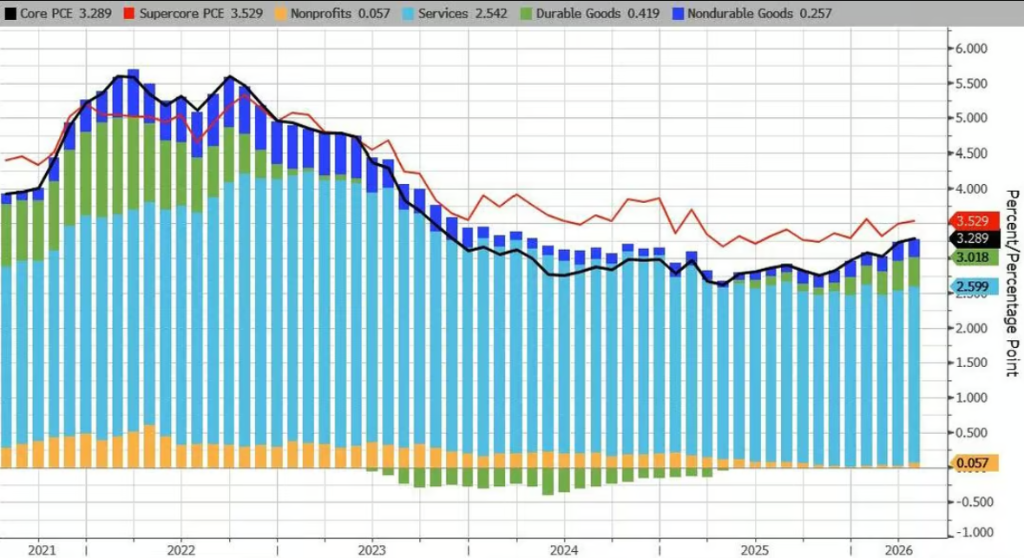
Core Inflation Hits Three-Year High, Driven Primarily by Services Costs
The Federal Reserve’s preferred inflation gauge—core PCE—continued its upward trend in May after accelerating in both March and April. The year-over-year increase of 3.4% widened further from the revised prior reading of 3.29%, reaching its highest level since November 2023.
By category, services costs accelerated again, serving as the primary driver behind the recent rise in core inflation. Prices for durable goods were flat month-over-month, while non-durable goods inflation moderated slightly. Notably, cost increases related to semiconductors showed signs of stalling—software and accessories, which carry roughly 30 times the weight in the PCE index compared to the CPI, exhibited temporary stabilization, offering a significant signal for broader inflation trends.
Headline PCE Jumps to Three-Year High as Middle East Conflict Lifts Energy Component
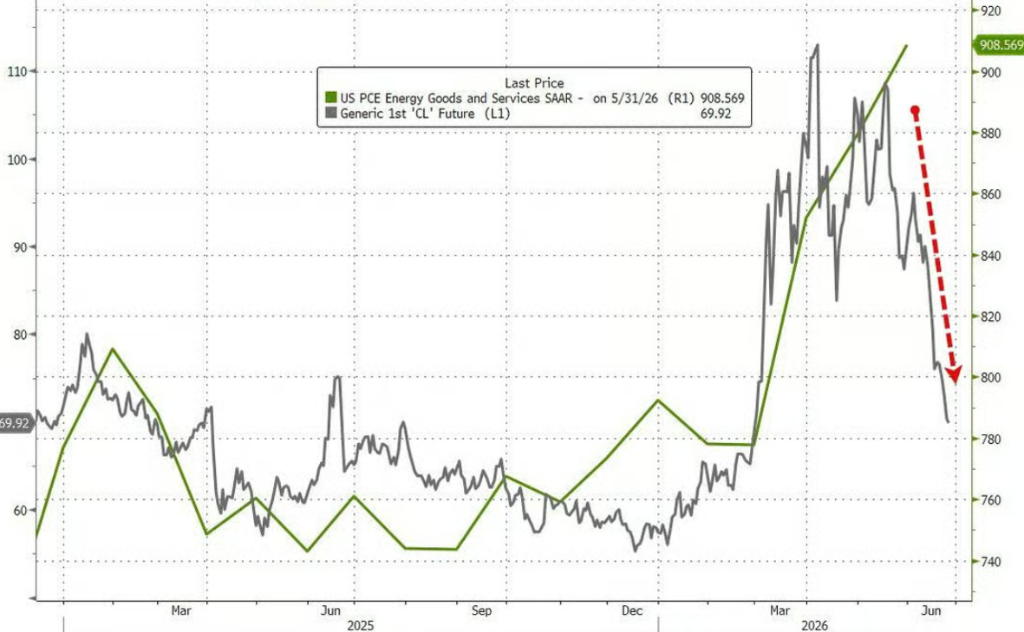
The headline PCE price index rose 4.1% year-over-year in May—the highest since April 2023—and increased 0.4% month-over-month, slightly below market expectations of 0.5%. The impact of geopolitical conflict on inflation was clearly visible in crude oil prices and the PCE energy component.
Meanwhile, separate data indicated that U.S. first-quarter GDP grew at an annualized rate of 2.1%, exceeding earlier estimates and suggesting underlying economic strength. Analysts note that, regarding the transmission of geopolitical shocks to inflation, the worst may already be behind us.
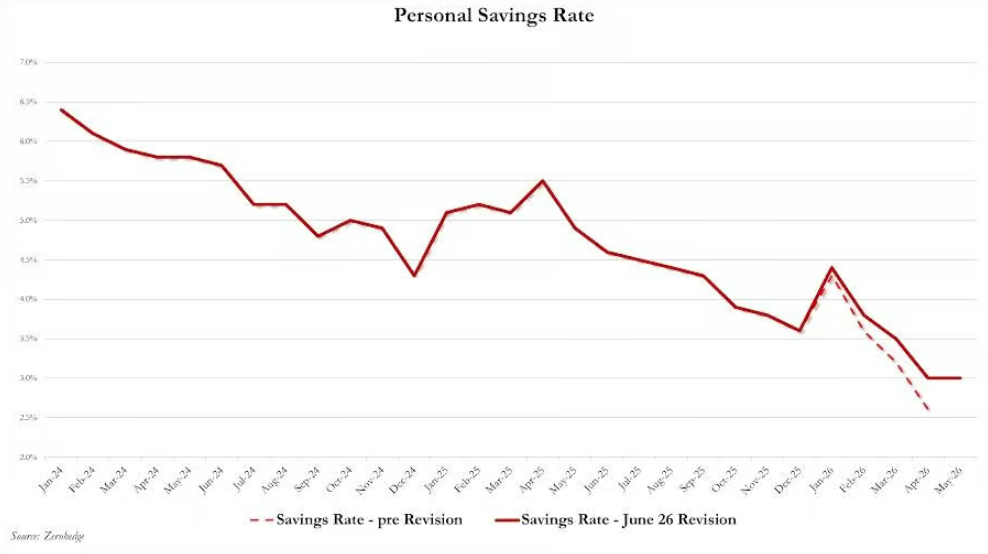
Consumer spending has grown in tandem with income, and the savings rate nearing a historic low has raised concerns.
Nominal consumer spending rose 0.7% month-over-month in May, matching the 0.7% increase in personal income over the same period. The simultaneous acceleration in both income and spending has provided superficial support to consumption.
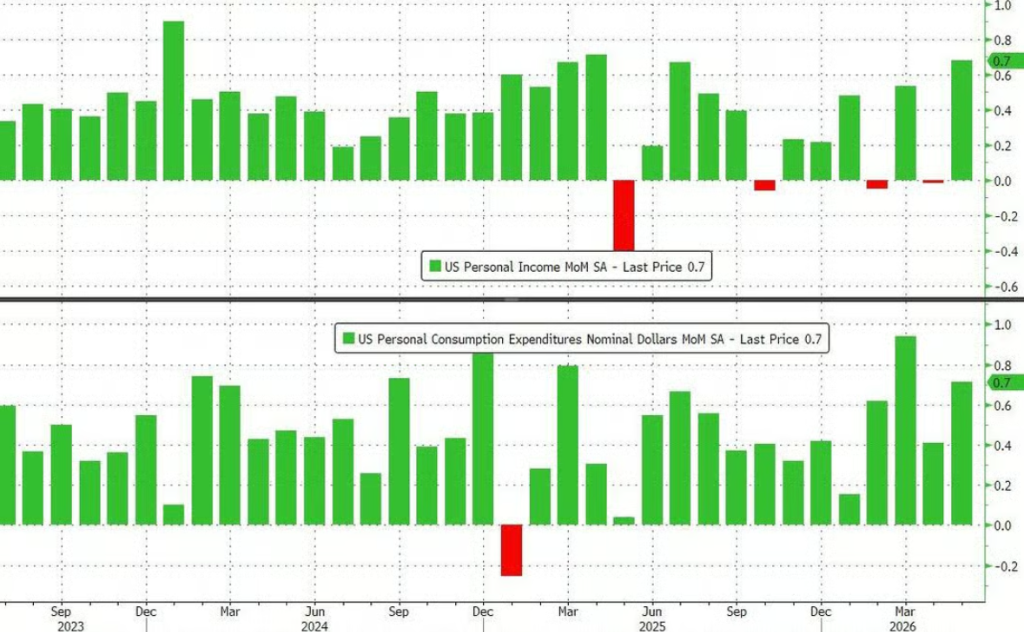
However, the savings rate data reveals deeper underlying risks. The savings rate stood at 3.0% in May. Although it has been revised upward each month since 2026, this level remains the lowest since 2022. Persistently low savings rates near historical lows suggest that U.S. consumers are significantly drawing down their savings to cope with rising prices, raising questions about the sustainability of consumer spending. This may also be closely linked to persistently weak consumer sentiment.
For investors, this data suggests that market expectations for interest rate cuts within the year may face further downward revision pressure, increasing the likelihood of a scenario in which rates remain 'higher for longer.'
Editor/KOKO