
In the first half of 2026, global financial markets were marked by volatility and uncertainty, presenting both opportunities and risks—the emergence of major events such as the U.S.-Iran conflict, Kevin Warsh assuming the role of Federal Reserve Chair, and SpaceX completing the largest IPO in history has been relentless. Fellow investors are not only participants in the market but also witnesses to this era.
Looking back, we draw on past experience—may all our efforts in the first half of the year lay the groundwork for pleasant surprises in the second half.
As the first half of 2026 draws to a close, U.S. equities are navigating a highly volatile, structurally bullish market supported by AI-driven earnings growth amid geopolitical tensions, inflationary pressures, and policy shocks. The market has sequentially faced threats of tariffs on Europe followed by the Supreme Court overturning emergency tariffs, AI substitution fears hitting software stocks, U.S.-Iran tensions pushing up oil prices and stoking stagflation concerns, and a shift in Federal Reserve rate expectations from anticipated cuts to potential hikes.
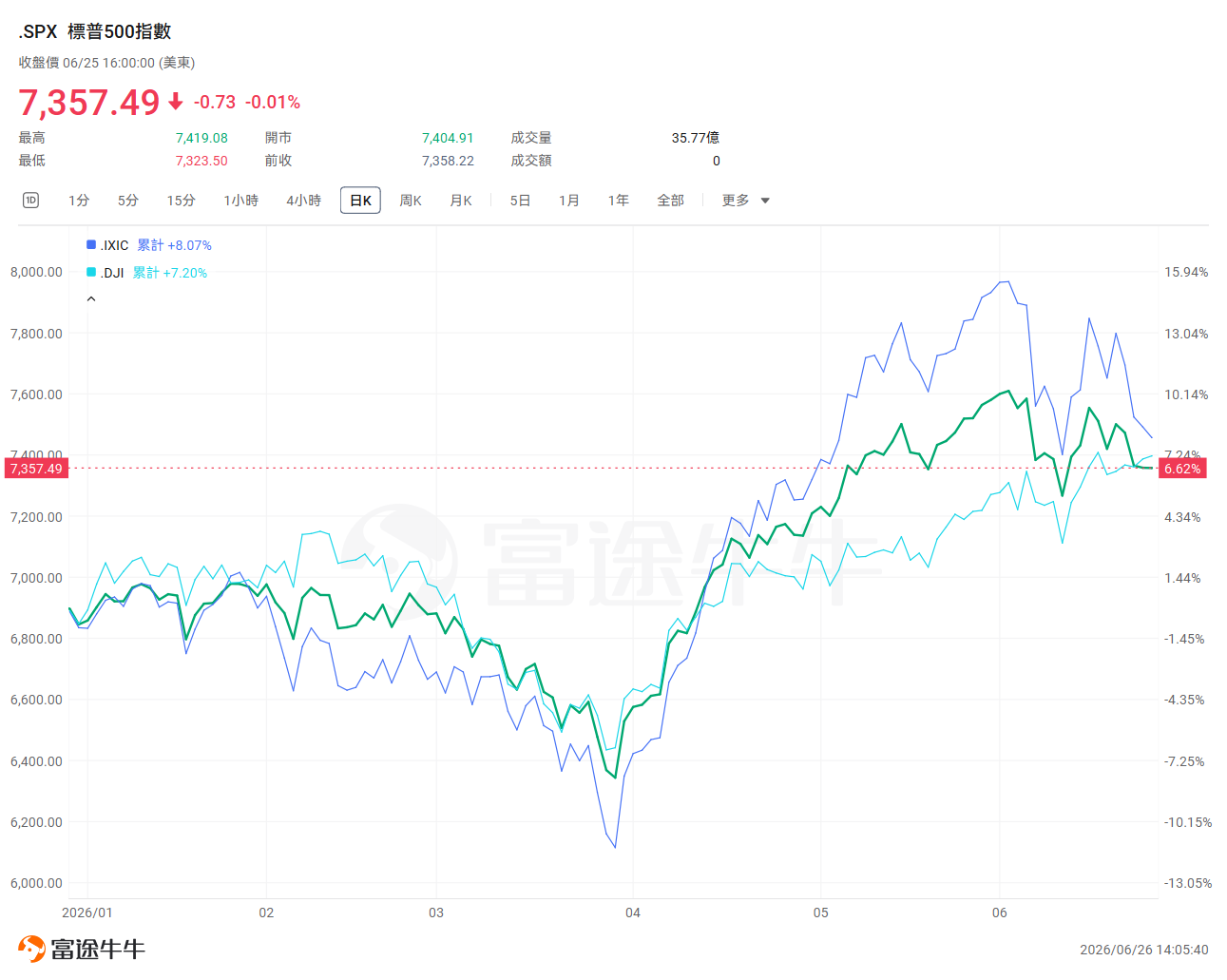
 As of June 25, $S&P 500 Index (.SPX.US)$ is up approximately 7.5% year-to-date, $Nasdaq Composite Index (.IXIC.US)$ has risen 9.1%, $Dow Jones Industrial Average (.DJI.US)$ is up 8%, while $Russell 2000 Index (.RUT.US)$ has surged 21.2%. Overall index gains have been modest, yet stocks within the AI hardware supply chain have repeatedly doubled in value. Meanwhile, software stocks previously shed roughly $1 trillion in market capitalization, $PHLX Semiconductor Index (.SOX.US)$ exhibiting heightened volatility, with single-day moves exceeding +6% on some occasions and nearing -8% on others.
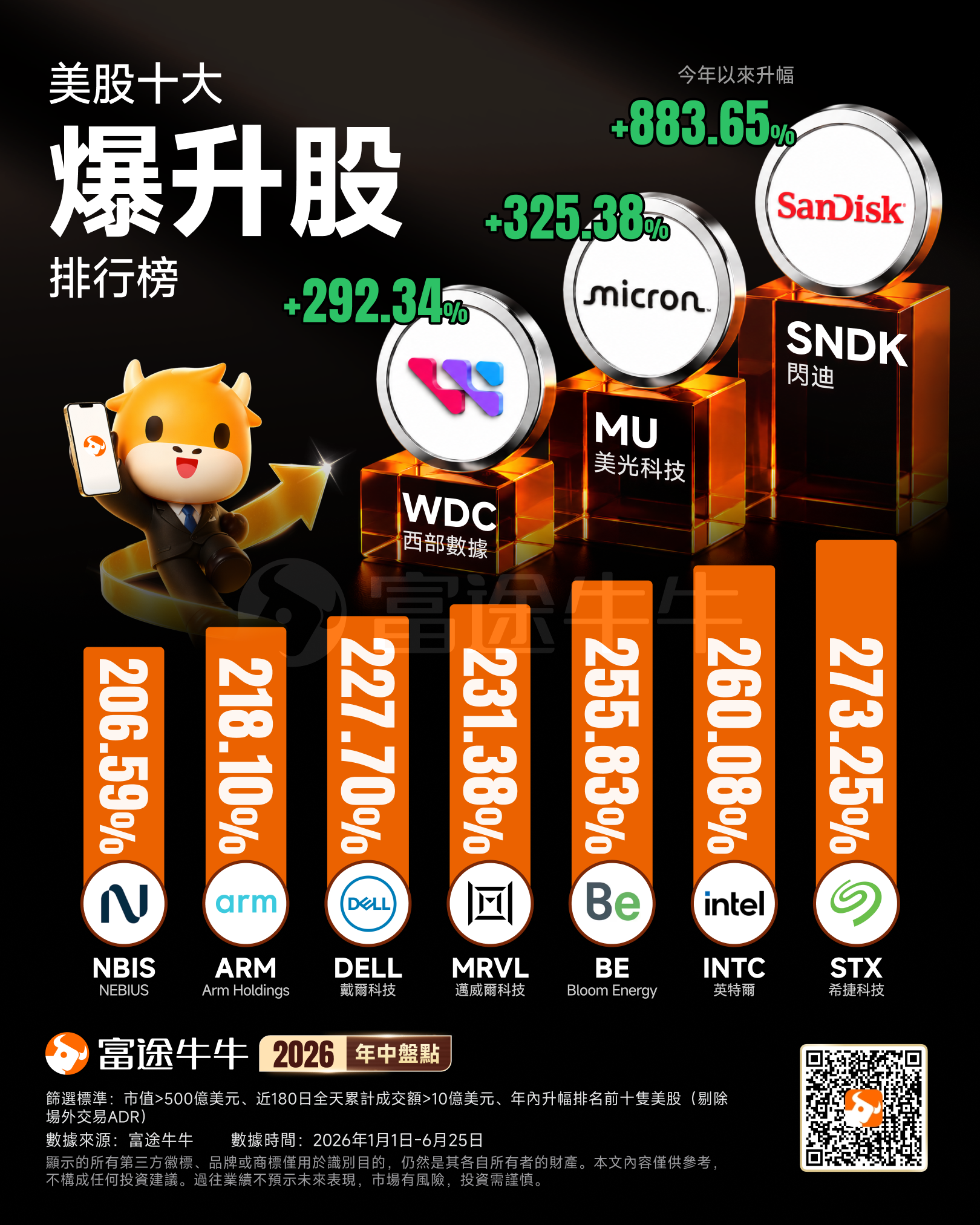
According to Futubull data, the mid-year list of top-performing U.S. stocks was compiled by screening for companies with a market capitalization of at least $50 billion and average daily trading volume exceeding $1 billion over the past 180 days. Stocks were ranked by price appreciation between January 1 and June 25, 2026, and OTC-traded ADRs were excluded. All ten stocks that made the final list delivered gains exceeding 100%:$SanDisk (SNDK.US)$leading by a wide margin with a gain of 883.65%,$Micron Technology (MU.US)$、$Western Digital (WDC.US)$、$Seagate Technology (STX.US)$securing second through fourth places; $Intel (INTC.US)$ 、$Bloom Energy (BE.US)$、$Marvell Technology (MRVL.US)$、 $Dell Technologies (DELL.US)$ 、 $Arm Holdings (ARM.US)$ and$NEBIUS (NBIS.US)$Close behind.
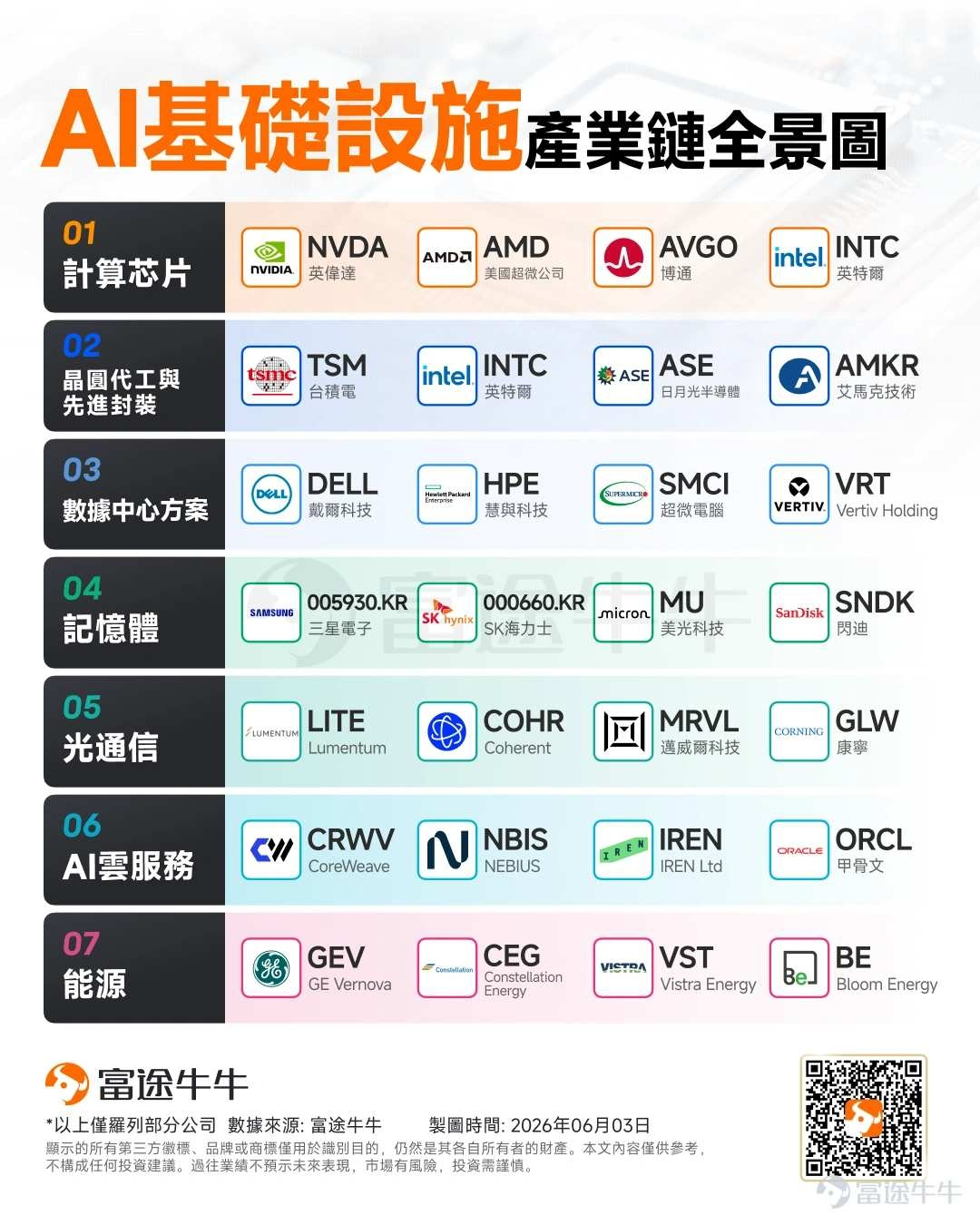
The performance of these doubling stocks indicates that the AI rally is far from over; however, capital has already shifted from the dominant GPU leader to a broader range of infrastructure bottlenecks—including storage, networking, servers, power, and AI cloud services.
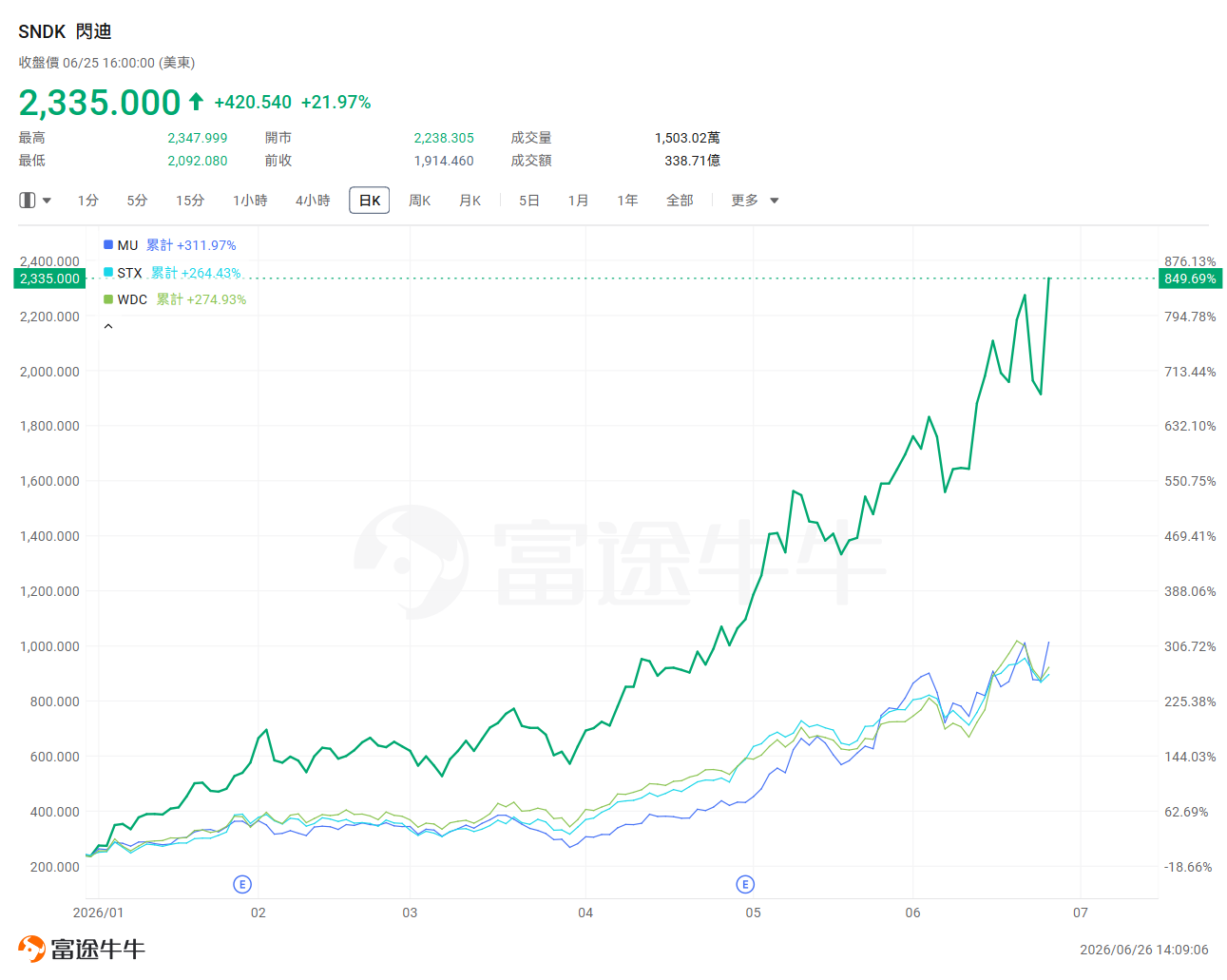
Memory chip stocks reign supreme! SanDisk has surged nearly eightfold in the past six months.
In recent years, the core constraint in AI investment has been insufficient computing power,$NVIDIA (NVDA.US)$GPUs became the scarcest asset in the market. However, entering 2026, as GPU procurement scales up significantly, other bottlenecks in data center construction have started to surface prominently. AI investment has thus evolved from a phase of 'scrambling for GPUs' to one focused on 'building complete AI factories.'
From April to June, the market gradually recognized that AI demand had not disappeared due to declines in software stocks or NVIDIA’s elevated valuation. Instead, demand has expanded from individual GPUs to the full AI infrastructure stack—once GPU quantities rapidly increased, system performance became constrained by HBM, server memory, SSDs, network bandwidth, power, and cooling. Consequently, capital markets began searching for the next 'most constrained component.'
The more large AI models are deployed and the higher their usage, the more data enterprises need to store, retrieve, and transmit. As a result, storage has emerged as a new bottleneck within AI infrastructure, and memory chip companies are benefiting broadly from these infrastructure constraints.
In the first half of 2026, memory stocks soared, accounting for nearly half of the gains among U.S.-listed equities with market capitalizations exceeding $50 billion—as of the close of U.S. markets on June 25, 2026, $SanDisk (SNDK.US)$ 、 $Micron Technology (MU.US)$ 、 $Western Digital (WDC.US)$ 、 $Seagate Technology (STX.US)$ their respective gains reached an astonishing 883.65%, 325.38%, 292.34%, and 273.25%. These four companies span NAND flash, DRAM and HBM, enterprise SSDs, and high-capacity hard disk drives, collectively covering virtually all major storage tiers in AI data centers.
Full revaluation underway across computing power, networking, servers, and power
Aside from the four leading storage companies, the other six standout performers each represent different segments of AI infrastructure.
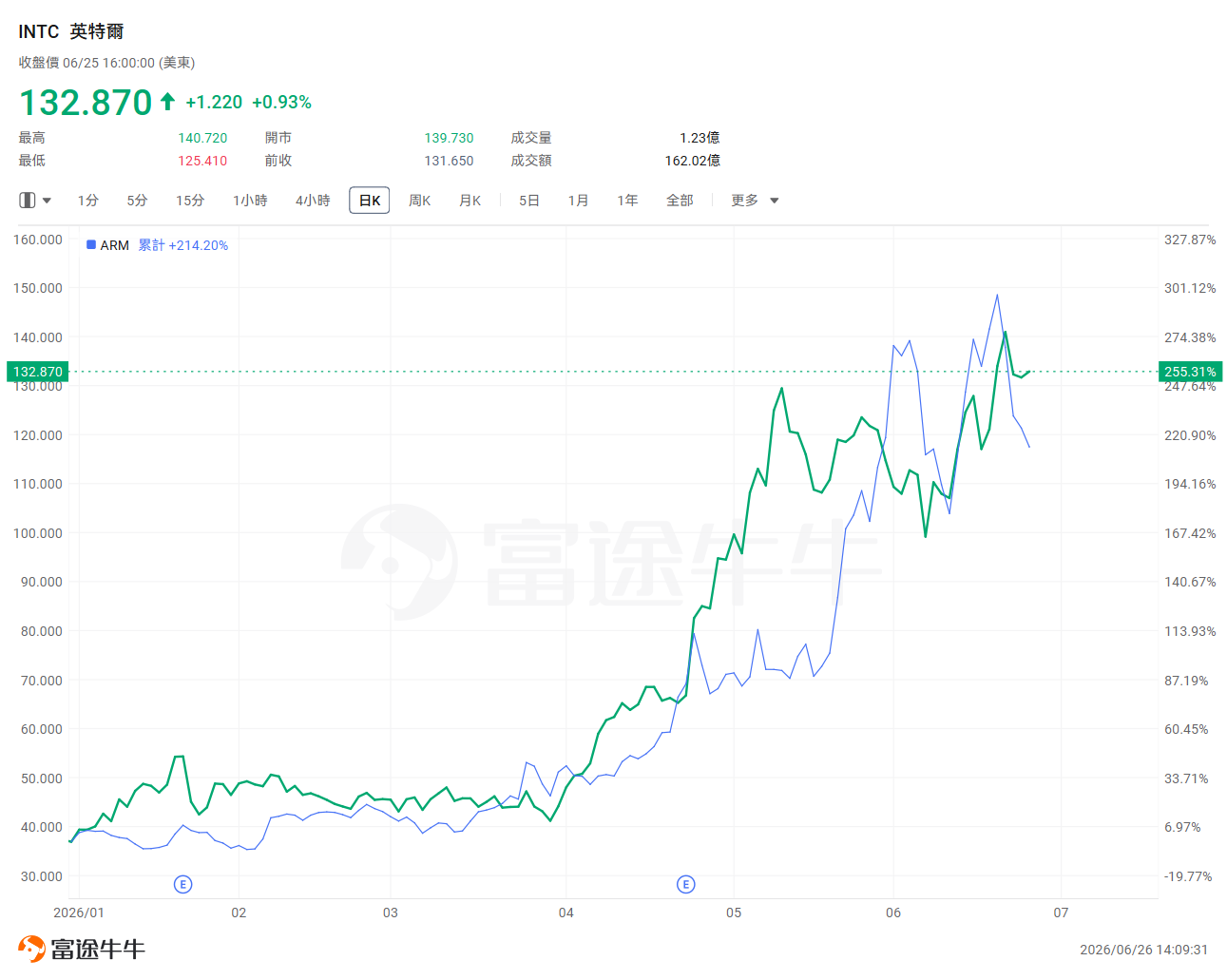
AI data centers require not only GPUs but also CPUs for task scheduling, data processing, and system control. $Intel (INTC.US)$ Up 260.08% year-to-date, this global CPU leader and 'pure-play' U.S. wafer fabrication company has seen a rally that resembles a 'distressed-asset turnaround trade.' Strategic investments from the U.S. government, NVIDIA, and SoftBank have bolstered its capital base and industrial resources, while its 18A process node, advanced packaging capabilities, and potential external foundry customers have reignited market enthusiasm for 'Intel Foundry.'
Another CPU company with significant year-to-date gains is $Arm Holdings (ARM.US)$ , which has surged 218.10% year-to-date. An increasing number of cloud providers are adopting Arm-based CPUs to reduce power consumption and total cost of ownership in AI data centers. Arm Holdings reported more than a doubling of data center licensing revenue in its latest fiscal year and, in March, unveiled its first AGI CPU designed directly by Arm for agentic AI data centers—marking its strategic shift from an intellectual property licensor toward a more comprehensive chip platform provider.
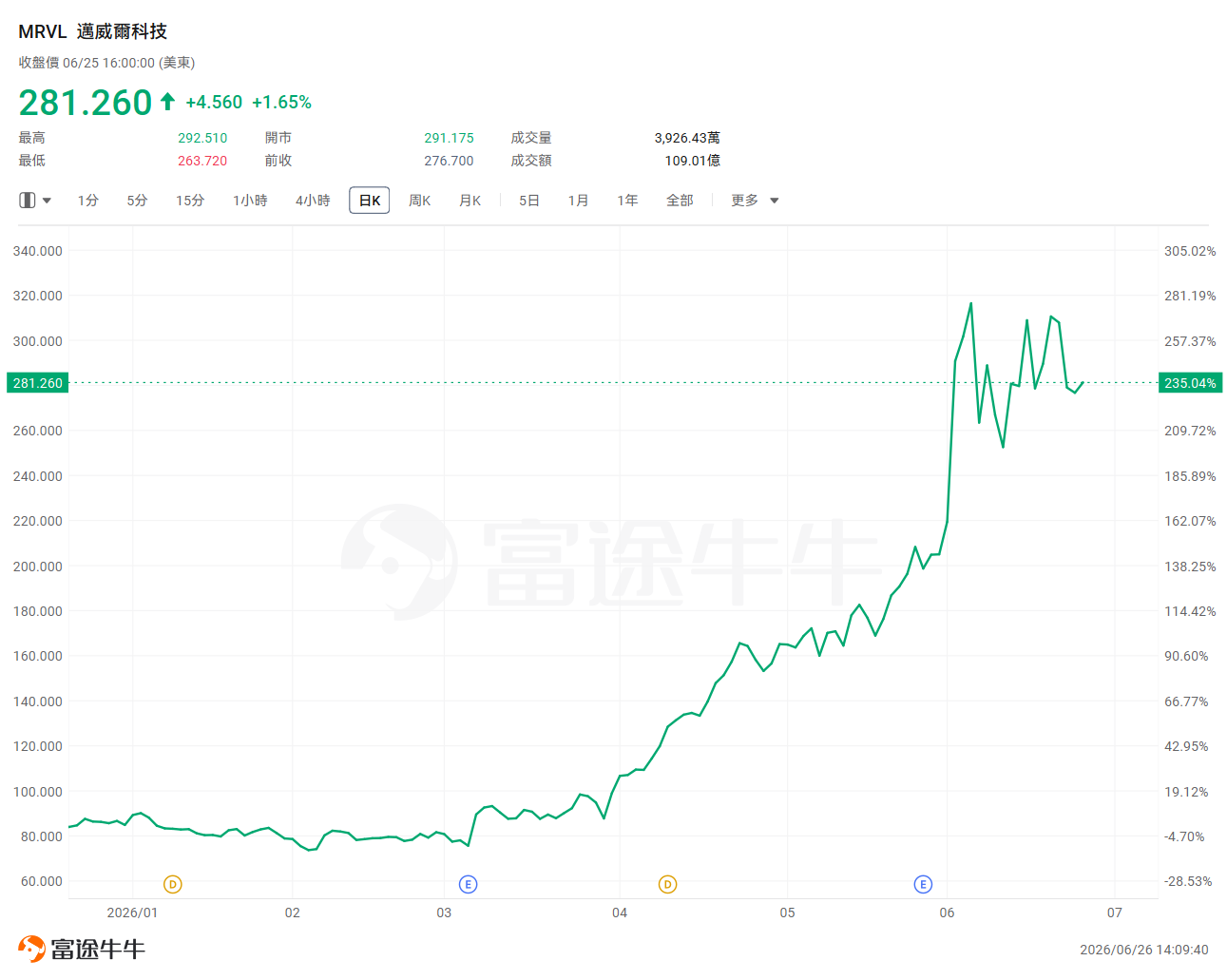
$Marvell Technology (MRVL.US)$ Up 231.38% year-to-date, the company has benefited from demand for custom AI chips and high-speed interconnects in data centers. As cloud providers reduce reliance on general-purpose GPUs, ASICs, optical interconnects, and data center networking chips have emerged as new growth drivers. Notably, during COMPUTEX Taipei, NVIDIA CEO Jensen Huang appeared onstage with Marvell Technology CEO Matt Murphy, praising Marvell as a potential 'next trillion-dollar company,' which significantly boosted market sentiment toward the firm.
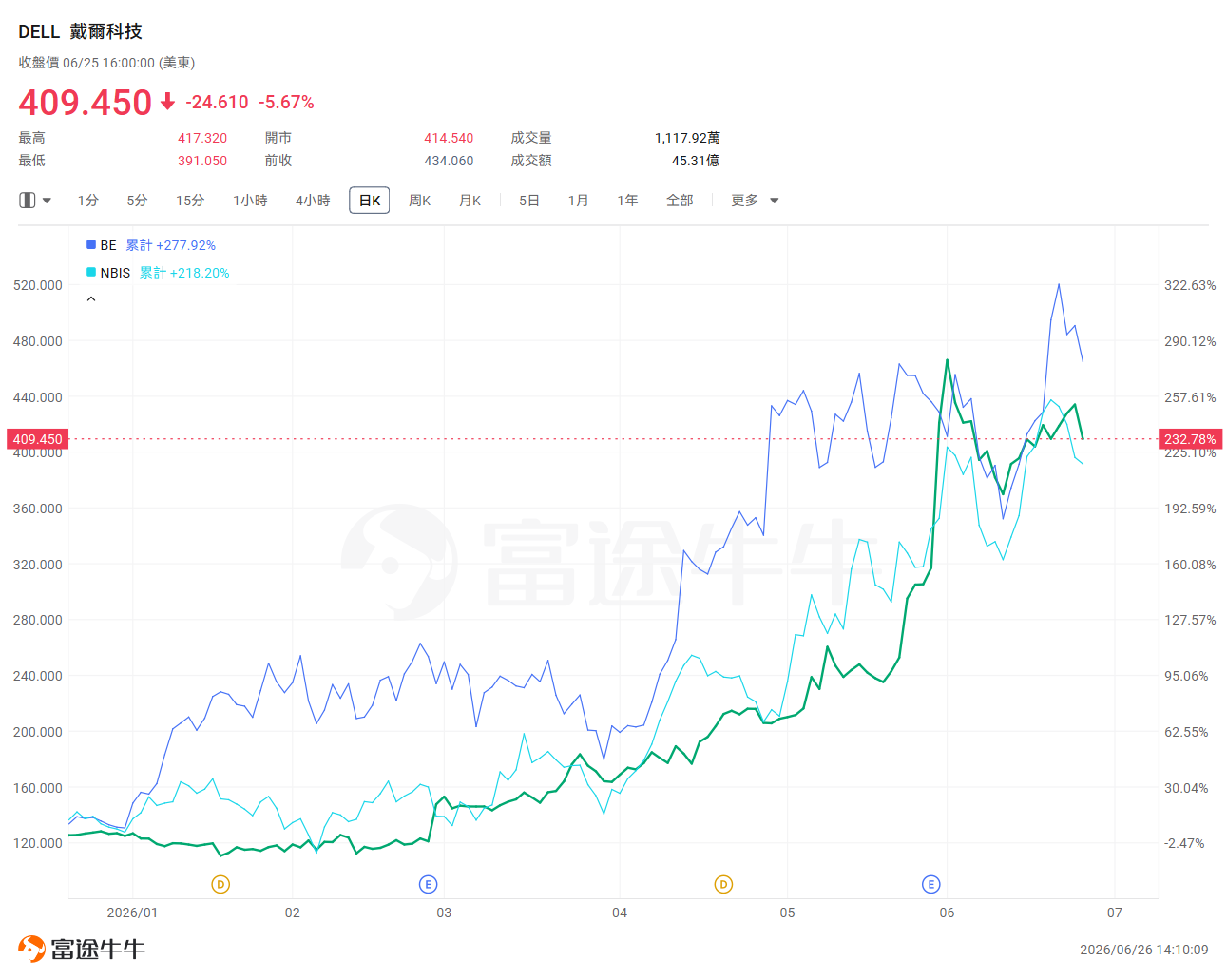
In addition, $Dell Technologies (DELL.US)$ 、 $NEBIUS (NBIS.US)$and$Bloom Energy (BE.US)$ These three companies correspond respectively to equipment, computing power, and power supply—effectively forming a data center construction and delivery chain: Dell Technologies integrates chips, networking, and storage into servers and racks; NEBIUS builds and operates AI data centers and cloud computing capacity; and Bloom Energy provides rapidly deployable on-site power solutions. Together, they benefit from accelerated data center construction and address the critical challenge of transforming chips into deliverable, operational, and scalable computing infrastructure.
Second-Half Outlook: The AI Bull Market Enters an Earnings Verification Phase
Looking ahead to the second half of 2026, major Wall Street banks remain broadly constructive on U.S. equities but generally expect further gains to rely more on earnings realization rather than indiscriminate valuation expansion.
Goldman Sachs raised$S&P 500 Index (.SPX.US)$Goldman Sachs has raised its year-end 2026 target for the S&P 500 to 8,000 points and forecasts full-year earnings per share of $340, arguing that corporate profit growth can still support further upside in U.S. equities. However, Goldman also cautions that current market valuations are already elevated, with AI infrastructure companies contributing a disproportionately large share of earnings growth—making market concentration and crowded positioning key risks to monitor.
JPMorgan has raised its year-end target for the S&P 500 to 7,800 and increased its 2026 earnings-per-share forecast to $350, while emphasizing that the market’s upward trajectory will not be linear, and investors will still face multiple challenges, including inflation, interest rates, geopolitical risks, and the return on AI-related capital expenditures.
Whether memory supply remains tight, whether AI server orders can be sustained, whether power projects are delivered on schedule, and whether cloud providers continue to raise their capital expenditure guidance will be key variables determining whether the current bull market rally can persist.
 Looking to select stocks or analyze your holdings? Want to understand the opportunities and risks in your portfolio? For any investment-related questions,just ask Futubull AI!

Editor/Rocky