Source: Smart Investors
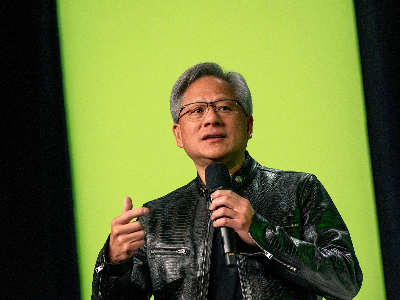
on$NVIDIA (NVDA.US)$At the latest shareholder meeting, Jensen Huang framed AI as an industrial business that is already generating revenue.
His core message was straightforward: 'Useful AI has arrived! The answer to the question of AI’s return on investment is already here. Now, every industry is racing to adopt agentic AI.'
 Over the past two years, the market was first awed by ChatGPT’s generative capabilities and then shifted focus to reasoning models and agents. But in Jensen Huang’s view, the truly pivotal shift isn’t that AI can now 'speak,' but that it can now 'work.'
Once AI can perform work, a token ceases to be merely a technical unit of model output and instead becomes a unit of profit that can be priced, delivered, and monetized.
Consequently, data centers are no longer just infrastructure for storing and distributing files—they are becoming AI factories that continuously produce digital intelligence.
This is precisely the story NVIDIA wants to tell its shareholders: customers aren’t buying a batch of more expensive chips—they’re purchasing AI factories capable of generating revenue.
Jensen Huang stated confidently that Vera, NVIDIA’s CPU product designed for agents, will be one of the most important product launches in the company’s history, and orders have already begun.
Over the past few months, NVIDIA has also sent very clear signals regarding capital returns.
When announcing its May earnings, the company declared an increase in its quarterly cash dividend from $0.01 to $0.25 per share and authorized an additional $80 billion in stock repurchases. At this shareholder meeting, Jensen Huang further emphasized that NVIDIA plans to return 50% or more of its free cash flow to shareholders this year, next year, and beyond.Free cash flow。
This is a company still experiencing rapid growth and making massive investments in R&D and ecosystem development—yet it is simultaneously significantly increasing dividends, expanding buybacks, and committing to returning more than half of its free cash flow to shareholders.
This indeed echoes Jensen Huang's assessment.
Notably, when asked about the Chinese market during the Q&A session, Jensen Huang candidly stated, 'Although the U.S. government has approved the license for shipping H200 to Chinese customers, we have not yet generated any related revenue.'
Below is Jensen Huang’s keynote address at the shareholder meeting—savvy investors, take note and share it.
The past year has been extraordinary—not only for NVIDIA but for the entire computing industry.
Approximately every ten to fifteen years, the computing industry undergoes a major reset: from mainframes to personal computers, from PCs to the internet, from the internet to cloud computing, and from cloud computing to mobile cloud. Each shift redefines the industry.
But this time, the transformation is even more profound.
For the past sixty years, the fundamental paradigm of computing has been: humans write software, and computers execute instructions. Now, that paradigm has shifted. With artificial intelligence, computers can now understand, reason, plan, use tools, and perform genuinely useful work.
In other words, computers are no longer just tools. In the AI era, they function more like assistants capable of using tools.
Moreover, data centers are no longer merely places to store tools. They are evolving into AI factories—infrastructure that produces digital intelligence and digital assistant capabilities. What NVIDIA is building is the computing infrastructure for this new era.
Two years ago, generative AI captured the world’s attention. ChatGPT could write, paint, summarize, and answer questions. Then came reasoning AI, which enabled AI systems to think through problems step by step. Now, agentic AI has arrived.
Agents can use tools, access memory, write code, invoke other agents, test results, and will continue working until the task is completed.
Software programming is the first enterprise-scale application scenario where agent AI has seen massive adoption.
This point is extremely important.
Because this means AI is now genuinely useful. When AI can perform valuable work, tokens gain intrinsic value; and when tokens can generate profit, demand for computing power accelerates.
Let’s look at a set of data: GitHub developers merged 300 million pull requests in 2023, 400 million in 2024, and 500 million in 2025.
This represents a very clear and stable growth trajectory. In the first few months of 2026, this pace has nearly tripled.
What does this indicate? The answer is clear: there are approximately 30 million software developers globally, who collectively earn about USD 3 trillion in annual compensation, and their work underpins roughly USD 100 trillion in global economic activity.
With the advent of AI agents, this same group of developers is now generating nearly USD 9 trillion in output—meaning an additional USD 6 trillion in value has been created.
Of course, programming is just one driver of demand. More importantly, useful AI has arrived. The question of AI’s return on investment now has a clear answer. Today, every industry is racing to adopt agent-based AI.
Over the past year, NVIDIA’s revenue grew by 65% to USD 216 billion. Operating profit increased by 60% to USD 130 billion. Diluted earnings per share rose by 67% to USD 4.90. We generated USD 103 billion in operating cash flow and returned USD 41 billion to shareholders. Data center revenue reached USD 194 billion, up 68%.
Blackwell has significantly expanded the reach of NVIDIA’s infrastructure. Our customers include hyperscale cloud providers, public cloud operators, AI labs, industrial enterprises, traditional enterprise clients, and sovereign entities. Model developers and hyperscale cloud providers have already deployed hundreds of thousands of Blackwell GPUs in aggregate.
The construction of AI factories is rapidly accelerating across major industries. Companies such as Capital One, Hyundai Motor Group, Jane Street, and Eli Lilly and Co. are all expanding their NVIDIA infrastructure to deploy AI.
International revenue has grown more than threefold, exceeding $30 billion. Nearly 40 countries worldwide are now building AI factories powered by NVIDIA infrastructure. Collectively, these countries represent $50 trillion in GDP.
In other words, AI infrastructure is no longer an experimental project—it has entered the production phase.
AI is not just a model. AI is becoming an entirely new industry.
You can think of it as a five-layer cake: energy, chips and systems, infrastructure, models, and applications. Traditional data centers store and serve files. AI factories produce tokens—and those tokens become code, answers, designs, actions, and services.
Useful AI is profitable. Every token is a unit of profit. That is why demand for computing remains so strong.
Customers are not buying computers—they are building AI factories that generate revenue. And the architecture of that factory is critical. The key question is not how much equipment you buy, but how much revenue the factory can generate at what cost.
Inference is the process of generating tokens. NVIDIA’s Blackwell has already set the industry standard for the inference era. In SemiAnalysis’s Inference-X benchmark, Blackwell is dubbed the 'King of Inference.' It delivers the lowest cost per token and achieves 30 times higher token throughput than the second-place platform. This is precisely why architecture matters so much.
NVIDIA systems may not carry the lowest purchase price, but they deliver the lowest cost per token, the highest token throughput, and ultimately the highest revenue generation.
Next is Vera Rubin. Hopper was built for pre-training; Blackwell brought inference to rack scale; and Vera Rubin is built for agents.
Agent AI is transforming the computing paradigm. Agents think, use tools, access databases, retrieve memories, execute code, and repeatedly call applications until their tasks are complete. Large language models perform 'thinking' on GPUs, but CPUs must keep pace. If the CPU becomes a bottleneck, GPUs sit idle. And in an AI factory, idle GPUs mean lost revenue. This is why Vera matters.
Vera is the CPU built for agents. Rubin is the GPU responsible for thinking. NVLink, Spectrum-X, storage and security capabilities on BlueField, along with software, tie the entire system together.
In fact, NVIDIA is the only company that owns all three networking businesses.
NVLink Scale-Up connects GPUs within a single rack, turning them into one giant computer. Spectrum-X is an Ethernet fabric purpose-built for AI. It scales horizontally within an AI factory and across AI factories. Today, Spectrum-X already exceeds the combined scale of all other Ethernet networking competitors. InfiniBand delivers the lowest-latency networking for the world’s largest AI and scientific computing systems.
Together, these three networking technologies enable us to optimize the AI factory stack end-to-end—from GPUs, to racks, to entire data centers, and even across data centers.
Thus, Vera Rubin is not just a chip. It is an AI factory platform—and the entire ecosystem is already mobilizing. Vera Rubin is now in full production. Every major model developer, public cloud provider, AI cloud provider, and hyperscaler is preparing to build on it.
Vera unlocks an entirely new market. Until now, nearly every CPU has been designed for humans. Humans live in a world measured in seconds. But agents operate in a world measured in nanoseconds. Every extra moment a CPU makes an agent wait translates directly into idle time for the most expensive asset in the data center—the GPU.
Therefore, we built an entirely new CPU from the ground up—specifically for agents. This is a new market.
In the past, CPUs designed for humans could be sliced and rented out by the core. But agents don’t come to rent a few CPU cores—they require ultra-low-latency responsiveness. In the future, billions of agents will each need a CPU purpose-built for them.
We believe that Vera will become one of the most significant product launches in NVIDIA’s history, and orders have already started pouring in.
CUDA is one of NVIDIA’s most important investments in its history. For two decades, we have remained focused on a single accelerated computing architecture. A large installed base attracts developers. Developers create breakthrough applications. Applications create new markets. New markets further expand the installed base. This flywheel is accelerating.
CUDA-X is a library stack built on top of CUDA. These libraries are NVIDIA’s crown jewels, addressing some of the most challenging problems in science and industry—including computational lithography, optimization, genomics, physics, data processing, robotics, AI, and radio networks.
Now, these libraries are becoming tools that agents can invoke. This week, we launched BioNeMo—a suite of digital biology and drug discovery tools designed for agents.
NVIDIA is both vertically integrated and horizontally open. We build a complete technology stack to enable end-to-end system optimization. We then open it up so the entire industry can build upon it. Our business scope is broad—and becoming increasingly diverse.
To help everyone better understand NVIDIA’s business, we now describe the company using two market platforms: Data Center and Edge Computing.
In the Data Center segment, we serve two markets. The first is hyperscale cloud; the second, which we refer to as AC, encompasses AI cloud, industrial, and enterprise markets.
Our customer base is highly diversified and continues to grow. Edge Computing includes PCs, workstations, gaming, AI base stations, robotics, and automotive. We can serve all these markets because we leverage a unified architecture, a common software stack, and a rich ecosystem.
Physical AI represents NVIDIA’s next wave of growth. Physical AI refers to embodied AI operating in the real world—robots, vehicles, and factories that can perceive, reason, plan, and act in dynamic environments.
NVIDIA is a pioneer in this field, building a fully integrated closed loop. AI factories train models. Omniverse simulates those models in virtual worlds. NVIDIA Jetson computers run the models on robots. COSMOS serves as the foundational world model underpinning it all.
Today, robots and robotic systems are being developed across industries—from transportation and manufacturing to surgical robotics, hospitality, and service sectors.
Over the past few months, AI development has accelerated dramatically.
Finally, I’d like to summarize with a few words: useful AI is here, and it is profitable. Therefore, computing is revenue.
Vera Rubin is now in full production. Vera is opening up an entirely new CPU market built for agents. Every company will become an agent company—and they will all run on NVIDIA.
The AI era is advancing at full speed, and NVIDIA is building the infrastructure that powers it.
As our company continues to grow, we will keep expanding our R&D investments, investing in our ecosystem, and returning capital to shareholders. We recently announced a significant increase in our dividend and an expansion of our share repurchase program.
We plan to return 50% or more of our free cash flow to shareholders this year, next year, and into the future.
Editor /rice