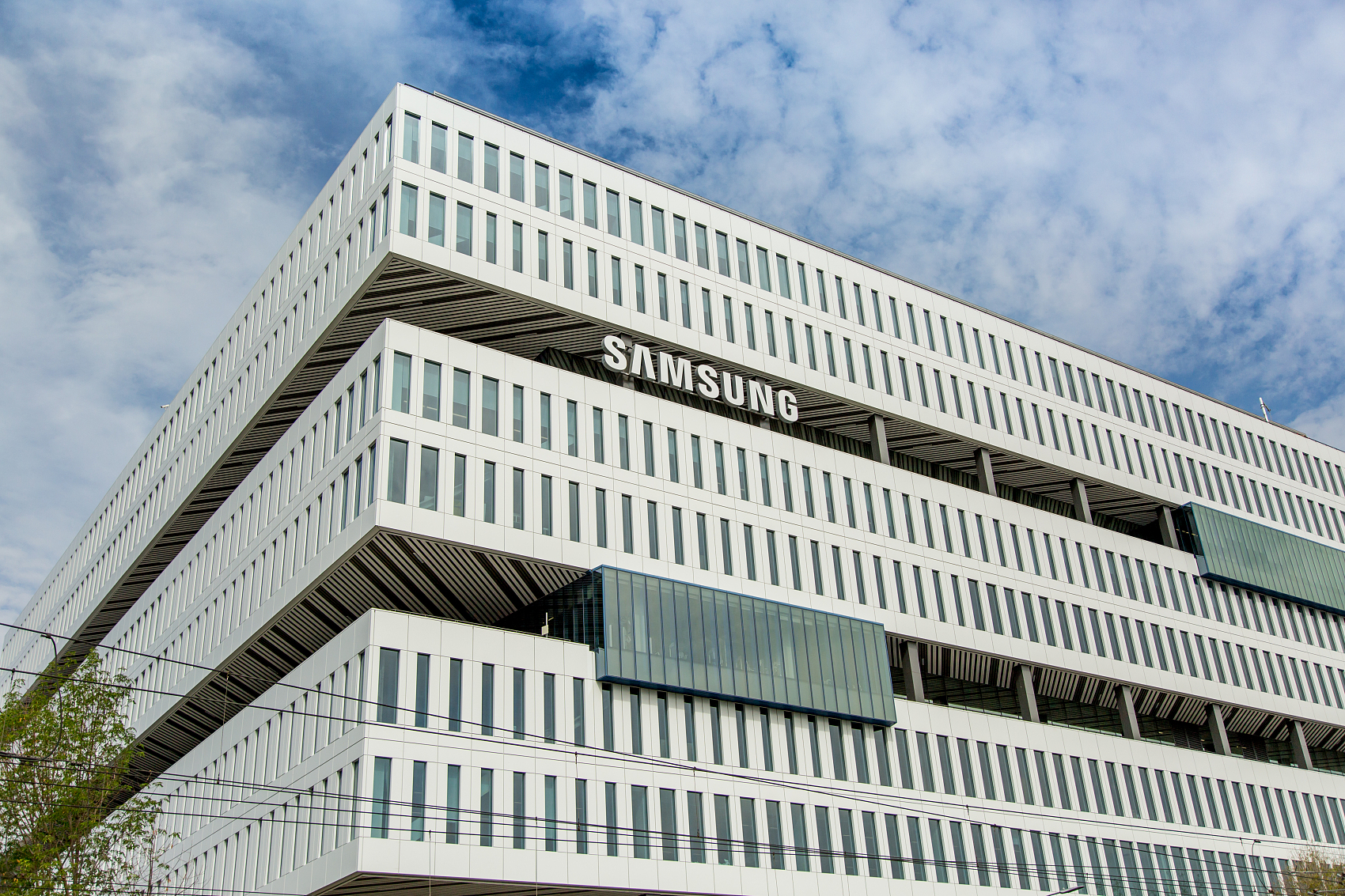
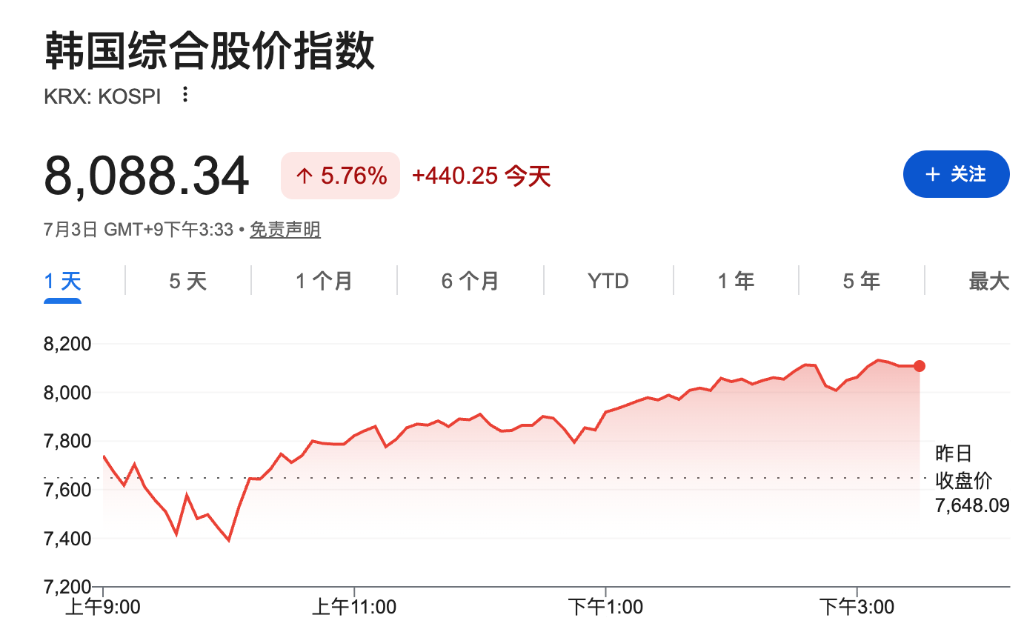
South Korean equities staged a sharp "V-shaped" reversal, with the KOSPI index plunging more than 3% in early trading before mounting a strong rebound, surging over 5% to trigger a circuit breaker for algorithmic buying and ultimately closing up 5.8%. The rally was driven by multiple positive developments across the AI supply chain: Anthropic is in talks with Samsung over custom chip collaboration, Korean companies are ramping up semiconductor investments, and Samsung plans to raise DRAM prices,$Kioxia Holdings (285A.JP)$and launched a new generation of NAND chips. Despite the improved sentiment, market caution regarding the returns on AI investments has not fundamentally shifted.
Technology stocks in Japan and South Korea staged a strong rebound following two consecutive days of heavy selling, as market sentiment was lifted by a cluster of positive developments from the industrial side, marking a temporary reversal of the previous trading narrative centered on 'AI compute capacity oversupply.'
On July 3, South Korea's KOSPI index initially dropped more than 3% during early trading, then quickly rebounded to gain 5%, triggering the circuit breaker mechanism for program-driven buying. Japan’s semiconductor sector also rose sharply in tandem, collectively exhibiting a deep V-shaped recovery pattern. In individual stocks,$Samsung Electronics (005930.KR)$、$SK hynix (SKHY.US)$both surged over 8%, while Kioxia jumped more than 10% intraday, fueling a broad-based recovery in the Japanese and Korean semiconductor sectors. By the close, the Nikkei 225 rose 1.5%, the TOPIX gained 1.2%, and South Korea’s Seoul Composite Index soared 5.8%.
 The immediate catalyst for the rebound stemmed from several new developments in the AI supply chain. According to reports, AI startup Anthropic is negotiating a partnership with Samsung Electronics on custom AI chips, boosting market expectations for Samsung’s foundry business. Meanwhile, Samsung,$SK Hynix (000660.KR)$continues to advance its AI semiconductor capacity expansion plans and has announced a new round of investment; Kioxia revealed that samples of its 10th-generation 3D NAND chips have already been delivered to AI data center clients, signaling sustained robust demand.
However, as AI investments enter a new phase emphasizing return on investment and capital efficiency, market participants continue to cautiously assess supply-demand dynamics and the pace of capacity expansion across the AI supply chain, and underlying disagreements remain unresolved.
AI Catalyst Drives Rebound; Strategic Collaboration and Earnings Expectations Align for Samsung
This market rebound was initially driven by new catalysts emerging from the AI supply chain.
According to reports, Anthropic is discussing a partnership with Samsung Electronics to co-develop custom AI chips. Although the collaboration remains in its early stages, the market interprets this as a sign that Samsung’s foundry business could play a deeper role in the AI chip ecosystem.
Jung In Yun, Chief Executive Officer of Fibonacci Asset Management Global, stated that while the collaboration would have limited near-term earnings impact, its strategic significance is positive—it helps reinforce Samsung’s pivotal position in the AI chip landscape and further underscores Asia’s critical role in the AI semiconductor supply chain.
Concurrently, the market has also begun front-running Samsung’s upcoming preliminary quarterly earnings release. Analysts widely anticipate another substantial profit increase in the second quarter, with investors particularly focused on management’s assessment of the sustainability of AI-driven memory demand.
South Korean Leaders Continue Capacity Expansion to Address Market Concerns Over AI Demand
In sharp contrast to earlier concerns in the capital markets, South Korean semiconductor companies continue to expand their investments.
On July 2, Samsung Electronics and SK Hynix announced new facility construction plans. According to public information, Samsung plans to invest approximately KRW 140 trillion in the Chungcheong region of South Korea, covering multiple areas including HBM wafer fabrication, advanced packaging, OLED, and next-generation batteries; SK Hynix, meanwhile, plans to invest around KRW 100 trillion, focusing on NAND and advanced packaging.
Meanwhile, the South Korean government announced plans to promote corporate investments exceeding KRW 312 trillion in the southeastern region, focusing on semiconductors, AI, and aerospace industries. Among the participants,$SK (034730.KR)$、 $Samsung Electronics (005930.KR)$, Hanwha,$Hyundai Motor (005380.KR)$All of the aforementioned enterprises will participate in the relevant investments.
Although short-term volatility persists in South Korea’s capital markets, leading memory chip manufacturers have opted to maintain investment levels to reinforce market confidence in the long-term growth trajectory of AI.
Industry insiders also suggest that Meta’s recent leasing of some idle computing capacity should be interpreted as resource optimization rather than signaling a turning point in demand for AI infrastructure. As AI companies increasingly prioritize cost control, the trend toward in-house chip development may even accelerate.
Samsung pushes for DRAM price hikes; long-term agreements bolster profitability outlook
Beyond demand expectations, pricing has also become a key market focus.
According to South Korea’s ZDNet, Samsung Electronics is currently negotiating DRAM prices for the third quarter with its customers, aiming to raise the average selling price of standard DRAM by up to 20% compared to the second quarter. Price increases for server and mobile LPDDR products could also exceed 20%.
Industry sources indicate that ongoing AI infrastructure expansion continues to drive tight supply conditions for server DRAM, high-bandwidth memory (HBM), and LPDDR, with supply-side pressures unlikely to ease significantly in the near term.
Notably, long-term supply agreements (LTAs) are becoming a critical pillar for stabilizing industry profitability.
Micron previously disclosed that it has signed 16 long-term supply agreements with customers. These agreements not only lock in purchase volumes but also set price floors, helping mitigate the risk of a significant price decline in the future. Industry insiders believe that as the proportion of long-term contracts increases, the likelihood of a pronounced downturn in the DRAM market next year is low.
However, some industry insiders noted that Samsung has adopted a relatively firm stance in price negotiations, and it remains to be seen whether customers will fully accept the proposed price increases.
Kioxia Launches New-Generation NAND, Betting on AI Data Center Demand
Japanese memory manufacturer Kioxia has opted to address market skepticism through new product launches.
The company announced that its tenth-generation BiCS FLASH 3D NAND has begun sampling to AI data center customers and is scheduled to commence mass production in 2027. The new product features a 332-layer stacking architecture and the company’s proprietary CBA technology, offering approximately 60% higher storage density compared to the previous generation and an interface speed of 4.8 Gbps.
According to reports, Kioxia believes that compared with designs exceeding 400 layers, the 332-layer architecture achieves a better balance among cost, power consumption, and reliability.
Hiroo Ota, the company’s Chief Executive Officer, stated that the company has not observed any signs of weakening demand from data centers and will continue actively responding to market growth, without ruling out further increases in capital expenditures. He believes that as AI agents and robotics applications advance, the flash memory market still holds significant growth potential.
However, market competition is intensifying.
According to Akira Minamikawa, an analyst at Omdia, Samsung Electronics is projected to hold approximately 40% of the data center NAND market share in 2025, SK Hynix around 30%, and Kioxia about 10%. Korean vendors’ ability to offer one-stop solutions leveraging their HBM products remains a significant competitive pressure for Kioxia.
Meanwhile, SK Hynix plans to invest in building new NAND production facilities, and Samsung is also planning new NAND production lines. The simultaneous capacity expansions by these three major players mean that market participants will continue closely monitoring supply-demand dynamics and price trends.
The market has begun to reassess the return on investment (ROI) in AI.
Although this rebound has alleviated market panic, industry participants widely believe that the investment rationale for the AI sector is shifting.
Analysts indicate that the industry is gradually moving away from the previous approach of 'unrestricted procurement of AI chips' toward a greater focus on return on investment. Going forward, cloud service providers will adopt a more refined approach to procuring products such as memory chips, and AI infrastructure investment will enter a new phase prioritizing efficiency.
Following this week’s sharp volatility, whether the AI supply chain can sustain its high-growth expectations will remain a key variable under market scrutiny.
Editor/Deng