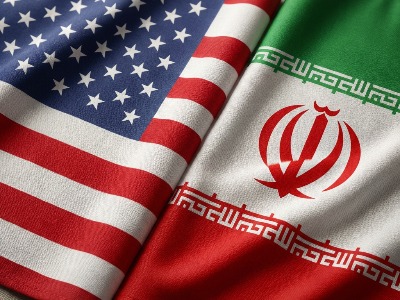
Following renewed mutual attacks between the U.S. and Iran, Trump publicly declared an end to the temporary ceasefire agreement between the two countries, casting doubt on the planned talks scheduled after Khamenei’s funeral. Global markets reacted sharply: both WTI and Brent crude prices surged more than 5%, gold plummeted, and U.S. stock index futures declined.
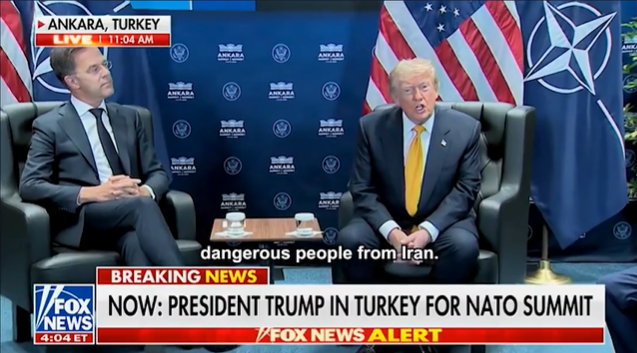
On Wednesday, at NATO’s annual summit in Ankara, Turkey, U.S. President Trump publicly stated during a joint media appearance with NATO Secretary General Mark Rutte that the temporary ceasefire agreement previously reached between the U.S. and Iran was null and void.
“As far as I’m concerned, this ceasefire is over—it was nothing but a waste of time,” Trump said on-site to the press.
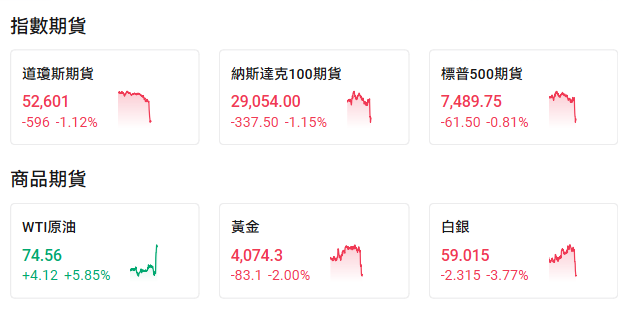
 WTI and Brent crude oil prices rose sharply in a short-term rally upon the news, both gaining more than 5% during the session. $XAU/USD (XAUUSD.CFD)$ It declined sharply in the short term, touching $4,070 per ounce.$USD (USDindex.FX)$It rebounded sharply in the short term, returning to 101 and reaching an intraday high of 101.18. Non-USD currencies broadly declined. Futures for the three major U.S. stock indices fell,$NASDAQ 100 Index (.NDX.US)$futures dropped by more than 1%,$S&P 500 Index (.SPX.US)$futures fell by 0.81%, and Dow Jones futures declined by over 1%.
Shortly before this statement, the U.S. military had launched a new round of strikes against Iran, and the U.S. simultaneously revoked Iran’s exemption from sanctions on crude oil exports. In response, Iran struck 85 key U.S. military facilities as an initial countermeasure.
The immediate trigger for this series of actions was the recent attacks on multiple commercial vessels in the Strait of Hormuz, which delivered the most severe blow yet to the already fragile U.S.-Iran peace framework and sent energy markets into sharp turmoil.
Trump harshly criticized the Iranian regime on-site: “I have no desire whatsoever to deal with them. These Iranians are inherently vile and mentally twisted—their leaders are deranged and act with brutal, bloodthirsty aggression. If they ever acquire nuclear weapons, they will not hesitate to use them.”
Three commercial vessels were attacked in the strait in what the U.S. believes was carried out by Iran. Iran has repeatedly stated publicly that no vessel may transit this globally critical energy corridor without its explicit permission.
Ceasing attacks on civilian shipping and the U.S. maintaining Iran’s crude export waiver were the two core provisions of the prior memorandum of understanding, which facilitated the U.S.-Iran ceasefire and established a 60-day window to negotiate a comprehensive peace agreement.
The U.S. holds Iran fully responsible for the attacks on commercial ships, while Iran accuses the U.S. of unilaterally violating the bilateral agreement through its airstrikes and revocation of the crude oil export waiver—rendering the two sides’ differences irreconcilable.
Oil prices have resumed their upward trajectory, while key negotiation challenges remain unresolved.
In late April this year, international crude oil prices briefly surged to around USD 125 per barrel. This month, the market had initially expected tensions to ease and supply to recover, allowing oil prices to gradually retreat to pre-conflict levels. However, following the announcement by the U.S. Treasury Department revoking exemptions for crude oil exports, crude prices surged again on Tuesday, rising more than 5% in a single day.
According to Bloomberg, citing an unnamed U.S. official earlier, the negotiating teams would continue advancing comprehensive U.S.-Iran agreement talks. However, even before the recent escalation of hostilities, the prospects for reaching a long-term peace accord were already highly uncertain, as core disagreements among multiple parties—including proposals for tolls on vessels transiting the Strait of Hormuz, the unfreezing of Iran’s overseas frozen assets, and Iran’s demands regarding its nuclear program—remain unresolved.
The U.S. and Iran resumed negotiations last week after exchanging strikes, but talks have now been suspended once again. Iran is currently holding a week-long national mourning period for Supreme Leader Ali Khamenei, who was killed in an attack on the first day of the conflict at the end of February. Qatar previously indicated that it would arrange a new round of talks immediately after the funeral concludes. Khamenei is scheduled to be buried on July 9 in his hometown of Mashhad.
Although Trump himself has previously expressed a desire to reach an agreement with Iran, he has also issued stern warnings that if negotiations fail, the U.S. would resume military strikes. The ongoing conflict in the Middle East has significantly eroded Trump’s domestic approval ratings. With U.S. midterm elections approaching in November, his party already faces formidable challenges in retaining control of Congress, and further escalation of the war is intensifying electoral pressure.
Rising energy prices continue to amplify voter concerns over the cost of living. Trump’s approval rating has fallen to a historic low, as the public widely disapproves of his economic management and handling of the Middle East conflict. Trump has publicly pledged that domestic gasoline prices will drop sharply once hostilities cease and that a rebound in the stock market will boost household asset returns. However, it remains unclear when crude oil shipping can fully return to pre-war levels.
Editor/Rocky