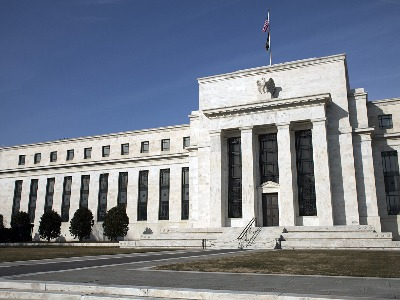
① Kevin Warsh, the newly appointed Chair of the Federal Reserve, is set to make his first appearance on Capitol Hill this week; ② On Tuesday and Wednesday, he will testify at the semiannual congressional hearings on monetary policy and engage in direct exchanges with lawmakers from both chambers during a critically important window for inflation data releases.
Newly appointed Federal Reserve Chair Kevin Warsh is set to make his first trip to Capitol Hill this week. On Tuesday and Wednesday, he will testify at the semiannual congressional hearings on monetary policy and face lawmakers from both chambers in a critical window ahead of key inflation data releases.
According to the schedule, Warsh will first appear before the House Committee on Financial Services at 10 a.m. Eastern Time on Tuesday (10 p.m. Beijing time); he will then proceed to testify before the Senate Banking Committee at the same time on Wednesday.
 What makes this visit particularly challenging for Warsh is that the U.S. government’s latest inflation reports are scheduled for release on the same days he appears on Capitol Hill—the Bureau of Labor Statistics will release June CPI data on Tuesday and June PPI data on Wednesday.
Economists surveyed by media outlets expect both inflation reports to show some easing following the sharp price increases from March to May, though certain underlying issues are likely to persist.
Recent declines in gasoline prices may help pull down headline CPI, which could post its first month-over-month decline since the onset of the pandemic in 2020. Year-over-year CPI inflation is also expected to fall back into the '3%' range from the '4%' level, with market forecasts pointing to a 3.8% annual increase for June.
However, the Producer Price Index (PPI) may indicate continued buildup of upstream inflationary pressures, as energy shocks triggered by the Iran conflict continue to affect the economy. Economists anticipate that the core PPI for June—excluding volatile food and energy prices—will accelerate to a year-over-year increase of 5.2%, up from 4.9%.
Some investors noted that core inflation indicators this week could become a focal point, particularly regarding the extent to which this year’s oil price surge is being transmitted into broader inflation.
“If inflation shows signs of heating up or indications emerge that it will remain elevated in the coming months, the likelihood of the Federal Reserve raising interest rates by year-end could increase,” said Anthony Saglimbene, Chief Market Strategist at Ameriprise.
Warsh to Make His First Appearance on Capitol Hill
Clearly, for Wall Street traders, any market volatility triggered by this week’s U.S. inflation data could face new uncertainties later in the day, as Fed Chair Worshe’s appearance on Capitol Hill is also a focal point closely watched by industry insiders.
In his first month in office, Worshe has largely maintained an intriguing silence on core market issues, adhering to a “less is more” communication philosophy. At press conferences, he refused to prejudge the July rate decision and sought to emulate former Chairs Paul Volcker and Alan Greenspan by speaking as little as possible in public.
But this week, as Worshe testifies before Congress for the first time as Fed Chair, he will face lawmakers eager for answers…
Mark Spindel, Chief Investment Officer at Potomac River Capital and co-author of the 2017 book *The Myth of Independence: How Congress Governs the Federal Reserve*, quipped, “Worshe must respond to his ‘bosses’ on Capitol Hill.”
Jonathan Pingle, Chief U.S. Economist at UBS Group, also noted that lawmakers summoned Worshe primarily to demand clarity on how he plans to bring inflation down to the 2% target, making it difficult for him to evade these forward-looking risks by citing “non-negotiable” constraints.
Notably, as Worshe heads to Capitol Hill to testify, the Federal Reserve has recently tilted back toward the possibility of raising rates. The June dot plot showed nine officials expecting at least one rate hike this year, with six anticipating more than one. Claudia Sahm, Chief Economist at New Century Advisors, stated that some central bank officials may already be showing signs of impatience and are prepared to raise rates to curb inflation.
However, another camp argues that given the recent decline in oil prices, the Fed can afford to remain patient. Oil prices have fallen significantly, and renewed tensions between Iran and the United States have not pushed them much higher.
So far, Worshe has not indicated which camp he belongs to. During his campaign for the position, he publicly advocated for rate cuts on television and other platforms—a stance aligned with the White House at the time. But as Chair, he has firmly refrained from prejudging the outcome of the July rate-setting meeting, instead pushing forward the central bank’s “institutional transformation” by establishing five working groups, including one focused on fighting inflation.
Democrats, however, clearly intend to show no leniency. Although the Fed operates independently in name, congressional Democrats continue to assert that Worshe is a close ally of the White House. With the November midterm elections approaching, Democrats are attempting to link high inflation directly to the current administration and Worshe himself, using it as leverage to regain control of Congress.
Spindel warned that Worshe currently lacks the deep credibility that Volcker or Greenspan once commanded—credibility that allowed them to deflect congressional inquiries with cigar smoke (by refusing to answer while smoking) or enigmatic rhetorical tactics. Facing relentless pressure from Democrats, Worshe’s continued use of evasive, tai chi–style responses may provoke a strong backlash on Capitol Hill.
Spindel stated that although Waller might attempt to sidestep related questions—just as he did during his first press conference as chair in June—by informing lawmakers that he has established five working groups to assist him in implementing 'institutional reforms' at the Federal Reserve, such tactics may not succeed. 'Congress has its own ways of compelling the Fed to communicate.'
Notably, in addition to Waller’s testimony, several other Federal Reserve officials are scheduled to speak this week, suggesting that the 'silence' enveloping the central bank since Waller assumed office may be starting to lift. Key public appearances include a speech by Fed Governor Waller on Monday; remarks by New York Fed President Williams and Fed Governor Lisa Cook on Wednesday; and addresses by Fed Vice Chair Jefferson, Dallas Fed President Logan, and Kansas City Fed President Schmid on Thursday.
Macroeconomist Andrew Sacher noted, 'The market currently implies a 24% probability of a Federal Reserve rate hike in July—a probability too low to suggest the Fed will actually act at that time. For this probability to rise substantially, we would likely need a red-hot CPI report and a Fed chair who clearly signals a hawkish stance on Tuesday—but in our view, neither scenario is very likely.'
 Stay ahead on major financial events and discover investment opportunities early! Open Futubull > Market > US Stocks >Financial Calendar/Featured Macro Data, seize the investment opportunity ahead of the curve!

Editor/lambor