
Declining energy prices are expected to help ease the overall U.S. CPI, but services prices—particularly in healthcare and insurance—remain elevated, making whether core inflation will again approach 3% the key focus. That evening, the latest remarks by Federal Reserve Chair Waller could further amplify market volatility.
Tuesday, July 14, will be the most closely watched day of the week for U.S. markets.
At 20:30 that day, the U.S. Bureau of Labor Statistics (BLS) will release the June Consumer Price Index (CPI) report, and newly appointed Federal Reserve Chair Kevin Warsh will testify before the House Committee on Financial Services. This CPI report represents the final major inflation data release ahead of the July FOMC meeting, and it marks Warsh’s first appearance before Congress since assuming his new role.
 The confluence of these two events could jointly shape market expectations regarding the Federal Reserve’s next policy move. Market participants are particularly focused on whether headline inflation continues to cool, whether core inflation remains stubbornly elevated, and whether Warsh uses the hearing to send clearer signals about future monetary policy.
For investors, this 'super inflation day' warrants close attention to four key aspects: whether headline CPI shows a notable decline due to falling energy prices; whether year-over-year core CPI rebounds to around 3%; whether prices for core services—particularly in healthcare and insurance—continue to serve as the primary drivers of inflation; and whether Warsh delivers more explicit policy guidance during his testimony, including his assessment of the latest inflation data, his view on whether further rate hikes are warranted, and his perspective on geopolitical developments in the Middle East, energy prices, and future inflation expectations.
Energy prices decline; headline CPI expected to ease
Following an unexpected uptick in May, markets widely anticipate an improvement in headline inflation for June.
In May, U.S. headline CPI rose 0.5% month-over-month and 4.2% year-over-year, accelerating for the second consecutive month. Energy prices accounted for approximately 60% of the monthly increase, serving as the main driver behind the inflationary surge.
However, energy markets cooled significantly in June. Following a temporary ceasefire understanding between the U.S. and Iran, partial navigation resumed through the Strait of Hormuz, causing international oil prices to retreat by roughly 20% from recent highs. U.S. gasoline prices followed suit, with data from the American Automobile Association (AAA) showing that the national average price at the pump fell from over $4.50 per gallon to $3.84 per gallon.
The decline in energy prices suggests that June headline CPI is likely to moderate noticeably. The median market expectation forecasts a 0.1% month-over-month decline (-0.1%) in headline CPI, with the year-over-year rate easing to 3.8%. Core CPI is projected to rise by 0.2% month-over-month.
Core inflation ultimately determines the Fed’s policy path.
Compared with headline CPI, the Federal Reserve places greater emphasis on core inflation—excluding food and energy—as it better reflects underlying domestic price pressures in the United States.
Currently, most economists expect core CPI to rise by 0.2%–0.3% month-over-month in June, with a year-over-year increase of approximately 2.9%–3%. If the year-over-year figure rebounds to 3%, it would suggest that progress in easing U.S. core inflation may have stalled, indicating persistent price pressures in the services sector and strengthening the case for the Fed to maintain interest rates unchanged.
What the market pays closer attention to is actually the Fed’s preferred 'super-core' PCE inflation measure—defined as core services prices excluding shelter—which covers categories such as healthcare, insurance, financial services, and transportation. This component is widely regarded as the best gauge of underlying services-sector inflation in the United States.
Data show that since February this year, super-core PCE inflation has accelerated to a year-over-year rate of 3.9%, significantly above the Fed’s long-term target of 2%. Healthcare services remain the largest contributor, while prices for insurance and financial services continue to rise at a relatively rapid pace.
Inflationary pressures are shifting from cyclical to structural.
Ahead of the CPI release, a new study published by the Federal Reserve Bank of San Francisco offered fresh insights into understanding current U.S. inflation dynamics.
The study distinguishes between cyclical and non-cyclical inflation. The former is primarily driven by business cycle fluctuations and demand conditions, whereas the latter is more influenced by structural factors such as healthcare costs, labor expenses, and industry-specific supply constraints. As a result, non-cyclical inflation typically persists longer and proves more difficult to bring down.
The research indicates that since 2023, cyclical inflation has continued to decline, while non-cyclical inflation has steadily risen—reaching approximately 3.9%—and has now surpassed cyclical inflation to become the primary driver of overall U.S. inflation.
More notably, historical evidence suggests that non-cyclical inflation tends to lead changes in overall core inflation. Moreover, the contribution of healthcare services to core PCE inflation continues to expand and shows signs of acceleration.
This implies that even if falling energy prices pull headline CPI lower, structural inflationary pressures in the U.S. services sector have yet to ease meaningfully.
Meanwhile, the positive impact from declining energy prices remains highly uncertain. Recently, tensions between the United States and Iran have escalated again, once more disrupting shipping through the Strait of Hormuz. According to PortWatch data from the International Monetary Fund (IMF), the number of vessels transiting the Strait of Hormuz has recently declined significantly again.
As a critical maritime corridor handling approximately one-fifth of global seaborne crude oil shipments, any renewed disruption in the Strait of Hormuz could push international oil prices higher again, exerting additional upward pressure on U.S. inflation over the coming months.
Waller’s Congressional testimony could amplify market volatility
Aside from the CPI data, another key market focus that day is Federal Reserve Chair Waller’s appearance at a Congressional hearing.
This marks Waller’s first public testimony before lawmakers since assuming office, occurring shortly after the release of the latest inflation data. Markets will closely watch how he assesses the most recent CPI figures, the current inflation outlook, and future interest rate policy.
The June FOMC meeting already signaled a more hawkish stance. Given that inflation had consistently exceeded expectations, the Federal Reserve revised its median inflation forecast for 2026 upward from 2.7% to 3.6% and raised its median federal funds rate projection from 3.4% to 3.8%, indicating that policymakers anticipate rates remaining elevated for longer—and even the possibility of further rate hikes.
Recently, Fed officials have expressed divergent views on the inflation outlook. John Williams, President of the New York Fed, noted that housing-related inflation is slowing, while Austan Goolsbee, President of the Chicago Fed, warned that inflation still carries risks of re-accelerating.
Mark Cabana, strategist at Bank of America Securities, stated that the June CPI report is the last key economic data release ahead of the July FOMC meeting, and differing components within the data could bring market expectations for either an additional rate hike or holding rates steady back toward equilibrium.
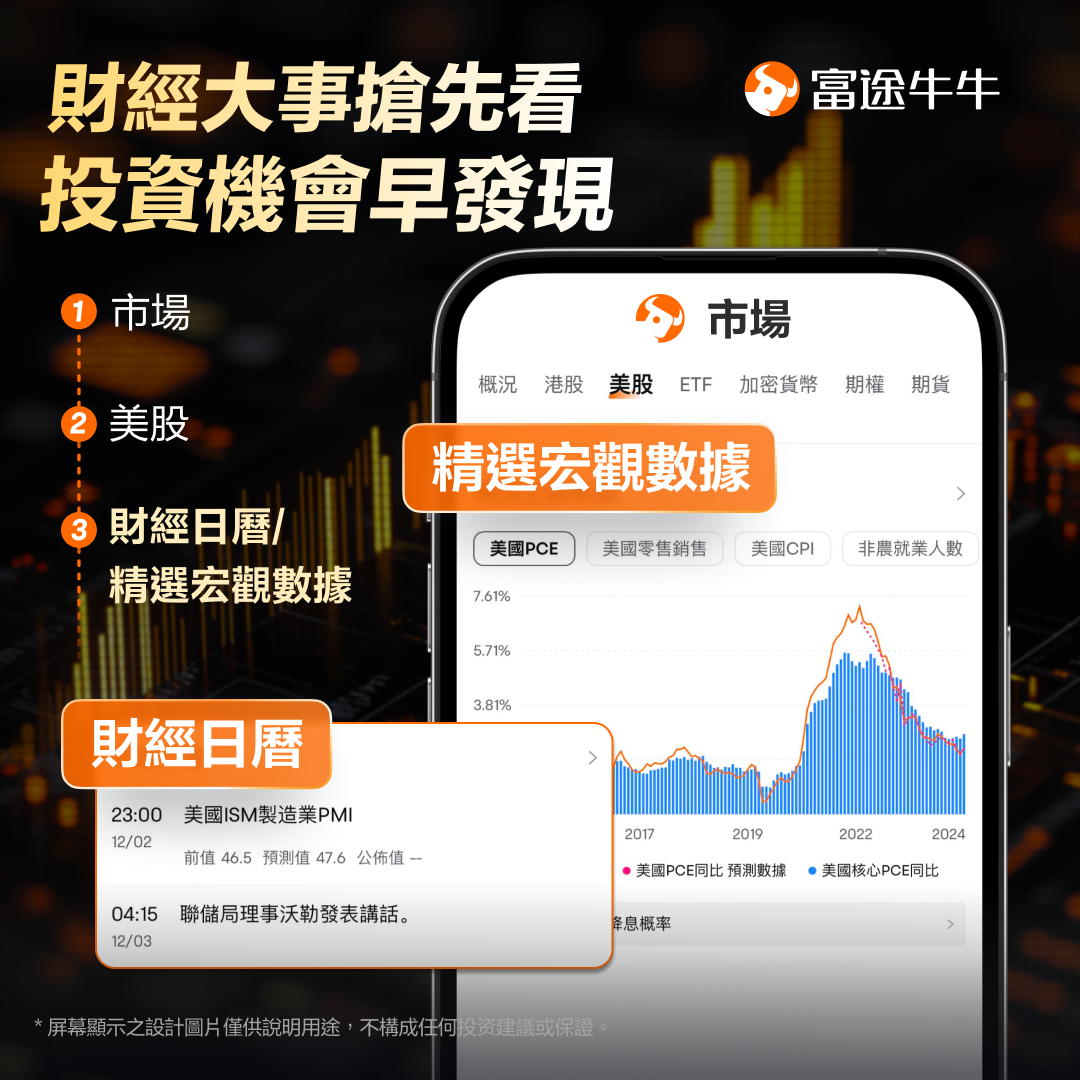
 Stay ahead on major financial events and discover investment opportunities early! Open Futubull > Market > US Stocks >Financial Calendar/Featured Macro Data, seize the investment opportunity ahead of the curve!
Editor/lambor