U.S. inflation has shown a significant turning point. The June CPI recorded its first month-over-month decline in six years, while core inflation remained largely flat, prompting markets to sharply reduce bets on a Federal Reserve rate hike in July.
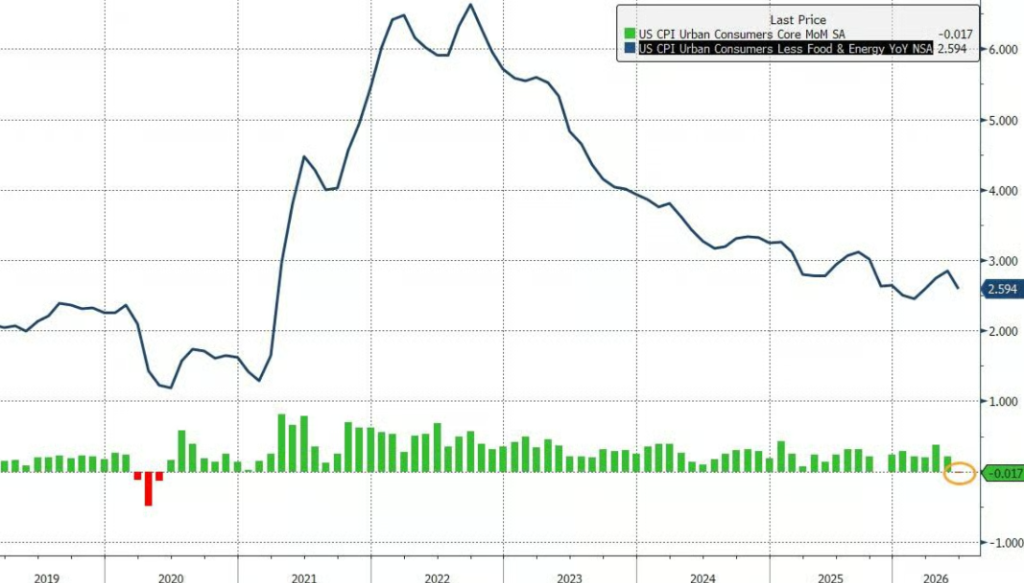
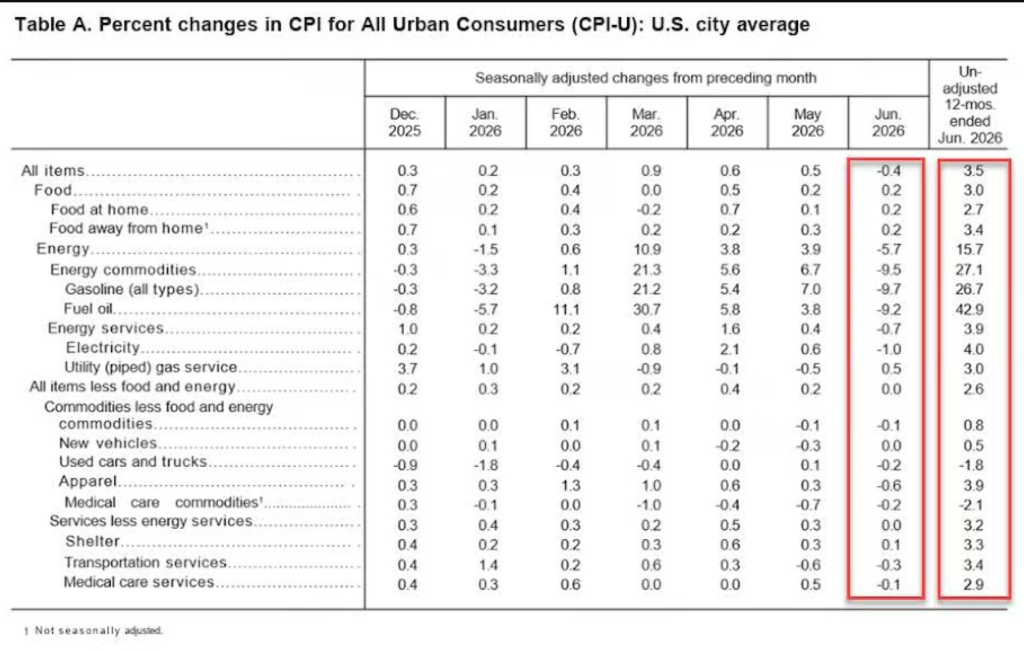
On Tuesday, the U.S. Bureau of Labor Statistics released data showing that the Consumer Price Index (CPI) rose 3.5% year-over-year in June, below the market expectation of 3.8% and a notable decline from the previous reading of 4.2%. Core CPI increased by 2.6% year-over-year, also below both the expected 2.8% and the prior reading of 2.9%.
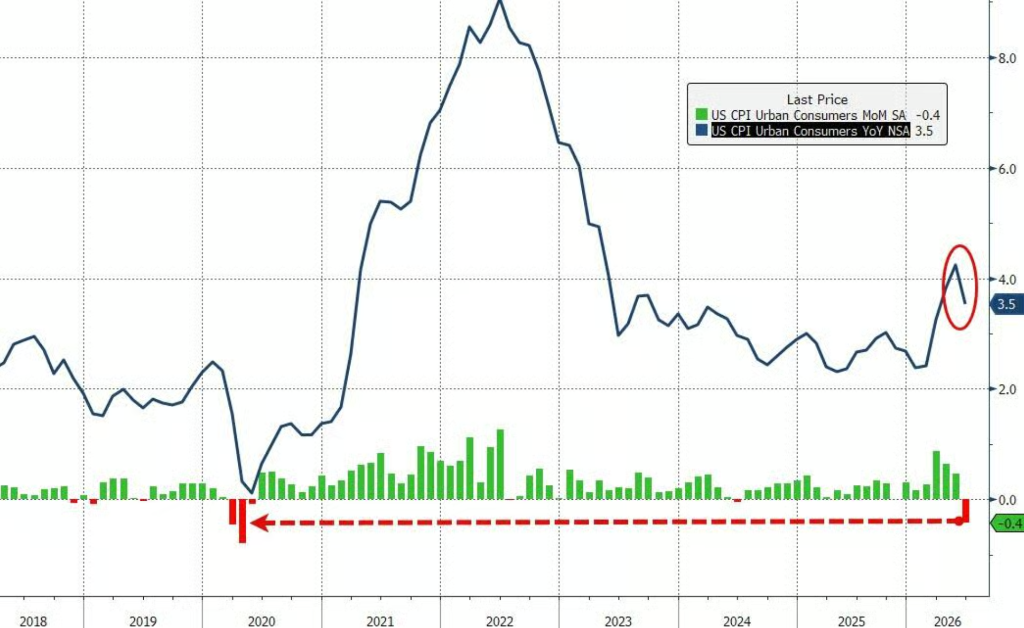
On a month-over-month basis, headline CPI declined by 0.4%, marking the first such drop in six years and far exceeding the market’s expectation of a -0.1% decrease. Core CPI was flat month-over-month, a significant slowdown from the previous 0.2% increase. As the energy price shock triggered by the Iran conflict began to fade, falling oil prices offered some relief to consumers.
 Following the release of the data, traders swiftly reduced their bets on a Federal Reserve rate hike this month, signaling a clear shift in market expectations for the policy path. Meanwhile, in prepared remarks for a congressional hearing, Waller stated that the Fed has 'zero tolerance' for persistently high inflation.
Energy prices drive CPI to its first monthly decline in six years
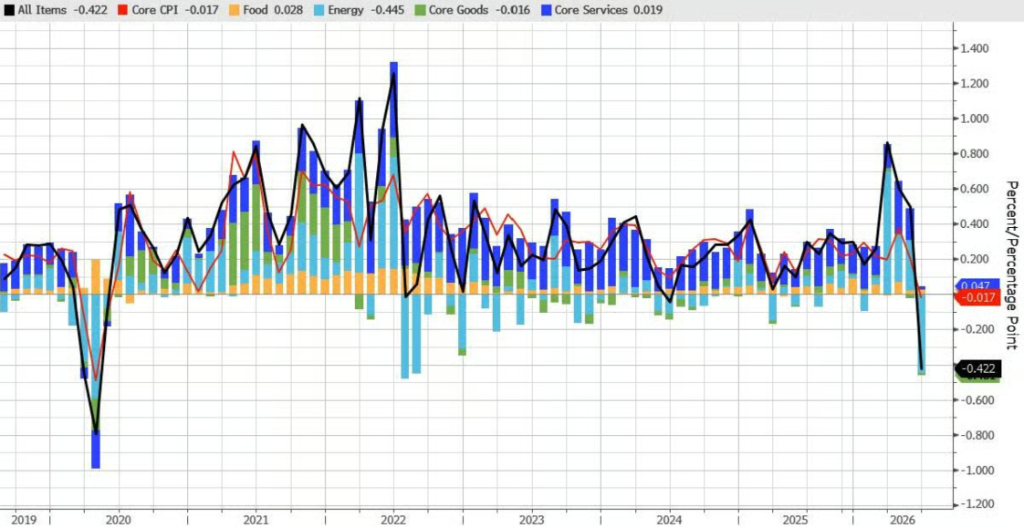
The primary driver behind the month-over-month decline in June CPI was the energy sector.
As the most acute phase of the energy shock stemming from the U.S.-Iran conflict gradually subsided, oil prices fell notably in June, with declining gasoline prices providing tangible relief to consumers.
Data showed that energy prices recorded their largest monthly decline since August 2022.
Broad-based declines in core goods prices
Core CPI remained unchanged on a month-over-month basis, reflecting widespread declines in goods prices.
Specifically, prices for apparel and used cars both declined, and motor vehicle insurance premiums also dropped sharply. The weakness across these components collectively dampened upward momentum in core inflation, easing market concerns about underlying inflationary pressures.
By contrast, core services prices rose only modestly on a month-over-month basis, contributing very little to overall inflation.
Expectations for a Federal Reserve rate hike in July have cooled, but risks remain.
The latest moderation in inflation data has provided the Federal Reserve with some additional policy flexibility ahead of its upcoming interest rate decision meeting at the end of this month.
Following the release of the data, market bets on a July rate hike declined markedly, pushing U.S. Treasury yields lower and boosting equity index futures—reflecting a rapid repricing of investor expectations regarding the monetary policy path.
However, uncertainty remains over whether inflation will continue to ease. Signs of renewed escalation in U.S.-Iran tensions pose a risk of higher oil prices; should energy costs rebound, the recent disinflationary trend could reverse, adding further complexity to the Federal Reserve’s policy assessment.
Market attention will now shift to Waller’s testimony at the congressional hearing, where investors will seek the latest signals from the Federal Reserve on its view of current inflation dynamics and future policy direction.
Editor/melody