
Hoisington Investment Management Co., long a steadfast bull on U.S. Treasuries, has now taken the rare step of reversing its stance.
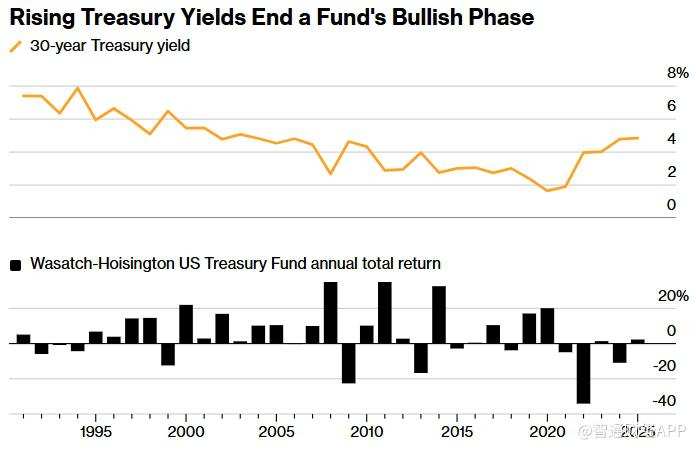
Zhitong Finance APP has learned that Hoisington Investment Management Co., long a staunch bull on U.S. Treasuries, has now made a rare shift in its stance. In its latest quarterly investment report, the firm stated that structural factors such as the persistent expansion of the U.S. fiscal deficit and rising capital requirements could lead to sustained increases in U.S. inflation and long-term Treasury yields, suggesting that the more than 30-year bull market environment for U.S. government bonds may have undergone a fundamental change.
The latest report, co-authored by Van R. Hoisington, founder of Austin, Texas-based Hoisington Investment Management, and Chief Economist Lacy Hunt, notes that larger fiscal deficits and growing financing needs are reshaping the bond market landscape, with inflation and long-term U.S. Treasury yields expected to trend upward.
 This view marks a significant shift in the firm’s long-standing investment philosophy. For over three decades, Hoisington has been one of Wall Street’s most steadfast bulls on U.S. Treasuries, consistently betting that long-term U.S. Treasury yields would decline—a position that earned it considerable market attention.
The report states that the ever-expanding scale of U.S. debt is prompting investors to demand higher risk premiums to hold U.S. Treasuries. This implies that the interest rate environment in the United States is no longer the same as it was between 1990 and 2020, when yields steadily declined and the long-bond bull market persisted.
Meanwhile, Hoisington forecasts that the U.S. long-run equilibrium inflation rate is shifting upward into the 3.5%–4.5% range and warns of ongoing risks that inflation could exceed 5% in the future.
This assessment is also reflected in its portfolio adjustments. Regulatory filings show that as of the end of September last year, the fund’s portfolio had an effective duration of 20.88 years; by the end of March this year, that figure had dropped sharply to 4.7 years, and by June 30, it had fallen further to less than one year. By comparison, the Bloomberg U.S. Aggregate Bond Index currently has an average duration of approximately six years.
Effective duration is a key metric for measuring a bond portfolio’s sensitivity to changes in interest rates; a shorter duration means lower exposure to the risk of rising rates.
Hoisington began adjusting its strategy in the first quarter of this year. At that time, following the U.S. military strike against Iran at the end of February, international oil prices surged sharply, rapidly intensifying market expectations of higher inflation and further monetary tightening by the Federal Reserve, which in turn pushed U.S. Treasury yields higher.
Data show that the yield on the 30-year U.S. Treasury note briefly approached 5.2% in May this year, reaching its highest level since 2007. As of Thursday, the yield remained around 5.12%.
In fact, since the 30-year U.S. Treasury yield fell below the historic low of 2% during the pandemic in 2020, long-term U.S. Treasury yields have generally followed an upward-trending path with only brief periods of decline. Over the same period, the global government bond index remains down approximately 19% from its 2020 peak.
For many years, Hoisington has concentrated client assets in long-term Treasury bonds and zero-coupon bonds, betting on persistently declining yields. This strategy performed exceptionally well during bond bull markets but suffered significant losses during periods of rapidly rising interest rates.
As of June 30 this year, the fund’s annualized return since inception remained at 5.38%, yet it recorded an annualized loss of 8.7% over the past five years. Meanwhile, the firm’s assets under management have declined from approximately $5 billion in 2020 to less than $2 billion last year.
Hoisington believes that the ongoing surge in U.S. capital expenditures will continue to exert upward pressure on long-term interest rates. On one hand, investment in artificial intelligence (AI) is driving a rapid increase in corporate financing demand; on the other, the persistently widening U.S. government fiscal deficit necessitates greater Treasury issuance, collectively boosting bond supply.
Jeffrey Gundlach, CEO of DoubleLine Capital and known as the 'New Bond King,' recently stated that the yield on the U.S. 30-year Treasury bond continues to approach the critical resistance level of 5%, a level that 'appears difficult to sustain over the long term.' He also noted that even Lacy Hunt, a long-time staunch bull on U.S. Treasuries, has now turned bearish—highlighting a clear shift in market conditions.
Editor/Stephen