
Market Snapshot
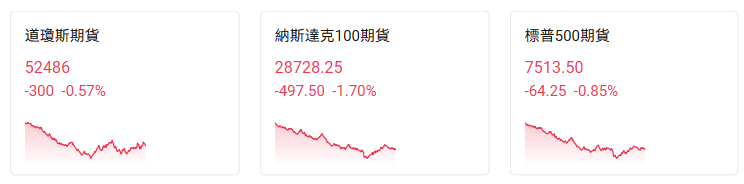
U.S. equity index futures all declined in pre-market trading on Friday. As of the time of writing, Dow Jones Industrial Average futures were down 0.57%, Nasdaq 100 futures fell 1.70%, and S&P 500 futures dropped 0.85%.
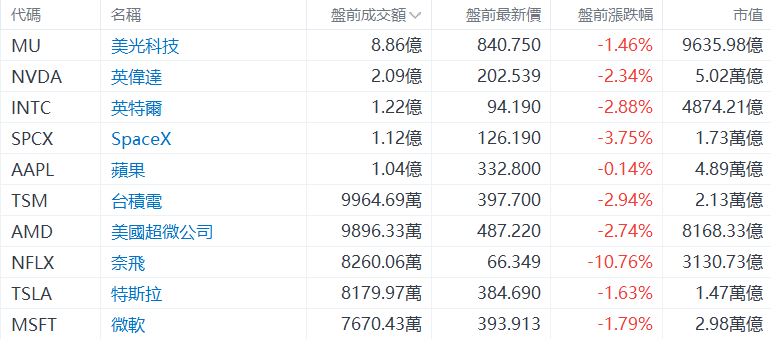
$Star Tech Stocks (LIST2518.US)$Stocks broadly declined in pre-market trading, with Netflix down nearly 11%, SpaceX falling close to 4%, Intel, Taiwan Semiconductor, and AMD each down nearly 3%, NVIDIA dropping more than 2%, Tesla and Microsoft falling nearly 2%, and Micron Technology declining over 1%.
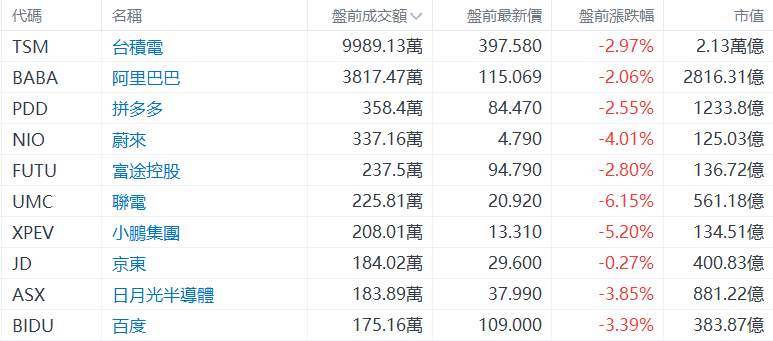
$Popular Chinese ADRs (LIST2517.US)$Most stocks rose, with United Microelectronics Corporation (UMC) down over 6%, XPeng falling more than 5%, Nio dropping over 4%, Taiwan Semiconductor declining nearly 3%, and Alibaba and PDD Holdings each down over 2%.
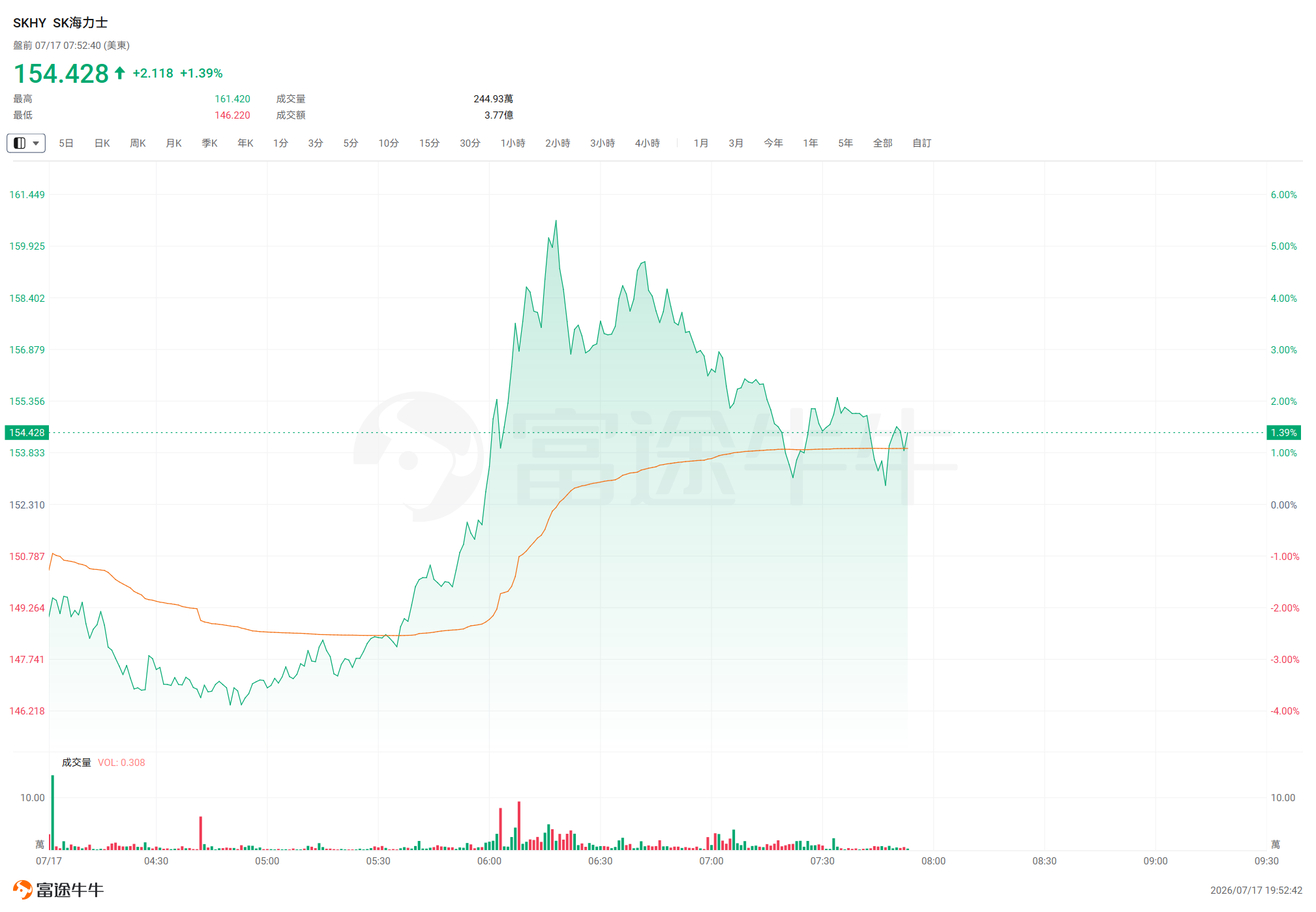
 $Storage Concept (LIST23925.US)$The downward trend continued in pre-market trading, with Western Digital down nearly 4%, Micron Technology and Seagate Technology falling over 2%, SanDisk declining nearly 2%, and SK Hynix rising nearly 1%.
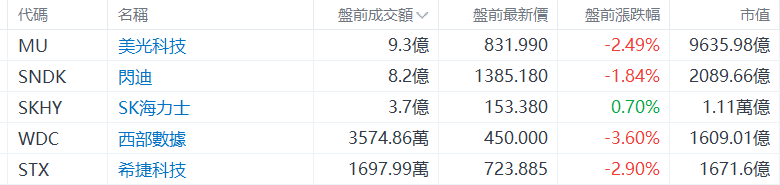
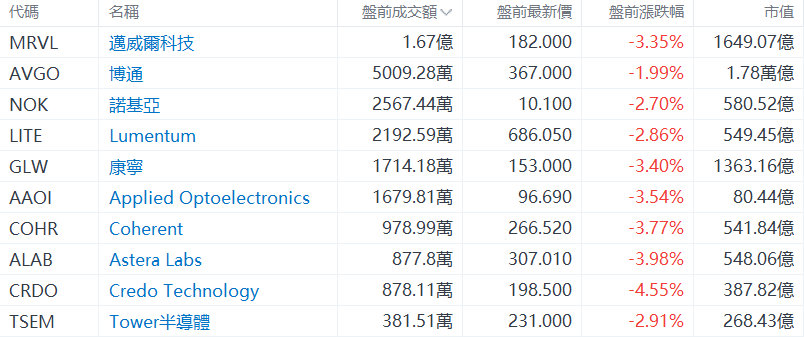
$Optical Communications (LIST23979.US)$Pre-market trading weakened, with Credo Technology down over 4%, Marvell Technology falling over 3%, Lumentum and Tower Semiconductor each down nearly 3%, and Broadcom declining nearly 2%.
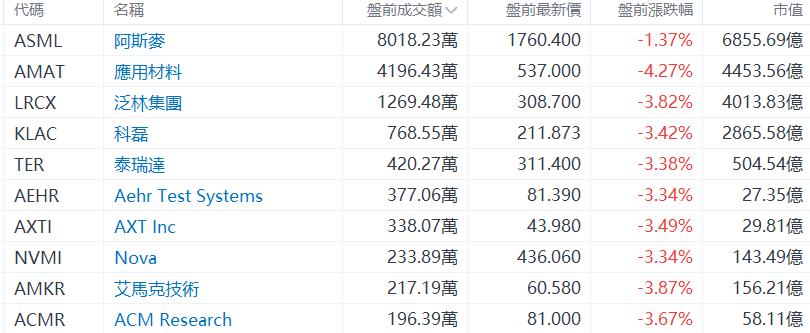
$Semiconductor Equipment and Materials (LIST2016.US)$ Stocks moved lower in tandem, with Applied Materials down over 4%, Lam Research and Ametek each falling nearly 4%, and KLA Corp and Teradyne declining over 3%.
Individual Stock News
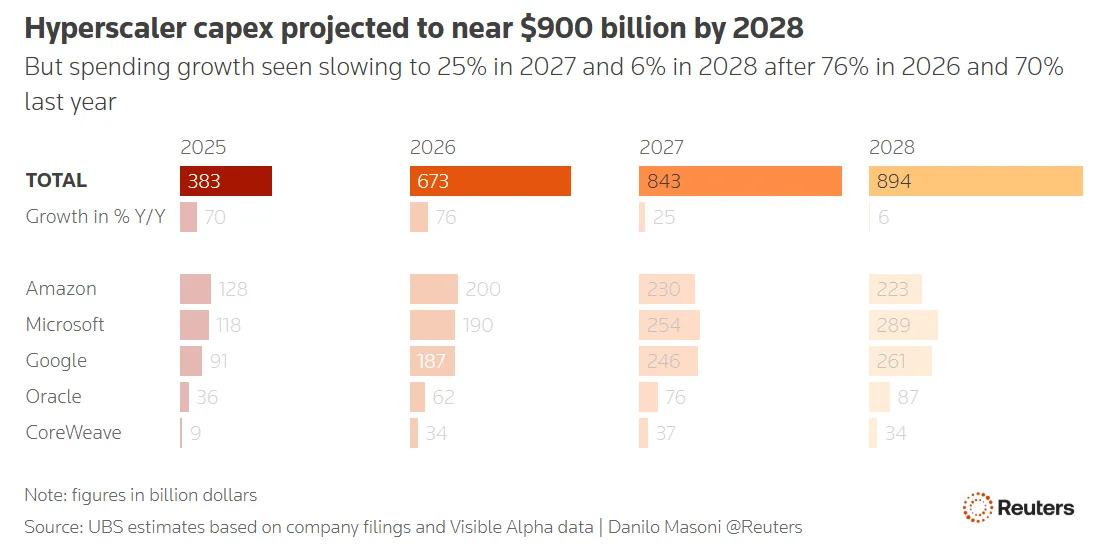
Cloud giants' capital expenditure slowing down? UBS Group warns of a potential 'sharp deceleration' in growth over the next two years.
UBS Group forecasts that capital expenditures by hyperscale cloud providers will surge by 76% this year to $673 billion, but growth will slow to 25% next year and further decelerate to just 6% by 2028. After initially funding early AI infrastructure investments with their own cash flows, hyperscalers are increasingly turning to external financing; this year, the corporate bond market has absorbed tens of billions of dollars in bonds issued by major technology companies.
Torsten Slok, Chief Economist at Apollo Global Management, noted that subscription multiples for these bonds have fallen from nearly 5x in February to below 2x in July. Industry observers also point out that growing local opposition in the U.S. to new data center construction could hinder spending growth.
Related Reading:Cloud giants' capital expenditure slowing down? UBS Group warns of a potential 'sharp deceleration' in growth over the next two years.
SK Hynix’s U.S.-listed shares turned positive in pre-market trading, rising over 1% after earlier falling nearly 4%; the stock had plunged 13% in the previous session.
Choi Tae-won, Chairman of SK Group, stated at a forum hosted by the Korea Chamber of Commerce and Industry today: “Demand for memory chips is growing exponentially, which is why the share prices of SK Hynix and Samsung Electronics have risen sharply since last year.” He made the remarks when asked about$SK Hynix (SKHY.US)$Regarding the recent stock price decline, it was noted that share prices typically rise in line with market expectations and then experience a pullback after an overbought phase. 'I believe demand for memory chips will remain robust, so their stock price trend will be upward over time.'
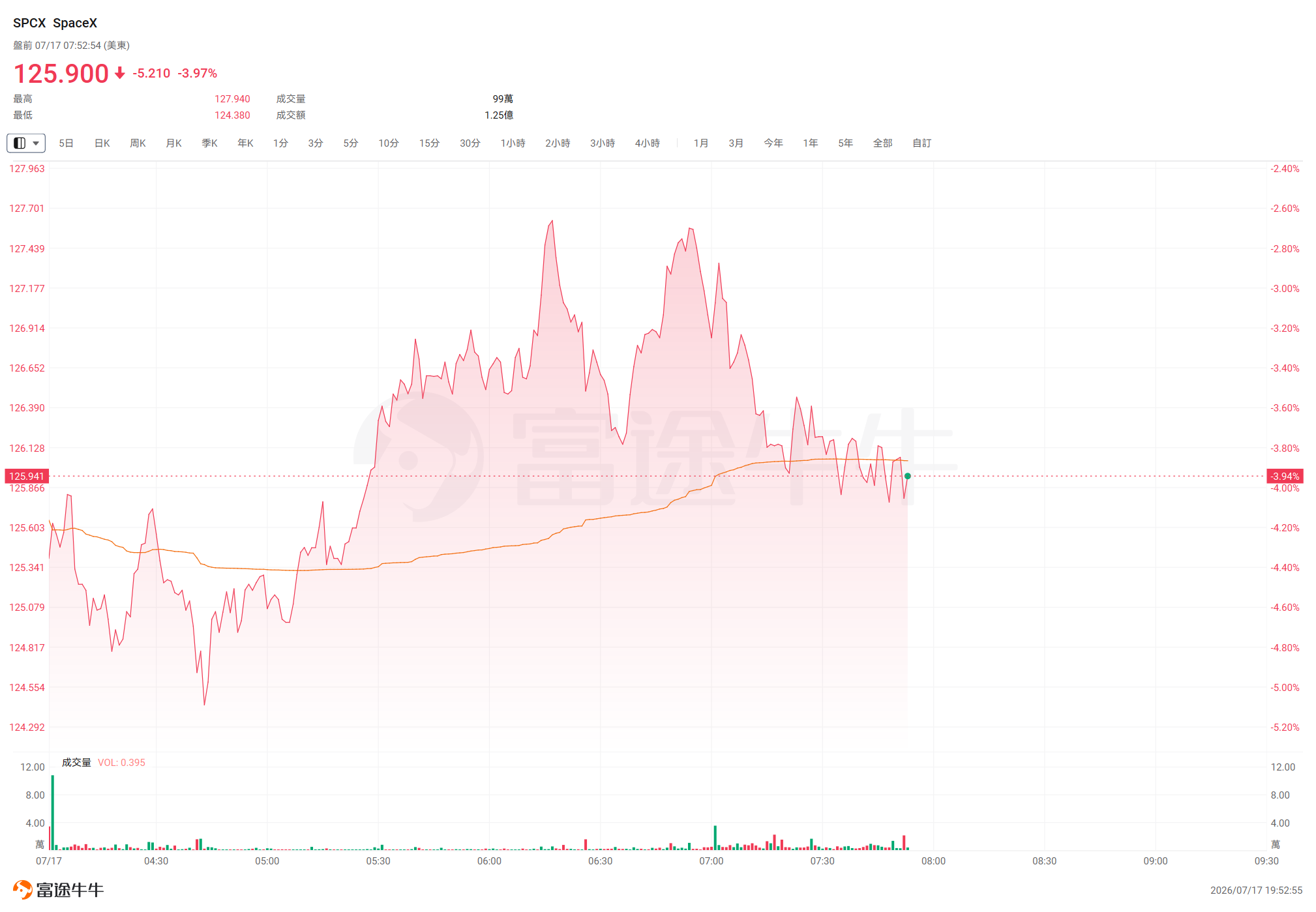
SpaceX fell nearly 4% in pre-market trading after the 'Starship' rocket aborted its launch just before liftoff.
$SpaceX (SPCX.US)$It canceled a major test flight of the 'Starship' rocket. The vehicle had been scheduled to lift off at 5:45 p.m. local time from SpaceX’s Starbase launch facility in southern Texas for its 13th major mission—the company’s first launch since its U.S. IPO. Elon Musk stated that the automatic abort was triggered because some engines failed to ignite, and another launch attempt is expected within the next few days.
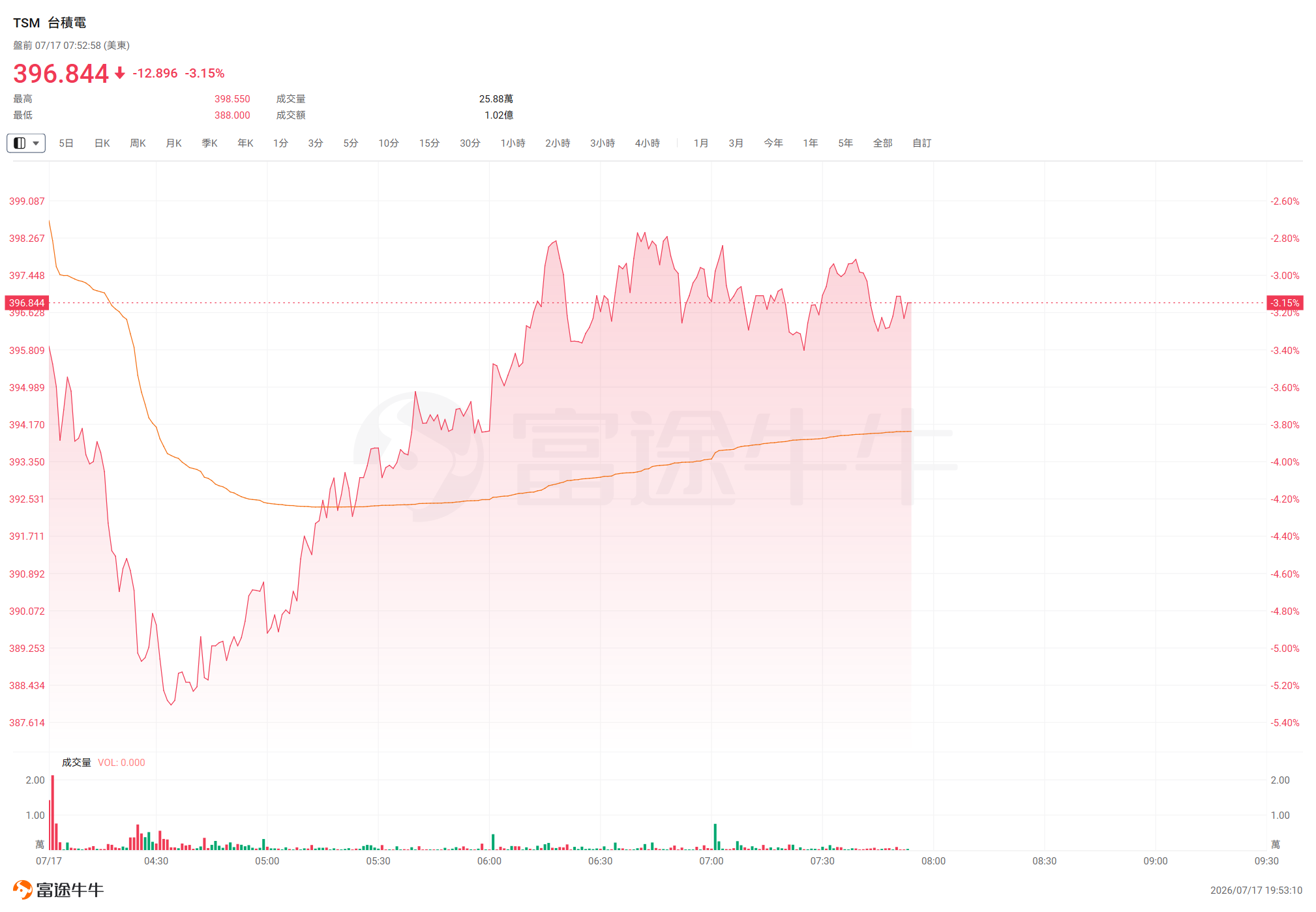
Citi: Taiwan Semiconductor's gross margin outlook remains resilient
Citi analysts stated in a research report that$Taiwan Semiconductor (TSM.US)$its gross margin outlook remains resilient. Analysts noted that with a second-quarter gross margin of 67.7%, advanced processes accounting for 77% of wafer revenue, and initial revenue contributions from its 2-nanometer chips, Taiwan Semiconductor remains well-positioned to sustain industry-leading profitability.
They added that Taiwan Semiconductor’s pricing discipline has also helped maintain long-term customer relationships. More importantly, management has repeatedly emphasized that artificial intelligence (AI) demand has become significantly stronger than previously anticipated, and the company sees AI demand continuing to grow as agentic AI expands CPU requirements beyond accelerators.
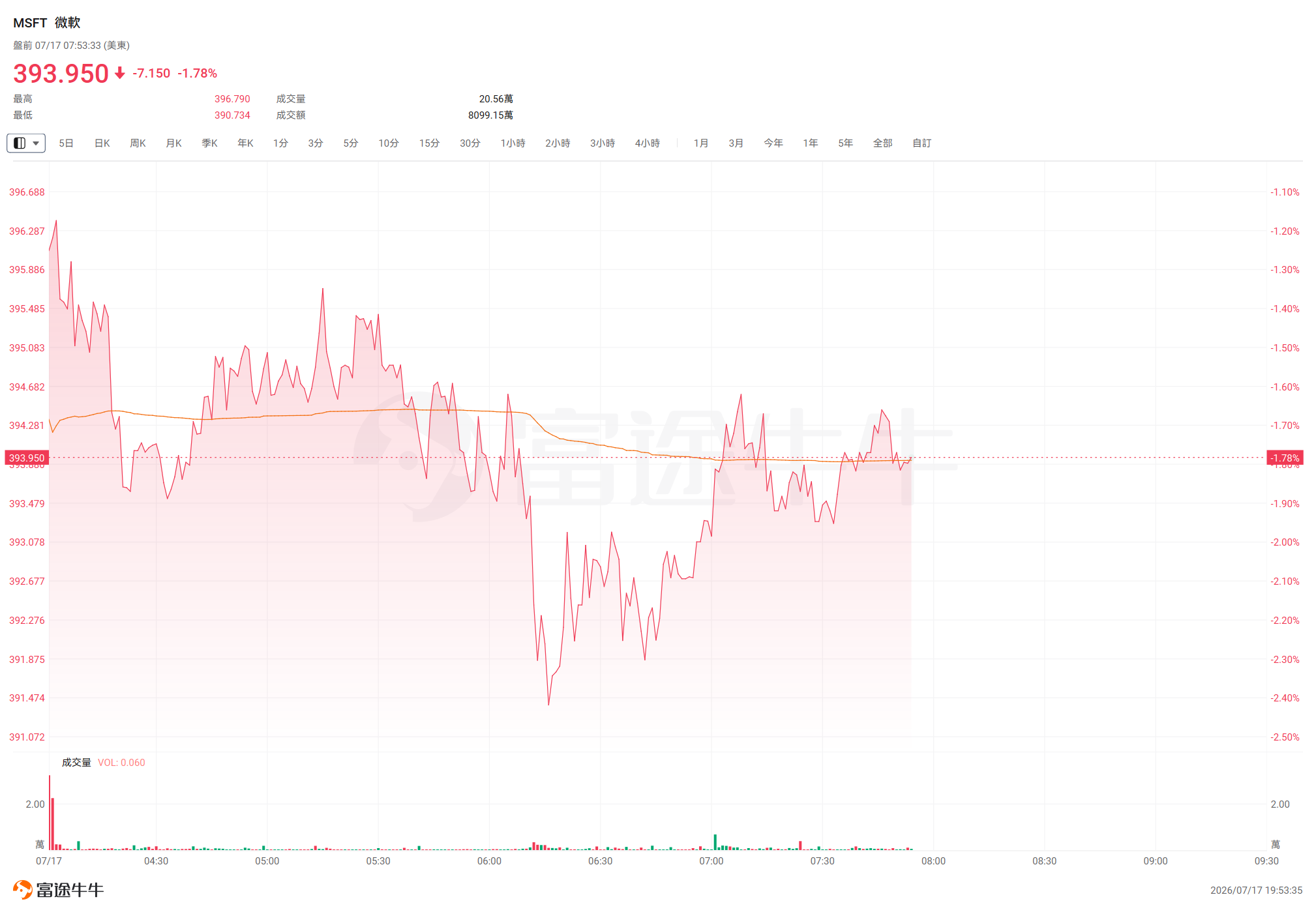
Microsoft is preparing an AI vulnerability detection tool to compete with Anthropic’s Mythos model, which may be released this month.
$Microsoft (MSFT.US)$It is preparing an AI vulnerability detection tool called Project Perception, scheduled for release within July. The tool will compete with Anthropic’s Mythos model and is expected to offer better cost efficiency than Mythos.
Morgan Stanley: Microsoft's leadership in generative AI is 'clear,' with continued strengthening intent to spend on Azure and M365
Morgan Stanley stated in a research report that$Microsoft (MSFT.US)$its leadership position in generative artificial intelligence (GenAI) is 'very clear,' citing 'strong demand trends' for Microsoft 365, Copilot, and Azure cloud services as supporting evidence.
Regarding Azure, 62% of CIOs expect to increase related spending over the next 12 months, up from 57% in the Q2 2025 survey. Spending intentions for Microsoft 365 and Office 365 also “rose significantly,” with 65% of CIOs anticipating increased expenditure, compared to 46% in Q2 2024 and 55% in Q2 2025.
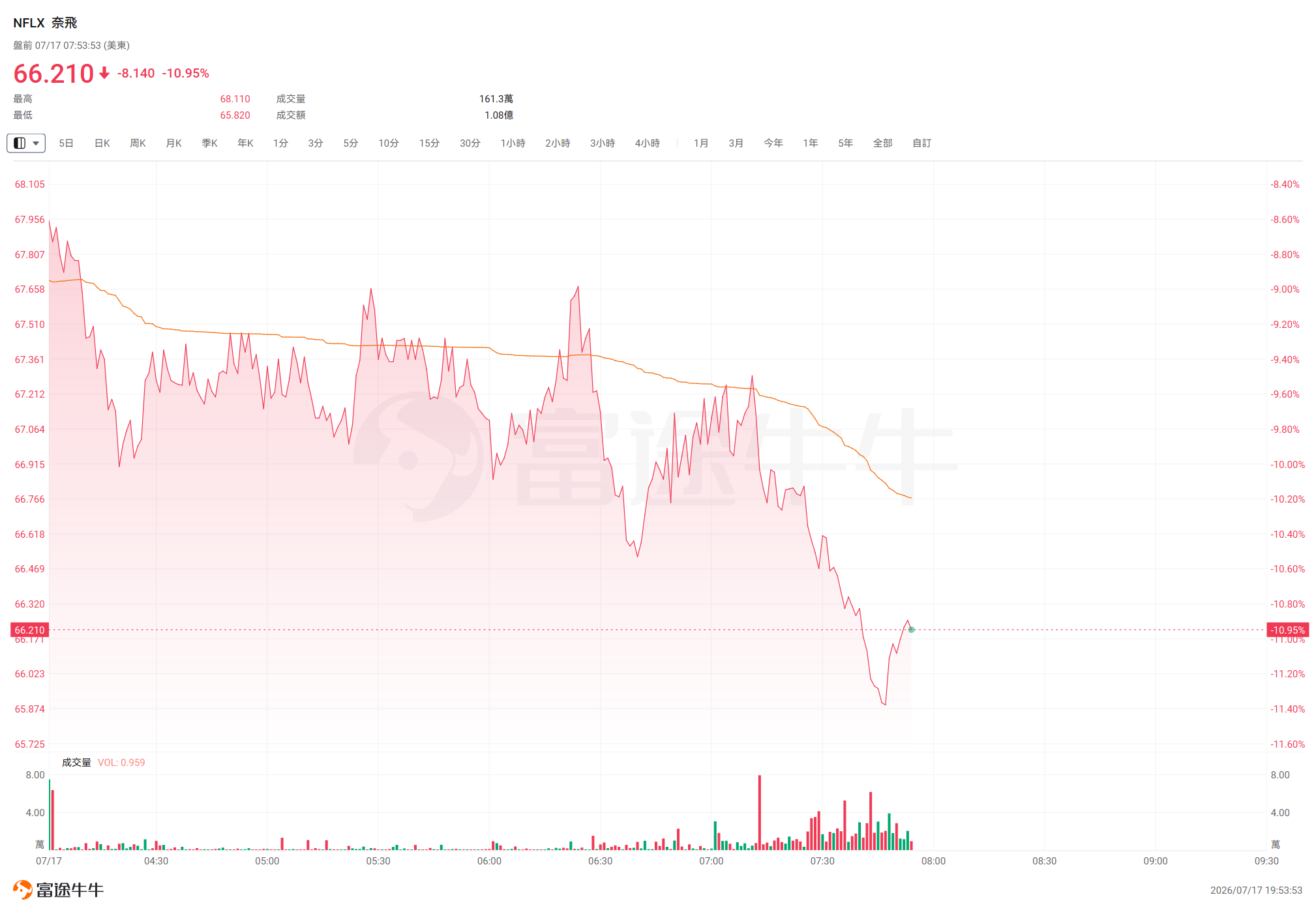
Netflix fell nearly 11% in pre-market trading after issuing weaker-than-expected Q3 guidance, with revenue growth potentially hitting a three-year low.
$Netflix (NFLX.US)$Second-quarter results largely met analyst expectations, with revenue rising over 13% year-over-year to $12.56 billion and net income increasing nearly 9% year-over-year to $3.4 billion. Netflix expects third-quarter revenue to grow 11.7% year-over-year, which would mark the lowest year-over-year growth rate since late 2023; it also forecasts earnings per share of $0.82, below consensus expectations.
Additionally, the company narrowed its full-year revenue guidance to $51.0–$51.4 billion, compared with its prior range of $50.7–$51.7 billion. It also announced that it will reduce the frequency of its 'What We Watched' report—from twice annually to once annually—which discloses user viewing hours for its film and TV content.
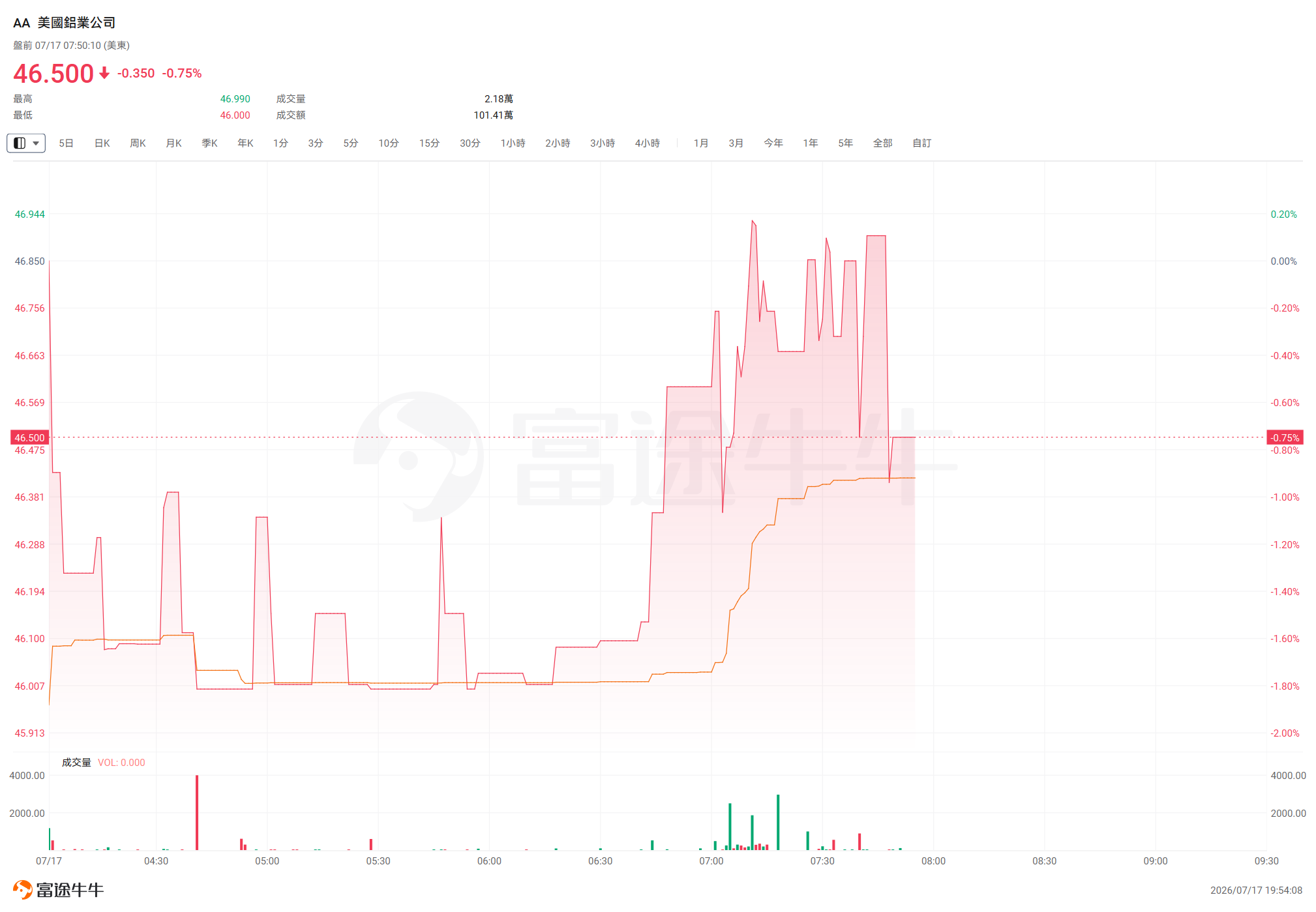
Alcoa reported weaker-than-expected Q2 results and lowered its alumina production outlook.
$Alcoa Corporation (AA.US)$Second-quarter revenue rose 31% year-over-year to $3.97 billion, a quarterly record, slightly below market expectations of $3.99 billion; adjusted earnings per share came in at $2.12, also below the expected $2.25. Alcoa lowered its 2026 alumina production forecast to 9.5–9.6 million metric tons and alumina shipments to 11.5–11.6 million metric tons; it maintained its aluminum segment production outlook at 2.4–2.6 million metric tons and shipments at 2.6–2.8 million metric tons.
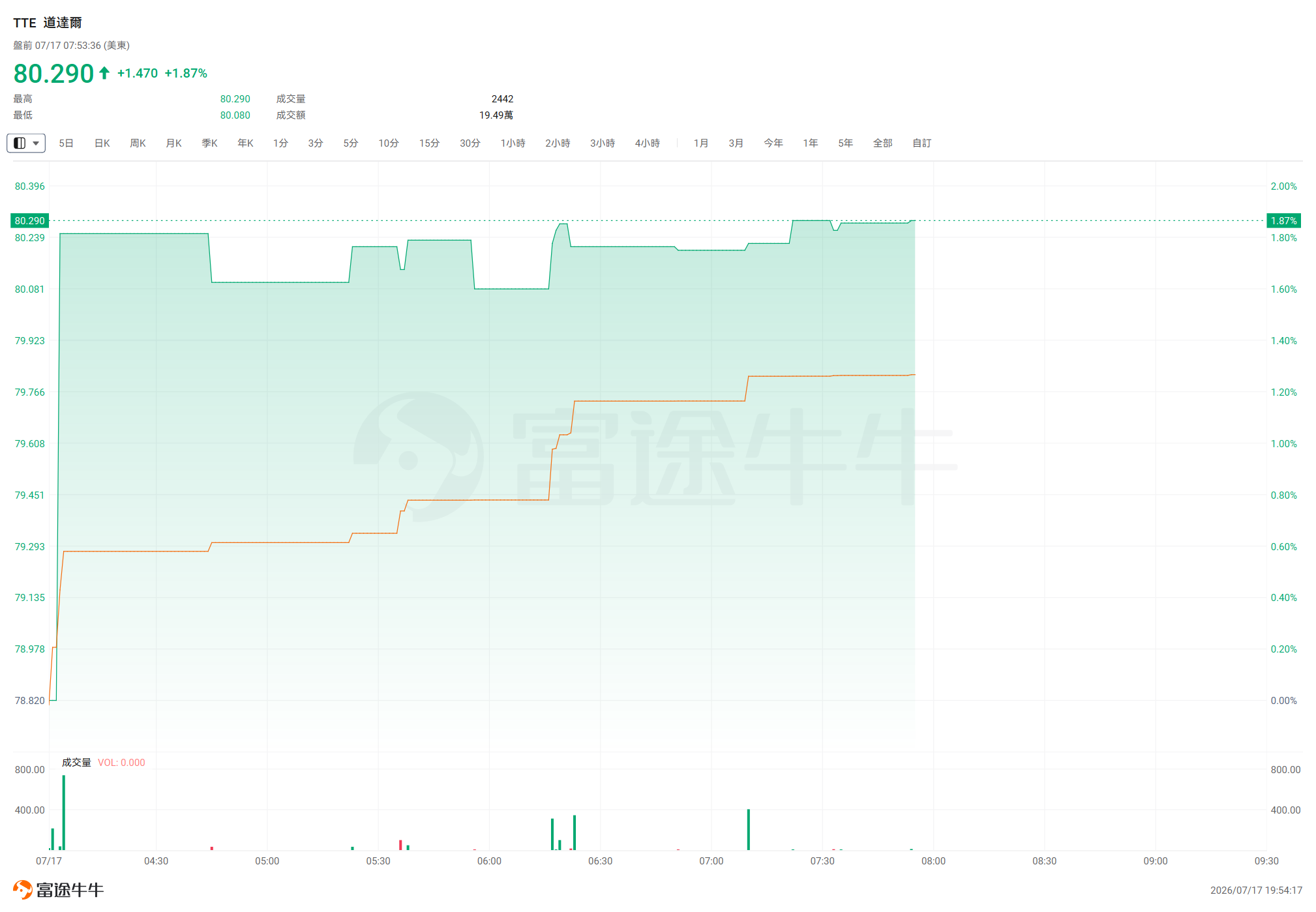
TotalEnergies stated that its oil trading business performed strongly in the second quarter.
$TotalEnergies (TTE.US)$The company attributed the strong performance of its oil trading business in the second quarter to heightened market volatility caused by the Middle East conflict, while its natural gas trading business remained weak. Oil trading profitability “is expected to remain at the robust level seen in the first quarter,” and downstream business results and cash flow are also expected to “increase significantly.”
The company’s optimistic outlook for its oil trading business aligns with signals previously issued by other international oil majors. As Western oil giants prepare to report earnings later this month, they are poised to deliver strong profit results.
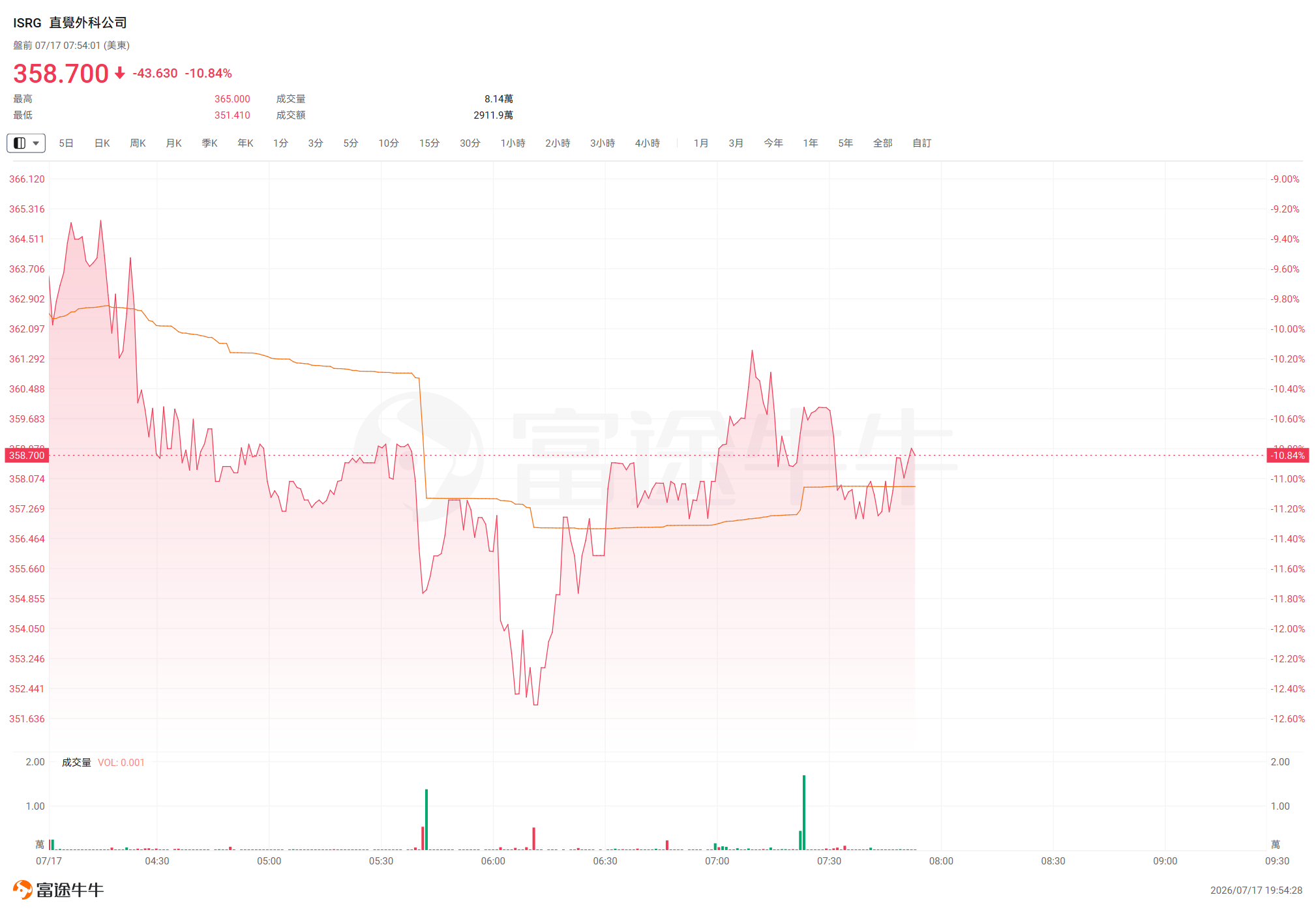
Intuitive Surgical reported better-than-expected Q2 results, yet its shares dropped nearly 11% in pre-market trading.
Medical technology company$Intuitive Surgical (ISRG.US)$Reported second-quarter 2026 financial results, with revenue reaching $2.89 billion, an 18.5% year-over-year increase, surpassing analyst expectations by 2.6%. Adjusted earnings per share came in at $2.80, exceeding market expectations by 11.9%. Operating margin improved to 33.6% from 30.5% a year earlier, while adjusted operating margin reached 40.9%.
Despite the across-the-board earnings beat, the company’s stock fell approximately 11% in after-hours trading to $357.20. The decline was primarily driven by reports from several large healthcare institutions indicating a drop in surgical volumes, coupled with a Class II recall issued for certain components of the da Vinci Surgical System.
Micron signs SCAs with seven companies including Qualcomm to secure automotive memory supply
Micron Technology (MU.US)announced that it has entered intoQualcomm (QCOM.US)、$Visteon Corporation (VC.US)$, Harman, Joyson Intelligence, Denso, Advantech Auto and Hyundai Mobis—key technology suppliers supporting the automotive ecosystem—Strategic Customer Agreements (SCAs). These agreements were referenced during Micron’s fiscal third-quarter 2026 earnings call.
By enhancing certainty around supply and pricing, these agreements will support investments in the development, qualification, and manufacturing capabilities required for future automotive platforms, helping ensure that advanced automotive systems have the memory and storage capacity needed to deliver richer, safer, and smarter user experiences.
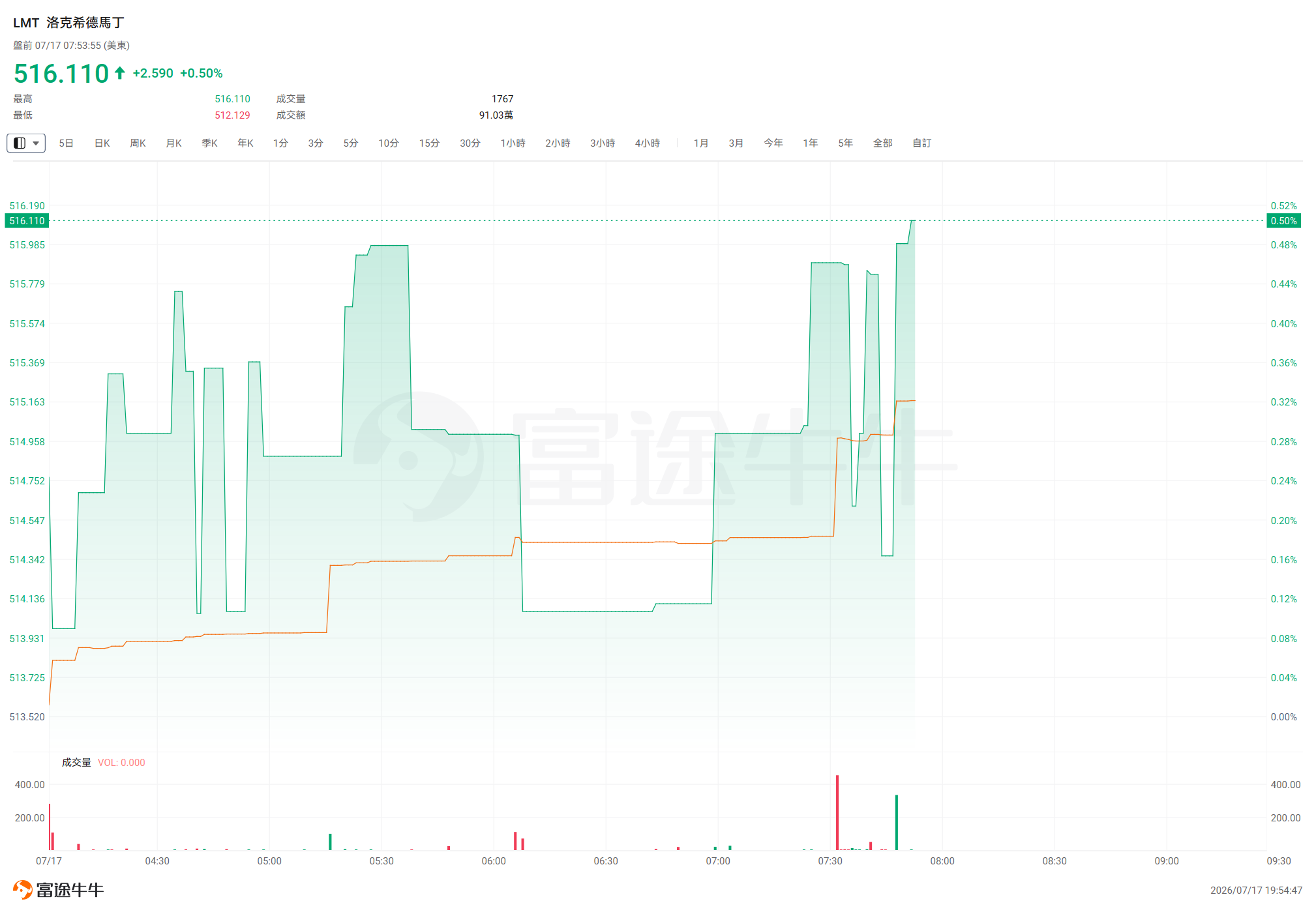
Lockheed Martin wins over $100 million South Korean defense contract
$Lockheed Martin (LMT.US)$announced that its Rotary and Mission Systems business area has been awarded a $101.8 million contract by the U.S. Air Force. The contract covers maintenance, repair, and sustainment of mission equipment and aircraft systems under the Republic of Korea’s Peace Krypton Prime program.
Global Macro
Islamic Revolutionary Guard Corps: Multiple U.S. military aircraft destroyed
On the 17th, Iran’s Islamic Revolutionary Guard Corps (IRGC) issued a statement saying that, in response to U.S. airstrikes on non-military targets in southern Iran the previous night, the IRGC launched ballistic missiles and drones in two phases, destroying multiple U.S. refueling tankers and fighter jets. According to the statement, on the evening of the 16th, U.S. forces used a military base in Jordan to strike several non-military sites in Bandar Abbas, southern Iran, including bridges, residential areas, and a water pumping station.
The statement did not specify the exact timing of the retaliatory strike by the Revolutionary Guard. According to multiple Iranian media outlets, including Tasnim News Agency, on the evening of the 16th, U.S. forces attacked infrastructure facilities in southern Iran—including airports, bridges, and railway stations—resulting in multiple casualties.
IEA: Global energy security at risk if Strait of Hormuz situation does not improve in coming weeks
Fatih Birol, Executive Director of the International Energy Agency (IEA), stated on Thursday that if the United States and Iran do not act swiftly to improve oil transit conditions through the Strait of Hormuz, the world should be concerned about energy security. "Oil security remains a critical issue," Birol said during an event hosted by the Council on Foreign Relations. "If the situation does not improve in the coming weeks, we should be worried—and I would be worried too."

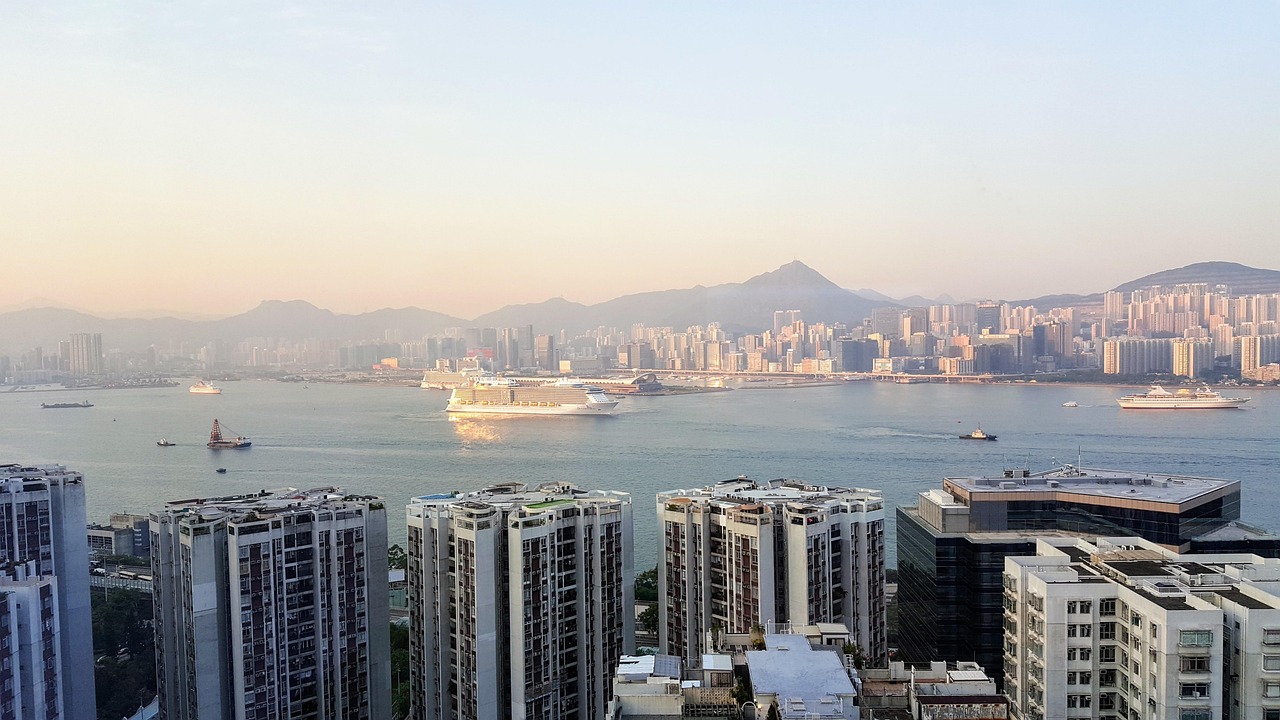
"Big Short" investor Michael Burry expresses optimism on Hong Kong equities, citing buying opportunities once the AI frenzy cools down
"Big Short" Michael Burry advised investors to seek undervalued opportunities in the Hong Kong stock market. In a social media post on Friday, he wrote: "Now is particularly suitable for focusing on the Hong Kong market and identifying inexpensive stocks that could perform well once the spotlight fades from Korea, Japan, and the iShares Semiconductor ETF." Earlier this month, he mentioned that he had increased his stake in JD.com. Morgan Stanley has also previously recommended that investors overweight Hong Kong equities, partly due to positive expectations for corporate earnings.
U.S. equities still have room for deleveraging, JPMorgan says it will take three months to return to pre-April levels
In its latest report, JPMorgan’s Global Market Strategy team noted that the investor deleveraging process initiated in June in the U.S. is still ongoing, with further deleveraging potential remaining across three areas: leveraged equity ETFs, options markets, and margin accounts. This will continue to weigh on equity market performance over the coming months. The team estimates it will take approximately three more months of choppy trading for the ratio of leveraged equity ETF assets to underlying market capitalization to revert to pre-April levels.
CNBC financial commentator warns: Semiconductor sector has become an irrational 'emotional casino'
CNBC commentator Jim Cramer issued a stern warning about the semiconductor market, noting that despite Taiwan Semiconductor’s second-quarter results being “strong and unusually exceptional,” its stock price declined instead of rising—a sign that the market has descended into an extremely anxious and irrational “emotional casino.” He argued that the primary reason for the disconnect between Taiwan Semiconductor’s fundamentals and its share price lies in SK Hynix’s highly publicized U.S. market debut. With SK Hynix listing in the U.S., market sentiment has swung dramatically, and this “SK Hynix effect” has reshaped investor perceptions across the entire chip sector.
He further warned that the semiconductor industry has now evolved into an “emotional casino” driven by sentiment. In such an environment, rational financial data is often overshadowed by collective investor anxiety or short-term euphoria. The irrational downward pressure facing Taiwan Semiconductor is a direct consequence of these volatile market emotions.

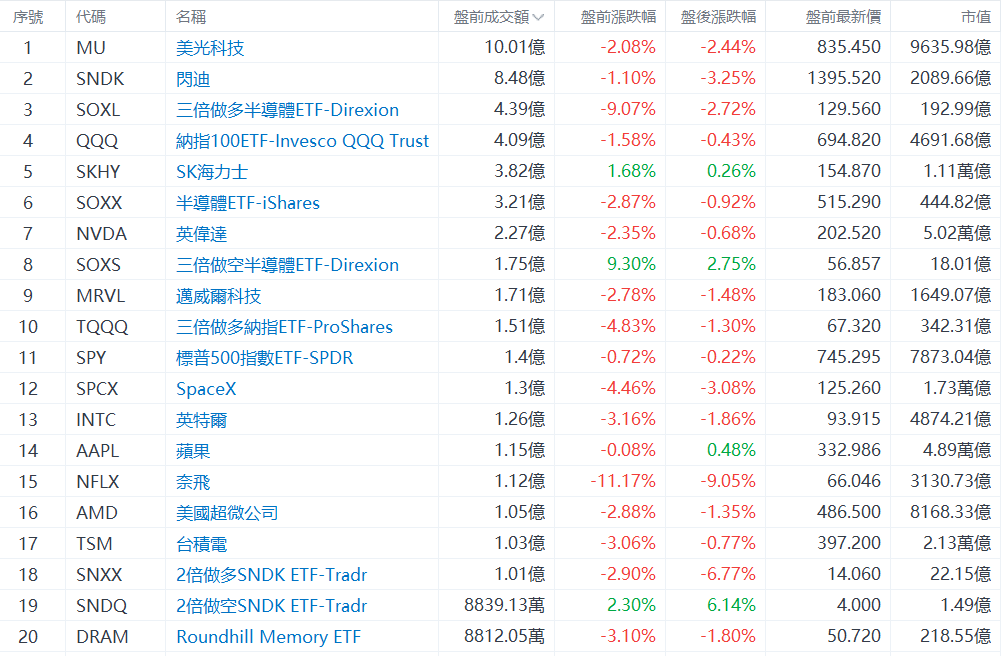
Top 20 pre-market trading volume stocks in the U.S.
U.S. Equity Market Macro Calendar Reminder
(All times listed below are in Beijing Time)
20:30 U.S. June Import Price Index (MoM)
20:30 U.S. June Housing Starts (Annualized, in 10,000 units)
20:30 Total U.S. Building Permits for June (in 10,000 units)
21:15 U.S. Industrial Production MoM for June
22:00 Preliminary University of Michigan Consumer Sentiment Index for July
22:00 Preliminary U.S. One-Year Inflation Expectations for July
Early the following morning
01:00 Total U.S. Oil Rig Count for the Week Ending July 17
 Looking to select stocks or analyze your holdings? Want to understand the opportunities and risks in your portfolio? For any investment-related questions,just ask Futubull AI!

Editor/melody