The S&P 500 declined 0.19% to close at 7,443.28, falling below its 50-day moving average, while the semiconductor index rose 0.60%,$Microsoft (MSFT.US)$up 2.15%, and Apple fell 2.14%,$Tesla (TSLA.US)$down 2.96%. The yield on the 10-year U.S. Treasury note rose by 5 basis points to 4.60%.$Bitcoin (BTC.CC)$up 1.32%. WTI September crude oil gained 0.9% to settle at $83.23 per barrel, while Brent rose 1.3% to close at $89.22.
Under dual pressures from Middle Eastern geopolitical risks and the impending earnings season for major tech firms, the three major U.S. equity indices ended lower in volatile trading. Sharp swings in oil prices heightened inflation concerns and weighed on U.S. Treasuries.
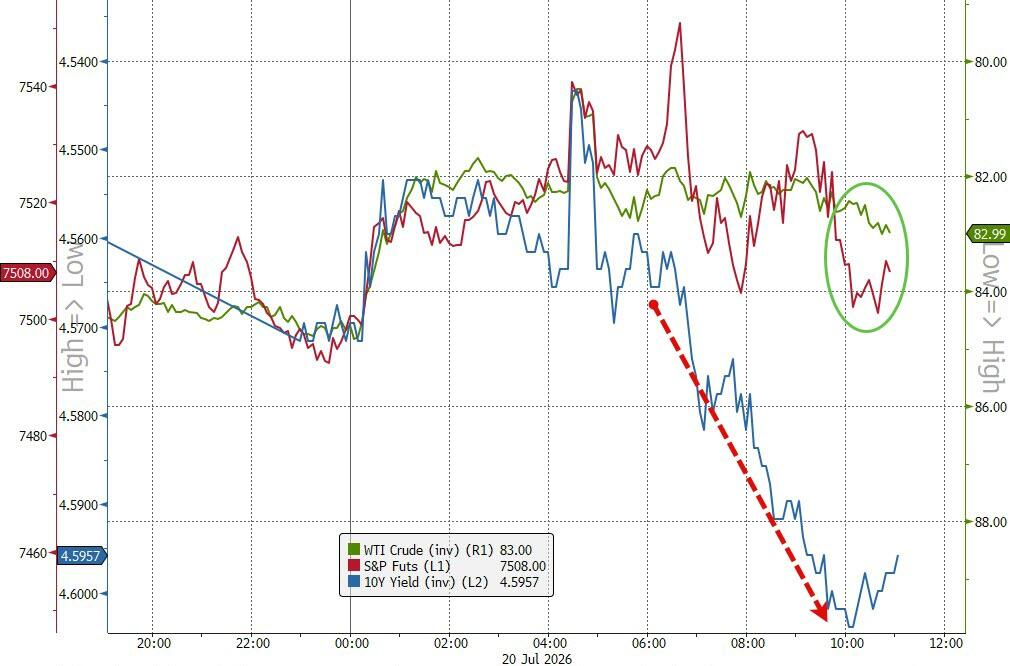
Trump vowed that Iran would "pay a price" for the recent killing of American soldiers, while Iran-backed Houthi militants in Yemen announced a blockade on Red Sea shipping to Saudi Arabia, further escalating regional tensions.
 Senior strategist Louis Navellier stated:
Ongoing turmoil in Iran continues to unsettle markets, dampening equity gains that would otherwise be supported by strong earnings momentum.
This week, led by Tesla and Google, large-cap technology companies will sequentially report second-quarter results, with markets looking for these firms to substantiate the rationale behind their AI investments through solid performance. Tom Essaye of The Sevens Report noted:
For equities to rebound, leading tech companies must deliver strong earnings, and tensions in the Middle East must also ease.
Oil prices experienced sharp volatility, with shipments through the Strait of Hormuz plunging by more than 80%.
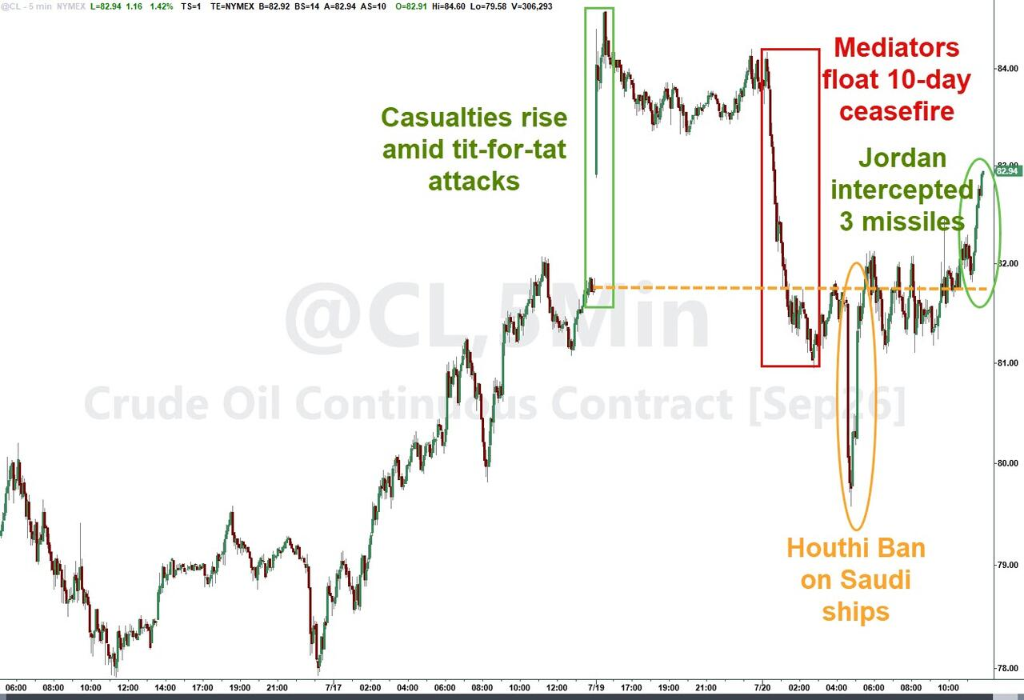
Oil markets experienced significant volatility on Monday. A ninth round of Iranian strikes initially pushed prices higher, but subsequent diplomatic statements regarding a potential 10-day ceasefire negotiation caused prices to retreat.
According to Xinhua News Agency, Trump suggested that the U.S. military would launch a forceful retaliation against Iran, with each American soldier killed exacting several times the cost in response.
However, the Trump administration has not entirely ruled out the possibility of pursuing a diplomatic solution. U.S. Secretary of State Rubio stated in a media interview on the evening of the 19th that the Trump administration 'remains open to a diplomatic resolution.'
According to Xinhua News Agency, senior Iranian officials said that mediators in the Iran-U.S. negotiations have presented Tehran with a proposal aimed at de-escalating the current situation, suggesting a 10-day ceasefire to facilitate the revival of the memorandum of understanding reached between Iran and the United States last month.
However, shipping through the Strait of Hormuz has nearly come to a halt, with Greek shipowners reporting that two tankers were attacked.
Data from the monitoring website Hormuz Strait Monitor shows that only about 12 vessels transited the strait on July 20, a sharp decline of over 89% compared to the pre-conflict daily average of 110 vessels, severely restricting crude oil and liquefied natural gas shipments.
WTI crude ultimately settled at approximately $83 per barrel. Kelly Xu, commodities strategist at Oxford Economics, stated:
“The market’s pronounced two-way volatility reflects high uncertainty among participants regarding the trajectory of the current situation—whether it will escalate further and prolong supply risks, or gradually ease.”
She added that the oil market will remain highly sensitive to geopolitical developments in the near term.
Rich Privorotsky of Goldman Sachs noted that Iran’s incremental strikes on Kuwait’s power and water treatment infrastructure are beginning to test the market’s tolerance for the conflict’s duration, though the overall dynamic remains within the bounds of a tit-for-tat escalation pattern.
He believes that there is an implicit upper bound on the right-tail risk of crude oil prices, and the U.S. government's concern about the market itself acts as a constraining mechanism.
The analysis suggests that the real risk lies not in crude oil, but in refined products and natural gas.
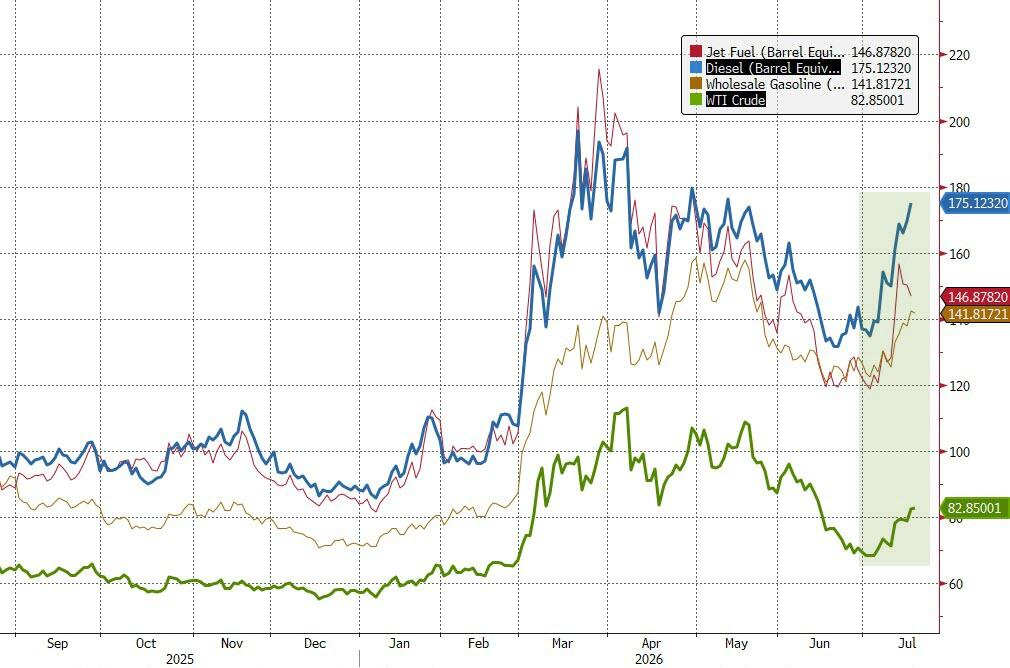
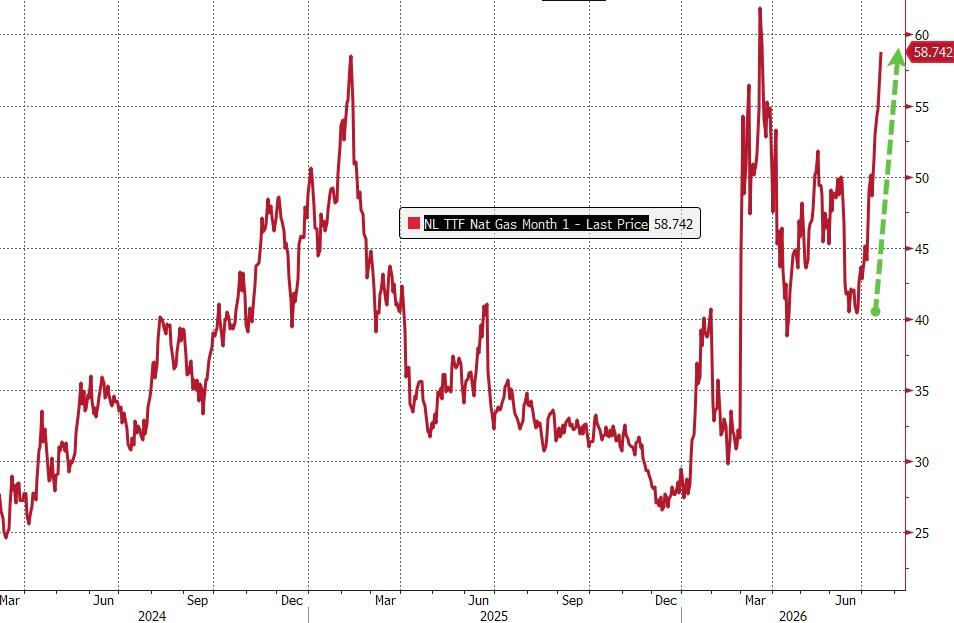
European natural gas prices are approaching highs seen during periods of geopolitical conflict.
Technology stocks stabilized after volatility, with earnings season emerging as a key variable.
U.S. equities opened higher but closed lower on Monday, with the Dow Jones Industrial Average falling 0.59%,$S&P 500 Index (.SPX.US)$down 0.19%,Nasdaq Composite Index (.IXIC.US)down 0.05%, closing at 25,508 points.
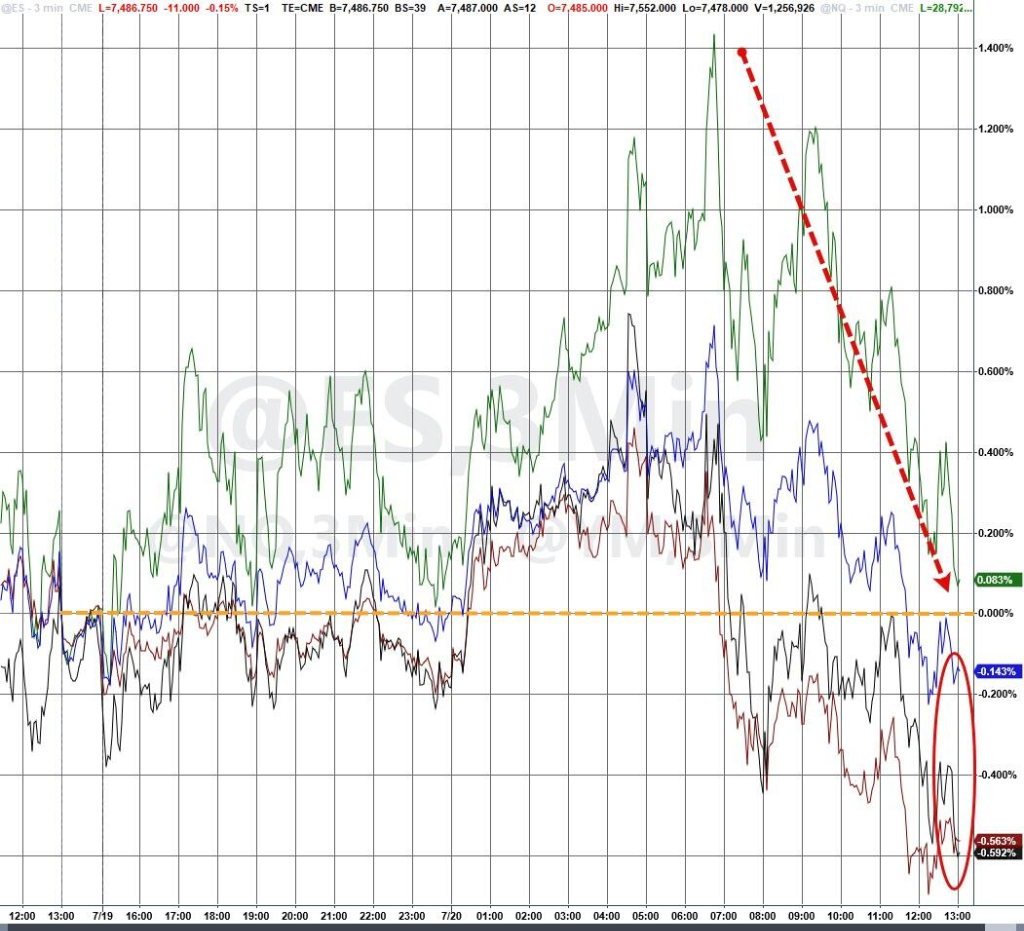
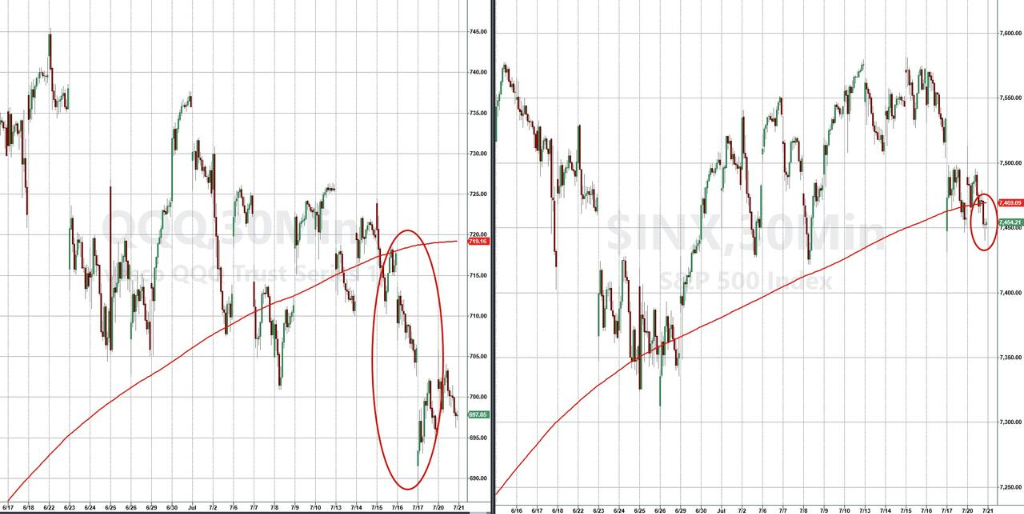
Both the S&P 500 and the Nasdaq 100 fell below their 50-day moving averages once again.
Semiconductor stocks staged a technical rebound on Monday, with chip stocks rising nearly 4% in early trading, though gains narrowed significantly thereafter, closing with only a modest increase of approximately 0.6%. Prior to this,$PHLX Semiconductor Index (.SOX.US)$they had declined more than 20% from their late-June peak, officially confirming entry into bear market territory.
Semiconductor stocks briefly rallied on reports that Kimi had stopped accepting new users due to insufficient computing power, but the gains failed to sustain.
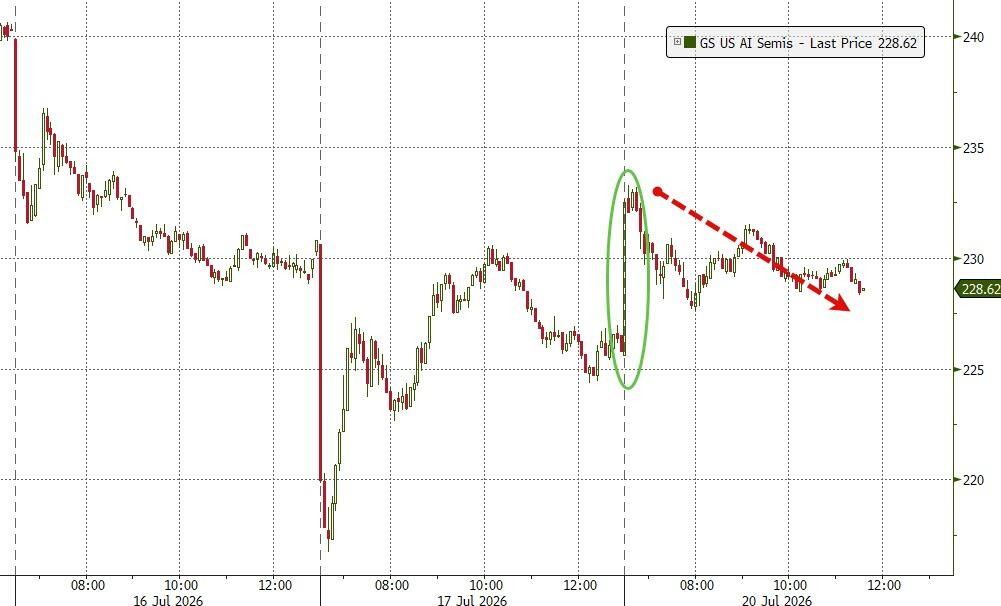
Shares of leading artificial intelligence companies rose today but remained well below recent highs. Excluding the AI sector, the S&P 500 declined.
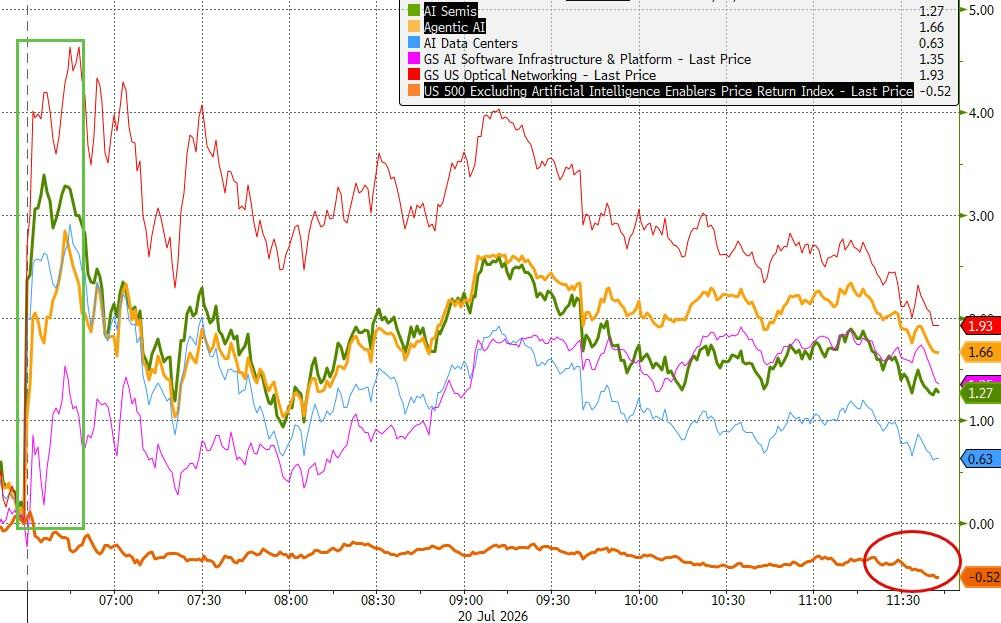
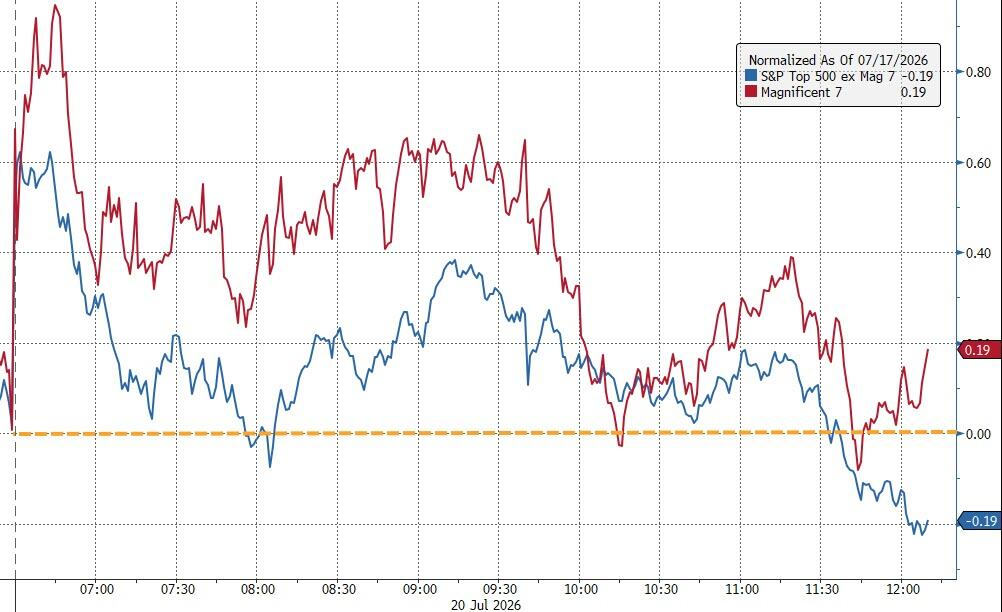
The Mag 7 tech giants collectively outperformed the other 493 constituents of the S&P 500, yet market breadth remains narrow.
Vincent Lin, head of Goldman Sachs Prime Services, noted that hedge funds have exited U.S. tech stocks over the past two months at a pace and scale that are both record-breaking. Vincent Lin stated:
The persistent and large-scale selling since early June indicates that tech investors are significantly reducing their positions, with early signs of capitulation beginning to emerge.
According to Bloomberg, Goldman Sachs macro strategist Michael Ball said that following the July options expiry, dealers’ positive gamma exposure has declined, weakening the 'pinning effect' on the S&P 500 and thereby widening the market’s two-way volatility range.
Stock selection logic is coming to the fore, with dispersion trades becoming a focal point for institutional investors.
Goldman Sachs derivatives strategist Brian Garrett believes that although geopolitical risks are resurfacing, implied correlation in the options market has approached its lowest level in the past two decades, suggesting that company-specific micro factors will dominate market performance more than macro conditions for the remainder of the year.
With earnings from S&P 500 constituents representing roughly one-fifth of the index’s total market capitalization set to be reported en masse over the coming week, Garrett expects stock-specific divergence to persist. Garrett stated:
The distinction between winners and losers will hinge on whether individual companies can surpass already elevated market expectations.
He recommended capturing next week's two-way trading opportunities by buying Nasdaq-100 options, which can hedge against further downside risk in semiconductors while also positioning for a potential oversold bounce. Current volatility has declined significantly, making both call and put options attractive.
Brock Weimer of Edward Jones believes the recent tech sector pullback reflects both profit-taking and investors reassessing the sustainability of AI infrastructure spending. He stated:
AI will remain a durable investment theme, but investors are advised to maintain exposure while complementing their portfolios with cyclical and value-oriented sectors.
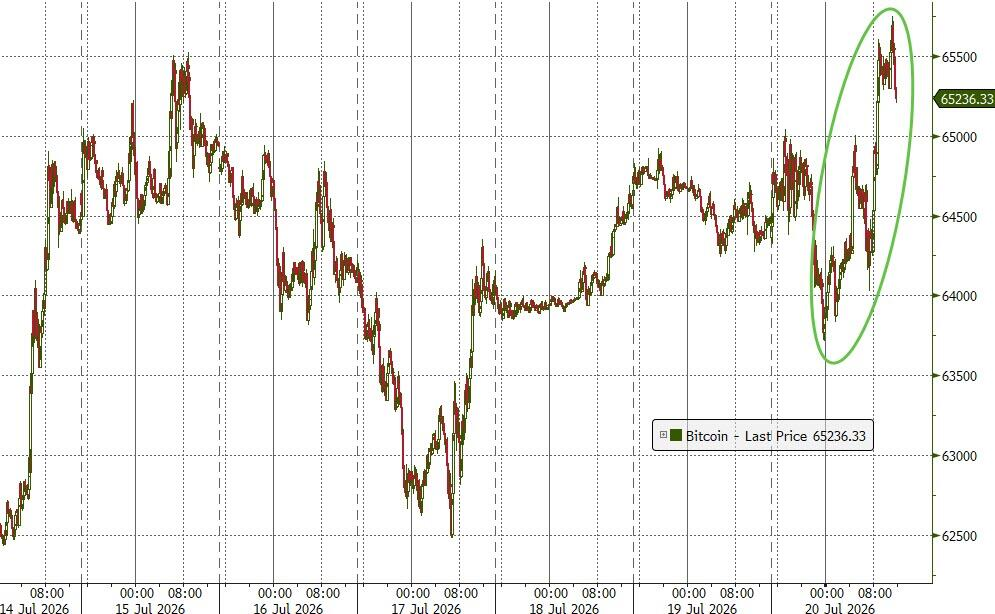
Bitcoin rebounded alongside technology stocks, while the U.S. dollar and gold were largely flat.
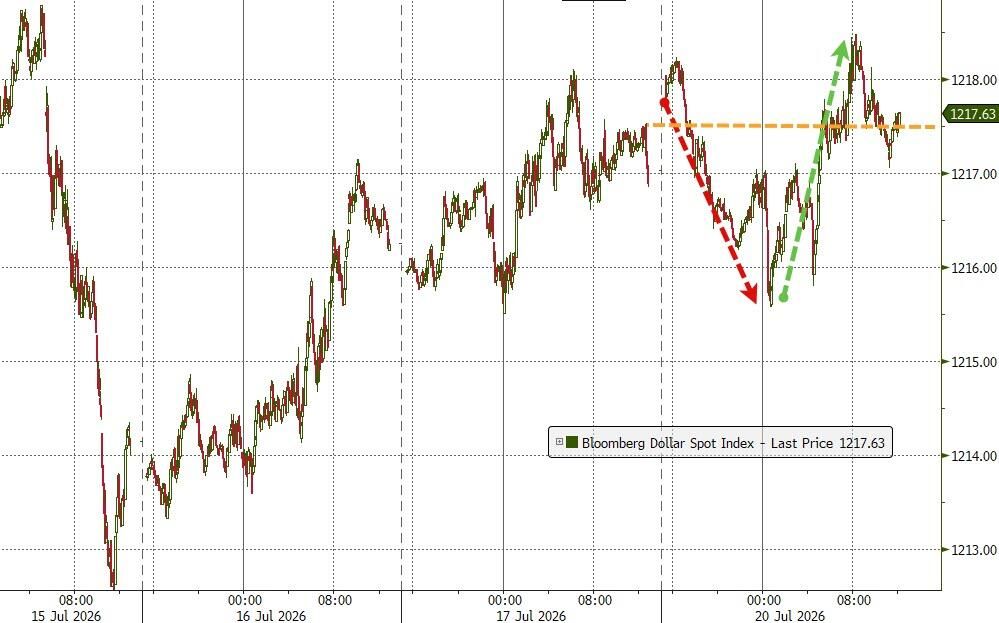
$U.S. Dollar Index (USDindex.FX)$After significant intraday volatility, it closed essentially unchanged.
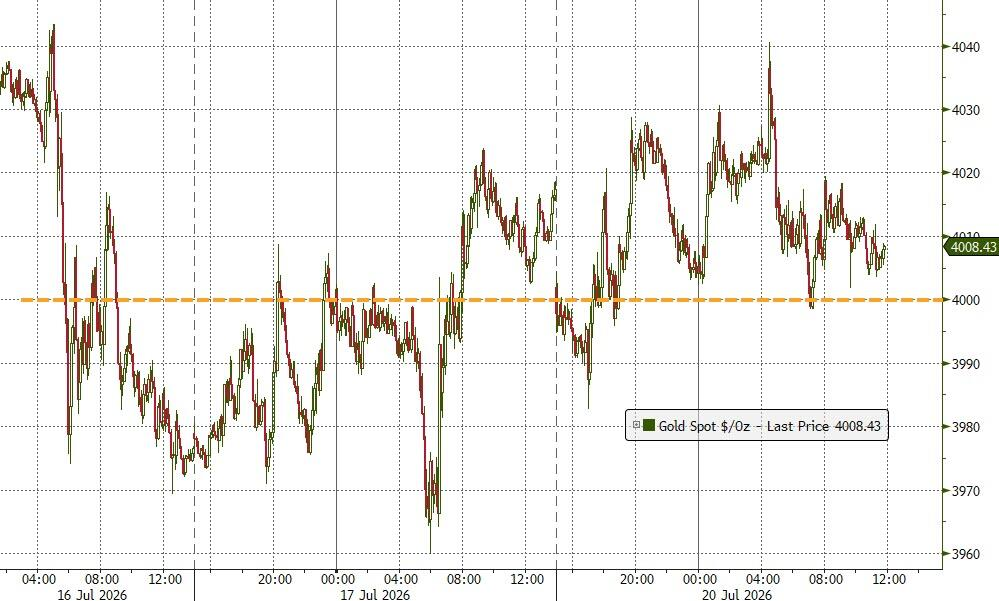
Gold moved in tandem with the U.S. dollar and closed nearly flat at $4,008, holding above the $4,000 level for consecutive sessions.
The cryptocurrency market rebounded on Monday along with large-cap tech stocks, with Bitcoin rising 0.8% to break above the $65,000 mark, closing at $65,036 without giving back gains despite a late-session softening in tech stocks.$Ethereum (ETH.CC)$It rose 1.7% to close at $1,897.
The three major U.S. equity indices closed lower on Monday: the S&P 500 fell 0.19% to 7,443.28, breaking below its 50-day moving average; the semiconductor index gained 0.60%; Microsoft rose 2.15%; Apple declined 2.14%; Tesla dropped 2.96%. Chinese ADRs posted gains amid the broader market decline.
U.S. equity benchmark indices:
The S&P 500 index rose 19.94 points, or 0.32%, closing at 6,263.70.
The Dow Jones Industrial Average rose 231.49 points, or 0.53%, closing at 44,254.78.
The Nasdaq Composite gained 52.69 points, or 0.26%, closing at 20,730.49, marking another record high close.$NASDAQ-100 Index (.NDX.US)$It advanced 23.38 points, or 0.10%, to close at 22,907.97, also posting a record high close for the second consecutive trading day.
$Russell 2000 Index (.RUT.US)$It rose 0.99%, closing at 2,226.98.
The CBOE Volatility Index (VIX) declined 1.27%, closing at 17.16.
U.S. stock sector ETFs:
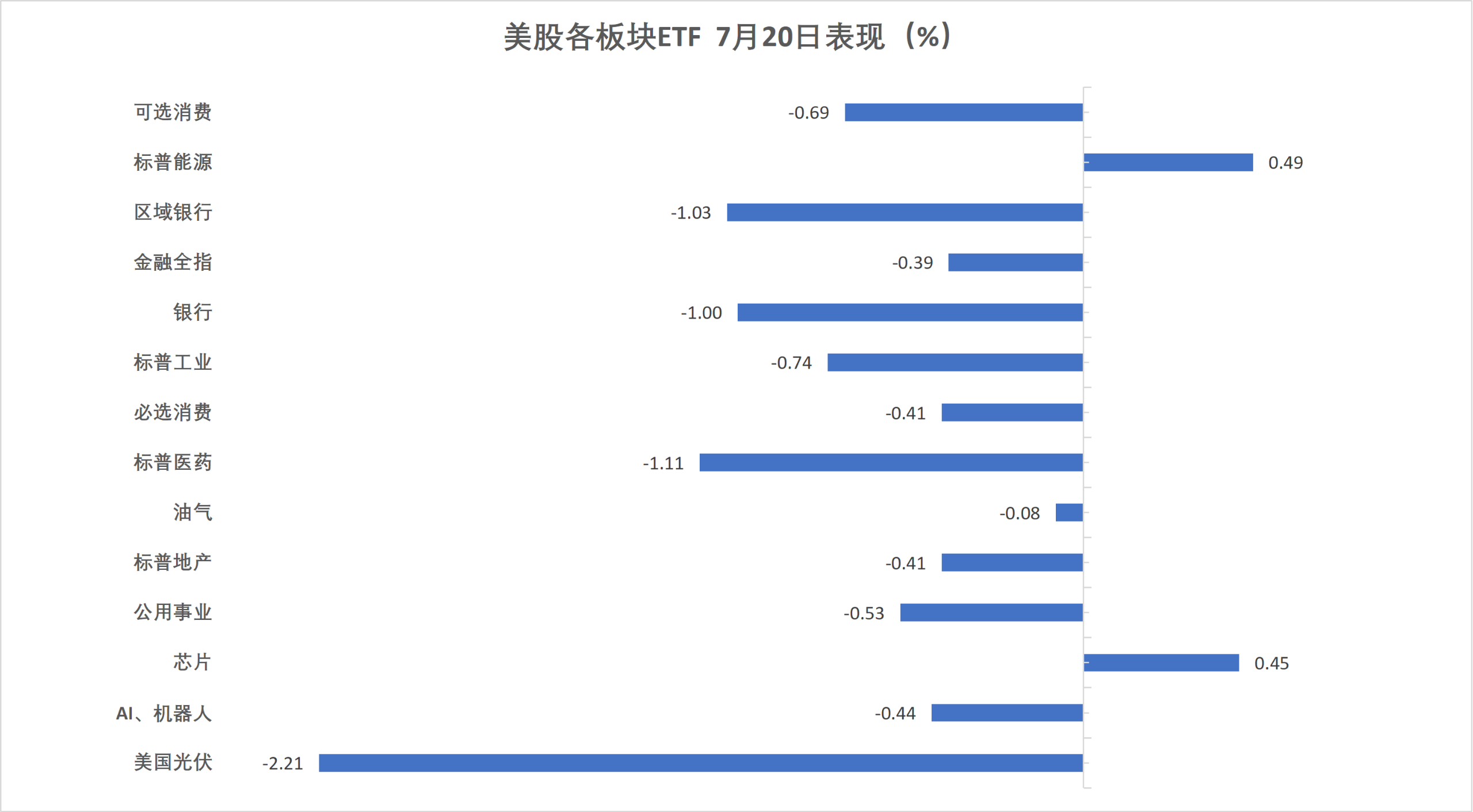
Most U.S. sector ETFs closed lower, with the biotechnology ETF down 1.70%, and healthcare, banking, and regional banking ETFs falling by as much as 1.14%.
Mag 7:
The Wind U.S. Mag 7 Index rose 0.09%.
Microsoft rose 2.15%, and Alphabet Class A shares gained 1.51%.$Amazon (AMZN.US)$up 1.12%,NVIDIA (NVDA.US)up 0.23%; Meta down 0.02%, Apple down 2.14%, Tesla down 2.96%.
Semiconductor stocks:
The Philadelphia Semiconductor Index closed down 0.39% at 5,696.21 points.
$Taiwan Semiconductor (TSM.US)$ADR up 0.26%, also hitting a new record closing high.
U.S.-listed Chinese stocks:
The Nasdaq Golden Dragon China Index closed up 0.90% at 6,337.52 points.
Among actively traded Chinese ADRs,$Alibaba (BABA.US)$closed up 4.7%, Tencent up 3.6%,Baiduup 2.4%,$PDD Holdings (PDD.US)$up 2.3%,$NetEase (NTES.US)$up 2.2%, while XPeng fell 2.6%,$ASE Technology Holding (ASX.US)$and slid 3.7%.
Other stocks:
$Circle(CRCL.US)$up 8.27%.
$AMC Entertainment (AMC.US)$closed up 27%, marking its largest single-day gain since May 2024, as the company’s adjusted EBITDA for Q2 exceeded analyst expectations.
IREN rose 20%, marking its largest single-day gain since November 2024, after the company raised its 2026 annual recurring revenue (ARR) target to over $4 billion and signed $2.8 billion in new customer contracts.
Warner Bros. Discovery fell 3.8%, closing at its lowest level since April 2025.
Most stocks in the optical communications and storage sectors advanced,$Lumentum (LITE.US)$Credo gained more than 4%,$Marvell Technology (MRVL.US)$rose by more than 3%, while$Coherent (COHR.US)$、SanDisk (SNDK.US)、$Western Digital (WDC.US)$Rising over 2%, $Seagate Technology (STX.US)$、Micron Technology (MU.US)rose over 1%;$SK Hynix (SKHY.US)$fell by more than 1%.
$Hut 8 (HUT.US)$surged over 10% after the company announced it had signed a second 15-year computing power leasing agreement worth $9.8 billion in total.
Company News
[Microsoft to Deploy AMD Helios Racks on Azure for AI Inference]
Microsoft will deploy AMD Helios racks at scale on its Azure cloud platform for AI inference. AMD is scheduled to begin shipping Helios to customers in the second half of 2026.
[BlackRock Plans to Issue Over $12 Billion in Bonds to Finance Meta’s Texas Data Center]
According to recent reports, BlackRock is planning to issue over $12 billion in bonds to finance Meta’s data center campus in El Paso, Texas. This transaction marks the latest in a series of debt financings aimed at supporting large-scale AI investments by technology companies.
[Philippine Airlines Confirms Order for Up to 20$Boeing (BA.US)$787 Dreamliners]
According to Boeing, during the Farnborough Airshow 2026, Philippine Airlines confirmed an order for up to 20 Boeing 787 Dreamliner aircraft.
[U.S. Judge Halts Paramount Global's Acquisition of Warner Bros.]
A U.S. judge ordered Paramount Global to pause its acquisition of Warner Bros. Discovery for two weeks. On the 13th local time, a coalition of 12 U.S. states led by California filed a lawsuit in the U.S. District Court for the Northern District of California seeking to block the acquisition. U.S. media widely view the deal—valued at approximately $111 billion—as one that would significantly reshape the landscape of the American entertainment and media industries if completed.
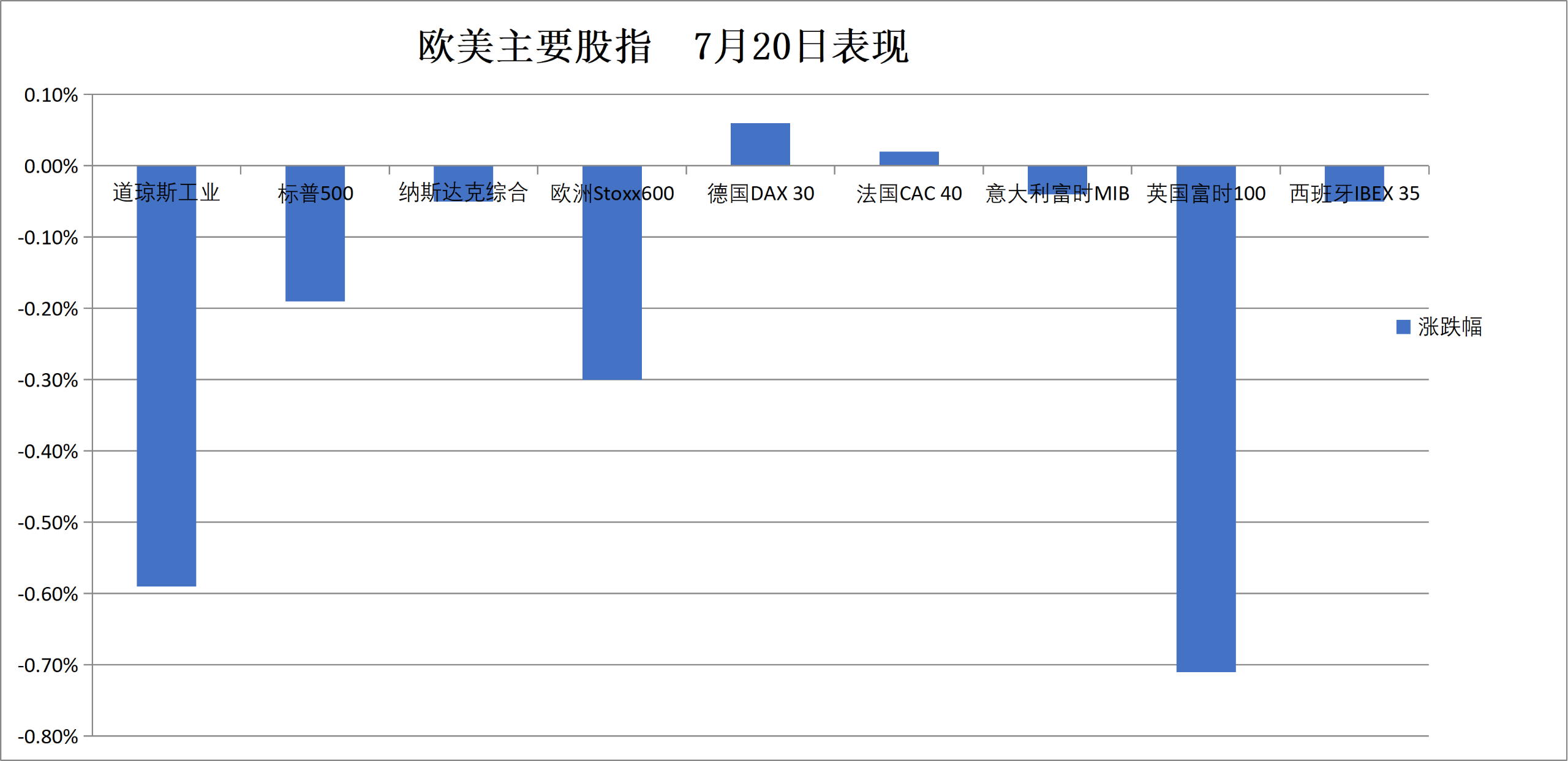
European stocks closed down 0.3%, with component stock Pirelli falling over 5.7% and Ryanair dropping more than 4.5%. The UK stock market closed down 0.7%, with component stock Persimmon declining approximately 3.8% and Computacenter rising over 5.5%.
Pan-European indices:
The pan-European STOXX 600 index closed down 0.30% at 639.60 points.
The Eurozone STOXX 50 index closed down 0.06% at 6,227.40 points.
National stock indices:
Germany's DAX 30 index closed up 0.06% at 24,846.69 points.
France's CAC 40 index closed up 0.02% at 8,340.11 points.
$FTSE 100 Index (.FTSE.GB)$Closed down 0.71% at 10,524.76 points.
Sector and individual stock performance:
Among Eurozone blue-chip stocks, ENEL declined 2.64%, Bayer fell 2.37%, and France’s Saint-Gobain and LVMH Group each dropped at least 1.67%.$ASML Holding (ASML.US)$Holdings fell 1.05%, marking the ninth-largest decline.
Among all constituents of the STOXX Europe 600 Index, Pirelli closed down 5.74%, Ryanair dropped 4.55%, Plus500 fell 3.9%, and Kakaku.com declined 3.77%, the fourth-largest drop.$Grifols (GRFS.US)$Rose 3.72%, with Prosus ranking third in performance.
Want to select stocks or get a stock diagnosis? Curious about the opportunities and risks in your portfolio? For all your investment questions,Just ask Futubull AI!

Editor/Liam