Macroeconomic Highlights
Trump stated that Iran will pay a heavy price for killing American soldiers, while a senior Iranian official said mediators have proposed a 10-day ceasefire between Iran and the U.S.
According to foreign media reports on the 20th, citing a senior Iranian official, mediators in Iran-U.S. negotiations have submitted a proposal aimed at de-escalating the current situation, suggesting a 10-day ceasefire to facilitate the resumption of implementation of the memorandum of understanding reached between Iran and the United States last month. On the same day, Iranian Foreign Ministry spokesperson Baghaei said at a press conference that Iran had received proposals from both the U.S. and the negotiation mediators, but declined to disclose specific details for now. He also noted that Iran’s Interior Minister would visit Pakistan that day to hold consultations on bilateral matters.
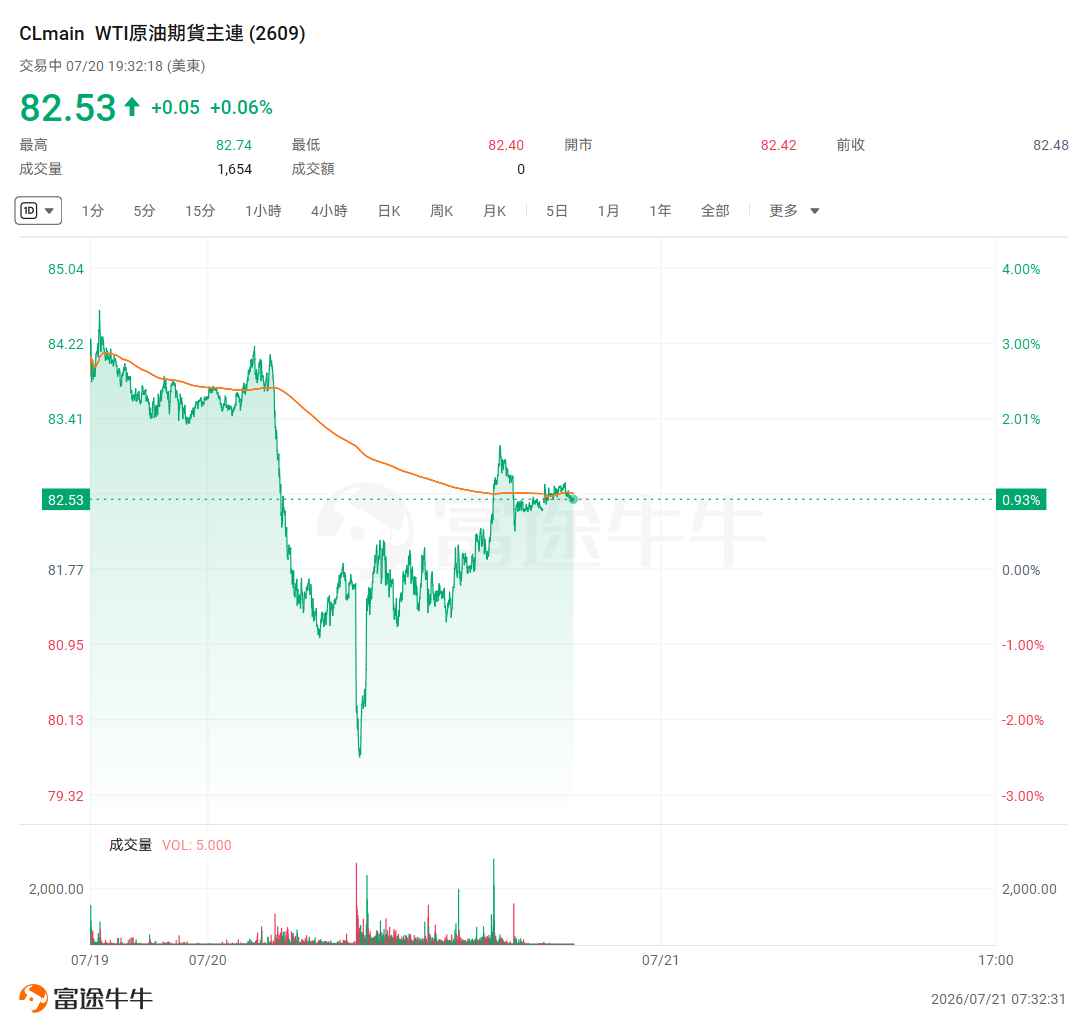
Trump posted on Truth Social: “Every time Iran kills an American soldier, they will pay many times over! This directive has been communicated to Secretary of War Pete Hegseth, Chairman of the Joint Chiefs of Staff Daniel Cain, and every leader in the military.” Following U.S. confirmation that at least three service members died recently in combat with Iran, Brent crude oil prices surged nearly 4% overnight, surpassing $90 per barrel. Prices later retreated after Iranian Foreign Ministry spokesperson Ismail Baghaei indicated Tehran was open to negotiations based on its national interests.
 Trump signs new proclamation imposing 50% tariffs on certain Canadian goods
On Monday, U.S. President Trump signed a proclamation imposing new 50% tariffs on certain Canadian goods under Section 338 of the Tariff Act of 1930. The measure will take effect in 30 days; energy products, potash, fish, critical minerals, as well as automobiles and metals already subject to sector-specific tariffs, are excluded from this latest round of duties. The new tariffs are scheduled to take effect at 00:01 a.m. Eastern Time on August 19 and will be levied in addition to existing tariffs, taxes, and other charges. The official emphasized that no exemptions will be granted under the existing North American trade agreement among the U.S., Canada, and Mexico. The absence of such an exemption means a significant volume of Canadian goods currently crossing borders duty-free will now face substantial tariffs.
Head of U.S. artificial intelligence safety agency under the Trump administration resigns
According to Axios, Chris Fall, Director of the Center for AI Standards and Innovation (CAISI)—a Commerce Department unit responsible for AI testing and standard-setting—has resigned just three months into his tenure. The agency, formerly known as the U.S. AI Safety Institute, is tasked with evaluating advanced AI systems and supporting related standards. Fall was appointed director in April following a reorganization of the agency. His sudden departure leaves this key federal AI office without permanent leadership as the Trump administration deliberates its next steps on AI safety and regulation.
Behind the recent U.S. equity market pullback lies intense positioning battles: short interest hits record levels
Recent data show that short interest in U.S. equities has soared to its highest level on record, which may partly explain the recent pullbacks in leading tech stocks. According to data compiled by S3 Partners since 2010, short positions in S&P 500 constituents now account for approximately 3.79% of free-float shares, nearing an all-time high. Meanwhile,Russell 3000 Indexthe short interest ratio for index constituents has recently risen to 6.3%, setting a new record. Goldman Sachs data also indicate that median short interest as a percentage of market capitalization for S&P 500 companies has reached 3%, the highest level since late 2011. Over the past three months, total short positions across the S&P 500 have grown by nearly 10%, now amounting to roughly 1.4 billion shares. Shorting U.S. equities was largely unprofitable during the first six months of this year, but as market discussions intensify around AI-related capital expenditures, short sellers appear to have found renewed justification to maintain their positions.
The 'positive gamma' cushion in U.S. equity options has significantly weakened, potentially amplifying market volatility.
Following the July expiration of U.S. equity options, the market-stabilizing 'positive gamma shock absorber' has largely vanished: previously, options dealers would buy on dips and sell on rallies to dampen price swings, but this stabilizing force has now weakened substantially, likely leading to markedly higher volatility in U.S. equities. Earlier declines were largely confined to the semiconductor sector, with capital rotating into large-cap tech and healthcare stocks to support the broader market. Now, there is a risk that chip-related pullbacks could spread across the entire market. This week’s earnings reports will be pivotal for determining near-term direction. Google-C (GOOG.US) 、 $Tesla (TSLA.US)$ 、 $Intel (INTC.US)$ as major tech giants release their earnings en masse. Expected price moves for individual stocks could reach as high as 13%. Without the usual dampening mechanism in place, swings in individual stocks are more likely to trigger sharp, broad-based market turbulence. The S&P 500 faces a critical pivot point at 7,480—breaking below would signal weakness, while holding above would indicate relative strength. Investors should brace for heightened volatility and closely monitor the quality of tech earnings.
Hong Kong Exchange responds to rumors about 'extending trading hours': still at a very preliminary discussion stage
On July 20, in response to market rumors that 'Hong Kong Exchange is considering extending stock trading hours and eliminating the lunch break,' the exchange told Xinjing News Shell Finance reporters: 'Hong Kong Exchange is committed to enhancing Hong Kong’s competitiveness as an international financial center and is currently studying various measures to improve market accessibility, including extended trading hours. Our current priority is to examine the proposal to extend trading hours in the derivatives market. Any implementation of such proposals remains subject to market feedback and regulatory approval.' The exchange added that discussions regarding optimizing trading hours in the cash equity market are still at a very early exploratory stage. Any adjustments to the cash market would require careful assessment of their market impact and comprehensive consideration of stakeholder views and arrangements under the Stock Connect programs.
South Korea's ruling party calls for strengthened regulation of single-stock leveraged ETFs and additional measures if necessary
According to South Korea’s Seoul Economic Daily, on the 20th, the Democratic Party of Korea urged the Financial Services Commission (FSC) to intensify monitoring of single-stock leveraged ETFs and implement supplementary measures if needed. On the same day, lawmakers from the Democratic Party serving on the National Assembly’s Committee on Planning and Finance held a party-government meeting with the FSC at the National Assembly in Yeouido, Seoul, where they received a briefing from FSC Chairman Lee Eok-won and other officials. Following the meeting, Park Sang-hyuk, the ruling party’s whip on the Committee on Planning and Finance and a member of the Democratic Party, told reporters: “The FSC reported on the measures announced last Thursday. Lawmakers broadly called on regulators to further enhance market surveillance and situation analysis, and to consider introducing additional supplementary measures if necessary.”
U.S. Stock Market Update
Major indices closed lower after opening higher; optical communication and memory-related stocks rebounded broadly
On Monday, July 20, U.S. stocks opened higher but closed lower across the board. At the close, the Dow Jones Industrial Average fell 0.59% to 51,839.26 points—the lowest closing level since June 24; the S&P 500 declined 0.19% to 7,443.28 points; and the Nasdaq Composite dropped 0.05% to 25,508.07 points.

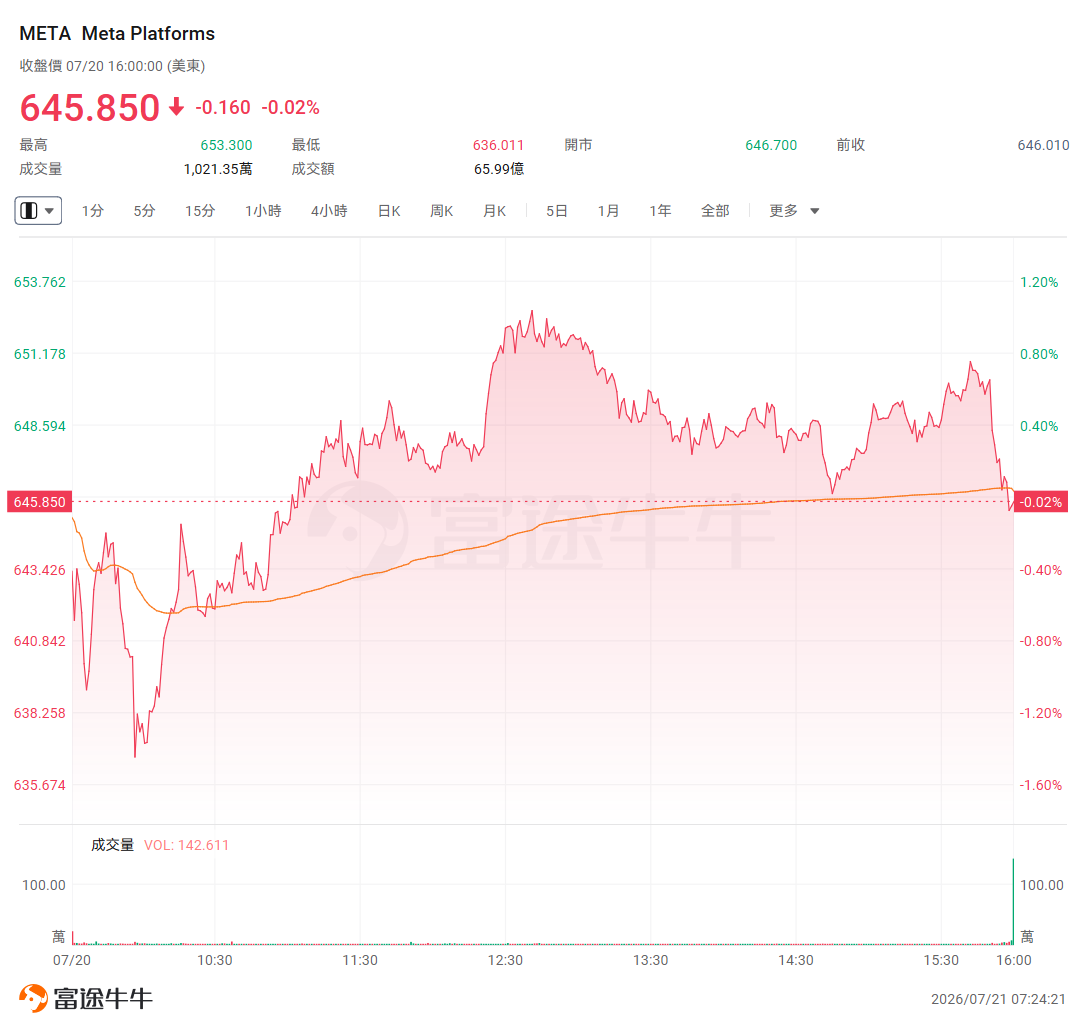
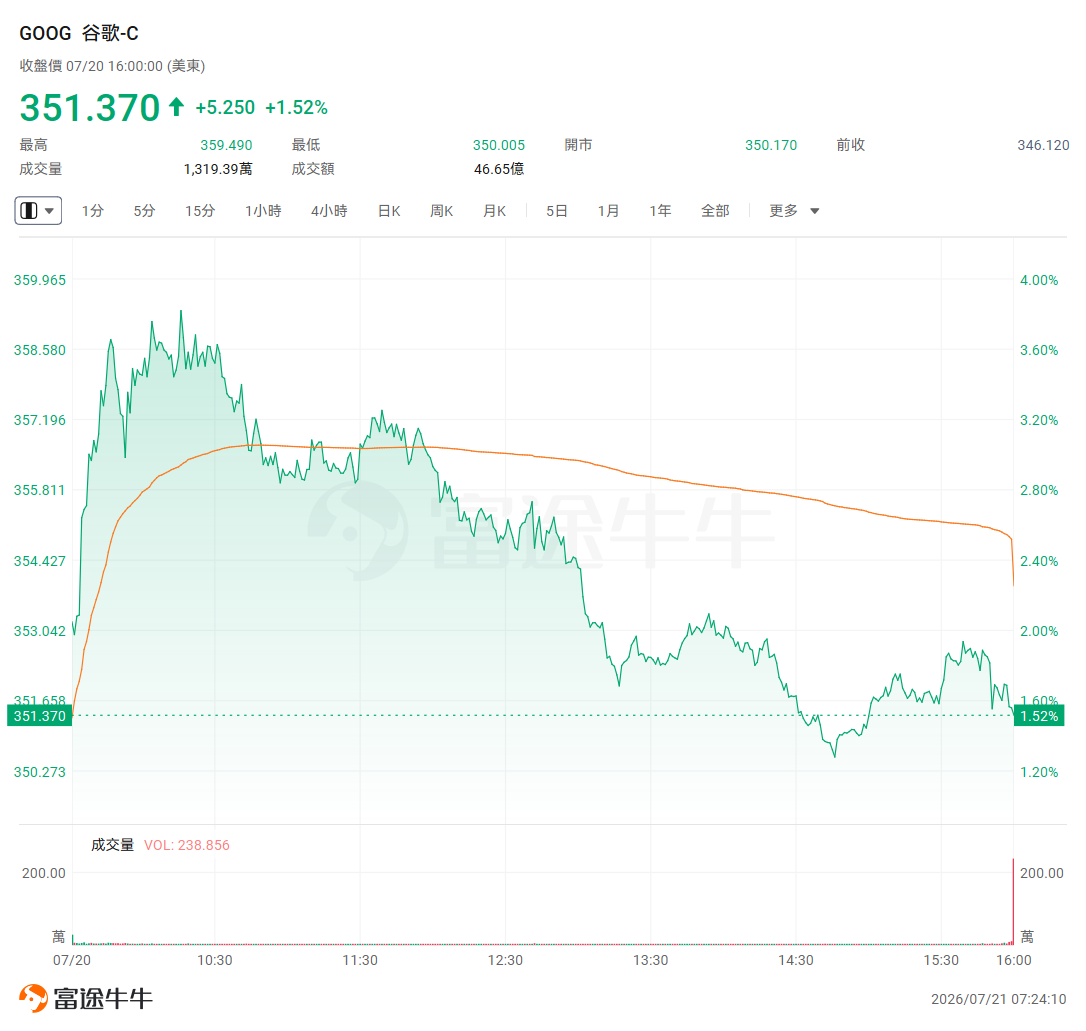
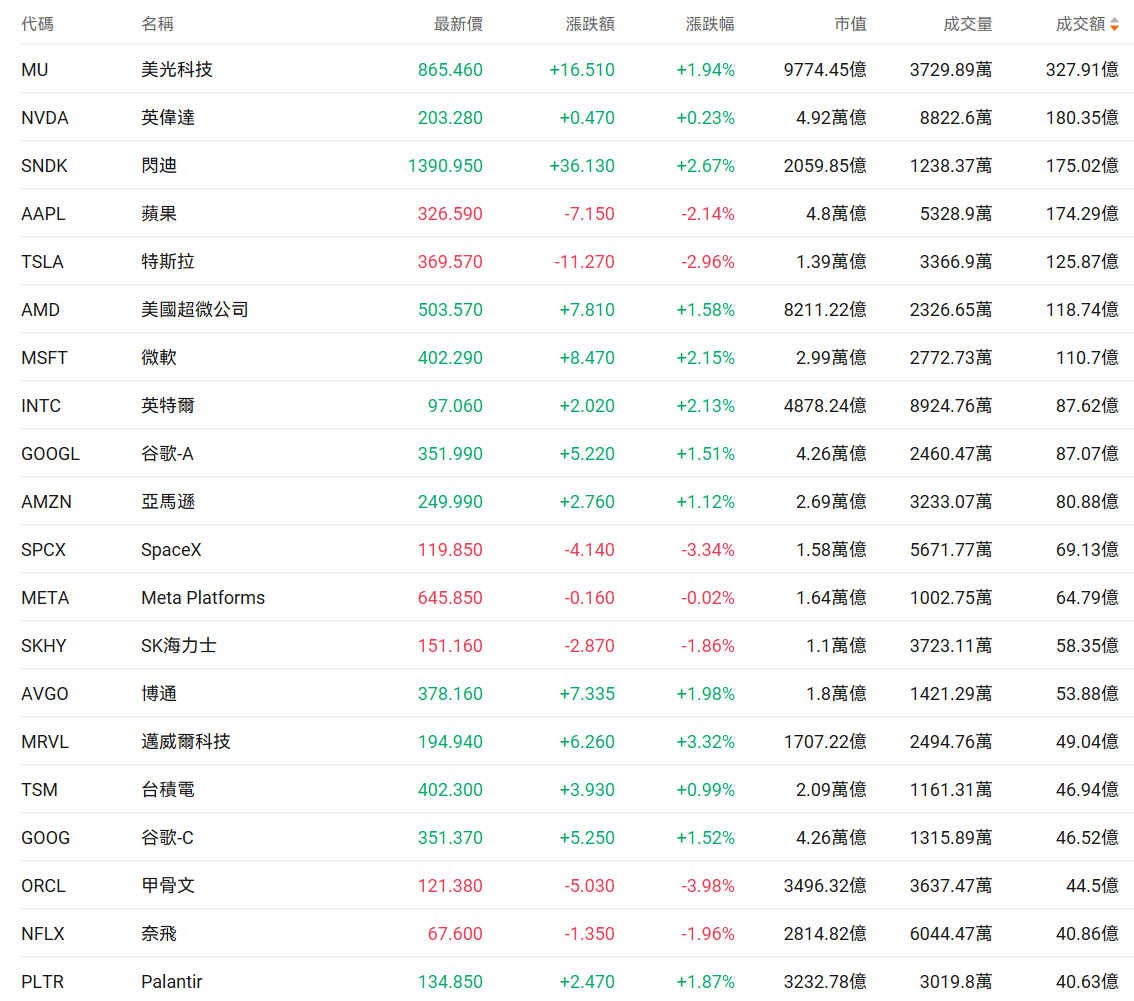
$Star Tech Stocks (LIST2518.US)$ Stocks ended mixed: NVIDIA rose 0.23%, Apple fell 2.14%, Alphabet Class C shares gained 1.52%, Microsoft advanced 2.15%, Amazon climbed 1.12%, Broadcom increased by 1.98%, Meta Platforms dipped 0.02%, SpaceX declined 3.34%, and Tesla dropped 2.96%.
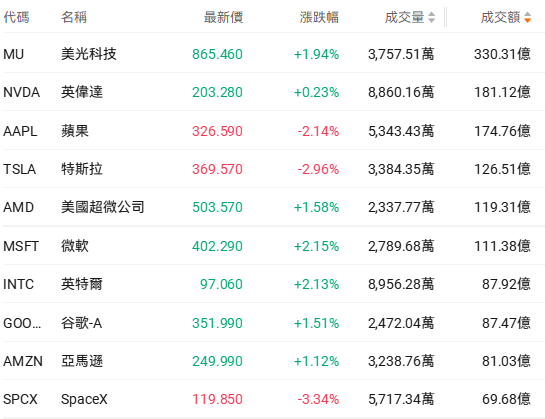
$Semiconductors (LIST2015.US)$ Stocks surged early but retreated later, $iShares Semiconductor ETF (SOXX.US)$ closing up 0.45%, $VanEck Semiconductor ETF (SMH.US)$ rose 0.41%, with both briefly gaining nearly 3% during the session.
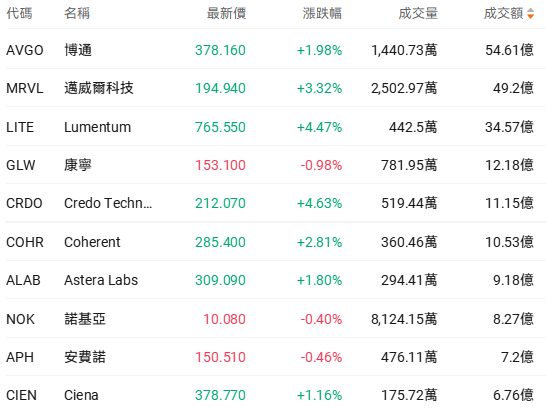
$PHLX Semiconductor Index (.SOX.US)$ closed up 0.6%, $Optical Communications (LIST23979.US)$ led by individual gainers, Credo Technology (CRDO) rose 4.63%, Marvell Technology gained 3.32%, and Coherent increased by 2.81%.
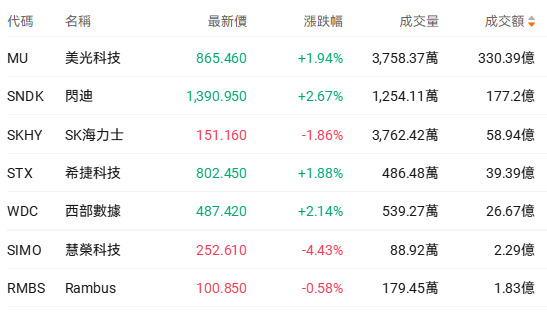
$Storage Concept (LIST23925.US)$ Most chip stocks advanced, with SanDisk up 2.67%, Western Digital rising 2.14%, Micron Technology gaining 1.94%, Seagate Technology increasing by 1.88%, while SK Hynix declined 1.86%.
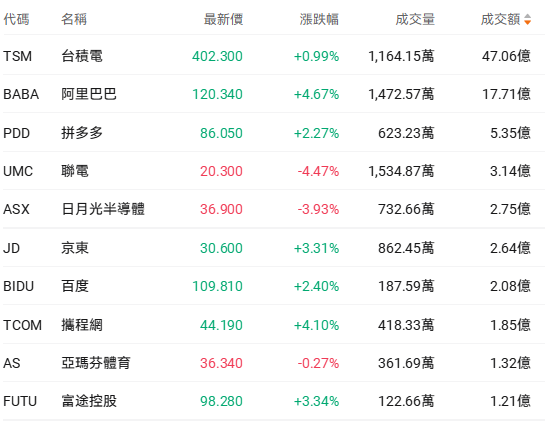
$Popular Chinese ADRs (LIST2517.US)$ Most stocks moved higher, with Kingsoft Cloud up 5.24%, Alibaba rising 4.67%, JD.com gaining 3.31%, XPeng Group falling 2.51%, and Nio down 1.43%.
Stock-specific news
BlackRock plans to issue over $12 billion in bonds to finance Meta's Texas data center.
In May this year, reports indicated that the total financing for the data center project, Project Sopaipilla Holdings, could reach approximately $13 billion. An 80% stake in Project Sopaipilla is held by funds managed by Global Infrastructure Partners (GIP) and HPS Investment Partners, both of which are currently subsidiaries of $Blackrock (BLK.US)$ , $Meta Platforms (META.US)$ which holds the remaining 20%. According to informed sources, the issuer has engaged JPMorgan and Morgan Stanley to host a fixed-income investor conference call on Wednesday, with pricing expected to be finalized early next week. Meta previously stated that the 1-gigawatt (GW) data center is expected to become operational in 2028 and will create over 300 on-site jobs upon completion. Financing for this data center project will further fuel the surge in bond issuance this year driven by global AI infrastructure development, while the substantial debt financing continues to exert downward pressure on valuations in the tech sector’s bond market.
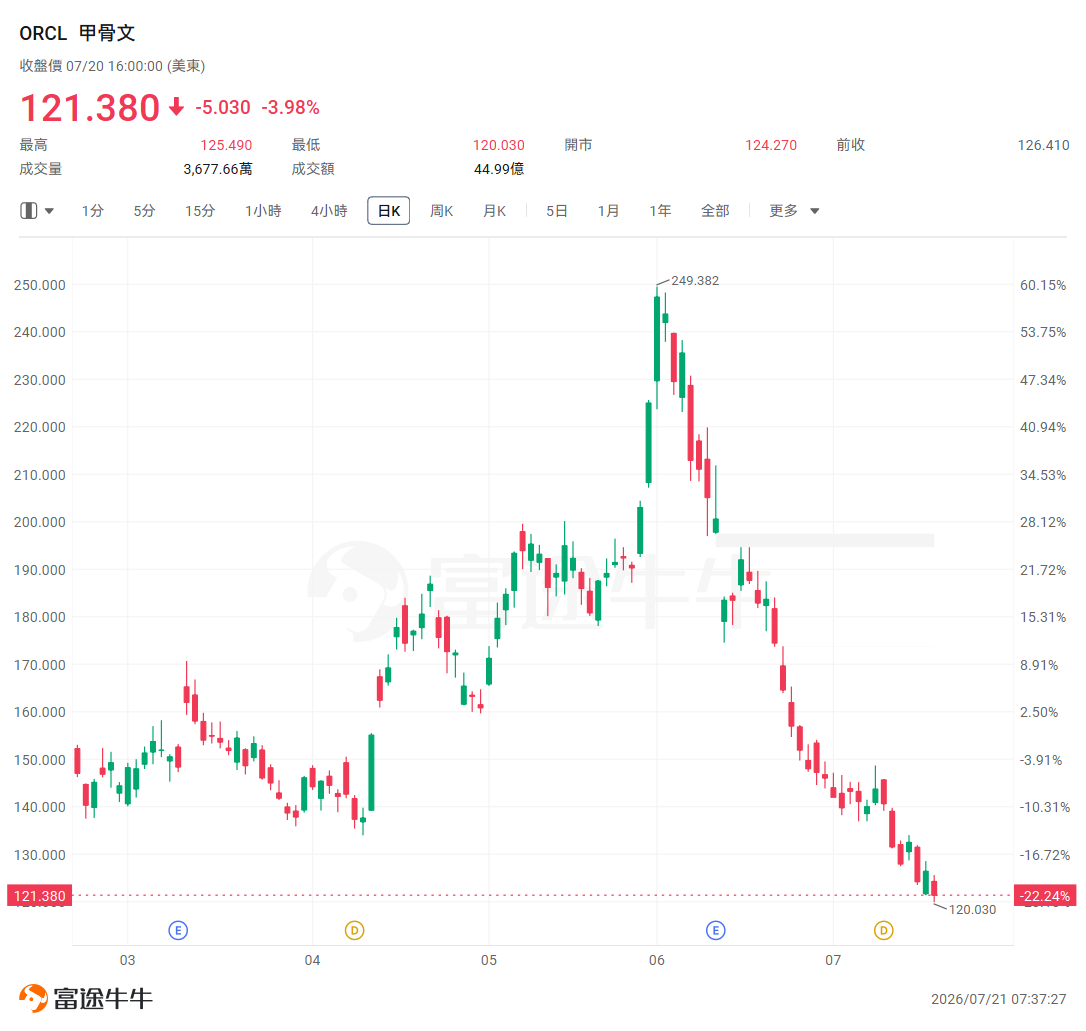
Oracle's credit risk has risen to its highest level in nearly 18 years, as markets express concern over its increasing debt burden.
Monday, Oracle (ORCL.US) The cost of debt default insurance has risen to a multi-year high, while its existing bonds have been sold off, as markets question whether its massive investments in artificial intelligence will yield returns. According to ICE Data Services, early Monday trading saw the annualized rate on the company's five-year credit default swaps (CDS) climb to approximately 203 basis points—marking the highest level since records began in late 2008 and surpassing Friday’s previous peak of 198.23 basis points. Meanwhile, Oracle bonds across maturities broadly weakened. TRACE data shows that one of the company’s most actively traded bonds—the 6.7% coupon bond maturing in 2056—saw its spread widen by about 8 basis points to 263 basis points, while the 5.7% coupon bond due in 2036 widened by approximately 9 basis points to 205 basis points.
Google is reportedly developing a new AI server chip aimed at significantly improving the efficiency of running Gemini.
The latest information shows that Google-C (GOOG.US) / Google-A (GOOGL.US) It is developing a new server chip internally codenamed “Frozen v2,” designed to run the Gemini model more efficiently. According to reports, the chip will permanently embed part of the Gemini model’s architecture directly into silicon, thereby reducing the computational load and data transfer required to answer user queries. The report states that Google plans to deploy the Frozen chip in 2028. It will not replace general-purpose TPUs but will instead serve as a more specialized addition within Google’s custom chip portfolio.
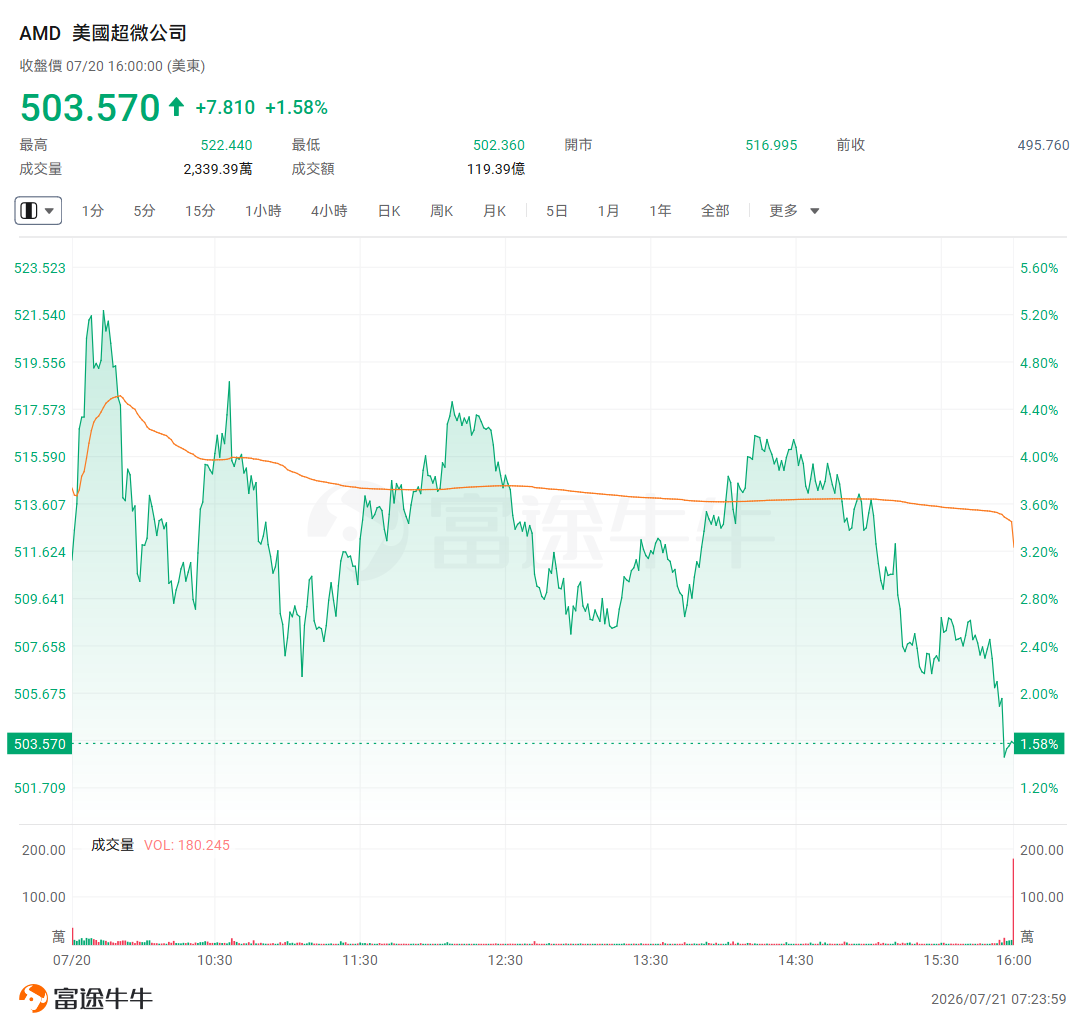
Microsoft will deploy Advanced Micro Devices’ Helios rack-scale solution on its Azure cloud platform.
On July 20, $Microsoft (MSFT.US)$ will deploy $Advanced Micro Devices (AMD.US)$ Advanced Micro Devices’ Helios rack-scale solution on its Azure cloud platform to power cutting-edge AI inference workloads. According to Futurum Group, under what is迄今为止 Microsoft’s most comprehensive cloud partnership with AMD to date, Microsoft has committed to full-stack procurement of the Helios rack-scale AI system at a price approximately 40% higher than NVIDIA’s Rubin, signaling a fundamental shift in AMD’s competitive strategy in the AI infrastructure market. Microsoft will use Helios on Azure for advanced AI inference and will also introduce the sixth-generation EPYC Venice CPU virtual machine series along with Pensando DPUs. This marks the first time AMD has achieved full-stack deployment—spanning GPUs, CPUs, and networking—within a single cloud customer.
Air taxi company turns defense player: Archer Aviation shares surge
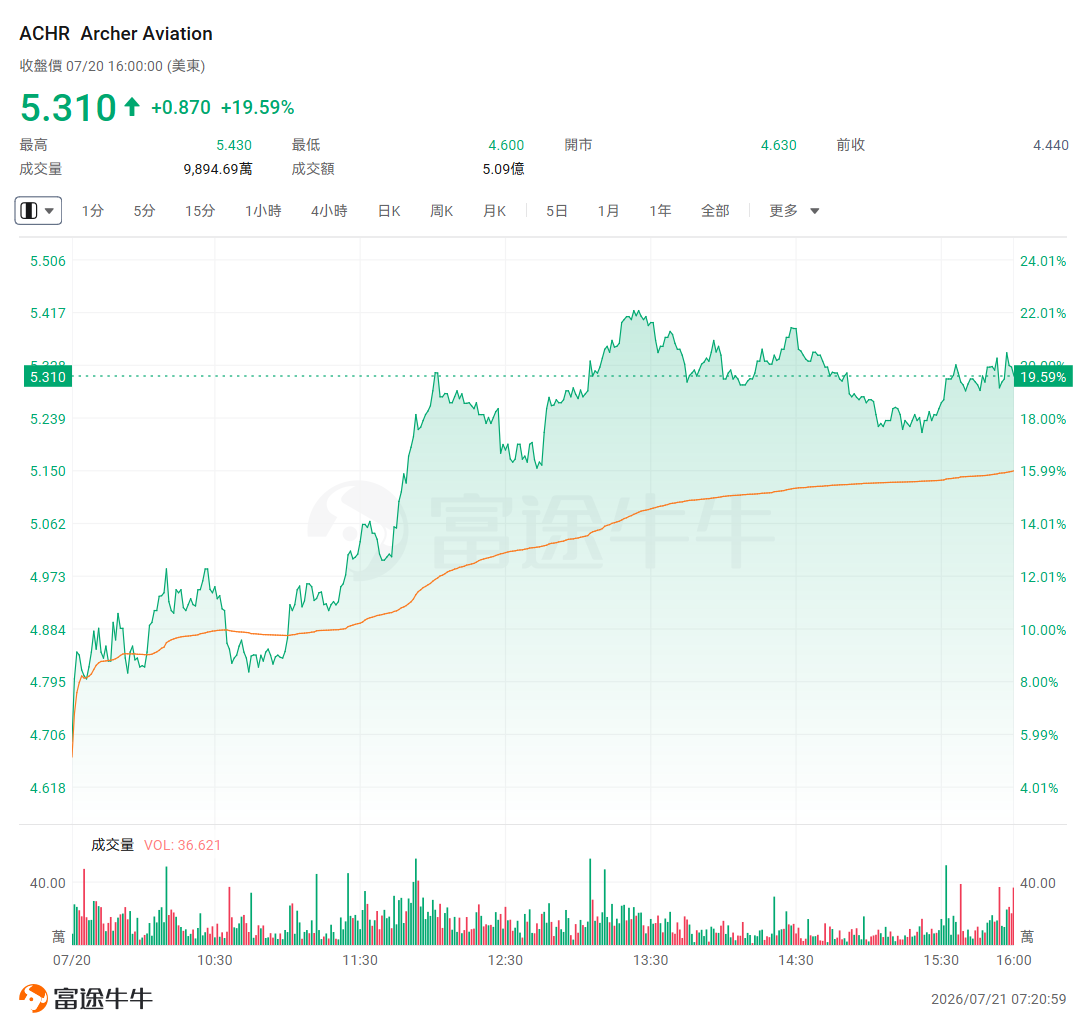
On Monday, July 20, Archer Aviation announced on its website a joint vertical take-off and landing (VTOL) aircraft platform developed with defense technology firm Anduril. The platform, developed under a collaboration agreement reached in 2024, is designed for both commercial and military applications. On the same day at the Farnborough International Airshow, Anduril unveiled “Thunder,” an autonomous attack rotorcraft based on this platform, intended to operate alongside current and next-generation manned attack and assault aircraft. Following this announcement, $Archer Aviation (ACHR.US)$ the company’s stock rose nearly 20% during the trading day.
Wedbush turns bullish on Intel ahead of earnings: Q2 results expected to show strong performance, but market sentiment remains the biggest variable
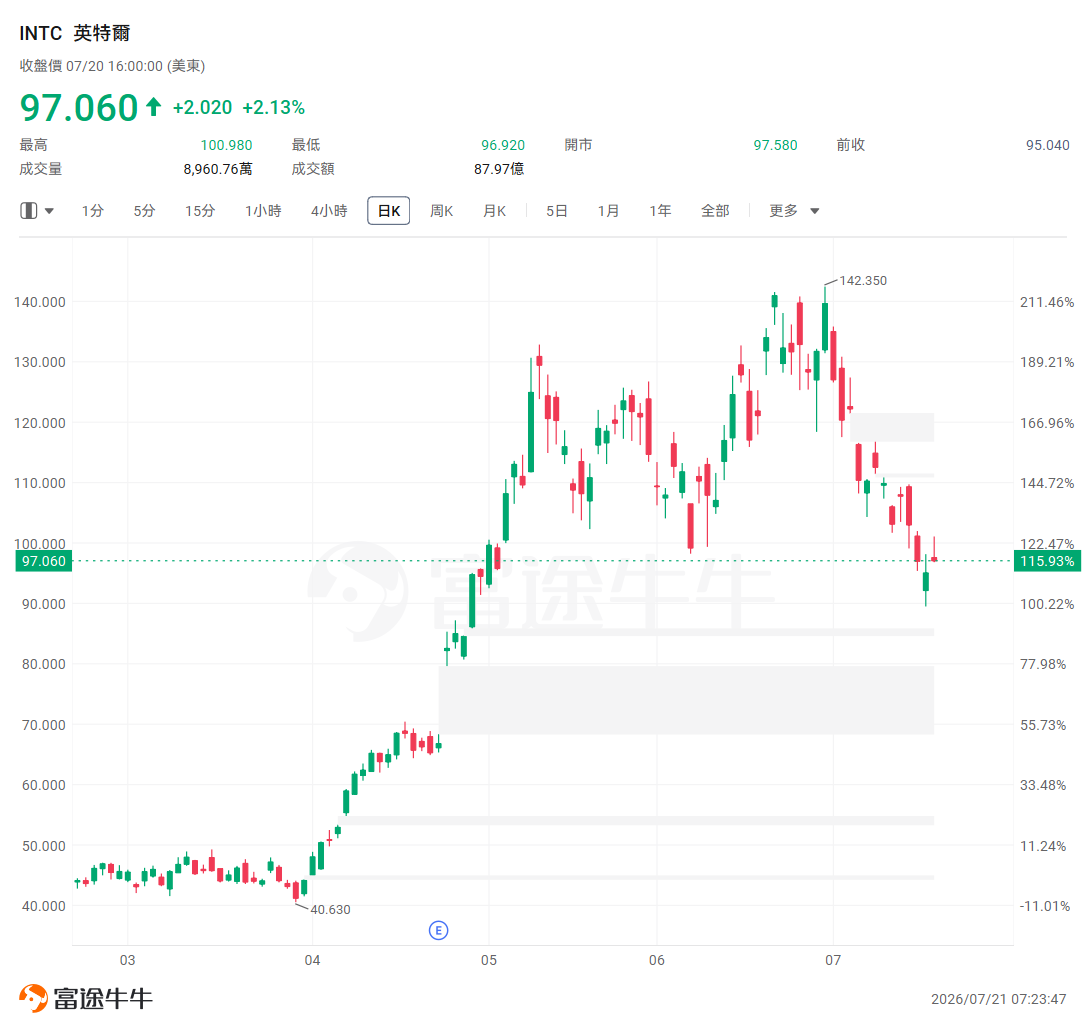
U.S. semiconductor veteran $Intel (INTC.US)$ Intel is scheduled to release its second-quarter earnings after U.S. market hours on July 23 (Eastern Time). In a note to clients, Wedbush analyst Matt Bryson wrote: “With both revenue and margins appearing poised to comfortably exceed second-quarter expectations—and with the third quarter likely to see a similar trend, potentially benefiting from lower operating expenses following another round of workforce reductions—we believe market expectations for earnings will see a significant upward revision.” Looking ahead to the upcoming earnings report, Bryson noted that Intel’s data center business could be the primary driver of quarterly performance, forecasting a 10% sequential and 40% year-over-year increase in sales for this segment. He added that the company may also benefit from stronger pricing power, as average selling prices (ASPs) rose by double-digit percentages during the quarter.
SpaceX rocket launch fails again, marking the second time in recent weeks that a launch has been aborted at the last minute
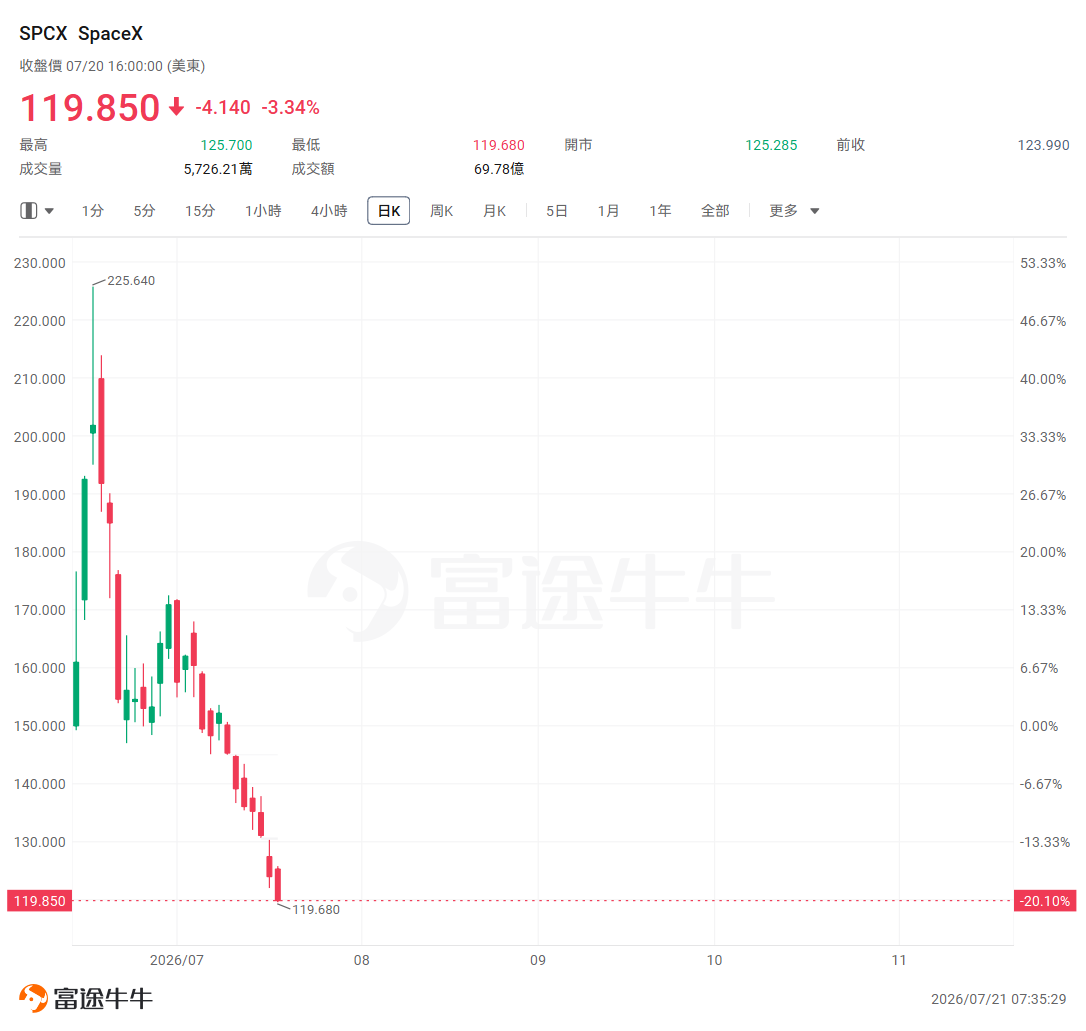
$SpaceX (SPCX.US)$ Shares closed down 3.3% locally on Monday, hitting a new all-time low since listing. SpaceX had planned to launch a Falcon 9 rocket on July 20 to deploy 24 Starlink satellites, but the launch was unusually aborted: after the countdown reached T-0 and engines ignited, liftoff did not occur, and commentators immediately announced the cancellation of the mission—marking the second recent abort of a launch attempt. SpaceX subsequently announced it would suspend Starlink launches effective immediately to ensure safety. Additionally, SpaceX stated it will release its financial and operational results for the second quarter of 2026 on August 4. Last week, SpaceX’s Starship rocket was scheduled for its 13th test flight from Texas but triggered an automatic abort sequence one second before liftoff.
Top 20 by Trading Volume
Hong Kong Market Outlook
Southbound capital reduced holdings of Hong Kong-listed stocks by over HK$5.9 billion, net bought Alibaba shares worth more than HK$1.8 billion, and increased positions in NetEase by over HK$1.4 billion
On Monday, July 20, southbound capital recorded net sales of HK$5.962 billion in Hong Kong-listed equities.
$Alibaba-W (09988.HK)$、$NetEase (09999.HK)$、$Meituan-W(03690.HK)$received net purchases of HK$1.864 billion, HK$1.409 billion, and HK$472 million, respectively;
$Ying Fu Fund (02800.HK)$、The Southern Hang Seng Technology (03033.HK)、$Tencent (00700.HK)$faced net sales of HK$5.188 billion, HK$1.279 billion, and HK$580 million, respectively.
Have China-based internet giants hit bottom? Bernstein: AI costs are being overly pessimistically interpreted; focus on Tencent.
A recent research report from Bernstein argues that the market’s pessimistic interpretation of AI inference costs has become severely distorted, compounded by $Tencent (00700.HK)$ the launch of the Hy3 model and better-than-expected growth from Alibaba Cloud, among other catalysts, which have driven sector valuations to rebound from the historical lows seen between 2022 and 2023, improving the risk-reward profile. Analyst Robin Zhu stated in the report that certain prevailing narratives about AI costs—such as the notion that platforms would need to subsidize inference costs indefinitely—are now “severely inaccurate and overly pessimistic.” Meanwhile, $Alibaba-W (09988.HK)$ Alibaba Cloud’s second-quarter revenue growth accelerated into the mid-40% range, and e-commerce profitability also exceeded expectations, collectively driving the sector-wide rebound.
Today's Focus
Key highlights: Weekly change in ADP employment for the week ending July 4; earnings reports from General Motors and 3M
Economic data: At 20:15, the weekly change in ADP employment (in thousands) for the week ending July 4 will be released in the U.S.
On the economic calendar, at 10:00, the State Council Information Office will hold a press conference on July 21 as part of its thematic series titled 'Laying the Foundation for the 15th Five-Year Plan'; Andy Burnham will move into Downing Street on the 20th, becoming the UK’s seventh prime minister in ten years.
In terms of performance,$D.R. Horton (DHI.US)$、$General Motors (GM.US)$、$3M(MMM.US)$、$Novartis AG (NVS.US)$、Charles Schwab (SCHW.US)will release its earnings before the U.S. market opens; during the after-hours session,$Chubb Ltd (CB.US)$、$Capital One Financial(COF.US)$、$EQT Corp (EQT.US)$Will release financial results.
 Looking to select stocks or analyze your holdings? Want to understand the opportunities and risks in your portfolio? For any investment-related questions,just ask Futubull AI!

Editor/Rocky