
Market Snapshot
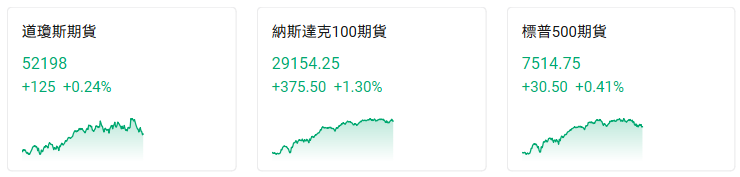
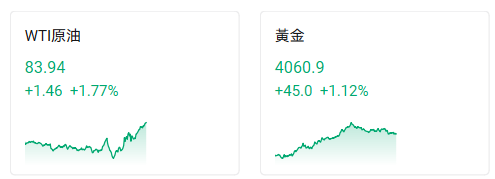
On Tuesday, all three major U.S. stock index futures rose in pre-market trading. As of the time of writing, Dow Jones Industrial Average futures were up 0.24%, Nasdaq 100 futures rose 1.30%, and S&P 500 futures gained 0.41%. WTI crude oil increased by 1.77%, while gold rose 1.12%.
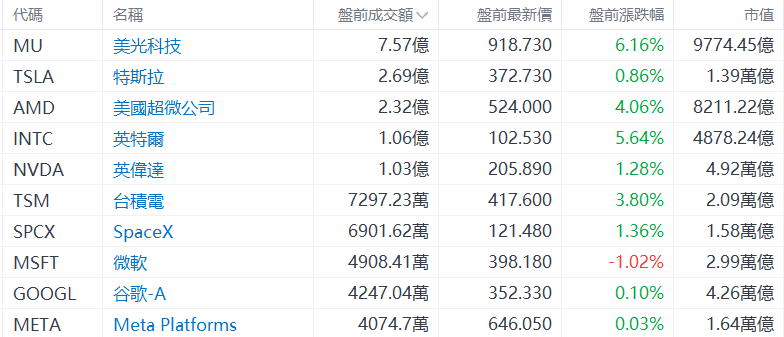
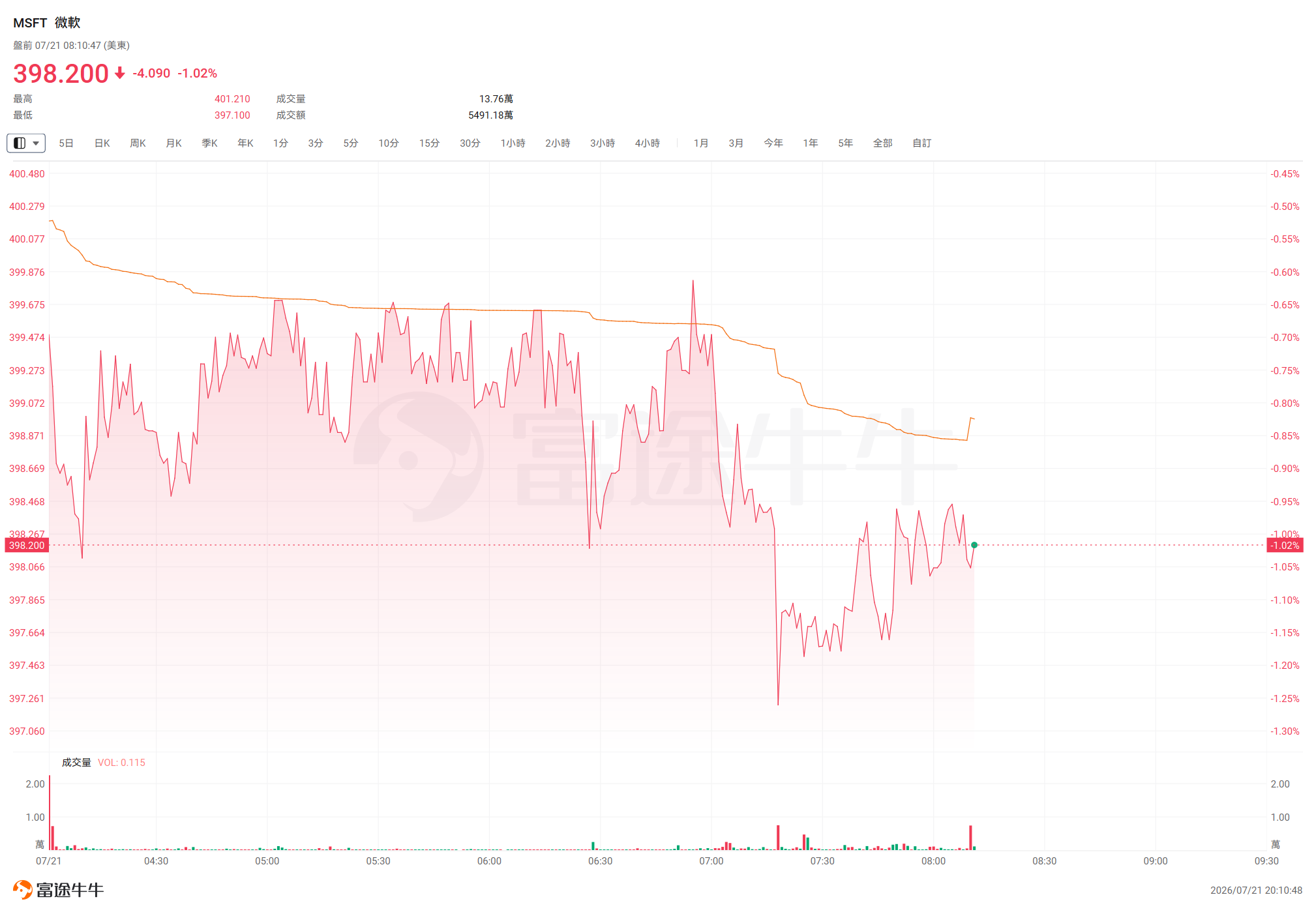
$Star Tech Stocks (LIST2518.US)$Most stocks rose in pre-market trading, with Micron Technology up over 6%, Intel rising nearly 6%, AMD gaining more than 4%, NVIDIA and SpaceX both up over 1%, Tesla climbing nearly 1%, and Microsoft falling over 1%.
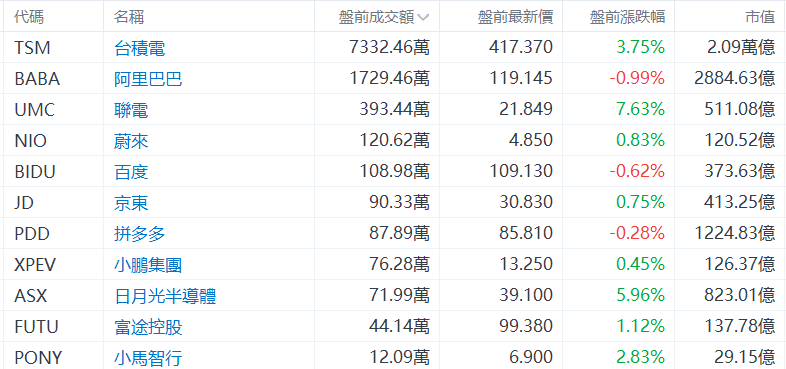
$Popular Chinese ADRs (LIST2517.US)$Most stocks rose in pre-market trading, with United Microelectronics (UMC) up nearly 8%, Taiwan Semiconductor gaining nearly 4%, Pony AI rising nearly 3%, Nio and JD.com both up nearly 1%, while Baidu and Alibaba each declined nearly 1%.
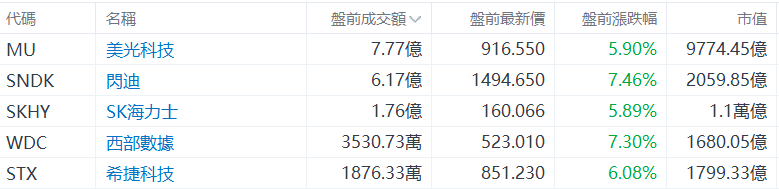
 $Storage Concept (LIST23925.US)$Stocks broadly advanced in pre-market trading, with Western Digital and SanDisk both up over 7%, Seagate Technology rising over 6%, and Micron Technology and SK Hynix each gaining nearly 6%.
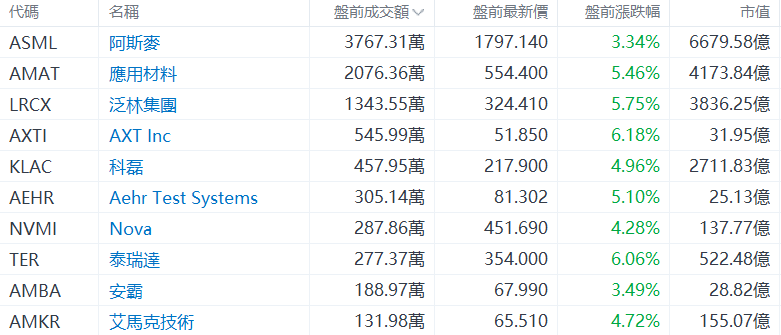
$Semiconductor Equipment and Materials (LIST2016.US)$Stocks rebounded in pre-market trading, with Lam Research up nearly 6%, Applied Materials rising over 5%, KLA Corp gaining nearly 5%, and ASML Holding up over 3%.
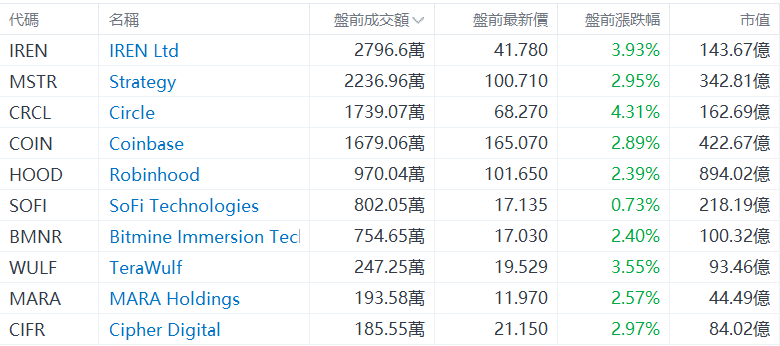
$Cryptocurrency-related stocks (LIST20010.US)$Stocks broadly rose in pre-market trading, with Circle up over 4%, IREN rising nearly 4%, Strategy and Coinbase both gaining nearly 3%, and Robinhood up over 2%.
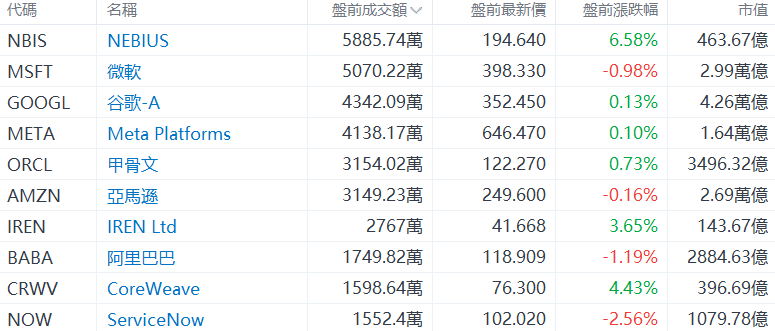
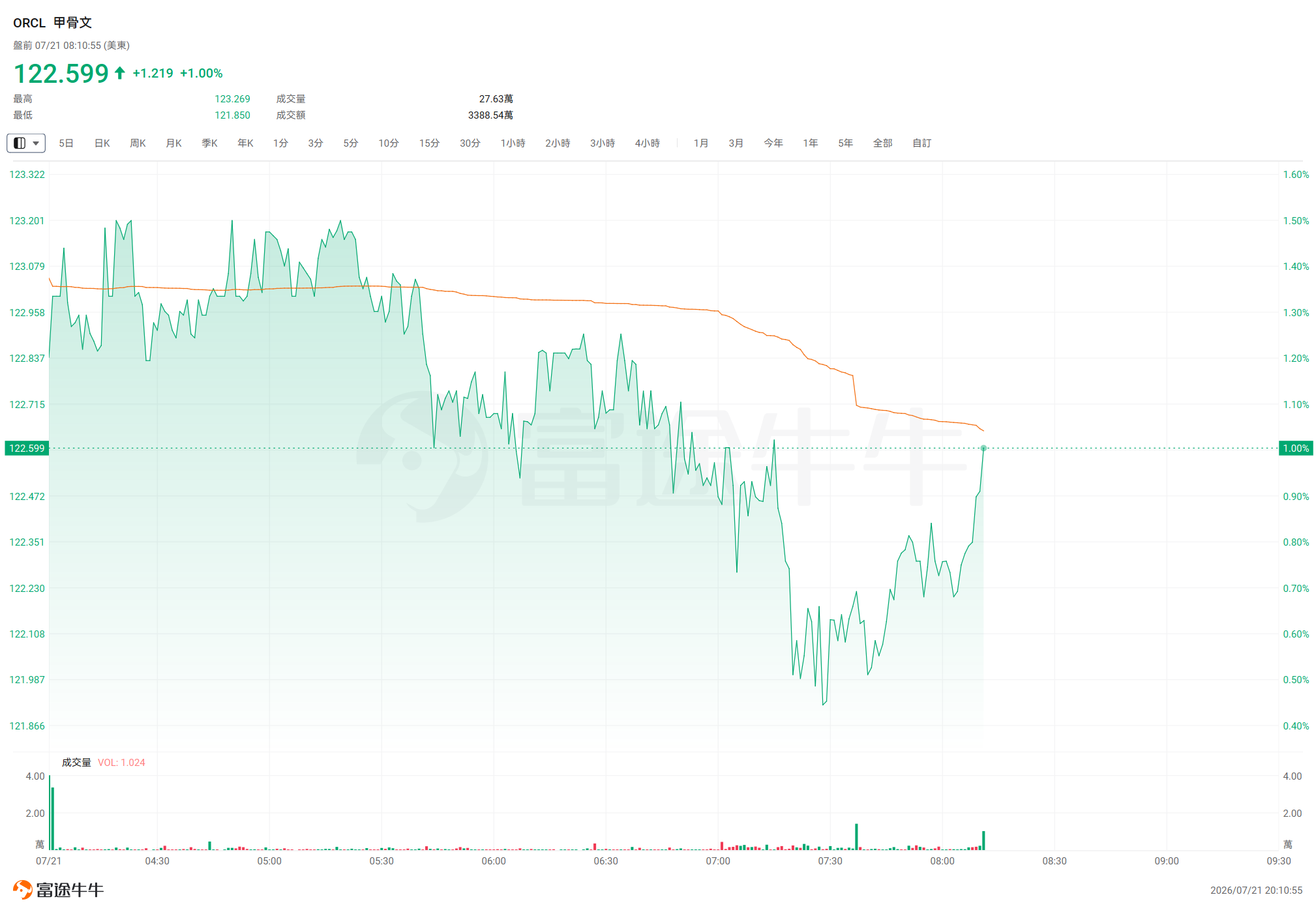
$Cloud Computing Service Provider (LIST2540.US)$Stocks mostly advanced in pre-market trading, with NEBIUS up over 6%, CoreWeave rising over 4%, IREN gaining nearly 4%, and Oracle up nearly 1%.
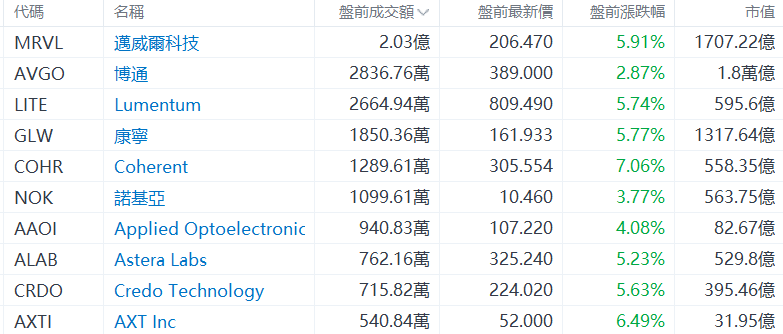
$Optical Communications (LIST23979.US)$Related concept stocks collectively rose in pre-market trading, with Coherent up over 7%, AXT Inc gaining over 6%, Marvell Technology, Credo Technology, Corning, and Lumentum all rising nearly 6%, Astera Labs up over 5%, and Applied Optoelectronics gaining over 4%.
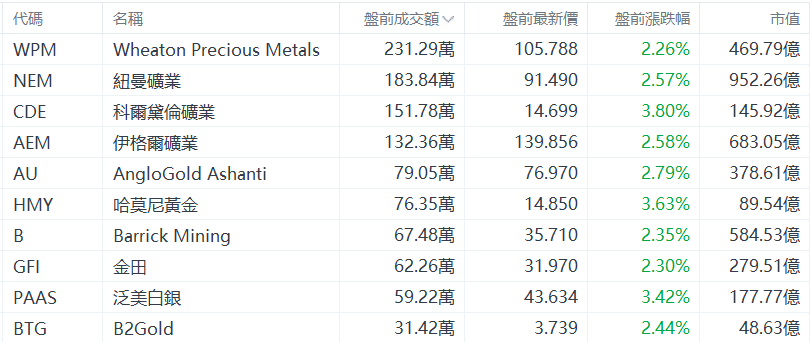
$Gold (LIST2110.US)$Stocks performed strongly in pre-market trading, with Harmony Gold and Coeur Mining both up nearly 4%, Pan American Silver rising over 3%, and Newmont, Gold Fields, and Barrick Mining all gaining over 2%.
Individual Stock News
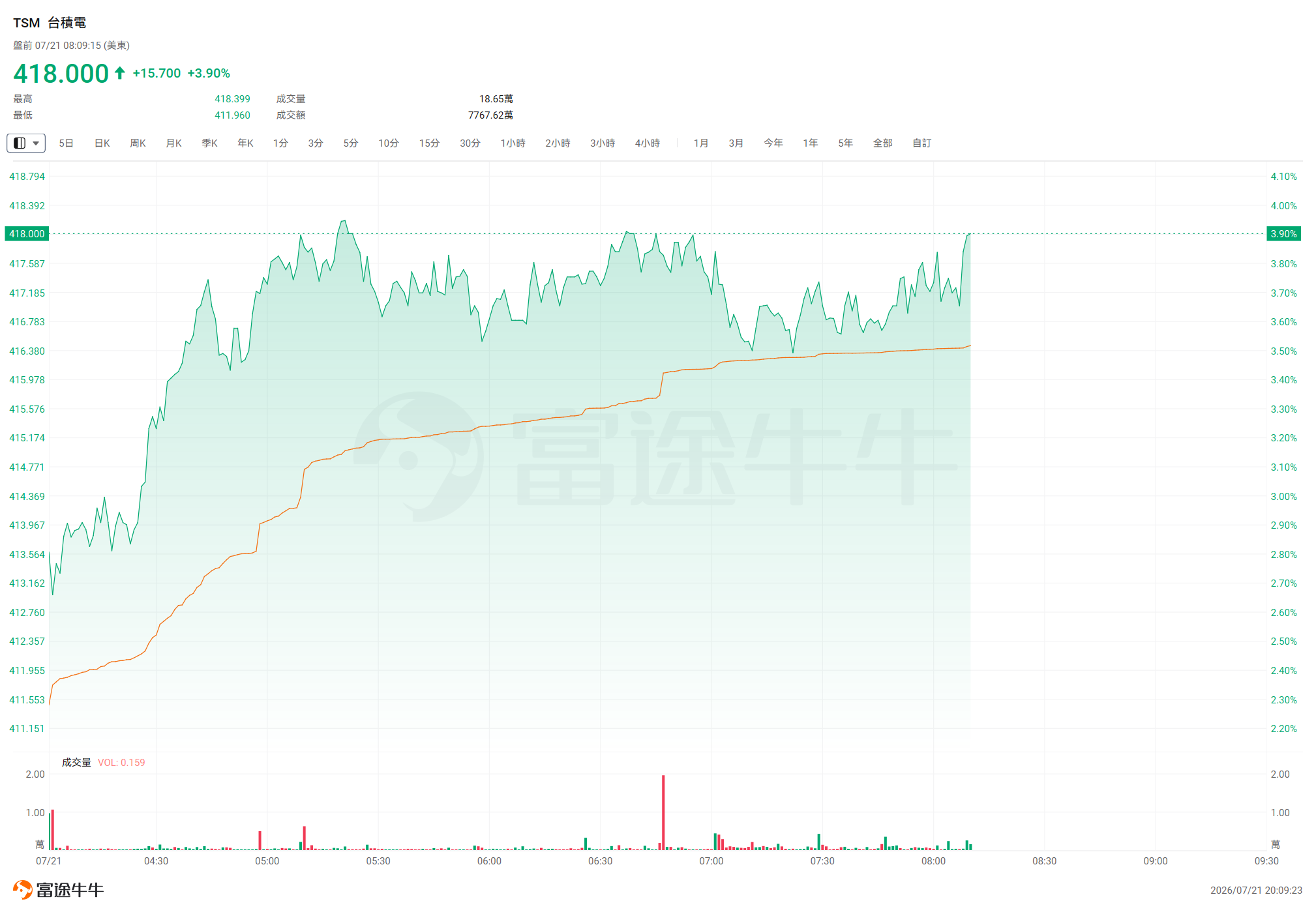
Taiwan Semiconductor rose nearly 4% in pre-market trading, reportedly set to increase its wafer foundry prices starting in 2027, with hikes of up to 10%.
According to Nikkei Asia, citing multiple informed sources,$Taiwan Semiconductor (TSM.US)$Taiwan Semiconductor plans to raise prices for both advanced and mature-node chip manufacturing in 2027 by as much as 10% to offset rising costs related to materials, manufacturing equipment, and the construction of new overseas fabs.
Taiwan Semiconductor has already begun discussions with customers regarding the price increases, which involve 7-nanometer and more advanced nodes. This segment accounted for approximately 77% of the company's revenue in the April–June quarter. According to informed sources, the base price increase will range from 5% to 10%, depending on the customer and product. For incremental orders of high-performance computing (HPC) chips that exceed clients’ original forecasts, Taiwan Semiconductor intends to impose an additional premium of 10% to 15% on top of the base increase.
As a result, the total price increase for certain advanced-node chip orders could exceed 10%. For mature nodes—including 12nm, 16nm, 28nm, and other legacy technologies—Taiwan Semiconductor plans to implement price hikes of up to 10%, though some products will see smaller increases. Mature-node business represented approximately 23% of the company’s revenue last quarter. Sources indicated that negotiations began around June and were finalized in July, with the new pricing taking effect at the beginning of 2027.
Deutsche Bank: Concerns Over Microsoft’s AI Investments Are Overdone; Azure Growth Could Reach 41%
In its latest research report, Deutsche Bank stated that market concerns over$Microsoft (MSFT.US)$Microsoft’s surging capital expenditures, AI return on investment, and concentration of OpenAI-related orders have been significantly overblown. The bank maintains that the current valuation is attractive and reiterates its “Buy” rating with a $550 price target. Deutsche Bank forecasts Microsoft’s fourth fiscal quarter revenue (corresponding to the second calendar quarter) at $87.4 billion, up 14.3% year-over-year, with non-GAAP earnings per share of $4.17.
Azure’s growth rate on a constant-currency basis is expected to reach 40% to 41%, supported by ongoing enterprise cloud migration, demand for AI computing power, and newly added data center capacity. Microsoft 365 Commercial Cloud revenue is projected to grow 15% to 16%, with Copilot paid seats potentially exceeding 25 million by year-end.
Oracle Faces Setback on Wisconsin Data Center Project, May Need to Post Over $7 Billion in Guarantees
Oracle (ORCL.US)Oracle’s large-scale data center project in Wisconsin, U.S., has encountered significant funding hurdles. The state’s utility regulator upheld credit collateral requirements for local utility We Energies, potentially obligating Oracle to provide guarantees exceeding $7 billion. This ruling further intensifies financial pressure on the tech giant as it scales up AI infrastructure investments.
Oracle stated that it hopes the committee will reconsider its position after fully considering the jobs and economic growth generated by this $15 billion project, adding that it remains "committed to providing the necessary financial guarantees to ensure Wisconsin ratepayers bear no risk." The data center is a critical component of Oracle's fulfillment of a $300 billion compute capacity contract with OpenAI, with total investment reaching $15 billion.
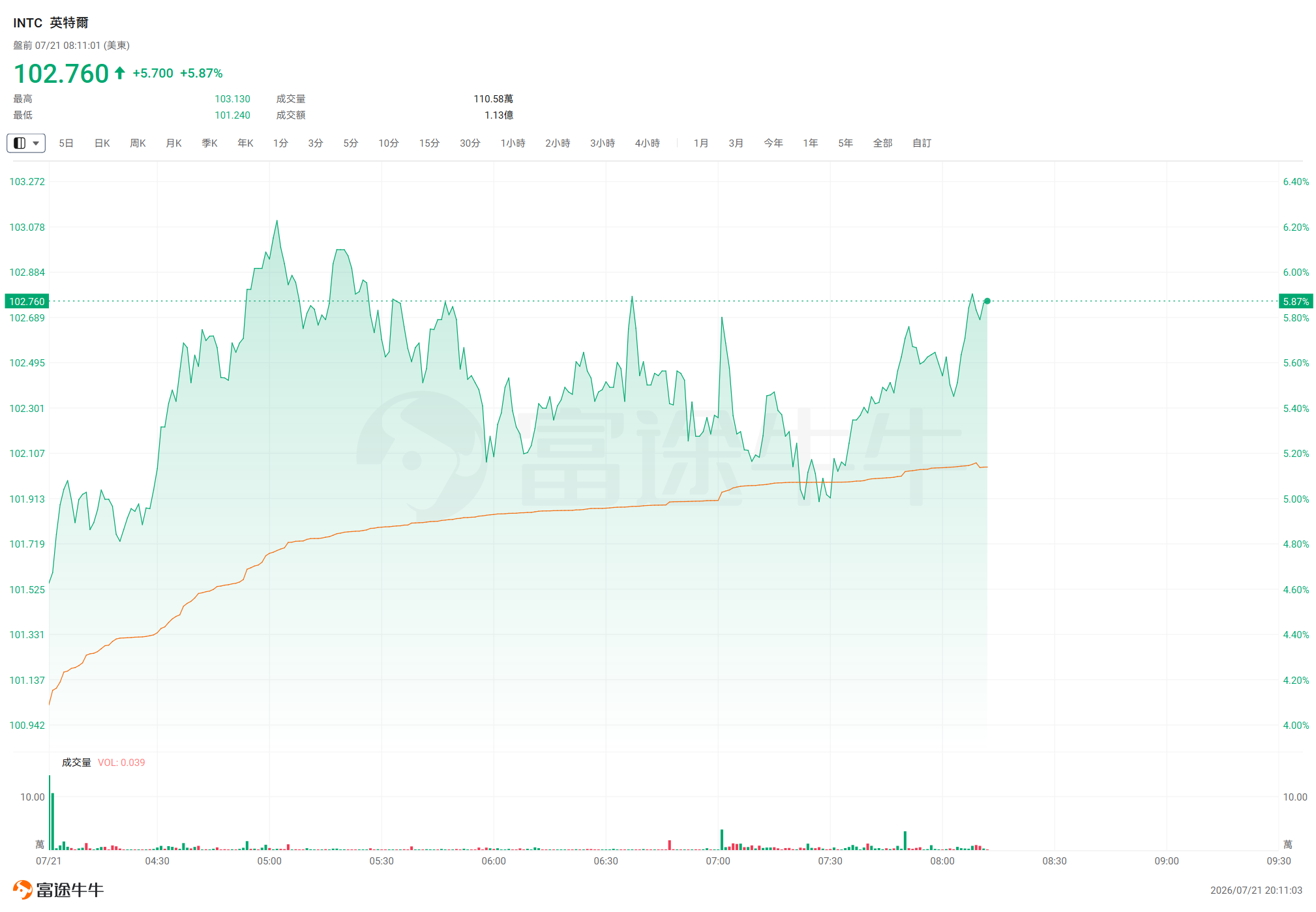
Intel rose nearly 6% in pre-market trading as its Data Center division initiates another round of layoffs.
$Intel (INTC.US)$The company has launched another round of layoffs targeting its Data Center division. It is currently unclear how many employees will be affected. An Intel spokesperson said, "As part of our broader strategy to enhance focus and efficiency, the Data Center division is adjusting its organizational structure to ensure it has the right roles and skills in place to lay the foundation for long-term business success."
Intel stated that this restructuring will enable it to operate with greater simplicity and speed. Over the past four years, Intel’s global workforce has been reduced by nearly 40%, from approximately 132,000 employees in 2022 to about 81,000 currently.
CLSA: Concerns that AI will lead to the 'demise of software' are overstated; SaaS moats remain robust.
In a detailed thematic report, CLSA noted that although the rise of artificial intelligence models has sparked market concerns about disruption in the software industry, Software-as-a-Service (SaaS) is far from obsolete. However, the sector must still undergo profound transformation before investor confidence returns.
CLSA analysts stated: "We are surrounded by business processes managed by software, compliance requirements, and information filters. The idea that AI 'vibe-coding' could eliminate all of this sounds unrealistic. We find moats everywhere—"$ServiceNow(NOW.US)$workflow directories,$Salesforce (CRM.US)$sales integrations,Oracle (ORCL.US)precise databases,$Microsoft (MSFT.US)$ubiquitous presence,$Workday(WDAY.US)$the professional competence in human resources, and even$Adobe (ADBE.US)$"The font library."
Securities firm CLSA has given$Microsoft (MSFT.US)$and$Adobe (ADBE.US)$"Outperform" rating, with target prices of $535 and $300, respectively; grantedOracle (ORCL.US)and$Salesforce (CRM.US)$"Hold" rating, with target prices of $145 and $165, respectively; granted$ServiceNow(NOW.US)$and$Workday(WDAY.US)$"Underperform" ratings, with target prices of $72 and $92, respectively.
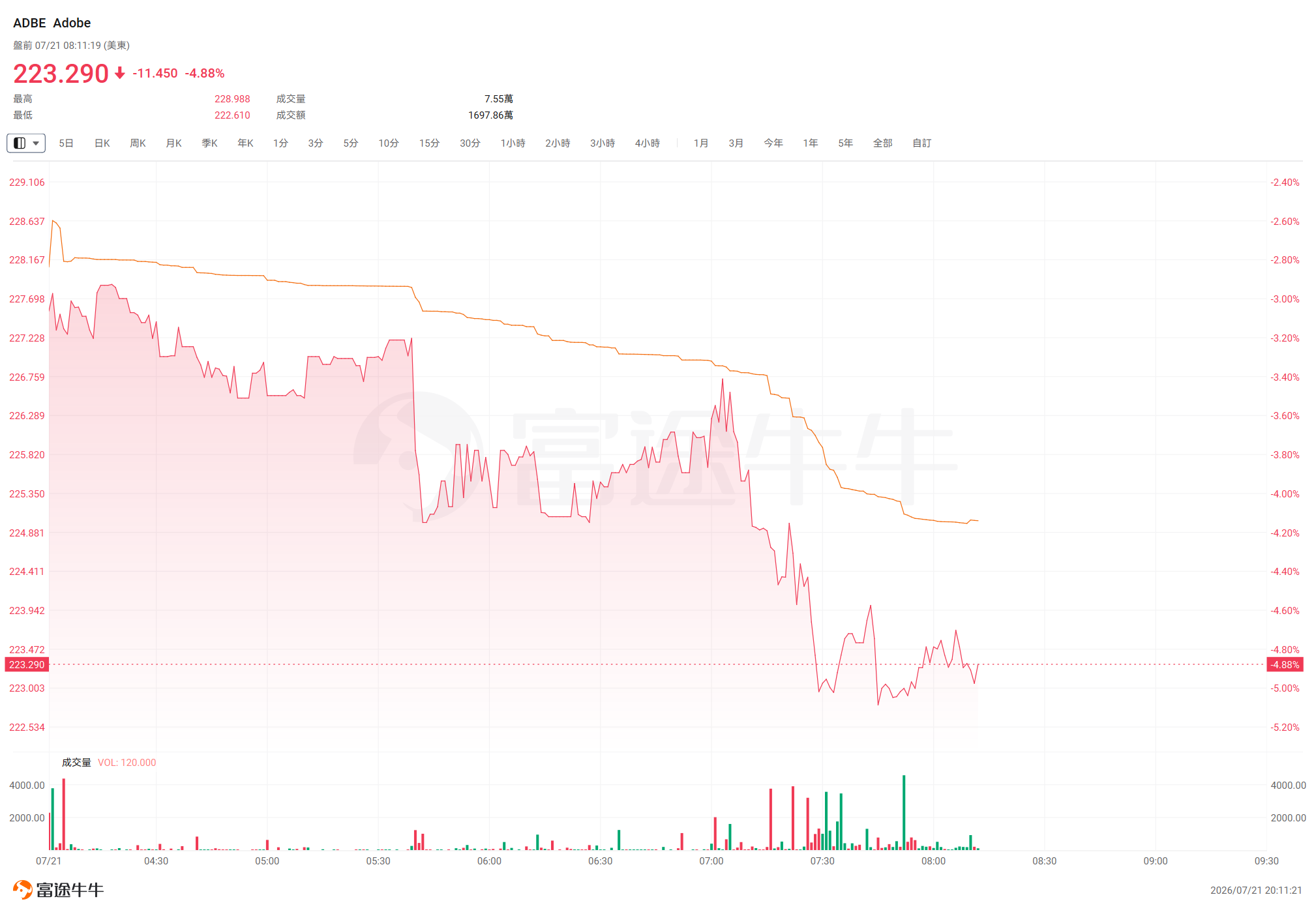
Morgan Stanley lowered its target price to $240, and Adobe fell nearly 5% in pre-market trading.
Morgan Stanley will today$Adobe (ADBE.US)$Morgan Stanley today downgraded Adobe’s rating from “equal-weight” to “underweight” and slashed its target price sharply from $365 to $240. This downgrade reflects concerns not only about current performance but also about the company’s simultaneous pursuit of three major strategic transformations, which Morgan Stanley believes significantly increases execution risk. At a time when other software companies are demonstrating clearer paths to monetizing AI, Morgan Stanley argues that Adobe’s multiple concurrent transformations make the timing and magnitude of any earnings recovery difficult to predict.
Alibaba’s Qwen3.8-Max-Preview latest version has been launched, and Citi reiterated its “buy” rating.
According to the official Weibo account of Qwen, Alibaba's Qwen3.8-Max-Preview has been launched. The new version features enhanced capabilities, particularly delivering improved performance in front-end (WebDev) tasks.
In a research report, Citi noted that Alibaba has released a preview version of its flagship model, Qwen 3.8 Max, which has 2.4 trillion parameters and will be open-sourced in the near term. The bank believes competition in China’s artificial intelligence sector is intensifying, with companies rapidly overtaking one another. This rapid iteration fosters a model-agnostic environment, prompting enterprises to adopt multi-model strategies to select the best combination of performance and cost.
This trend lowers the defensive moat of any single model and shifts competitive focus toward platforms and infrastructure capable of seamless hosting and management. Companies like Alibaba, which possess full-stack capabilities spanning chips, cloud infrastructure, models, and applications, are better positioned to lead. Citi reiterated its 'Buy' rating on Alibaba with a target price of HK$191.
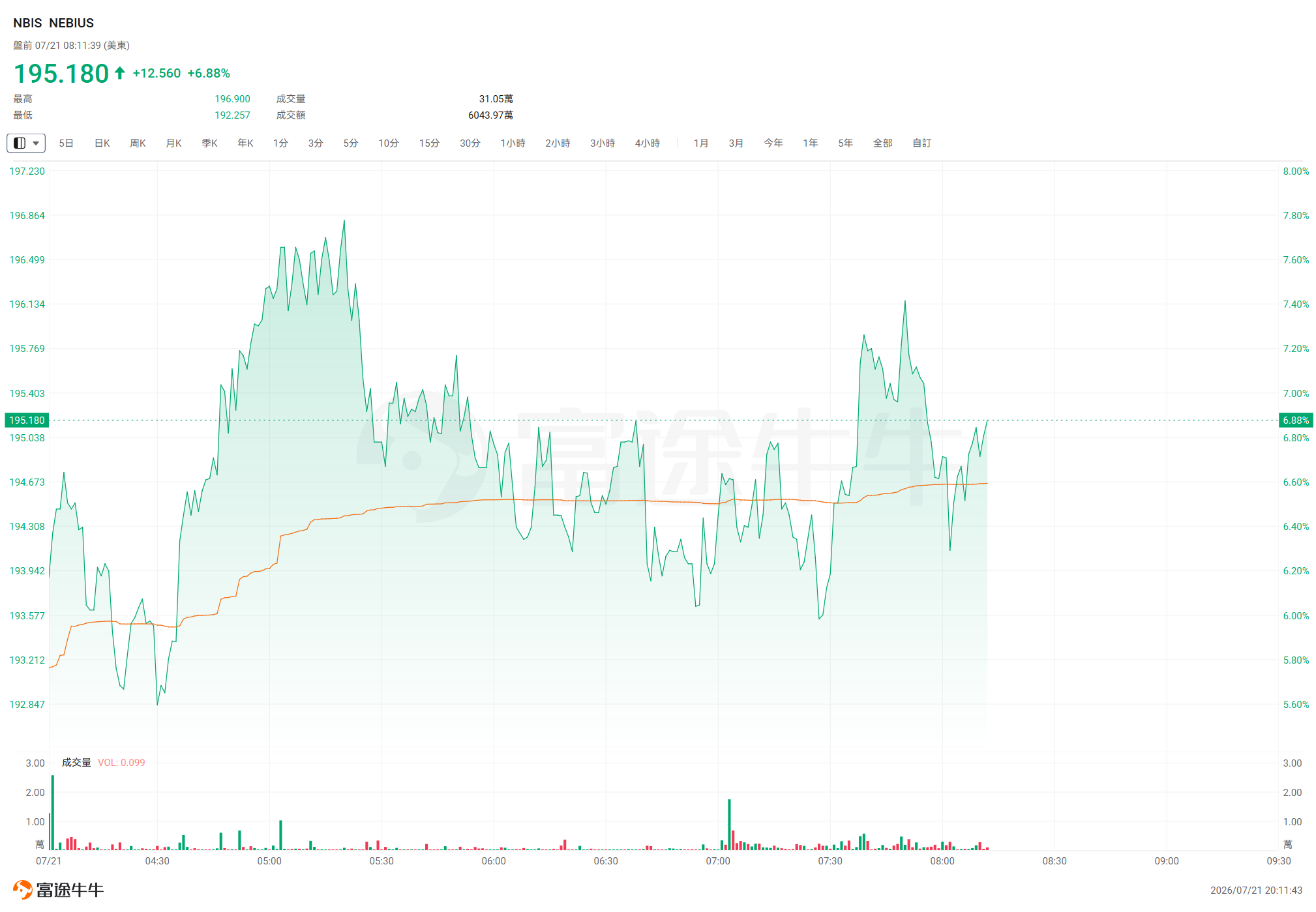
AI cloud service provider NEBIUS rose nearly 7% in pre-market trading after NVIDIA disclosed a 9.3% equity stake.
On Monday, NVIDIA filed a Schedule 13G with the U.S. Securities and Exchange Commission (SEC), disclosing beneficial ownership of$NEBIUS(NBIS.US)$22,256,400 Class A ordinary shares of the company, representing a 9.3% stake. The filing indicated that this holding includes 1,190,500 ordinary shares previously reported in NVIDIA’s Form 13F for the quarter ended March 31, as well as 21,065,900 shares issuable upon exercise of a pre-funded warrant.
Meanwhile, Northland raised$NEBIUS(NBIS.US)$its price target from $248 to $410, maintaining an 'Outperform' rating, implying upside potential of over 124%. The firm applied a valuation framework similar to that used for$CoreWeave(CRWV.US)$comparable peers, expecting NEBIUS to capture approximately 14% market share in the long run within the $800 billion AI-as-a-Service (AIaaS) market, with a terminal-period free cash flow margin estimated at 30%.
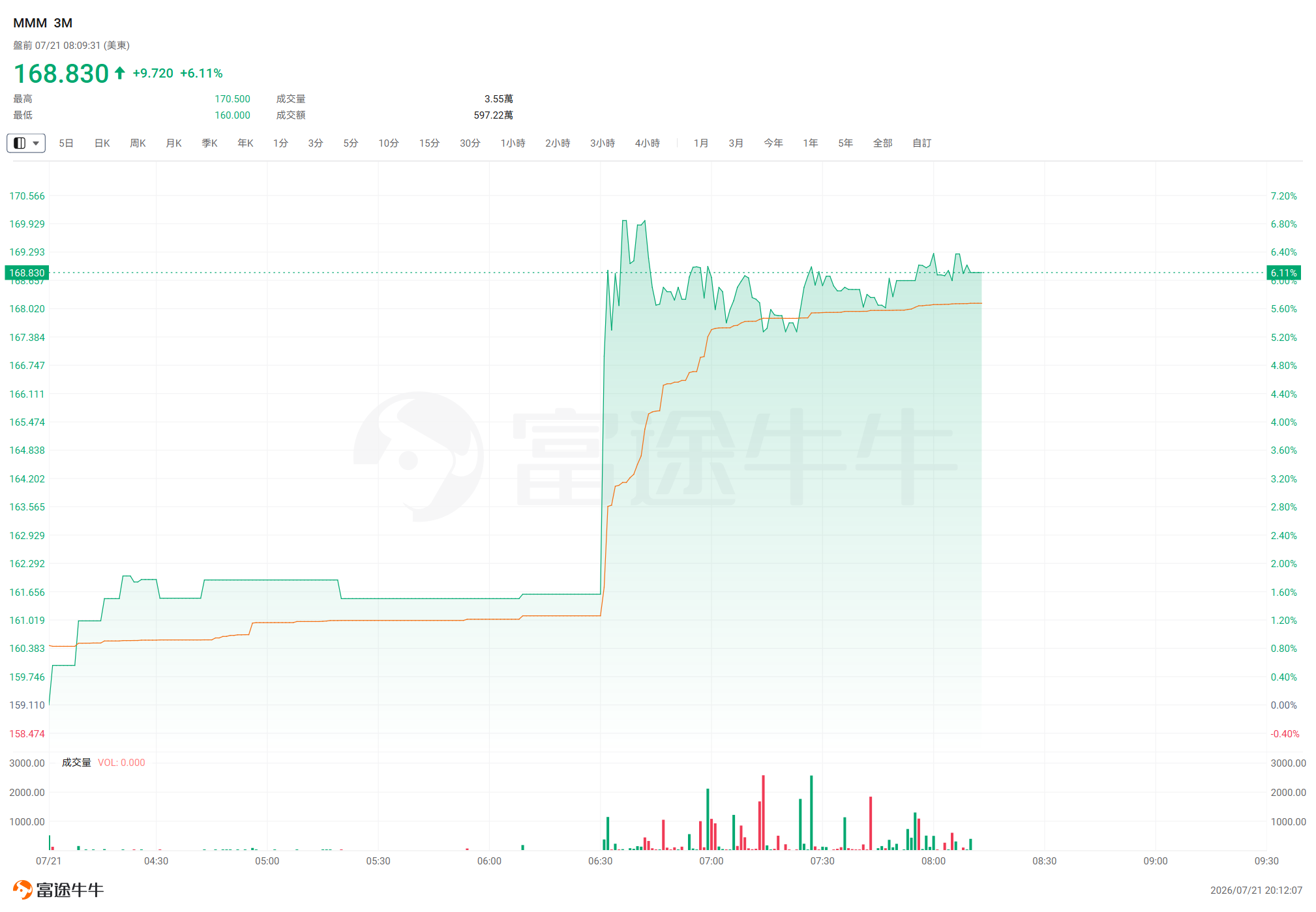
3M rose more than 6% in pre-market trading after reporting a 2.4% year-over-year increase in Q2 sales and raising its full-year guidance.
$3M(MMM.US)$Shares rose more than 6% in pre-market trading. Second-quarter sales reached $6.5 billion, up 2.4% year-over-year; adjusted organic sales growth was 5.4%. Adjusted earnings per share (EPS) came in at $2.40, exceeding the analyst consensus estimate of $2.25 and representing an 11% year-over-year increase. Based on this strong performance, 3M raised its full-year 2026 adjusted EPS guidance from $8.50–$8.70 to $8.80–$8.95, above the market expectation of $8.74.
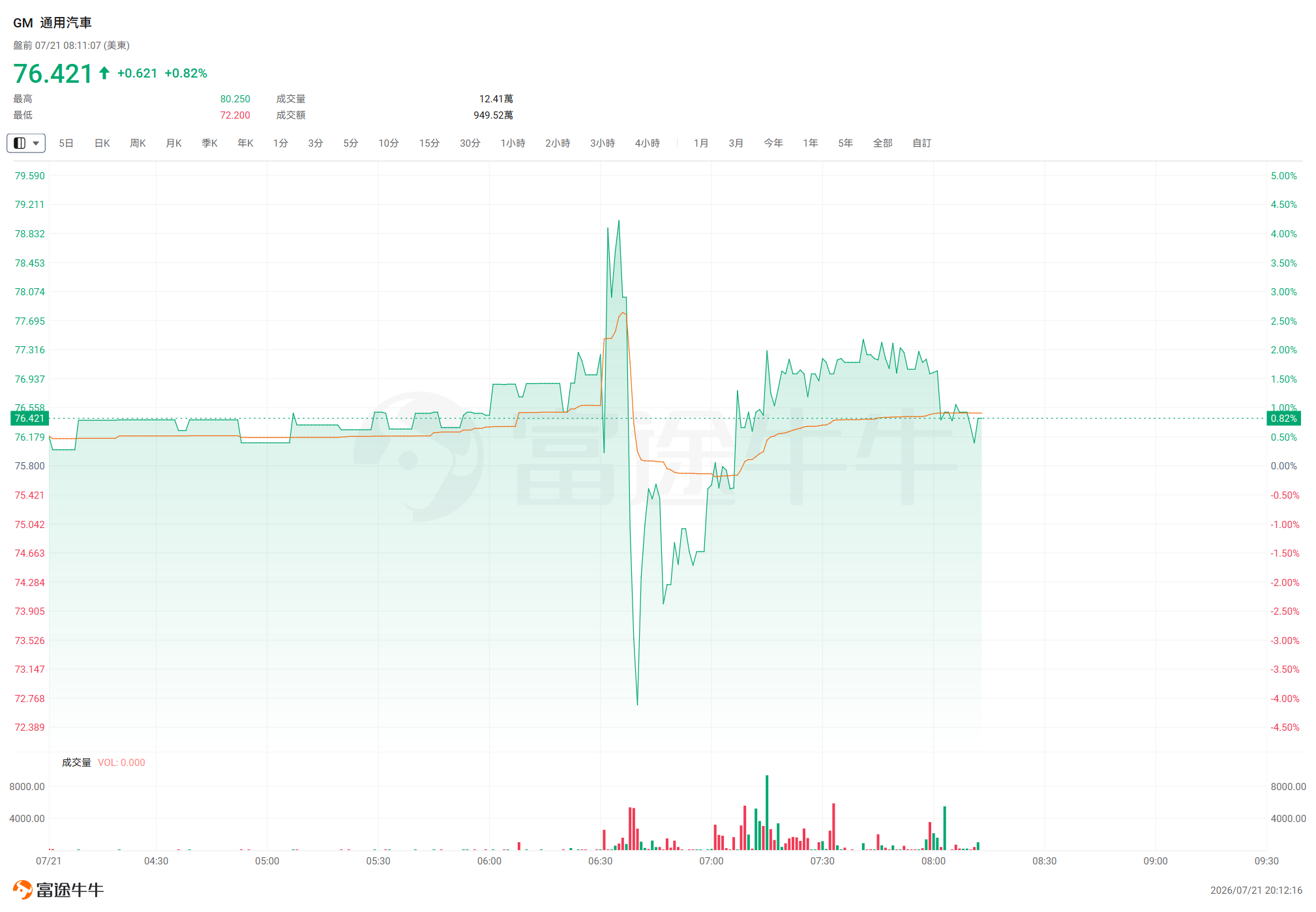
General Motors reports Q2 2026 revenue of $48.03 billion and raises full-year adjusted EPS forecast
$General Motors (GM.US)$The company now expects full-year adjusted EPS of $12 to $14, compared with its previous guidance of $11.50 to $13.50. General Motors reported second-quarter net sales and revenue of $48.03 billion, versus an estimated $46.61 billion. Adjusted EPS for the quarter was $3.57, above the expected $3.19.
General Motors now forecasts full-year adjusted EBIT of $14 billion to $16 billion, up from its prior range of $13.5 billion to $15.5 billion, and above the market estimate of $14.38 billion. The company also expects 2027 performance to surpass that of 2026, driven by multiple key factors that will support growth in revenue, margins, EBIT, and free cash flow.
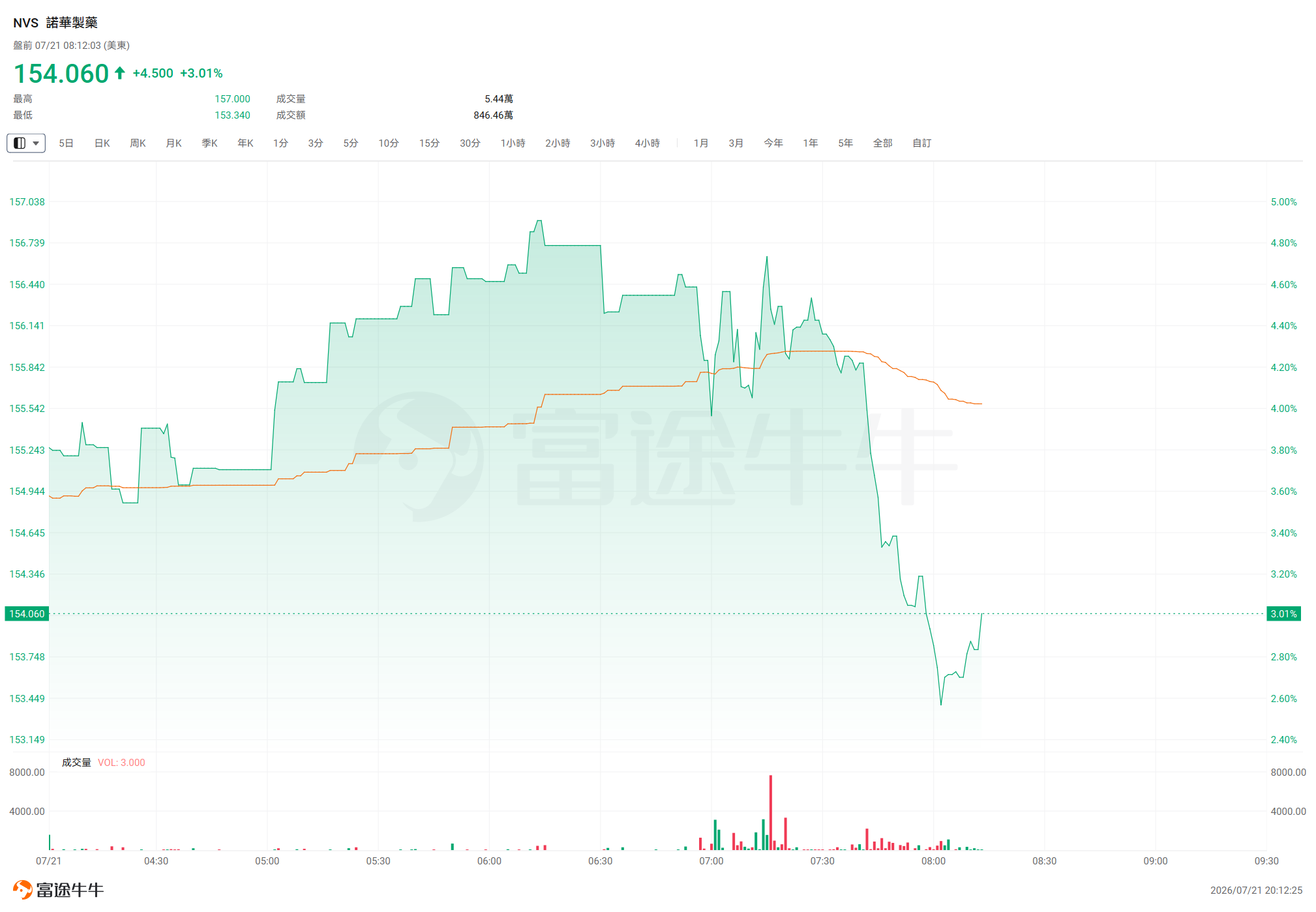
Novartis AG shares rose over 3% in pre-market trading after reporting better-than-expected Q2 results
$Novartis AG (NVS.US)$The company reported second-quarter results that exceeded market expectations. Strong performance from its next-generation oncology drugs offset the impact of generic competition on its blockbuster heart drug Entresto, signaling a return to growth. Second-quarter sales rose 3% year-over-year to $14.408 billion, above the expected $14.042 billion; core operating profit was $5.940 billion, surpassing the forecast of $5.34 billion; and core EPS stood at $2.41, higher than the anticipated $2.13.
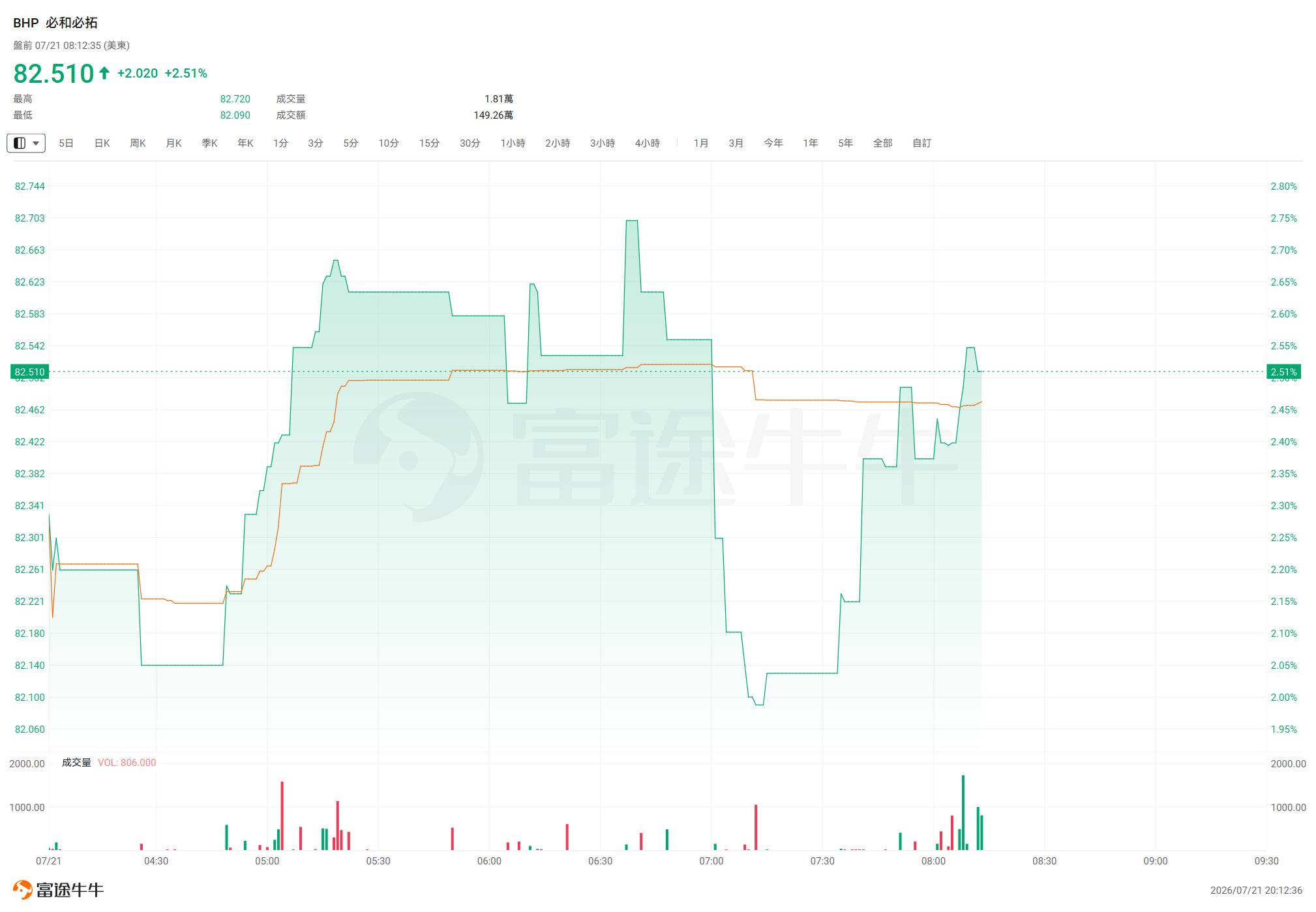
BHP Group Ltd makes progress with Port Hedland unions; negotiations to resume next week
$BHP (BHP.US)$The Combined Ports Unions, representing workers at Port Hedland in Western Australia, stated on Tuesday that both parties are close to reaching an agreement. The unions noted that although no final consensus was reached during Tuesday’s talks, progress had been made and discussions would continue next week. In a statement, the Combined Ports Unions said: “Some progress has been made in the negotiations, but a final agreement has not yet been reached. We will continue negotiations on July 28, committed to building a safe, fair, and efficient iron ore industry.”
The progress in discussions reduces the likelihood of a new round of strike action being announced before next Tuesday. BHP Group Ltd said in an earlier statement: “Our focus remains on achieving a fair and reasonable agreement and making constructive progress.”
Global Macro
Trump could impose new tariffs on dozens of countries as early as this week
According to the Financial Times, as the 10% tariff rate is set to expire on Friday, U.S. officials have prepared multiple options to enable Trump to impose new tariffs on dozens of countries. The new tariffs are expected to be comparable to the current 10% rate, but the U.S. government is also advancing other investigations to secure legal authority to propose higher tariffs.
Israeli media: The 10-day ceasefire proposal originated from Iran; Trump demands Iran 'pay a price'
According to The Jerusalem Post, two sources revealed that Tehran was the first to propose a 10-day ceasefire between the U.S. and Iran, currently being promoted by mediators, highlighting Tehran’s urgent desire for a truce. The two sources said the 10-day ceasefire aims to achieve a solution regarding the Strait of Hormuz. Mediators—including senior officials from Qatar, Egypt, Oman, and Pakistan—have submitted the proposal to the U.S. and added further details during talks with Washington and Tehran. One idea under consideration is establishing a 'transit corridor' in the Strait of Hormuz to allow safe passage for commercial vessels.
Sources indicate that the U.S. is now demanding an extension of the ceasefire period, insisting that at least a partial agreement on freedom of navigation through the Strait of Hormuz be reached before the truce takes effect, with remaining details finalized during the proposed 10-day pause. Some sources noted that certain Trump administration officials described Iran’s proposal as 'absurd' and 'illogical.' A U.S. official stated that Trump is determined to hold Iran accountable for violating the memorandum of understanding and for actions that resulted in the deaths of U.S. military personnel.
International Energy Agency: Middle East tensions threaten energy security; crude oil market remains supported by multiple factors
Fatih Birol, Executive Director of the International Energy Agency (IEA), stated that the recent escalation of hostile actions against energy infrastructure in and around the Strait of Hormuz has heightened concerns over global energy supply security and increased uncertainty about market prospects. Threats to the Bab el-Mandeb Strait—a key alternative route bypassing Hormuz—have further exacerbated these concerns. However, he noted that the crude oil market continues to be supported by several buffering factors. Gulf producers such as Saudi Arabia and the UAE are maintaining exports via alternative routes, and some crude oil continues to flow through the Strait of Hormuz.
The IEA estimates that crude oil exports from the Gulf region, while below their late-June peak, remain significantly higher than levels seen between March and mid-June. Additionally, increased exports from oil-producing countries such as the U.S., Brazil, Venezuela, and Kazakhstan have partially offset supply losses from the Gulf. China’s nearly 50% reduction in crude oil imports has also contributed to market stabilization. The IEA noted that since announcing the release of 400 million barrels of strategic reserves on March 11, member countries have delivered approximately 290 million barrels to the market, with ongoing releases of emergency stocks providing continued support.
NASA’s nuclear-powered Mars mission exceeds $2 billion in cost; launch planned for 2028
NASA confirmed that the preliminary cost estimate for the nuclear-powered Mars mission 'Space Reactor-1 Freedom,' championed by Administrator Isaacman, is approximately $2.1 billion, with further adjustments expected during procurement. According to documents submitted to Congress, NASA plans to allocate $640 million, $890 million, $415 million, and $180 million respectively between fiscal years 2026 and 2029. However, this cost does not include the scientific mission 'SkyFall,' which would accompany the nuclear-powered spacecraft to Mars.
NASA has not yet disclosed SkyFall’s budget, but Mars researchers previously warned that the project could crowd out funding for other NASA scientific research. Scheduled for launch in late 2028, the mission will mark the world’s first in-flight demonstration of a nuclear electric propulsion system. The spacecraft is expected to carry three helicopters to Mars to collect scientific data and search for potential water sources.

South Korea's stock market rebounded, closing up 3.6% as the sell-off triggered by leveraged trading began to ease.
South Korea’s stock market rebounded on Tuesday as the intense sell-off triggered by leveraged position unwinding began to ease, allowing investors to refocus on the intrinsic strengths of this market at the heart of global AI trading. The KOSPI index closed up 3.6% at 6,747.95, having risen as much as 4.9% intraday. The index had plunged 10.5% over the previous two trading sessions. Although still deep in bear-market territory—down 25% from its record closing high on June 22—market attention is shifting back to fundamentals, including sustained strong demand driven by artificial intelligence and optimistic earnings outlooks for memory chipmakers, as regulators move to curb leveraged financing products.
JPMorgan analysts noted, 'The market’s fundamental strength remains robust over the coming years.' They maintained an 'overweight' rating on the South Korean market in their regional asset allocation, with a 12-month target of 12,500 points. 'The market should be able to absorb the impact from position unwinding and sustain its positive momentum.'
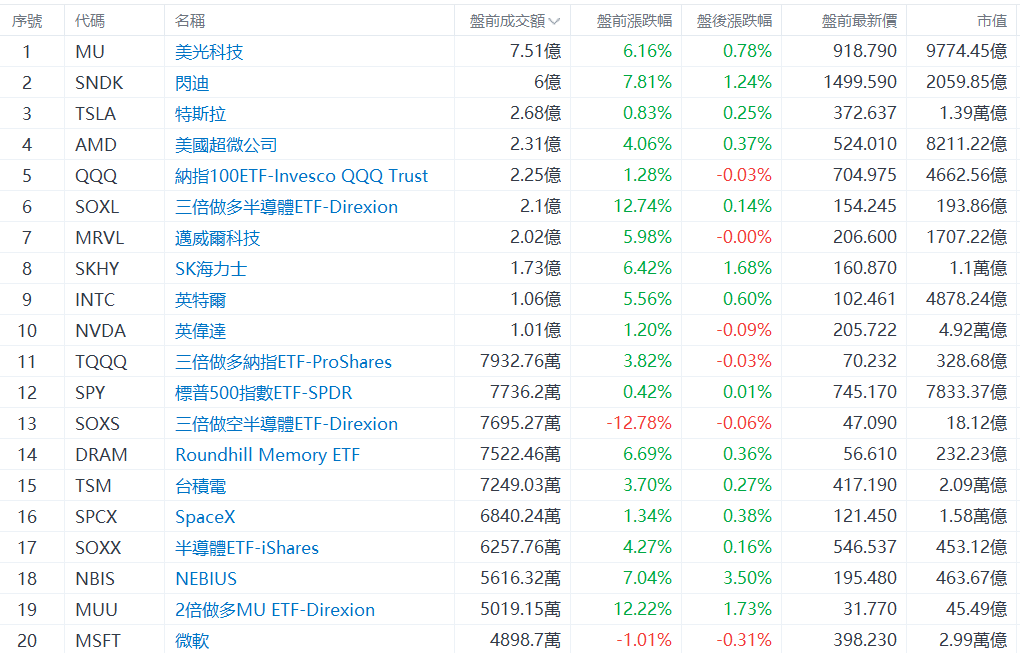
Top 20 pre-market trading volume stocks in the U.S.
U.S. Equity Market Macro Calendar Reminder
(All times listed below are in Beijing Time)
Early the following morning
04:30 API Weekly Crude Oil Inventories for the Week Ended July 17 (in 10,000 barrels)
 Looking to select stocks or analyze your holdings? Want to understand the opportunities and risks in your portfolio? For any investment-related questions,just ask Futubull AI!

Editor/melody