
Trump publicly threatened to strike Iran’s Fordow underground nuclear facility, prompting Iran to warn that such an action would trigger a regional war. Located over 100 meters beneath solid rock, Fordow has become the focal point of U.S.-Iranian confrontation; reports indicate Iran may have already relocated thousands of centrifuges into these deep tunnels. Current U.S. bunker-busting munitions may struggle to directly destroy the site, and as military clashes and nuclear negotiations continue to intertwine, the risk of escalating tensions in the Middle East has sharply increased.
Trump publicly threatened to bomb Iran's underground nuclear facility at 'Hao Mountain,' thrusting this previously little-known site abruptly into the global spotlight.
On the 21st, Trump told reporters at the White House that U.S. forces would 'soon' strike 'Hao Mountain' with 'extreme force,' adding that Iran was 'powerless' to respond. Iran swiftly issued a strong rebuttal: the Khatam al-Anbia Central Headquarters warned that such an attack would mark 'the outbreak of regional war' and threatened to target 'all interests of the United States, its allies, and supporters.'
 Meanwhile, according to Xinhua News Agency, U.S. Defense Secretary Hegseth hinted on the 21st that American forces possess the capability to strike Iran’s underground nuclear facility at 'Hao Mountain,' though whether they will do so depends on a 'cost-benefit assessment.' During a Senate Appropriations Committee hearing the same day, when asked whether U.S. forces could destroy 'everything beneath the mountain at Hao Mountain,' Hegseth declined to discuss specific U.S. military operational capabilities, citing that such information is 'classified.' To date, neither Iran’s Ministry of Foreign Affairs nor the International Atomic Energy Agency (IAEA) has issued a public response to Trump’s threat.
According to analysis by the U.S.-based nonproliferation think tank Institute for Science and International Security (ISIS), activity in the area has been intense over the past 15 months, including truck transport, tunnel reinforcement, and construction of security infrastructure. Additionally, Iran has been conducting construction around an older tunnel network originally built in 2007. David Albright, director of ISIS, stated: 'Iran may have already moved centrifuges into the tunnels at Hao Mountain.' Experts estimate that this underground complex lies approximately 91 to 137 meters beneath solid rock, sufficient to house multiple nuclear-related facilities.
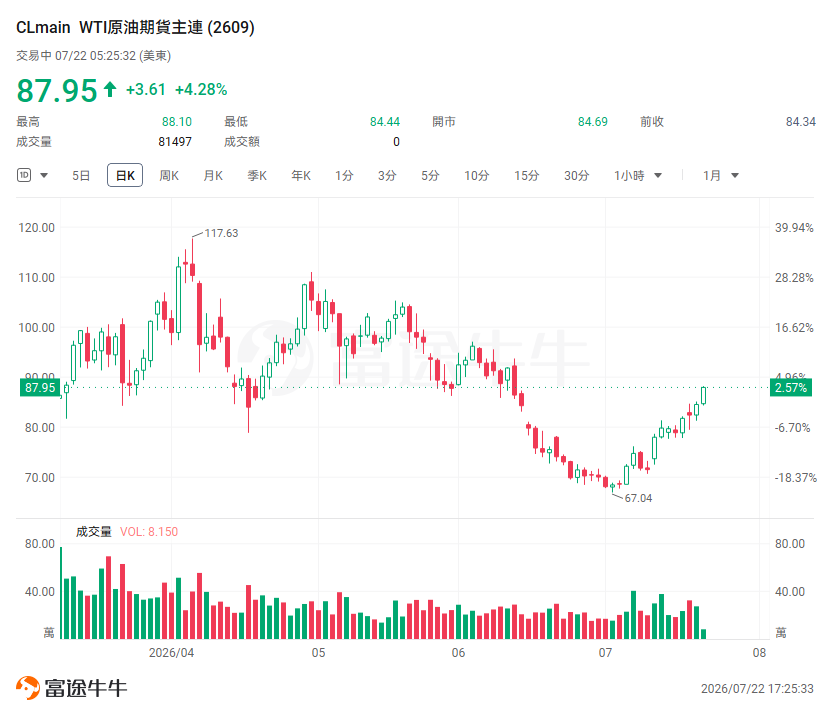
This previously untouched underground fortress is now emerging as a pivotal variable shaping the future of Middle Eastern geopolitics and global crude oil supply dynamics.
What is 'Hao Mountain'? Iran’s Fourth Nuclear Facility Comes to Light
'Hao Mountain,' known in Persian as 'Kuh-e Kolang Gaz La,' is located on Iran’s central plateau, approximately 225 kilometers south of Tehran, adjacent to the Natanz uranium enrichment facility. Construction began in 2020, initially intended to replace centrifuge assembly infrastructure damaged in an explosion that year.
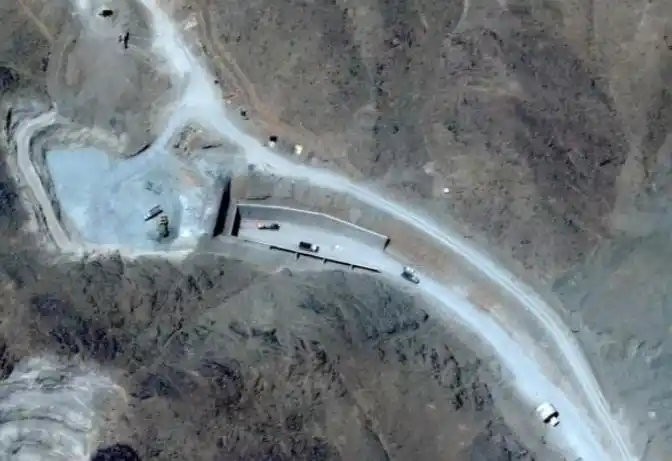
This is Iran’s fourth nuclear facility site to draw significant international attention, following Natanz, Fordow, and Isfahan. The site is protected by multiple layers of air defense missile positions, perimeter fencing, and the Islamic Revolutionary Guard Corps (IRGC). Covering approximately 2.7 square kilometers, satellite imagery reveals multiple entry points.
According to an analysis by the Institute for Science and International Security (ISIS), the underground complex lies approximately 91 to 137 meters beneath solid rock. Experts estimate it is large enough to house multiple nuclear-related facilities and may serve dual functions for uranium enrichment and centrifuge manufacturing. IAEA Director General Rafael Grossi previously stated that Iran declared its 'intention' to conduct nuclear activities at this site in 2021 but has consistently refused IAEA requests for on-site inspections.
Intelligence Trigger: Centrifuges May Have Already Been Moved Deep into the Mountain
On the 20th, Israeli intelligence disclosed that Iran moved thousands of uranium enrichment centrifuges deep into tunnels beneath 'Gao Mountain' last autumn and had shared this intelligence with the United States. This information is widely regarded as the immediate catalyst for Trump’s recent public identification of the facility.
David Albright, director of ISIS, stated, 'Iran may have already moved centrifuges into the tunnels at Gao Mountain.' However, some experts noted that deploying centrifuges at Gao Mountain does not necessarily imply the construction of a new enrichment facility—following the strike in June 2025, Iran may have relocated surviving equipment deeper underground to reduce the risk of further attacks.
Over the past 15 months, activity in the Gao Mountain area has been intense, including truck transport, tunnel reinforcement, and security infrastructure construction. Iran has also continued excavation around an older tunnel network originally built in 2007. In an interview, Trump acknowledged that there was currently 'no visible activity' at the site but nonetheless listed it as a potential target for strikes.
Strike Challenge: Existing Weapons May Be Ineffective
The extreme depth of Gao Mountain poses a core technical challenge for any U.S. military strike. The U.S. military’s most powerful earth-penetrating bomb, the GBU-57, can penetrate at least 60 meters of soil before detonating. U.S. officials reportedly discussed dropping two bombs in succession to ensure target destruction. Nevertheless, analysts generally believe that even a 'tandem bombing' approach may fail to effectively destroy underground facilities located 91 to 137 meters deep.
Trump himself publicly acknowledged this uncertainty, stating that his primary focus was tracking Iran’s stockpile of highly enriched uranium—'We track the material—that’s what matters.' During the 2025 strikes, Iran’s Natanz, Fordow, and Isfahan nuclear facilities were bombed, but Gao Mountain was not among the targeted sites at that time.
Experts analyze that whether the United States ultimately undertakes military action may largely depend on whether Iran initiates significantly larger-scale nuclear activities at Gao Mountain in the coming days; if clear signs of escalation emerge, the likelihood of a strike will rise substantially.
Broader Context: U.S.-Iran Military Tensions and Nuclear Negotiations Proceed in Parallel
The 'Gao Shan' threat occurs against the backdrop of sustained tensions in U.S.-Iran relations. U.S. Central Command has conducted airstrikes on Iranian targets for eleven consecutive nights, striking military command centers, drone storage facilities, and military logistics infrastructure, directly targeting Iran’s ability to control commercial shipping through the Strait of Hormuz.
Previously, the United States and Iran signed a temporary memorandum of understanding on June 17 to halt military operations, called for reopening the Strait of Hormuz, and established a 60-day window to negotiate a permanent agreement covering provisions related to Iran’s nuclear program. However, the document did not resolve the core disagreement over future control of the Strait of Hormuz, leaving significant uncertainty regarding the prospects for negotiations.
On the nuclear issue, Iran has long maintained that its nuclear program is for peaceful purposes. Both the IAEA and Western countries agree that Iran has not had an active military nuclear program since 2003. However, Iran’s current Supreme Leader, Mojtaba Khamenei, has so far made no public statements on nuclear weapons, introducing a new variable into external assessments of Iran’s nuclear intentions.
Editor/rice