Macroeconomic Highlights
U.S. and Iran Exchange Harsh Warnings, Reviving Rate Hike Expectations
Earlier on the 22nd, U.S. President Trump posted on social media that from now on, if Iran fires upon any vessel in the Strait of Hormuz—whether using missiles, rockets, drones, or any other device or weapon—the United States will bomb and destroy an Iranian bridge or power plant. In response, Iranian military sources stated that Iran is firmly resolved in exercising its sovereignty over the Strait of Hormuz and will not allow the strait to again become a tool of threat against Iran.
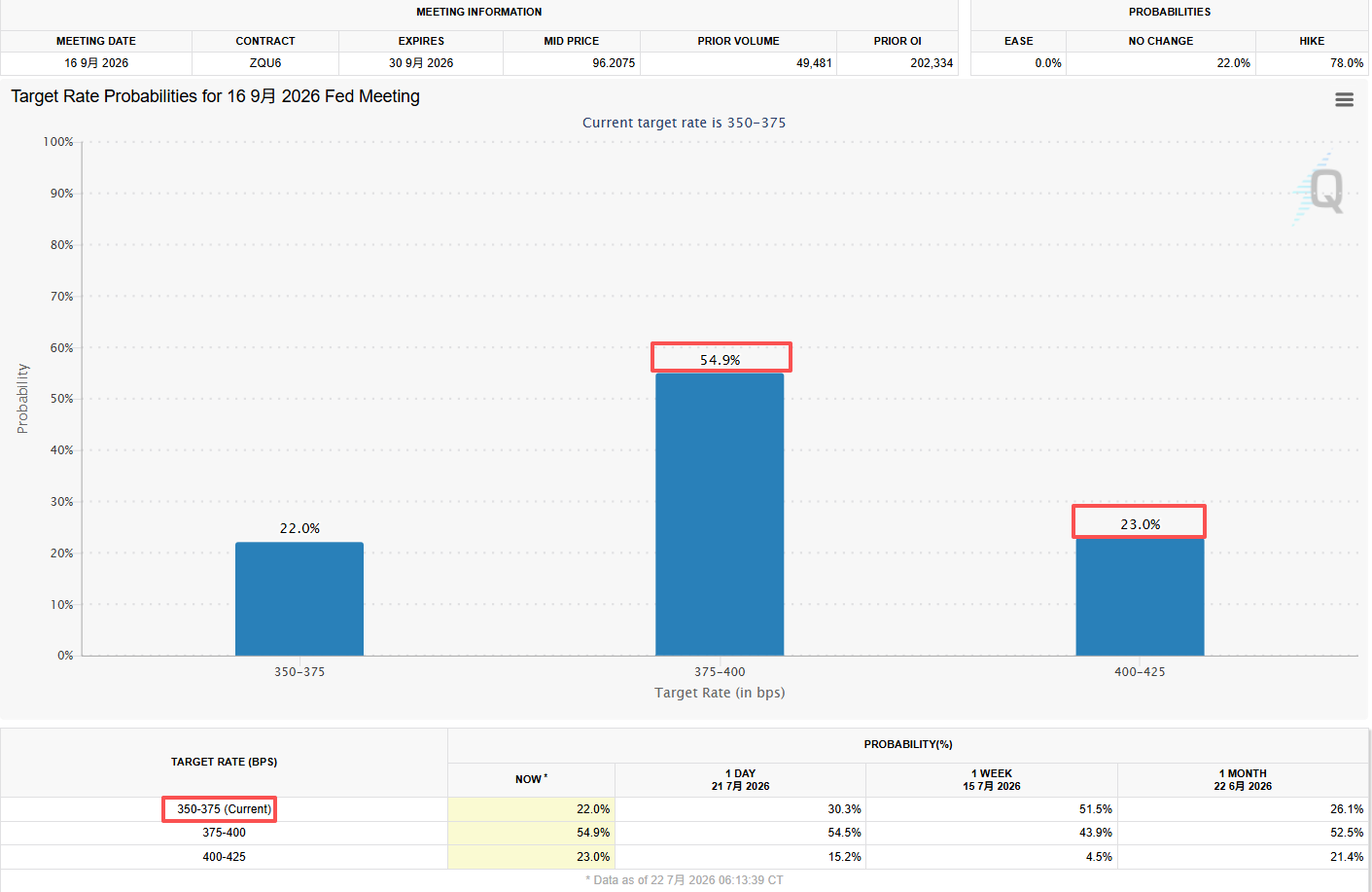
Following this news, international crude oil futures settled sharply higher, both reaching their highest levels in over a month. Traders have been closely monitoring the oil market, concerned that rising oil prices could push up consumer goods prices and ultimately lead the Federal Reserve to raise interest rates. According to the CME Group’s 'FedWatch' tool, the probability of at least one rate hike by the Fed before the conclusion of its September meeting has now approached 80%.
 Trump: U.S. federal government shutdown expected in September
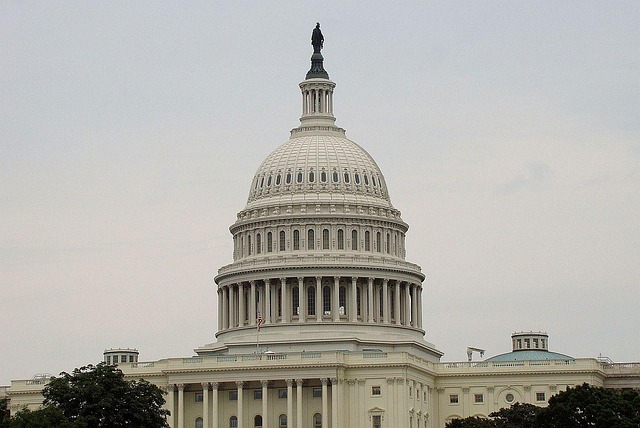
On July 22 local time, U.S. President Trump mentioned during a speech in Georgia that a federal government shutdown is expected in September due to disagreements between Republicans and Democrats over spending priorities. On July 21 local time, the Republican-controlled U.S. House of Representatives passed a short-term appropriations bill to fund federal agencies until December 4, aiming to avoid a government shutdown before the November midterm elections. This temporary funding measure is also known as a 'continuing resolution.' The bill will now be sent to the Senate for consideration.
Currently, Senate Republican leaders are negotiating with Democrats and considering proposing their own short-term funding proposal. If Congress fails to pass an appropriations bill in time, funding for most federal agencies and programs will expire at midnight on September 30, when the current fiscal year ends.
Tech Giants Ramp Up Data Center Investments; OpenAI Reportedly Significantly Raises Compute Spending Forecast
According to late Wednesday reports, artificial intelligence leader OpenAI has further expanded its ambitions for compute spending. Citing informed sources, media outlets reported that OpenAI has revised its projected compute expenditures through 2030 upward from approximately $600 billion, as estimated earlier this year, to $750 billion. This increase reflects new agreements with cloud computing providers and intensified efforts to build its own data centers amid setbacks in the 'Stargate' data center project. As the latest manifestation of this strategy, OpenAI has just announced plans to invest $20 billion in Effingham County, Georgia, to launch a data center named 'Project Camellia.'
Additionally, SpaceX is considering expanding its data center operations in Texas. Microsoft is once again increasing its AI investments in Europe, signing a 'multi-billion-dollar' data center partnership agreement with Mistral. Anthropic plans to begin purchasing up to 2 gigawatts of AMD’s latest-generation chips in the first half of 2027.
Yen Weakness Persists; Bank of Japan Said Open to Accelerating Pace of Rate Hikes
Recent reports indicate that, as the yen’s continued depreciation heightens upside inflation risks, Bank of Japan officials are open to raising interest rates at a faster pace than widely anticipated by economists. Sources familiar with the matter revealed that while many market observers assume the central bank hikes rates roughly every six months, officials are prepared to act sooner if necessary, as they have not committed to a fixed policy path. Markets currently expect the Bank of Japan to hold rates steady at its monetary policy meeting on July 31. Most analysts anticipate the next rate hike—following last month’s increase of the policy rate to 1%, the highest level in 31 years—to occur in December.
Ban Trump from Issuing Crypto! U.S. Senate to Vote on Clarity Act as Early as Next Week
Republican senators updated the Clarity Act on Wednesday, which would prohibit the president and other federal officials from issuing or sponsoring cryptocurrencies and other digital assets. Republicans in the Senate need to secure support from at least seven Democratic senators to overcome the 60-vote threshold. A core point of contention in negotiations is that Trump previously earned billions of dollars from crypto-related ventures. Senators may vote on the bill within the next two weeks before the August recess.
U.S. Stock Market Update
All three major indices closed lower.
On Wednesday (July 22), all three major U.S. stock indices closed lower. At the close, the Dow Jones Industrial Average fell 0.01% to 52,218.58 points; the S&P 500 declined 0.14% to 7,498.96 points; and the Nasdaq Composite dropped 0.57% to 25,690.90 points.

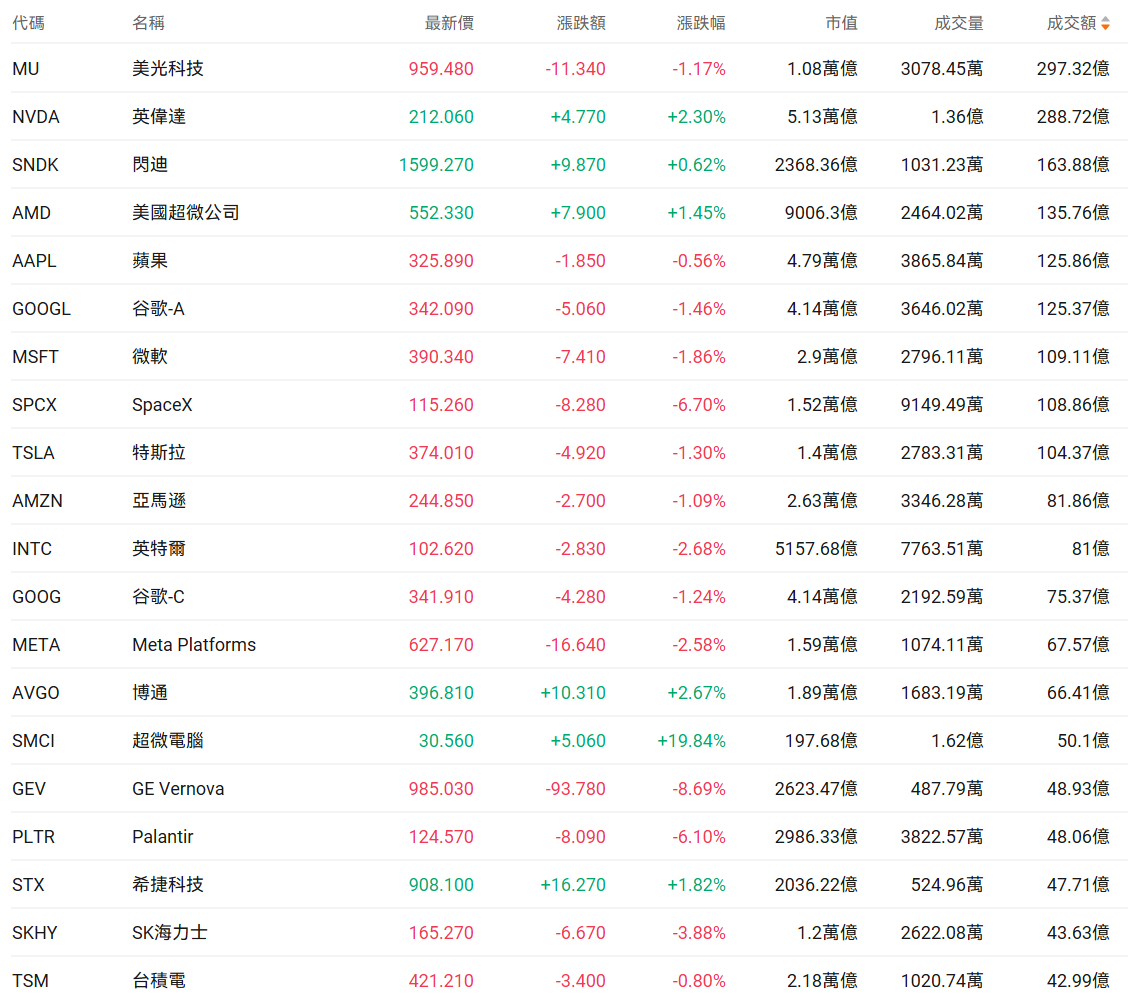
$PHLX Semiconductor Index (.SOX.US)$ rose 0.44%, with notable gainers including Astera Labs up 3.47%, Broadcom up 2.67%, and NVIDIA up 2.3%; ARM fell 2.18% and Intel dropped 2.36%, marking the largest declines.
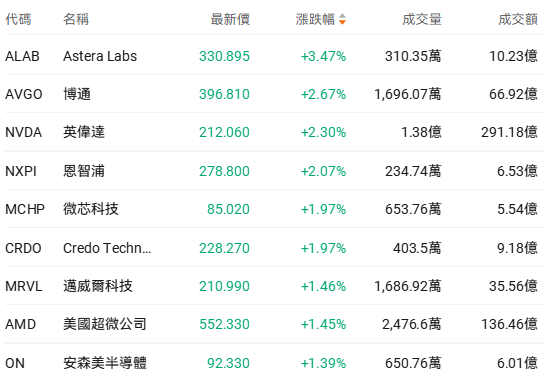
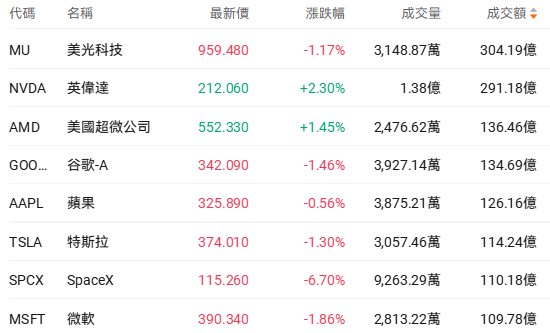
$Star Tech Stocks (LIST2518.US)$ Most declined, with Apple down 0.56%, Alphabet C down 1.24%, Microsoft down 1.86%, Amazon down 1.09%, Meta down 2.58%, and Tesla down 1.3%.
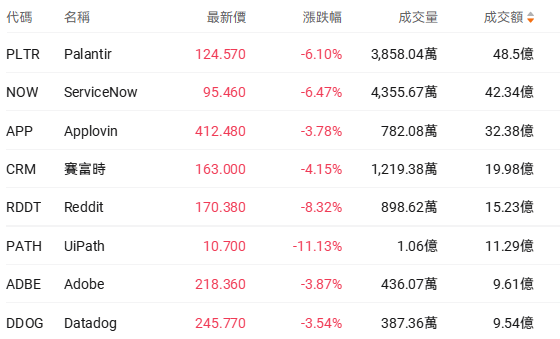
$Application Software (LIST2096.US)$ weakened significantly, $iShares Expanded Tech-Software Sector ETF (IGV.US)$ fell 3.05%, with Palantir down 6.1%, Salesforce down 4.15%, and Palo Alto Networks down 2.01%.
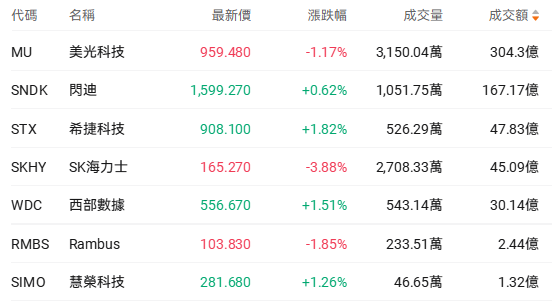
$Storage Concept (LIST23925.US)$ Stocks were mixed, with Seagate Technology up 1.82%, Western Digital up 1.51%, and SanDisk up 0.62%; Micron Technology fell 1.17% and SK Hynix dropped 3.88%.
$Optical Communications (LIST23979.US)$ Sector performance diverged, with Credo Technology rising 1.97% and Marvell Technology up 1.46%; AAOI fell 7.33%, Corning declined 5.14%, and Lumentum dropped 0.94%.
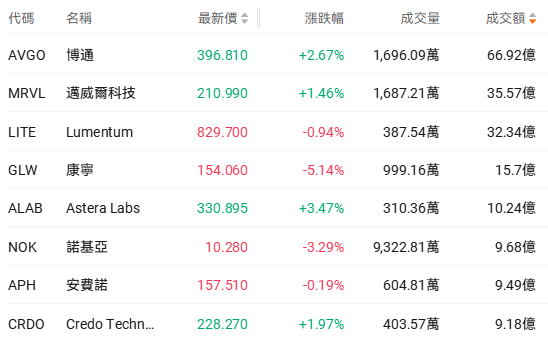
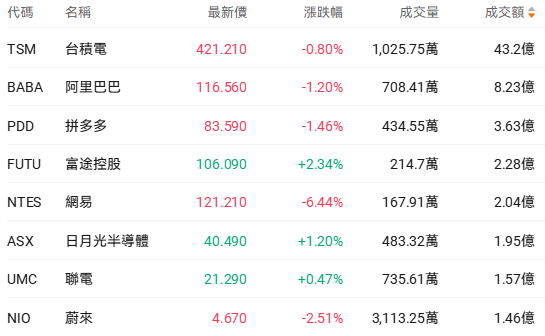
$Popular Chinese ADRs (LIST2517.US)$ Most stocks declined, with NetEase down 6.44%, Chagee falling 4.93%, XPeng Group dropping 3.6%, Nio down 2.51%, and Tencent Music declining 1.79%.
Stock-specific news
Negative cash flow warning triggered? Alphabet delivers strong earnings report
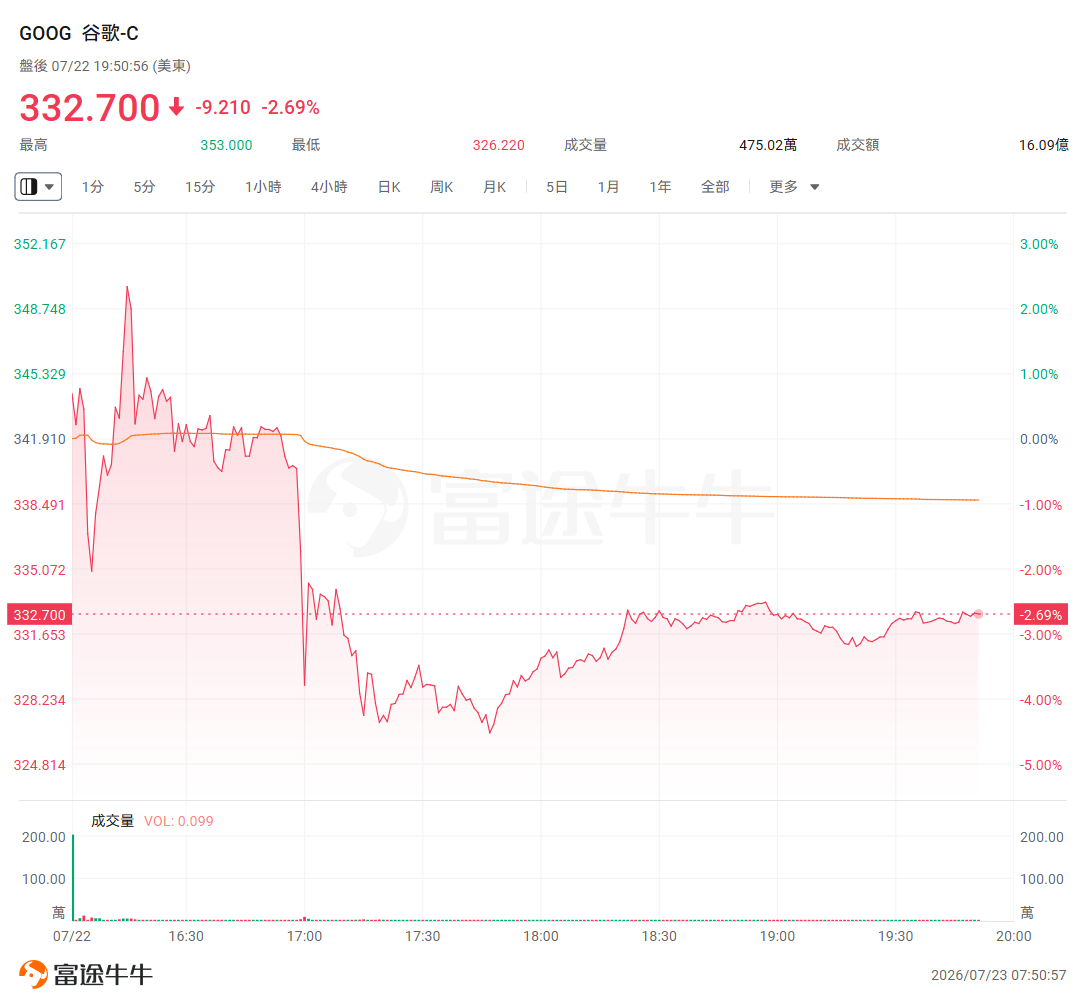
After U.S. market hours on Wednesday, Google-C (GOOG.US) / Google-A (GOOGL.US) parent company Alphabet released its second-quarter earnings report. The results showed that both revenue and profitability exceeded expectations, with Google Cloud posting its strongest growth in several quarters. However, Google significantly raised its full-year spending forecast, now expecting capital expenditures to range between $195 billion and $205 billion, driven by robust demand for artificial intelligence. The revised guidance reflects the company’s accelerated investment in AI computing capacity and its efforts to generate more revenue from cloud clients. This outlook may intensify investor scrutiny of Alphabet’s AI investments. More concerning to the market is that the company reported negative free cash flow for the first time in its history. Its stock price fell in after-hours trading, declining over 3% as of this report.
Tesla beats Q2 revenue expectations but profit disappoints; capital expenditures fall short of target, turning cash flow negative
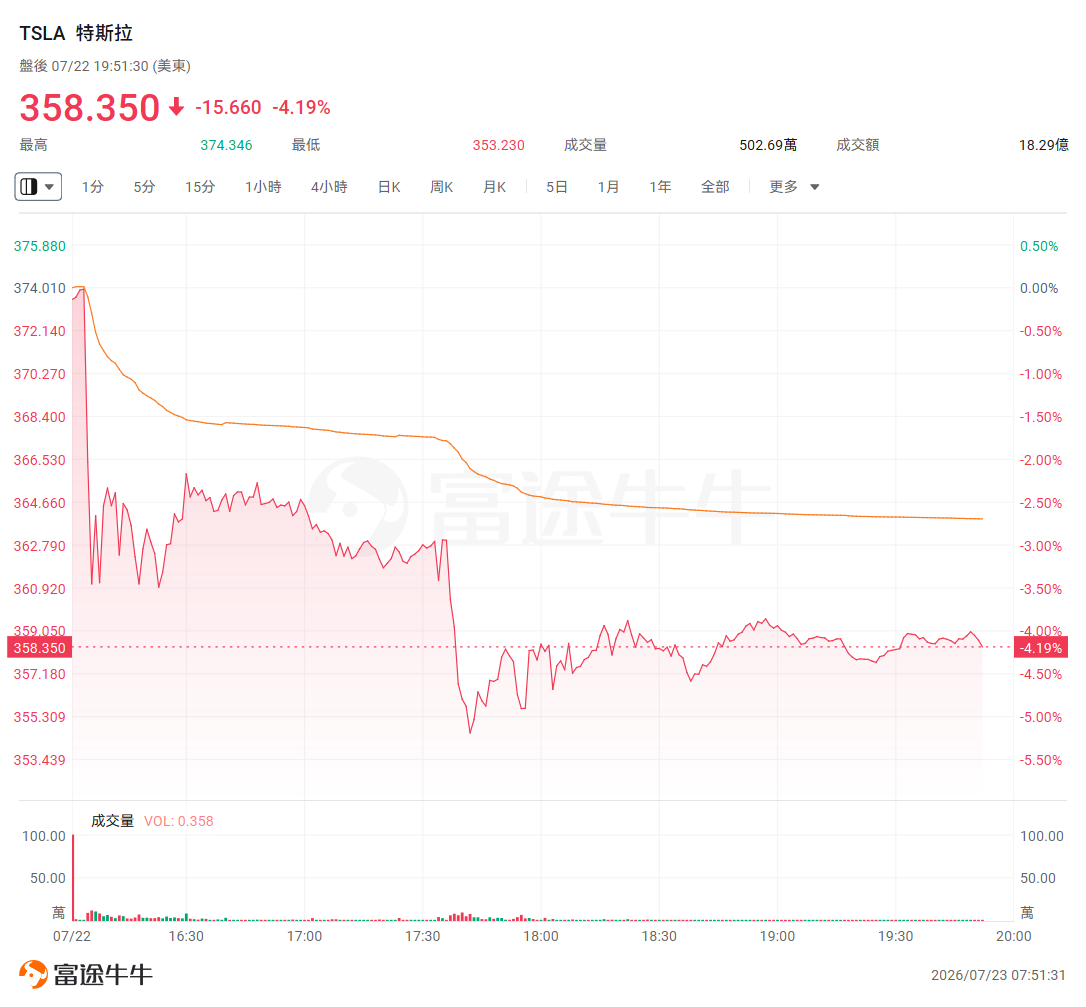
Although $Tesla (TSLA.US)$ Tesla delivered strong vehicle sales in the second quarter, its profits still fell short of Wall Street expectations. This outcome represents a setback for Tesla as it accelerates expansion into new businesses such as robotics, autonomous driving, and artificial intelligence. After market close on Wednesday, Tesla published its second-quarter financial results on its official website, reporting quarterly revenue of $28.236 billion—above the consensus estimate of $25.71 billion—and a 26% year-over-year increase. Automotive segment revenue reached $20.516 billion, up 23% year-over-year. Analysts attribute Tesla’s profit decline primarily to lower average selling prices of vehicles. To stimulate demand, Tesla introduced multiple purchase incentives and discontinued its higher-priced Model S and Model X variants.
IBM reports only 1% revenue growth in Q2 and lowers full-year revenue outlook, as mainframe sales plunge drag on performance
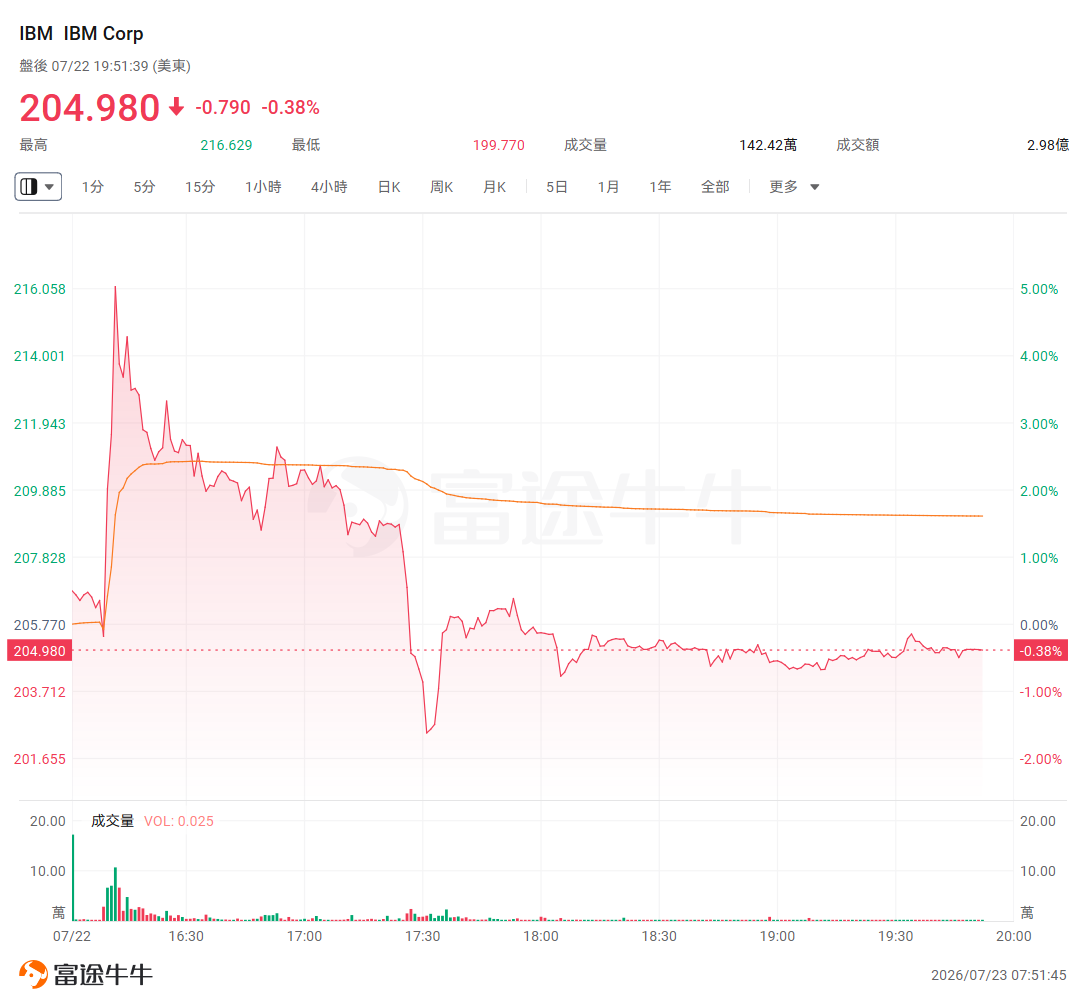
$IBM Corp (IBM.US)$ IBM reported second-quarter revenue of $17.2 billion, up approximately 1% year-over-year, and adjusted earnings per share of $2.93—both below expectations. The company revised its full-year revenue growth forecast downward from “over 5%” to “4% to 5%.” Revenue from its Z-series mainframes plummeted 42% year-over-year, dragging infrastructure segment revenue down by 7%. Although IBM is actively promoting AI productivity tools—including its new code assistant Bob—to offset weaknesses in legacy businesses, this growth has not been sufficient to counteract the mainframe-related drag. Software revenue remained relatively resilient, increasing 5% year-over-year. Previously viewed as a beneficiary of enterprise AI adoption, IBM’s latest earnings warning highlights ongoing revenue pressures during the transition from traditional IT infrastructure to AI-driven solutions. As the company had issued a profit warning a week earlier, its after-hours share price briefly rose by approximately 5%.
Apple fully upgrades its Mac product line, betting on AI-driven demand to spur a new wave of device replacements.
$Apple (AAPL.US)$ The company plans to roll out new versions of its entire Mac lineup starting this fall and continuing into next year: the first OLED touchscreen MacBook Pro is set to debut, with entry-level models powered by the M6 chip. The MacBook Air will be updated in early next year, while an OLED version is expected as early as 2028. The MacBook Neo will receive a chip upgrade and expanded memory. New models of the Mac mini and Mac Studio will also be launched.
Wall Street banks have launched a $35 billion AI infrastructure financing package for Broadcom and Anthropic.
According to Bloomberg, major Wall Street banks have begun trading $Broadcom (AVGO.US)$ the initial tranche of the $35 billion financing package for Anthropic’s AI infrastructure expansion, marking one of the largest private credit market participations in recent years. This transaction sets a new record for AI infrastructure financing, reflecting institutional investors’ strong enthusiasm for AI compute capacity expansion. As a core supplier of AI chips and networking equipment, Broadcom’s involvement in this financing will further solidify its strategic alignment with Anthropic in the AI compute space, sending a positive signal to upstream semiconductor and data center equipment companies across the AI supply chain.
AMD makes its first bet on Anthropic: up to $5 billion investment and securing tens of billions of dollars in AI server orders
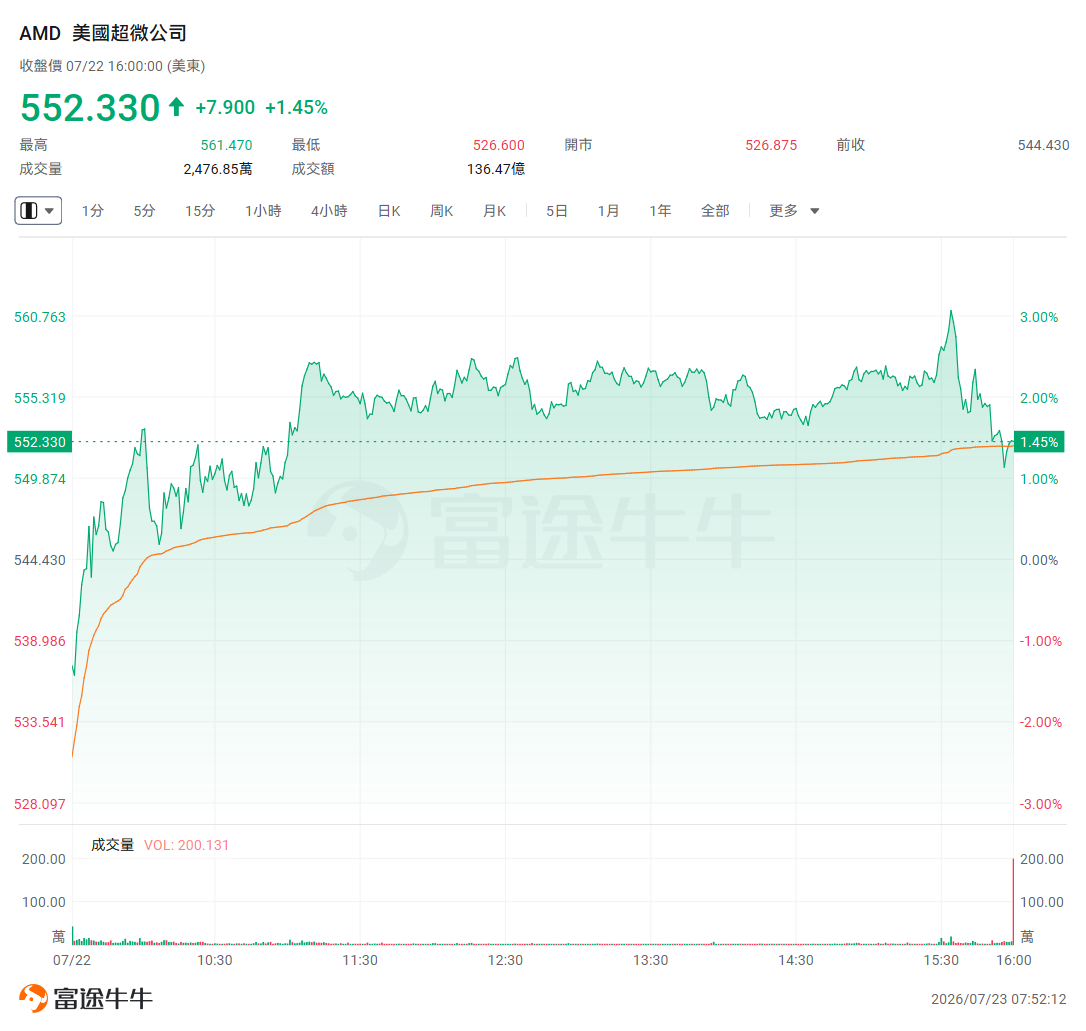
According to media reports on Wednesday, $Advanced Micro Devices (AMD.US)$ AMD has signed a multi-billion-dollar AI server procurement agreement with Anthropic, significantly bolstering AMD’s competitive position in the industry, and will invest up to $5 billion in the company. Following the announcement, AMD’s stock rose during pre-market trading but quickly gave back those gains. Despite the muted market reaction, this multi-year partnership represents one of AMD’s most significant enterprise collaborations to date. Under the agreement, Anthropic will purchase up to 2 gigawatts of AI servers equipped with AMD’s latest-generation Instinct MI450 chips beginning in the first half of 2027. Industry executives noted that 1 gigawatt of AI computing capacity is sufficient to meet the electricity needs of approximately 750,000 U.S. households, and building such AI infrastructure would cost roughly $50 billion.
Texas Instruments reports Q2 revenue of $5.46 billion, exceeding market expectations
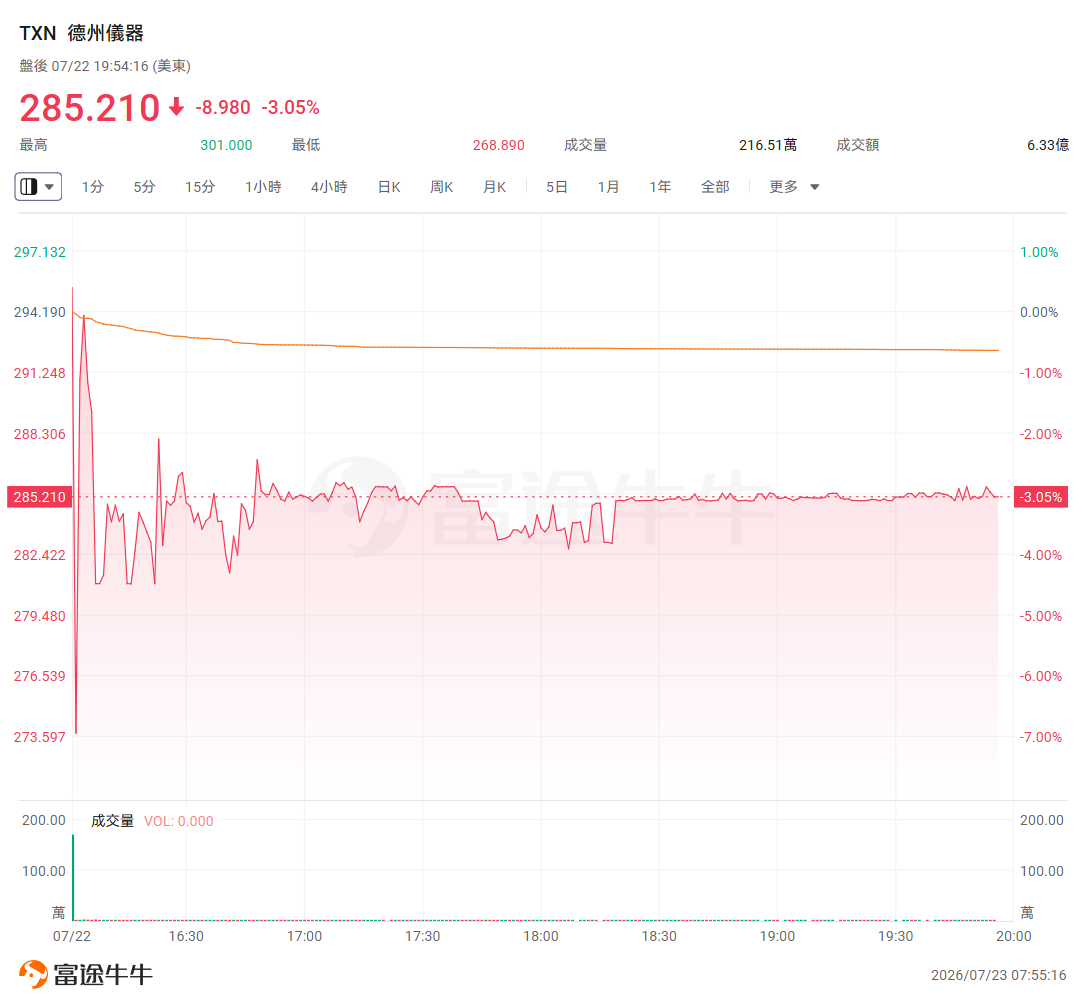
Texas Instruments (TXN.US) reported second-quarter revenue of $5.46 billion after the market close, surpassing analysts’ expectation of $5.24 billion. The company forecasts third-fiscal-quarter revenue between $5.65 billion and $6.15 billion, compared to the market consensus of $5.62 billion. Haviv Ilan, Chairman, President, and CEO, stated: “Revenue increased 13% sequentially and 23% year-over-year, driven by broad-based growth in industrial, data center, and automotive segments.” Texas Instruments has returned approximately $5.8 billion to shareholders this fiscal year through share repurchases and dividends. The company also announced a cash dividend of $1.42 per share.
ServiceNow reports Q2 2026 revenue of $3.987 billion
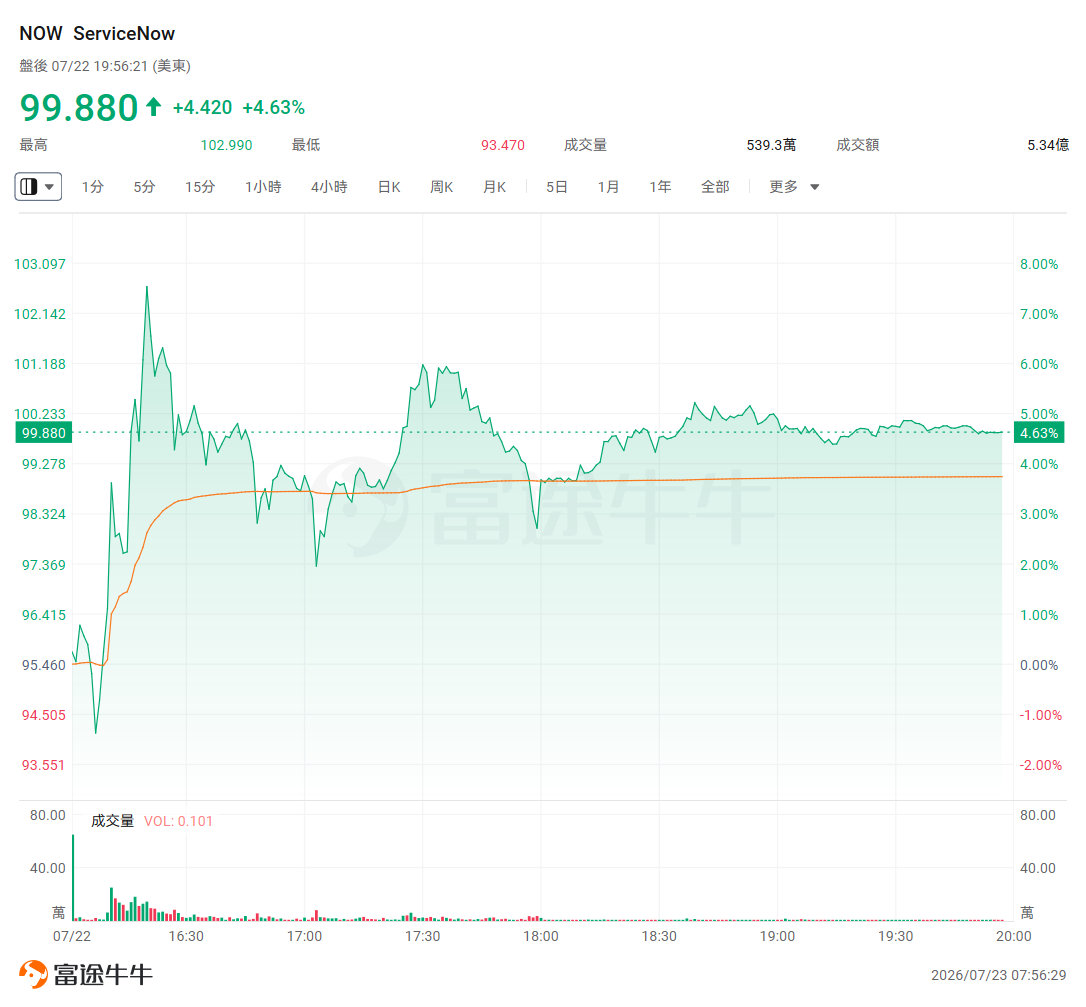
$ServiceNow(NOW.US)$ After-hours, the company reported Q2 2026 revenue of $3.987 billion, an increase of 24% year-over-year; adjusted EPS was $0.90. Subscription revenue totaled $3.877 billion, up 24.5% year-over-year. ServiceNow Inc. forecasts revenue for the next fiscal quarter to be between $3.975 billion and $3.980 billion.
Bill McDermott, Chairman and CEO of ServiceNow, stated: “ServiceNow’s exceptional second-quarter performance solidifies our position as the fastest-growing enterprise software and cybersecurity company. Our strong foundation enables us to operate under the Rule of 56 and we are progressing toward the Rule of 60. With our AI Control Tower established as the market standard, deployments of ServiceNow AI agents have grown ninefold in just nine months. Our $29 billion in remaining performance obligations reflects longer customer commitments and surging demand from our partner ecosystem. We are exactly what we say we are: a defining company that is just getting started.”
SpaceX’s Falcon Heavy booster has completed additional pre-launch tests.
$SpaceX (SPCX.US)$ Preparations are now underway for the earliest possible launch of Starship on Thursday, July 23, local time. Current weather conditions remain a significant factor affecting the launch.
Top 20 by Trading Volume
Hong Kong Market Outlook
Southbound capital increased its holdings of Hong Kong-listed stocks by over HK$7.5 billion, with Hua Hong Hongli receiving net purchases exceeding HK$1.2 billion.
On Wednesday, July 22, southbound capital recorded net purchases of HK$7.517 billion in Hong Kong-listed stocks.
$Ying Fu Fund (02800.HK)$、$Huahong Hongli (01347.HK)$、$Zhipu AI (02513.HK)$Net purchases amounted to HK$6.183 billion, HK$1.205 billion, and HK$362 million, respectively;
$Tencent (00700.HK)$、$Alibaba-W (09988.HK)$、$KBTL (01888.HK)$Net sales amounted to HK$2.765 billion, HK$2.759 billion, and HK$820 million, respectively.
Baidu: Application submitted to Hong Kong Stock Exchange for primary listing conversion
Baidu Group-SW (09888.HK) In a filing with the Hong Kong Stock Exchange, the company announced it has submitted an application for primary listing conversion and has received acknowledgment of receipt from the exchange. The effective date is expected within this calendar year, subject to approval by the Hong Kong Stock Exchange. Upon effectiveness of the primary listing conversion, the company will maintain dual primary listings on the Hong Kong Stock Exchange and Nasdaq in the United States.
Today's Focus
Key highlights: European Central Bank interest rate decision; weekly initial jobless claims; earnings reports from Intel and Nokia
On the economic data front, China’s share of global payments in RMB as reported by SWIFT for June will be released at 09:00. At 20:30, the U.S. weekly initial jobless claims (in 10,000s) for the week ending July 18 will be published. At 22:30, the U.S. weekly EIA natural gas storage change (in billion cubic feet) for the week ending July 17 will be released.
On the economic calendar, at 20:15, the European Central Bank will announce its interest rate decision; at 20:45, ECB President Lagarde will hold a monetary policy press conference.
In terms of performance,$American Airlines (AAL.US)$、Blackstone (BX.US) 、$Lockheed Martin (LMT.US)$、 Nokia (NOK.US)、 RTX Corp (RTX.US)will release earnings before the U.S. market open; after the U.S. market close,$Intel (INTC.US)$、$Newmont (NEM.US)$、$SAP SE (SAP.US)$will report earnings.
 Looking to select stocks or analyze your holdings? Want to understand the opportunities and risks in your portfolio? For any investment-related questions,just ask Futubull AI!

Editor/Rocky