On the day$S&P 500 Index (.SPX.US)$fell 1.2%,$NASDAQ-100 Index (.NDX.US)$declined by 1.9%, as the large-cap tech sector—led by the Mag 7—suffered its worst single-day performance since the tariff turmoil of April 2025, wiping out approximately $800 billion in combined market value. Escalating U.S.-Iran tensions pushed Brent crude above $100 per barrel intraday, reigniting fears of renewed inflationary pressures.
Soaring oil prices and growing skepticism over AI investment returns triggered by tech giants’ earnings reports jointly rattled markets, sending U.S. equities sharply lower on Thursday. The S&P 500 posted its steepest one-day drop in nearly a month, while Treasury yields climbed to their highest levels of the year.
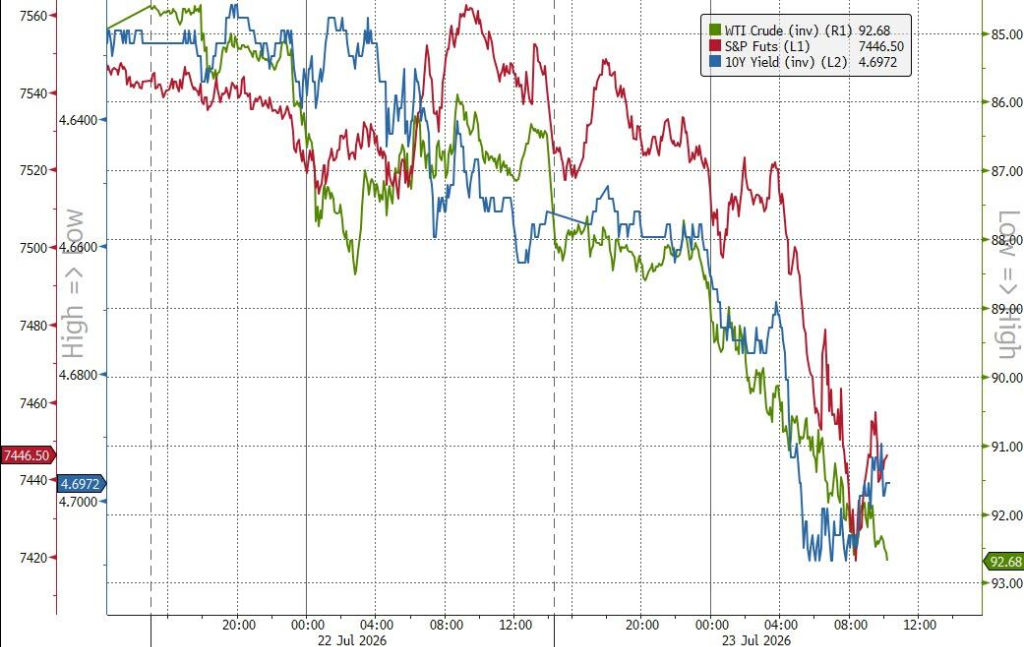
Escalating U.S.-Iran tensions pushed Brent crude above $100 per barrel intraday, reigniting fears of renewed inflationary pressures.
 As oil prices rose, expectations mounted that the Federal Reserve would raise interest rates sooner to contain inflation. CME Group’s 'FedWatch Tool' indicated that markets priced in a nearly 36% probability of a 25-basis-point rate hike at the Fed’s upcoming meeting next week.
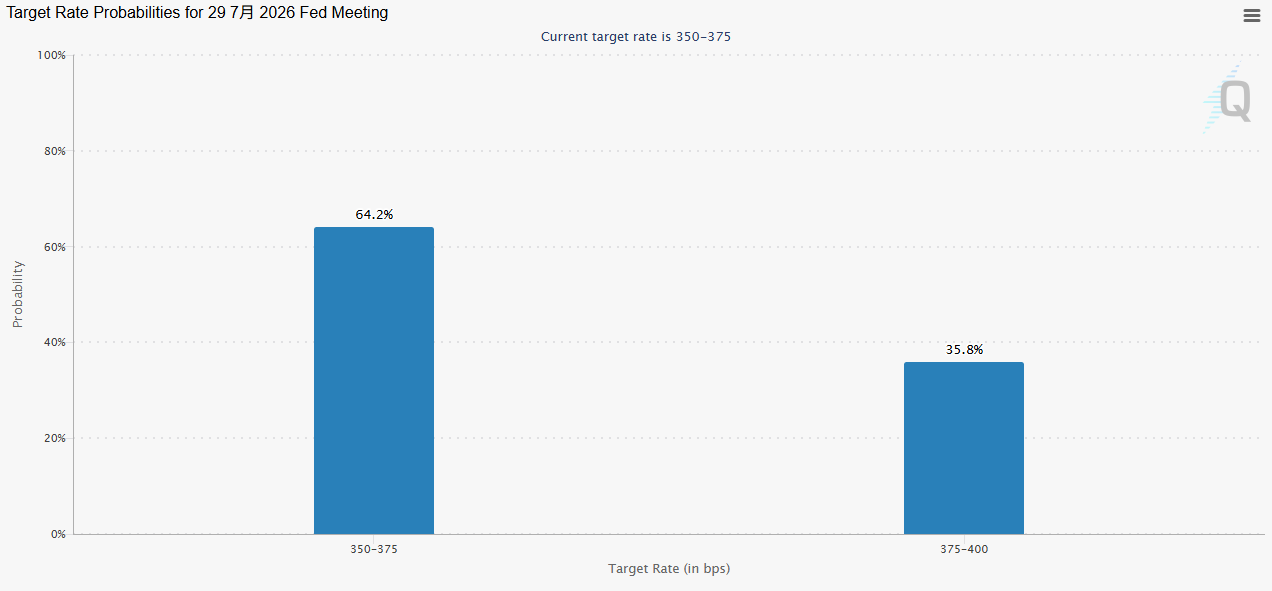
The Federal Reserve is set to hold its policy meeting next week, and money markets show that traders’ bets on a rate hike surged from around 10% to over 35% within a week, signaling a sharp shift in market sentiment. The dollar strengthened, while gold and$Bitcoin (BTC.CC)$moved lower in tandem with risk assets.
On the day, the S&P 500 fell 1.2%, while the Nasdaq 100 declined by 1.9%. The large-cap tech sector—led by the Mag 7—suffered its worst single-day performance since the tariff turmoil of April 2025, wiping out approximately $800 billion in combined market value.
Oil breaches $100; inflation and rate hike concerns weigh on markets
U.S. forces have carried out strikes against Iran for the twelfth consecutive night, with neither Washington nor Tehran showing any signs of willingness to negotiate.
According to a Thursday report by U.S. media outlets cited by Xinhua News Agency on the 23rd, President Trump said that day he was “seriously considering” restarting large-scale military operations against Iran, potentially exceeding the scope of the 'Operation Praying Mantis'-style strike conducted in late February this year.
Trump emphasized that no final decision had yet been made, but the U.S. military was fully prepared. Earlier that day, Trump had already publicly threatened to impose “military punishment” on both Iran and Yemen’s Houthi militants.
The report stated that in mid-month, Iran had deployed military commanders, military advisors, and equipment related to missiles and drones to Yemen to support the Houthis. This move is believed to further enhance the Houthis’ capability to launch missile and drone attacks against Red Sea shipping.
The president of Rapidan Energy Group stated:
The scope of a second round of military conflict would be broader than the first. The risks are enormous—not only for the shipping industry but also for energy infrastructure.
Brent crude oil prices rose above $100 per barrel during trading, reaching a nearly two-month high. WTI crude climbed 5.5% to $91.59 per barrel.
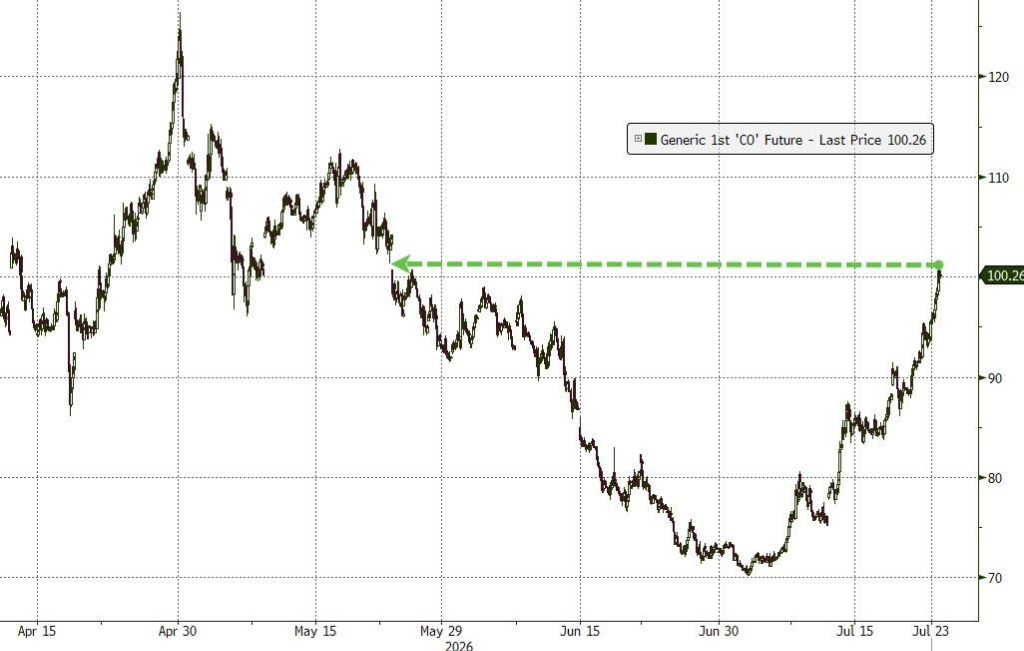
Brent crude futures are exhibiting a pronounced backwardation relative to spot prices, signaling market concerns that the situation could deteriorate further.
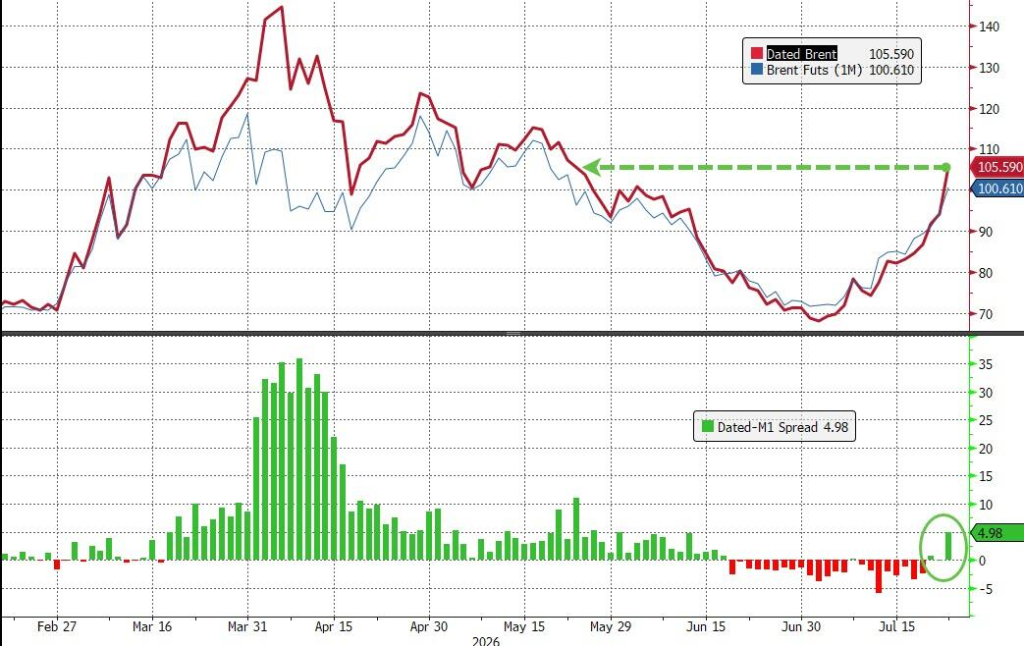
Market participants in the oil sector say political pressure is mounting on President Trump to end the conflict and rein in soaring energy costs.
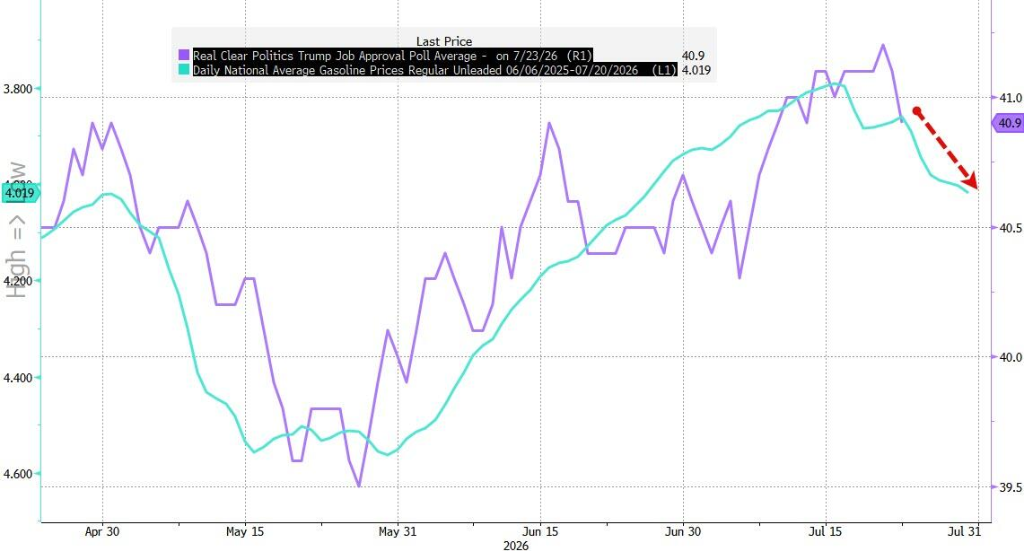
Retail diesel prices have already surpassed $5 per gallon, and this price surge could inflict further pain on businesses and consumers. Rob Haworth, Senior Investment Strategy Director at Bank of America Wealth Management, stated:
If oil prices remain within the range of $90 to $120 per barrel by the end of summer, consumer spending could be more significantly impacted.
Inflationary pressures have reignited, pushing the probability of a Federal Reserve rate hike next week up sharply to approximately 38%.
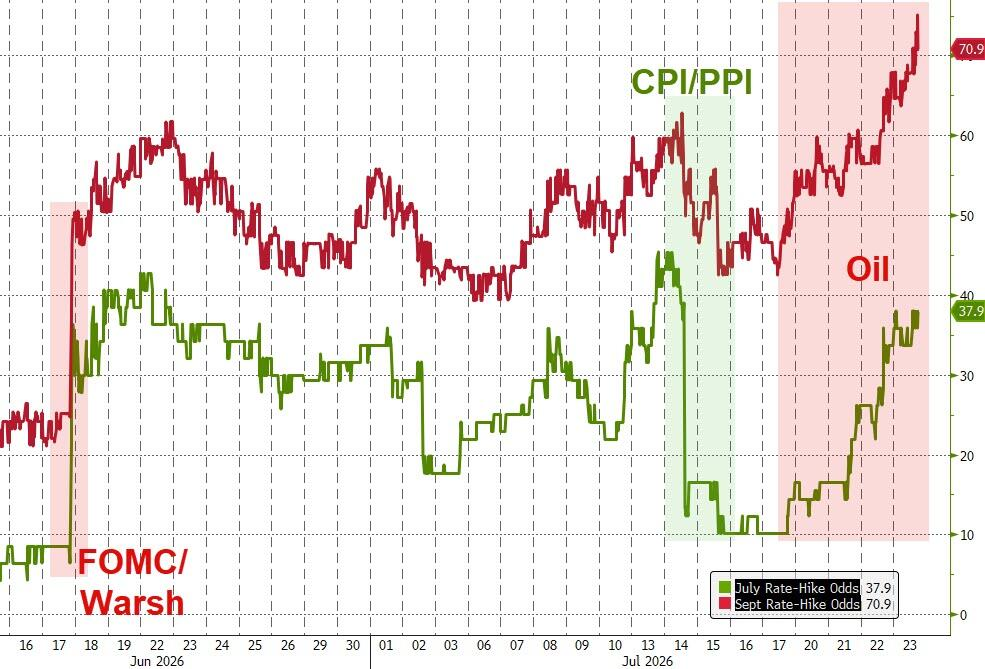
Sameer Samana of Wells Fargo & Co’s Investment Institute stated:
Escalating tensions in the Middle East have driven up crude oil prices, raising concerns that inflation could re-accelerate, delay interest rate cuts, and potentially even force the Federal Reserve to raise rates.
$U.S. 2-year Treasury yield (US2Y.BD)$Rising to a 17-month high, the 10-year yield climbed 4 basis points to 4.70%.
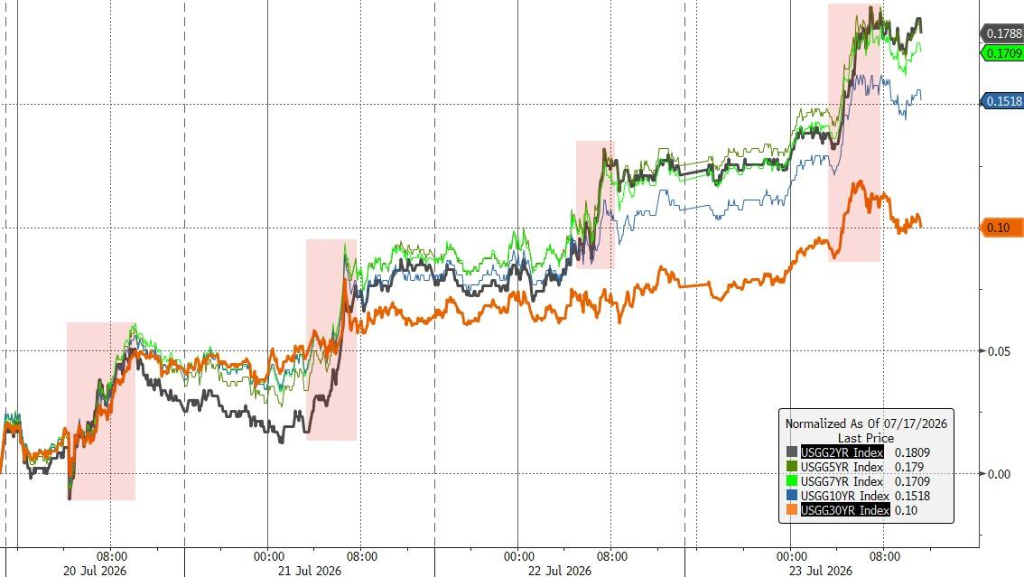
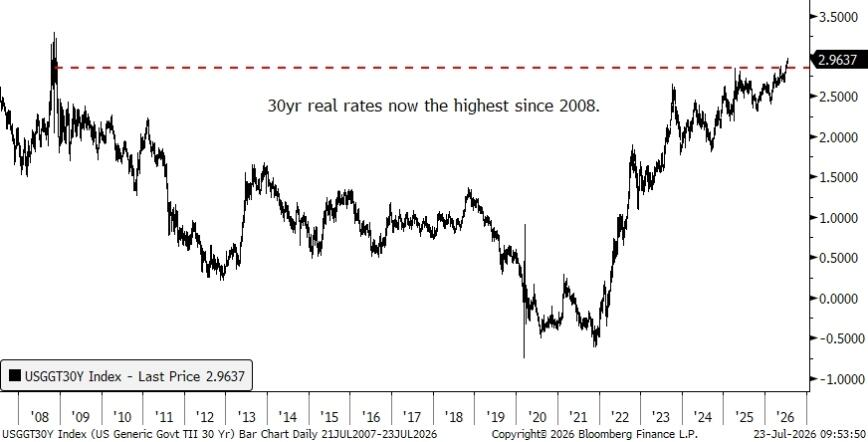
The 30-year real yield is approaching 3%, its highest level since 2008.
AI-related spending triggered a sell-off, weighing on earnings reports from major tech firms.
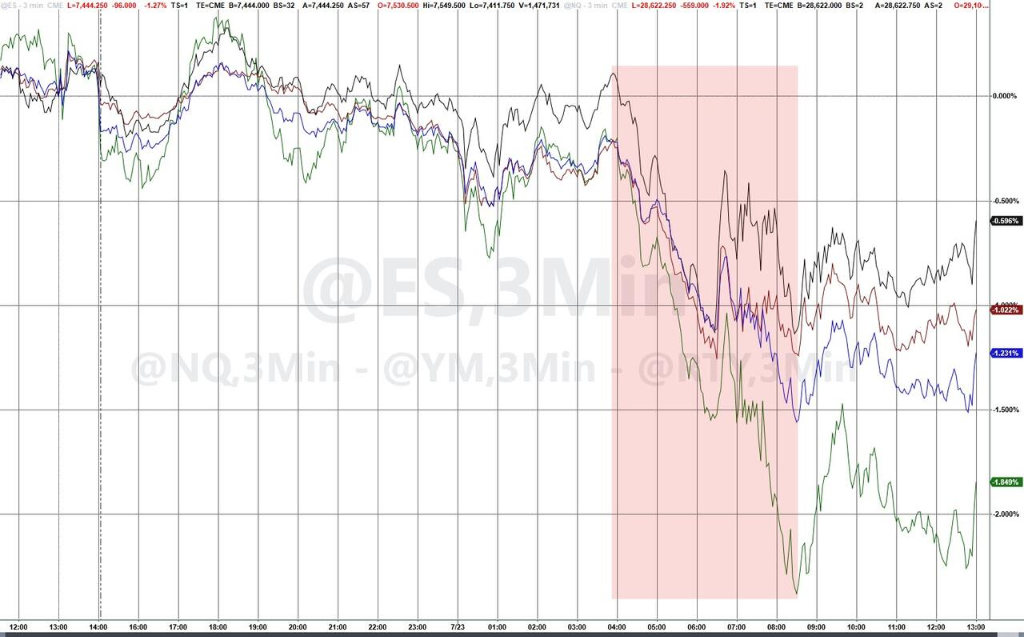
On Thursday, the S&P 500 fell 1.2%, while the Nasdaq 100 dropped 1.9%.
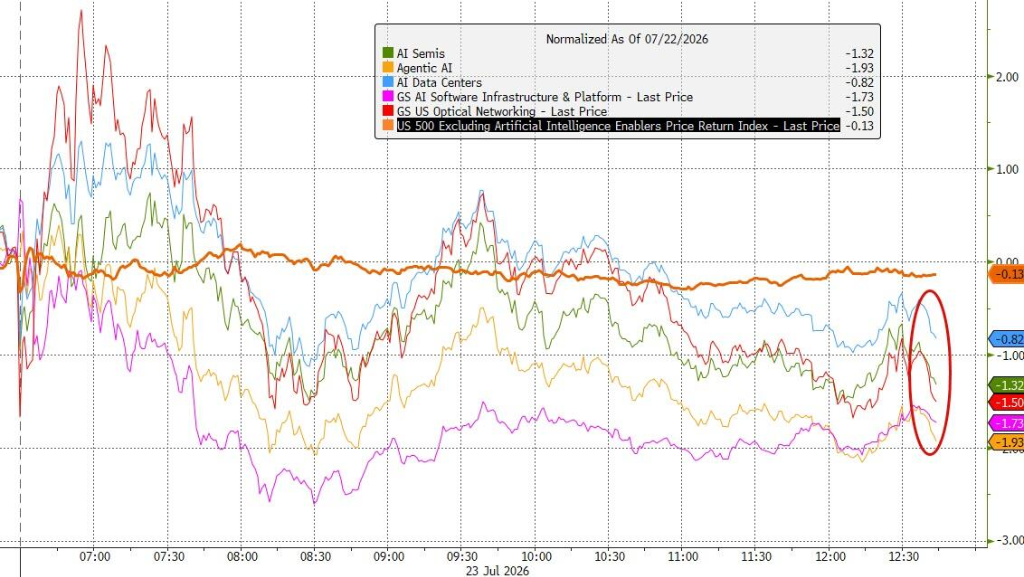
Despite an initial wave of buying at the open, all AI-leading stocks declined during the session, while the S&P 500 excluding AI-related components closed essentially flat.
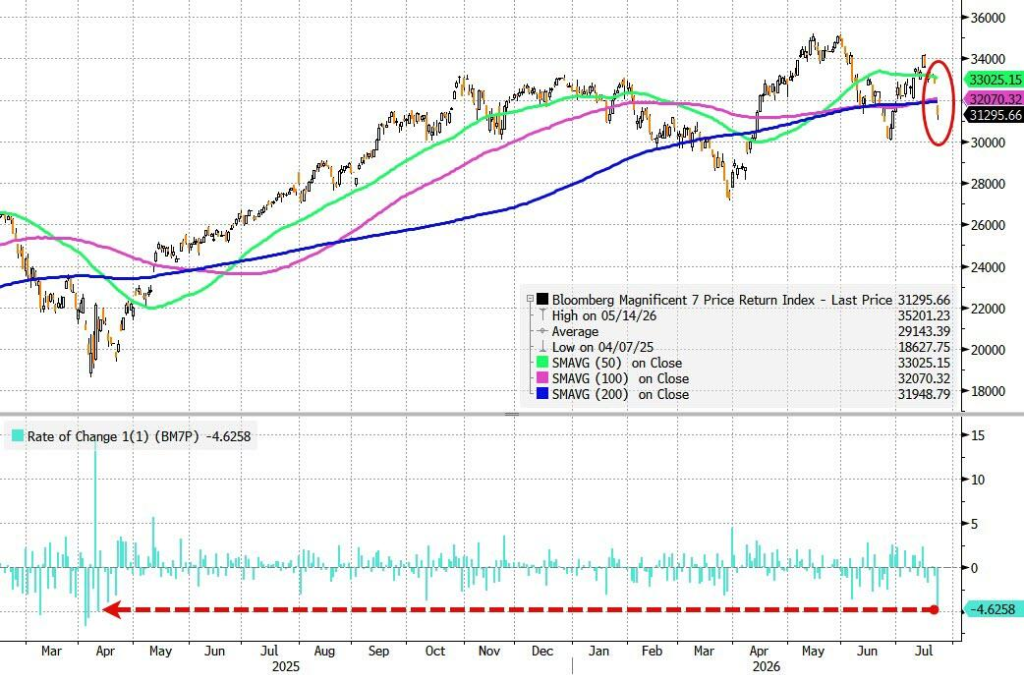
The large-cap technology sector, represented by the Mag 7, posted its worst single-day performance since the tariff turmoil of April 2025, with the index price breaking below all major moving averages and wiping out approximately $800 billion in combined market value.
Although Google's second-quarter earnings significantly exceeded profit expectations, the company announced a further increase in its capital expenditure plans and posted its first-ever negative free cash flow, causing its share price to plunge 6.9% and dragging the communication services sector down by 4.8%.
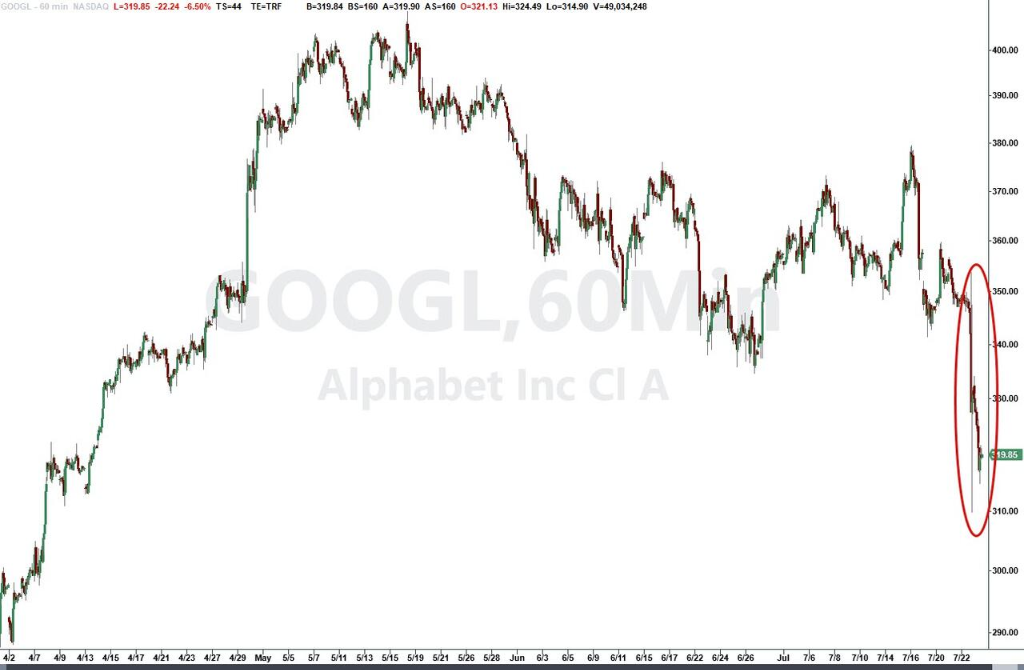
Notably, Bloomberg data shows that Alphabet has halted stock buybacks since the fourth quarter of 2025. Against the backdrop of negative free cash flow, share repurchases—a key market support mechanism in recent years—are now absent.
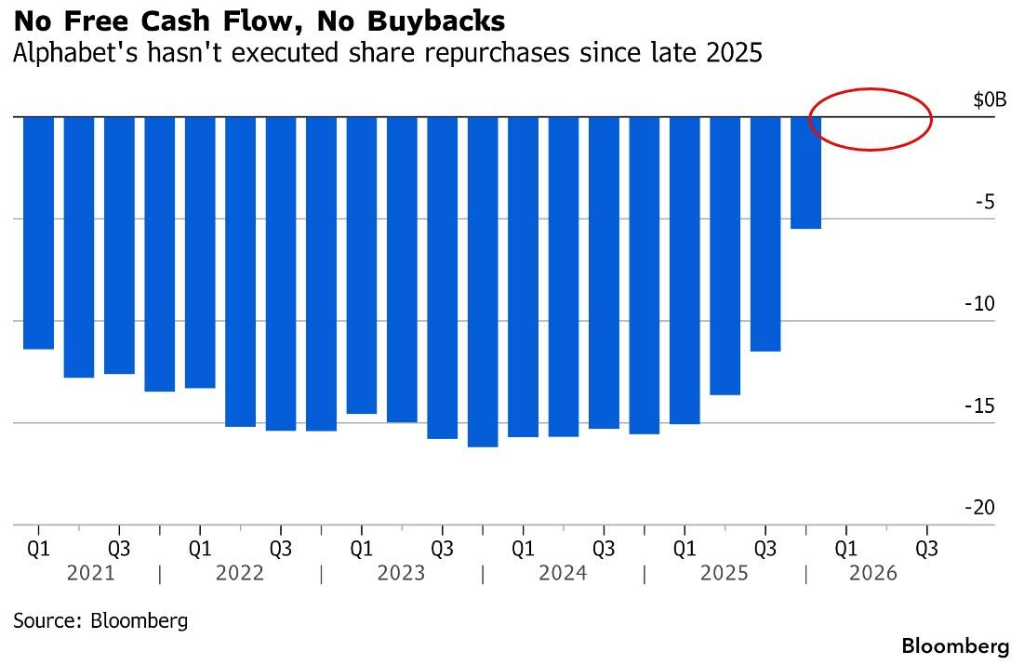
Bloomberg macro strategist Tatiana Darie noted:
Alphabet’s latest upward revision to its capital expenditure plans, combined with substantial future spending commitments, has unnerved investors—especially as other tech giants are set to report earnings next week and face similar risks of negative investor reactions.
Earlier in April, Meta and$Microsoft (MSFT.US)$and$Amazon (AMZN.US)$have already disclosed combined AI-related spending plans for this year totaling $725 billion. Since the start of this earnings season, investors have grown increasingly concerned about whether such massive investments in AI infrastructure will generate tangible business growth or merely weigh on profits.
Matt Maley of Miller Tabak stated:
We are still in the early stages, and next week we will see more earnings reports from hyperscale cloud providers. We cannot yet conclude that they will face the same negative reaction as semiconductor stocks, but this trend has indeed heightened concerns about 'sell-the-news' dynamics.
$Tesla (TSLA.US)$was another significant drag. Despite strong electric vehicle delivery figures, the company reported a decline in second-quarter profits, and its free cash flow turned negative for the first time in over two years, sending its shares plunging 15%.
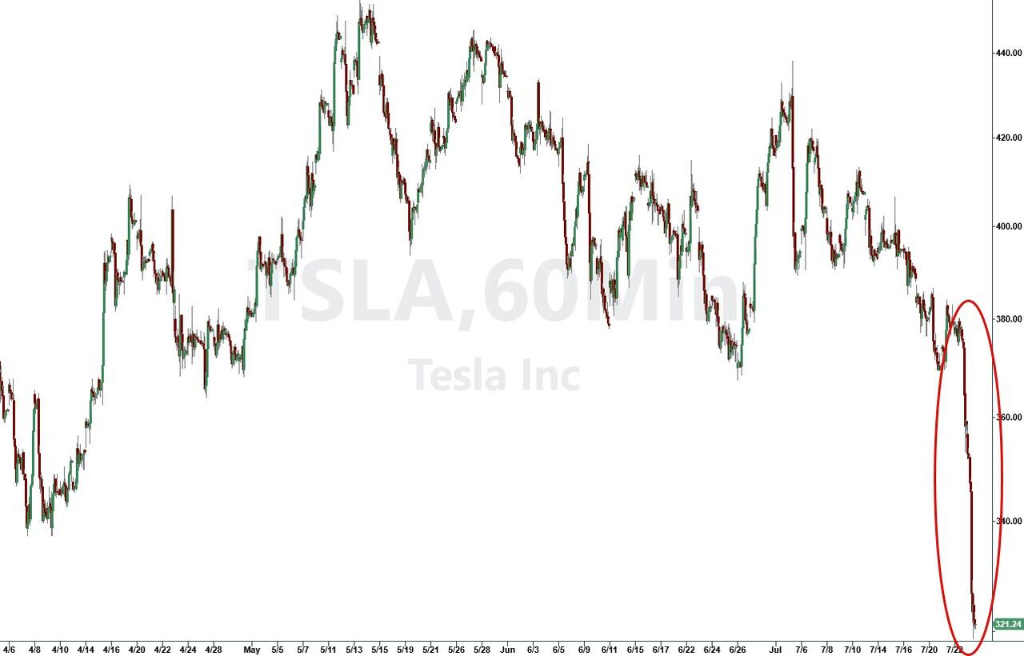
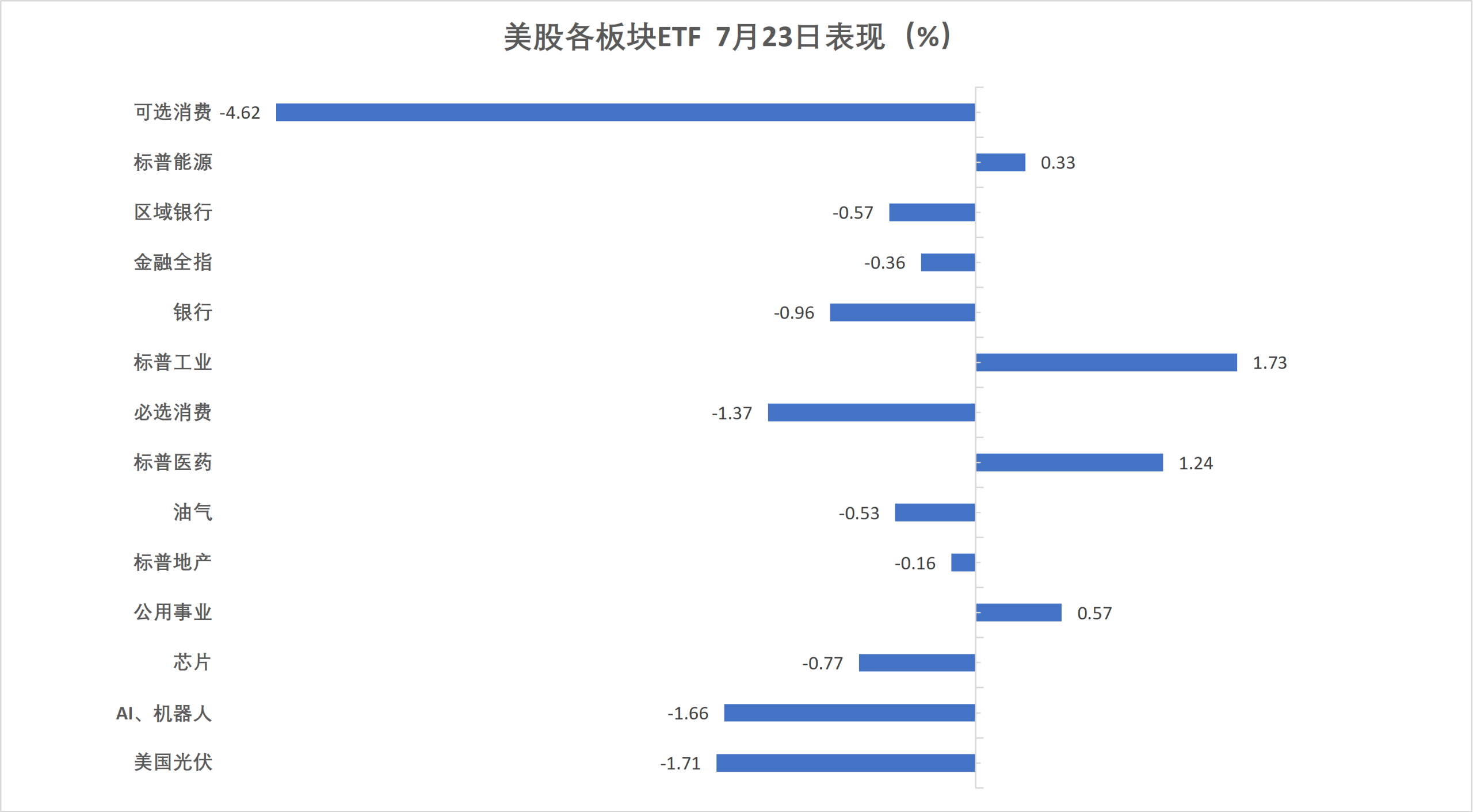
As a result, the consumer discretionary ETF sector became the day’s worst-performing sector, falling more than 4%.
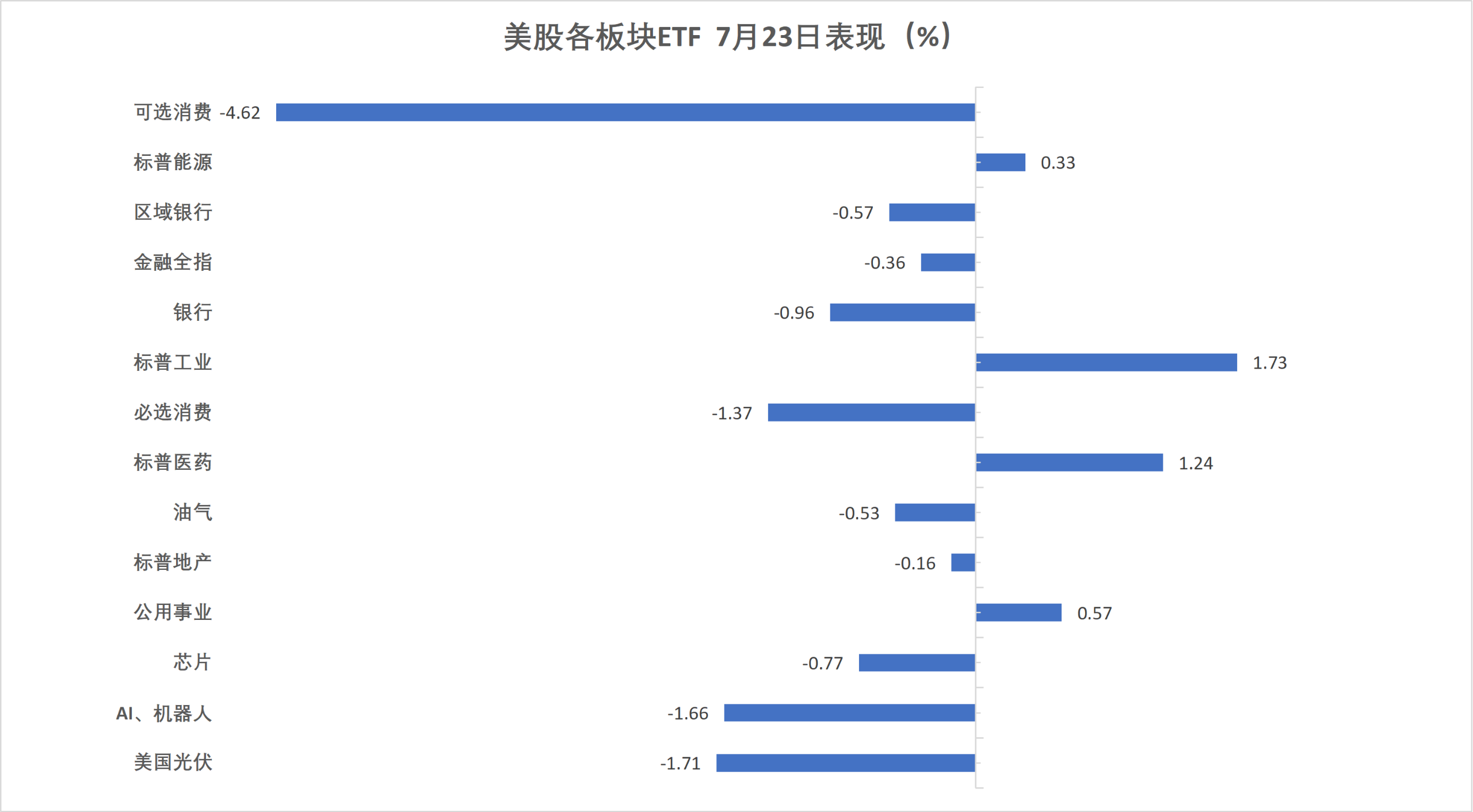
Defensive sectors, including defense, gained ground amid the broader market decline.
Amid broad-based declines, the defense sector emerged as one of the few bright spots.
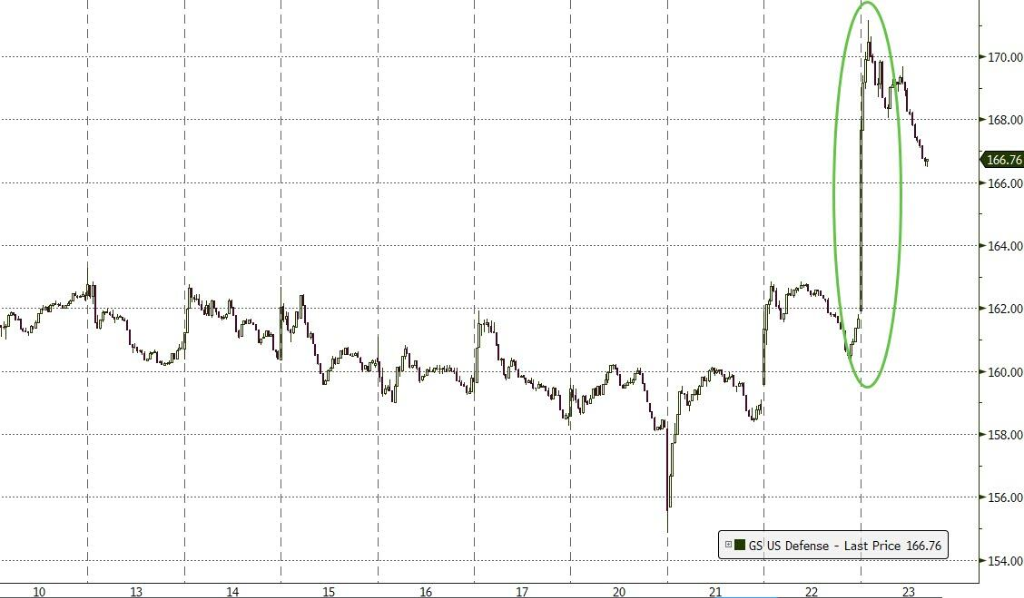
Lockheed Martin rose more than 9%, RTX Corp (RTX.US)and also climbed higher, as both companies raised their full-year sales forecasts, benefiting from increased defense spending driven by heightened geopolitical tensions globally.
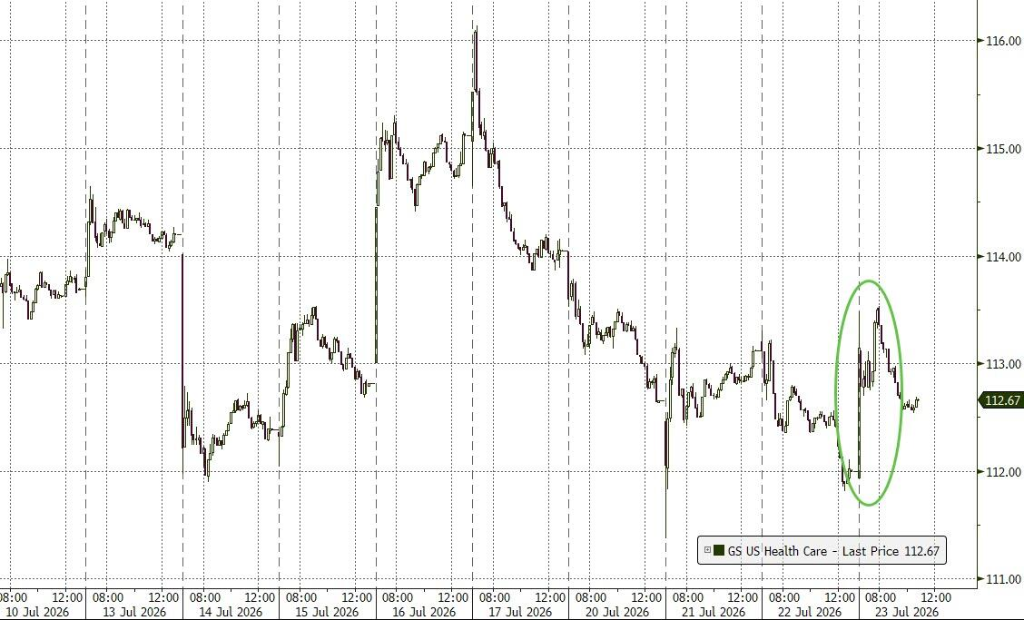
The industrial sector as a whole gained approximately 1.5%, making it the best-performing of the 11 S&P 500 sectors for the day. Healthcare stocks$Thermo Fisher Scientific(TMO.US)$surged nearly 9% after the company raised its full-year profit forecast and exceeded second-quarter earnings expectations.
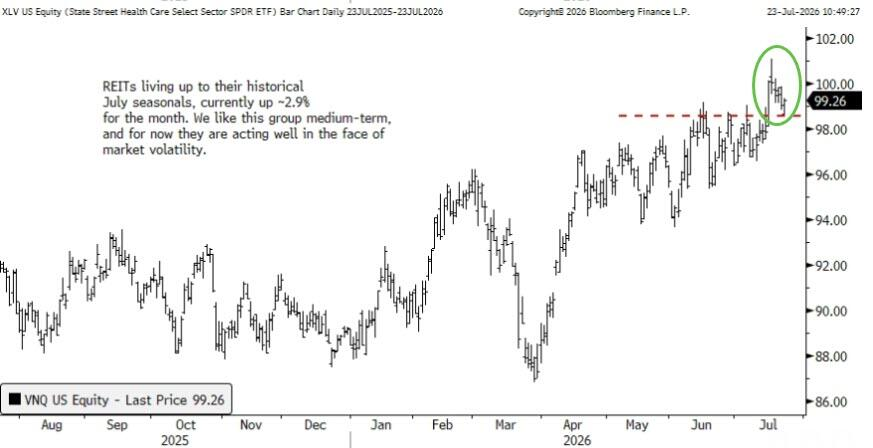
Additionally, real estate investment trusts (REITs) experienced their typical seasonal volatility in July as expected.
Performance of Other Major Asset Classes
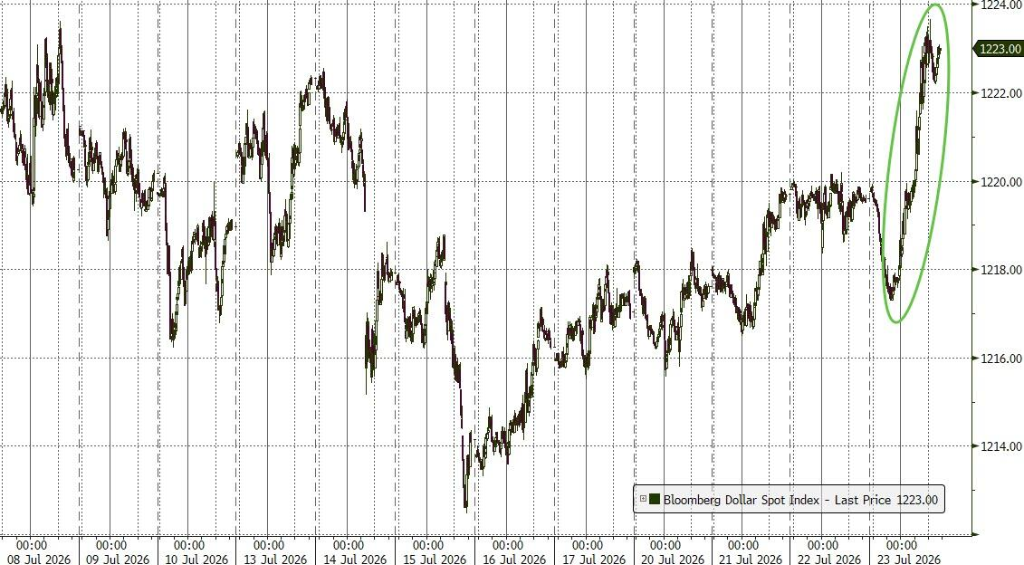
Renewed expectations of Federal Reserve rate hikes drove the U.S. dollar sharply higher, pushing the Bloomberg Dollar Spot Index up to 1223.
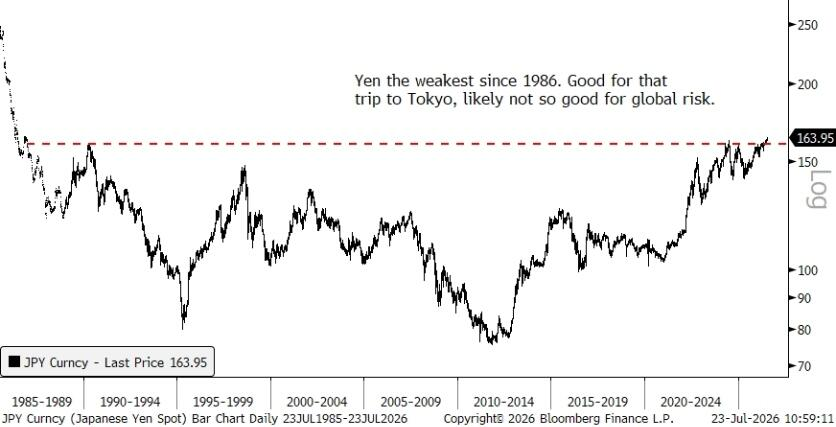
The dollar breached 163 against the yen, with the Japanese currency hitting its weakest level since 1986.
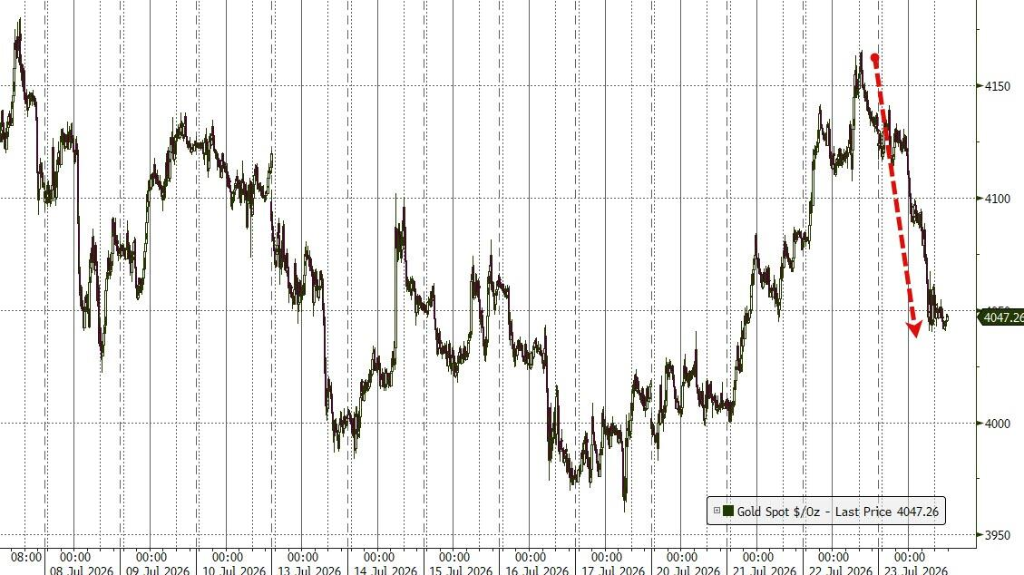
Under pressure from the strong dollar, spot gold plunged 2%, erasing all gains from the previous day.
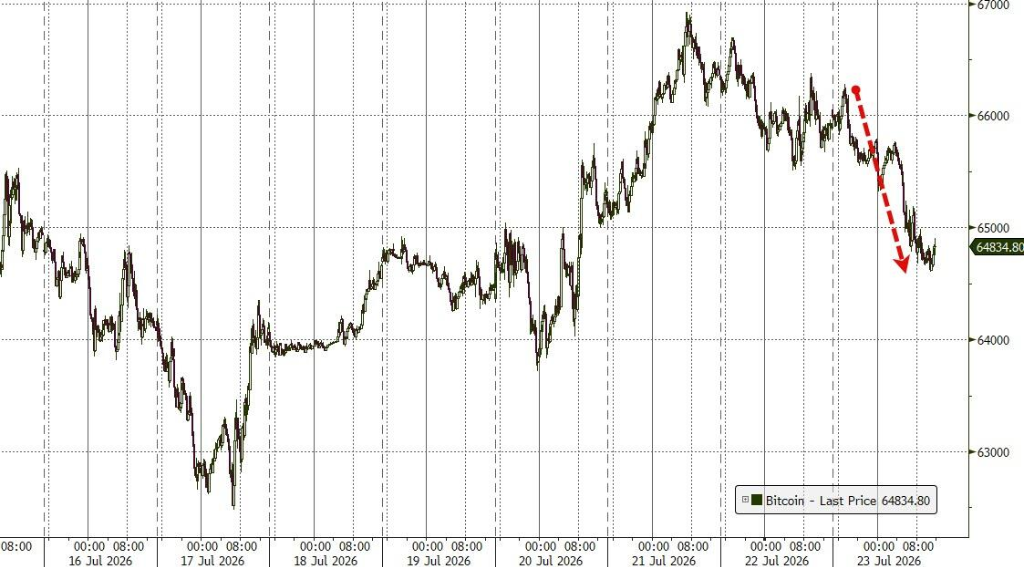
Bitcoin reverted to its high-beta tech-asset characteristics, falling below $65,000 and touching $64,834 intraday. Despite net inflows into Bitcoin ETFs exceeding $1 billion this week, it failed to break its downward trajectory alongside tech stocks.
U.S. stocks closed lower on Thursday. The Nasdaq Composite fell by 2%, while the semiconductor index significantly pared losses in the final moments of trading.
U.S. equity benchmark indices:
The S&P 500 declined by 90.66 points, or 1.21%, closing at 7,408.30—opening with a gap down and then stabilizing near the 7,400 level.
The Dow Jones Industrial Average dropped 506.93 points, or 0.97%, to close at 51,711.65.
The Nasdaq Composite fell 553.21 points, or 2.15%, to close at 25,137.692. The Nasdaq 100 declined by 543.292 points, or 1.87%, ending at 28,454.808.
$Russell 2000 Index (.RUT.US)$It closed down 0.67% at 2,940.163.
The CBOE Volatility Index (VIX) rose by 12.38%, closing at 18.70.
U.S. stock sector ETFs:
Most U.S. equity sector ETFs closed lower, with the consumer discretionary ETF down 4.61%, the internet stocks ETF down 2.56%, and the semiconductor ETF down 1.15%. Meanwhile, the biotechnology, healthcare, and industrial sector ETFs gained between 1.06% and 1.73%.
Mag 7:
The Wind U.S. Mag 7 Index fell by 3.86%, with the combined market capitalization of the Mag 7 companies shrinking by USD 797 billion.
Tesla plunged 14.5%, Alphabet A dropped 7.13%, Amazon fell 4.57%, Meta declined 3.36%, and Microsoft slipped 2.24%.NVIDIA (NVDA.US)fell 1.56%, and Apple dropped 1.30%.
Semiconductor stocks:
$PHLX Semiconductor Index (.SOX.US)$closed down 66.827 points, or 0.54%, at 12,343.837.
$Taiwan Semiconductor (TSM.US)$ADR fell 1.36%, and AMD dropped 2.9%.
U.S.-listed Chinese stocks:
The Nasdaq Golden Dragon China Index closed down 0.57% at 6,145.46.
Among actively traded Chinese ADRs,$ASE Technology Holding (ASX.US)$closed down 2.8%, with Alibaba falling 2.1%,$NetEase (NTES.US)$down 0.8%, while Meituan rose 2.4%,$Pony AI (PONY.US)$up 7.5%.
Other stocks:
$Circle(CRCL.US)$fell 6.02%.
Defense stocks performed strongly,$Lockheed Martin (LMT.US)$RTX Corp rose more than 7%, and GE Aerospace gained over 2%,$Northrop Grumman (NOC.US)$、$General Dynamics (GD.US)$rose more than 1%.
Cryptocurrency mining-related stocks surged collectively,$Cipher Digital (CIFR.US)$Up more than 5%,$Hut 8 (HUT.US)$rose more than 7%,$MARA Holdings (MARA.US)$、$TeraWulf (WULF.US)$、$Riot Platforms(RIOT.US)$gaining over 2%,$CleanSpark(CLSK.US)$Increasing nearly 2%.
$SpaceX (SPCX.US)$closed up 2.59% at $118.24, but had earlier fallen intraday to $110.85, marking a new all-time low. Pre-market ORTEX data indicated that short sellers’ estimated profit on SpaceX, based on market capitalization, has reached approximately $15.5 billion.
Optical communication stocks were mixed, with CRDO up 3.61% and AAOI rising 1.36%,Corning (GLW.US) up 1.3%,$Lumentum (LITE.US)$up 0.47%,$Coherent (COHR.US)$up 0.33%;$Astera Labs(ALAB.US)$down 1.19%,$Marvell Technology (MRVL.US)$down 0.79%.
Memory-related stocks advanced against the broader market trend, possibly supported by positive sentiment from Google’s increased AI spending. Micron Technology rose 3.2%, SK Hynix gained 2.56%, SanDisk climbed 0.69%, Seagate Technology advanced 0.58%, and Western Digital edged up 0.29%.
Company News
[Intel Reports Q2 Revenue of $16.13 Billion, Up 25% Year-over-Year]
Intel reported second-quarter revenue of $16.13 billion, a 25% increase year-over-year, compared with an estimated $14.43 billion. Data Center and Artificial Intelligence (AI) revenue for the quarter totaled $6.26 billion, surpassing analysts’ expectation of $5.54 billion. Adjusted earnings per share (EPS) for the quarter came in at $0.42, well above the analyst consensus of $0.21. The company forecasts third-quarter revenue in the range of $15.8–$16.8 billion, higher than the analyst estimate of $15.06 billion, and projects adjusted EPS of $0.38 for the third quarter, compared to the expected $0.27.
[Google Cloud CEO: Customer Spending Surges 50% as Cloud Performance Far Exceeds Expectations]
Thomas Kurian, CEO of Google Cloud, stated: “Our existing customers have all increased their spending after making commitments to us. Their actual expenditure is approximately 50% higher than their initial commitments. This is attributable to the differentiated strength of our product portfolio and our execution excellence in go-to-market strategies, which is directly reflected in the dual growth of our revenue and operating profit.” This overperformance has fueled explosive growth in its cloud business, with revenue from the segment surging 82% year-over-year.
[AMD CEO: AMD and Cerebras Systems to Launch AI Inference Solution Combining AMD Helios GPU Server Racks with Cerebras Wafer-Scale Chips]
At the AMD Advancing AI event, AMD CEO Lisa Su announced that the company is collaborating with chip designer Cerebras to deliver high-speed inference capabilities via Cerebras’ cloud services. AMD and Cerebras Systems will jointly launch an AI inference solution integrating AMD Helios GPU server racks with Cerebras wafer-scale chips. The product is expected to reach the market later this year.
The eurozone blue-chip index closed down approximately 1.7%, with constituent Infineon falling about 6.2%,STMicroelectronics (STM.US)down 17.7%, while Soitec rose more than 21.6%. Germany’s stock market closed down over 1.5%, Italy’s banking sector declined more than 3.2%, and Norway’s benchmark index gained 0.8%.
Pan-European Equities:
The pan-European STOXX 600 Index closed down 1.18% at 639.27 points.
The Eurozone STOXX 50 Index closed down 1.69% at 6,210.17 points, slipping steadily after opening slightly lower.
National stock indices:
Germany's DAX 30 index closed down 1.56% at 24,763.12 points.
France's CAC 40 index closed down 1.64% at 8,299.09 points.
$FTSE 100 Index (.FTSE.GB)$It closed down 0.73% at 10,639.17 points.
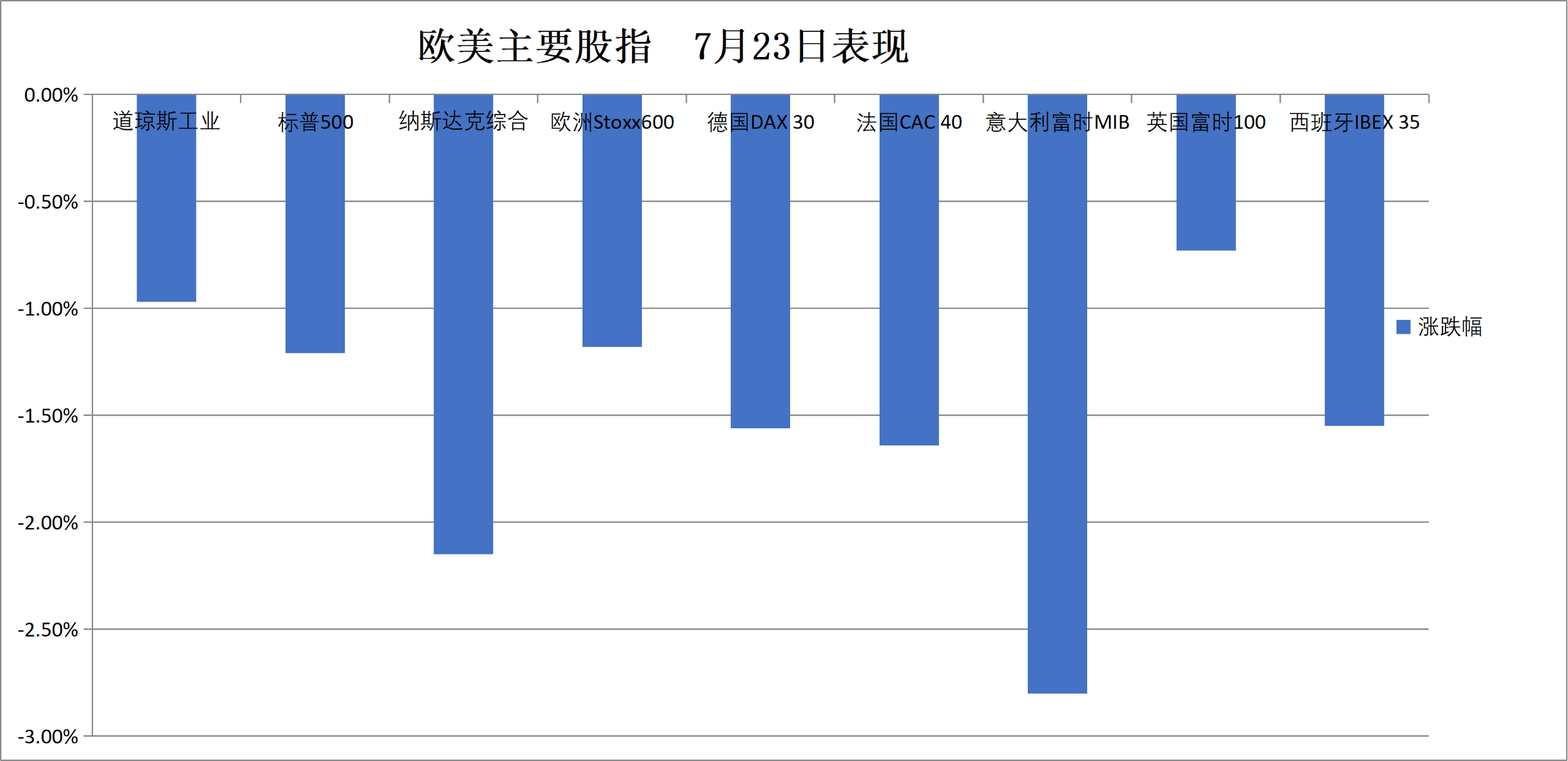
Sector and individual stock performance:
Among Eurozone blue-chip stocks, Infineon closed down 6.17%, Ahold Delhaize Group fell 5.59%, UniCredit dropped 4.8%, and LVMH Group declined 4.31%, marking the fourth-largest loss; only five constituents ended higher.
Among all constituents of the STOXX Europe 600 Index, STMicroelectronics closed down 17.70%, Centrica fell 10.23%, Stora Enso dropped 8.51%—the third-largest decline—and BE Semiconductor Industries declined 7.34%, ranking as the eighth-worst performer.
Want to select stocks or get a stock diagnosis? Curious about the opportunities and risks in your portfolio? For all your investment questions,Just ask Futubull AI!

Editor/Liam