Macroeconomic Highlights
U.S. Announces New Tariff Measures, Effective on the 24th
At 12:01 a.m. Eastern Time on Friday (12:00 p.m. Beijing time on the 24th), the United States will implement a new set of import tariffs ranging from 10% to 12.5%, applicable to approximately 60 economies. This marks Trump’s most significant effort to rebuild tariff barriers since his earlier measures were struck down by the Supreme Court. Meanwhile, the previously imposed 10% global import tariff is set to expire on Friday, ensuring no gap between the old and new measures.
According to a notice published in the Federal Register on Thursday, approximately 10 trading partners that have either implemented or committed to implementing forced labor restrictions will be subject to a 10% tariff on their exports to the United States, including Mexico, the United Kingdom, Canada, and India. India ultimately faces a 10% tariff, down from the initially threatened 12.5%, said a senior government official who briefed reporters prior to the announcement, noting this as one of several adjustments made from the original proposal. Goods from the European Union will be subject to a tariff of at least 10%, while products from Japan, Switzerland, and South Korea will face tariffs of at least 12.5%.
 U.S. Threatens Unprecedented Strike; Iran and Houthi Forces Say They Are Prepared for War
On the 23rd, U.S. President Trump stated he was “seriously considering” restarting large-scale military operations against Iran. He added that if Yemen’s Houthi forces launch another attack on Saudi vessels, the U.S. would hold Iran accountable and impose “significant military punishment” on both Iran and the Houthis. On the same day, Israeli Defense Minister Katz said Israel was prepared to respond to developments involving Iran. Iran declared it was ready to counter any U.S. ground invasion and would continue striking U.S. targets until Washington ceased its actions. The Houthi forces in Yemen stated they were “fully prepared” to respond if the U.S. conducts further military operations in Yemen.
Soaring Oil Prices and Rising U.S. Treasury Yields Reflect Market Pricing of Approximately 36% Probability of a Fed Rate Hike Next Week
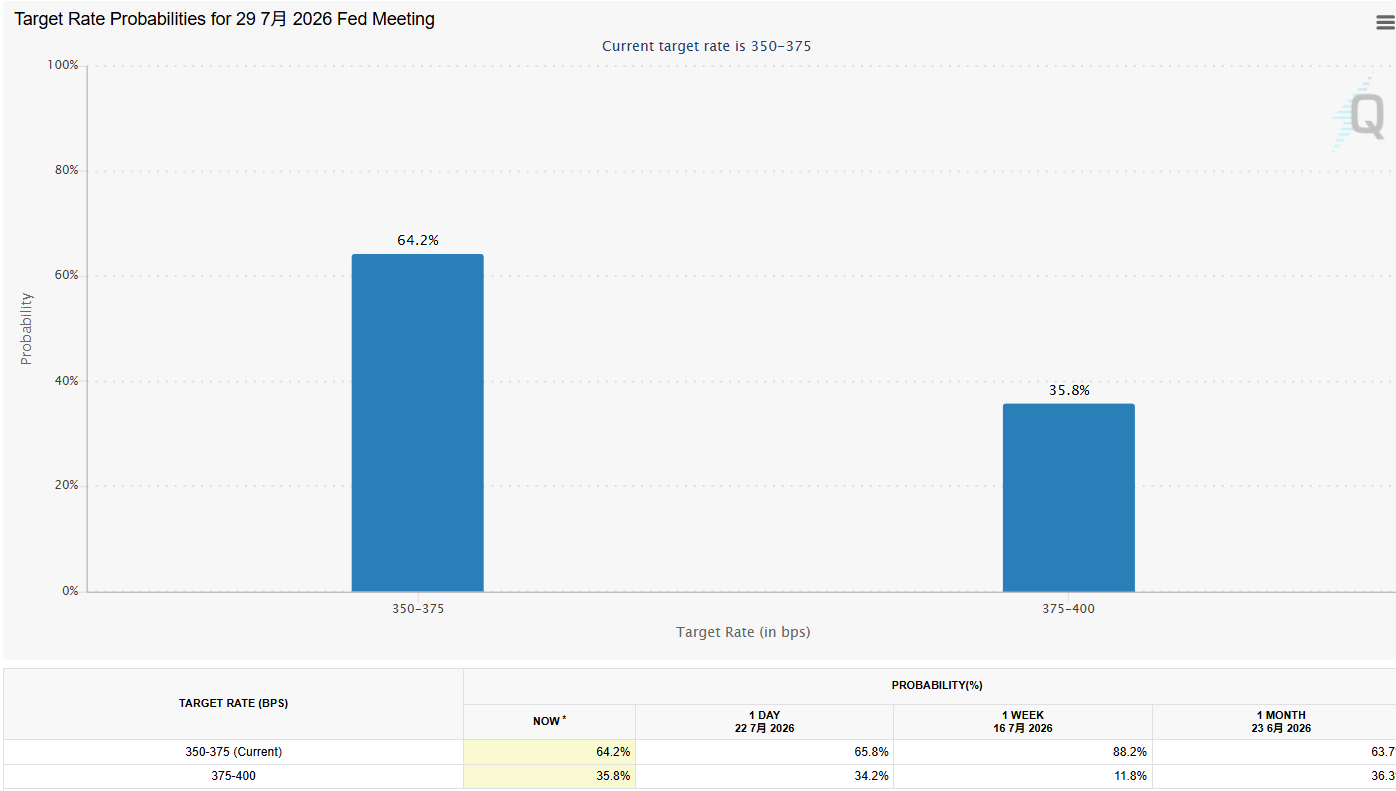
International crude oil futures prices surged sharply in early trading on the 23rd following attacks on Saudi tankers in the Red Sea and further escalation of military conflict in the Middle East, with the September Brent crude futures contract surpassing $100 per barrel. On Thursday, the yield on the two-year U.S. Treasury note—the most sensitive to monetary policy—rose to around 4.365%. The benchmark 10-year Treasury yield also hit a new high for the year, while the 30-year yield climbed to 5.19%, just shy of its highest level since 2007. As oil prices climb, market participants increasingly expect the Federal Reserve to raise interest rates sooner to contain inflation. The CME Group’s 'FedWatch Tool' indicates the market assigns a nearly 36% probability to a 25-basis-point rate hike at the Fed’s upcoming meeting.
The People’s Bank of China will conduct a RMB 500 billion Medium-term Lending Facility (MLF) rollover operation, restoring net liquidity injections in the medium term to help maintain ample market liquidity.
On the evening of the 23rd, the People’s Bank of China announced that, to ensure sufficient liquidity in the banking system, it would conduct a RMB 500 billion one-year Medium-term Lending Facility (MLF) operation on July 24. This represents an increase of RMB 100 billion compared to the maturing amount in July, marking the third consecutive month of expanded MLF rollovers, though the additional amount is RMB 100 billion less than last month’s. Market participants noted that money market rates rose in July, signaling a reversal from the previously loose liquidity conditions. “The resumption of net medium-term liquidity injections in July will help maintain ample market liquidity, prevent excessive upward pressure on market rates, and thereby stabilize market expectations.”
Starting July 31, South Korea will raise the cash deposit requirement for leveraged ETF trading to KRW 30 million.
The Financial Services Commission of Korea announced that stricter deposit requirements for retail investors trading single-stock leveraged ETFs will take effect on July 31—earlier than the originally scheduled August implementation date. The required deposit amount is KRW 30 million in cash only. This increases the minimum cash deposit requirement from KRW 10 million to KRW 30 million, and excludes stocks, ETFs, and bonds from counting toward the minimum deposit. The new rule applies to purchases of both domestically listed and overseas-listed single-stock leveraged ETFs. Firms unable to complete system upgrades by July 31 are advised to restrict new trades in these products.
The new regulation is theoretically expected to reduce extreme volatility in heavyweight stocks such as SK Hynix and covers overseas-listed single-stock leveraged products purchased by Korean investors. Following the reduction in Korean capital flows, Southern Two-Times Leveraged Hynix (07709.HK) trading volume, bid-ask spreads, and premium/discount levels may experience temporary fluctuations.
U.S. Stock Market Update
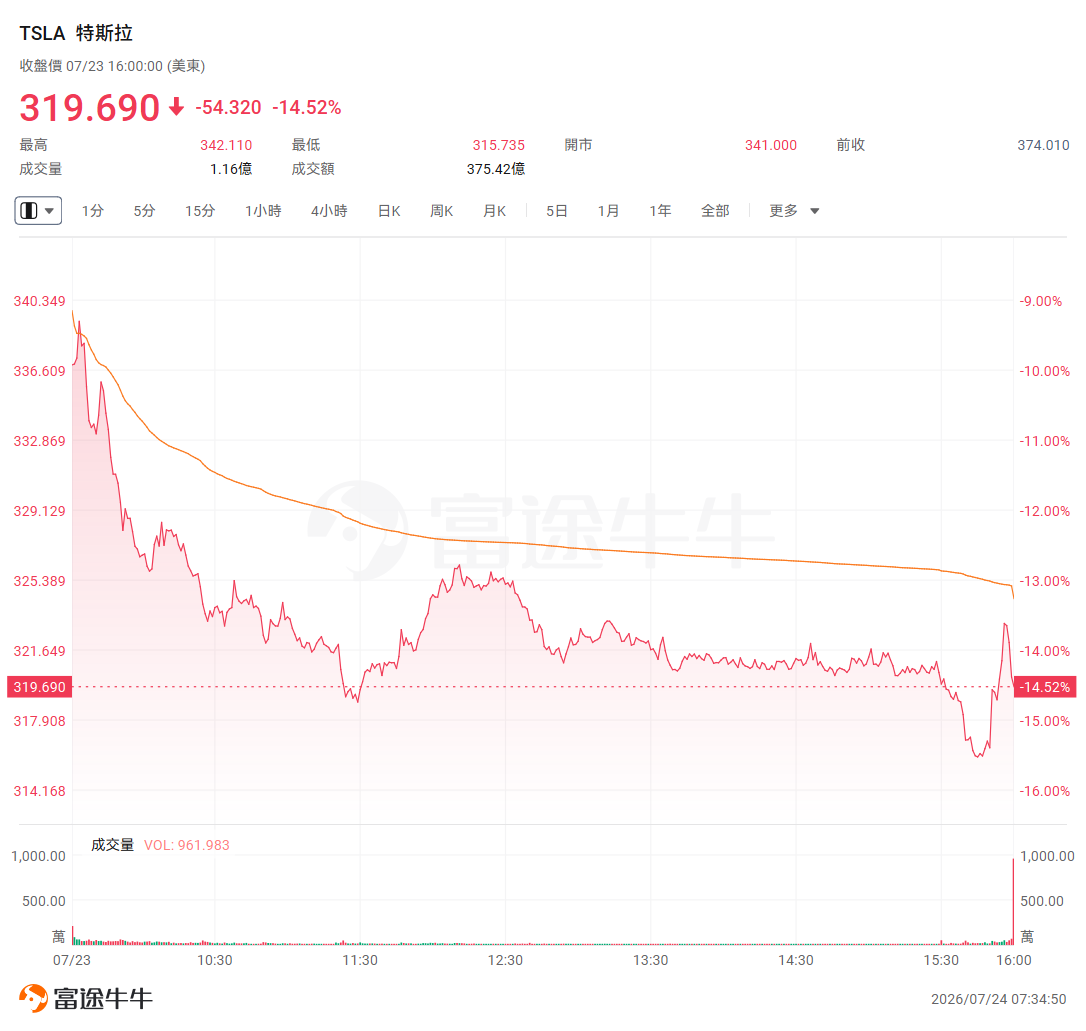
All seven tech giants fell, with Tesla plunging 14% and the Nasdaq dropping 2%.
On Thursday, July 23, U.S. stocks opened and closed lower, with all three major indices declining. At the close, the Dow Jones Industrial Average fell 0.97% to 51,711.65 points; the S&P 500 declined 1.21% to 7,408.30 points; and the Nasdaq Composite dropped 2.15% to 25,137.69 points. Analysts attributed the decline to escalating Middle East tensions driving a surge in international oil prices, coupled with quarterly results from Google and Tesla intensifying concerns over rising artificial intelligence spending—two factors that jointly dampened market risk appetite.

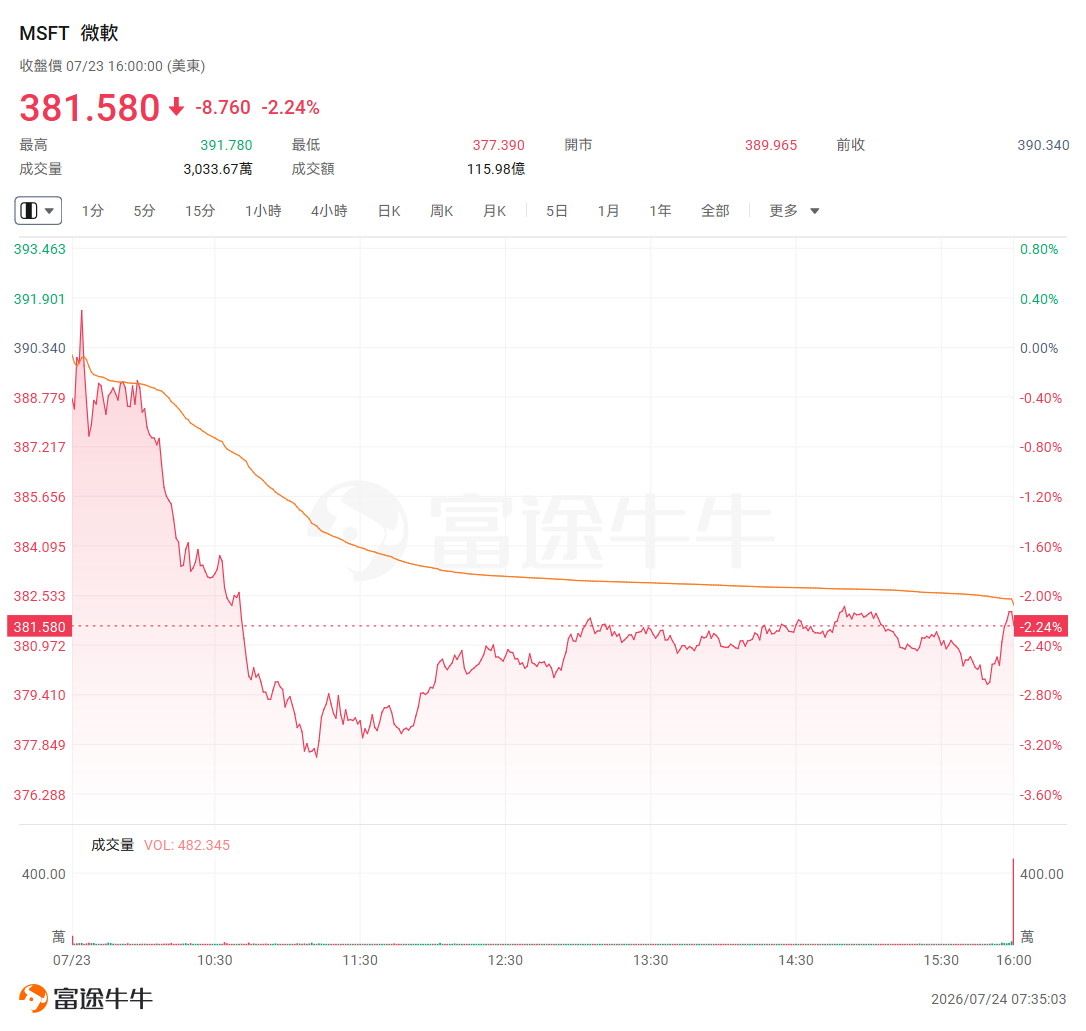
$Star Tech Stocks (LIST2518.US)$ All declined collectively, Roundhill Magnificent Seven ETF (MAGS.US) down 4.63%. (The Mag 7 ranked by market capitalization) NVIDIA fell 1.56%, Apple dropped 1.3%, Microsoft declined 2.24%, Amazon slid 4.57%, and Meta fell 3.36%.
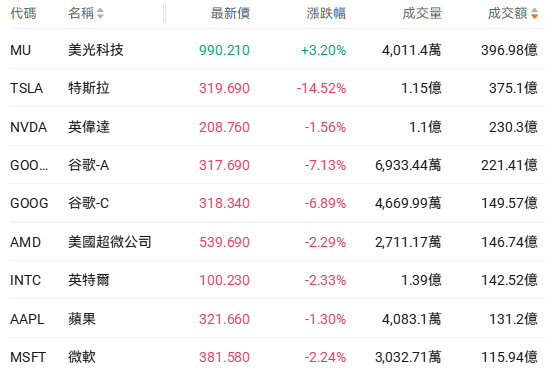
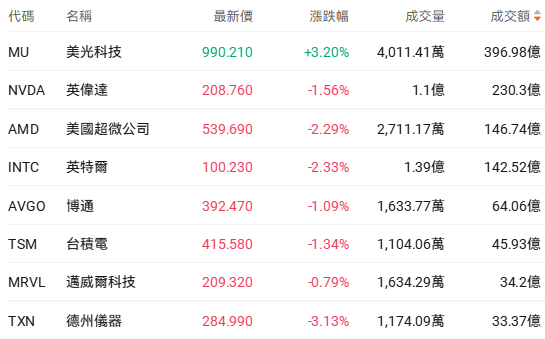
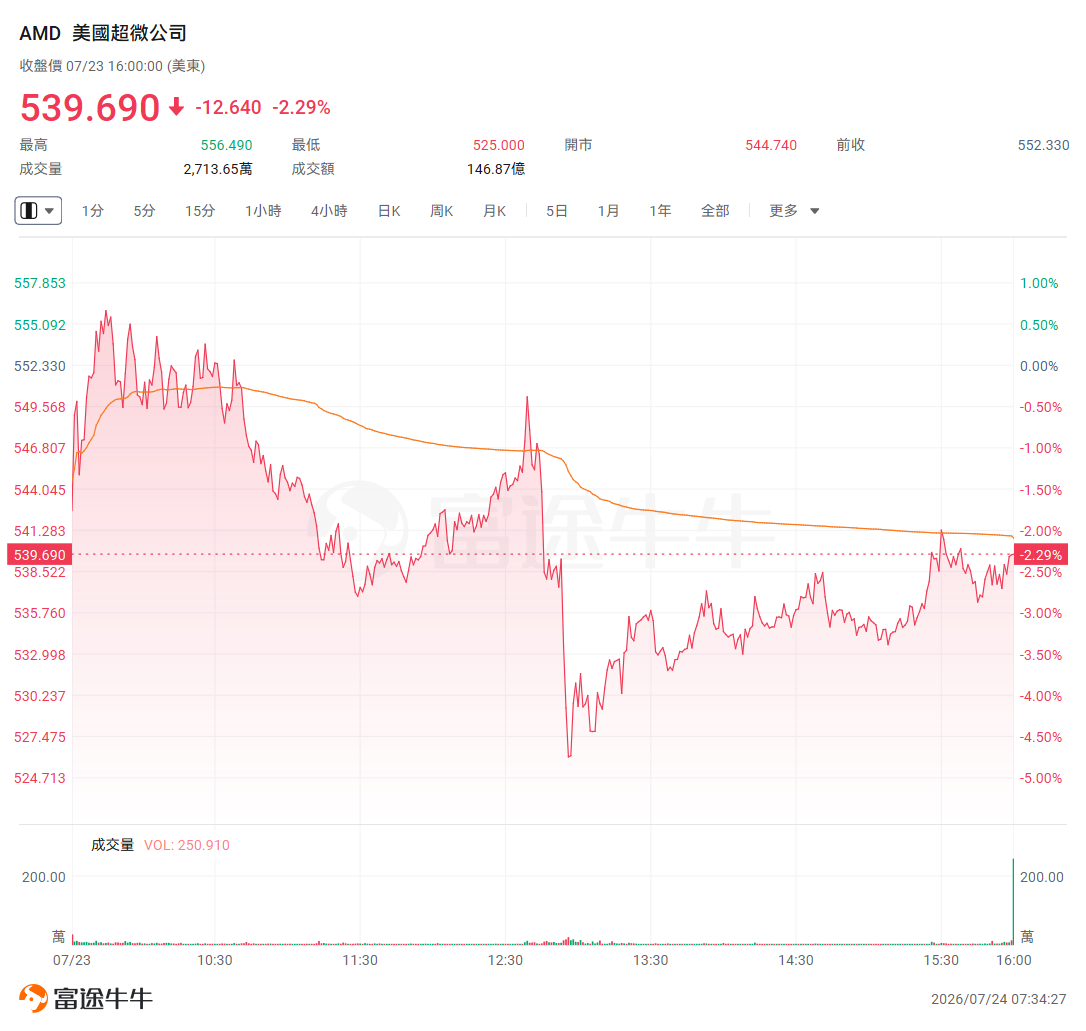
$PHLX Semiconductor Index (.SOX.US)$ closed down 0.54%, Texas Instruments fell 3.13%, GlobalFoundries dropped 2.7%, Qualcomm declined 2.57%, Intel slid 2.33%, Advanced Micro Devices fell 2.29%, Taiwan Semiconductor decreased 1.34%, and Broadcom dropped 1.09%.
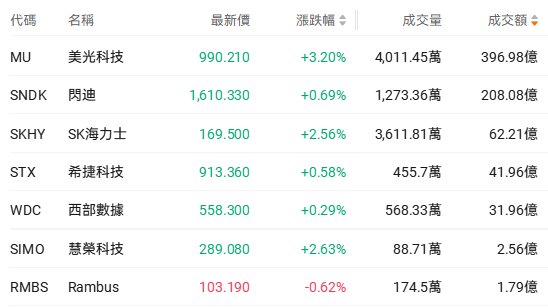
$Storage Concept (LIST23925.US)$ shares rose against the broader market trend, possibly boosted by positive sentiment surrounding Google's increased AI spending. Micron Technology gained 3.2%, SK Hynix rose 2.56%, SanDisk advanced 0.69%, Seagate Technology climbed 0.58%, and Western Digital edged up 0.29%.
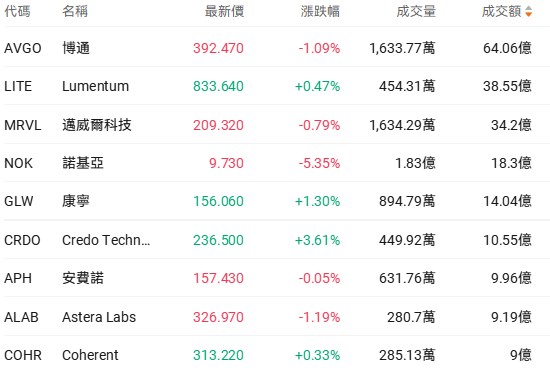
$Optical Communications (LIST23979.US)$ shares were mixed, with CRDO up 3.61%, AAOI gaining 1.36%, Corning rising 1.3%, Lumentum advancing 0.47%, and Coherent increasing 0.33%; Astera Labs fell 1.19%, and Marvell Technology declined 0.79%.
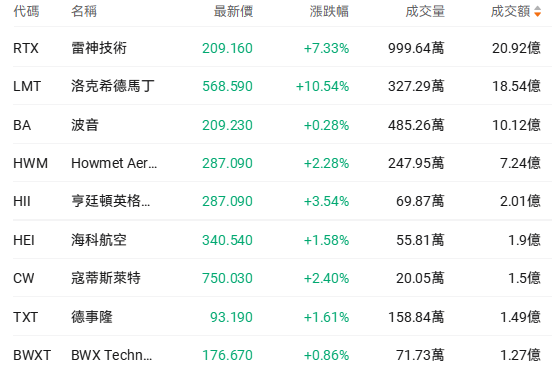
$U.S. Defense Aerospace (LIST2654.US)$ shares strengthened, with Lockheed Martin surging 10.54% and RTX Corp climbing 7.33%. Both companies indicated robust future demand for inventory replenishment, expecting sustained strong profitability.
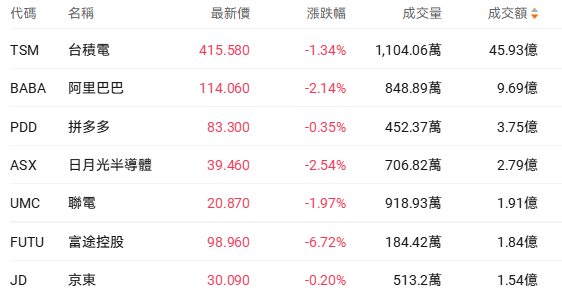
$Popular Chinese ADRs (LIST2517.US)$ In China-related equities, the Nasdaq Golden Dragon China Index fell 0.57%. Most prominent Chinese ADRs declined, with Alibaba dropping 2.14%; Pony AI rose 7.17%, and Li Auto gained 2.06%.
Stock-specific news
Intel reported second-quarter revenue of $16.13 billion, an increase of 25% year-over-year.
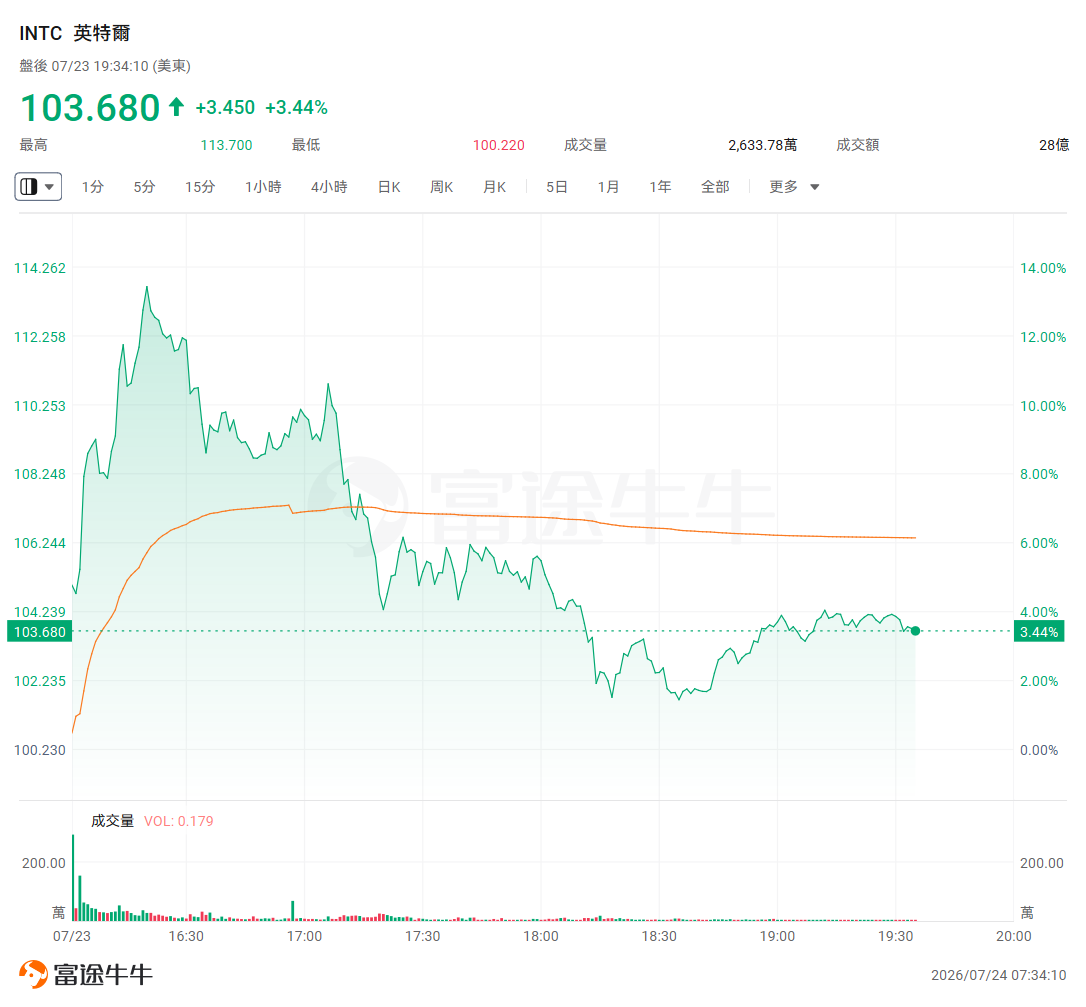
$Intel (INTC.US)$ The company reported second-quarter revenue of $16.13 billion, up 25% year-over-year, versus an estimate of $14.43 billion. Data Center and AI revenue for the quarter totaled $6.26 billion, surpassing analysts’ expectation of $5.54 billion. Adjusted earnings per share (EPS) for the second quarter were $0.42, compared to the analyst consensus of $0.21. Intel forecasts third-quarter revenue in the range of $15.8–$16.8 billion, above the analyst estimate of $15.06 billion. The company also projects adjusted EPS of $0.38 for the third quarter, exceeding the analyst forecast of $0.27. During the earnings call, Intel executives disclosed strong double-digit growth in server CPU sales and indicated that capital expenditures in 2027 will be significantly higher than in 2026.
AMD CEO: AMD and Cerebras Systems will launch an AI inference solution combining AMD Helios GPU server racks with Cerebras’ wafer-scale chips.
$Advanced Micro Devices (AMD.US)$ At the AMD Advancing AI event, CEO Lisa Su stated that the company is collaborating with chip designer Cerebras to deliver high-speed inference capabilities via Cerebras’ cloud service. AMD and Cerebras Systems will introduce an AI inference solution integrating AMD Helios GPU server racks with Cerebras’ wafer-scale chips, with product availability expected later this year.
Anthropic Achieves Full AMD Stack Compatibility in a Weekend: Uses Claude for Bootstrapping Instead of NVIDIA Hardware, Breaking CUDA’s 'Human Capital Barrier'
At AMD’s AdvancingAI conference this year, Anthropic not only officially announced its compute deployment plans but also revealed a technical detail that could reshape the competitive landscape for AI chips: its engineers used the Claude model to automatically complete full-stack adaptation and performance tuning for AMD’s Instinct MI355 chip and the ROCm platform over a single weekend.
Market observers immediately remarked, “We’ve moved past the CUDA moat era.” For investors, this breakthrough signals that the hardware lock-in logic underpinning the AI compute supply chain is now being challenged by AI’s own capabilities. As AI itself can replace engineers in performing the most expensive human-intensive step—hardware migration—the foundational moat of NVIDIA’s CUDA ecosystem, namely high switching costs, is being eroded at its core by AI.
Google Cloud’s explosive growth fails to prevent stock plunge; executives highlight cloud customers spending 50% more than committed.
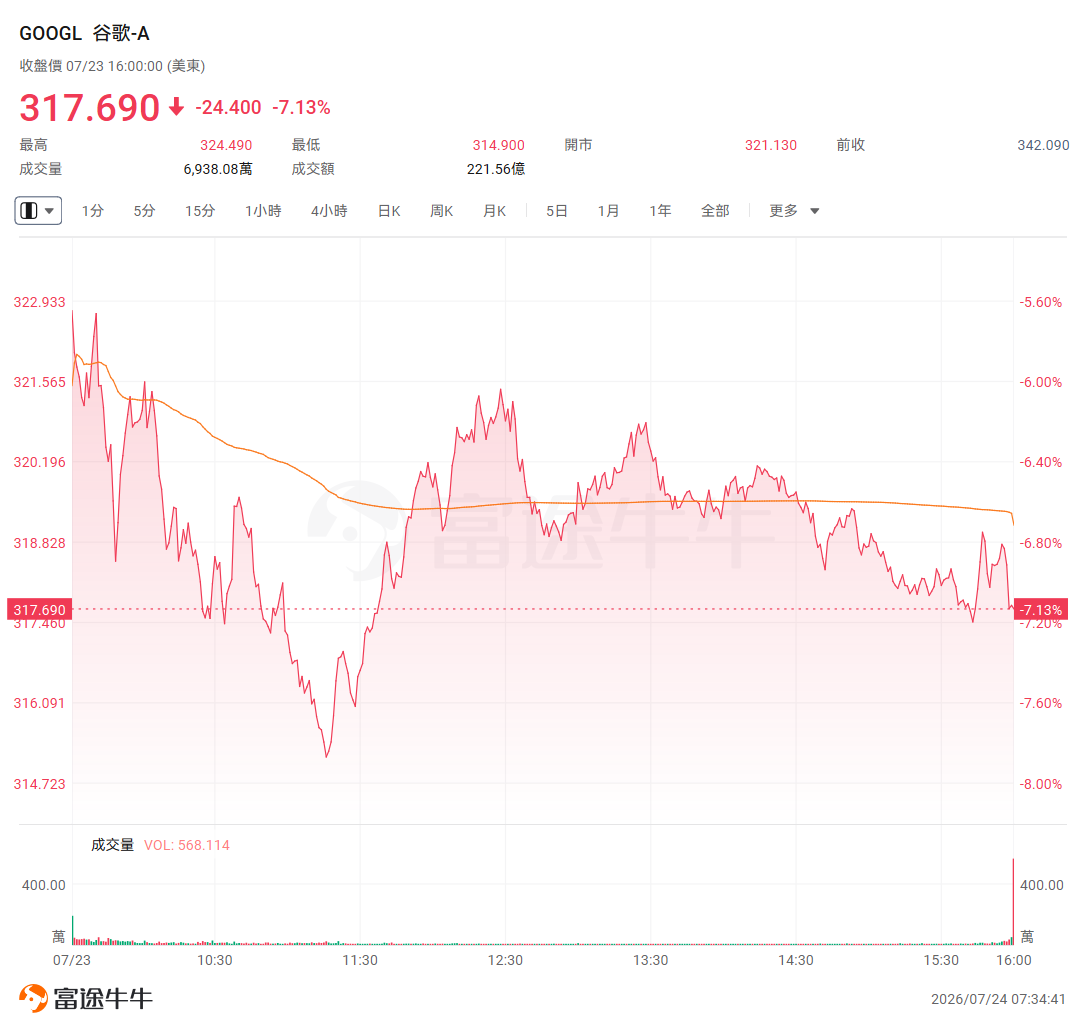
Google Cloud CEO Thomas Kurian stated that existing customers are, on average, spending approximately 50% more on Google Cloud products than their initial commitments, a key driver behind the segment’s robust second-quarter growth. In an interview on Thursday, July 23, Kurian said, “After making purchasing commitments to us, our existing customers consistently increase their spending. Their actual expenditure is roughly 50% higher than what they initially pledged.” He added, “This reflects the differentiation of our product portfolio and our enhanced go-to-market and sales execution capabilities, which are also evident in our revenue and operating profit growth.” Despite cloud business outperforming expectations, Google-A (GOOGL.US) the stock still plunged more than 7% intraday on Thursday, as the company raised its full-year capital expenditure outlook to as high as $205 billion, sparking investor concerns over the escalating scale of AI investments.
Tesla plunges 15% post-earnings; short sellers pocket $4.1 billion in a single day; BNP Paribas: valuation implies extremely high expectations.
$Tesla (TSLA.US)$ Among the U.S. 'Mag 7' tech stocks, Tesla has the highest short interest, with approximately 3% of its outstanding shares sold short. Its Q2 profits fell far short of expectations, triggering a single-day stock drop of 15%. Short sellers recorded mark-to-market paper gains of approximately $4.12 billion on the day. Retail investors, however, bought the dip—Tesla saw net retail inflows of $42 million on Thursday, making it the most purchased stock by retail traders.
In a research report, James Picariello, an analyst at BNP Paribas, stated, 'As Tesla pursues its ambitious artificial intelligence goals with an extremely aggressive pace of capital expenditure, we remain highly cautious about the speed at which its AI progress is accelerating, and the stock’s valuation already embeds very high expectations.' He maintained an equivalent 'sell' rating and a $280 price target.
Microsoft PowerPoint and Bing to replace OpenAI models with in-house image AI
According to Bloomberg, $Microsoft (MSFT.US)$ Microsoft is replacing OpenAI’s image generation technology with its own proprietary AI models in key products such as PowerPoint and Bing. This move signals Microsoft’s accelerated push toward self-reliance in AI products and reduced dependence on OpenAI’s technology. Previously, AMD CEO Lisa Su disclosed that OpenAI was 'betting on AMD' for computing power. Combined with Microsoft’s latest action, this highlights intensifying strategic integration and competition among tech giants across the AI supply chain. The development may impact OpenAI’s commercial prospects and its deep partnership with Microsoft, warranting close attention to its potential reshaping effect on the AI industry landscape.
Strong AI demand is not in question, yet the stock price has plunged: The analog chip leader falls into a 'high-expectations trap'
Texas Instruments (TXN.US) and STMicroelectronics (STM.US) Despite solid earnings reports, the sector faced sell-offs due to overly elevated market expectations, underscoring valuation pressures in the analog chip segment. STMicroelectronics’ Q3 guidance fell short of expectations, causing its share price to plunge by as much as 17%; although Texas Instruments delivered earnings above expectations, its commentary on capital expenditures weighed on cash flow outlooks. Long-term tailwinds from AI demand are increasingly insufficient to offset near-term challenges in expectation management, shifting industry risks from fundamentals to the pacing of growth.
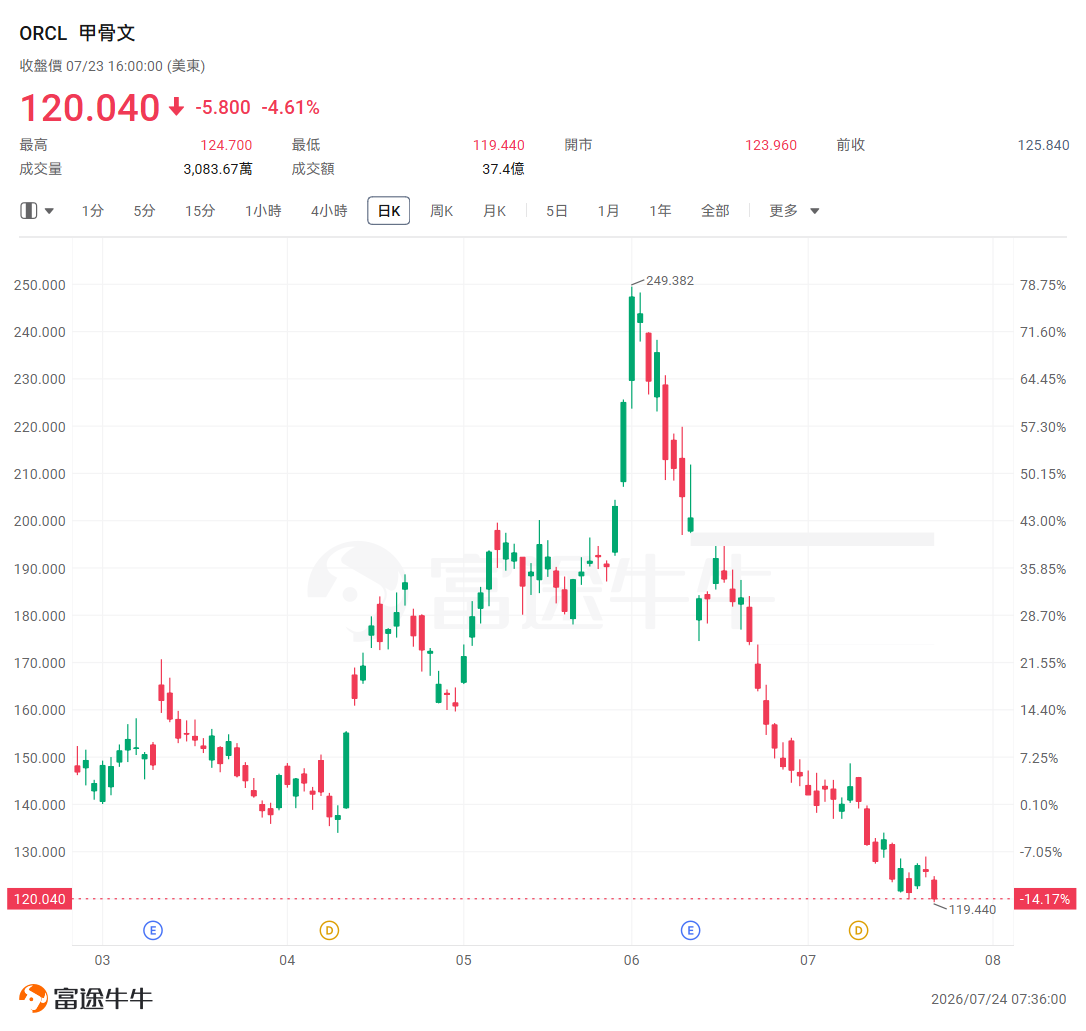
Oracle stock breaches its 52-week low: The OCI growth narrative fades as persistent concerns over AI capital expenditure returns weigh heavily.
On July 23, Oracle (ORCL.US) Shares closed down more than 4% at $120, marking a year-to-date decline of over 37% and hitting their lowest level in the past 12 months—meaning all investors who purchased the stock over the past year are now sitting on unrealized losses. Oracle’s current pressure warrants attention: as a legacy enterprise software giant aggressively transitioning toward cloud infrastructure (Oracle Cloud Infrastructure, or OCI) and AI, the company stands at the intersection of peak capital expenditure and market validation of returns. Investor concerns are mounting over the extended payback periods for large tech firms’ substantial AI-related capital outlays. Coupled with recent broad-based weakness in the tech sector, this places cloud vendors like Oracle—still playing catch-up—in a more stringent valuation spotlight.
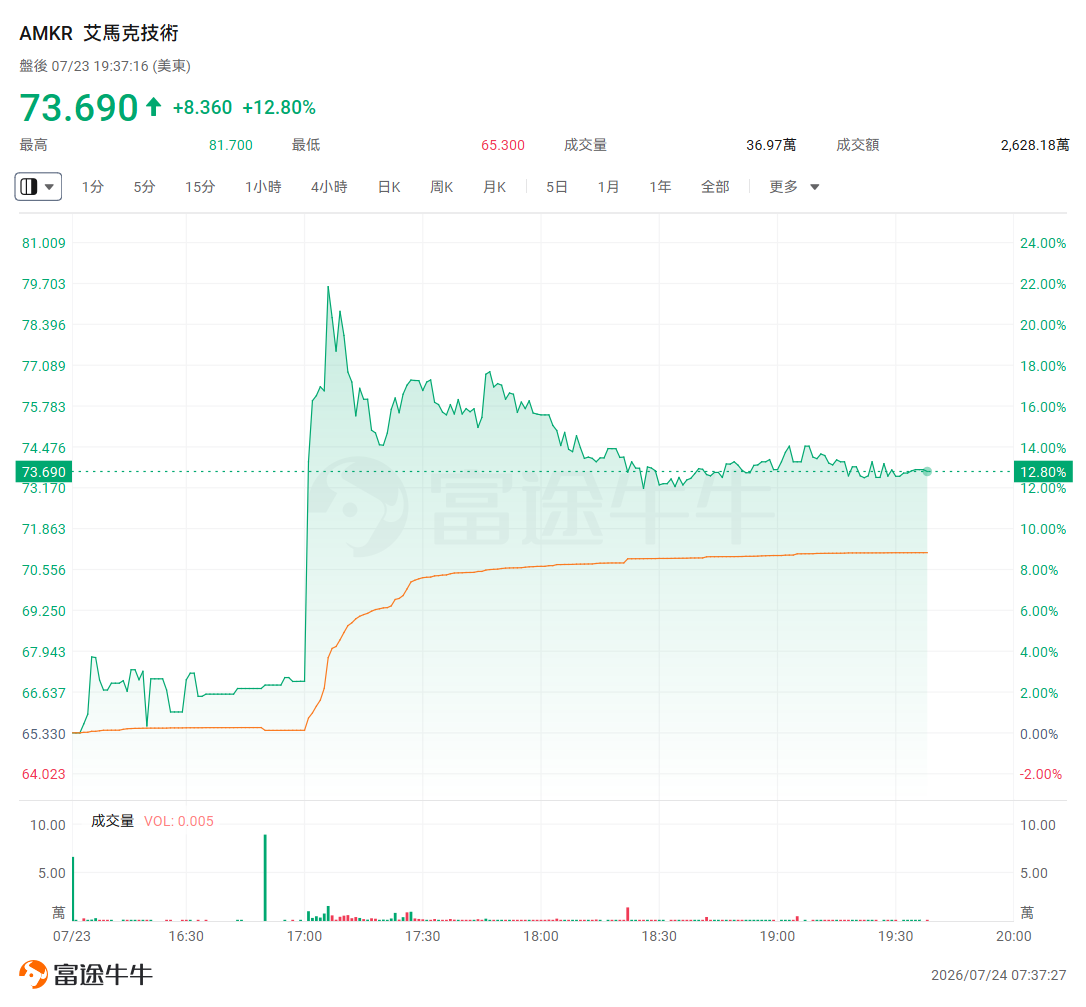
NVIDIA and Amkor sign $1.5 billion chip packaging and testing cooperation agreement
U.S.-based semiconductor packaging and testing services provider Amkor Technology (AMKR.US) announced on July 23 local time that it has entered into a $1.5 billion multi-year cooperation agreement with NVIDIA (NVDA.US) NVIDIA to jointly develop advanced semiconductor packaging and testing technologies for next-generation artificial intelligence and accelerated computing platforms. Under the agreement, NVIDIA will provide advance payments to support Amkor’s expansion of advanced packaging capacity in the United States.
SpaceX is back in the spotlight following its U.S. IPO, again delaying a major flight test.
Due to unfavorable weather conditions, SpaceX has postponed the next major test of its Starship rocket to Friday. The rocket will carry upgraded Starlink satellites, which are scheduled to burn up in the atmosphere during the latter phase of the test mission. Starship is central to CEO Elon Musk’s ambitious vision, which includes establishing data centers in space, expanding the Starlink communications network, and sending humans to the Moon and Mars.
Top 20 by Trading Volume
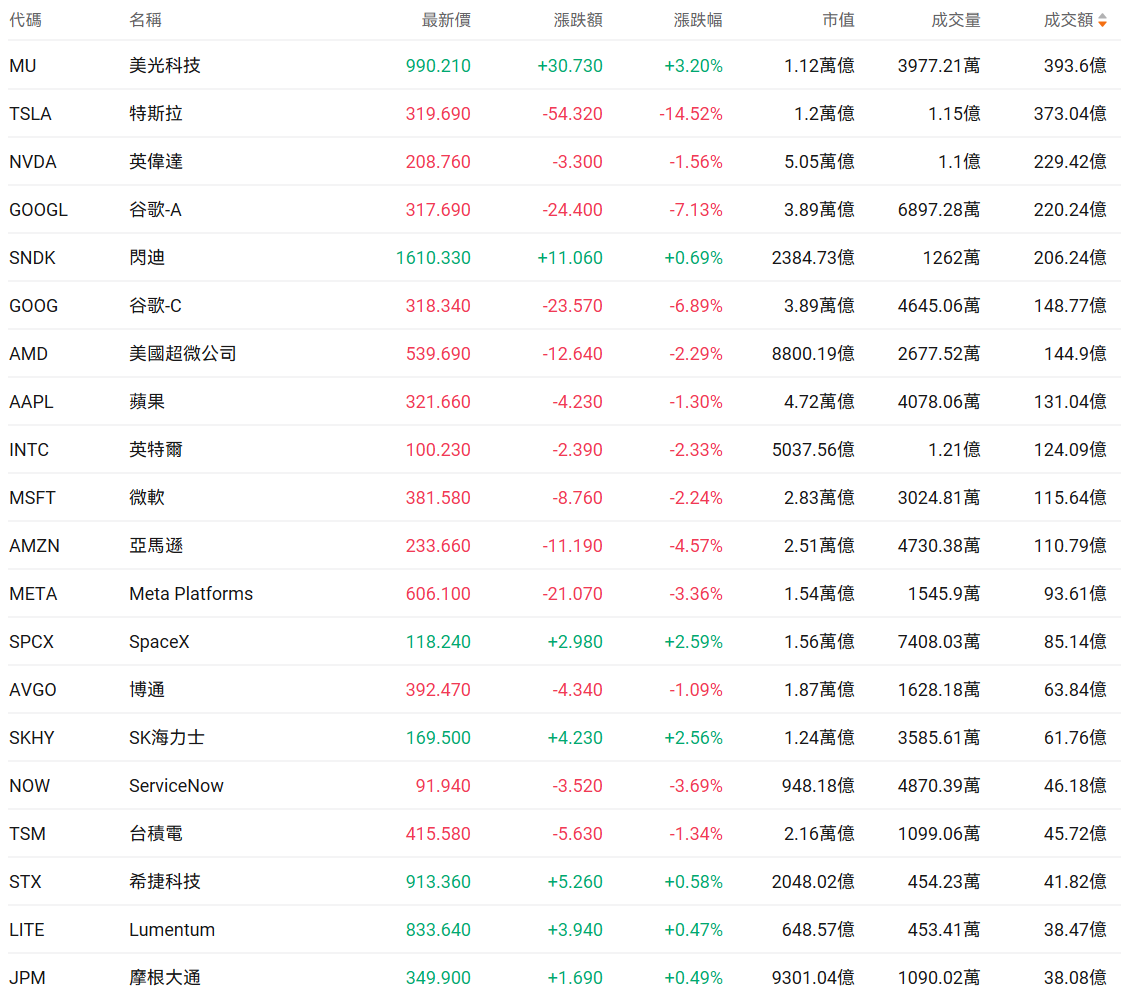
Hong Kong Market Outlook
Southbound capital reduced its holdings of Hong Kong-listed stocks by over HK$4.2 billion, while Meituan recorded net purchases exceeding HK$600 million.
On Thursday, July 23, southbound capital recorded net sales of HK$4.226 billion in Hong Kong-listed stocks today.
$Meituan-W(03690.HK)$、$Zhipu AI (02513.HK)$、Montage Technology (06809.HK)received net purchases of HK$642 million, HK$494 million, and HK$105 million, respectively;
$Ying Fu Fund (02800.HK)$、$Tencent (00700.HK)$、$Alibaba-W (09988.HK)$suffered net sales of HK$2.519 billion, HK$1.54 billion, and HK$1.096 billion, respectively.
HSBC Holdings' subsidiary plans to sell its Singapore life and health insurance business to Allianz for USD 2.1 billion.
$HSBC Holdings (00005.HK)$ HSBC Holdings announced that its indirect wholly-owned subsidiary, HSBC Insurance (Asia-Pacific) Holdings Limited (the Seller), has entered into a share purchase agreement today with Allianz Asia Holdings Pte. Ltd. (the Buyer) to sell 100% of the issued share capital of HSBC Life Insurance (Singapore) Pte. Ltd. (HSBC Life Singapore) for a consideration of SGD 2.7 billion (USD 2.1 billion) (collectively, the "Sale Transaction"). HSBC Life Singapore is a leading insurer in Singapore, offering a comprehensive range of life and health insurance products.
Dongfang Zhenxuan issues a profit alert, forecasting substantial year-over-year growth in both total revenue and profit for fiscal year 2026.
Oriental Selection (01797.HK) The Group announced that it expects significant year-over-year increases in both total revenue and profit for the fiscal year ended May 31, 2026 (FY2026). Total revenue for FY2026 is projected to be between RMB 5.6 billion and RMB 5.8 billion, compared to RMB 4.4 billion for the fiscal year ended May 31, 2025 (FY2025), representing year-over-year growth of approximately 27.3% and 31.8%, respectively. Net profit for FY2026 is expected to range between RMB 520 million and RMB 550 million, compared to RMB 6 million in FY2025, reflecting year-over-year growth of 8,566.7% and 9,066.7%, respectively.
Huaqin Technology acquired a total of 1,996,000 H-shares of JN Integrated Circuit.
$Huaqin Technology (03296.HK)$ The Company announced that on July 23, 2026, its wholly-owned subsidiary, Huaqin Telecom Technology, acquired a total of 1.996 million H-shares (representing approximately 0.09% of JHICC’s total issued share capital as of the announcement date) through on-exchange transactions on the Stock Exchange of Hong Kong on July 23, 2026. $Jinghe Integrated (02249.HK)$ The total consideration amounted to approximately HK$65.7718 million (excluding transaction costs), equivalent to an average price of approximately HK$32.95 per target share. Following the completion of the acquisition and as of the announcement date, the Group held approximately 10.91% of JHICC’s total issued share capital.
Duan Yongping: Highly unlikely to sell Pop Mart within 10 years
On July 23, renowned investor Duan Yongping made his latest statement regarding his investment strategy in $Pop Mart (09992.HK)$ Pop Mart, clearly stating, “It is highly unlikely I will sell within the next 10 years.” Since 2026, Duan Yongping has publicly increased his stake in Pop Mart three times through H&H International Investment, which he controls. His latest holding totals approximately 102 million shares, representing a stake of 7.65%. According to disclosures filed with the Hong Kong Stock Exchange, Duan Yongping has become Pop Mart’s second-largest shareholder, after founder Wang Ning.
Today's Focus
Keywords: White House Correspondents' Association (WHCA) Dinner; American Express and CATL earnings reports
On the economic data front, at 21:45, the preliminary U.S. S&P Global Manufacturing PMI and Services PMI for July will be released; at 22:00, the annualized number of new home sales in the U.S. for June (in thousands) will be published.
On the financial events front, Trump’s White House Correspondents' Association (WHCA) Dinner has been rescheduled to Friday.
In terms of earnings, during U.S. pre-market hours,$American Express (AXP.US)$、$HCA Healthcare (HCA.US)$、NextEra Energy (NYSE: NEE)、$Schlumberger (SLB.US)$、$Verizon(VZ.US)$will release its earnings;CATL (03750.HK)Hong Kong-listed stocks will release their earnings on the same day.
 Looking to select stocks or analyze your holdings? Want to understand the opportunities and risks in your portfolio? For any investment-related questions,just ask Futubull AI!

Editor/Rocky