
Market Snapshot
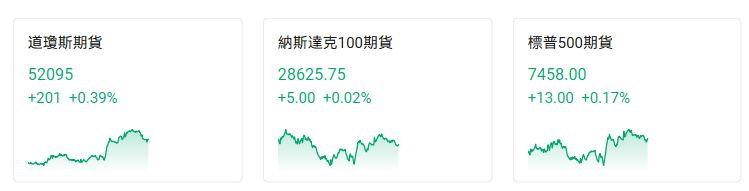
U.S. equity index futures all rose in pre-market trading on Friday. As of the time of writing, Dow Jones Industrial Average futures were up 0.39%, Nasdaq 100 futures edged up 0.02%, and S&P 500 futures gained 0.17%. WTI crude oil fell 2.42%, while gold rose 0.14%.
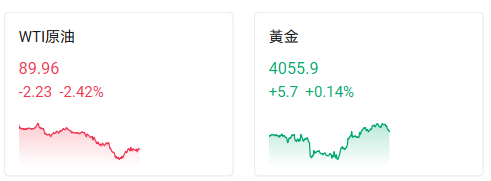
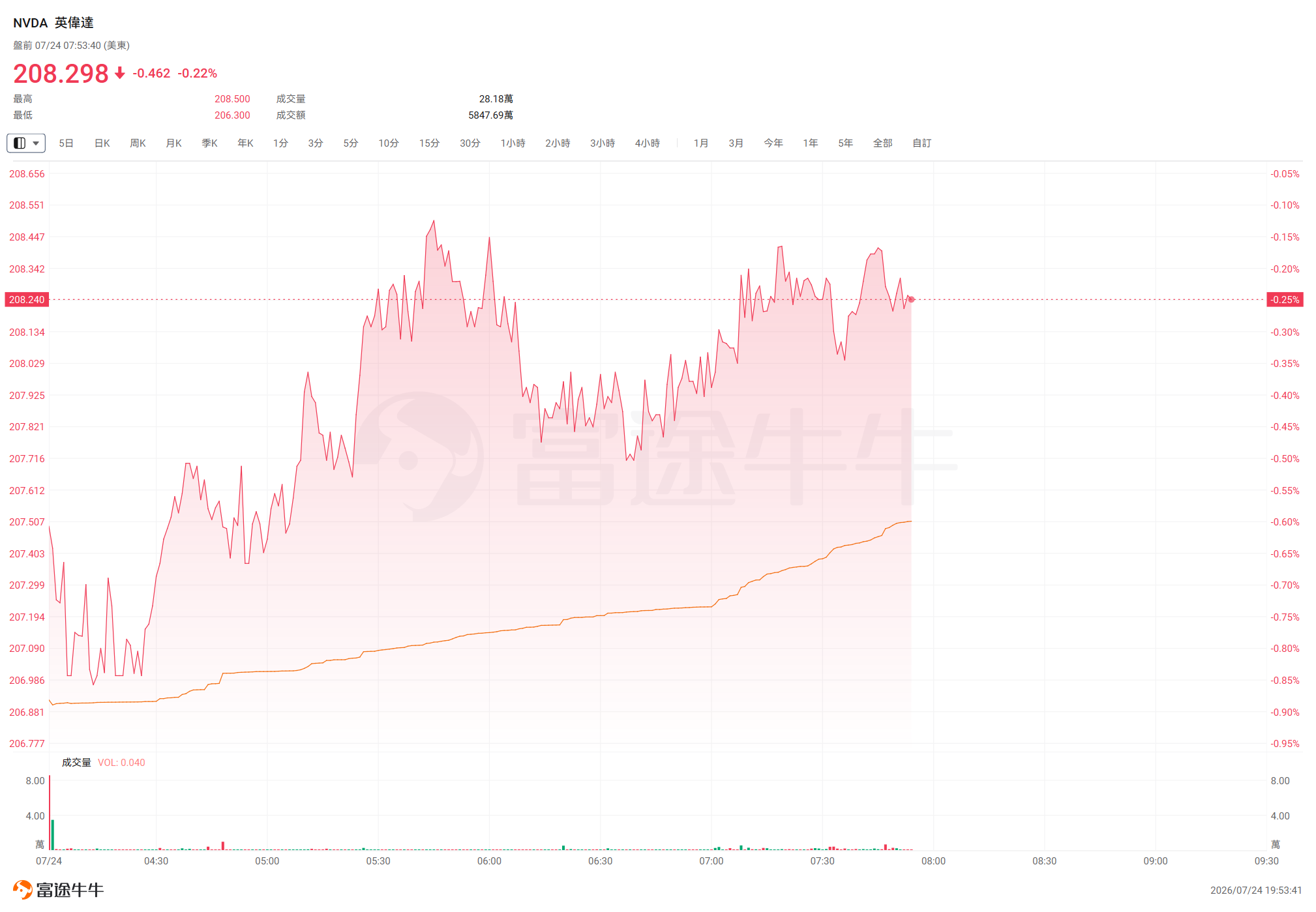
$Star Tech Stocks (LIST2518.US)$Most stocks traded higher in pre-market action, with Intel rising nearly 4%, Microsoft gaining over 1%, Tesla and AMD climbing nearly 1%, Alphabet (Google) edging up slightly, Micron Technology falling nearly 2%, SpaceX declining nearly 1%, and NVIDIA and Meta dipping marginally.
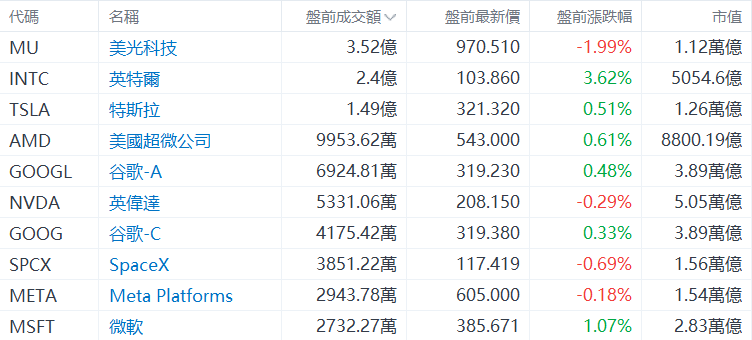
$Popular Chinese ADRs (LIST2517.US)$Pre-market trading saw broad declines, with ASE Technology Holding Co. down nearly 3%, Alibaba dropping over 1%, PDD Holdings, Baidu, and XPeng each falling close to 1%, Hesai rising over 1%, and Trip.com Group gaining 1%.
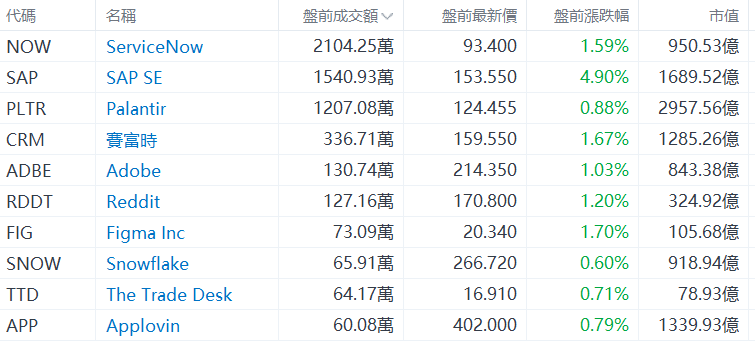
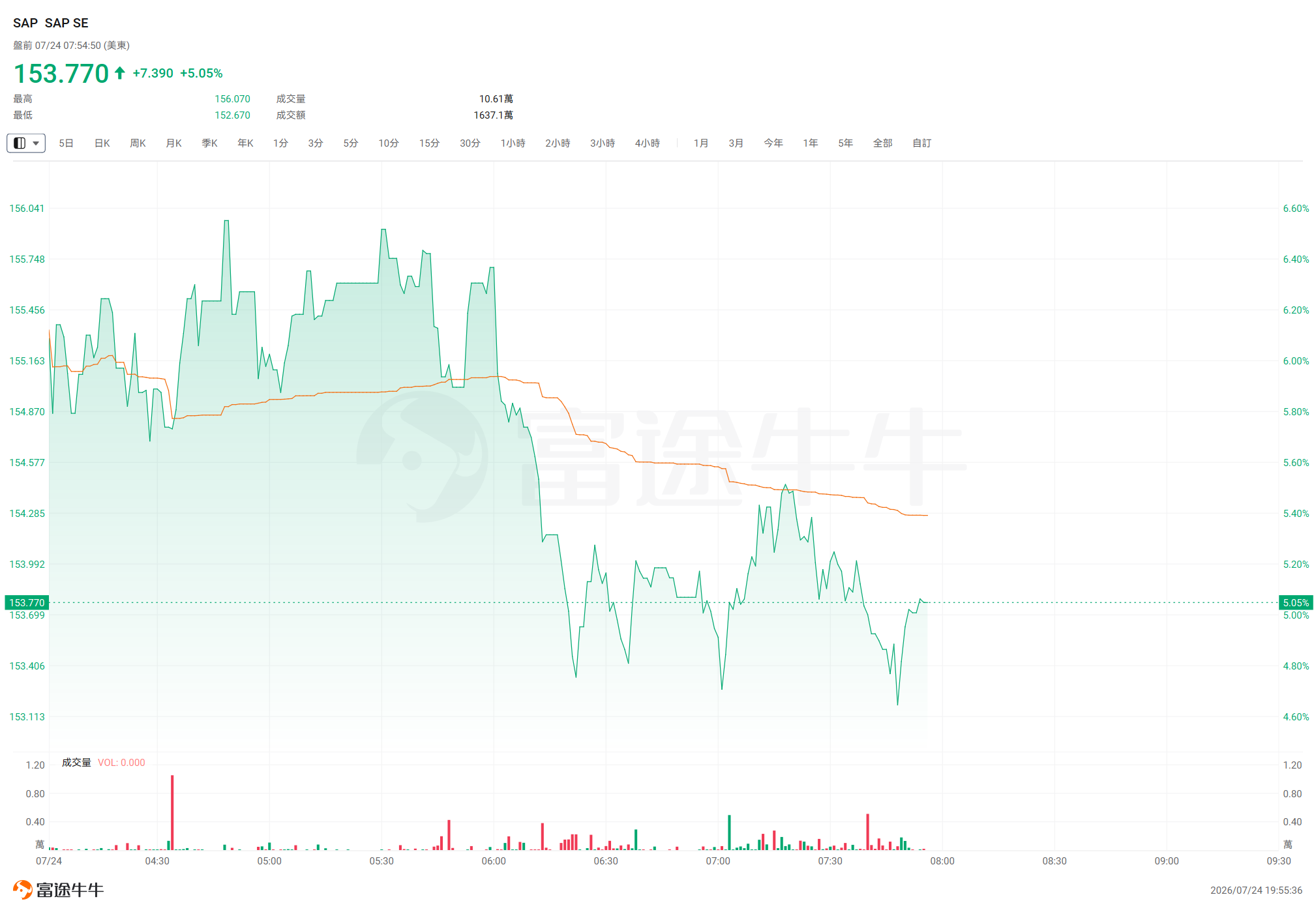
 $AI Application Software Stocks (LIST23492.US)$Pre-market trading was broadly positive, with SAP SE rising nearly 5%, ServiceNow and Adobe gaining over 1%, and Snowflake, Applovin, and Palantir each climbing close to 1%.
Individual Stock News
NVIDIA is reportedly set to raise prices for memory kits involving GDDR6 and GDDR7.
According to tech media outlet Benchlife, NVIDIA (NVDA.O) has notified its add-in board (AIB) partners of a price increase covering GDDR6 and GDDR7 memory kits. NVIDIA typically supplies its partners with bundled kits comprising GPU chips and VRAM (video memory) chips. The partners then mount these components onto their own custom-designed PCBs (printed circuit boards) to produce branded graphics cards.
With the prices of GDDR6 and GDDR7 memory kits set to rise again, AIB (Add-in Board) manufacturers are expected to have no choice but to raise graphics card prices accordingly.
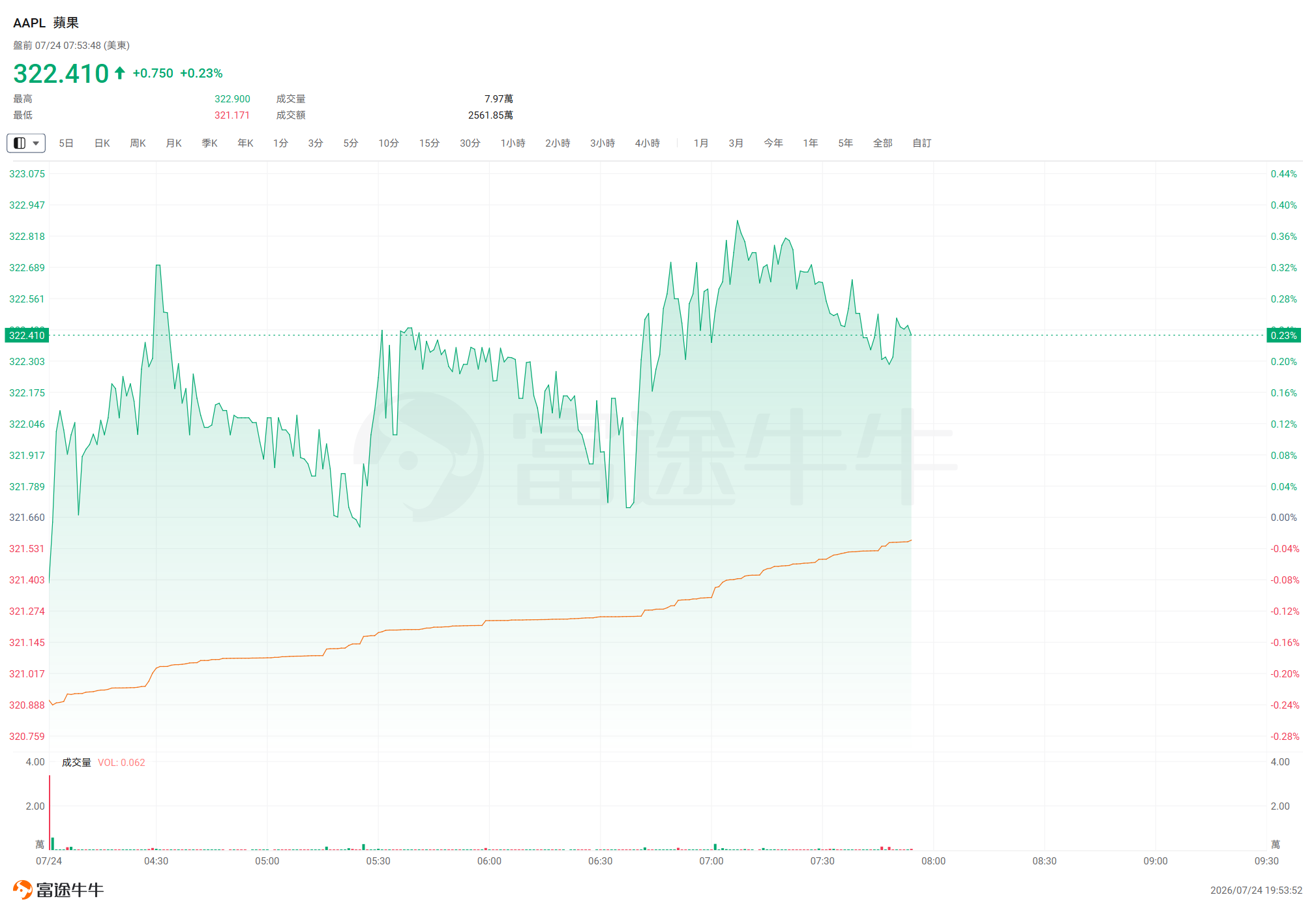
Due to 'chipflation,' Apple is demanding a 20% price reduction on OLED display panels for the high-end iPhone 18 models.
According to The Elec, as soaring memory chip prices continue to drive up the overall cost of iPhones, Apple is pressuring upstream suppliers to significantly lower the prices of OLED display panels.
On July 24, foreign media reported that Apple has proposed a price of approximately $70 for the OLED display panel used in the iPhone 18 Pro Max, representing a roughly 20% decline from the previous generation. Industry insiders estimate that Samsung Display and LG Display currently supply panels at an average price of $66.50—already below Apple’s proposed level.
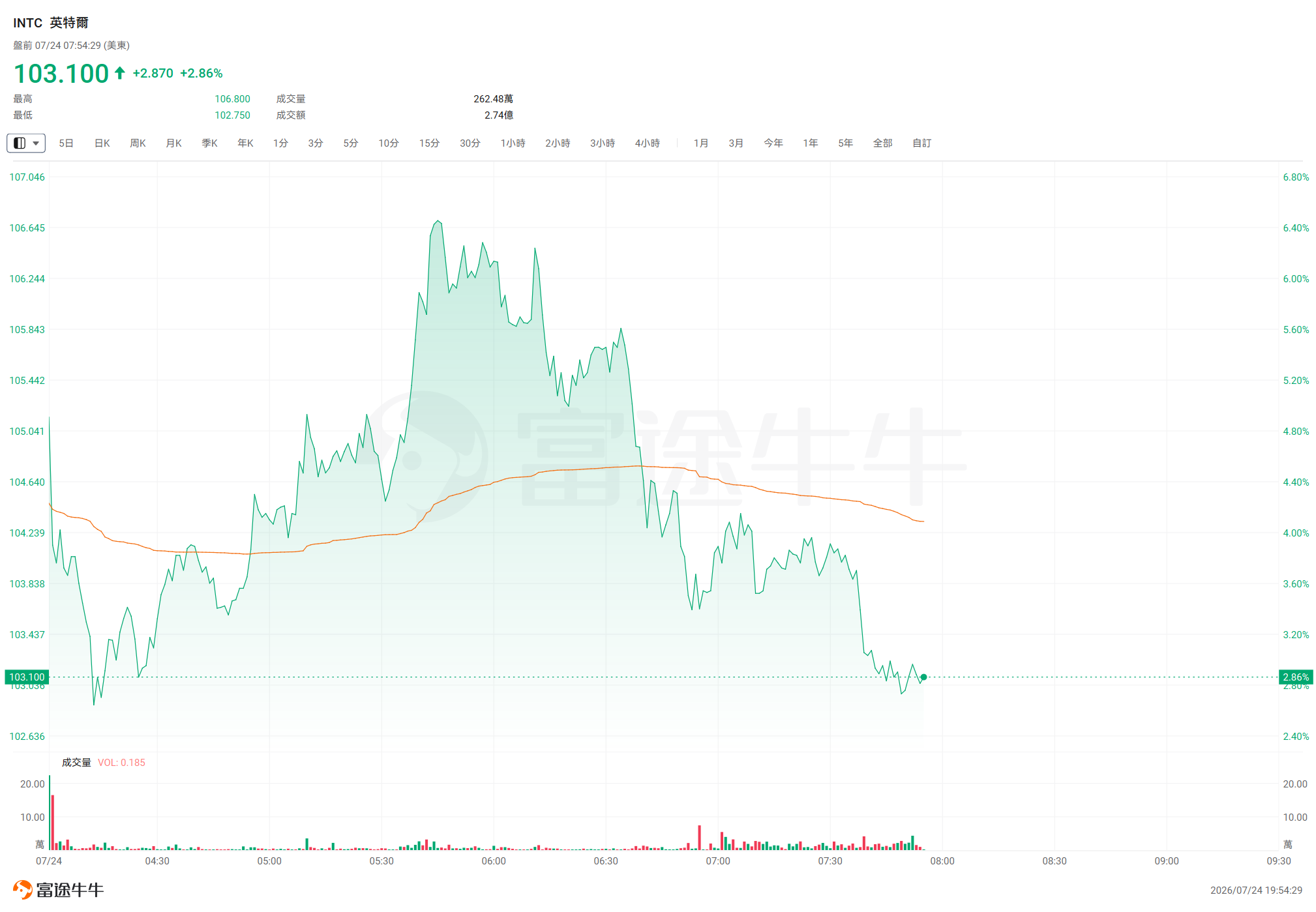
Intel rose nearly 3% in pre-market trading after reporting a 25% year-over-year revenue increase in Q2, significantly exceeding expectations, and maintaining strong growth guidance for Q3.
$Intel (INTC.US)$Second-quarter 2026 revenue, reported after market close on Thursday, came in nearly 12% above analyst expectations, with year-over-year revenue growth accelerating to 25%—the strongest quarterly revenue growth rate in nearly fifteen years. Revenue from data center-related businesses surged by almost 60% year-over-year, more than double the overall revenue growth rate.
More importantly, Intel’s revenue guidance for the third quarter maintains double-digit high growth, with a range implying year-over-year growth of over 15% to nearly 23%—entirely above analyst expectations. Based on the midpoint of the guidance range, Intel expects third-quarter revenue of approximately $16.3 billion, more than 8% above market expectations and slightly higher than actual second-quarter revenue.
South Korean Official: Samsung Electronics and SK Hynix to Sign Major Agreements with U.S. Companies During Lee Jae-myung's Visit to the U.S.
Kim Yong-beom, Director of the Policy Office at the South Korean presidential office, stated that during President Lee Jae-myung’s visit to Silicon Valley,$Samsung Electronics (005930.KR)$and$SK Hynix (000660.KR)$major agreements involving “substantial” funding will be signed with leading U.S. technology companies. These agreements may include new long-term memory chip supply contracts, strategic investment partnerships, and memoranda of understanding. He did not disclose specific figures.
Kim noted that President Lee Jae-myung’s visit served as a “catalyst” in finalizing prolonged negotiations between South Korean and U.S. companies. Lee departed for the U.S. on Friday, where he will attend an artificial intelligence summit and hold separate meetings with NVIDIA CEO Jensen Huang, OpenAI founder Sam Altman, Anthropic co-founder Dario Amodei, and Broadcom CEO Hock Tan.
SK Group Chairman Chey Tae-won has paid his former wife a cash property settlement of KRW 94.4 trillion.
The decade-long 'divorce of the century' between Chey Tae-won, chairman of South Korea's SK Group, and his ex-wife No Soo-young (daughter of former South Korean President Roh Tae-woo) has reached its latest ruling. The court ultimately ordered Chey Tae-won to pay his ex-wife a cash property settlement of KRW 944 billion (approximately USD 644 million or RMB 4.37 billion).
This record-breaking ruling immediately drew significant attention from global capital markets to SK Group and its core semiconductor subsidiary—$SK Hynix (SKHY.US)$though the market generally expects the ruling to have limited material impact on SK hynix’s share price, as the company’s leadership position in AI chips remains the key driver of its valuation.
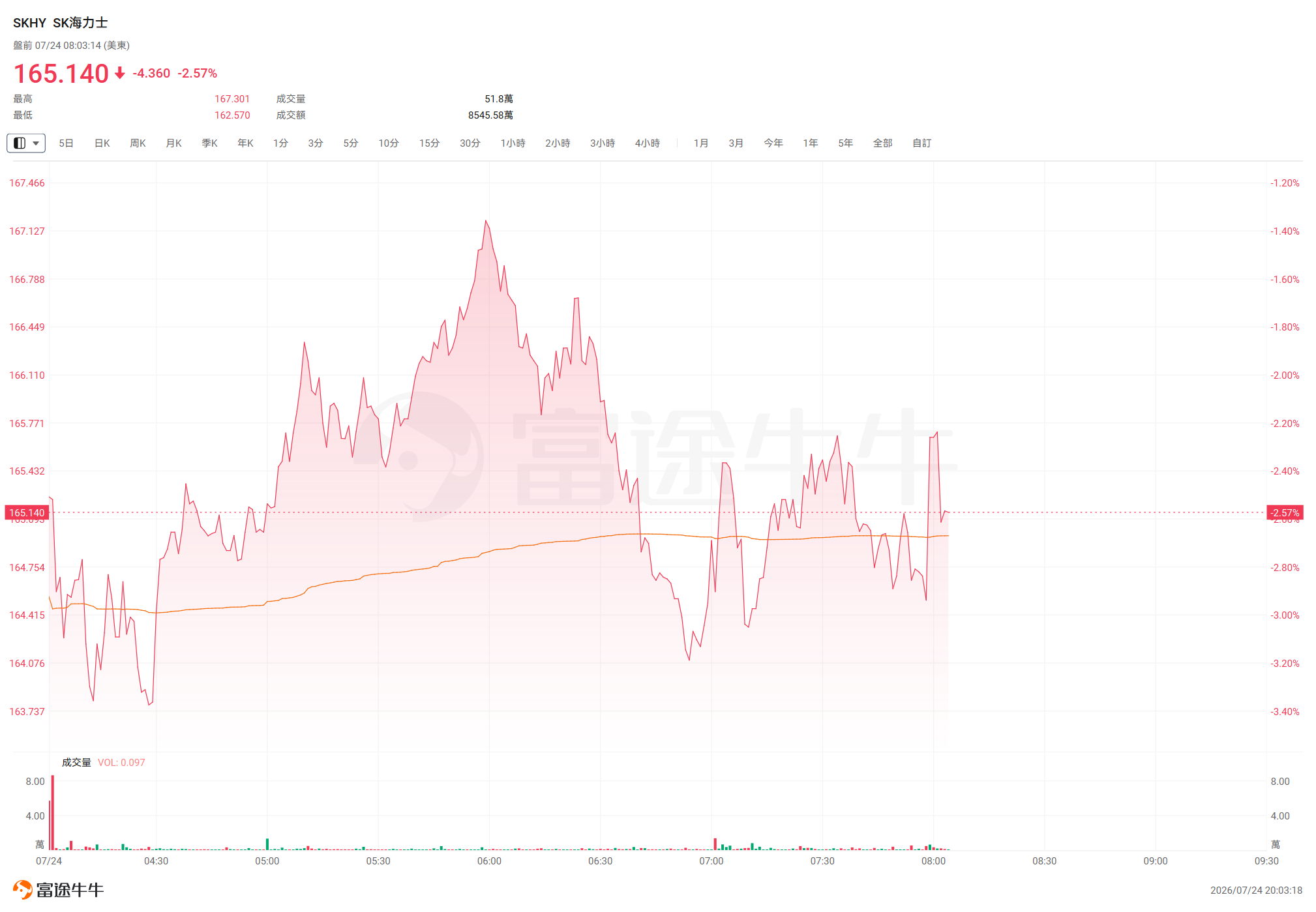
The ‘Big Three’ memory chipmakers are set to report earnings next week.
Next week,$SK Hynix (SKHY.US)$、$Samsung Electronics (005930.KR)$and$Kioxia (285A.JP)$The three leading memory chip manufacturers are about to release their latest earnings:
SK Hynix will release its second-quarter earnings on Wednesday, July 29. According to Visible ALPHA consensus estimates, SK Hynix is poised to deliver another standout quarterly performance, with second-quarter revenue expected to surge 260% year-over-year to USD 52 billion. Of this, DRAM business revenue is projected at USD 40.4 billion, up 265% year-over-year, while NAND flash memory revenue is forecast at USD 13.1 billion, a 330% increase from the same period last year.
Samsung Electronics will officially release its full second-quarter earnings report on Thursday, July 30. On July 7, Samsung had already issued preliminary results for the quarter. Second-quarter revenue rose 129% year-over-year to KRW 171 trillion (approximately USD 116.6 billion), while operating profit reached KRW 89.4 trillion (approximately USD 58.4 billion), soaring 18-fold year-over-year and setting a new record for the highest single-quarter operating profit in the company’s history.
Kioxia will release its first-quarter fiscal 2027 earnings on Friday, July 31. The market expects its quarterly profit to double compared to the previous quarter.
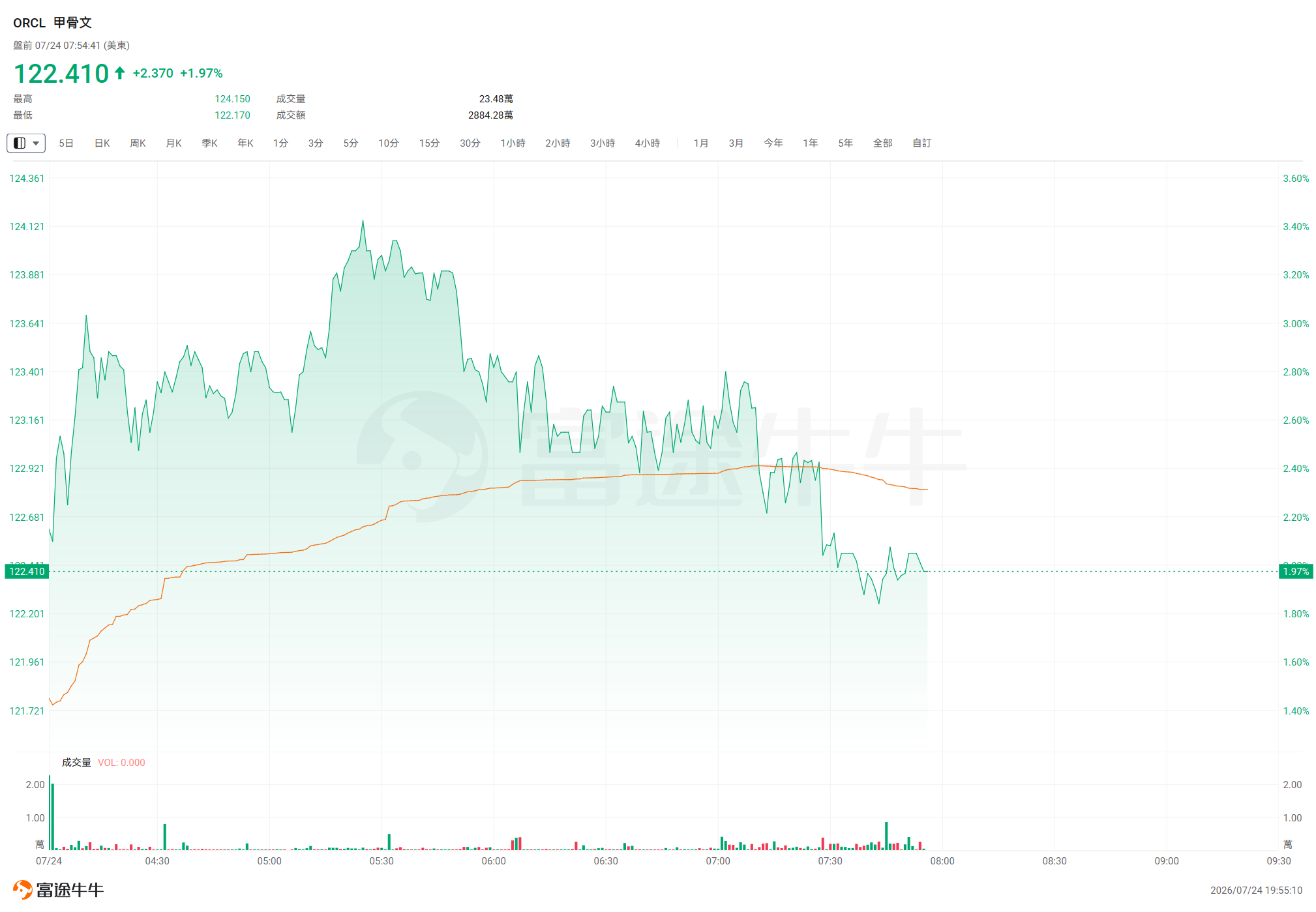
Oracle shares rose nearly 2% in pre-market trading after securing a USD 7 billion software contract from the U.S. Department of Defense.
Oracle (ORCL.US)The company won a major U.S. Department of Defense contract worth nearly USD 7 billion over ten years. According to the announcement, the contract covers the use of Oracle software by military branches, U.S. intelligence agencies, and the Coast Guard within on-premises data centers. The Central Intelligence Agency (CIA) was Oracle’s first customer under this agreement. The base term of the contract is five years and includes perpetual software licenses, subscription-based software licenses, maintenance services, and consulting services.
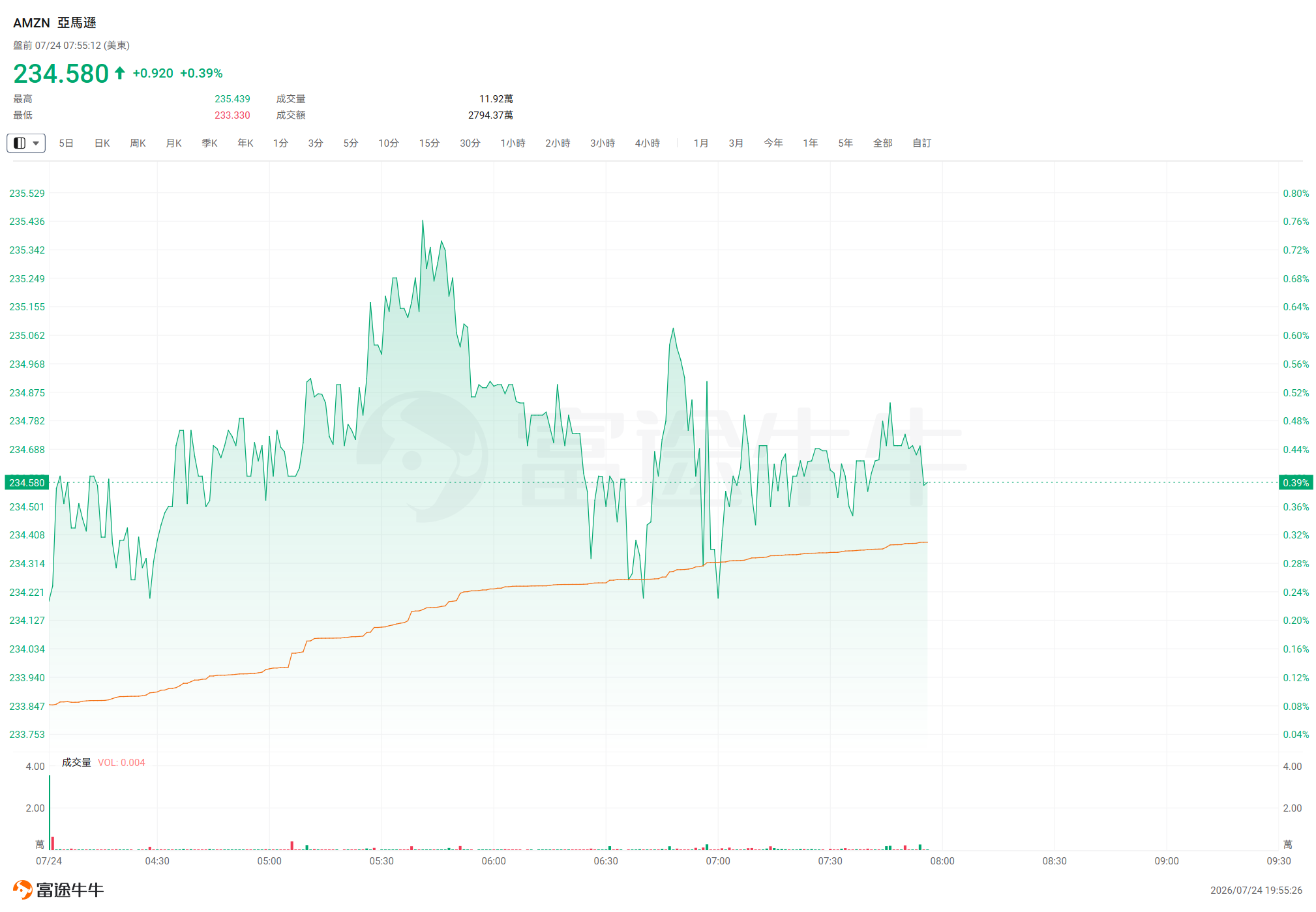
Amazon upgrades Alexa+ AI assistant with multiple new intelligent agent capabilities.
$Amazon (AMZN.US)$On July 24, Amazon updated the Alexa+ feature to further enhance its next-generation AI assistant capabilities. Alexa+ supports natural conversation, information retention, and task execution, enabling users to manage schedules, summarize emails, generate podcasts, control smart home devices, and complete everyday tasks such as shopping, restaurant reservations, and ride-hailing. This update introduces an AI-generated personalized podcast feature that creates audio content tailored to user interests. Additionally, Alexa+ can now read files, photos, and documents uploaded by users and generate summaries, Q&A responses, or study quizzes based on the content.
Moreover, Alexa+ can extract information from connected calendars and email accounts to automatically create events and reminders. In smart home and consumer scenarios, Alexa+ enables voice-triggered automation, analyzes Ring camera events to help manage household devices, and integrates shopping, music, Fire TV, and other ecosystem services to deliver personalized recommendations and an AI-assisted shopping experience.
SAP shares rose more than 5% in pre-market trading after reporting second-quarter cloud revenue growth of 22% year-over-year, exceeding expectations.
The German enterprise software giant$SAP SE (SAP.US)$reported second-quarter results, with total revenue increasing 9% year-over-year to EUR 9.88 billion, slightly above analysts’ expectation of EUR 9.85 billion. Non-IFRS operating profit grew 9% to EUR 2.7 billion, and adjusted earnings per share came in at EUR 1.59, below the analyst consensus of EUR 1.75. Cloud revenue for the period rose 22% year-over-year to EUR 6.28 billion, surpassing the expected figure of approximately EUR 6.26 billion.
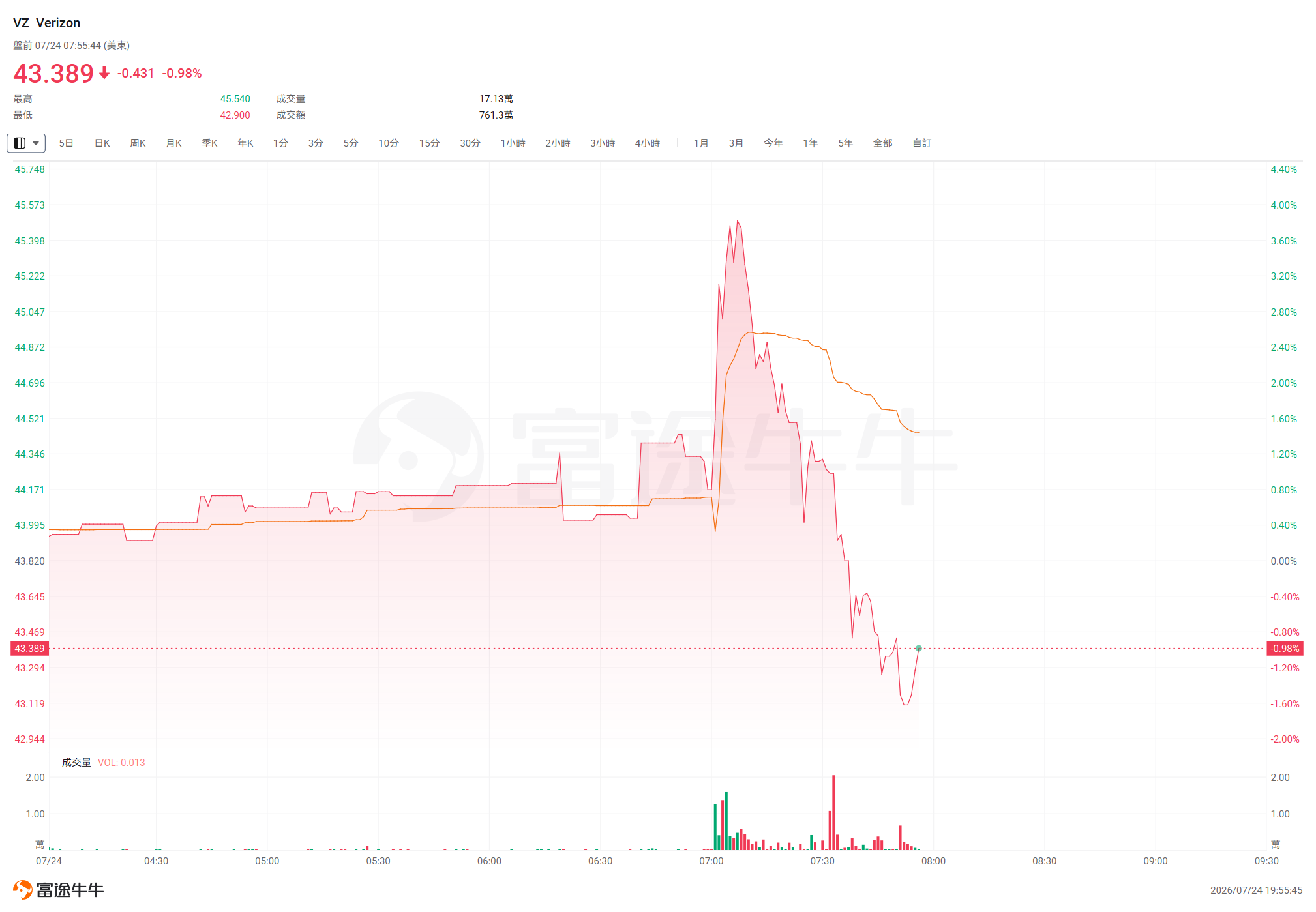
Verizon raises full-year earnings per share outlook
$Verizon(VZ.US)$Second-quarter adjusted earnings per share came in at $1.30, compared with $1.22 in the same period last year and an estimate of $1.27; second-quarter operating revenue was $34.3 billion, below the estimated $35.17 billion. Verizon now expects full-year adjusted earnings per share of $4.99 to $5.04, up from its previous guidance of $4.95 to $4.99.
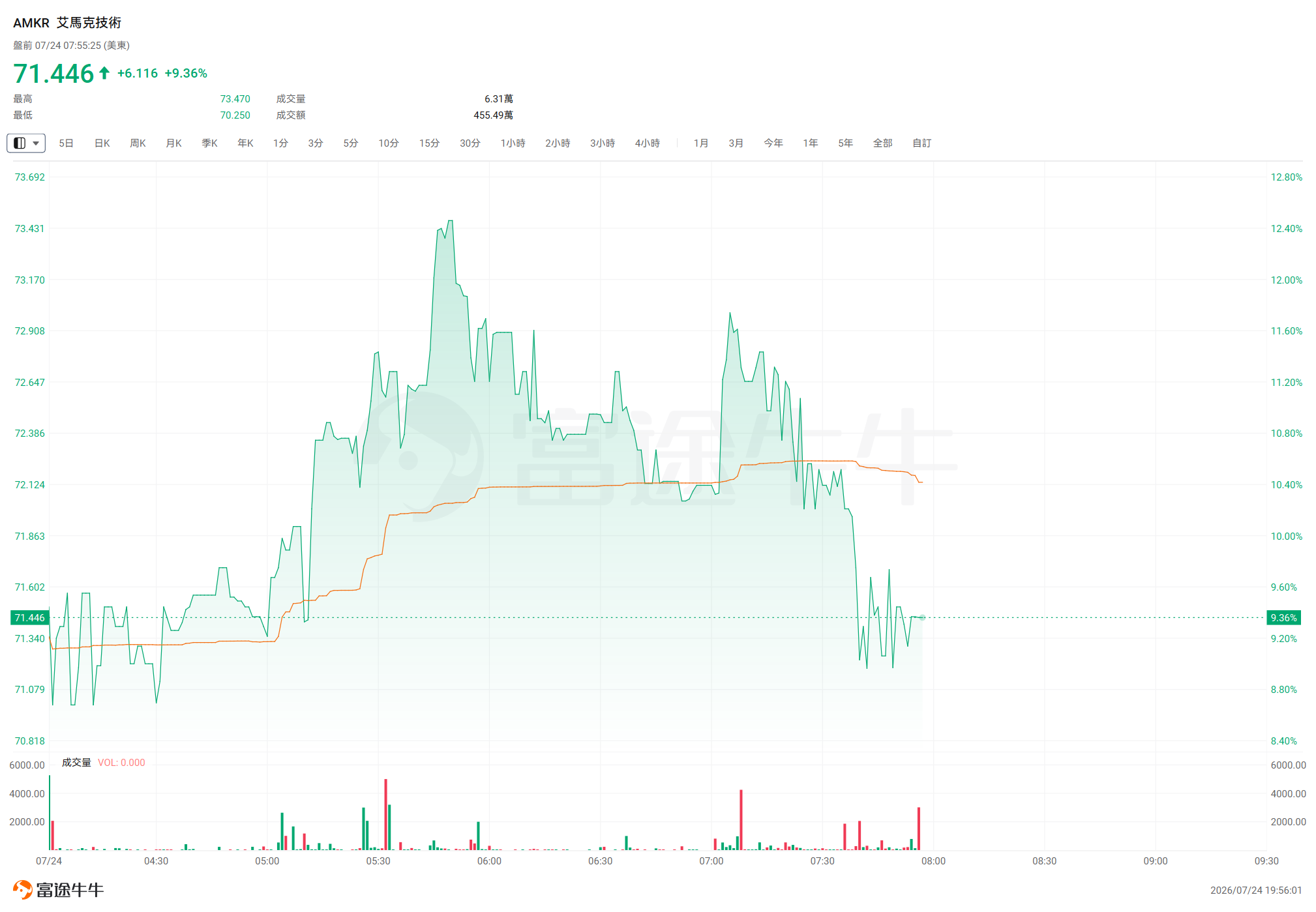
Amkor Technology surged more than 9% in premarket trading after signing a $1.5 billion chip packaging agreement with NVIDIA
NVIDIA (NVDA.US)andAmkor Technology (AMKR.US)The companies signed a $1.5 billion agreement to support NVIDIA’s expansion of chip packaging facilities and strengthen its semiconductor footprint in the United States. The deal includes an advance payment that will help Amkor enhance its manufacturing capabilities in Arizona. Both companies stated that the collaboration will focus on chip packaging and testing technologies for artificial intelligence applications.
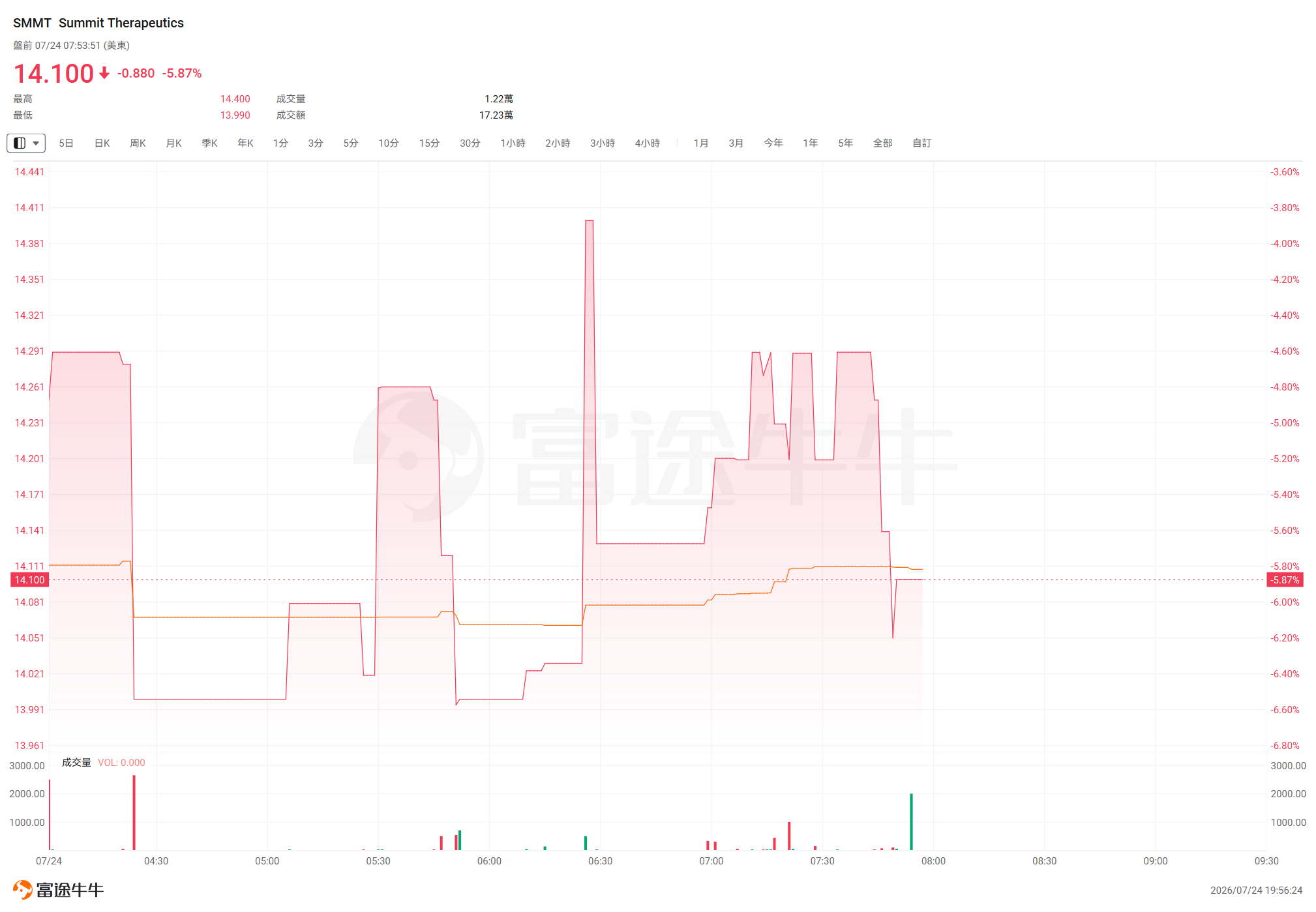
Summit Therapeutics fell nearly 6% in premarket trading after reporting a Q2 net loss of $216 million and signaling a cash crunch
$Summit Therapeutics (SMMT.US)$The company reported a net loss of $215.7 million for the second quarter of 2026, or a loss of $0.28 per share. Although this represents an improvement compared to the year-ago loss of $565.7 million, the narrower loss was primarily due to a one-time stock-based compensation expense of $410.1 million recorded in the prior-year period, rather than any meaningful improvement in core operations. The company explicitly stated that it expects losses to continue.
Although the company held $690.7 million in cash and short-term investments as of June 30, it acknowledged that its current working capital is insufficient to fund its planned operations over the next twelve months.
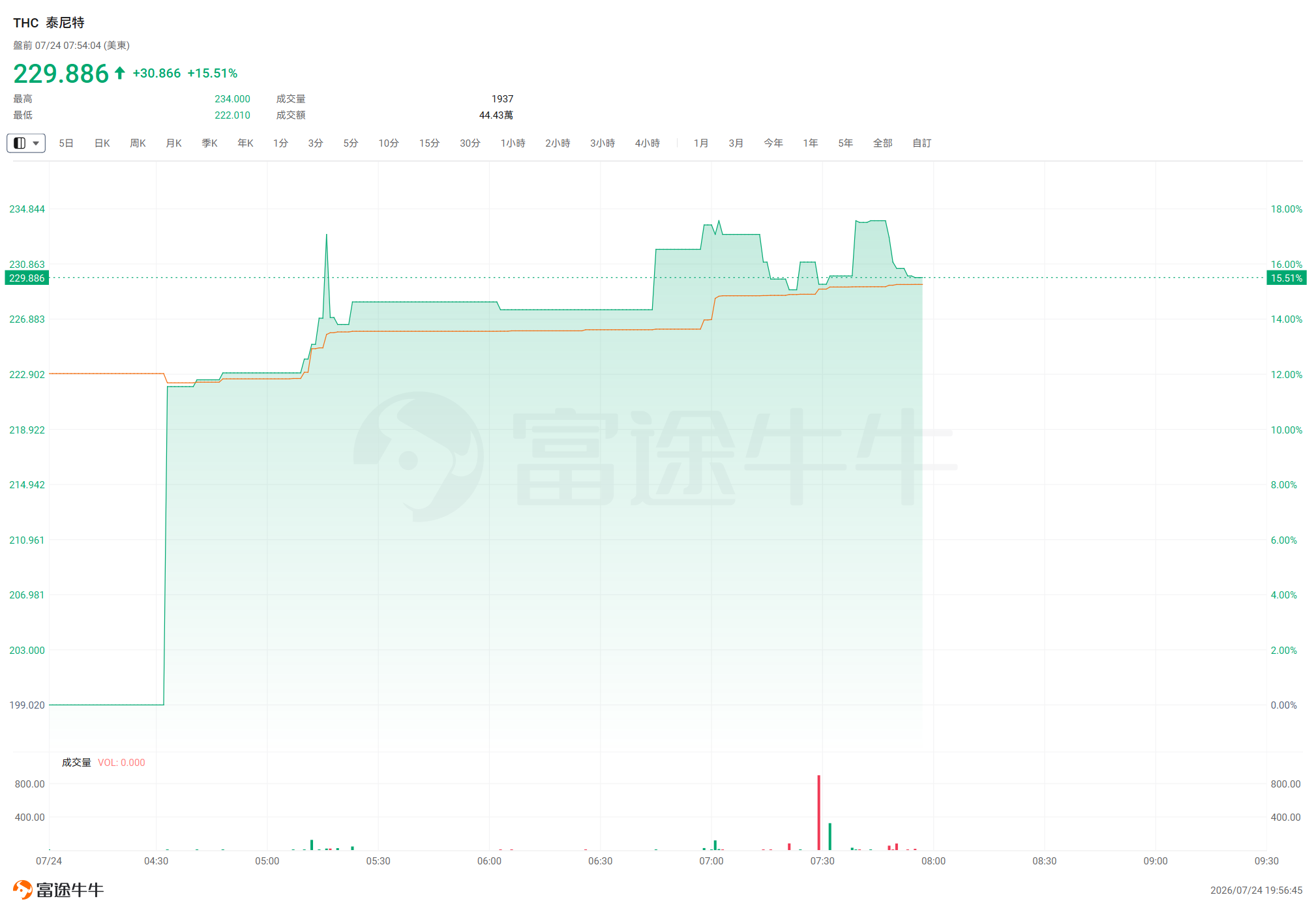
Tenet Healthcare surged more than 15% in premarket trading as its Q2 results significantly beat expectations and it sharply raised its full-year guidance
$Tenet Healthcare (THC.US)$Q2 adjusted earnings per share came in at $6.12, substantially exceeding the consensus estimate of $4.08 by a wide margin of 50%; quarterly revenue reached $5.63 billion, up approximately 6.8% year-over-year, also surpassing analysts’ expectations. The company simultaneously raised its full-year 2026 financial outlook significantly, signaling strong confidence. Additionally, its board authorized a new $2 billion share repurchase program, further bolstering shareholder return expectations.
Union Pacific's Q2 results beat expectations, prompting Barclays to raise its price target
$Union Pacific (UNP.US)$The company reported second-quarter results before the market opened yesterday, with revenue reaching $6.9 billion, up 12% year-over-year and exceeding the market expectation of $6.65 billion. Adjusted earnings per share came in at $3.41, also surpassing the consensus estimate of $3.19. Barclays maintained its Buy rating on Union Pacific and raised its price target to $350 from the previous $315 (reiterated on April 24), representing an increase of approximately 11%.
Global Macro
The Israeli military stated it is preparing to launch a large-scale military operation in the West Bank.
According to CCTV, on the 24th local time, the Israel Defense Forces (IDF) announced the emergency deployment of five additional infantry companies to the West Bank, imposed lockdowns on Nablus and surrounding villages and towns, and initiated related military search-and-arrest operations. Additionally, the IDF stated that weekend leave for troops stationed in the West Bank has been canceled, and preparations are underway for a large-scale military operation.
On the same day, Israeli Prime Minister Netanyahu urgently convened a security consultation meeting. Defense Minister Katz, IDF Chief of Staff Zamir, and David Barnea, head of the Israel Security Agency (Shin Bet), attended the meeting.
Iranian Foreign Minister: Any source launching an attack against Iran will become a legitimate target for defensive operations
On the 24th local time, Iranian Foreign Minister Araghchi stated that Iran would consider any source launching attacks against the Iranian people as a legitimate target for defensive action by Iran’s armed forces. Araghchi also emphasized that any party involved in, cooperating with, or assisting in attacks against Iran would bear corresponding international responsibility.

Saudi Arabia reroutes crude oil exports around the 'two straits,' increasing shipping time by one month.
According to CCTV, amid disruptions to shipping through the Strait of Hormuz and the Bab el-Mandeb Strait—two critical international energy transport corridors—major oil producer Saudi Arabia has been forced to reroute its crude oil exports via the Suez Canal and around Africa. This detour increases transit time by approximately one month and doubles transportation costs.
According to data from international market intelligence firm Kpler and LSEG Shipping Research, a tanker typically takes only 19 days to travel from Yanbu, a Red Sea port in western Saudi Arabia, through the Bab el-Mandeb Strait to Asia. In contrast, the route via the Suez Canal, the Mediterranean Sea, the Strait of Gibraltar, and around the Cape of Good Hope to Asia requires 48 days. Calculations show that fuel costs alone for the longer route rise from $1.26 million to approximately $2.87 million, in addition to roughly $1 million in Suez Canal transit fees.
Trump initiates new tariff measures.
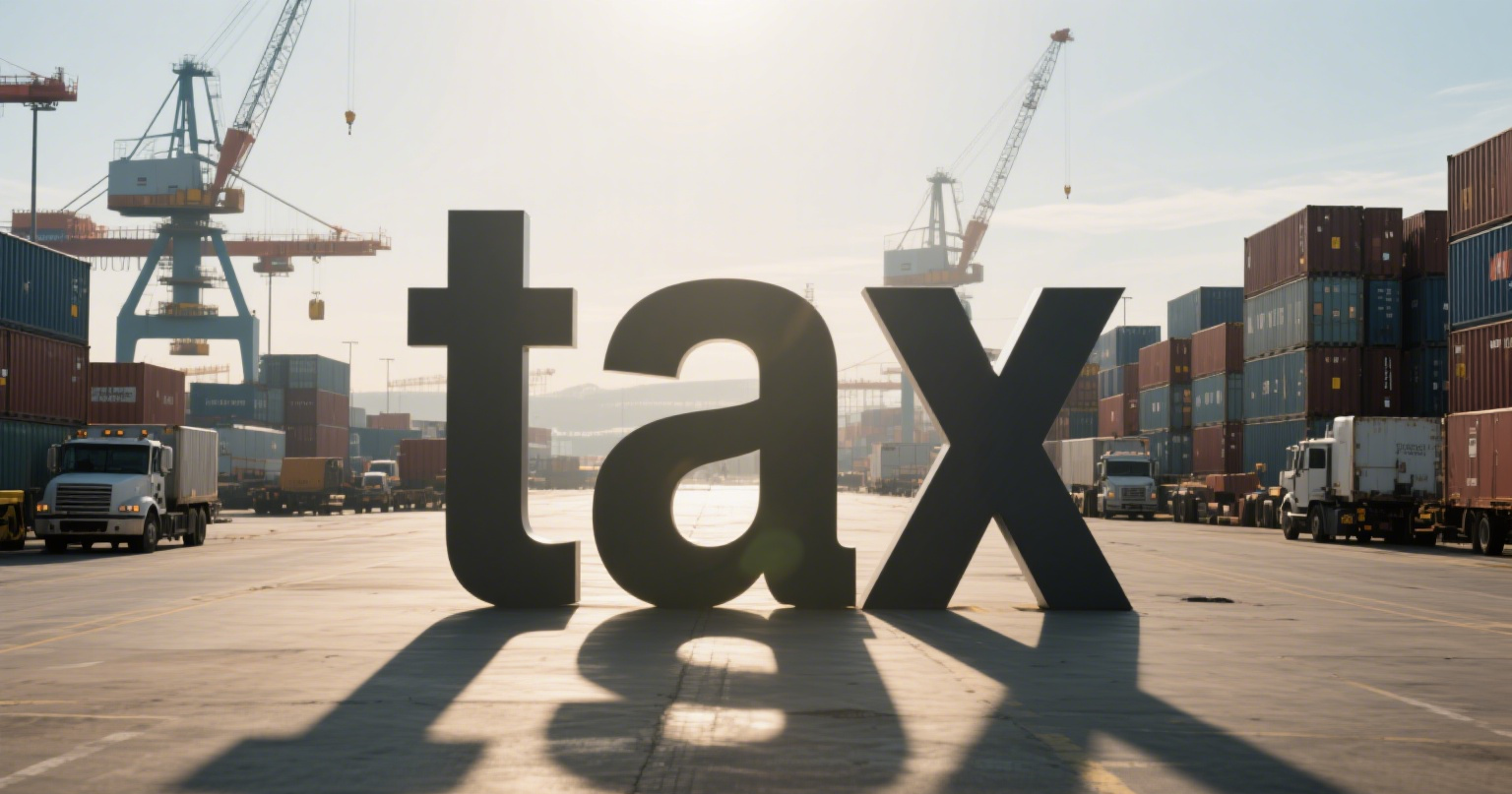
On the 23rd local time, the Office of the United States Trade Representative (USTR) issued a notice announcing, under Section 301 of the Trade Act of 1974, the imposition of tariffs ranging from 10% to 12.5% on dozens of countries and regions, citing alleged 'forced labor' as justification. These new tariffs replace expiring global import duties and took effect at 12:00 p.m. Eastern Time on the 24th (12:00 p.m. Beijing time).
Ministry of Foreign Affairs: China is willing to effectively implement the important consensus reached by the Chinese and U.S. heads of state in the field of artificial intelligence; tariff wars and trade wars serve no party's interests.
In response to media reports that U.S. President Trump stated that the leaders of China and the United States would discuss issues related to artificial intelligence, Lin Jian, spokesperson for the Ministry of Foreign Affairs, said at a regular press briefing on the 24th that summit-level diplomacy plays an irreplaceable strategic guiding role in China-U.S. relations. China is ready to work with the United States to effectively implement the important consensus reached by the two heads of state in the field of artificial intelligence.
When asked about the new round of U.S. tariff measures taking effect today and whether the Ministry of Foreign Affairs had any comment, Lin Jian stated that China’s position on China-U.S. economic and trade issues has been consistent and clear: it opposes unilateral tariff measures in all forms, as tariff wars and trade wars serve no party's interests.
UBS Group: Does Not Believe There Is a 'Bubble' in China's AI Industry
On July 24, Xiong Wei, Internet sector analyst at UBS Securities China, stated that Chinese cloud providers are adopting a more measured investment pace, emphasizing ROI and sustainability, and that he does not believe there is a 'bubble' in China’s AI industry. He added that as model capabilities continue to improve and inference demand keeps rising, investment in China’s AI sector will gradually increase.
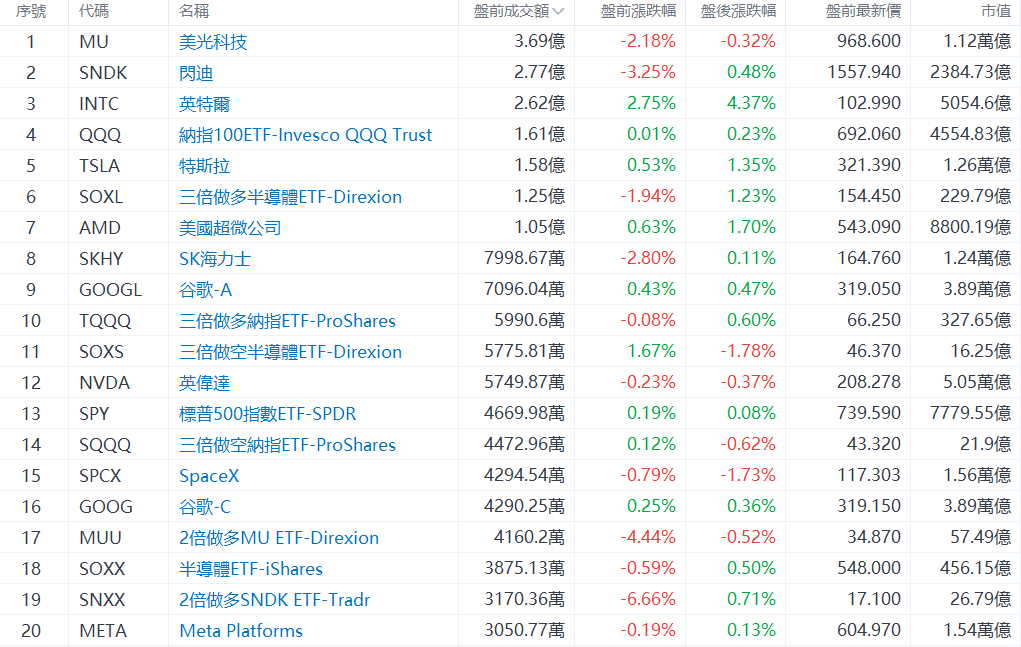
Top 20 pre-market trading volume stocks in the U.S.
U.S. Equity Market Macro Calendar Reminder
(All times listed below are in Beijing Time)
21:45 S&P Global U.S. Manufacturing PMI (Preliminary), July
21:45 S&P Global U.S. Services PMI (Preliminary), July
22:00 U.S. New Home Sales Annualized (in 10,000 units), June
Early the following morning
01:00 Total U.S. Oil Rigs, Week Ended July 24
 Looking to select stocks or analyze your holdings? Want to understand the opportunities and risks in your portfolio? For any investment-related questions,just ask Futubull AI!

Editor/melody