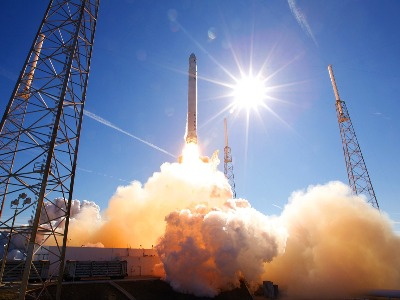
SpaceX's Starship successfully completed its 13th test flight on the 24th at Central Time in the United States, marking the company's first successful flight following its IPO. During this test flight, the V3 version of Starship successfully reignited its engines in a vacuum, addressing the shortcomings of the previous flight; the upper-stage spacecraft achieved its "smoothest" splashdown yet in the Indian Ocean, while the Super Heavy booster was recovered in the Gulf of Mexico, with no significant anomalies observed throughout the mission.
SpaceX's Starship completed its 13th test flight, successfully lifting off in its first test launch following the company's IPO in the United States.
On the afternoon of the 24th, Central Time in the United States, SpaceX's heavy-lift rocket Starship lifted off from its launch site in southern Texas for its 13th test flight.
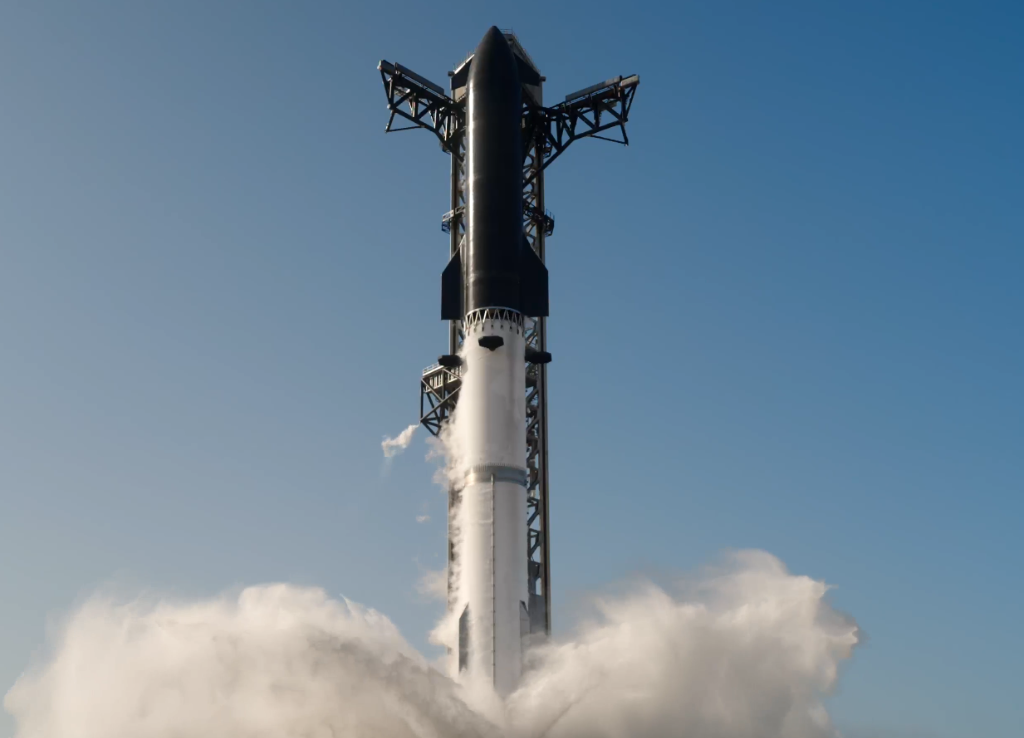
 During this test flight, the Starship upper stage executed a controlled splashdown in the Indian Ocean, while the Super Heavy booster was recovered via splashdown in the Gulf of Mexico, with no significant anomalies observed throughout the mission.
This marks the second test flight of the V3 version of Starship and SpaceX’s first successful launch since going public—the previous attempt last week was aborted due to multiple engine ignition failures, triggering a sell-off in its stock, which remains below its IPO price.
The successful flight of SpaceX’s massive Starship rocket validated several critical technologies, laying the groundwork for its role in NASA’s lunar landing missions. NASA plans to use Starship to land astronauts on the Moon as early as 2028.
NASA Administrator Jared Isaacman posted on social media an image showing Starship launching with the Moon in frame, captioning it, "SpaceX knows where we’re going," offering public endorsement of the mission.

The V3 version has now completed its first full validation, addressing shortcomings from the previous flight.
This test flight marked the second appearance of the V3 version of Starship.
At 5:45 p.m. local time on July 16, Starship was scheduled to carry out its 13th major mission from the 'Starbase' launch facility in southern Texas, but the test flight was postponed after multiple engines failed to ignite, triggering an automatic abort sequence.
During the first V3 flight (the 12th overall test flight) in May, a series of engine failures led to subpar rocket performance, forcing the cancellation of the planned in-vacuum engine restart test.
This successful 13th test flight remedied that shortfall: Starship reignited its engines in the vacuum of space, completing a key test that had previously been unachieved.
SpaceX had previously conducted this test during its sixth flight in November 2024, tenth flight in August, and eleventh flight in October, but the twelfth flight failed to execute the test due to an engine malfunction.
The ability to restart engines in a vacuum is critical. This capability provides Starship with the flexibility required for complex maneuvers such as orbital adjustments and re-entry burns—particularly when the spacecraft re-enters Earth’s atmosphere at speeds exceeding Mach 20, where precise maneuverability directly determines mission success.
Precision splashdown achieved; reusability roadmap advances steadily
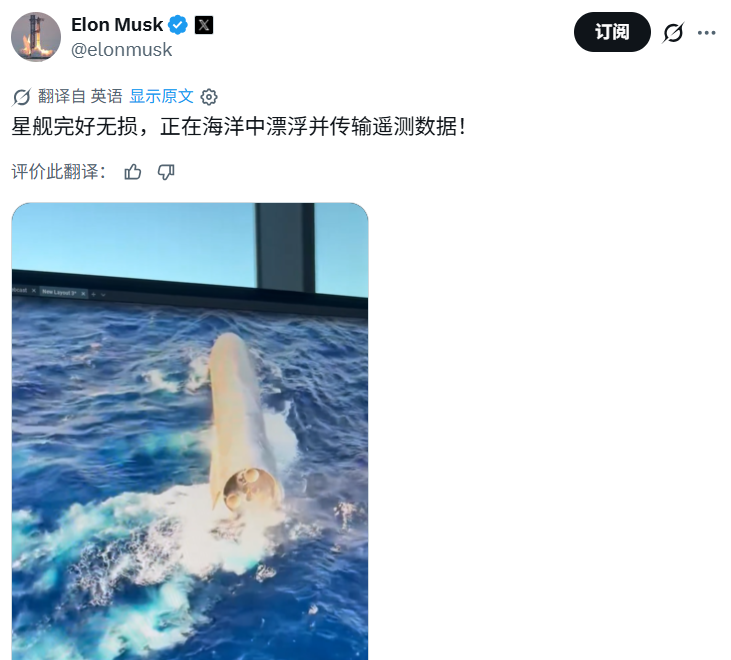
During the final phase of flight, Starship decelerated from speeds exceeding Mach 20 to subsonic velocity, reignited its engines, executed a steep-angle “belly-flop” descent, and then flipped upright to achieve what SpaceX described as its “smoothest” splashdown yet in the Indian Ocean.
According to SpaceX spokesperson Dan Huot, the landing maneuver was nearly perfect, with the vehicle gently tipping over after splashdown and floating on the ocean surface. Elon Musk posted:
Starship is intact and floating in the ocean while transmitting telemetry data!
This splashdown test carries deeper engineering significance. SpaceX is actively working toward recovering Starship intact on land to enable rapid reuse.
Reusability of rocket components is central to SpaceX’s business model, which the company says can reduce launch costs by several orders of magnitude.
Satellite deployment completed; first post-listing flight pressure successfully validated
The mission also deployed 20 Starlink satellites. SpaceX confirmed on social media that it has successfully established contact with all 20 satellites.
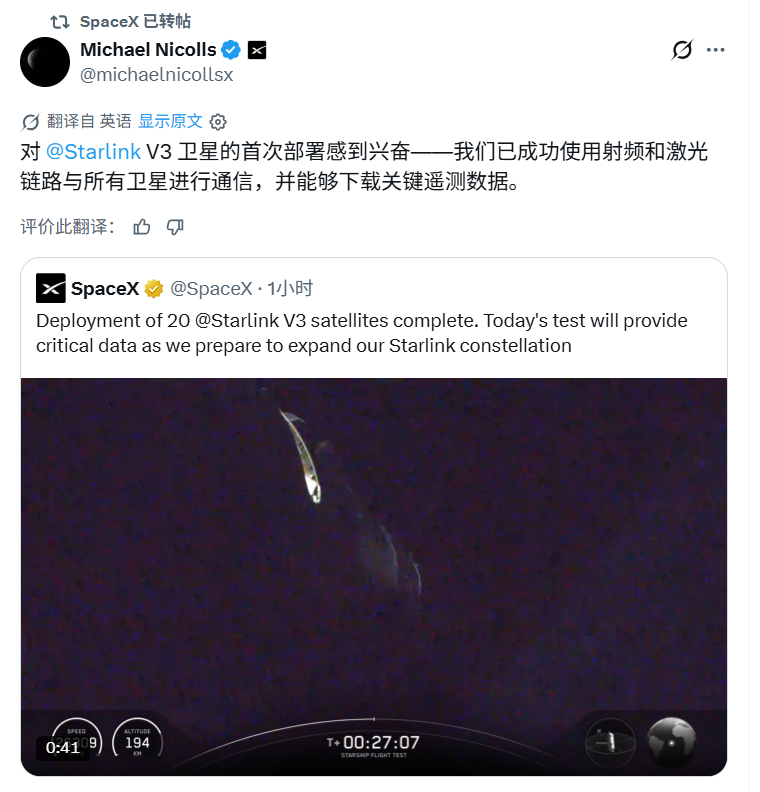
Notably, these satellites are functional test vehicles and were not designed for long-term orbital operations. Approximately 20 minutes after deployment, the satellites burned up in the atmosphere as planned.
This flight carries particular market significance for SpaceX. Last week’s aborted launch triggered investor sell-offs, and the company’s stock price remains below its IPO offering price. This successful mission has provided some support to market sentiment.
Although this test flight proceeded smoothly, Starship remains a considerable distance away from crewed flight capability. NASA hopes to use Starship for lunar missions as early as 2028, placing significant pressure on the program’s development timeline.
NASA Administrator Jared Isaacman previously self-funded a trip to space aboard SpaceX’s Crew Dragon spacecraft and assumed the role of NASA Administrator in December last year. His public comments on Starship reflect NASA’s high level of attention to the program.
However, technical validation efforts will continue until Starship achieves certification for crewed flight—and even more so before it can undertake crewed lunar missions.
Edited by Jeffy