① On July 25, SpaceX conducted the 13th test flight of Starship. During the flight, the Super Heavy booster separated after approximately two minutes and performed a splashdown in the Gulf of Mexico;
② A SpaceX spokesperson expressed delight, stating that this marked the first time Starship had landed intact in the water and represented the gentlest splashdown in history;
③ Experts believe that the Starship program has made progress, but it still has a long way to go before achieving rapid reusability.
 Caixin Global, July 25 (Editor: Ma Lan) – On Friday evening local time, $SpaceX (SPCX.US)$ SpaceX launched its massive Starship rocket from Starbase in Texas, USA. This was the company’s 13th test flight and its first since last month’s record-breaking IPO.
Starship is currently the world’s largest and most powerful rocket, designed to be fully reusable and capable of delivering more payload into orbit at a lower cost.
The rocket had originally been scheduled for a test flight last Thursday, but the launch was canceled just before the countdown concluded. The subsequent attempt, rescheduled for this past Thursday, was again postponed due to weather conditions and ultimately delayed until Friday.
During Friday’s test flight, the Super Heavy booster separated from the Starship spacecraft after approximately two minutes of flight and executed a controlled splashdown in the Gulf of Mexico. In its statement, SpaceX noted that the landing was not perfect, as the booster attempted to reignite its engines for a landing burn, but only a subset of engines successfully ignited before the hard splashdown occurred.
Nevertheless, SpaceX personnel remained pleased and enthusiastic about the test flight. SpaceX spokesperson Dan Huot stated, “This was the first time Starship landed intact in the water, and it was also the gentlest splashdown ever achieved—a dream scenario for the team working to collect heat shield data.”
Elon Musk also posted on X that Starship remained intact, floating in the ocean and transmitting telemetry data.
Test Flight Details
Approximately 18 minutes into Friday's test flight, SpaceX successfully deployed 20 new Starlink V3 satellites into orbit—marking the company's first opportunity to evaluate the in-flight performance of these satellites. The satellites were originally scheduled to deorbit around 20 minutes after launch.
These new satellites, manufactured at SpaceX’s facility in Redmond, Washington, are larger and more powerful than previous Starlink models. During the live broadcast, a SpaceX commercial analyst explained that they are also equipped with solar arrays capable of generating twice the power of earlier generations.
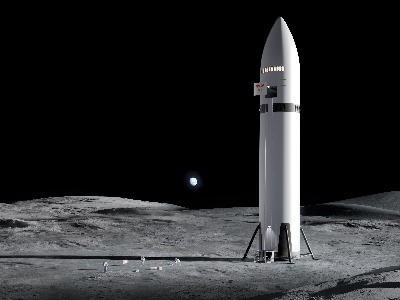
In addition to using the Starship rocket to launch these new, larger satellites, SpaceX also aims to utilize the vehicle to return U.S. astronauts to the lunar surface and ultimately power crewed missions to Mars. The company is currently preparing for a critical Starship test flight next year under NASA’s oversight.
Tim Farrar, a satellite services industry expert at TMF Associates, stated that this test flight indicates SpaceX has made some progress on the Starship program, but still has a long way to go before achieving rapid reusability of the entire spacecraft.
He noted that SpaceX encountered issues during the Raptor engine relight sequence on Friday. A similar failure during a landing attempt at the company’s launch site could cause severe damage to the launch pad.
Edited by Jeffy