
I. Key Data and Market Outlook Updates
(i) Recap: On May 6, we were the first in the industry to issue the “Cold Winds of Summer” warning, consistently highlighting significant downside risks for global equities in June and July. In particular, we cautioned that AI-related trades had become overly crowded in the short term and would face adjustment pressures from both macro and micro perspectives. In our weekly report dated July 19, titled “Aftermath of Cold Winds of Summer Diverges Across Markets; Korea’s Market Fire Could Spread,” we reiterated our bearish stance on global equities in July. The core rationale remains that neither macro nor micro liquidity conditions support a bullish position, and overseas markets may even face unexpected liquidity shocks.
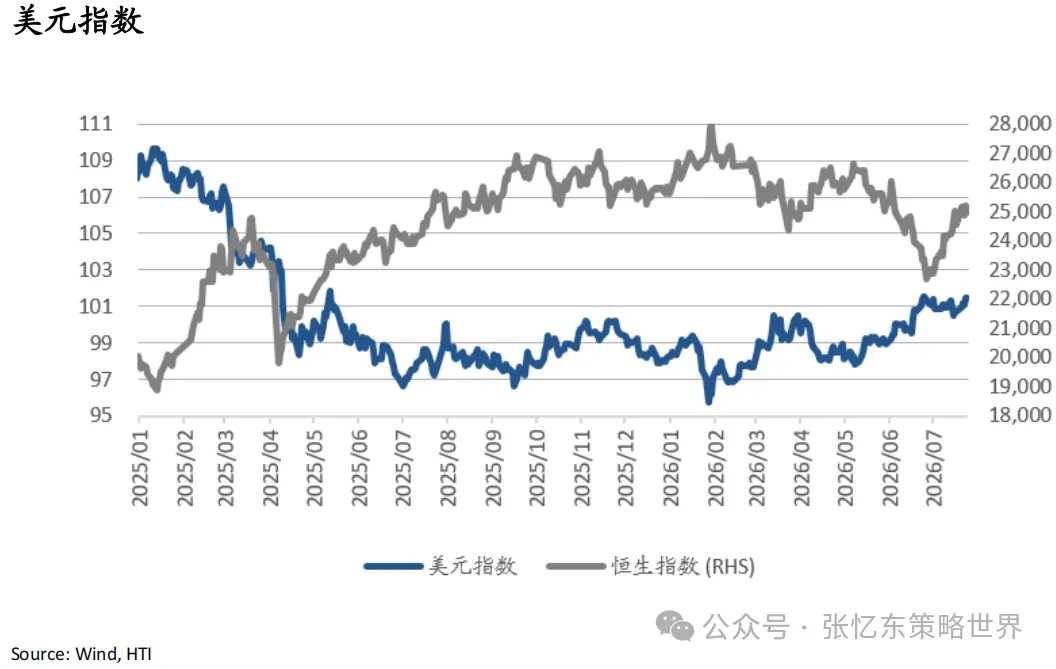
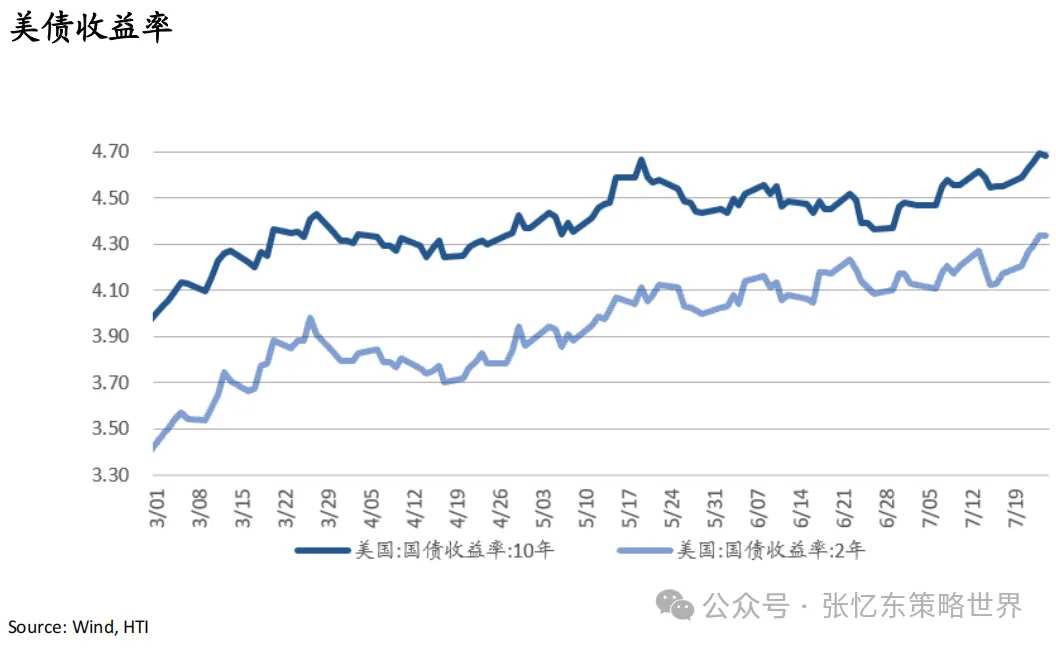
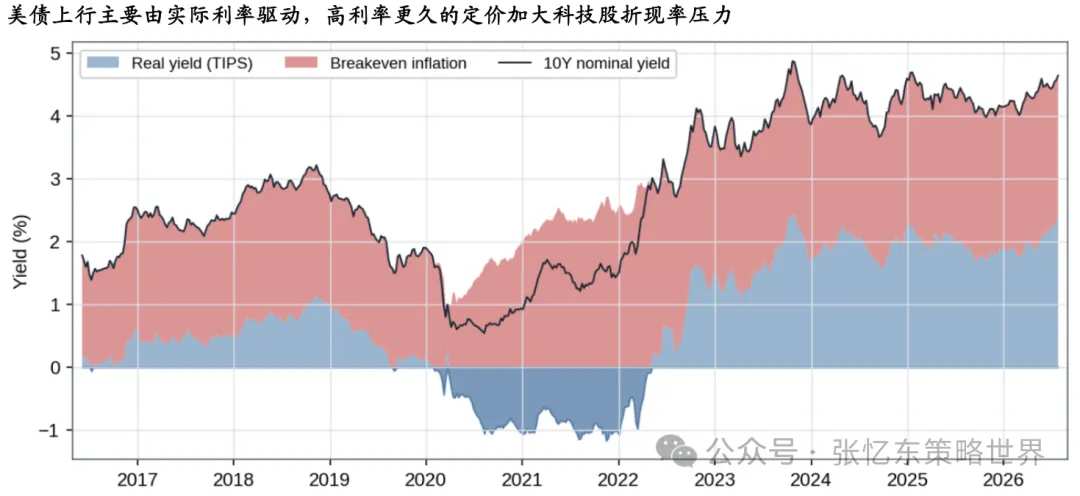
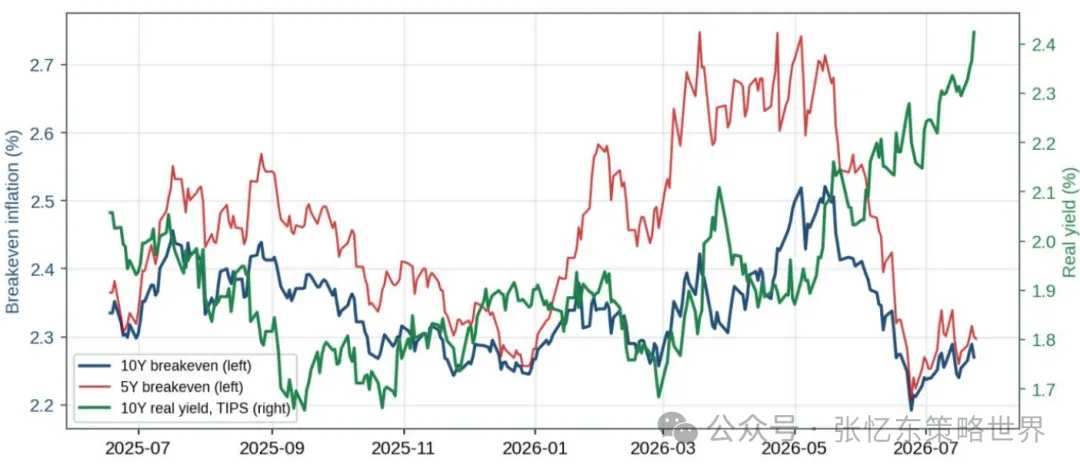
Last week’s developments in macroeconomic conditions and capital markets once again validated our forecast. On the macro front, the U.S.-Iran conflict escalated further, with disruptions spreading from the Strait of Hormuz to Red Sea shipping lanes, reigniting concerns over oil prices and inflation. The 10-year U.S. Treasury yield rose by 13 bps over the week to 4.68%, briefly touching 4.71%—a new high since Trump’s second term—and was primarily driven by higher real yields. Market participants significantly revised upward their expectations for Federal Reserve rate hikes, now pricing in nearly two hikes this year, with the probability of a July FOMC rate hike rising to 38%. The U.S. dollar index remained strong, closing near 101.5.
 (ii) Market Outlook: Lingering Effects of the Cold Winds of Summer, with Overseas Risks Forcing a Turning Point
First, on the macro liquidity front, continued close attention should be paid to Middle Eastern geopolitical tensions, oil prices, U.S. Treasury yields, and the U.S. dollar.
The deterioration in Middle Eastern局势 is the root cause of recent macro liquidity risks. We anticipate that the next potential turning point for global capital markets linked to the Middle East situation may occur around mid-August. A necessary condition for a genuine near-term turnaround is mounting adjustment pressure in U.S. financial markets, which would compel Trump to re-implement a ceasefire mechanism and reopen the Strait of Hormuz.
Given the repeated cycles of negotiation and escalation seen previously, mere expectations of a TACO (Temporary Agreement to Cease Operations) are unlikely to serve as a true market inflection point. Over the weekend, both sides signaled renewed willingness to negotiate: the U.S. paused further airstrikes, and under third-party mediation, discussions began regarding navigation through the Strait of Hormuz and ceasefire arrangements. However, these developments are insufficient to meaningfully boost risk appetite or materially influence oil price and inflation expectations.
Ahead of the FOMC meeting on July 28–29, ongoing oil price and inflation risks could further intensify upward pressure on U.S. Treasury yields, thereby weighing further on U.S. equities and accelerating the tightening of financial conditions. This, in turn, may push Trump toward another substantive TACO initiative, particularly one aimed at driving a sharp decline in oil prices.
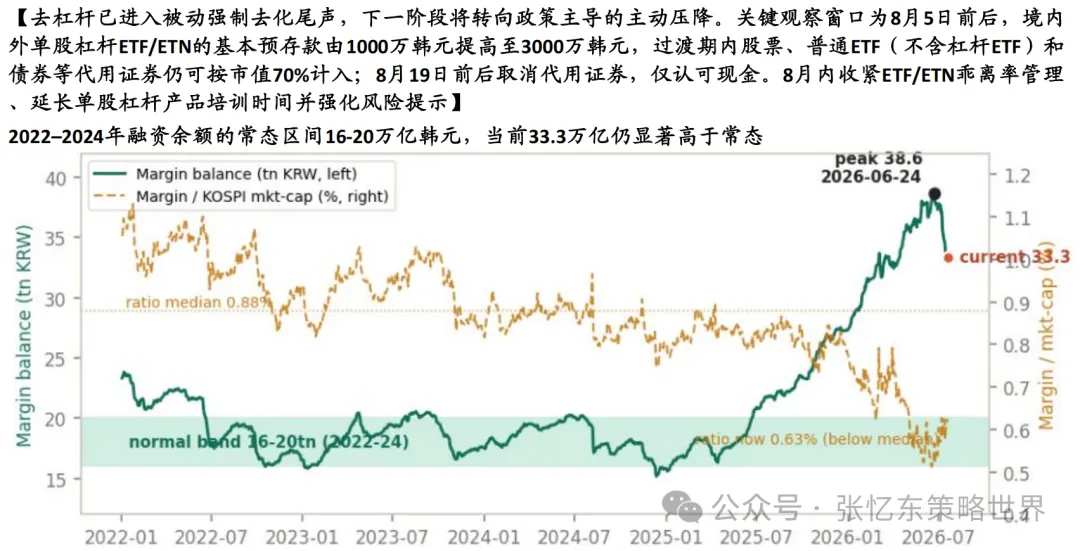
Second, on the micro liquidity front, the unwinding of excessively leveraged and crowded AI trades in the first half of the year has been the key driver behind our persistent “Cold Winds of Summer” warning on global equity corrections. The epicenter of this global deleveraging storm has been the Korean equity market. Following a brief rebound after a sharp sell-off, Korean regulators accelerated the implementation of proactive deleveraging measures from August 5 to July 31: the minimum cash collateral requirement for single-stock leveraged ETFs/ETNs (both domestic and foreign) was raised from KRW 10 million to KRW 30 million, and only cash—not stocks, standard ETFs, bonds, or other substitute securities—will be accepted. This policy shift, combined with tech stock corrections in the U.S., rising oil prices, and concentrated selling by foreign and institutional investors, triggered another sharp drop in Korean equities last Friday.
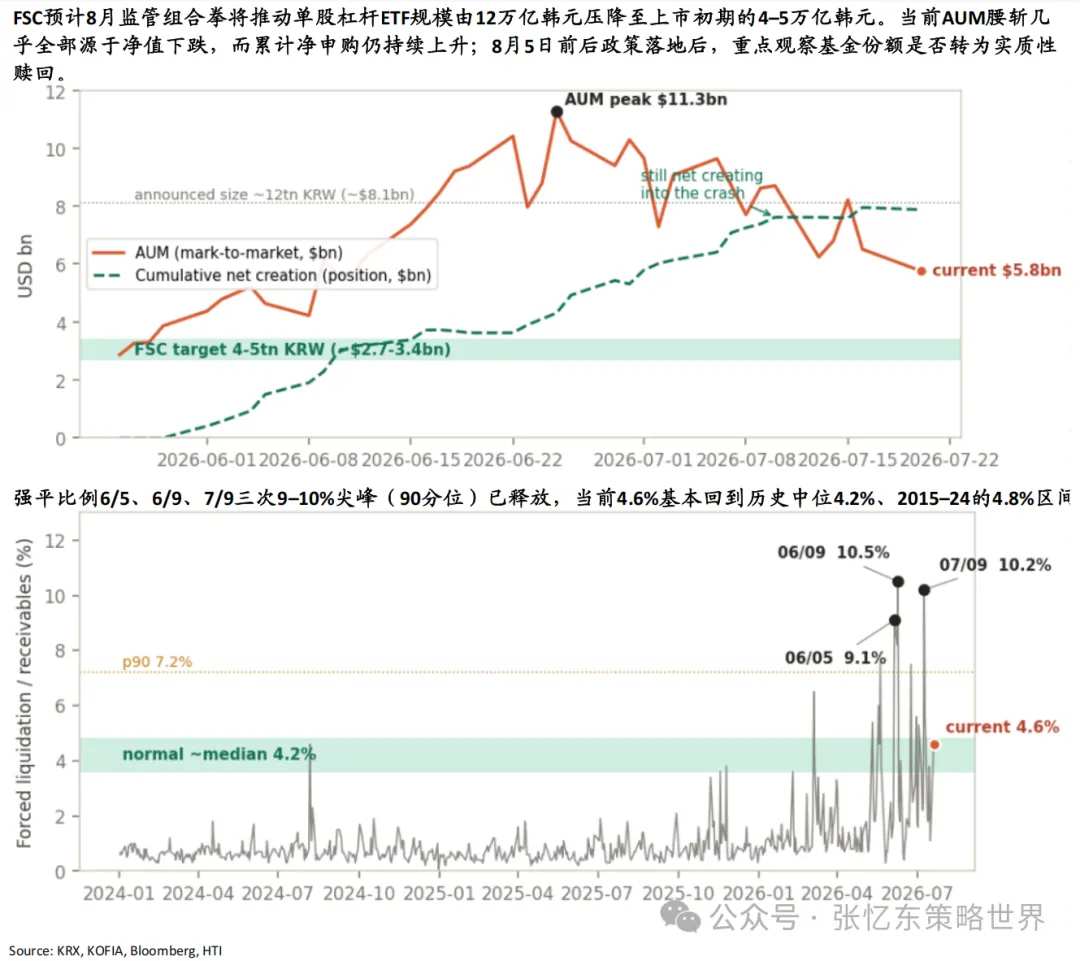
Heightened vigilance is warranted regarding a new round of deleveraging risks in the Korean equity market at the end of July and beginning of August, particularly due to the potential for a disorderly unwind of crowded trades from the first half of the year, which could reignite contagion-driven turmoil across Japanese, ****, and U.S. equity markets. Although the aggregate assets under management of Korea’s 16 single-stock leveraged ETFs have declined notably from their peak—standing at KRW 10.7 trillion on July 23, down 35.6% from the peak—the reduction is largely attributable to net asset value declines. As of July 24, total shares outstanding remained elevated at 753 million, up 265% from launch levels, with cumulative net inflows remaining substantial. More importantly, current AUM remains well above the KRW 4–5 trillion range deemed stable by regulators. While the new rules only restrict new purchases and additional margin calls—and do not mandate forced liquidation of existing positions—if outstanding positions continue converging toward this regulatory threshold, the policy-driven deleveraging pressure in this round could be as severe as the prior episode of market-driven deleveraging.
Third, regarding short-term micro-level liquidity conditions, vigilance is still warranted against heightened volatility triggered by either active or passive contraction in quantitative trading. Over the past few years, the most significant change across major global equity markets has been their entry into the AI era, with quantitatively driven funds increasingly dominating market dynamics and amplifying structural ‘herding’ rallies beyond historical norms. Active fund managers in China, the U.S., and Japan remain broadly positioned at elevated levels, and the extreme crowding in TMT sectors—led by AI-related names—has yet to show meaningful relief. Should quantitative trading trigger a sharp correction in core assets, this would represent not only risk but also opportunity—an apparent crisis that in fact harbors strategic openings—and investors should consider positioning on the left side of the market based on fundamentals.
Fourth, the release of fundamental risks will still require time. The current market correction is no longer solely driven by liquidity and risk appetite—the so-called 'denominator-side' shocks—but has now begun to impact earnings, capital expenditures, and profit distribution along the industrial chain—the 'numerator-side.' Investors are beginning to question the old logic underpinning the AI-driven rally, which explains why recent sharp rebounds in tech stocks have lacked sustainability. Starting late July, major U.S. tech firms will report earnings en masse, marking a period of painful transition and turbulence as the market shifts from old to new fundamental narratives.
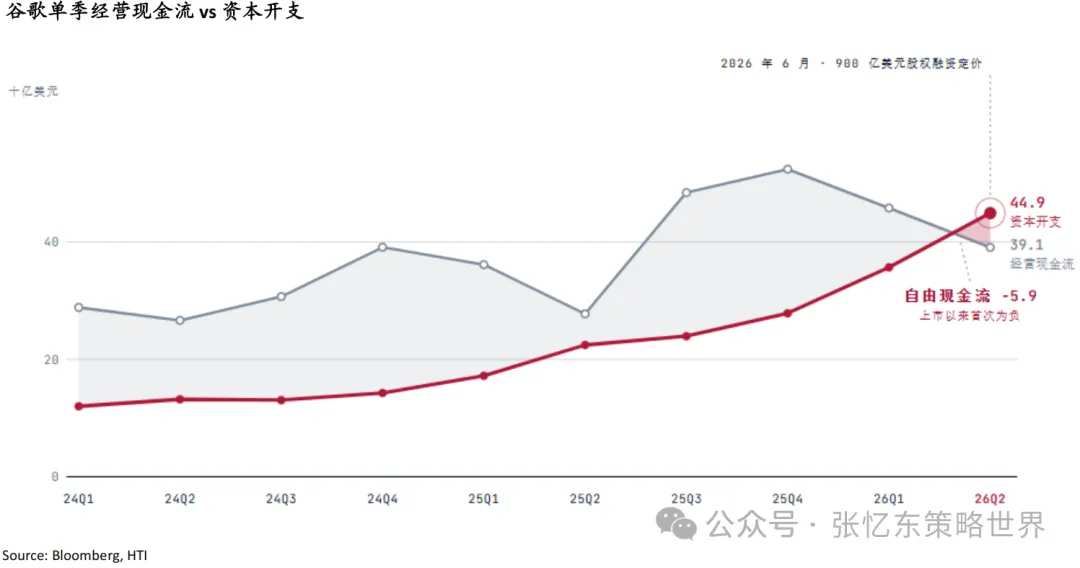
The prevailing ‘brute-force miracle’ logic within the AI supply chain now faces a classic prisoner’s dilemma between upstream and downstream players: if cloud providers continue aggressively expanding capital expenditures, pricing power and profitability in upstream segments—such as computing and storage—can remain robust, but downstream free cash flow and valuation pressures will intensify further; conversely, if downstream firms slow capex to stabilize profits and share prices, upstream order books, revenues, and earnings expectations could be revised downward. The post-earnings declines in Alphabet and Tesla recently illustrate how overseas markets are shifting away from last year’s narrative of chasing AI-driven capex expansion toward growing concerns about how heavy investment erodes free cash flow and valuations. A negative feedback loop—rising capex, cash flow strain, valuation compression, and further deleveraging in tech stocks—is now beginning to weigh on market sentiment.
The turning point for fundamentals will lie in identifying and establishing a new market narrative—potentially driven either by unexpectedly strong progress in AI application demand and commercialization revenues, or by an industry-wide rebalancing of profit distribution shifting away from memory-price-led dynamics toward more sustainable upstream-downstream equilibrium.
Regarding China’s new fundamental narrative, attention should be paid to the Politburo meeting at the end of July, which will outline policy priorities and arrangements for China’s economic work in the second half of the year.
(3) Investment Strategy: Positioning on the Left Side for the Autumn Rally—Sowing Through Tears
Looking ahead over the next few weeks, major global equity markets will remain in the aftershock phase of this round of ‘summer chill.’ Historically, such post-correction periods often drive retail investors to capitulate in despair and force leveraged traders into margin calls. Despite the ongoing adjustment, we reiterate that the recoil effect from excessive leverage and crowded trades built up in the first half of the year continues to exert momentum.
However, as short-term risks are further released, overseas risks may gradually shift from being a source of shock to becoming a catalyst for market bottoming. On one hand, following the resolution of risks such as U.S.-Iran tensions, persistently high U.S. Treasury yields, and South Korea’s second round of regulatory deleveraging, a turning point could emerge as early as early August. On the other hand, fundamentals in the second half of the year also hold potential for improvement, possibly culminating in a new narrative centered on renewed demand expansion or sustainable, rapid development across the AI supply chain.
We maintain a strategic bullish stance on core assets in A-shares and Hong Kong equities. We emphasize once again that our caution on global equity markets through June, July, and even mid-August—characterized as the ‘summer chill’—is fully consistent with our firm long-term conviction in the AI-driven Juglar cycle and our positive outlook on China’s core equity assets. History shows that even during super bull markets, crash-like corrections are not uncommon. We believe the current AI-driven wave is far from over. The year 2026 resembles 1998 during the first internet boom—a point at which tech-driven Juglar cycles typically enter their ‘second half,’ transitioning from infrastructure build-out (‘building roads and laying networks’) to accelerated application diffusion and commercialization. Notably, during the 1990s U.S. internet bull market, a liquidity-driven crash occurred precisely between August and October 1998.
Tactically, Chinese equities offer stronger relative value compared to overseas markets. Since initiating corrections in mid-May, A-shares and Hong Kong stocks have already priced in some risks ahead of global peers. Recently, both volatility and trading volumes have contracted in tandem, suggesting the market has largely confirmed a bottoming range and entered a phase of low-volume consolidation and accumulation. Going forward, stricter regulation of algorithmic trading and the listing of ChangXin Technology may introduce short-term sentiment swings and structural disruptions, but these factors are unlikely to alter the medium-term cyclical uptrend.
We believe the current adjustment represents a strategic window of opportunity disguised as risk. China’s equity market is gradually entering a left-side positioning window and is poised to stabilize ahead of overseas markets, potentially launching its autumn rally in August. Therefore, we maintain our forward-looking bullish stance and recommend that investors seize the left-side buying opportunities presented by market panic unwinding, while respecting short-term volatility and strictly controlling leverage. Investors should avoid speculative, high-leverage bottom-fishing and instead adopt a phased, time-for-space investment strategy.
Over the medium to long term, confidence should be maintained in 'global AI technological advancement and the diffusion of China’s AI industrial chain,' as even crash-like market volatility is unlikely to alter the underlying industry momentum and fundamental trends.
From a medium- to long-term perspective, investors should apply the SMART framework to identify core assets in the AI era, focusing on three key themes:
First, high-tech and hard-tech sectors: focus on core segments within the AI supply chain characterized by high景气 (industry momentum) and supply shortages, selecting individual stocks accordingly. This marks a shift from the first half of the year’s thematic, ‘reach-for-the-stars’ speculation toward grounded, fundamentals-driven investments based on mid-term earnings visibility and valuation attractiveness.
Second, safe-haven assets, including critical resource categories such as copper, tungsten, molybdenum, rare earths, and energy.
Third, outbound-oriented sectors, including power equipment, chemicals, and biopharmaceuticals.
Finally, during the diffusion phase of AI-driven industry momentum, leading companies in traditional sectors also benefit from AI-enabled transformation. We recommend allocating to non-bank financial leaders, with a particular preference for brokerage leaders exhibiting high 'AI exposure.'
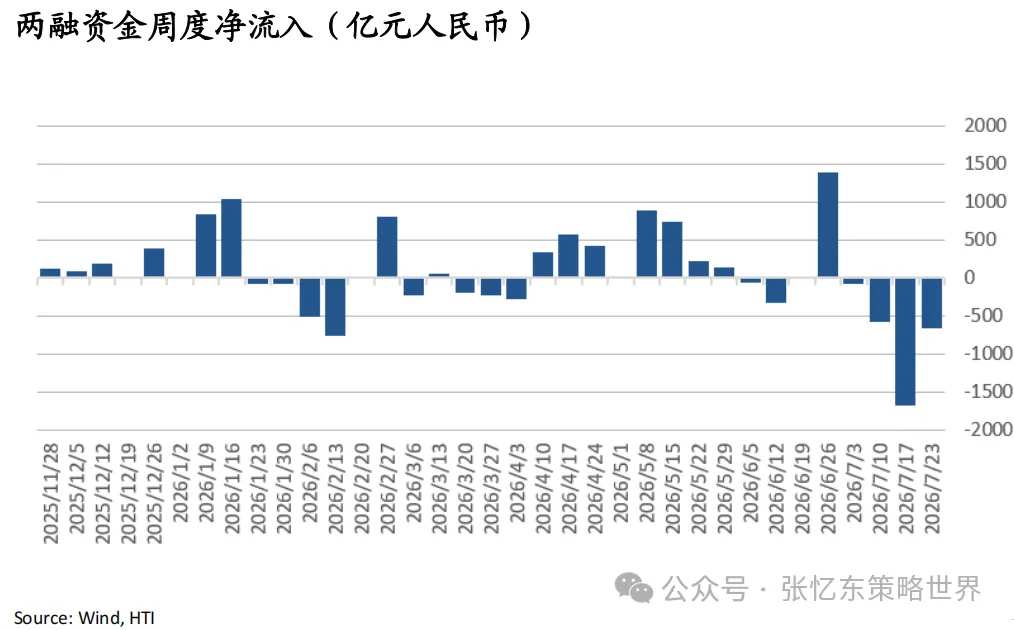
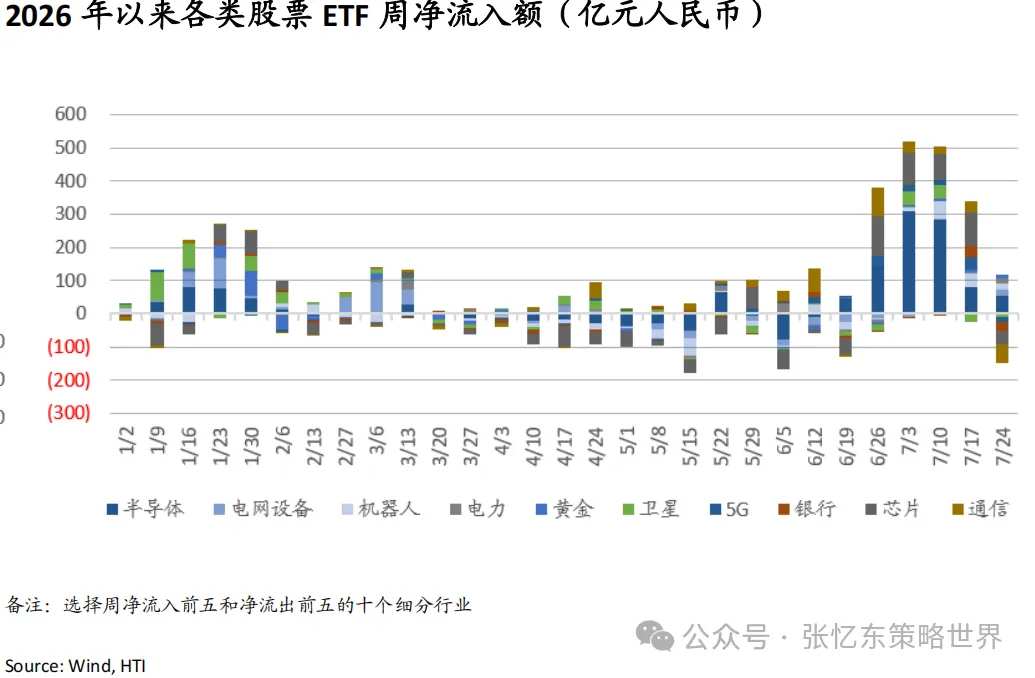
A-share Market: From July 20–23, margin trading funds recorded a net outflow of RMB 66.7 billion. On the ETF front, broad-based ETFs saw substantial net inflows of RMB 53.3 billion last week, while sector-specific ETFs continued to register net inflows of RMB 1.5 billion: semiconductor, power grid equipment, robotics, power, and gold ETFs saw net inflows, whereas satellite, 5G, banking, chip, and communications ETFs experienced net outflows.
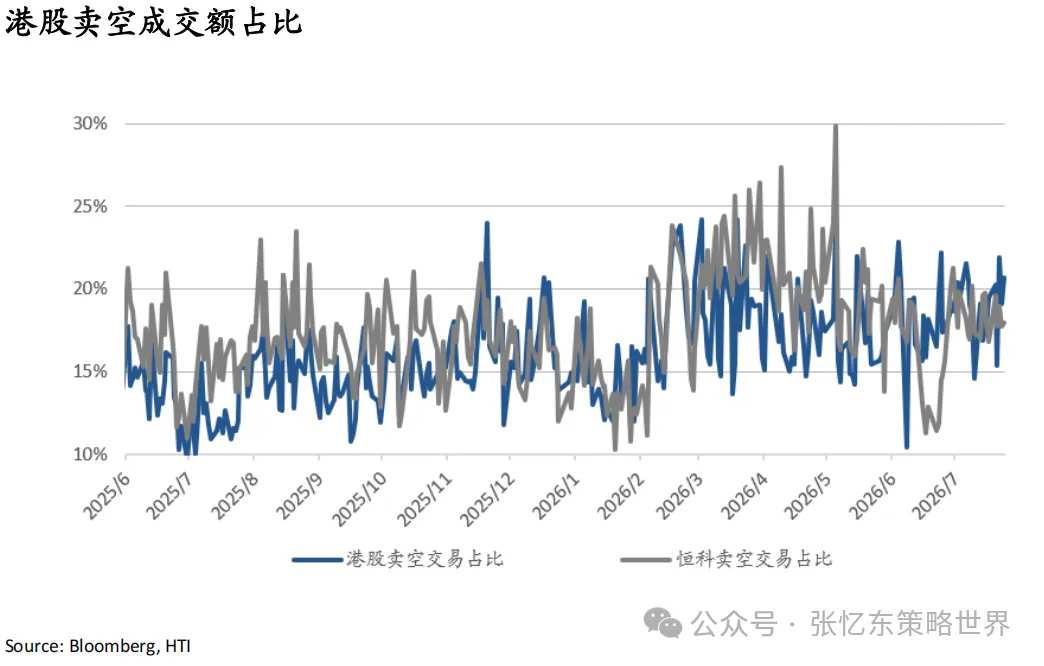
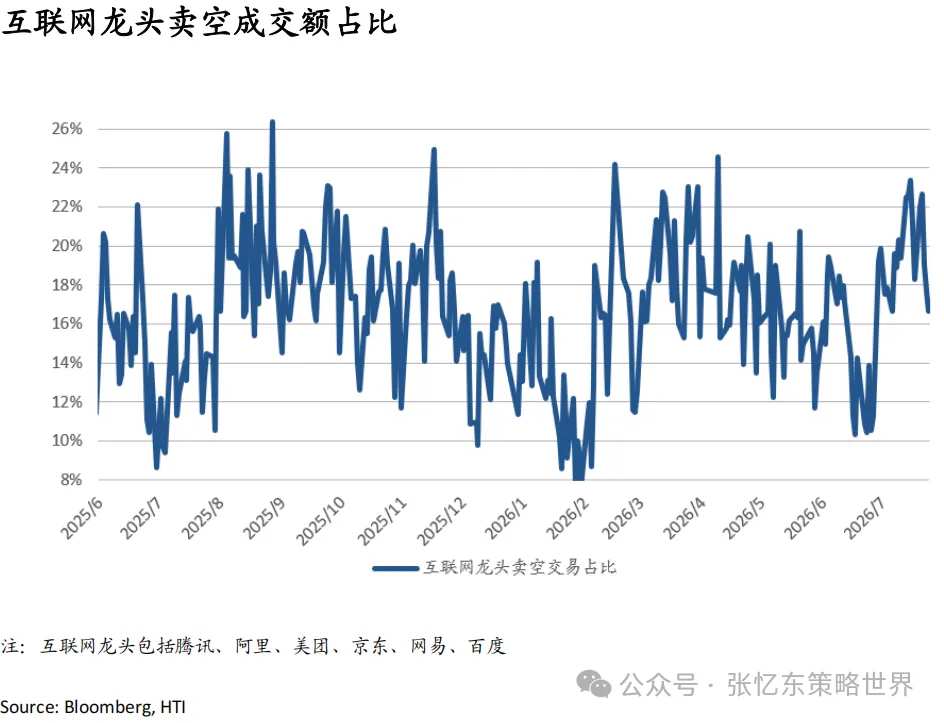
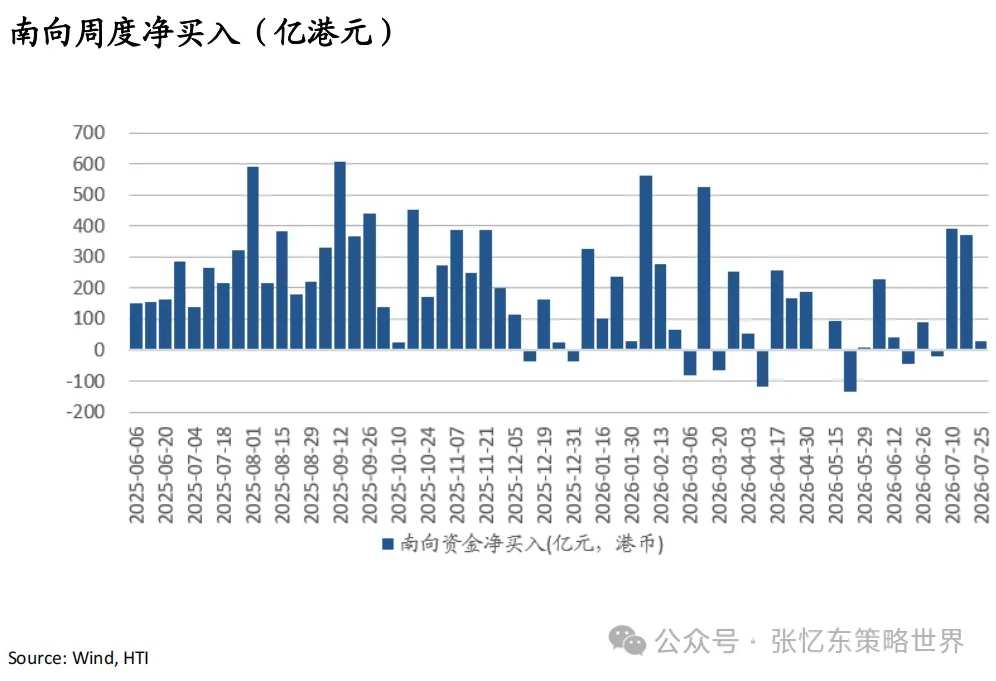
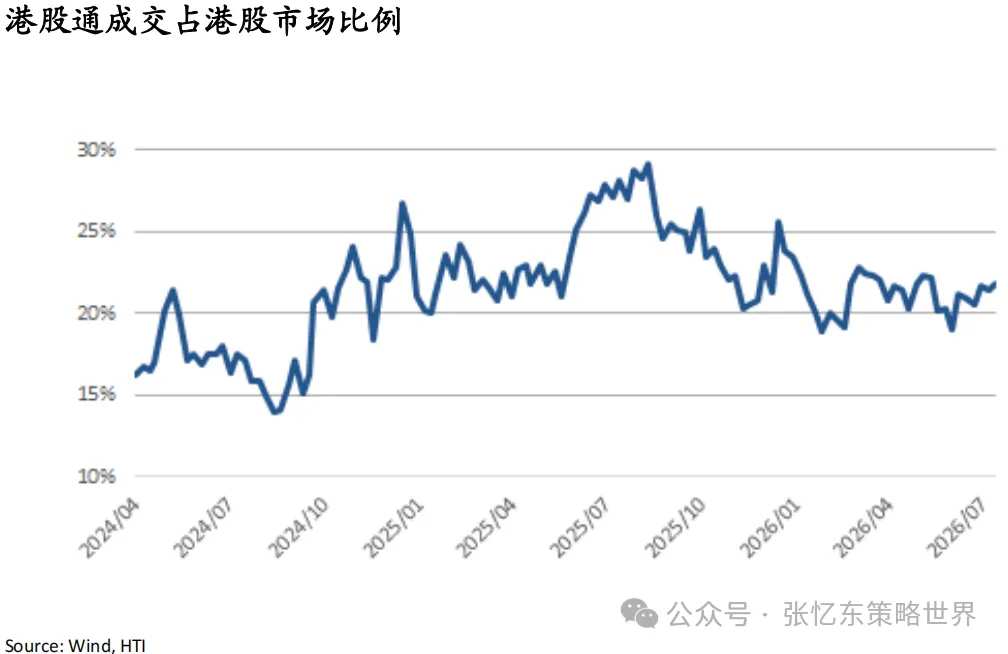
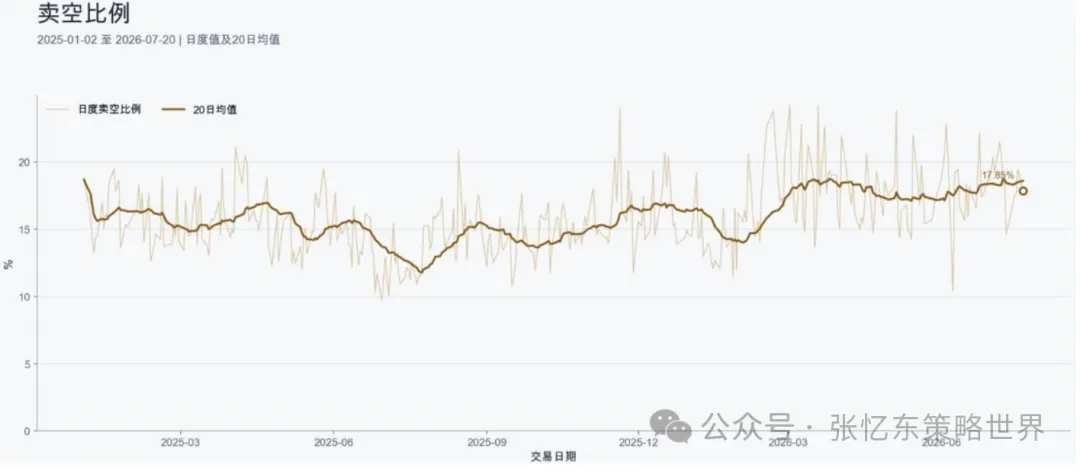
In the Hong Kong market, the overall short-selling turnover ratio rose to 21%, with the Hang Seng Tech Index short-selling ratio climbing to 18%. Southbound capital flows slowed markedly last week, with net inflows totaling HK$3.0 billion, while their share of total turnover rose to 21.8%. Notably, Zhipu AI continued to see net inflows of HK$2.5 billion; Hua Hong Semiconductor and SMIC turned to net inflows of HK$3.3 billion and HK$0.5 billion, respectively; meanwhile, Alibaba and Tencent shifted to net outflows of HK$5.2 billion and HK$6.4 billion, respectively. At the sector level, from July 16–22, capital inflows into the information technology sector contracted sharply, while metals, energy, and innovative pharmaceuticals registered significant net inflows—with the metals sector seeing substantial inflows for three consecutive weeks. E-commerce, insurance, and telecommunications services posted net outflows.
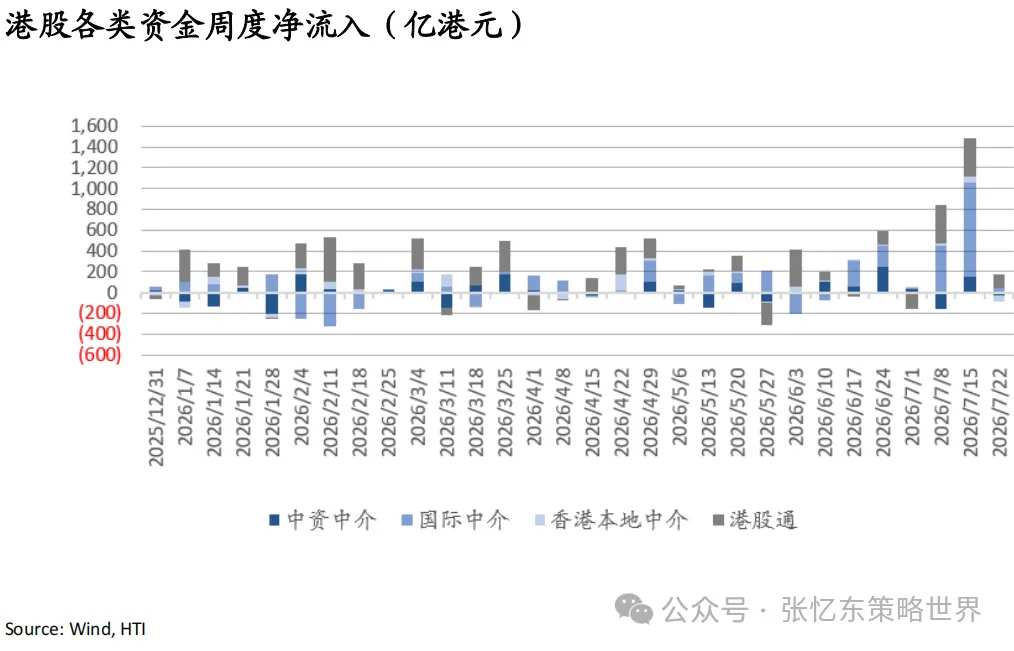
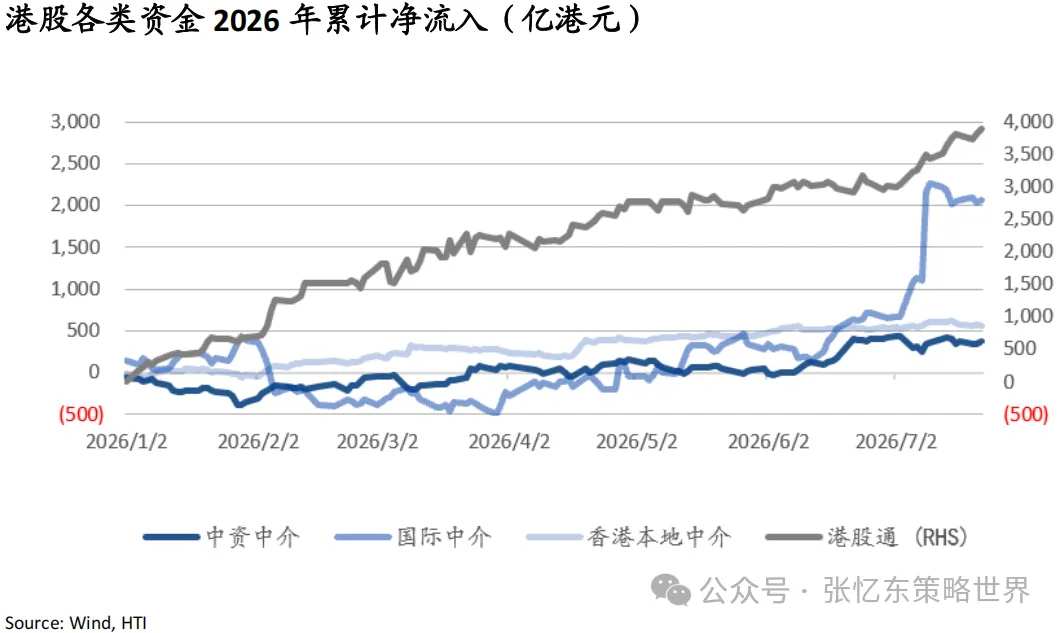
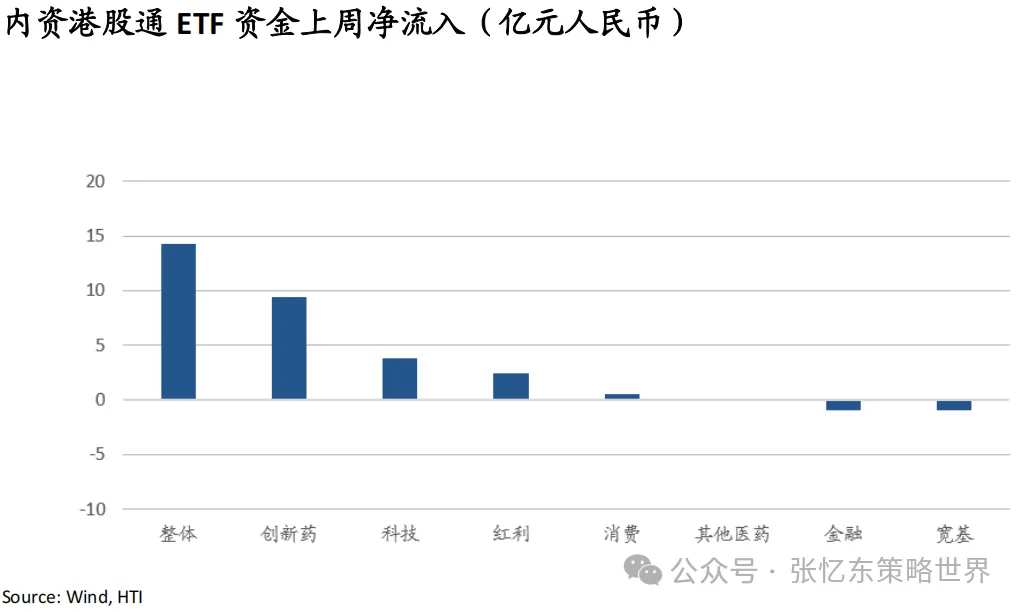
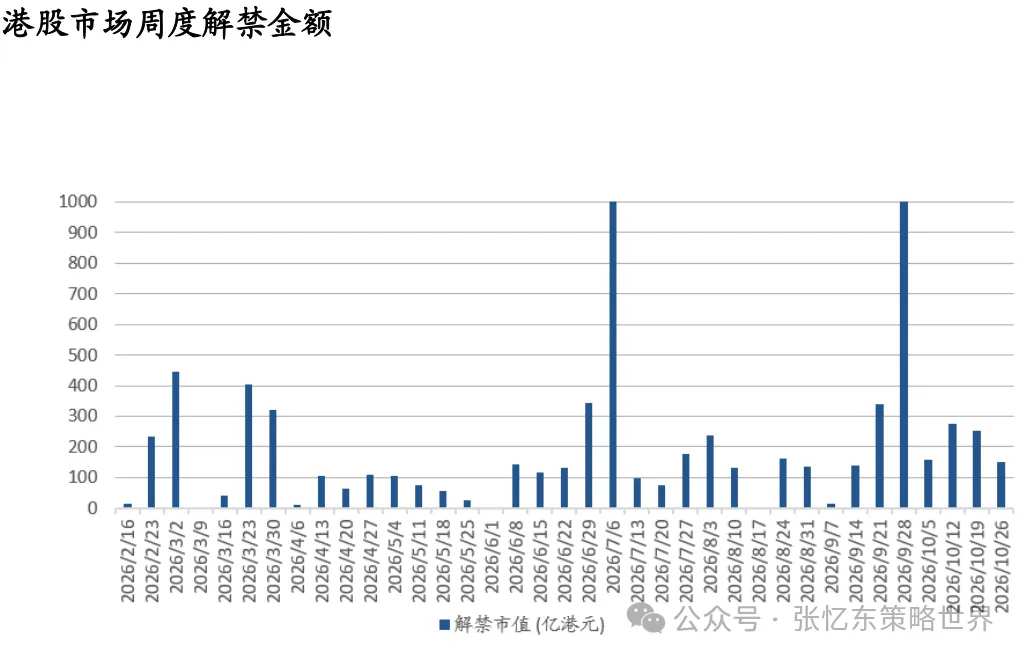
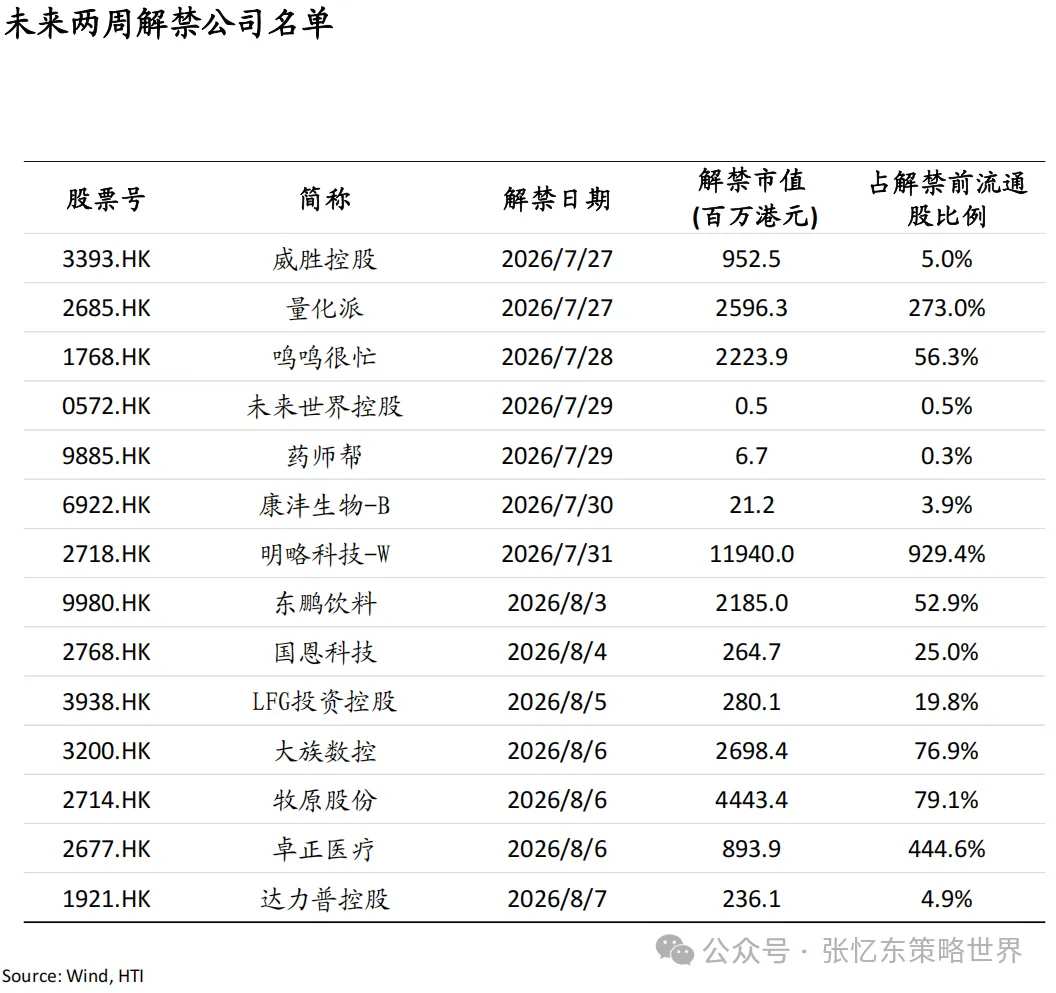
Last week (July 16–22), foreign investors in the Hong Kong market sustained net inflows of HK$4.8 billion, while Hong Kong-based intermediaries turned to net outflows of HK$6.1 billion and mainland China-based intermediaries recorded net outflows of HK$2.7 billion. Mainland investors via the Stock Connect ETF channel continued net inflows of RMB 1.4 billion, with innovative pharma, technology, high-dividend, and consumer sectors seeing inflows, while financials and broad-based ETFs saw outflows. Last week’s market-wide share lock-up expirations amounted to HK$7.5 billion, with HK$17.7 billion expected this week.
II. Highlights of Key Research Reports
Overseas TMT:
Google Frozen v2: Deeper Co-optimization of Models and Chips Shifts the Inference Competition — Barney Yao
WAIC 2026 Coverage: Super Nodes Emerge as Compute Core; Domestic AI Hardware Accelerates Breakthroughs — Kunyu Liu
Overseas Energy Technology
Adjustment of Consumption Tax in the Battery Industry: Policy Phase-out Accelerates Market Consolidation, While Technological Iteration Opens Growth Potential — Baiqiao Xu
Overseas Advanced Manufacturing
U.S. Space Force Contract Values Increase, Boosting Order Elasticity for Rocket Companies — Ziyi Chen
Overseas Consumer
Overseas Field Research Series – Central Asia: Kazakhstan Accelerates Capital Market Opening, with Fintech and Resource Endowments Creating Cross-border Collaboration Opportunities — Yuanyuan Kou
III. Daily Chart Series
• Multiple indicators show marginal improvement, with Hong Kong equities continuing to recover
• Short-term selling pressure in Korea has eased; focus shifts to potential active deleveraging shocks driven by August policy actions
• Deleveraging accelerates in U.S. tech trades: leveraged tech ETF assets decline, and net short positioning in the Nasdaq reaches extreme levels
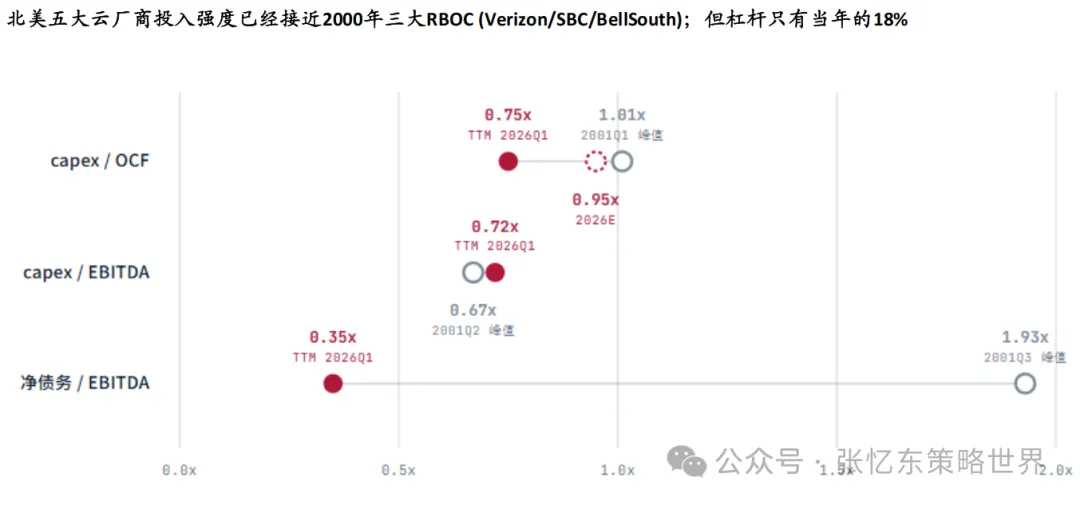
• Compared to 2000: cloud providers’ investment intensity is approaching similar levels, but leverage remains significantly lower
• Real yield shocks in U.S. Treasuries intensify, yet active portfolio managers maintain elevated positions
Risk Factors: Escalating geopolitical risks in the Middle East, rising expectations of U.S. rate hikes, and greater-than-expected deleveraging shocks in Korean markets
I. Key Data and Market Outlook Updates
Last week, the U.S.-Iran conflict escalated further, with hostilities spreading from the Strait of Hormuz to the Red Sea. Concerns over energy supply pushed oil prices higher, with Brent crude rising 10.6% for the week to close at $92.82 per barrel. Precious metals rebounded, with London gold gaining 0.85% to close at $4,052.60 per ounce, and London silver rising 4.06% to $58.18 per ounce.
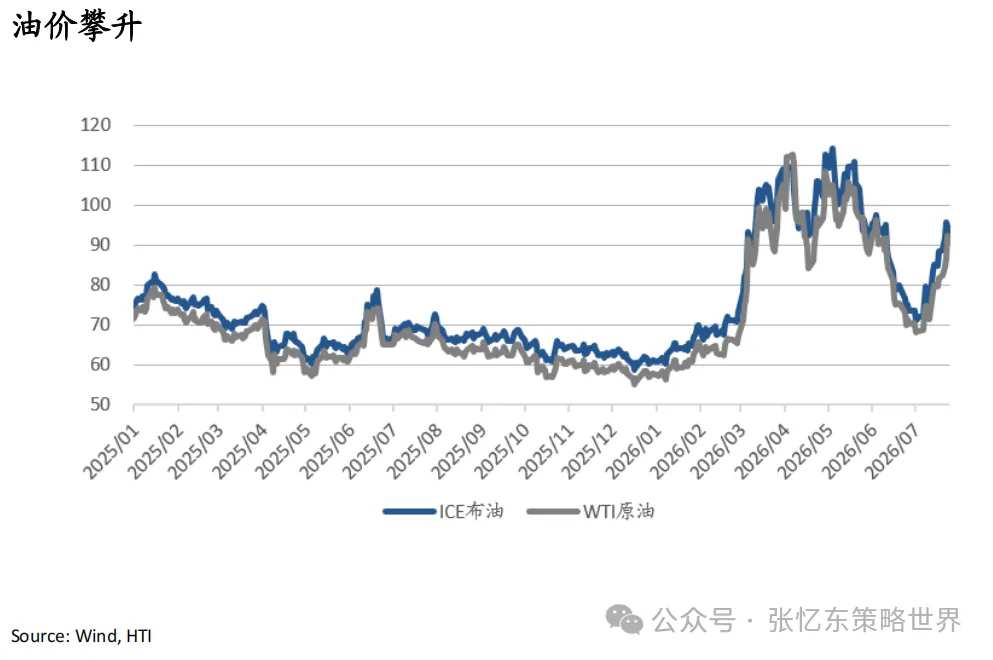
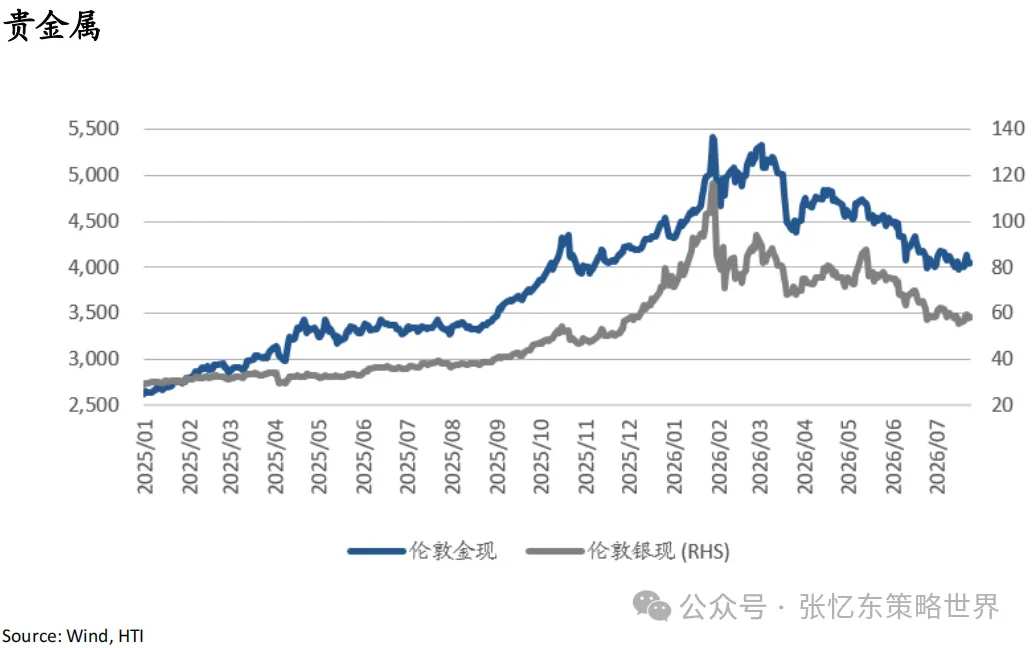
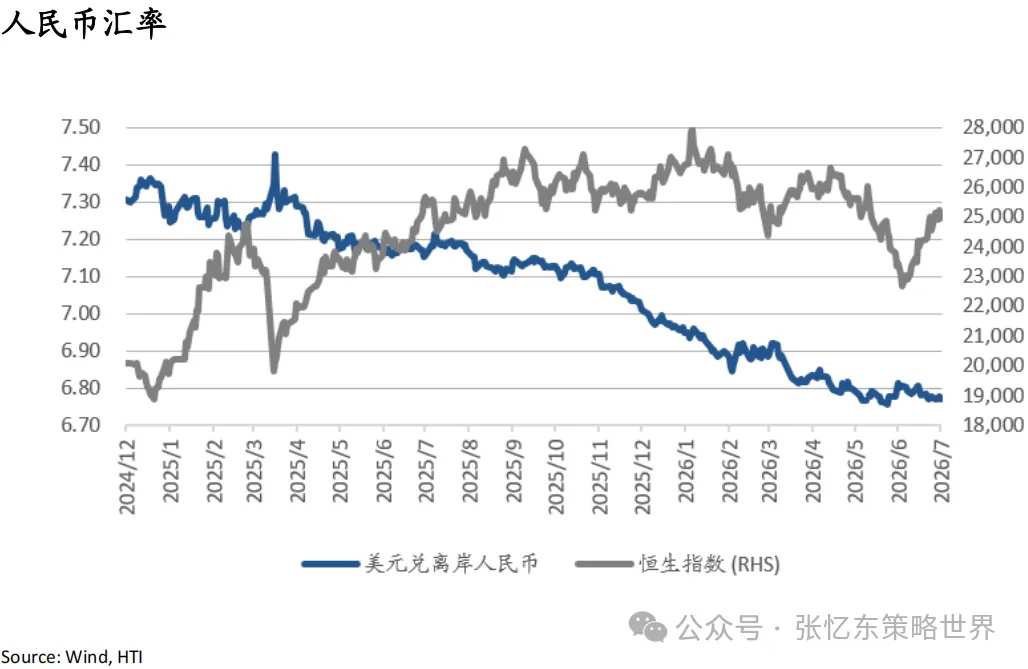
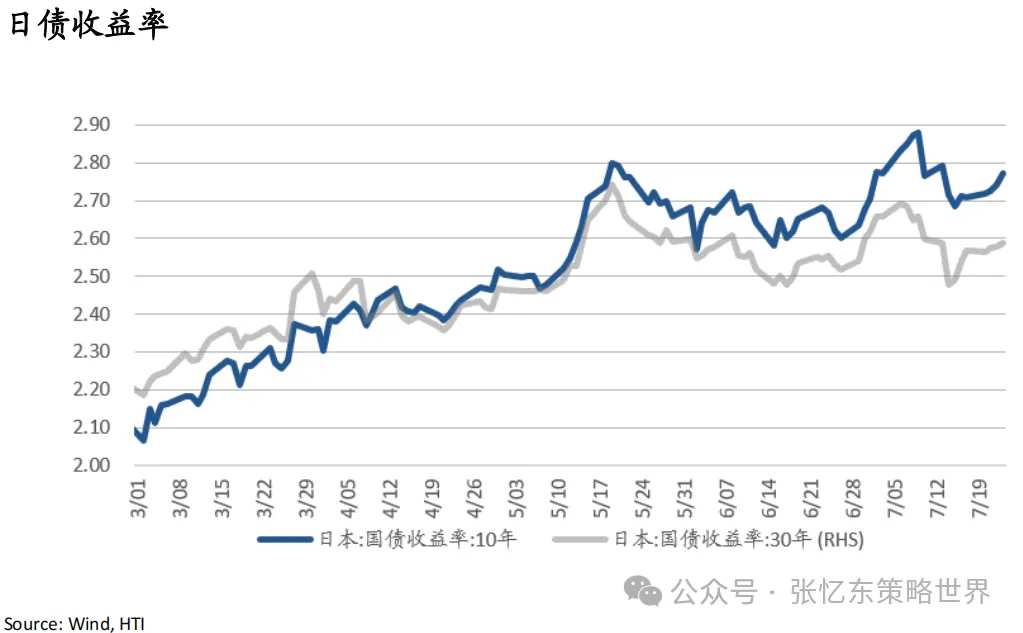
Last week’s surge in oil prices reignited inflation concerns, prompting the market to significantly revise upward its interest rate hike expectations. Markets now price in nearly two rate hikes this year, with the probability of a Fed rate hike at next week’s FOMC meeting rising to 38%. The dollar gained modest support and rose slightly, closing near 101.5. Heightened rate hike expectations triggered broad-based selling in U.S. Treasuries: the 10-year yield rose 13.16 basis points (bp) for the week to 4.681%, marking a new high since Trump 2.0 took office; the 2-year yield climbed 16.46 bp to 4.339%. Japan’s 10-year government bond yield increased by 6.4 bp to 2.77%.
Last week (July 20–23), net outflows from margin financing and securities lending in China’s A-share market amounted to RMB 66.7 billion. On the ETF front, broad-based ETFs recorded significant net inflows of RMB 53.3 billion, while sector ETFs continued to see net inflows of RMB 1.5 billion: semiconductors, power grid equipment, robotics, utilities, and gold attracted net inflows of RMB 5.3 billion, RMB 1.9 billion, RMB 1.7 billion, RMB 1.6 billion, and RMB 1.2 billion, respectively; satellite, 5G, banks, chips, and telecommunications saw net outflows of RMB 0.8 billion, RMB 1.8 billion, RMB 2.6 billion, RMB 4.2 billion, and RMB 5.7 billion, respectively.
The proportion of short-selling turnover in the Hong Kong stock market rose to 21% overall, with the Hang Seng Tech Index’s short-selling share increasing to 18%, while that of major internet companies declined to 17%. At the individual stock level, Meituan, JD.com, and NetEase saw their short-selling turnover ratios rise to 23.9%, 37.1%, and 45.3% respectively from the previous week, corresponding to rolling one-year percentiles of 65.5%, 92.1%, and 99.2%. Tencent, Alibaba, and Baidu saw their short-selling turnover ratios decline to 12.6%, 14.2%, and 26.9% respectively, with corresponding rolling one-year percentiles of 45.2%, 36.5%, and 39.7%.
Last week, southbound capital inflows slowed markedly to HKD 3.0 billion, with their share of total turnover rising to 21.8%. Among individual stocks, Zhipu AI continued to see net inflows of HKD 2.5 billion, while Hua Hong Semiconductor and SMIC turned to net inflows of HKD 3.3 billion and HKD 0.5 billion, respectively. Conversely, Alibaba and Tencent recorded net outflows of HKD 5.2 billion and HKD 6.4 billion, respectively. At the sector level, between July 16 and July 22, capital inflows into the information technology sector contracted sharply, while metals, energy, and innovative pharmaceuticals registered notable net inflows—metals have now seen substantial inflows for three consecutive weeks. E-commerce, insurance, and communication services sectors posted net outflows.
From the perspective of funding sources for Hong Kong equities, last week (July 16–22) foreign investors continued net inflows of HKD 4.8 billion, bringing year-to-date cumulative net inflows to HKD 205.8 billion. Hong Kong-based intermediaries shifted to net outflows of HKD 6.1 billion, though year-to-date they remain net positive at HKD 55.4 billion. Mainland Chinese intermediaries also turned to net outflows of HKD 2.7 billion, with year-to-date net inflows totaling HKD 37.8 billion.
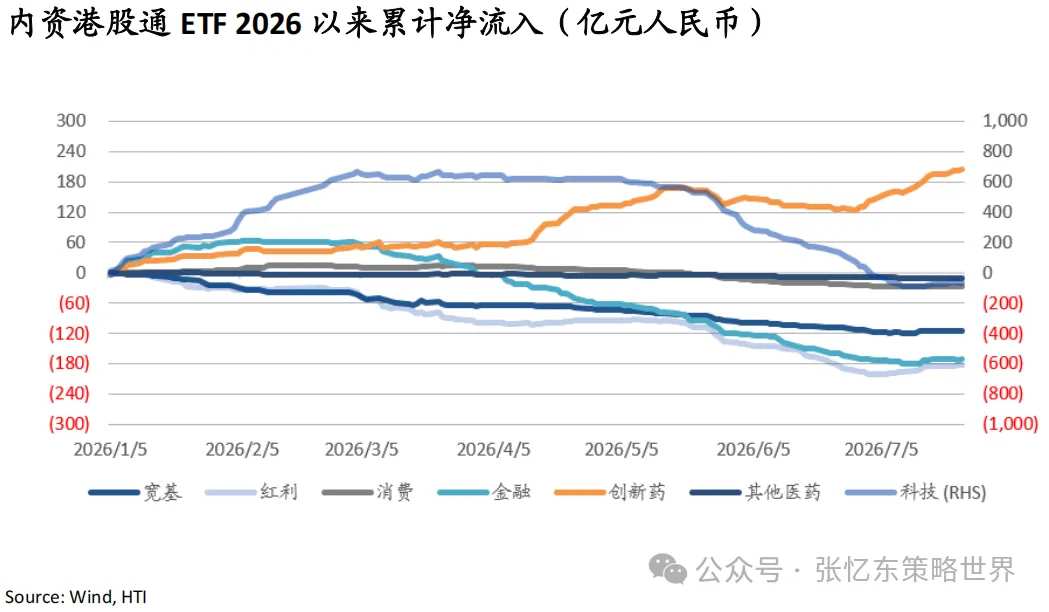
Mainland China–based Hong Kong Stock Connect ETFs continued net inflows of RMB 1.4 billion, with innovative pharmaceuticals, technology, dividend-focused, and consumer sectors attracting inflows of RMB 0.9 billion, RMB 0.4 billion, RMB 0.3 billion, and RMB 0.1 billion, respectively; financials and broad-based ETFs each recorded outflows of RMB 0.1 billion. Since the beginning of 2026, the overall market has seen cumulative net outflows of RMB 37.1 billion, with broad-based, technology, dividend-focused, consumer, and financial sectors recording cumulative net outflows of RMB 11.6 billion, RMB 7.0 billion, RMB 18.2 billion, RMB 2.6 billion, and RMB 17.2 billion, respectively, while the innovative pharmaceuticals sector has recorded cumulative net inflows of RMB 20.5 billion.
Last week, the market value of expiring lock-up shares in the Hong Kong market reached HKD 7.5 billion, with an estimated HKD 17.7 billion expected to expire this week. Since the beginning of 2026, the cumulative value of expiring lock-up shares in the Hong Kong market has totaled HKD 523.2 billion.
II. Highlights of Key Research Reports
Overseas TMT
Google Frozen v2: Deeper Co-optimization of Models and Chips Shifts the Inference Competition — Barney Yao
– Google is developing the Frozen v2 server AI chip, aiming to integrate certain elements of its Gemini models directly into hardware. Deployment is expected as early as 2028, with the chip intended to complement rather than replace TPUs.
– Core innovation lies in defining chips around specific models, hardwiring relatively static architectures and execution paths to reduce reliance on general-purpose instructions, runtime scheduling, and data movement.
– The next step to address the 'memory wall': TPU 8i has increased SRAM to 384 MB and HBM to 288 GB; Frozen v2 further narrows the optimization boundary down to Gemini.
– Static estimates suggest a 6–10x improvement in tokens per watt could reduce chip power consumption by 83%–90%, saving approximately $21.5–23.2 million annually in electricity costs for a 100 MW cluster, with potentially even greater value from deferred capital expenditures.
– Near-term GPU/TPU procurement plans remain unchanged; however, over the medium to long term, NVIDIA’s market share in the decode phase of mature models may be eroded by CSP-developed solutions and model-specific ASICs.
WAIC 2026 Coverage: Super Nodes Emerge as Compute Core; Domestic AI Hardware Accelerates Breakthroughs — Kunyu Liu
– WAIC 2026 opened in Shanghai under the theme 'Intelligent Partners, Co-Creating the Future,' featuring numerous real-world demonstrations of system-level super-node clusters, marking a new phase in domestic compute competition.
– Domestic chipmakers showcased super-node solutions en masse: Biren’s Blink 2.0 supports up to 1,024 GPUs, Moore Threads’ MTT C256 exceeds 64 GPUs, and MetaX’s XiJing S600 scales to tens of thousands of GPUs.
– Server and infrastructure vendors addressed delivery and cooling challenges: Sugon’s 8000-series supports 100,000-GPU clusters; Inspur’s single-rack solution accommodates 128 GPUs with a PUE as low as 1.06; Huawei debuted its Atlas 950 hardware for the first time.
– Supporting technologies are also being deployed: Lightelligence’s LightSphere optical interconnect is commercially operational at 2,000 GPUs; Dongfang Computing’s TY64 and Qingwei Intelligence’s switchless 4,096-chip super-node are now available.
– Competitive focus has shifted from per-chip compute performance to interconnect topology and system stability, extending investment themes beyond chip substitution to include optical modules, switching chips, connectors, and other system-level upgrades.
Overseas Energy Technology
Adjustment of Consumption Tax in the Battery Industry: Policy Phase-out Accelerates Market Consolidation, While Technological Iteration Opens Growth Potential — Baiqiao Xu
– On July 17, three ministries clarified that mature energy storage products such as lithium-ion batteries will be subject to a 2% consumption tax starting September 2026, reverting to 4% in 2027; photovoltaic cells will be taxed starting April 2027. – Sodium-ion, solid-state, hydrogen fuel, and perovskite tandem batteries are fully exempt; exports and self-produced/self-used units qualify for tax exemption or credit, providing companies with a window to adjust capacity and product mix. – Demand-side impact is limited; the key lies in profit redistribution: leading firms can pass on tax burdens through pricing power and export capacity, while smaller manufacturers face margin pressure, accelerating the exit of low-end, inefficient capacity. – Three core themes: technology shift toward sodium-ion and solid-state batteries, continued industry consolidation, and accelerated global supply chain integration—leveraging export tax exemptions and vertical integration as hedging strategies. – Investment recommendations focus on two tracks: lithium battery leaders with global export capabilities and vertical integration advantages, and upstream materials and equipment suppliers for sodium-ion and solid-state technologies.
Overseas Advanced Manufacturing
U.S. Space Force Contract Values Increase, Boosting Order Elasticity for Rocket Companies — Ziyi Chen
– The ceiling for NSSL Phase 3 Lane 1 contracts has been raised from $5.6 billion to $17 billion—an increase of $11.4 billion—expanding both the mission cadence and budget pool for U.S. national security space launches.
– Lane 1 emphasizes commercial competition, requiring only one successful launch to qualify for bidding; the current pool includes seven qualified providers, with coverage extending through FY2029, offering an entry path for new players.
– Lane 2 serves as the highest-priority channel for core national defense missions; in April, its launch manifest was increased by 25 missions—from 54 to 79 over five years—with only SpaceX, ULA, and Blue Origin currently eligible.
– Rocket Lab stands to gain the most in terms of full-vehicle launch elasticity; the key catalyst is its potential to secure order share following the Neutron rocket’s maiden flight, representing a meaningful marginal addition relative to its current backlog of approximately $2.2 billion.
– The development also benefits prime contractor SpaceX (which has secured 7 out of the past 8 Lane 1 missions, totaling approximately $1.7 billion); risks include delays in rocket development and maiden flight schedules.
Overseas Consumer
Overseas Field Research Series – Central Asia: Kazakhstan Accelerates Capital Market Opening, with Fintech and Resource Endowments Creating Cross-border Collaboration Opportunities — Yuanyuan Kou
– Recently conducted on-site research on Kazakhstan’s financial infrastructure (KASE, AIX, AIFC) and leading listed resource companies to deepen understanding of Central Asian capital markets and industries.
– Foreign investor access is generally open, with a dual-platform structure emerging: “KASE for domestic pricing, AIX for cross-border financing.” In the first half of the year, KASE’s trading volume rose 57% year-over-year to USD 539.2 billion.
– AIX focuses on cross-border financing, with over 110 new listings expected by 2025; it is currently exploring a depository link with Hong Kong, with Jiaxin International serving as a dual-listing pilot case.
– Differentiated fintech landscape: Kaspi has 15.7 million monthly active users (76.6% of the national population); Freedom builds an integrated ecosystem based on brokerage services and is investing in AI and data centers.
– Energy and aviation form the medium- to long-term strategic focus: KMG’s three major projects underpin an integrated system, and Air Astana plans to expand its fleet from 67 to 86 aircraft by 2030.
III. Daily Chart Series
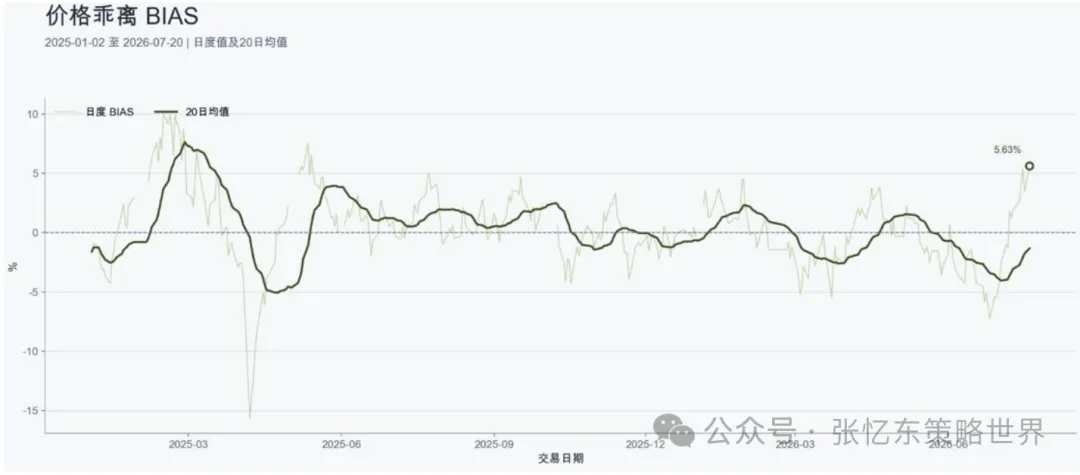
Multiple Indicators Show Marginal Improvement; Hong Kong Equities Continue to Rebound
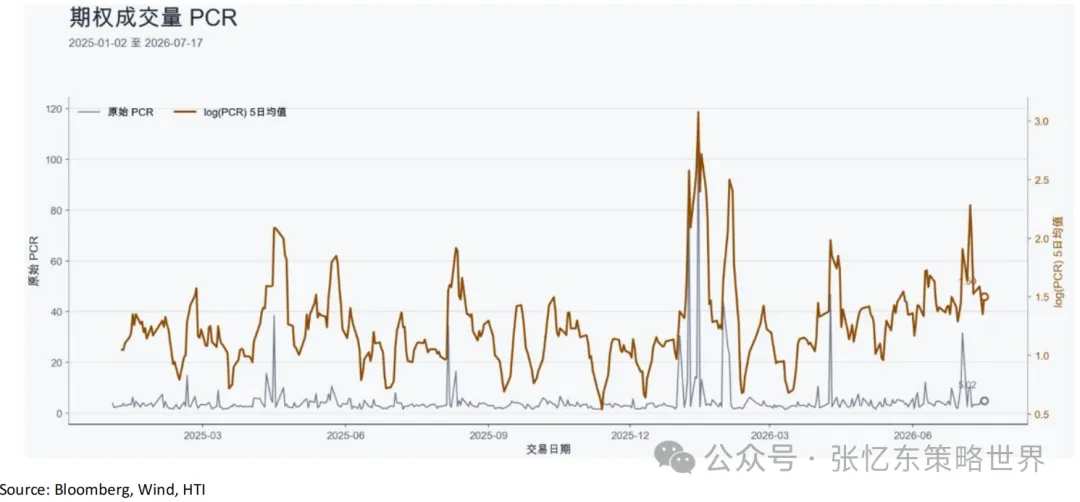
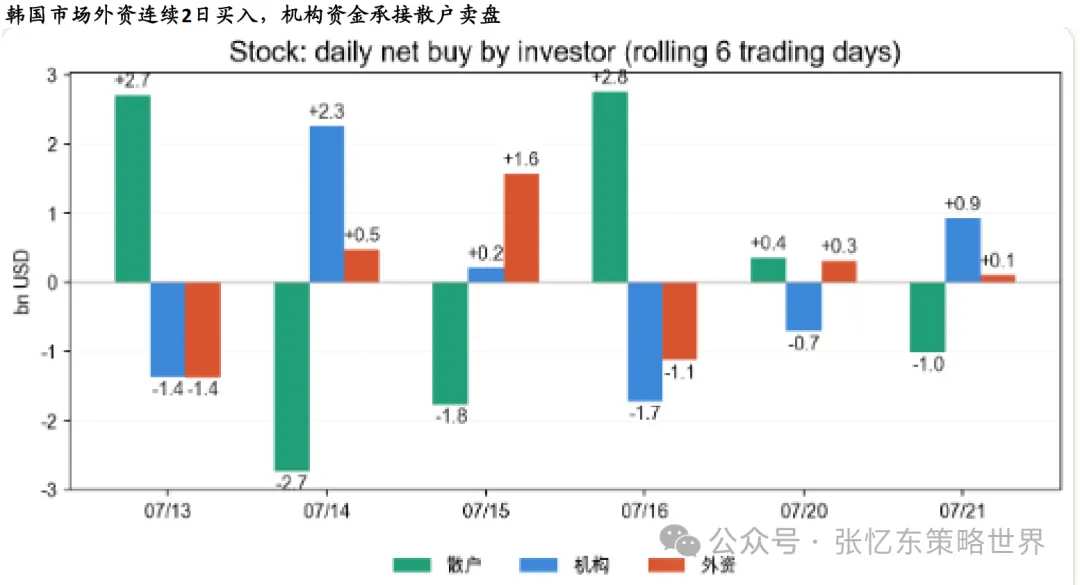
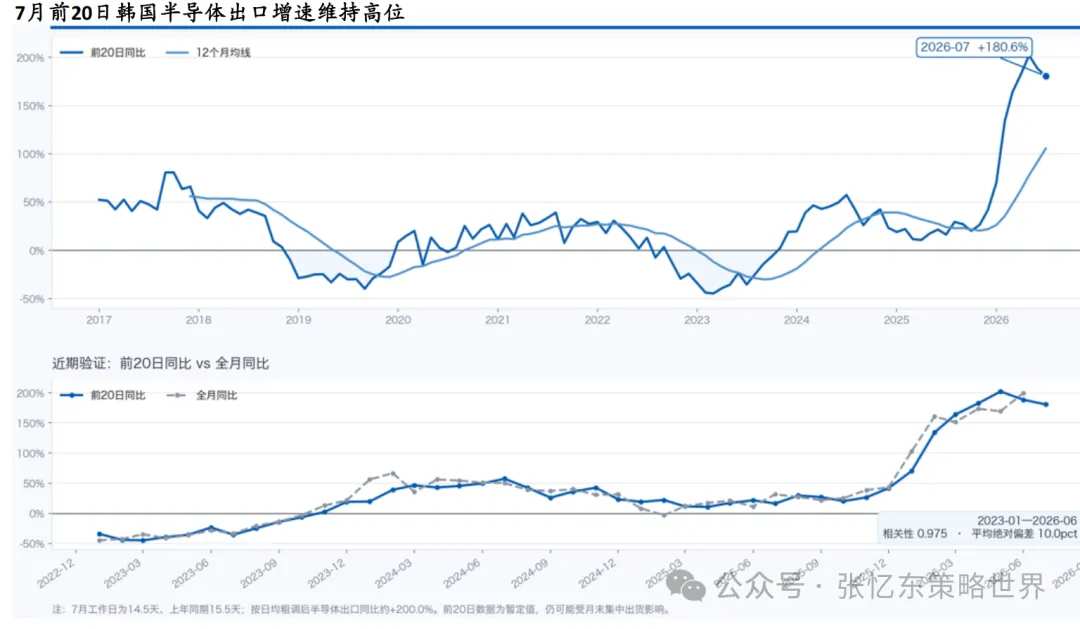
Near-term selling pressure in South Korea has eased; next phase focus shifts to policy-driven deleveraging shocks expected in August
Deleveraging in U.S. tech trades accelerates: Tech leverage ETF assets decline, and net short positions in the Nasdaq reach extreme levels
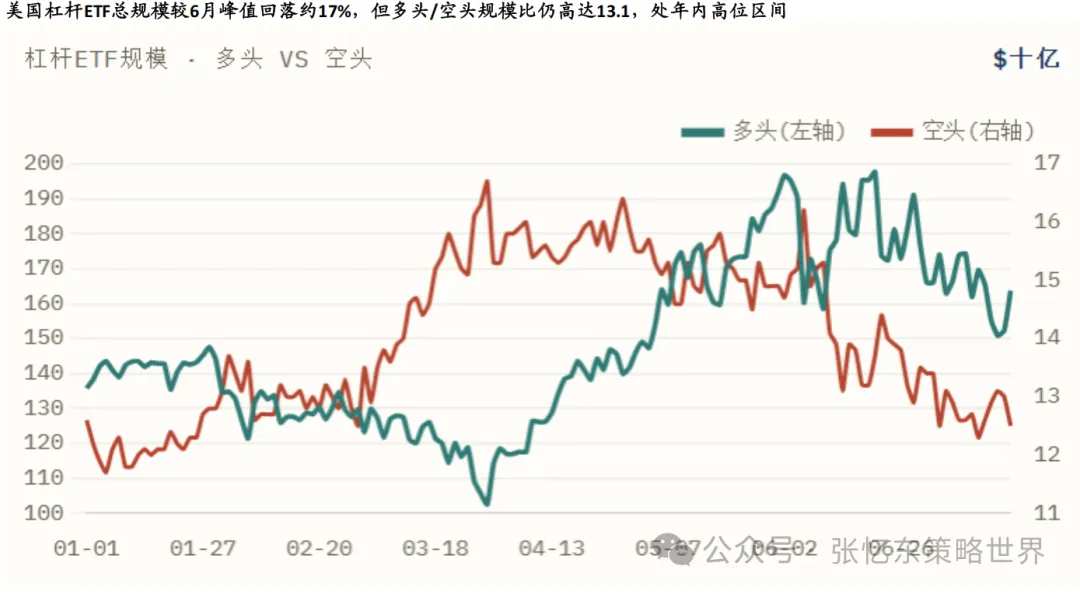
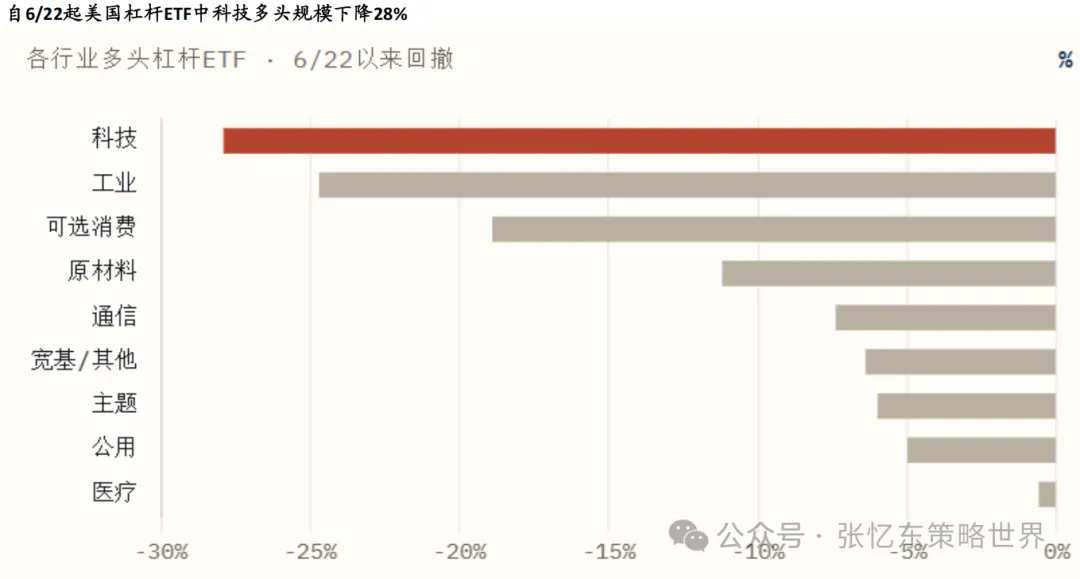
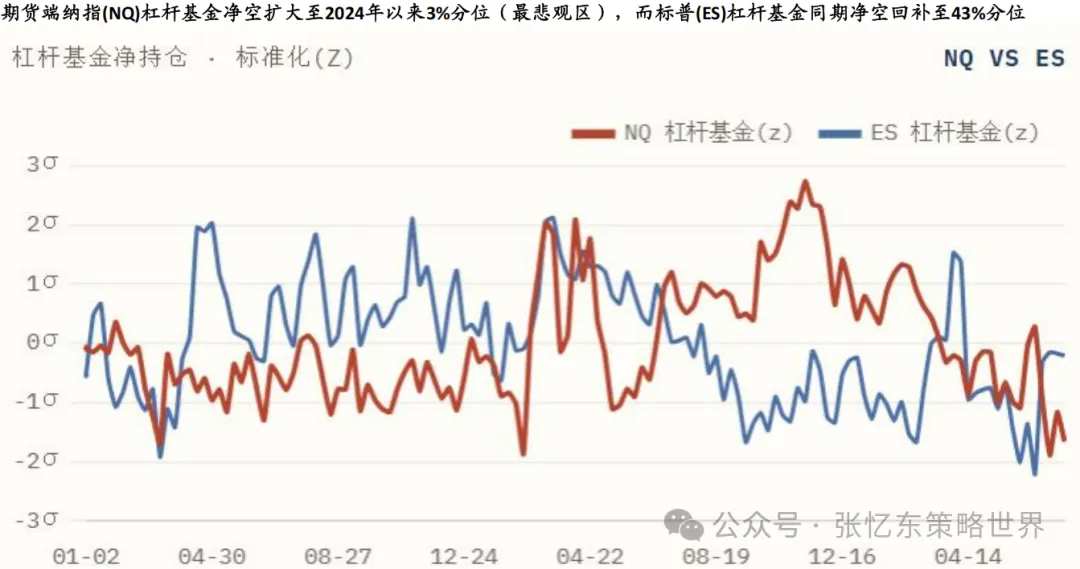
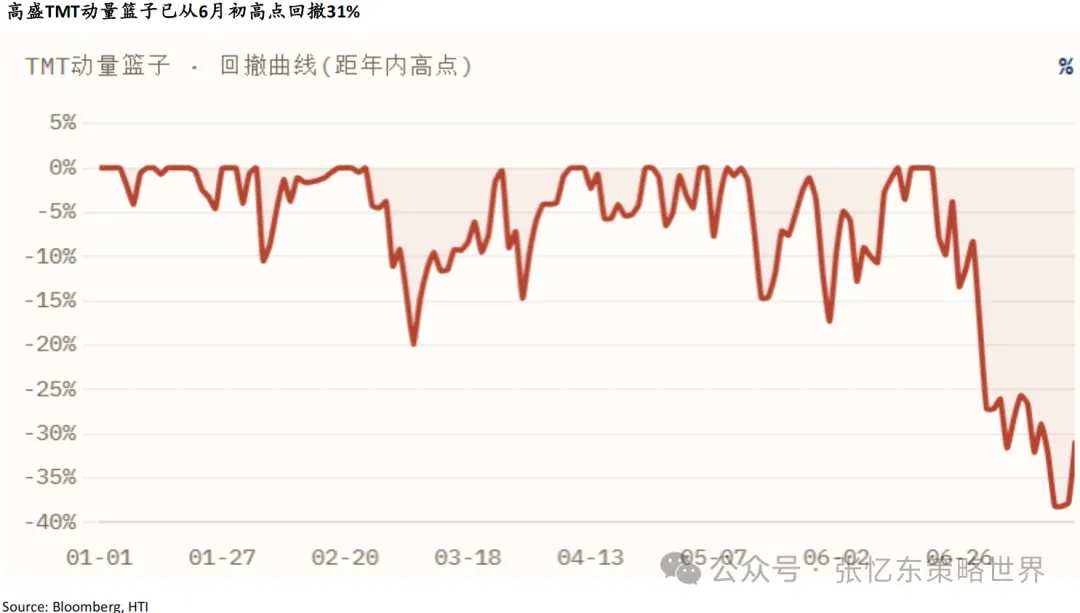
Compared to 2000: Cloud providers’ investment intensity is now similar, but leverage levels are significantly lower
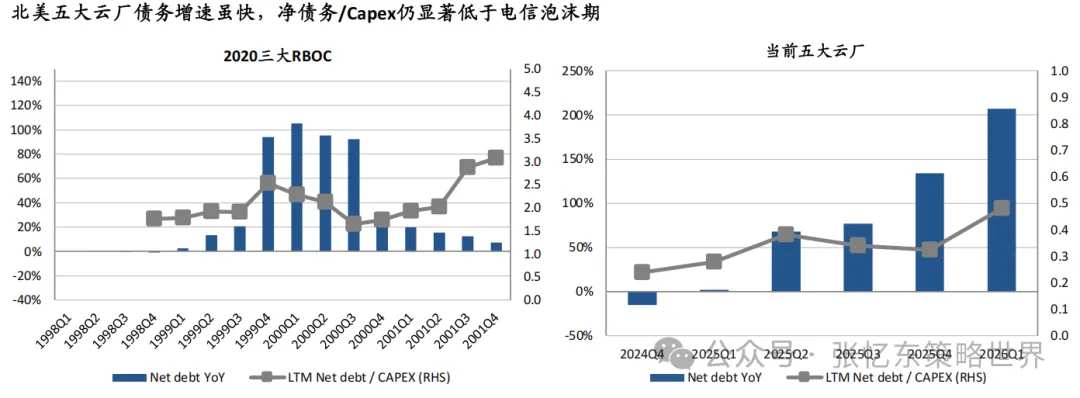
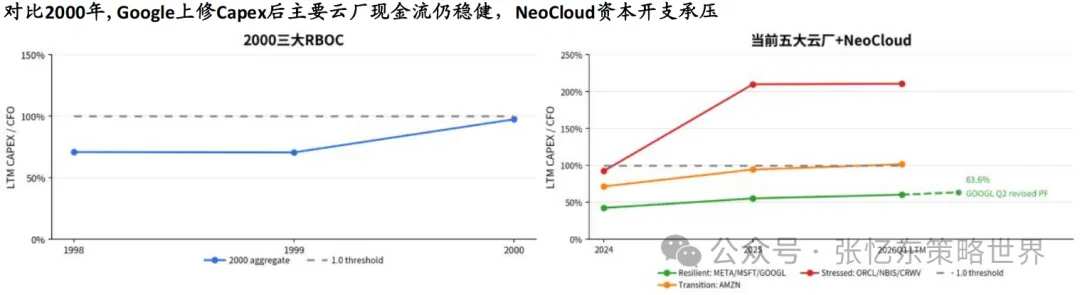
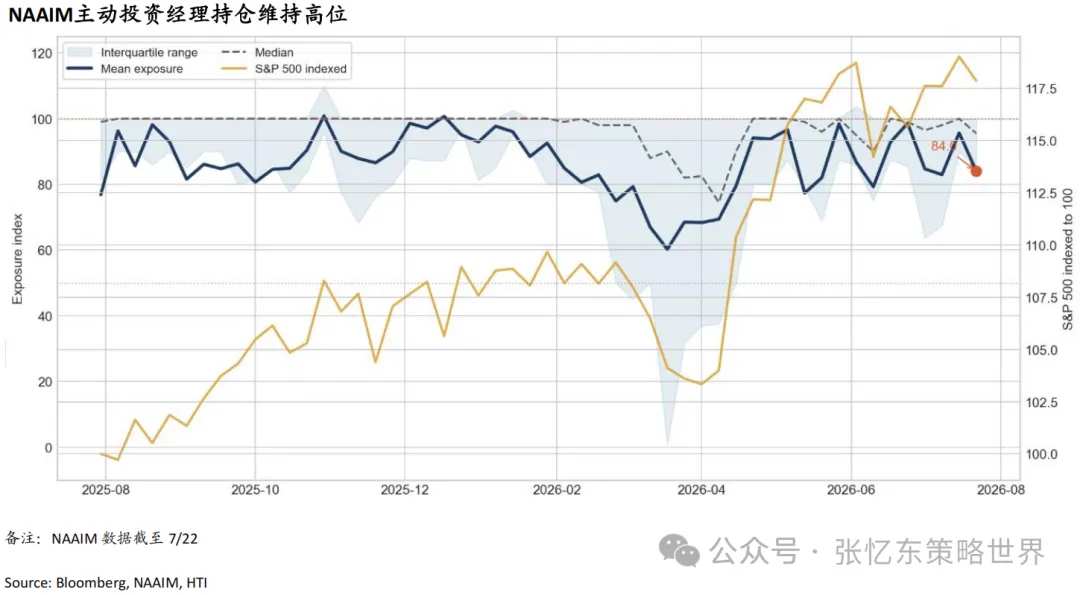
Real interest rate pressure from U.S. Treasuries intensifies, yet active fund managers maintain high portfolio allocations
Risk Factors: Escalating geopolitical risks in the Middle East, rising expectations of U.S. rate hikes, and greater-than-expected deleveraging shocks in Korean markets
Editor/melody