Market Snapshot
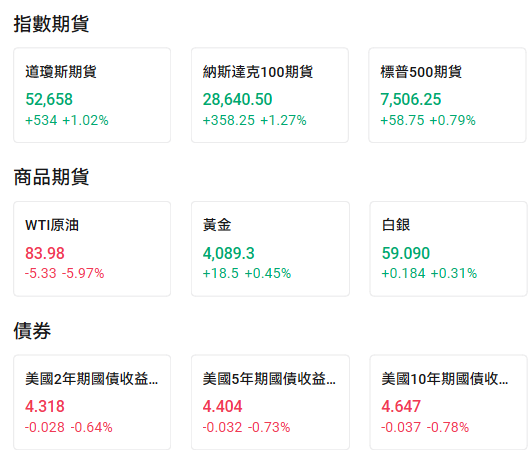
Before the market opened on Monday, all three major U.S. equity index futures rose. As of the time of writing, Dow Jones Industrial Average futures were up 1.02%, Nasdaq 100 futures gained 1.27%, and S&P 500 futures increased by 0.79%.
The temporary halt in mutual airstrikes between the U.S. and Iran significantly eased market risk aversion, sending oil prices sharply lower. Brent crude plunged as much as 8.8% to $88.30 per barrel; spot gold rose approximately 0.5% to $4,090 per ounce, the U.S. Dollar Index declined about 0.2%, and the yield on the 10-year U.S. Treasury note retreated to around 4.64%.
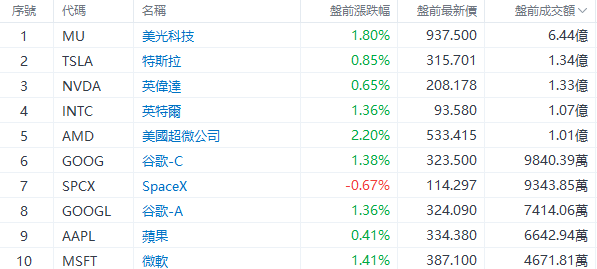
$Star Tech Stocks (LIST2518.US)$Most stocks rose in pre-market trading, with AMD up over 2%, Micron Technology up nearly 2%, and Intel, Google, and Microsoft each gaining more than 1%. SpaceX declined.
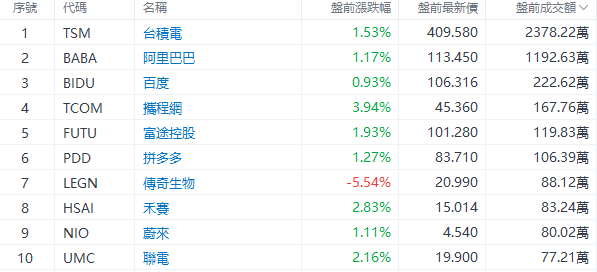
 $Popular Chinese ADRs (LIST2517.US)$Broad gains were seen in pre-market trading, with Hesai rising nearly 3%, Ctrip up almost 4%, and Alibaba climbing over 1%.
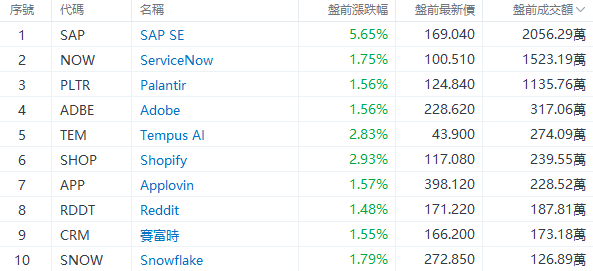
$AI Application Software Stocks (LIST23492.US)$Widespread gains occurred in pre-market trading, with SAP surging over 5%, and ServiceNow and Adobe each rising more than 1%.
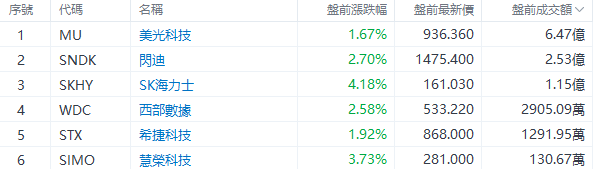
$Storage Concept (LIST23925.US)$ Broad gains were observed, with SK Hynix rising over 4% and SanDisk up nearly 3%.
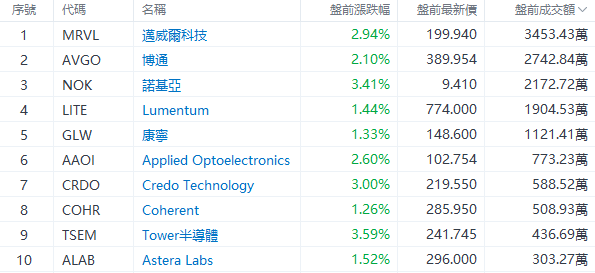
$Optical Communications (LIST23979.US)$ Most stocks in the sector rose, with Marvell Technology up nearly 3% and Broadcom gaining over 2%.
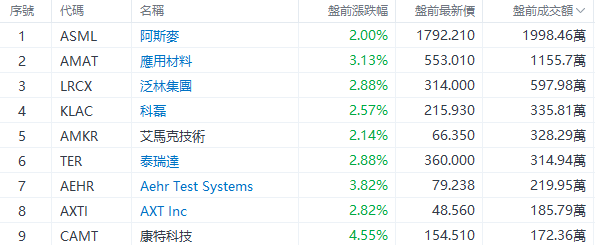
$Semiconductor Equipment and Materials (LIST2016.US)$ Stocks moved higher, with Applied Materials rising over 3%.
Individual Stock News
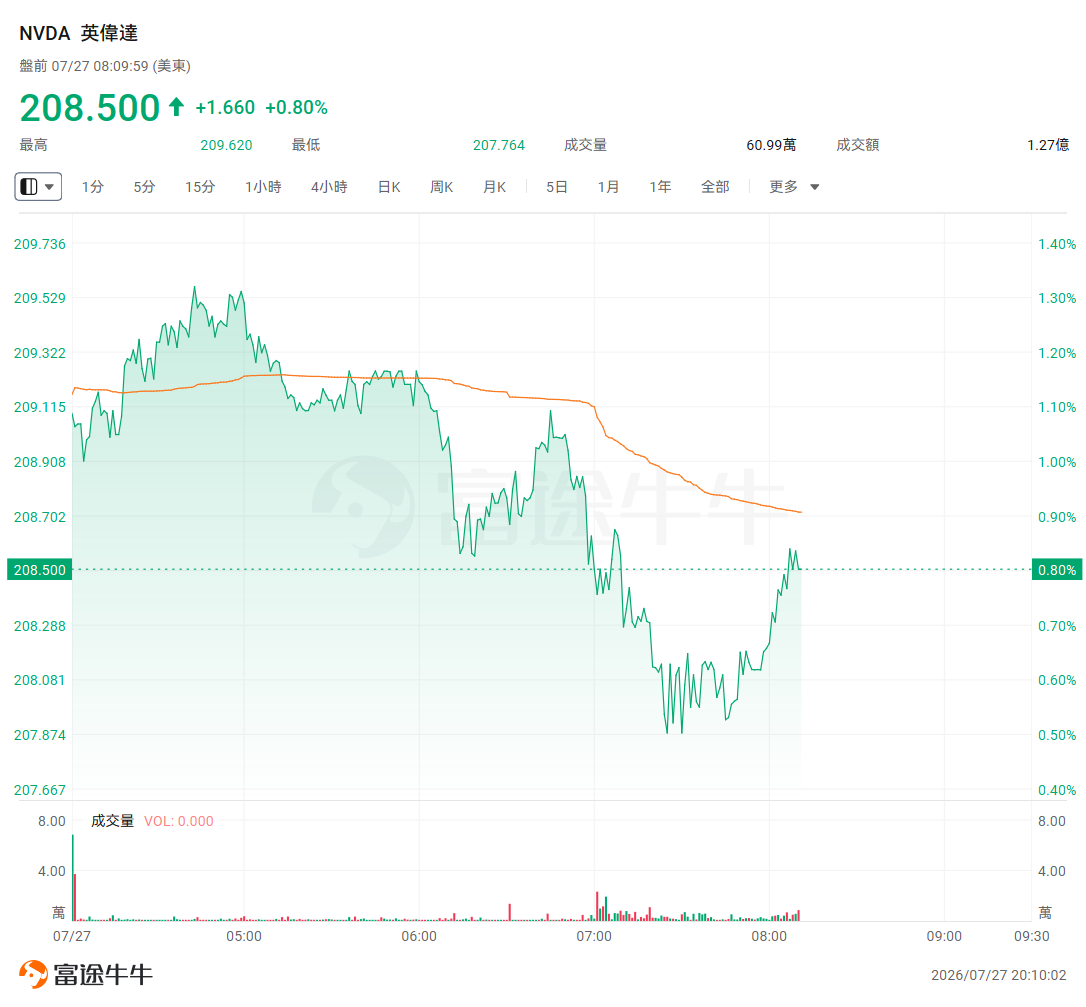
NVIDIA launched Spectrum-6, marking the dawn of a new gigawatt-era in computing power competition.
The competition in AI infrastructure is crossing a new magnitude threshold. NVIDIA (NVDA.US) It recently officially launched Spectrum-6, its next-generation Ethernet switch designed for gigawatt-scale AI factories, doubling network bandwidth compared to the previous generation, and has already secured $CoreWeave(CRWV.US)$ 、 $Microsoft (MSFT.US)$ 、 $NEBIUS(NBIS.US)$ 、 $SpaceX (SPCX.US)$ AI and $Tesla (TSLA.US)$ early adoption by leading AI infrastructure providers such as NVIDIA. Spectrum-6 is a 102.4T Ethernet switch specifically designed for NVIDIA’s Vera Rubin platform, serving as the core of the next-generation Spectrum-X Ethernet platform. As global AI factories scale to support hundreds of thousands of GPUs operating in parallel, NVIDIA positions networking as a critical determinant of overall computational output, rather than merely a connectivity layer component.
NVIDIA Reportedly Plans to Provide Approximately $250 Billion in Financing Guarantees for OpenAI Data Centers
According to The Wall Street Journal, citing informed sources, NVIDIA (NVDA.US) NVIDIA is in discussions with OpenAI to provide approximately $250 billion in financing guarantees for the latter’s lease of large-scale data centers. The project, located in southern Ohio and developed by SoftBank’s energy division, is planned to have a power capacity of 10 gigawatts (GW), with total investment potentially exceeding $500 billion. NVIDIA’s guarantee primarily covers leasing and debt financing arrangements, not direct purchases of NVIDIA chips. Separately, the two parties are also discussing a chip procurement financing arrangement of up to $350 billion. The first phase of the project, with a capacity of approximately 800 megawatts (MW), is expected to become operational in 2028.
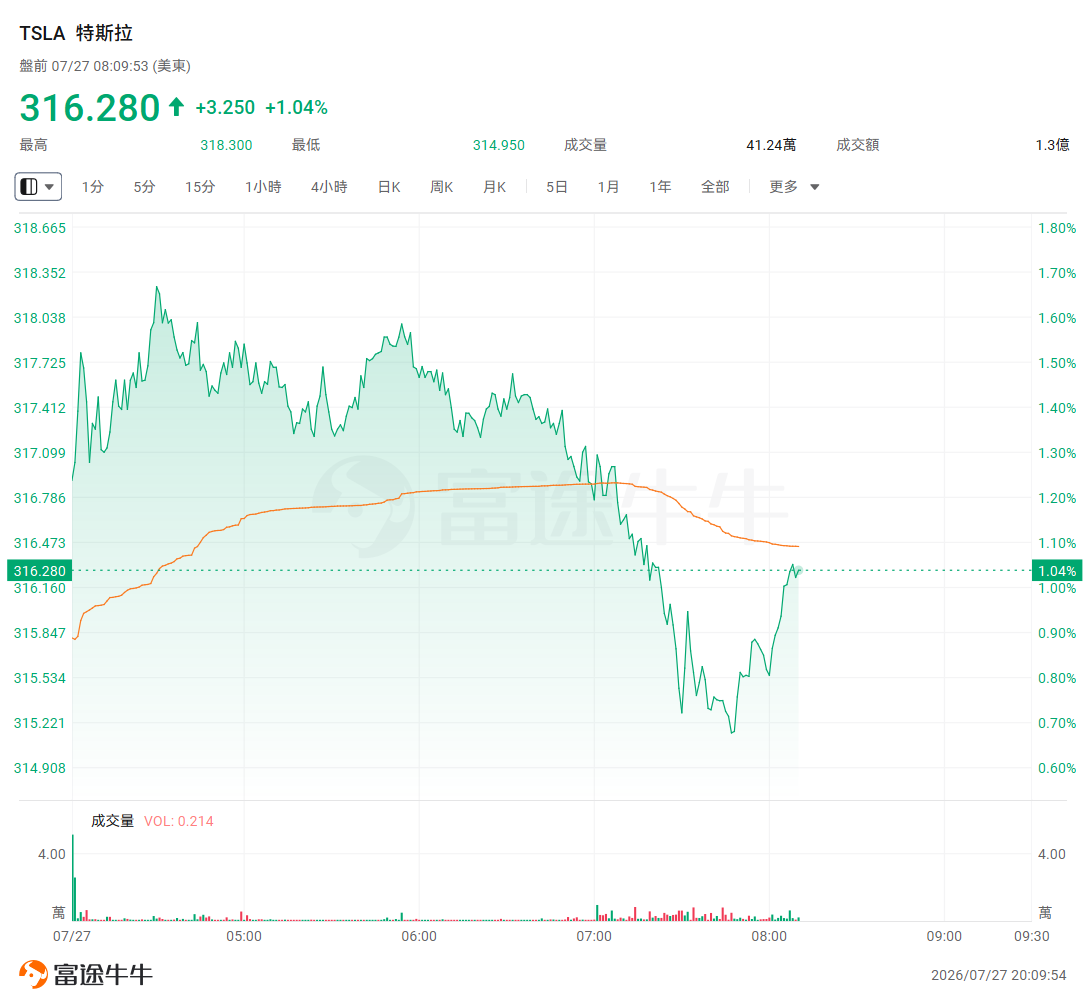
Tesla's Optimus project faces skepticism; prominent investor says it will not generate revenue in the short term.
$Tesla (TSLA.US)$ Tesla CEO Elon Musk has called the company’s humanoid robot its “most important product ever.” However, a prominent U.S. investor recently warned that it could take a long time for Musk to achieve commercial success with Tesla’s Optimus robot, as it is not only difficult to manufacture but also unlikely to generate revenue in the near term. Ross Gerber, CEO of investment firm Gerber Kawasaki, stated that the biggest obstacle to building humanoid robots lies in replicating the unique physical capabilities of humans. “Over millions of years of evolution, God did a great job creating humans. Hands are hard, feet are hard, and eyes are hard [to replicate],” Gerber said in a media interview.
Microsoft, SpaceX, and Palantir Jointly Establish AI Safety Alliance in Response to Aftermath of OpenAI Cyberattack
Microsoft, SpaceX, Palantir, and dozens of other technology companies from the U.S. and Europe have announced the joint formation of the “Open Secure AI Alliance.” This move follows the ongoing fallout from a recent cyberattack on OpenAI, prompting industry leaders to collaborate on addressing AI security threats. The alliance focuses on establishing security standards and defense frameworks for AI systems, covering both infrastructure security and model protection. The initiative provides short-term catalysts for core members such as Palantir and Microsoft and marks the formal emergence of AI security as an independent industry segment, $Cybersecurity Concept (LIST2570.US)$ relevant investment targets warrant attention.
Rocket Lab Secures $266 Million Missile Defense Contract with U.S. Space Force
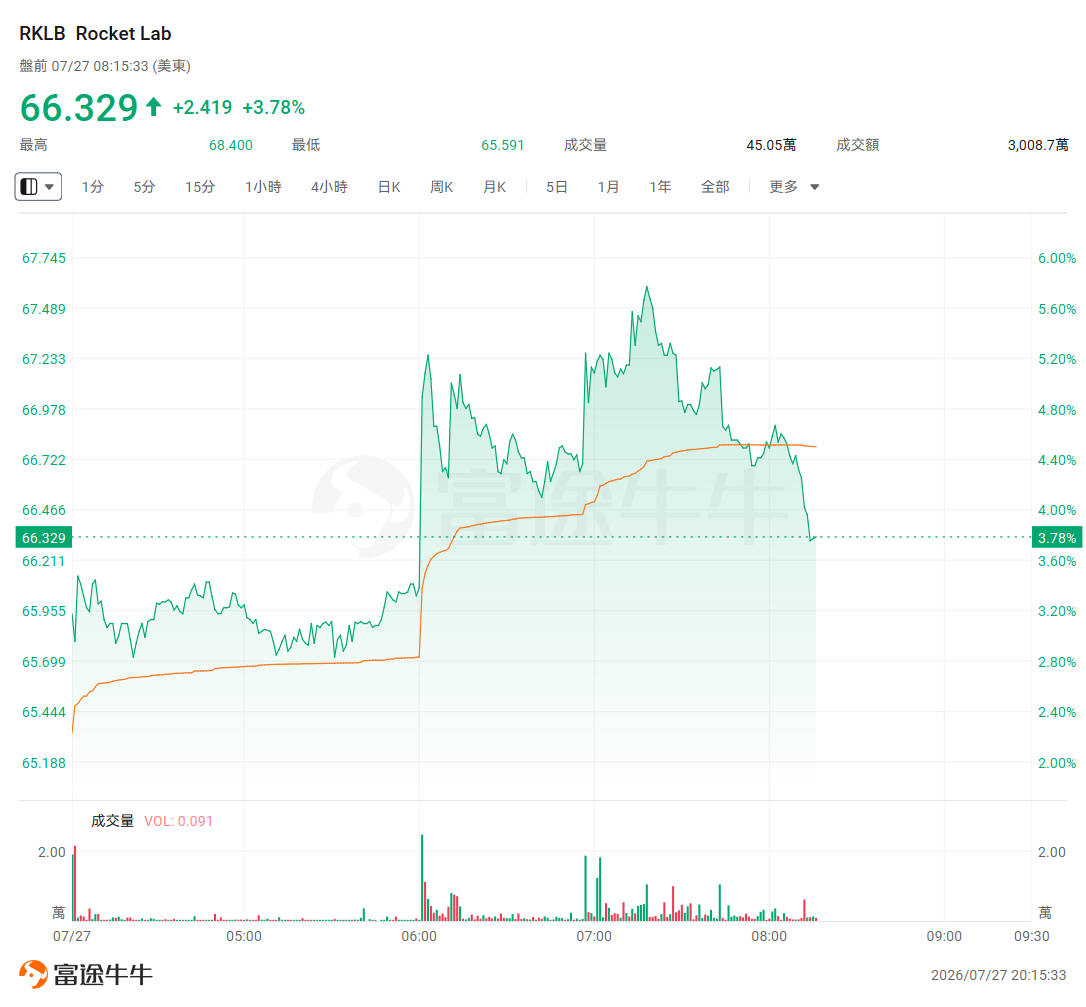
$Rocket Lab (RKLB.US)$ Shares rose approximately 4% in pre-market trading. The company has secured a $266 million multi-launch contract from the U.S. Space Force, marking the largest launch order in its history. Under the Rocket Systems Launch Program managed by the U.S. Space Force’s Space Systems Command, Rocket Lab will conduct 12 suborbital launches, with an option for up to six additional missions. The first launch under this contract is expected as early as late 2026.
Apple bets on its 'privacy card' to break into the smart glasses market, aiming to challenge Meta and capture the next-generation AI hardware gateway.
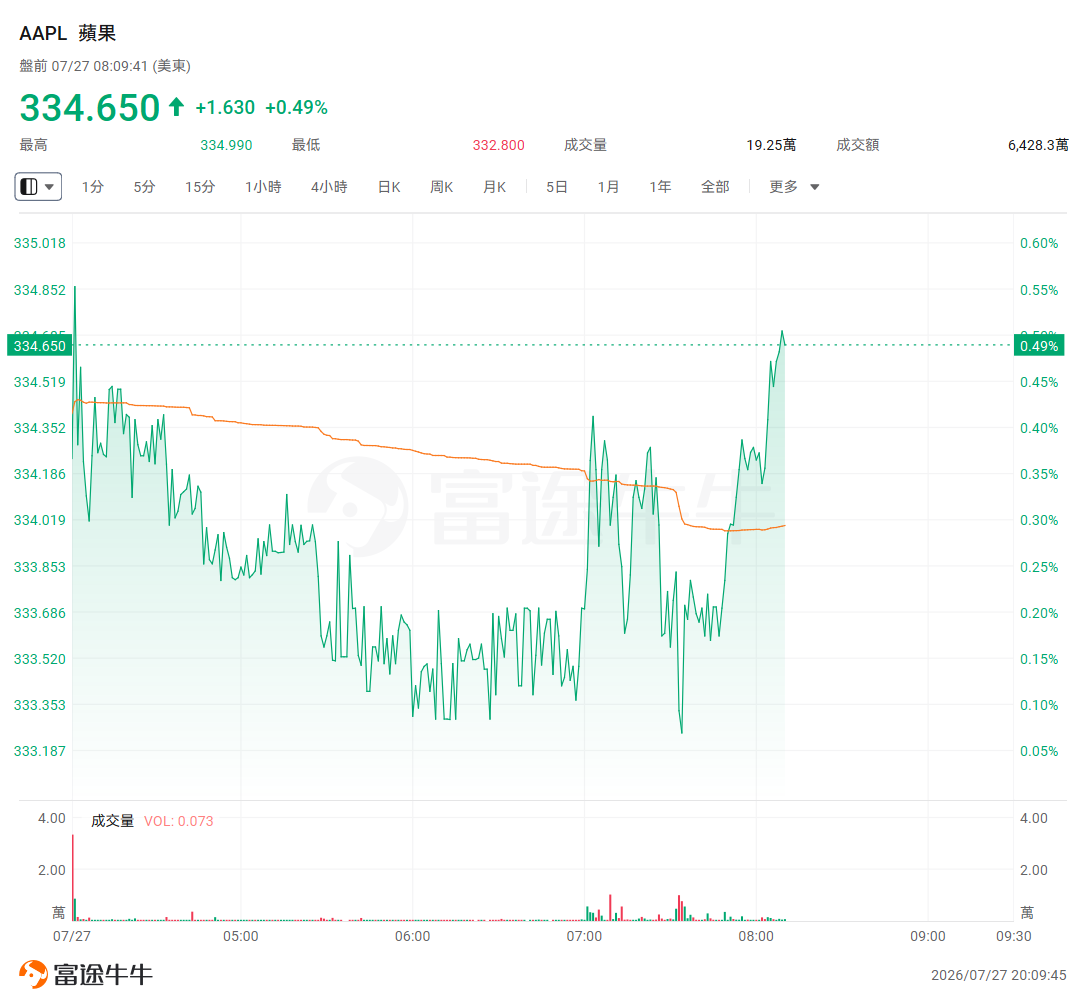
According to reports, $Apple (AAPL.US)$ Apple is placing privacy protection at the core of its smart glasses strategy to differentiate itself from competitors and address consumer concerns about AI-powered wearable devices equipped with cameras. Apple previously delayed the launch of its smart glasses partly because it wanted to further refine the product design and associated privacy policies. The company now plans to unveil the product for the first time at its Worldwide Developers Conference next June and expects to release it to consumers as early as the end of 2027. Apple is developing a range of protective measures to reassure users that its smart glasses will not infringe on personal privacy. Potential measures include greater reliance on on-device AI processing, avoidance of facial recognition technology, limitations on continuous environmental analysis, and refraining from using user-recorded content to train AI models.
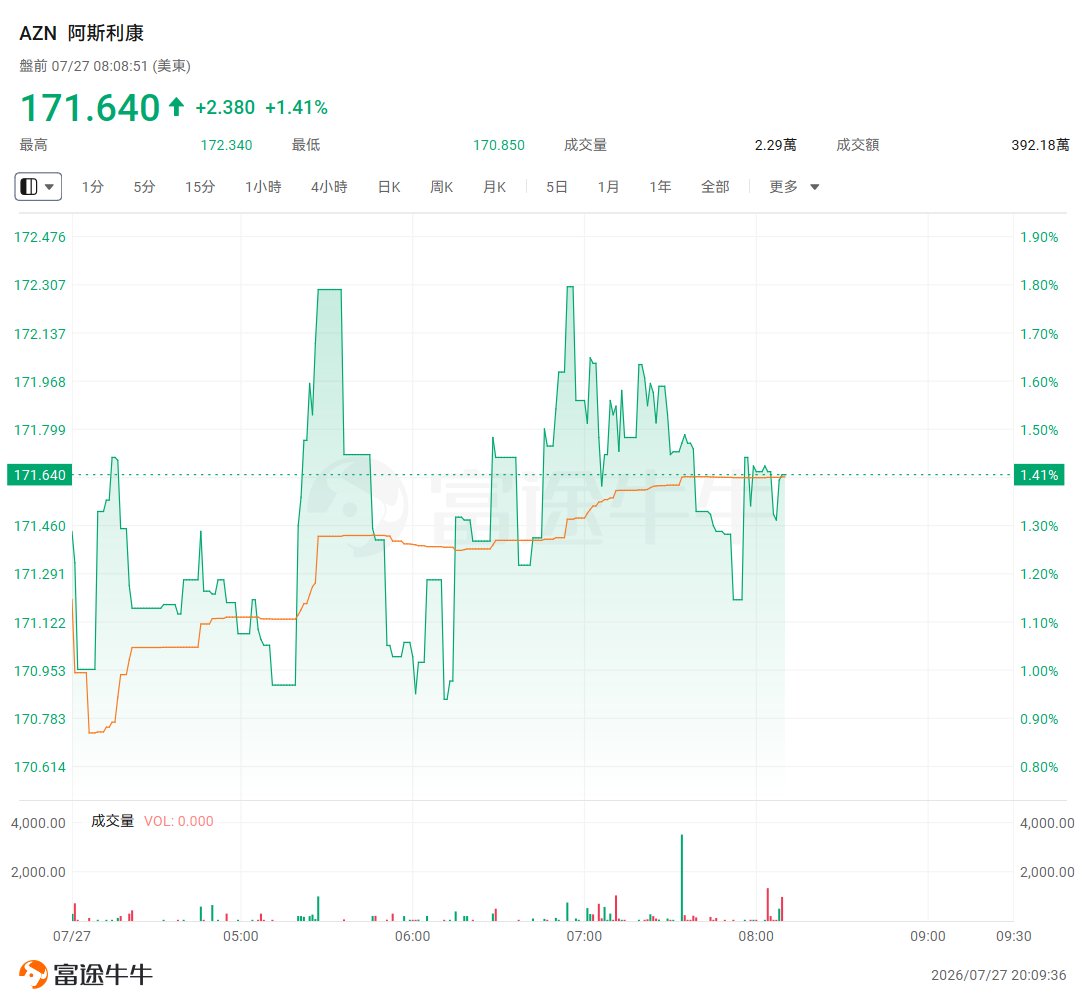
AstraZeneca Q2 Earnings Beat Expectations; Market Focuses on Next-Generation Oncology Drug Pipeline
Boosted by strong sales of blockbuster cancer drugs, the British pharmaceutical giant $AstraZeneca (AZN.US)$ reported better-than-expected second-quarter earnings, with market attention now shifting to its next-generation oncology pipeline. On Monday, AstraZeneca announced that second-quarter revenue rose 5% on a constant-currency basis to $15.38 billion, slightly below the market expectation of $15.39 billion, while adjusted earnings per share increased by 18% to $2.63, surpassing the consensus estimate of $2.48. Sales of the breast cancer drug Enhertu surged significantly. Known for its strong presence in oncology, the British pharmaceutical company has previously launched several blockbuster drugs, including Tagrisso and Imfinzi. However, investors are now focused on whether the company can sustain this success, as it is set to disclose results from multiple pivotal clinical trials in the second half of this year.
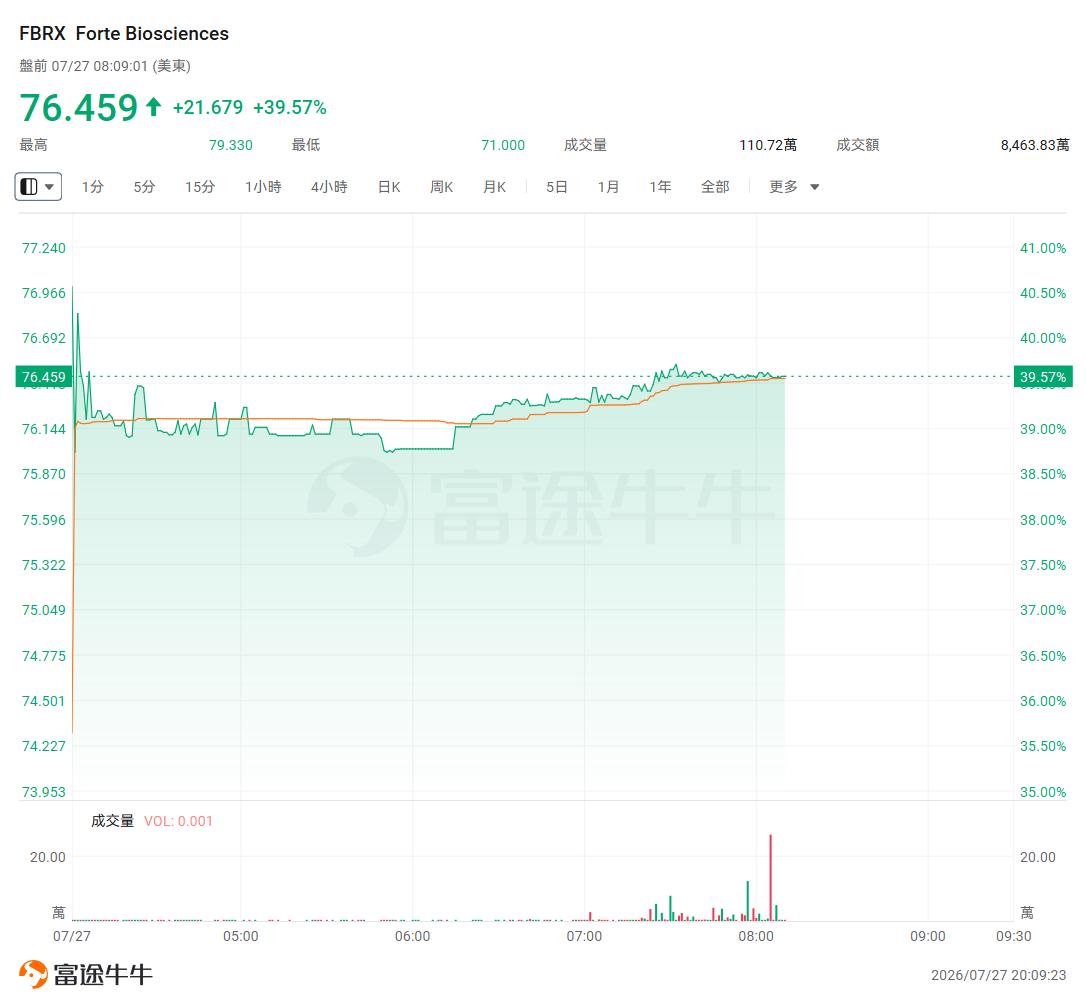
Forte Biosciences Jumps Nearly 39% in Pre-Market Trading as argenx Announces $2.2 Billion Acquisition
$argenx SE(ARGX.US)$ has agreed to acquire $Forte Biosciences(FBRX.US)$ , with a total transaction value of approximately $2.2 billion, representing a premium of about 41% over Forte’s closing share price on its last trading day. Forte’s core asset is the investigational antibody drug FB102, which is currently undergoing clinical trials for autoimmune diseases such as vitiligo and celiac disease. The transaction is expected to close in the third quarter. Forte’s pre-market shares surged nearly 39%, while argenx declined slightly.
Global Macro
Signs of easing tensions in the Middle East! U.S. and Iran announce suspension of mutual attacks; international oil prices plunge.
Following the U.S. and Iran’s suspension of airstrikes, signs of de-escalation have emerged after five months of conflict. International oil prices subsequently retreated, though the Houthi forces claimed attacks on Saudi targets, and crude flows through key shipping lanes remain constrained. In a client report, ING analysts stated: “Oil prices dropped sharply in early trading as the U.S. and Iran refrained from further military action, offering the first tangible indication that tensions may be easing.” The U.S. halted military operations late last Friday after 13 days of sustained strikes against Iran. Iranian military officials later confirmed Tehran had also suspended retaliatory actions.
Saul Kavonic, Senior Energy Analyst at MST Marquee, said: “The suspension of airstrikes and reports of progress in negotiations have once again raised market expectations for a de-escalation, which could prompt a rebound in crude oil flows. However, all core issues—including Iran’s control over the Strait, as well as its missile and nuclear programs—remain highly contentious. Any ceasefire agreement may ultimately prove temporary, and this risk remains very high,” Kavonic added.
Wash abandons 'forward guidance,' sparking Wall Street anxiety over the Federal Reserve's policy uncertainty
The market’s difficulty in forming a clear outlook is also linked to Federal Reserve Chair Waller’s refusal to provide policy guidance. Since taking office, he has abandoned the long-standing practice known as ‘forward guidance.’ Narayana Kocherlakota, Professor of Economics at the University of Rochester and former President of the Minneapolis Fed, told CNN that the absence of policy guidance increases uncertainty for financial markets and businesses. Some market participants hold differing views, arguing that the Fed has historically communicated too frequently about economic conditions, leading markets to overinterpret officials’ remarks. Kezia Samuel, Chief Market Strategist at AssetMark, said: “We’ve reached a point where we’re over-analyzing the Fed’s forward guidance—I’m not sure it can still serve its intended purpose effectively.”

U.S. midterm elections enter the 100-day countdown! Goldman Sachs: U.S. equities to gradually feel the impact starting in August.
With three months remaining until the 2026 U.S. midterm elections, markets are increasingly pricing in political risk. However, according to Goldman Sachs’ latest research, the elections themselves carry limited potential to trigger significant equity market volatility. The real pressure on U.S. stocks stems from a structural imbalance in volatility driven by sharply rising real interest rates and historically low stock correlations. In a report dated July 24, Goldman Sachs strategists including Ben Snider noted that option-implied correlation has fallen to its lowest level in decades, artificially suppressing index-level implied volatility. Meanwhile, the 10-year real yield has climbed to its highest since 2023, and the 30-year real yield is approaching the critical threshold of 3%—a level rarely breached in recent decades. The convergence of these two forces strengthens the case for going long on index volatility.
Bank of America: August could mark the start of the stock market’s “toughest three months” of the year.
As August begins, investors may need to keep both hands on the wheel—and have hedging tools ready at a moment’s notice. Paul Ciana, Technical Strategist at Bank of America Securities, noted in a recent seasonality report that, based on decades of market data, August through October historically represents the weakest rolling three-month period for the S&P 500. During this same window, the U.S. dollar, gold, and U.S. Treasuries typically outperform the broader market. This historical pattern reinforces Bank of America’s defensive stance, which it has consistently maintained since late May. Notably, Ciana also cautioned that seasonal weakness does not necessarily imply a bearish long-term outlook. Historically, late-summer pullbacks often pave the way for stronger rallies—on average, the S&P 500 gains 3.54% between November and January of the following year.
CME Group launches single-stock futures, covering 50 leading U.S.-listed companies.
The U.S. market is set to welcome a new trading product. CME Group will launch single-stock futures on Monday, enabling investors to hedge or speculate on more than 50 of the largest U.S. companies. These contracts offer leverage and are cash-settled based on the closing price of the underlying stock, without the complexity associated with options trading. The new offering allows investors to hedge or take speculative positions on shares of over 50 major U.S. corporations, including Alphabet, Amazon, Apple, Meta, NVIDIA, SpaceX, Micron Technology, Pfizer, and Walmart. Single-stock futures will trade five days a week for 23 hours per day—longer than regular stock market hours. Quarterly contracts will be divided into two categories: standard contracts based on 100 shares of stock, similar to typical equity options, and 22 micro futures contracts based on 10 shares of stock.
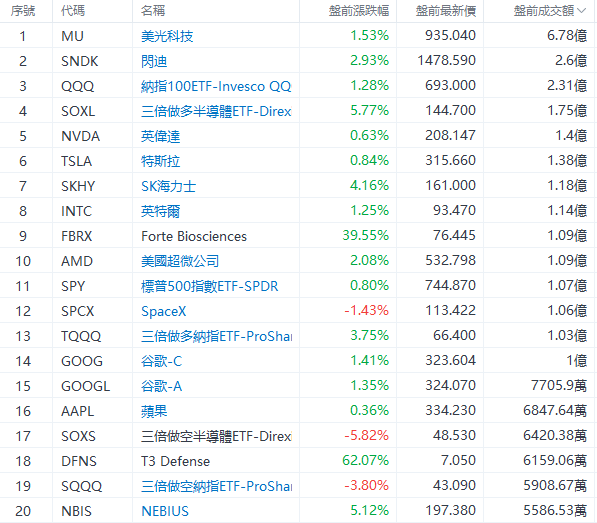
Top 20 pre-market trading volume stocks in the U.S.
U.S. Equity Market Macro Calendar Reminder
(All times listed below are in Beijing Time)
22:30 Dallas Fed’s business activity index for July
 Looking to select stocks or analyze your holdings? Want to understand the opportunities and risks in your portfolio? For any investment-related questions,just ask Futubull AI!

Editor/Rocky