
July 28 news: Hong Kong-listed PCB stocks plunged across the board; as of the time of writing,$KB LAMINATES (01888.HK)$down more than 14%,$DELTON (01989.HK)$Down more than 13%,$KINGBOARD HLDG (00148.HK)$down more than 11%,$VGT (02476.HK)$down more than 8%.
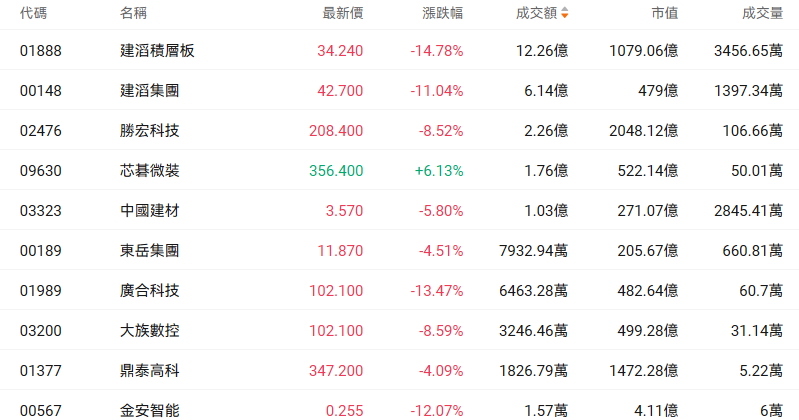
On the news front, NVIDIA is advancing a new round of AI infrastructure deals, with a potential scale exceeding $750 billion. Renewed concerns over revolving credit risk have once again drawn market attention. Additionally, Google reported negative free cash flow of $5.9 billion for the second quarter—the first time in the company’s history it has recorded negative cash flow. The company completed a $49.6 billion stock offering and a $20.3 billion bond issuance in June, and continues to face significant pressure in managing its future cash exposure. The market is gradually correcting previously inflated expectations regarding AI-related capital expenditures.
According to the Securities Times, the PCB industry is currently undergoing an unprecedented wave of capacity expansion. Guo Tao, an angel investor and seasoned AI expert, noted that amid widespread expansion efforts, less than 20% of newly added capacity represents high-end production capable of fulfilling orders for AI servers and optical modules. The majority of new capacity remains concentrated in conventional mid-to-low-end circuit boards, leading to a prevalent industry phenomenon where companies tout ‘high-end’ expansions while actually building low-end capacity. Industry consensus holds that this current investment surge will ultimately result in a bifurcated market: high-end capacity will consolidate among leading players, while outdated mid-to-low-end capacity will be rapidly phased out.
 Editor/melody