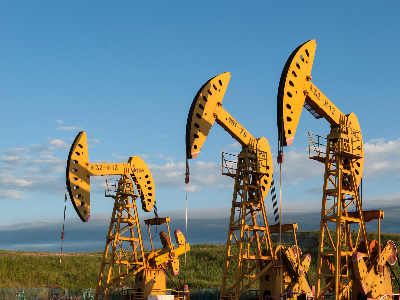
Following reports from Israeli media, Brent crude oil prices extended their losses to over 4%. According to Israeli media, the meeting between Trump and the Israeli prime minister is a critical observation window, with the White House hoping to decide on whether to revive the agreement only after Trump hears Israel's position. U.S. officials increasingly believe, as reported by American media, that sanctions are more effective than airstrikes in weakening Iran. Trump stated that the U.S. currently holds a strong position on Iran—either a deal is reached, or the Fordow nuclear facility will be destroyed. He expressed a desire to avoid targeting Iranian civilian infrastructure but emphasized that Iran’s violations of the agreement can no longer be tolerated. Israel’s defense minister noted that the U.S. has blocked Israeli strikes on Iranian energy facilities. Iran denied Trump’s claims, stating it has not sought dialogue with the U.S. in the past two weeks.
As the meeting between U.S. President Trump and Israeli Prime Minister Netanyahu approaches, signs of easing tensions have reemerged in the Middle East.
According to Israeli media reports citing multiple sources on Tuesday, February 28 (Eastern Time), ahead of the Trump-Netanyahu meeting, mediators involved in the diplomatic efforts—including Qatar and Oman—believe that the United States and Iran are close to resuming diplomatic contact and achieving a breakthrough that could revive the memorandum of understanding signed in June this year, which outlined an initial ceasefire framework but was subsequently shelved due to escalating conflict.
 The report states that these mediators are still awaiting Trump’s final decision following his meeting with Netanyahu.
Following the report, risk appetite improved: U.S. equity markets rose, with the S&P 500 accelerating its rebound, the Nasdaq erasing earlier intraday losses, and the Dow Jones Industrial Average expanding its gain to over 1%. International crude oil prices fell sharply, with Brent crude declining by more than 4% and West Texas Intermediate (WTI) dropping approximately 4%, reflecting renewed market expectations of reduced Middle Eastern supply risks. The decline in oil prices alleviated inflationary pressures that might have prompted the Federal Reserve to raise interest rates, leading to broader gains in U.S. Treasury prices and a general decline in yields of 4–6 basis points.
Although Iranian Foreign Ministry spokesperson Baghaei denied on Monday that negotiations were taking place between the U.S. and Iran, U.S. media reported that the two countries are engaged in indirect talks through mediators led by Oman, Qatar, and Pakistan, who are working to convert the current mutual suspension of attacks into a durable new ceasefire agreement.
On Tuesday, Iran rejected Trump’s claim, stating it had not sought dialogue with the United States in the past 16–17 days.
Israeli media: The White House hopes to decide whether to restart the agreement after Trump hears Israel’s position.
According to Israeli media reports, mediators believe both the United States and Iran currently wish to avoid a renewed escalation of conflict and are inclined to restore the preliminary ceasefire arrangement reached in June this year.
According to informed sources, the U.S. and Iran have recently maintained discreet contact through channels such as Oman and Qatar. The U.S. side hopes to institutionalize the limited ceasefire that followed recent military actions and revive negotiations on the nuclear issue, while Iran seeks additional tangible concessions on sanctions and energy exports.
The report suggests that the upcoming meeting between Trump and Netanyahu will serve as a critical window for observing the trajectory of U.S.-Iran diplomacy. Informed sources indicate that mediators believe a breakthrough is imminent, but the White House intends to await Trump’s consultation with Israeli officials before deciding whether to push forward with reviving the preliminary agreement reached in June.
However, Israel remains cautious. A source indicated that several obstacles still stand in the way of a formal agreement, including Iran’s nuclear program, arrangements for subsequent sanctions, and issues related to regional proxy forces.
U.S. media: American officials increasingly believe sanctions are more effective than airstrikes in weakening Iran
As markets bet on a diplomatic breakthrough, signals within the U.S. government have increasingly favored economic pressure over expanded military action.
Citing multiple U.S. officials, U.S. media reported on Tuesday that an increasing number of officials within the Trump administration believe that intensifying financial sanctions, energy blockades, and economic isolation against Iran could yield greater long-term impact than airstrikes on Iranian nuclear facilities.
The report noted that the White House currently assesses Iran’s economy as under severe strain and believes that further restrictions on its oil exports, financial system, and international trade channels would more likely compel Tehran to return to the negotiating table without resorting to large-scale military strikes.
Multiple officials stated that this is also one of the key reasons why the United States, despite maintaining continuous military deterrence, has not immediately resumed large-scale airstrikes recently.
Citing one official, the report quoted: “Intelligence indicates that Iran is complaining it cannot pay its fighters. Why? Because of financial pressure. Because of the Treasury Department. Because of actions taken by (U.S. Treasury Secretary) Scott Bessent.”
The official added that Iran “faces the risk of bank runs, and in this oil-rich country, gasoline shortages have emerged—they fear the Treasury Department more than the Department of Defense.”
Trump: The U.S. holds a position of strength on Iran; if no deal is reached, we will destroy Fordow
Nevertheless, Trump’s public remarks continue to reflect his characteristic ‘maximum pressure’ approach.
According to reports, Trump stated on Tuesday that Iran has publicly acknowledged ongoing dialogue between the two sides and that the United States currently holds a position of significant strength on the Iran issue.
He reiterated once again that Iran will never possess nuclear weapons.
Trump said that if a deal ultimately cannot be reached, U.S. forces would destroy the underground nuclear facility located south of Natanz, known as 'Fordow.' He expressed hope to avoid attacking civilian infrastructure in Iran, such as power plants and bridges, but also warned that 'Iran’s violations of the agreement can no longer be tolerated.'
Meanwhile, Trump denied a previous report by The New York Times claiming that strikes against Iran had been paused due to insufficient U.S. military ammunition stockpiles.
According to China Central Television (CCTV), Trump attributed the issue to the Biden administration, firmly asserting that the suspension of military action was not due to weapons shortages. On the same day, the Pentagon announced it had signed agreements with major defense contractors to accelerate production of key weapons systems, including Patriot air defense missiles and the THAAD missile defense system.
Israeli Defense Minister: U.S. Blocked Israeli Strikes on Iranian Energy Facilities
Meanwhile, Israeli officials have disclosed additional details regarding prior U.S.-Israel coordination.
According to reports, Israeli Defense Minister Katz stated on Tuesday that, out of concern for economic and energy-related implications, the United States has consistently prevented Israel from striking Iran’s energy infrastructure.
Katz said, 'We very much wanted to strike Iran’s energy targets, but the United States currently does not permit it.' He added that Washington fears such attacks could provoke Iranian retaliation against neighboring countries and trigger a global oil crisis.
This statement indicates that while Washington supports Israeli military operations, it has simultaneously sought to prevent the conflict from escalating into a large-scale regional war that would disrupt global energy supplies.
Analysts believe this aligns with the U.S. policy stance of recently placing greater emphasis on stabilizing the international energy market and preventing another sharp spike in oil prices.
Katz also confirmed on Tuesday that U.S. fighter jets would launch strikes against Iran either from Israeli territory or through Israeli airspace.
Katz reiterated Israel’s warning to Iran: any direct attack would be met with a forceful response. He stated, “If Israel is attacked, we will respond with full force. We have already struck Iran twice and are prepared to carry out a third strike.”
Both sides maintain tough rhetoric, but diplomatic channels remain open.
U.S. media outlets have reviewed recent statements from both sides, noting that although public rhetoric from the United States and Iran remains firm, diplomatic communication has never been fully severed.
Trump has repeatedly emphasized that the United States retains the capability to strike Iran again, while also frequently expressing his desire to resolve the Iranian nuclear issue through negotiations.
Iran, for its part, continues to insist that negotiations can only move forward if the United States demonstrates sufficient goodwill and makes concrete adjustments on core issues such as sanctions.
At present, the upcoming meeting between Trump and Netanyahu, along with mediation efforts aimed at reviving the June ceasefire framework, could become key variables influencing Middle East dynamics and global asset prices in the coming weeks.
For financial markets, further breakthroughs in U.S.-Iran negotiations could lead to a continued decline in geopolitical risk premiums, exerting additional downward pressure on international oil prices; conversely, if talks falter again and tensions in the Middle East escalate anew, energy markets and global risk assets could quickly reverse course.
Editor/Stephen