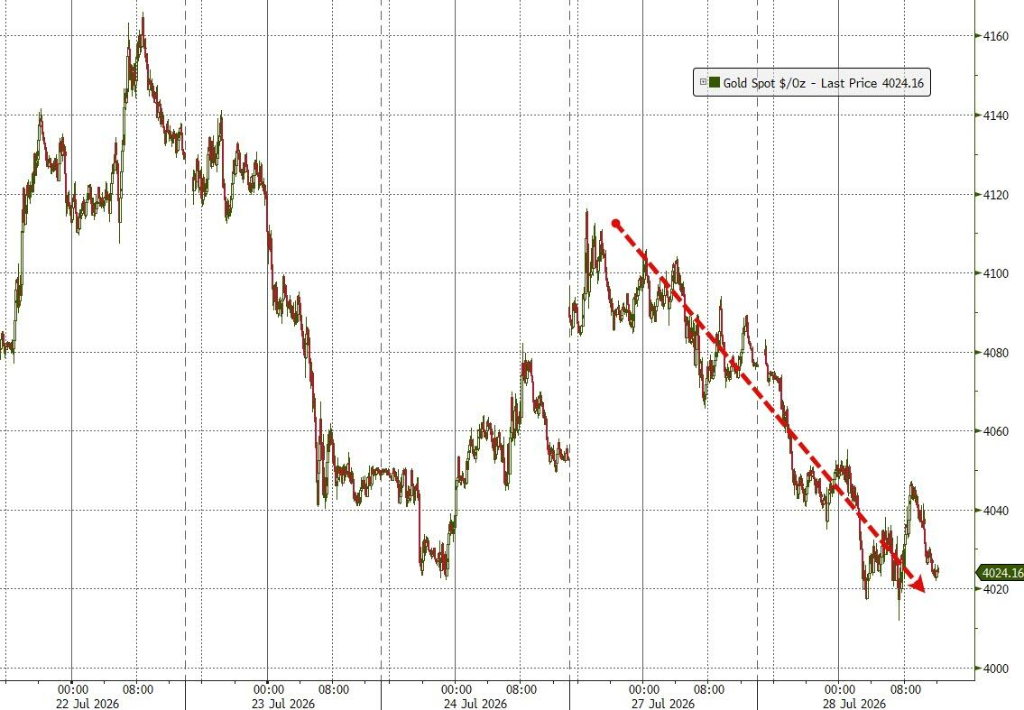
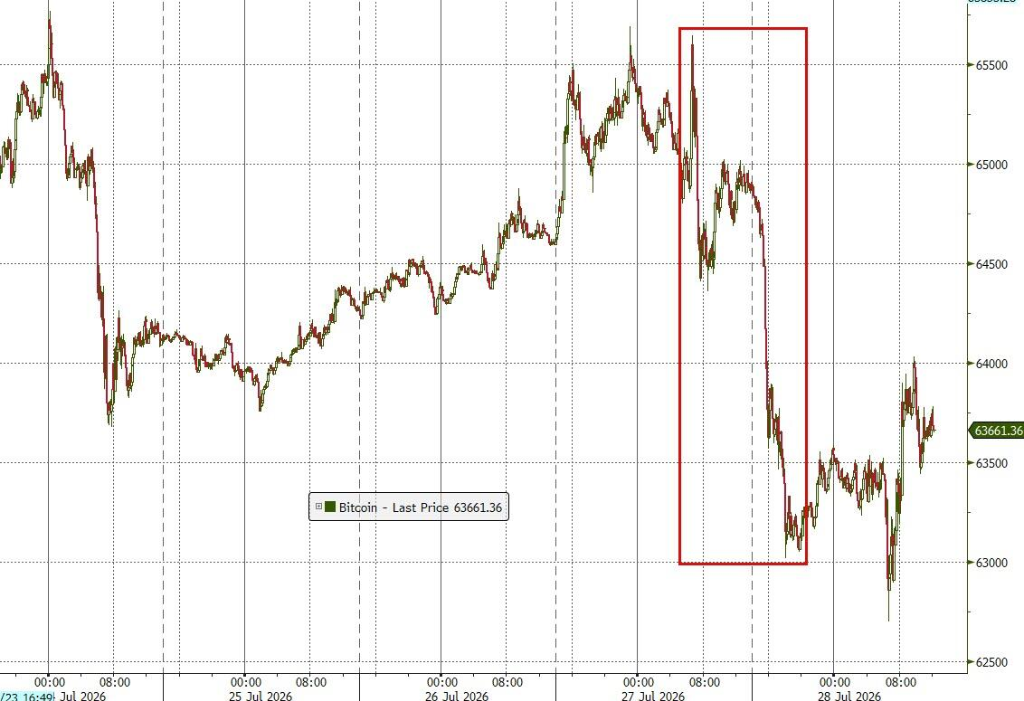
$S&P 500 Index (.SPX.US)$The Dow Jones Industrial Average rose, gaining approximately 1%, while the S&P$500 Equal Weight (399982.SZ)$heavily weighted index hit a record high. Sectors such as financials, industrials, materials, and healthcare showed stronger relative outperformance. Despite a weaker U.S. dollar, gold prices fell sharply today, dropping 1.16% intraday. Affected by the crash in South Korean equities,$Bitcoin (BTC.CC)$it plunged 3.4%, though the decline narrowed to 1.6% by the New York close.
U.S. stocks diverged on Tuesday as market rotation accelerated. Investors continued to exit AI-related stocks such as semiconductors and shifted toward traditionally cyclical sectors with more attractive valuations. A sharp decline in oil prices provided some support to market sentiment, but heavy pressure on tech stocks limited overall gains.
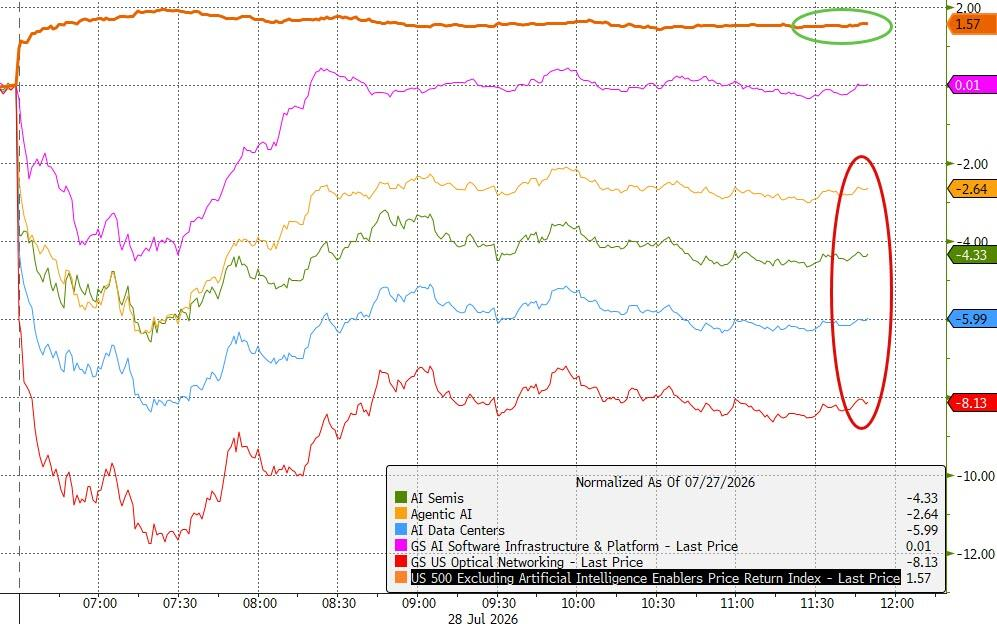
AI-related speculative stocks, led by memory storage and optical communications segments, continued their synchronized sell-off. Meanwhile, broader economic sectors saw widespread gains. Apple Inc., a tech giant known for its cautious investment approach during this AI rally, along with the so-called 'American Kweichow Moutai'—a leading high-dividend stock,$Coca-Cola (KO.US)$surged again to reach a new all-time high.
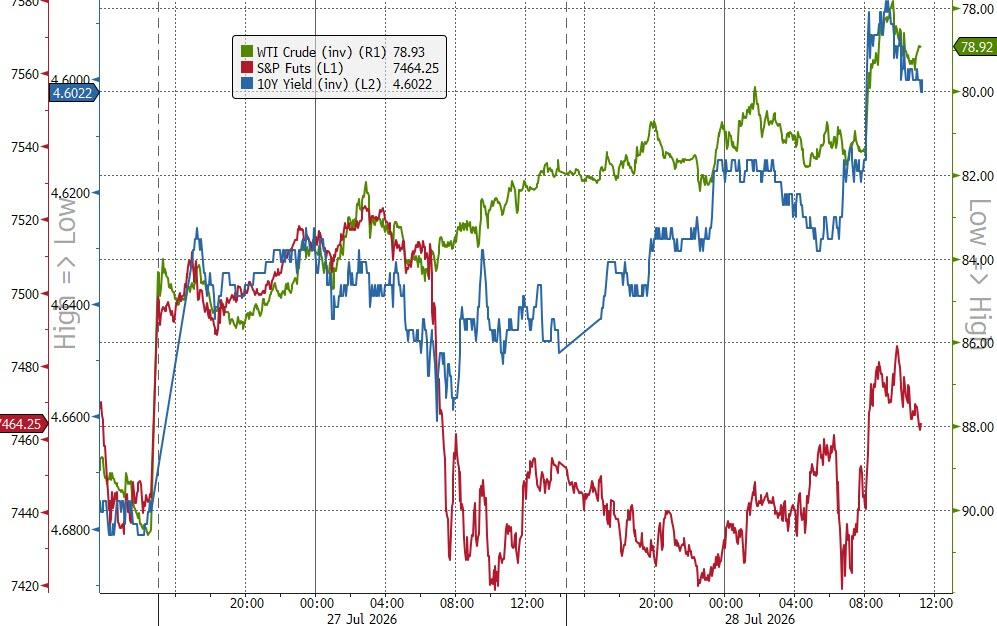
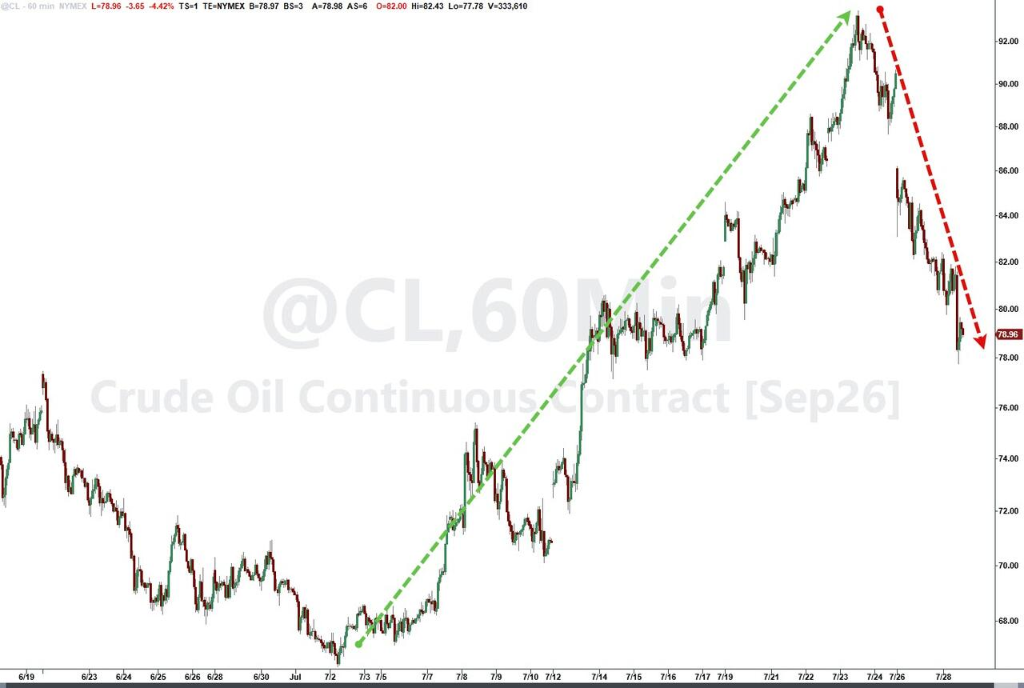
 Expectations of easing tensions in the Middle East drove oil prices to their steepest three-day drop in nearly three years, pushing U.S. Treasury yields lower. Combined with solid economic data and corporate earnings, this supported capital flows into undervalued, economically sensitive traditional sectors.
The Dow Jones Industrial Average rose more than 1% on the day, while equal-weighted versions of the S&P 500 hit record highs, signaling improved market breadth.
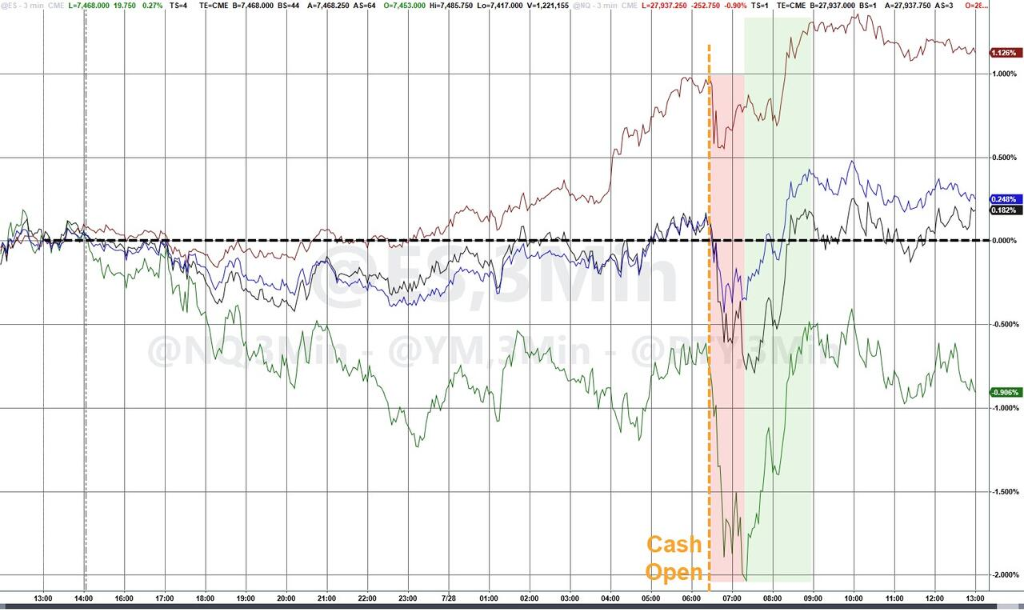
On the other hand, amid growing market concerns over the monetization potential of massive capital expenditures on AI infrastructure, funds are accelerating their exit from overcrowded technology, semiconductor, and AI-related stocks.$NASDAQ-100 Index (.NDX.US)$fell by approximately 1%, approaching a technical correction territory.
The Federal Reserve will announce its interest rate decision early Thursday morning, coupled with$Microsoft (MSFT.US)$dense earnings reports from tech giants such as Meta, creating an unusually high degree of uncertainty rarely seen in recent years.
Declining oil prices and market rotation jointly boosted traditional sectors.
The core driver behind the Dow’s strength lies in the significant retreat in oil prices and the ongoing rotation of capital across market sectors.
According to Wall Street Journal reports, the United States and Iran are nearing an agreement that could revive a previously failed memorandum of understanding, triggering a sharp drop in oil prices. U.S. crude fell 4.1% to $79.16 per barrel, while Brent crude dropped 5.0% to $83.93, cementing a three-day downward trend.
Angelo Kourkafas, analyst at Edward Jones, stated:
The transmission channel through which falling oil prices affect overall inflation is clear. If oil prices do not reach new highs, the Consumer Price Index likely peaked in May. The moderate June inflation reading has bought the Federal Reserve additional time to observe incoming data.
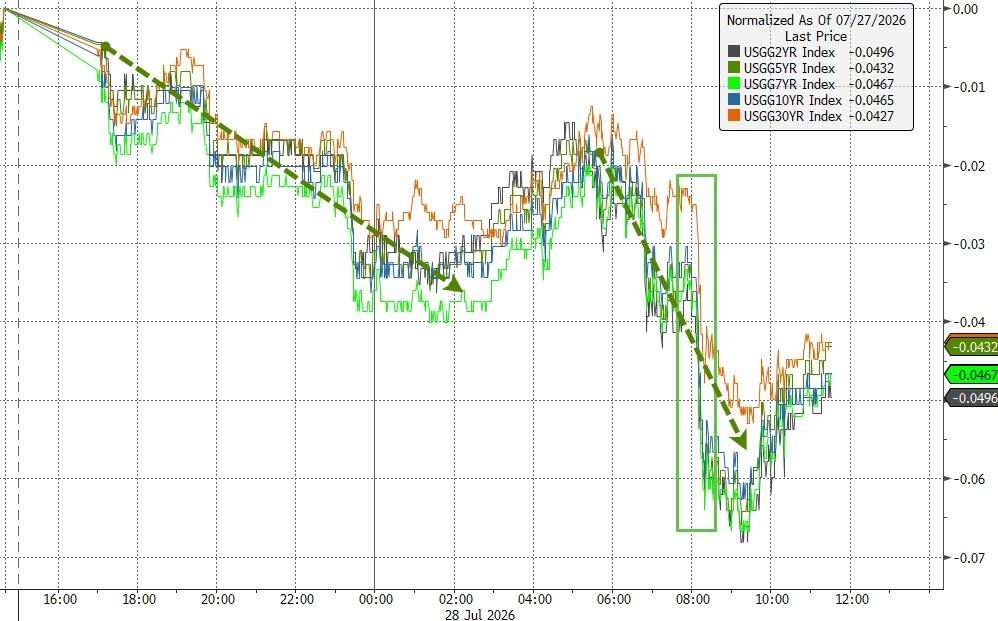
Falling oil prices pushed U.S. Treasury yields lower in tandem, with the 10-year yield declining by approximately 5 basis points on the day to 4.60%.
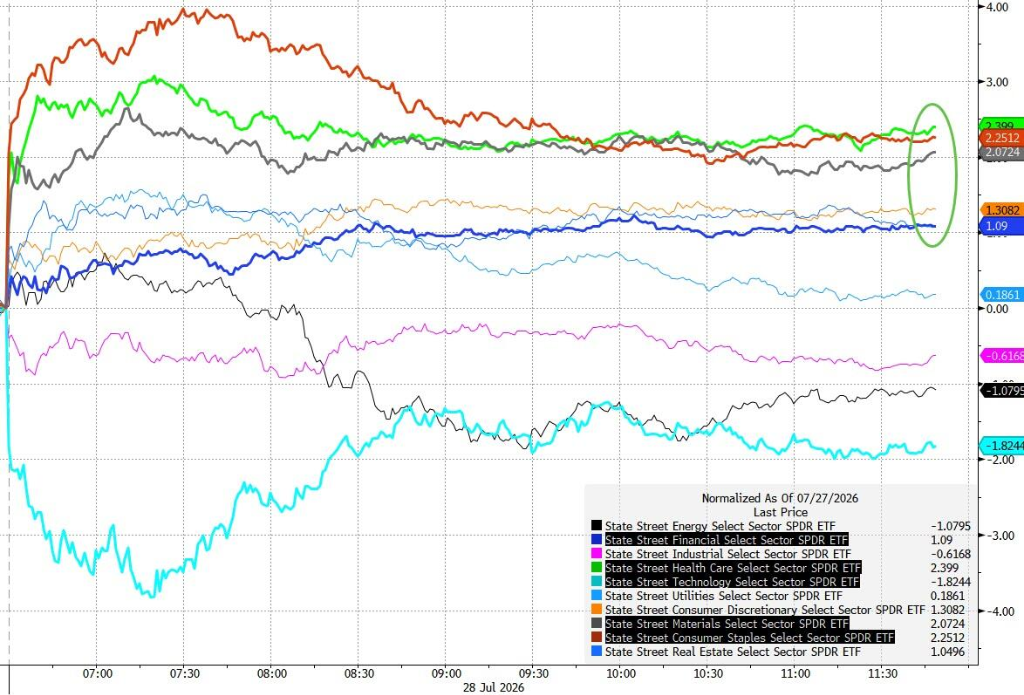
Meanwhile, 357 constituents of the S&P 500 closed higher, with financials, industrials, materials, and healthcare sectors showing relative strength, significantly improving market breadth.
According to Goldman Sachs data, the S&P ex-AI Index (SPXXAI) has risen 5.12% this month, marking its best single-month performance since November 2024.
$Boeing (BA.US)$, along with strong earnings from blue-chip stocks such as Coca-Cola, also provided support to the Dow Jones Industrial Average. Boeing’s second-quarterFree cash flowresults exceeded expectations, and Coca-Cola raised its full-year guidance, both adding positive signals to the market.
Fed decision shrouded in high uncertainty; markets wary of a 'no-cut surprise'
Wednesday’s upcoming Federal Reserve interest rate decision has added another layer of uncertainty to markets. Federal funds futures currently imply a roughly 32% probability of a rate hike, down from 38% on Monday but still at a relatively elevated level.
Analysts note that this will be the first time in years that the Fed holds a meeting with market confidence in its decision falling below 80%. If current market pricing holds, the degree of surprise from a 'no-cut' outcome could be the greatest in decades.
‘Higher oil prices and heightened tensions in the Middle East have increased inflation risks and strengthened the case for a rate hike, but we believe the Fed still needs more evidence to secure majority support,’ wrote Oscar Munoz, Head of U.S. Economics at TD Securities, in a research report.
Wednesday features a highly concentrated calendar of event risks: the Federal Reserve’s policy decision and earnings reports from Microsoft and Meta will all be released simultaneously, followed by Apple’s$Amazon (AMZN.US)$earnings reports followed closely. In the options market,implied volatilitydata show that traders are building sizable hedging positions ahead of this major event day.
Commenting on current market conditions, Goldman Sachs’ top trader Ariana Contessa summarized: ‘Market pain persists. The combination of “sell-the-news” reactions to earnings, factor volatility, and calendar effects has created a buyer strike atmosphere. Investors are now searching for signs that markets are stabilizing after weeks of sharp volatility.’
Performance of Other Major Asset Classes
The U.S. dollar weakened today amid declining yields and reduced expectations of interest rate hikes.
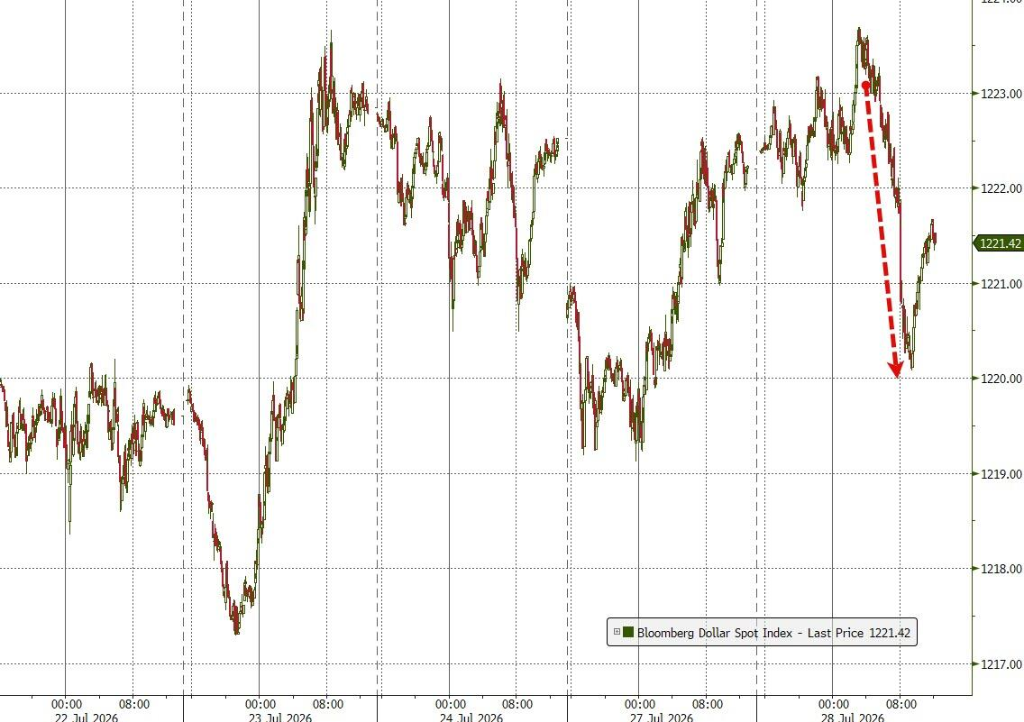
Despite the dollar's weakness, gold prices fell sharply today, dropping 1.16% intraday.
Bitcoin plunged 3.4% following a crash in South Korean equities, though its intraday loss narrowed to 1.6% by the close of New York trading.
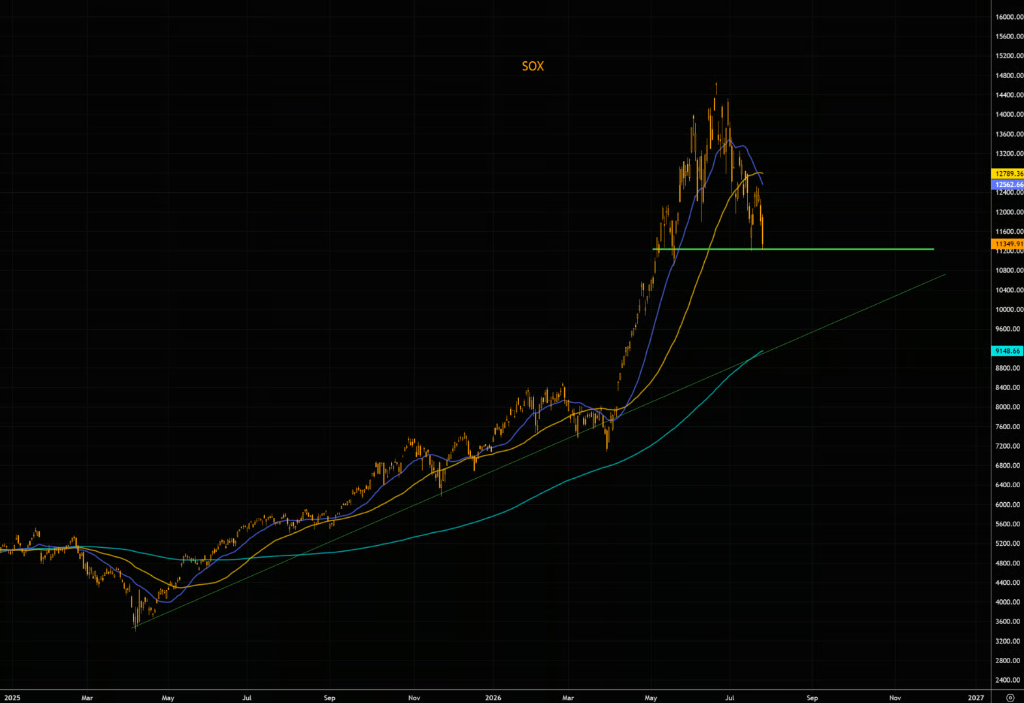
$PHLX Semiconductor Index (.SOX.US)$breaking below the key support level of 11,200
The SOX index fell more than 6.5% during early U.S. trading hours, dropping below 10,800, but pared losses in the afternoon session to close down approximately 4.5%. Memory chip stocks continued to plunge sharply on the day,SanDisk (SNDK.US)with intraday declines exceeding 10%. Micron Technology (MU),$SK Hynix (SKHY.US)$ ADR (SKHY),$Western Digital (WDC.US)$and$Seagate Technology (STX.US)$all posted intraday declines exceeding 10%. AI chip giants showed mixed performance: AMD also dropped more than 10% intraday,NVIDIA (NVDA.US)while NVIDIA dipped nearly 2% in early trading before rebounding slightly into positive territory.
While semiconductor stocks continued to underperform the broader market, the SOX index breached the key short-term support level near 11,200 intraday and closed below it—a level that had held during the selloff on July 17. However, conditions have sinceTechnical Analysiscontinued to deteriorate—the 21-day moving average has crossed below the 50-day moving average, forming a short-term bearish signal. Meanwhile, renewed concerns over the cyclicality of AI-related capital expenditures have further dampened investor sentiment.
Despite technical pressures, some positive shifts are emerging at the market structure level. According to Vanda data,institutional holdingsmarket positioning has normalized, and retail investor participation has cooled significantly compared to earlier this summer. The previously overcrowded “long semiconductors, short Mag 7” trade has largely been unwound, resulting in a clearer overall positioning structure.
U.S. equities showed mixed performance on Tuesday, though traditional sectors remained strong. The S&P 500 and Dow Jones Industrial Average rose (with the Dow gaining about 1%), and the equal-weighted S&P 500 index hit a record high. Financials, industrials, materials, and healthcare outperformed other sectors on a relative basis.
U.S. equity benchmark indices:
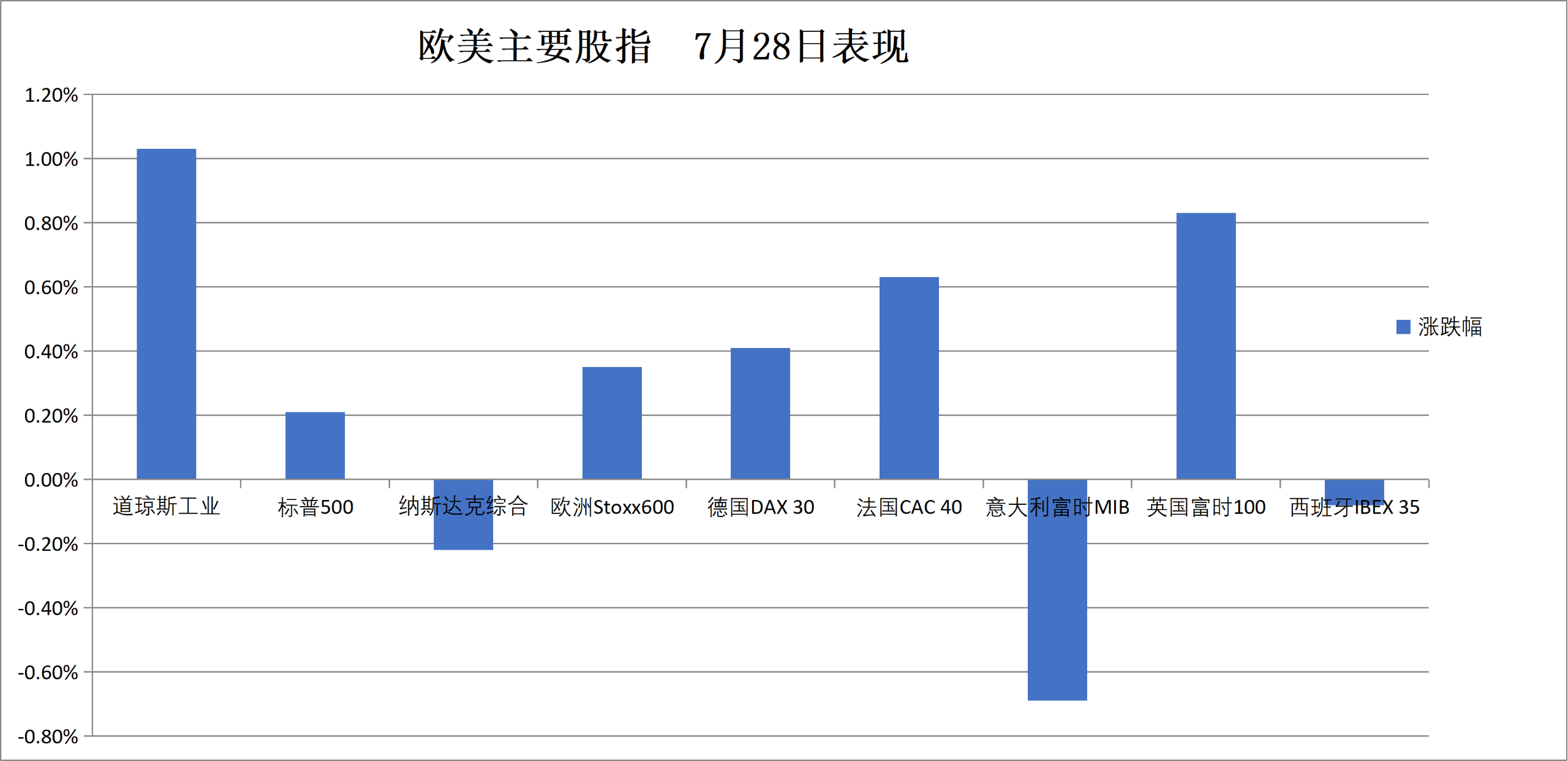
The S&P 500 closed up 15.60 points, or 0.21%, at 7,428.78.
The Dow Jones Industrial Average closed up 537.24 points, or 1.03%, at 52,747.32.
The Nasdaq Composite closed down 55.169 points, or 0.22%, at 24,876.912. The Nasdaq 100 closed down 276.076 points, or 0.99%, at 27,763.134.
$Russell 2000 Index (.RUT.US)$closed up 0.20% at 2,953.80 points.
The Cboe Volatility Index (VIX) closed down 2.52% at 18.20.
U.S. stock sector ETFs:
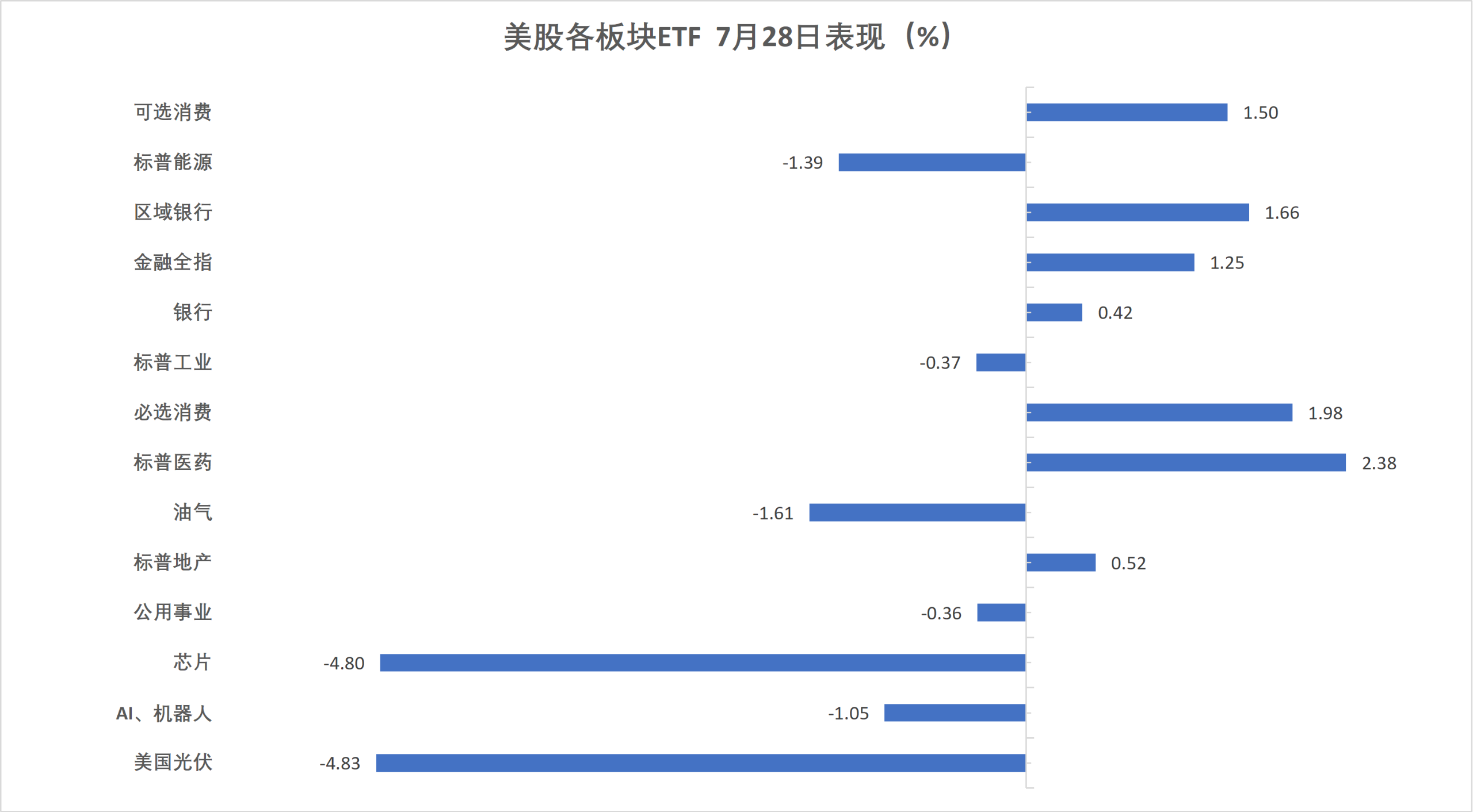
Most U.S. equity sector ETFs ended higher, with the Global Airlines ETF up 2.87%, the Health Care Sector ETF up 2.38%, and the Internet Index ETF up 1.59%. The Energy Sector ETF declined 1.35%, the Technology Sector ETF fell 1.84%, the Global Tech Index ETF dropped 2.08%, and the Semiconductor ETF slid 3.45%.
Mag 7:
The Wind U.S. Tech Mag 7 Index rose 0.69%.
$Tesla (TSLA.US)$It fell 0.58%, with Amazon down 0.23%, Meta down 0.08%, NVIDIA up 0.25%, Apple up 0.94%, Microsoft up 1.09%, and Google A up 2.19%.
Semiconductor stocks:
The Philadelphia Semiconductor Index closed down 519.198 points, or 4.49%, at 11,035.68.
$Taiwan Semiconductor (TSM.US)$ADRs fell 1.70%, with AMD plunging 8.15%.
U.S.-listed Chinese stocks:
The Nasdaq Golden Dragon China Index closed up 1.08% at 6,325.46.
Among popular Chinese ADRs, Li Auto closed up 4.9%,$Atour Lifestyle Holdings (ATAT.US)$ up 4.5%,$NetEase (NTES.US)$up 3%, Xiaomi up 2.3%,New Oriental Education (EDU.US)up 1.7%,$PDD Holdings (PDD.US)$Tencent up 1%, Alibaba up 0.3%,Baidudown 0.3%,$ASE Technology Holding (ASX.US)$down 7%.
Other stocks:
$Circle(CRCL.US)$down 2.09%.
Optical communication and storage stocks plunged sharply,$Kioxia ADR (KXIAY.US)$with SanDisk down over 14%,Corning (GLW.US) declining more than 12%,$Coherent (COHR.US)$Plummeting over 10%,$SK Hynix (000660.KR)$、$Lumentum (LITE.US)$Seagate Technology,Micron Technology (MU.US)AMD down over 8%,$Ciena(CIEN.US)$、$Marvell Technology (MRVL.US)$Credo down more than 7%, Western Digital down over 6%, and Intel down over 5%.
Other news
[Seagate Technology’s Latest Earnings Beat Expectations Across the Board]
Early Wednesday morning, Seagate Technology—one of the so-called 'Storage Eight'—released its fiscal fourth-quarter report for the period ended July 3, 2026. Both quarterly results and profit guidance exceeded market expectations. Q4 revenue rose 48% year-over-year to $3.63 billion, and adjusted earnings per share came in at $5.71, up 120% from a year earlier. Analysts had previously expected, on average, $3.49 billion in revenue and $5.08 in adjusted EPS.
For the first quarter of fiscal year 2027, Seagate expects adjusted EPS to range between $7.10 and $7.50, significantly exceeding analysts’ consensus estimate of $5.85. Revenue is projected to be between $4.0 billion and $4.2 billion, also well above the analyst expectation of $3.78 billion.
[Coca-Cola Hits New All-Time High]
The well-known U.S. dividend stock rose 5% on Tuesday, reaching a new all-time high. According to its earnings report, Coca-Cola reported comparable revenue of $13.37 billion for the second fiscal quarter, an increase of approximately 6% year-over-year, surpassing the analyst consensus estimate of $13.16 billion. Net income stood at $4.43 billion, or $1.03 per share, compared with $3.81 billion and $0.89 per share in the same period last year. The company also raised its full-year guidance.
[After-Hours Earnings Snapshot]
As of this report,$Ford Motor(F.US)$Shares rose more than 5% after hours, as the company reported adjusted earnings per share (EPS) of $0.42 for Q2, exceeding analysts’ expectation of $0.36. Full-year adjusted EBIT is now forecast at $10–11 billion, up from the previous guidance of $8.5–10.5 billion.
Top-performing fuel cell stock$Bloom Energy (BE.US)$Shares surged over 10% after hours, with the company reporting adjusted EPS of $0.78 for Q2, well above analysts’ estimate of $0.40. Q2 revenue came in at $1.07 billion, surpassing the expected $838.7 million. Full-year revenue guidance was raised to $3.9–4.2 billion from the prior range of $3.4–3.8 billion.
semiconductor testing equipment company$Teradyne (TER.US)$(Teradyne) Shares jumped more than 13% after hours. The company reported Q2 net revenue of $1.33 billion, ahead of analysts’ estimate of $1.22 billion, and adjusted EPS of $2.47 versus the expected $2.04. For Q3, the company forecasts revenue of $1.2–1.3 billion, compared to analysts’ consensus of $1.04 billion, and adjusted EPS of $1.85–2.15 versus the expected $1.46.
Solar inverter supplier Enphase rose 1.93% after hours. The company reported Q2 revenue of $291.9 million, slightly below analysts’ expectation of $292.1 million. Q2 capital expenditures totaled $14.4 million, compared to the expected $14.1 million.
[Saudi Prince Takes Stake in Lucid; Shares Surge Over 20%]
Troubled electric vehicle maker Lucid Group soared 21.54% on Tuesday. The move followed news that Saudi Prince Alwaleed bin Talal Al Saud acquired approximately $129.5 million worth of shares in Lucid Group. Over the past 12 months, Lucid’s stock has declined roughly 75%, making it one of the worst-performing investments in the portfolio of its largest shareholder, Saudi Arabia’s Public Investment Fund (PIF), which currently holds about 45.4% of Lucid and has invested more than $9 billion in the company.
[Multiple Apple AI-Powered Home Devices in the Pipeline]
Noted Apple insider Mark Gurman reported that Apple plans to soon launch a new smart home hub centered around an upgraded Siri AI, marking the start of its latest push into home products. Apple also intends to release a new Apple TV set-top box and an updated HomePod mini.
[Corning’s Q3 Guidance Slightly Below Expectations as Optical Communications Business Growth Slows]
Corning, a U.S. specialty glass and optical fiber manufacturer, closed down 12.1% on Tuesday. The company’s core sales guidance for the third quarter came in slightly below Wall Street expectations, and growth in its optical communications segment—a key growth driver—slowed compared to previous quarters, raising concerns about the pace of AI infrastructure investment.
[Apple Announces Device Leasing Program Launch in the U.S.]
On Tuesday, Apple announced on its website that U.S. customers will soon be able to lease iPhones, with monthly payments starting at $17.99 and lease terms of up to two years. Similar leasing options will also be available for the Apple Watch, while Macs and iPads will be offered under two- or three-year lease agreements.
Apple also stated it will discontinue the 'iPhone Upgrade Program' in the U.S. and migrate existing participants to the new leasing and upgrade plan.
Meanwhile, the software sector, which had been under pressure from AI-related concerns for some time, continued to rally on Tuesday,$Adobe (ADBE.US)$closing up 4.81%, IBM rising 5.21%,$Salesforce (CRM.US)$up 4.55%,$FactSet (FDS.US)$up 6.76%.Thomson Reuters (TRI.US)up 5.66%.
European stocks closed up more than 0.3%, with Unilever gaining 8%,$ASML Holding (ASML.US)$down approximately 3%, Soitec falling over 7.1%, and Aixtron dropping 10%. Dutch equities rebounded 1% at the close, the UK index rose more than 0.8%, and the German index gained 0.4%.
Pan-European Equities:
The STOXX Europe 600 Index closed up 0.35% at 646.89 points.
The EURO STOXX 50 Index closed up 0.12% at 6,289.51 points.
National stock indices:
The German DAX 30 Index closed up 0.41% at 25,464.01 points.
The French CAC 40 Index closed up 0.63% at 8,458.78 points.
$FTSE 100 Index (.FTSE.GB)$It rose 0.83%, closing at 10,871.02 points.
Sector and individual stock performance:
Among Eurozone blue-chip stocks, Adyen gained 6.87%, Wolters Kluwer rose 6.68%, SAP increased by 5.26%, Volkswagen climbed 4.5%, and BMW and Rheinmetall$Anheuser-Busch InBev (BUD.US)$rose at least 3.23%.
Among all constituents of the STOXX Europe 600 Index, Bechtle rose 14.8%, Sika AG of Switzerland gained 9.77%, Nemetschek advanced 9.58% to rank third, and Unilever climbed 8.02%, marking the seventh-largest increase.
Want to select stocks or get a stock diagnosis? Curious about the opportunities and risks in your portfolio? For all your investment questions,Just ask Futubull AI!

Editor/Liam