① Will there be a rate hike tonight? ② How many FOMC members will vote in favor of a rate hike? ③ How will the Fed’s statement be revised? ④ What will Kevin Warsh say?
In recent years, when the Federal Reserve held its policy meetings, Wall Street typically already knew the outcome well in advance. But this time, the suspense has clearly been carried right up to the final moment.
Two weeks ago, conditions appeared clearly to point toward the Fed holding rates steady, keeping the target range at 3.5% to 3.75%. Although several senior officials who routinely guide market expectations had previously outlined thresholds for a rate hike, June’s cooling inflation data did not actually breach those red lines—effectively pushing the debate over the timing of the next rate move into September.
 However, around last week, as the U.S.-Iran ceasefire agreement collapsed and sent energy prices soaring, market expectations for a July rate hike began to “self-reinforce” once again—traders priced in a hike largely because many of their peers were doing the same.
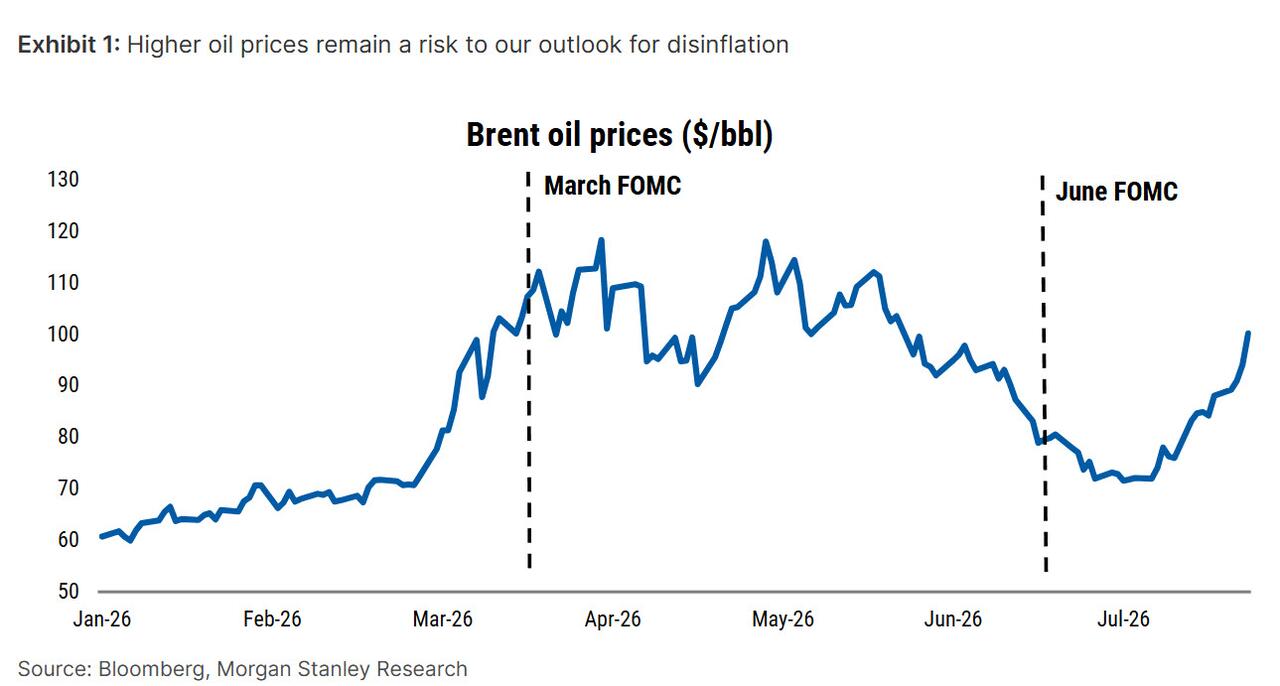
Suddenly, the debate that had centered on whether a rate hike would occur in September erupted prematurely in July. As of this past Tuesday, interest rate futures markets indicated roughly a one-in-three probability of a rate hike this week—a level of uncertainty far greater than usual.
To some extent, if the Fed were to deliver a surprise rate hike tonight, the rationale would stem less from signals previously issued by FOMC members and more from whether Chair Kevin Warsh decides, based on his own judgment, to advocate strongly for tightening. Consequently, this decision has become as much a test of Warsh’s personal strategy as it is a monetary policy meeting.
Below are four key points to watch closely in tonight’s Fed decision:
① Will there be a rate hike tonight?
The Fed holding rates unchanged remains the more likely scenario tonight. This aligns both with the guidance offered by June’s moderate inflation data and with the recent signals from officials whose comments typically reflect the Fed’s thinking. Moreover, most interpretations suggest that Warsh himself pointed in this direction during his five-hour congressional testimony two weeks ago—he gave no indication at the time that any policy action was imminent.
Conversely, if the Fed ultimately opts to raise rates, it would signal a significant shift in policy stance.
This means that officials who previously held a relative advantage within the committee and favored maintaining the status quo will be 'directly overruled,' significantly diminishing the weight of their future statements.
At the same time, this move could also invite political pressure. Over the past year, the White House has repeatedly emphasized that interest rates are too high and that inflation is under control; if the Fed chair, personally nominated by Trump, were to push for a rate hike now, it would not only directly contradict that stance but also completely dispel rumors that Waller is merely following Trump’s lead.
② How many votes for a rate hike?
Analysts predict that if the Federal Reserve holds rates steady, Wall Street’s initial market reaction to the decision may hinge on the number of dissenting votes—making this a key determinant of whether markets trend bullish or bearish tonight.
Since the last meeting, Governors Waller and Cook have indicated they would consider tightening policy if signs emerge that the downward momentum in inflation is stalling. Meanwhile, two regional Fed presidents with voting rights this year—Loretta Mester of Cleveland and Lorie Logan of Dallas—have issued notably hawkish remarks: Logan argued that a modest increase in the policy rate would better balance the outlook against risks and stated that some degree of policy restrictiveness is needed to bring inflation back to target. Mester explicitly said the Fed might need to consider raising rates.
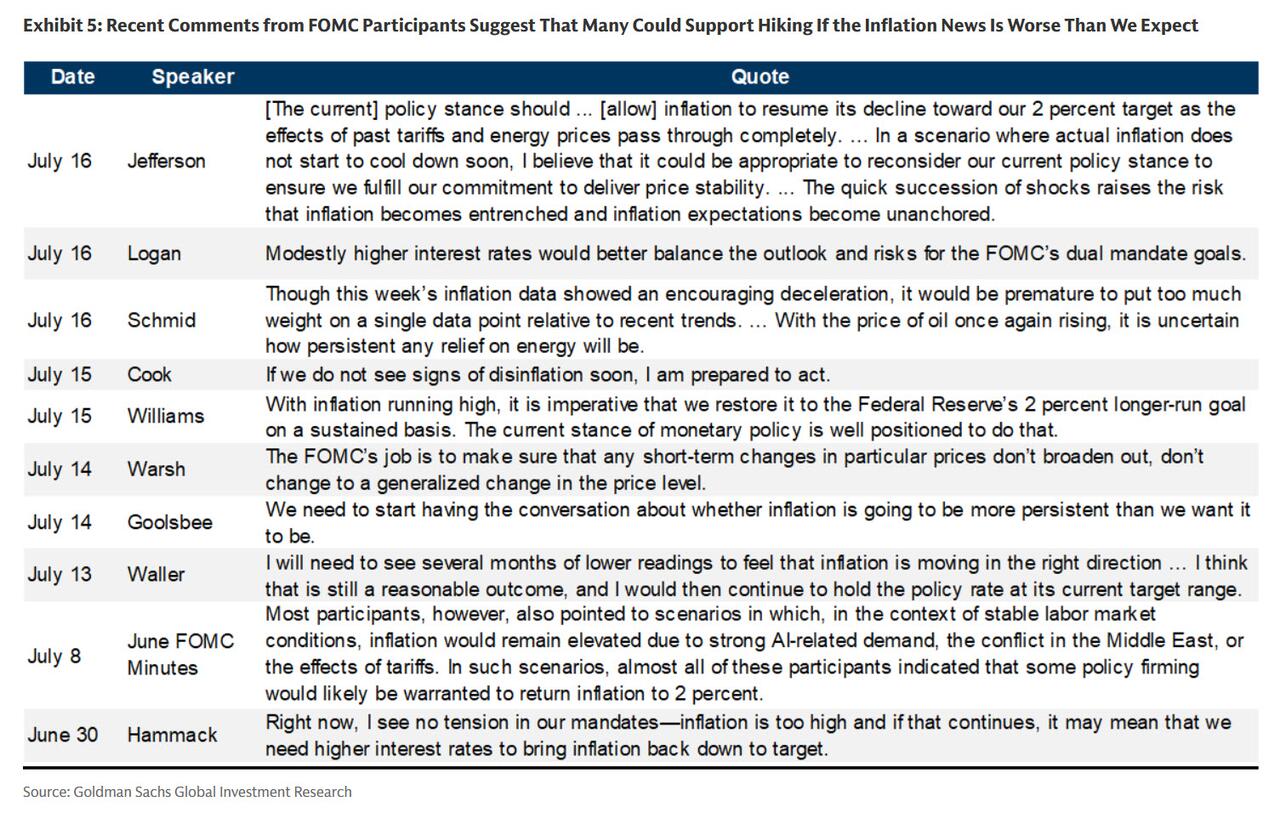
Based solely on these statements, if the Fed indeed decides to hold rates unchanged, the meeting this week could see two to four dissenting votes in favor of a rate hike.
According to current mainstream expectations among market participants, Cleveland Fed President Mester and Dallas Fed President Logan are widely expected to vote in favor of a rate hike. However, if other officials join them, equity and bond markets could react negatively, as such a move would be interpreted by markets as a signal that the central bank is leaning toward tightening.
③ How will the Fed’s statement be revised?
At the first FOMC meeting chaired by Waller last month, the Federal Reserve completely overhauled the framework of its monetary policy statement.
That statement was drastically shortened to approximately 130 words—the Fed not only removed all forward guidance language but also reinforced the FOMC’s commitment to its 2% inflation target.
Consequently, even minor wording changes in tonight’s statement will be closely scrutinized. Although a fundamental shift is unlikely, it remains to be seen whether a consistent statement format has been established, given that this is only the second meeting under Waller’s leadership.
Morgan Stanley expects the Fed statement to remain largely unchanged: reiterating its ‘ample reserves’ framework and describing economic activity as expanding “at a solid pace despite high uncertainty.” There have been no significant new signals regarding productivity growth or capital expenditures. The FOMC is likely to continue characterizing the unemployment rate as “little changed” and inflation as “elevated.”
④ What will Waller say?
Regardless of the decision the Federal Reserve ultimately makes tonight, Waller’s interpretation of it will be critical. Over the past two months, he has repeatedly vowed to restore price stability and emphasized the Fed’s unequivocal responsibility for inflation.
If the Fed holds rates steady tonight, as most analysts expect, attention will turn to why it missed this prime opportunity to fulfill its commitment—and what conditions would actually prompt him to act. During the Fed’s previous meeting, tensions between the U.S. and Iran appeared to be easing; that reassurance no longer exists.
Conversely, if the Fed chooses to raise rates tonight, Waller’s rationale will directly shape market expectations. If the hike is framed as a response to the Fed’s persistent failure to meet its inflation target, it could signal the start of a series of rate increases—some analysts anticipate that long-term U.S. Treasury yields might even decline in this scenario, as markets interpret it as the Fed finally committing to taming inflation. However, if the move is portrayed merely as a one-off reaction to short-term shocks, its policy signal would be significantly weaker.
Stephen Juneau, an economist at Bank of America, noted that a rate hike without clear justification could easily trigger market confusion. “There’s a risk the market overinterprets the move, questioning why they chose to hike now when inflation data had already shown signs of cooling.”
 Stay ahead on major financial events and discover investment opportunities early! Open Futubull > Market > US Stocks >Financial Calendar/Featured Macro Data, seize the investment opportunity ahead of the curve!

Editor/lambor