All three major U.S. stock indices declined sharply, with the Dow Jones Industrial Average plunging 1,153.18 points, or 2.19%, to close at 51,594.14; the S&P 500 falling 1.52% to 7,316.16; and the Nasdaq Composite dropping 1.74% to 24,442.94, marking its sixth consecutive day of losses. Brent crude surged 8%, rebounding above $90 per barrel. The Federal Reserve held interest rates steady, but three FOMC members dissented in favor of a rate hike. The yield on the 30-year U.S. Treasury bond soared to its highest level since June 2007.
The ceasefire in Iran collapsed after only four days, sending Brent crude surging 8% back above $90. The Federal Reserve held rates steady, but three FOMC members dissented in favor of a rate hike. The yield on the 30-year U.S. Treasury bond soared to its highest level since June 2007, while the Dow Jones Industrial Average recorded its largest single-day point decline in 15 months.
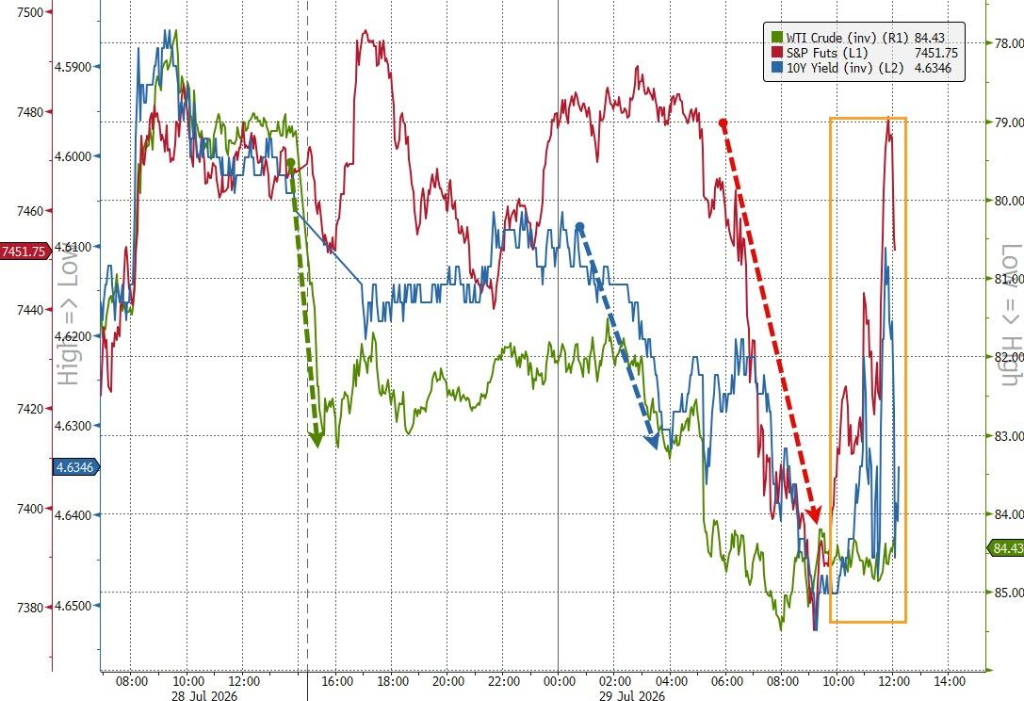
Iran’s overnight missile strike shattered the ceasefire, triggering a 7% one-day surge in oil prices.
The collapse of the Iran ceasefire emerged as Wednesday’s biggest shock variable for global markets.
 Iran’s Islamic Revolutionary Guard Corps launched multiple ballistic missiles from Iranian territory at U.S. military bases in Jordan, all of which were intercepted, according to U.S. Central Command. Trump vowed to “strike Iran hard” in retaliation, prompting a U.S.-Saudi coalition to conduct “precision strikes” against Iran-aligned militias in Iraq shortly afterward.
Oil markets reacted sharply. The September WTI crude futures contract surged 6.56% to settle at $84.46 per barrel, briefly breaching $85 during the session.
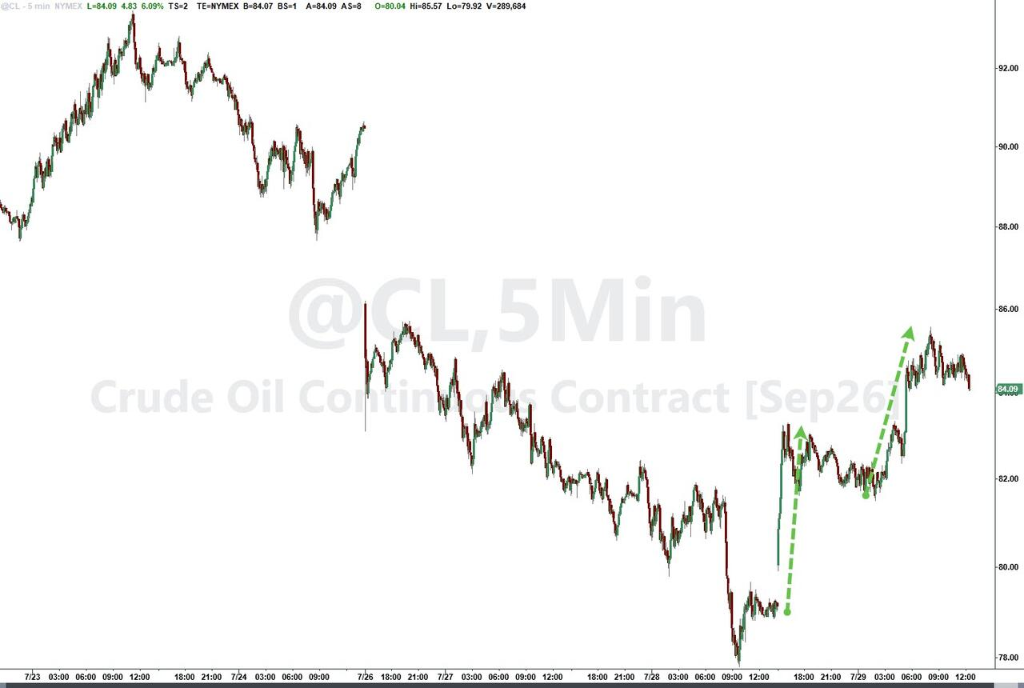
The September Brent crude futures contract jumped 7.91% to close at $90.74 per barrel, reclaiming the $90 mark. Meanwhile, Iran rejected Oman’s proposal for joint management of the Strait of Hormuz, with Deputy Foreign Minister Gharibabadi stating unequivocally on state television that access channels into Iranian ports must remain under full Iranian control.
Tickmill strategist Patrick Munnelly noted that markets are not pricing in a sudden new oil supply shock, but rather the complete erosion of any premium previously attributed to diplomatic de-escalation. Deutsche Bank senior international economist Peter Sidorov warned that escalating Middle East tensions are heightening the risk of a return to 'full-scale war.'
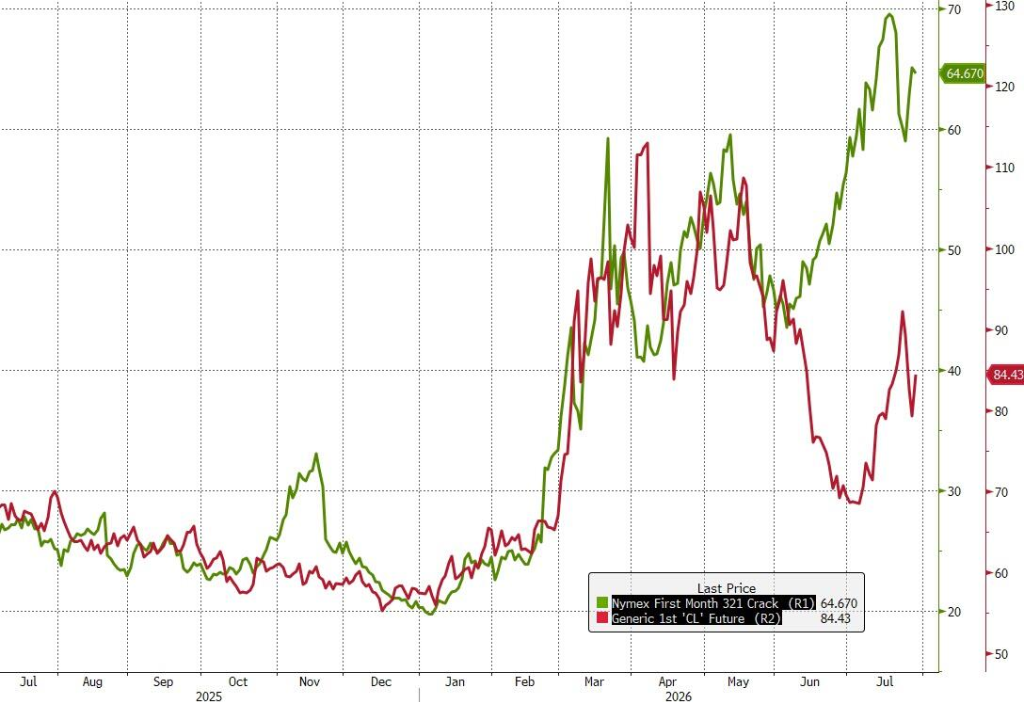
Fundamentals are tightening simultaneously. EIA data showed that U.S. crude inventories plummeted by 7.167 million barrels in the week ending July 24, dropping to 404.5 million barrels—the lowest level since 2018.
Matt Smith, head of commodity research at Kpler, pointed out that Cushing inventory levels continue to decline, approaching critically low thresholds, and exceptionally wide crack spreads are driving refineries to operate at maximum capacity.
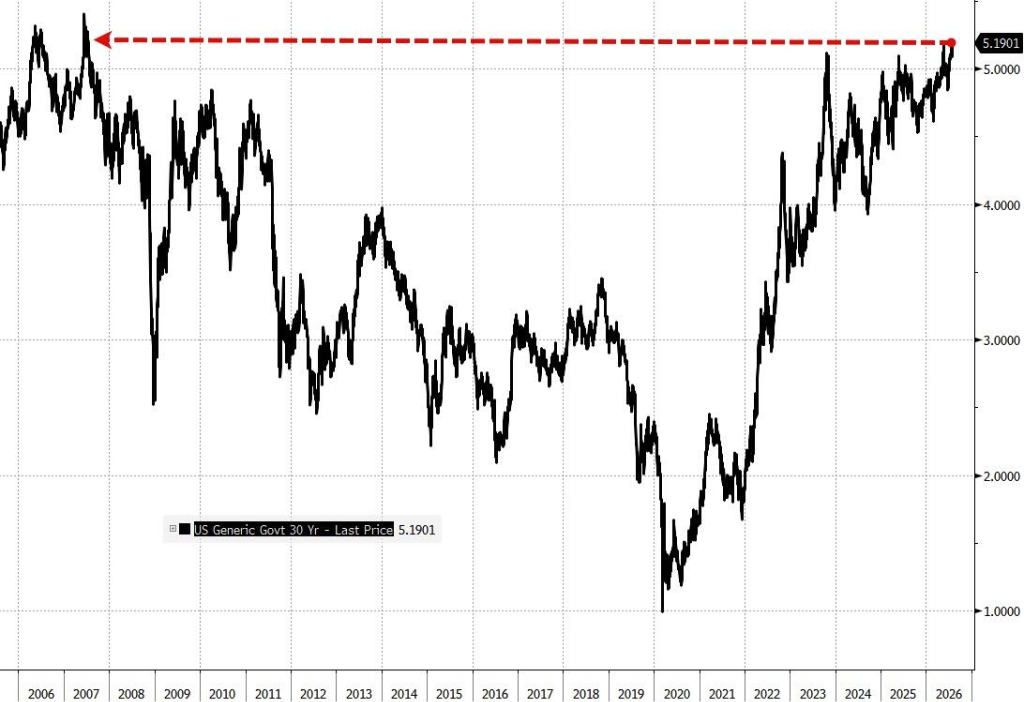
The Federal Reserve adopted a hawkish hold, with the 30-year U.S. Treasury yield soaring to 5.21%—its highest level since 2007.
The Federal Reserve's decision to hold rates steady was in line with expectations, but the extent of dissent—three opposing votes—far exceeded market forecasts.
Loretta Mester of the Cleveland Fed, Neel Kashkari of the Minneapolis Fed, and Lorie Logan of the Dallas Fed formally dissented, all advocating for a 25-basis-point rate hike. This marks the largest number of dissenting votes on the FOMC since 2022 and signals the strongest internal hawkish stance under Chair Powell.
During the press conference, Powell repeatedly emphasized that the Fed 'will not hesitate to act' to curb inflation, stating, 'We have some important decisions ahead of us.' However, what unsettled bond markets even more was his stance against providing forward guidance, leaving markets to infer the future path of interest rates solely from incoming data.
The U.S. Treasury yield curve steepened sharply. Driven by a surge in oil prices that lifted inflation expectations, the 30-year Treasury yield jumped 10 basis points to 5.21%, reaching its highest level since June 2007.
The 2-year yield declined by 5 basis points to approximately 4.27% following the Fed’s decision to hold rates steady, causing the 2s30s spread to widen rapidly. The 10-year Treasury yield rose by about 3.67 basis points to 4.641%.
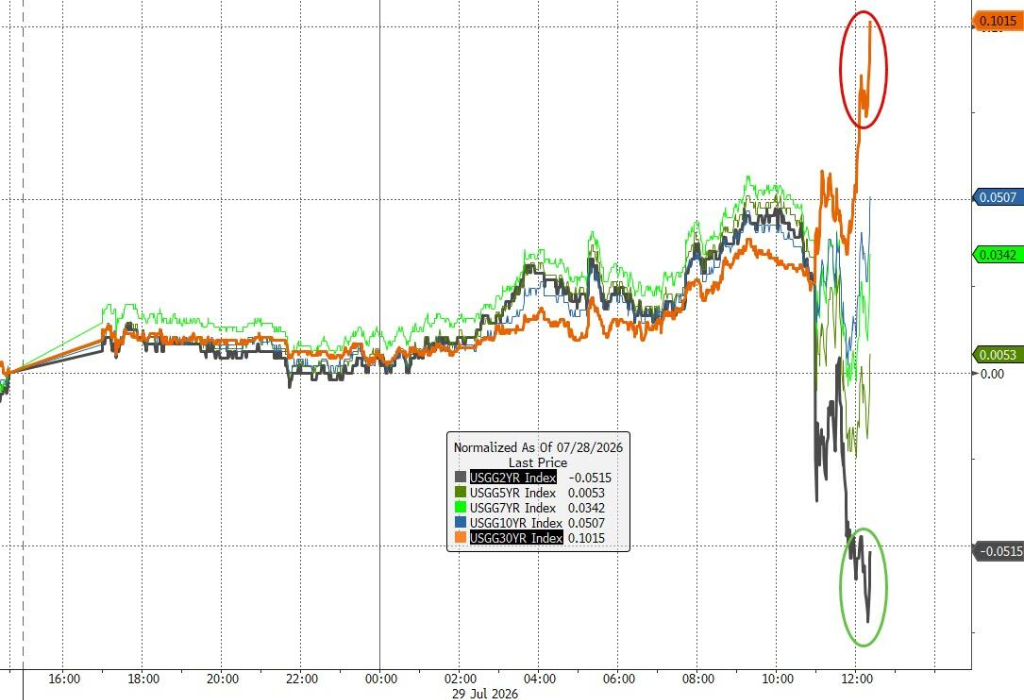
Bond vigilantes have fully returned, using long-end selling to challenge Powell: 'What are you still waiting for?'
Chip stocks accelerate the collapse of AI-driven market optimism.
Global markets plunged on Wednesday amid a triple shock: renewed fears of conflict involving Iran, hawkish divisions within the Federal Reserve, and the unraveling of AI-fueled investor confidence.
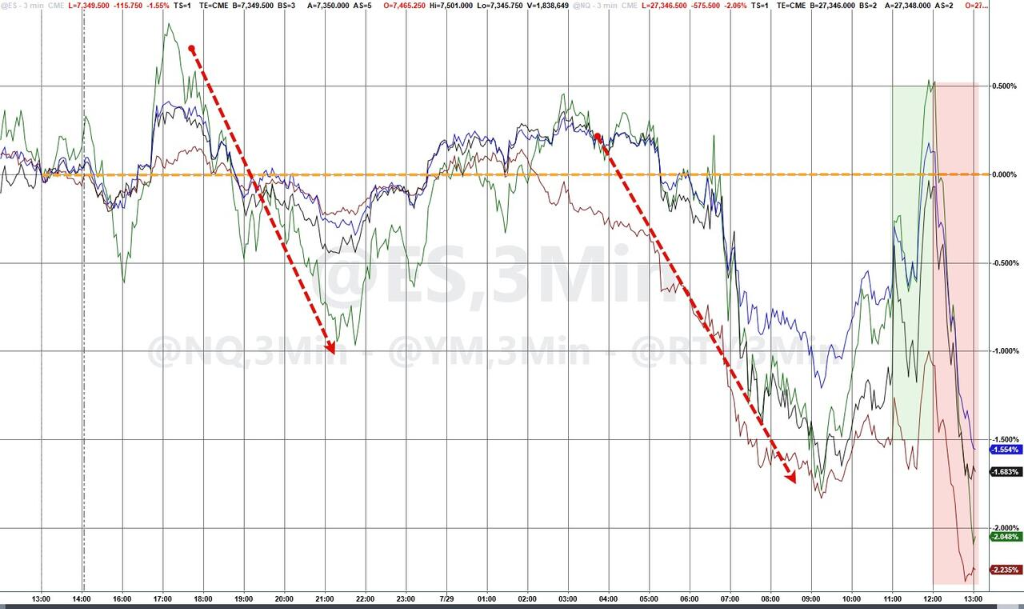
All three major U.S. equity indices declined sharply. The Dow Jones Industrial Average tumbled 1,153.18 points, or 2.19%, closing at 51,594.14; the S&P 500 fell 1.52% to 7,316.16; and the Nasdaq Composite dropped 1.74% to 24,442.94, marking its sixth consecutive daily loss.
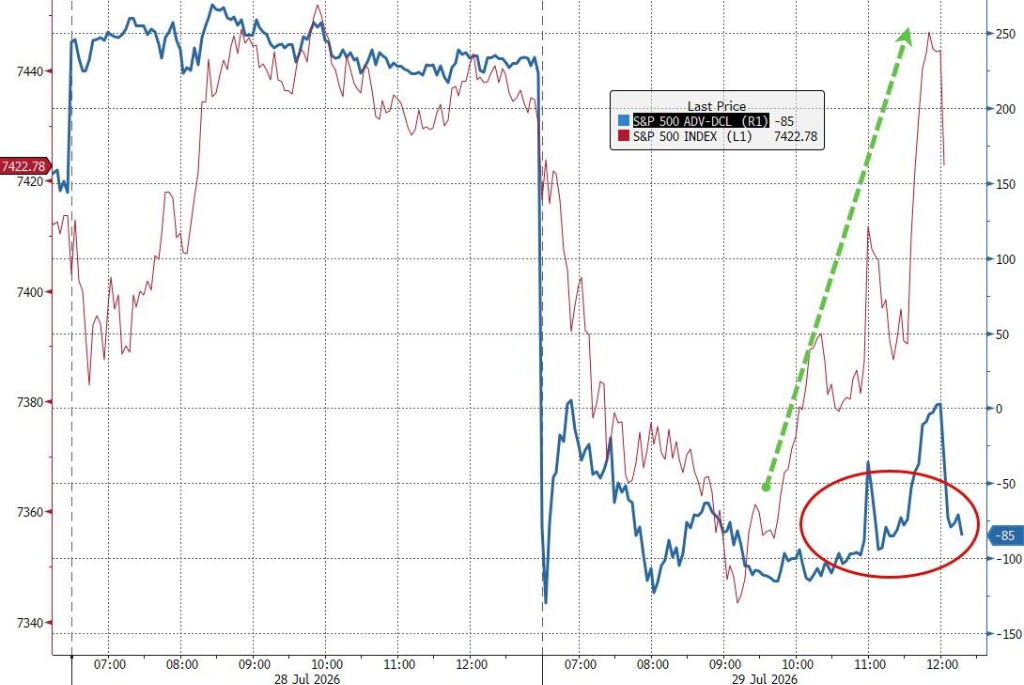
Approximately 300 stocks in the S&P 500 declined, compared to only 176 that advanced, reversing Tuesday’s historically extreme breadth into broadly negative territory.
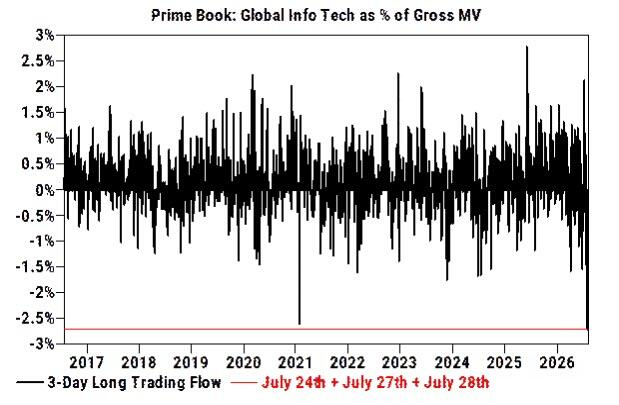
Goldman Sachs' trading desk recorded its largest three-day cumulative de-risking since November 2022, with short-selling in the technology sector reaching its highest level since 2016.
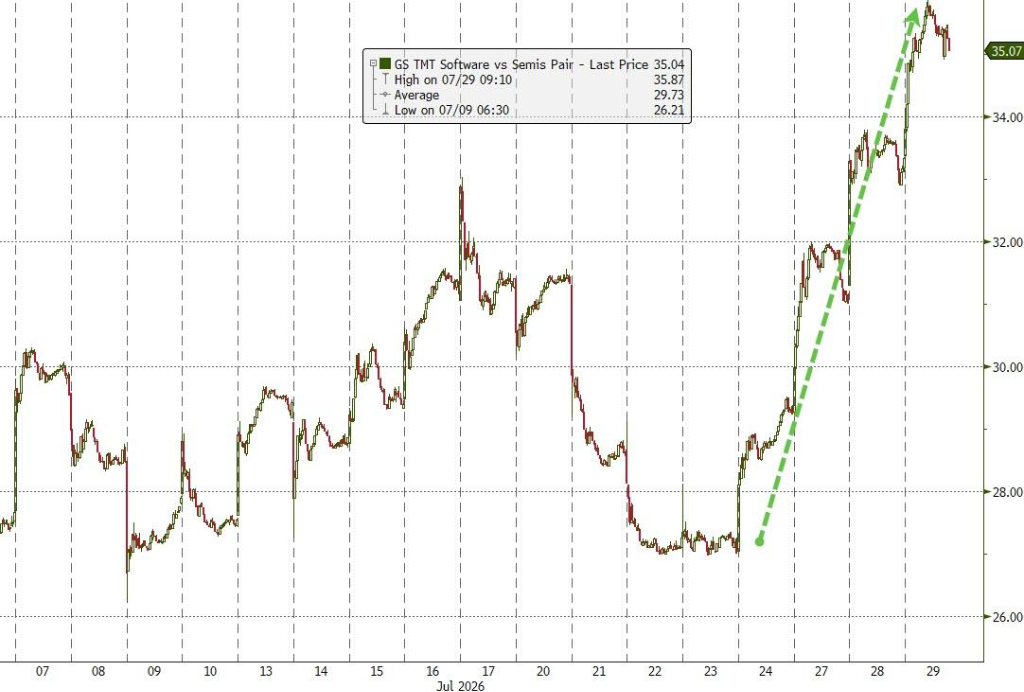
U.S. semiconductor stocks were also hit hard simultaneously. AMD fell 5.51% and Intel dropped 5.12%,$PHLX Semiconductor Index (.SOX.US)$reaching new recent lows. Meanwhile, growth-oriented software stocks rose for the fourth consecutive trading day.
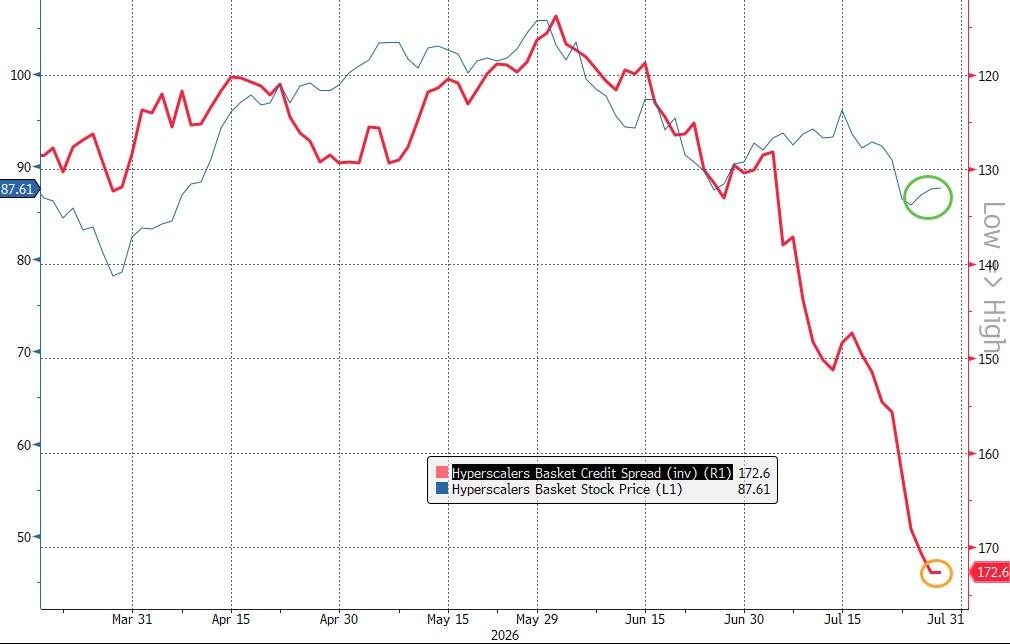
As credit markets stabilized, prices for hyperscale data centers rebounded slightly.
Large-cap stocks performed strongly today, surging sharply ahead of earnings releases on comments from Waller, though they failed to hold onto those gains.
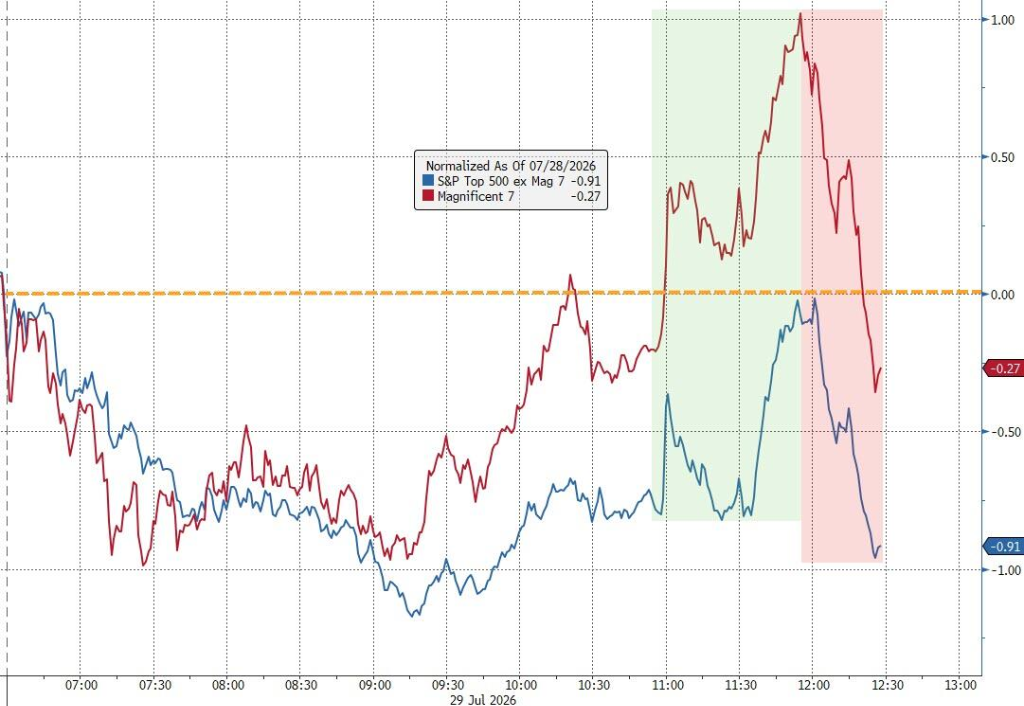
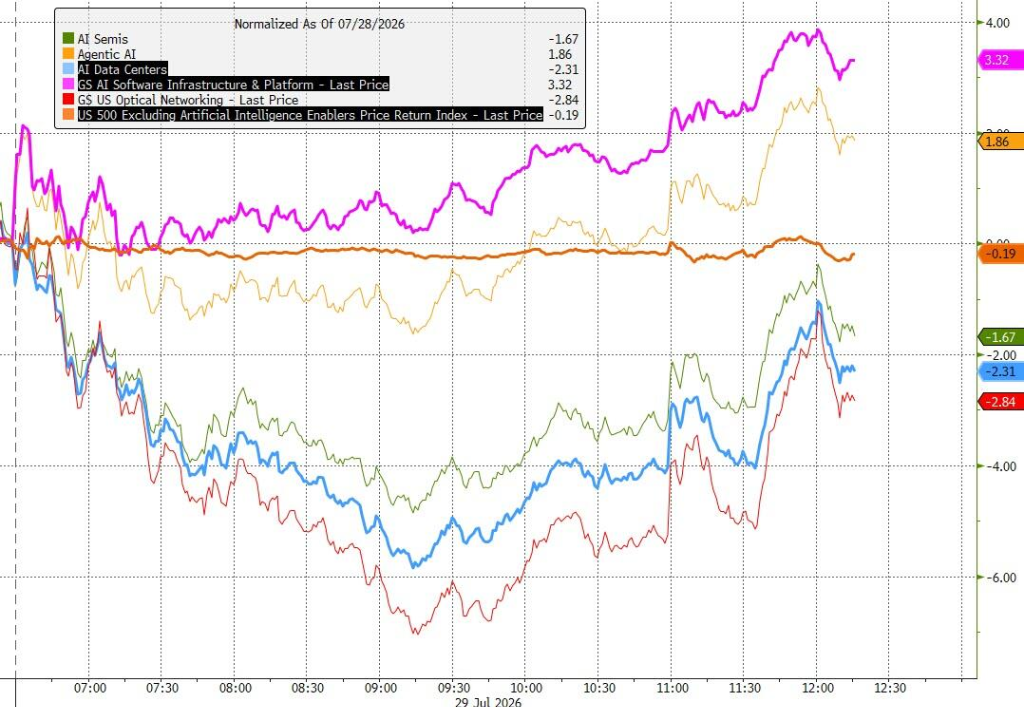
Leading artificial intelligence companies showed mixed performance today,$S&P 500 Index (.SPX.US)$(excluding the AI segment) the broader market was essentially flat, with semiconductors and data center stocks underperforming, while infrastructure and platform segments posted gains.
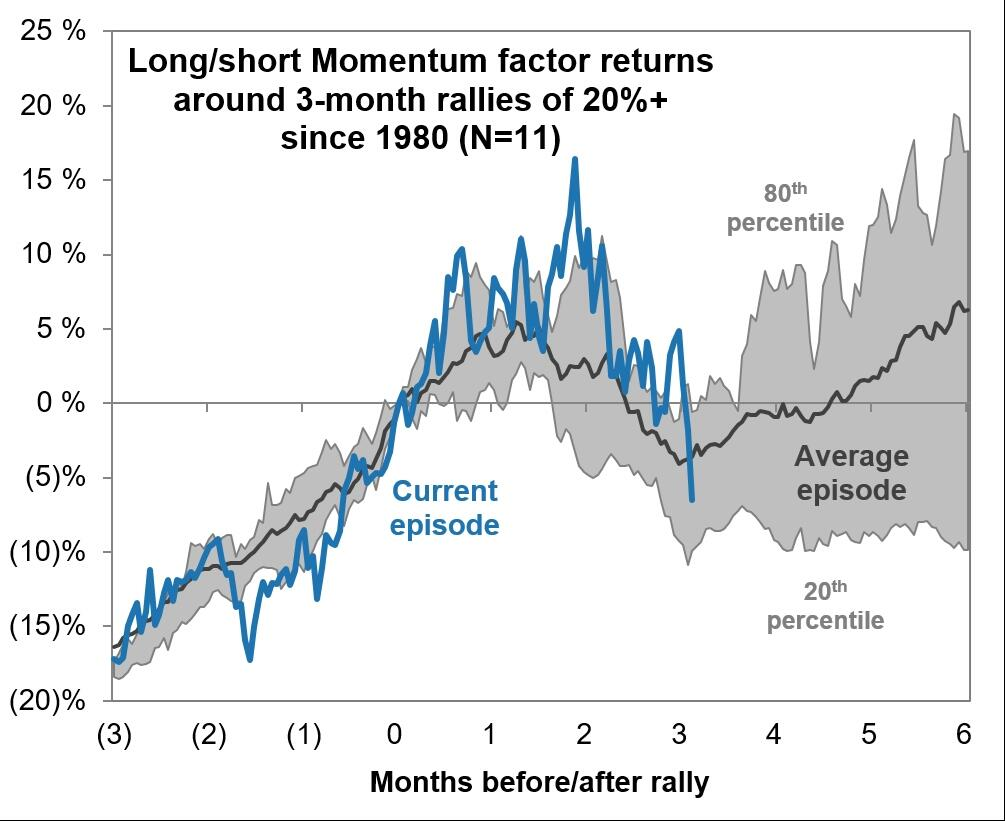
Notably, Goldman Sachs pointed out that the overallmomentum-driven tradingdecline has approached historical extremes.
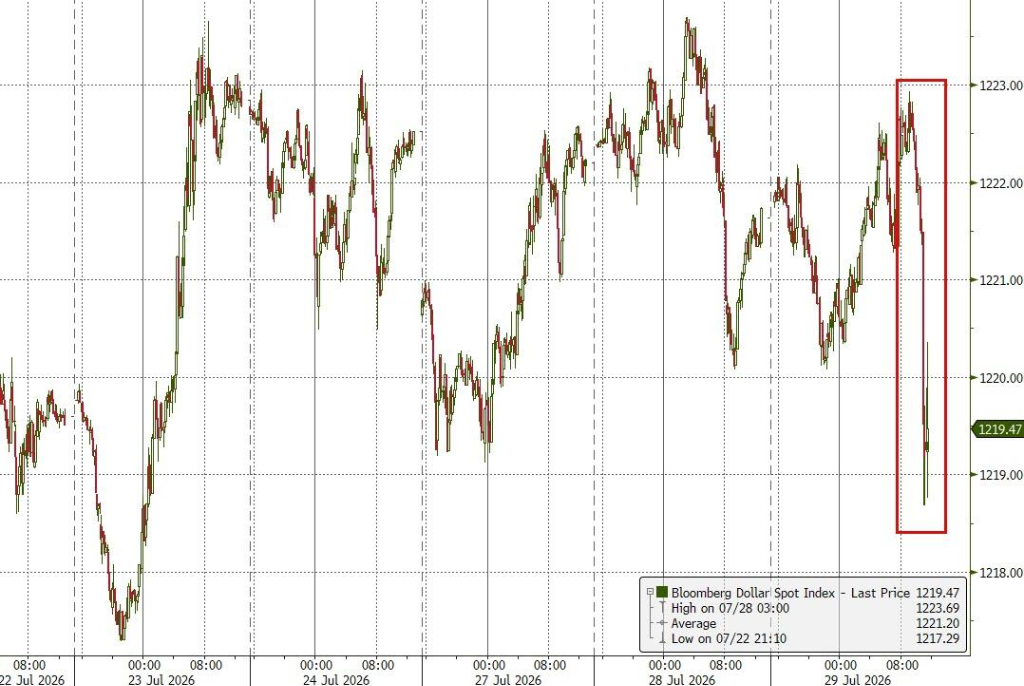
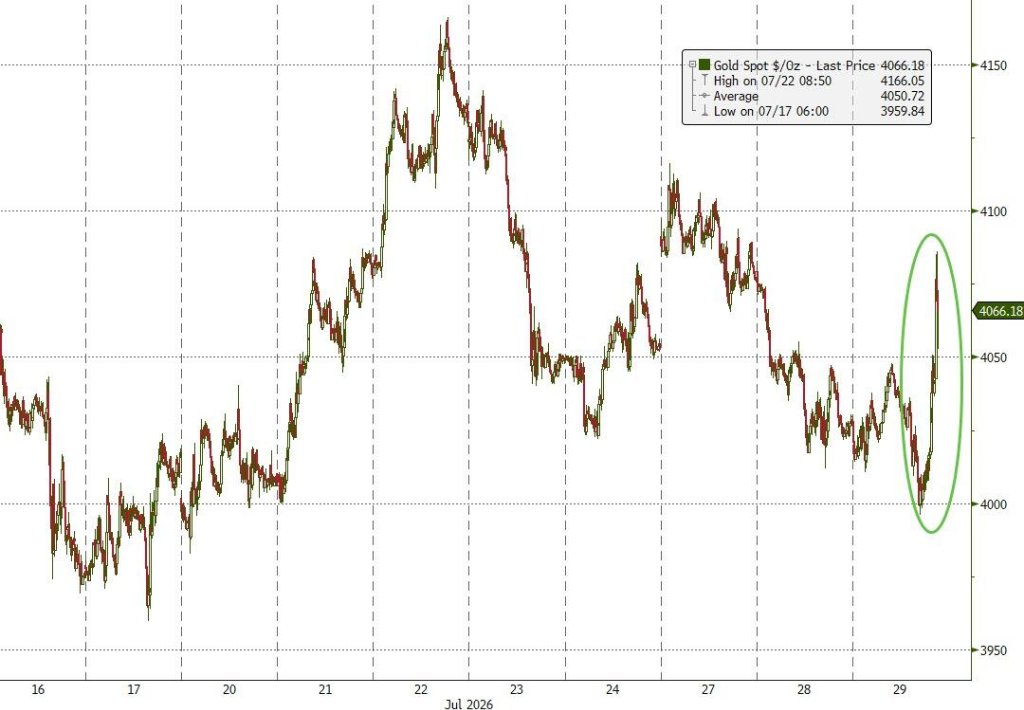
Major asset classes moved in tandem, with gold rebounding and the U.S. dollar under pressure.
$U.S. Dollar Index (USDindex.FX)$It plunged sharply following the Fed’s announcement and closed at approximately 101.17, down 0.25%.
A weaker U.S. dollar spurred a rebound in spot gold, which closed at approximately $4,066 per ounce, recovering from Tuesday's low. Silver also strengthened in tandem.
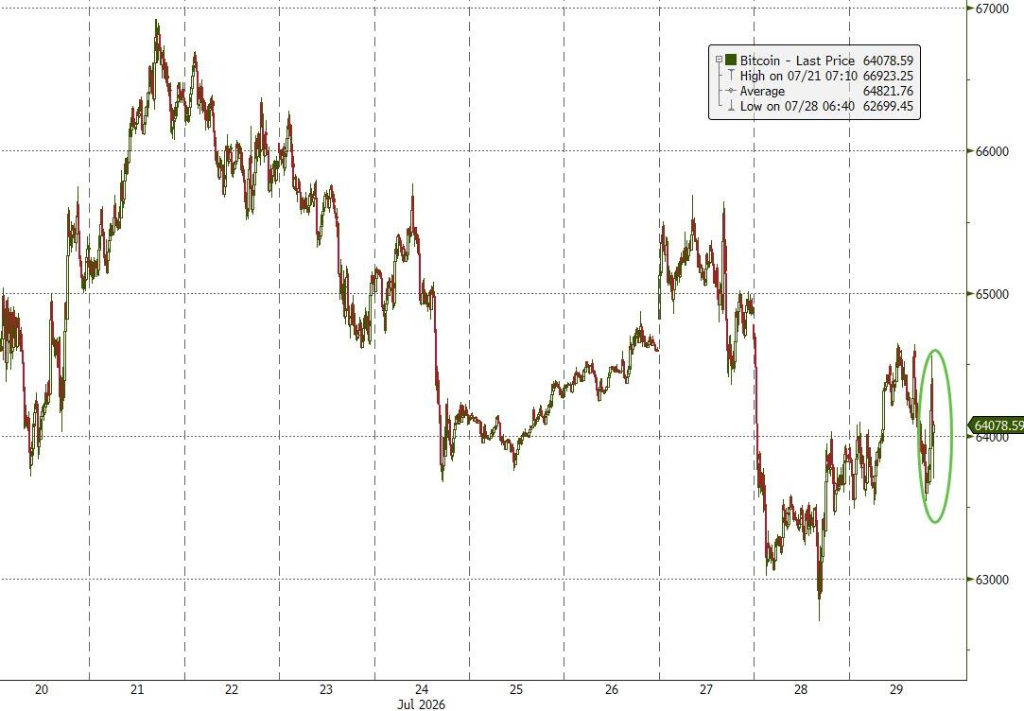
$Bitcoin (BTC.CC)$It remained above $64,000, partly supported by expectations of short-term liquidity easing as the Federal Reserve held steady.
U.S. stocks broadly declined on Wednesday, with the Dow Jones Industrial Average posting its largest single-day point drop in 15 months.
U.S. equity benchmark indices:
The S&P 500 Index fell 112.63 points, or 1.52%, closing at 7,316.15.
The Dow Jones Industrial Average dropped 1,153.18 points—the largest single-day point decline since April 2025—representing a 2.19% loss, and closed at 51,594.14.
The Nasdaq Composite declined 433.97 points, or 1.74%, closing at 24,442.942.$NASDAQ-100 Index (.NDX.US)$It fell 570.828 points, or 2.06%, closing at 27,192.306.
$Russell 2000 Index (.RUT.US)$It declined 1.61%, closing at 2,906.31.
The CBOE Volatility Index (VIX) rose 13.29%, closing at 20.63.
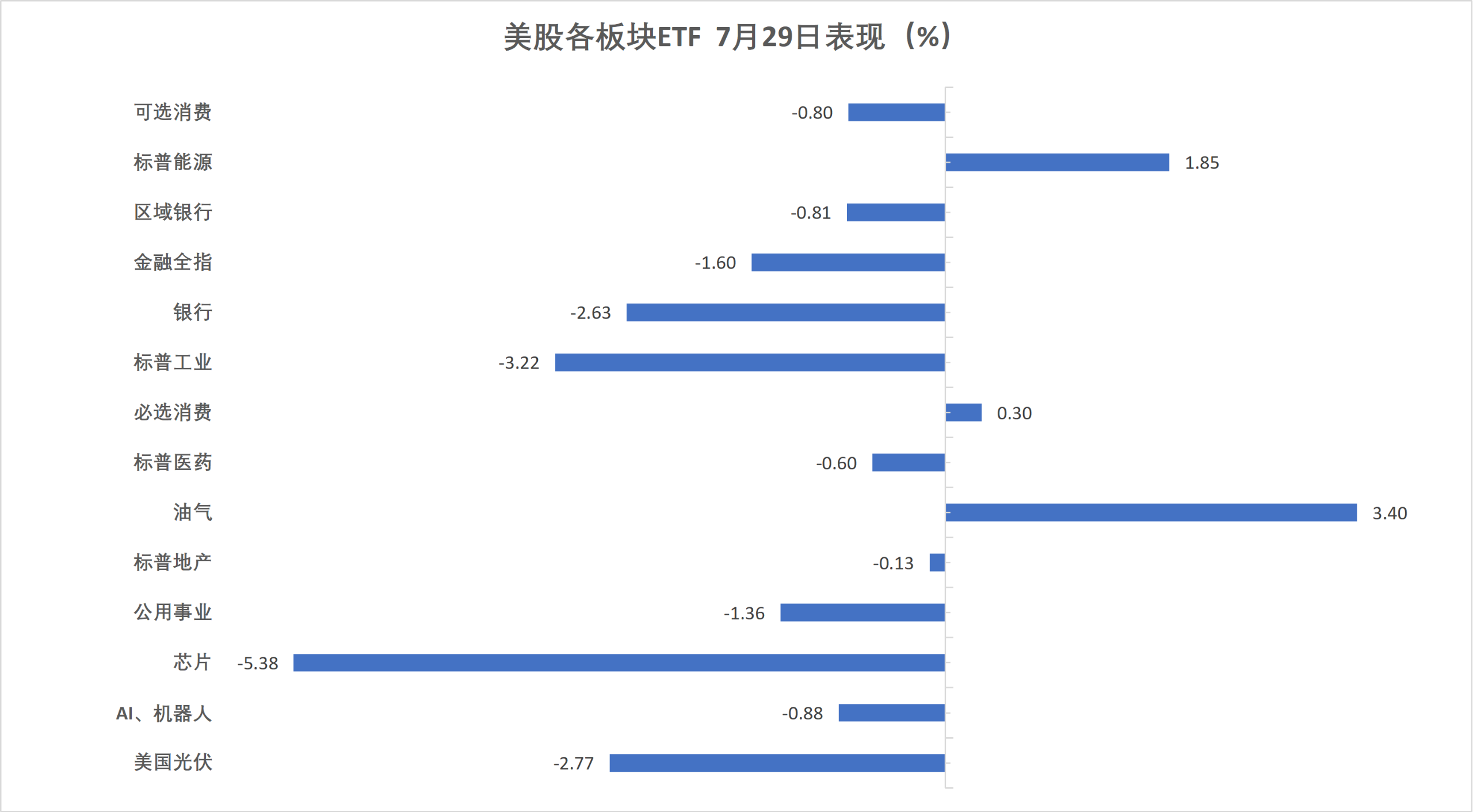
U.S. stock sector ETFs:
Sector ETFs broadly declined, with the semiconductor ETF falling more than 5%, the S&P Industrials down 3.22%, and both bank and U.S. solar ETFs dropping over 2%. In contrast, the oil & gas ETF gained 3.40%, and the S&P Energy Index rose 1.85%.
Mag 7:
The Wind U.S. Mag 7 Index declined by 0.8%.
NVIDIA (NVDA.US)down 3.55%,$Tesla (TSLA.US)$down 2.97%,$Amazon (AMZN.US)$down 1.82%; Meta fell 1.31%,$Microsoft (MSFT.US)$down 0.71%; Apple dropped 0.56%, while Google A rose 0.90%.
Semiconductor stocks:
The Philadelphia Semiconductor Index closed down 588.194 points, or 5.33%, at 10,447.489 points.
$Taiwan Semiconductor (TSM.US)$ADR fell 4.48%, and AMD declined 5.51%.
U.S.-listed Chinese stocks:
The Nasdaq Golden Dragon China Index closed up 1.73% at 6,434.96 points, marking its second consecutive trading day above the 50-day moving average and approaching the 100-day moving average, with a cumulative gain of 5.41% over the past three trading days.
Among actively traded Chinese ADRs,New Oriental Education (EDU.US)up 14.7%, Xiaomi rose 8.1%, Li Auto gained 4.6%,$PDD Holdings (PDD.US)$, Tencent advanced 3.2%, Bilibili and XPeng both rose over 2%,$NetEase (NTES.US)$up 1.8%,$ASE Technology Holding (ASX.US)$down 6.8%.
Other stocks:
$Circle(CRCL.US)$down 4.68%.
"America's Kweichow Moutai"$Coca-Cola (KO.US)$It rose 0.92%, reaching another all-time high, and has gained nearly 30% year-to-date. The oil sector also broadly advanced amid escalating U.S.-Iran tensions.$Exxon Mobil (XOM.US)$、$Chevron (CVX.US)$all gaining more than 2%.
Roundhill Storage ETF fell more than 6%, with optical communication and storage sectors continuing to plunge.Micron Technology (MU.US)Plummeting over 10%,$Coherent (COHR.US)$down over 8%, Credo,$Lumentum (LITE.US)$、$SanDisk (SNDK.US)$down more than 7%,$Marvell Technology (MRVL.US)$Down more than 6%, with Intel and AMD both falling over 5%.
Other news
[After-Hours Earnings Snapshot]
As of this writing, Microsoft shares rose more than 2% in after-hours trading. The company reported fourth-quarter revenue of $90.01 billion, up 18% year-over-year, versus an estimate of $87.72 billion; operating income of $40.60 billion, compared to an estimate of $39.02 billion; and adjusted earnings per share (EPS) of $4.74, surpassing the expected $4.25. Azure cloud revenue growth reached its highest level since 2022, and annual revenue exceeded $100 billion for the first time.
Meta shares dropped more than 10% in after-hours trading. The company reported second-quarter revenue of $60.80 billion, up 28% year-over-year, versus an estimate of $60.24 billion; EPS of $6.18, down from $7.14 in the same period last year. Meta projected third-quarter revenue between $61 billion and $64 billion, with a midpoint below analysts’ consensus estimate of $63.17 billion, sparking investor concerns.
$Lam Research (LRCX.US)$Shares rose more than 5% in after-hours trading. The company reported Q4 revenue of $6.72 billion for fiscal year 2026, up 15.1% quarter-over-quarter; adjusted EPS of $1.82, up 23.8% quarter-over-quarter.
$Arm Holdings(ARM.US)$Shares fell more than 3% in after-hours trading. The company reported first-quarter adjusted gross margin of 98.1%, in line with expectations; adjusted net income of $480 million, exceeding the expected $433.6 million. Arm Holdings forecast second-quarter revenue between $1.33 billion and $1.43 billion, compared to analysts’ estimate of $1.35 billion.
$Robinhood(HOOD.US)$Shares declined more than 4% in after-hours trading. The company reported Q2 2026 revenue of $1.31 billion, up 32% year-over-year; diluted EPS of $0.62, up 48% year-over-year.
[NextEra Energy and$Brookfield(BN.US)$to invest $100 billion in building a data center campus]
The largest electric utility in the United States,NextEra Energy (NYSE: NEE)NextEra Energy and asset management giant Brookfield announced plans to develop a data center campus with a total investment of approximately $100 billion at a former uranium enrichment site in Paducah, Kentucky.
[Vertiv Shares Drop Over 17% as Revenue Misses Expectations, Dragging Down Stock Price]
Vertiv Holdings Co., a leading data center liquid cooling stock, fell 17.26% on Wednesday. The company reported second-quarter revenue of $3.27 billion, up 24% year-over-year, but below the market consensus estimate of $3.38 billion. Given the stock’s substantial year-to-date gains prior to the announcement, investor expectations were high, and the slight revenue shortfall triggered a sell-off.
【 Hims & Hers Health(HIMS.US) Sued by the FTC]
Shares of online healthcare company Hims & Hers Health dropped 14.73% after the U.S. Federal Trade Commission (FTC) filed a lawsuit alleging the company violated user privacy rules by sharing users’ health data with third-party advertisers such as Meta and Snap, in addition to raising concerns over subscription cancellation practices and billing procedures related to consumer protection.
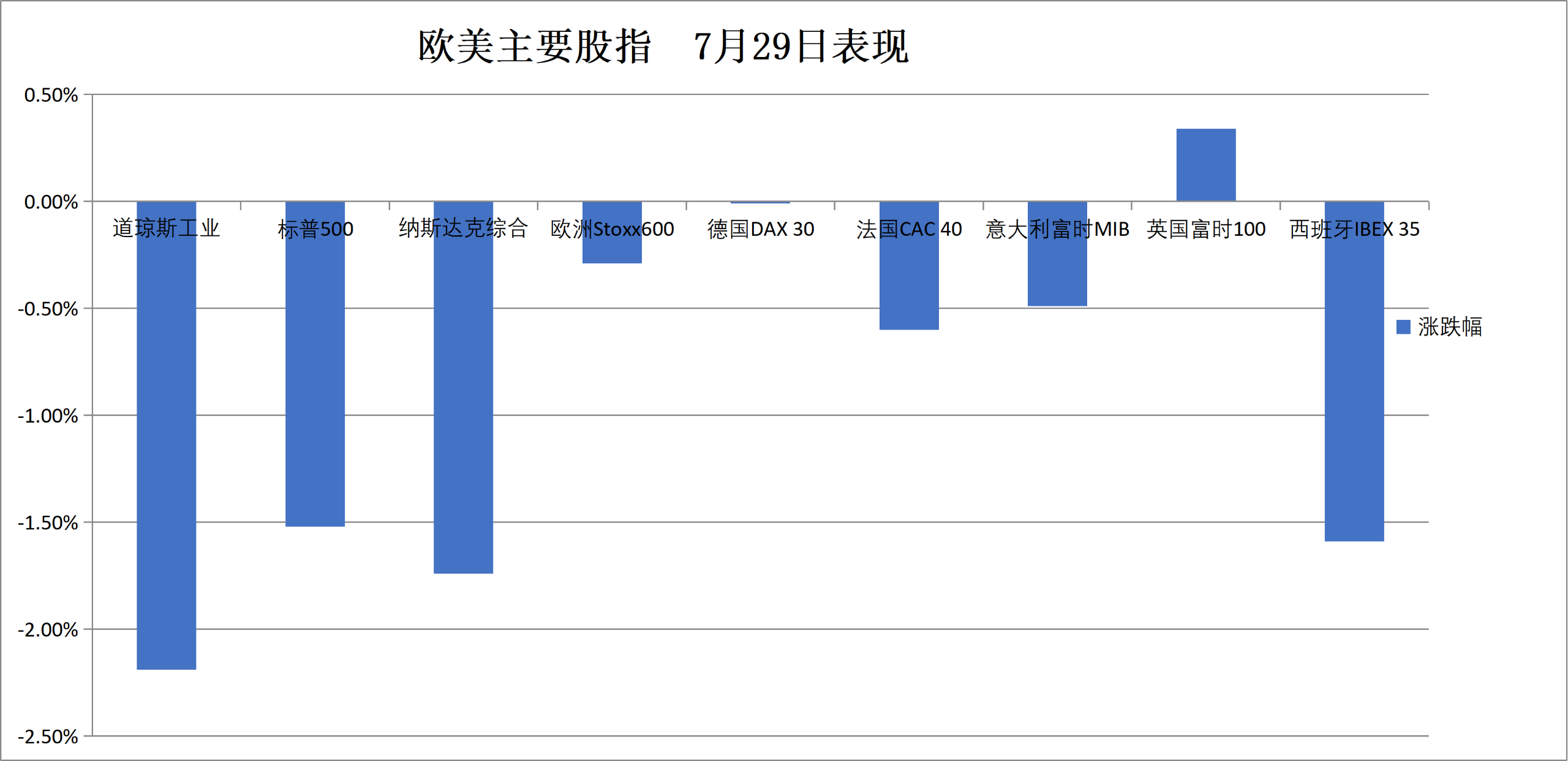
Italian banking stocks closed down nearly 1.3%, while the UK equity index rose more than 0.3%.
Pan-European Equities:
The pan-European STOXX 600 Index closed down 0.29% at 645.01 points.
The eurozone STOXX 50 Index closed down 0.65% at 6,248.84 points.
National stock indices:
Germany's DAX 30 Index closed down 0.01% at 25,460.48 points.
France's CAC 40 Index closed down 0.60% at 8,408.27 points.
$FTSE 100 Index (.FTSE.GB)$Closed up 0.34% at 10,908.41 points.
Want to select stocks or get a stock diagnosis? Curious about the opportunities and risks in your portfolio? For all your investment questions,Just ask Futubull AI!

Editor/Liam