Macro News
U.S. media: The U.S. military has drafted a plan for an intensive two-week air campaign against Iran, awaiting Trump's decision.
According to The Wall Street Journal, last week, U.S. President Trump held an emergency consultation aboard Air Force One on a tarmac in Delaware with his top military advisers—Chairman of the Joint Chiefs of Staff General Dan Caine and Defense Secretary Hegseth. Also participating in the impromptu meeting was General Brad Cooper, commander of U.S. Central Command, who had drafted a plan for punitive airstrikes against Iran lasting up to two weeks.
 Now, in response to Iran’s surprise missile attack on Tuesday, Trump has vowed retaliation, but remains torn between two options: he could approve Cooper’s proposed intensive air campaign lasting 10 to 14 days aimed at crippling Iran’s missile capabilities—despite military warnings of critically low stocks of defensive munitions—or opt for a more restrained strike to leave room for diplomatic engagement.
According to informed sources, Cooper’s high-intensity option is designed to break the stalemate of tit-for-tat airstrikes by sharply escalating the conflict. In his suite of proposed scenarios, this 'decisive strike' approach would reduce U.S. reliance on defensive munitions, as Iran’s offensive capabilities would be significantly degraded.

Trump Vows to Strike Iran Hard and Seeks Authorization to Impose Tariffs on Iran
On the afternoon of July 29 local time, U.S. President Trump told the media at the White House that the United States would deliver a 'heavy blow' to Iran in retaliation for 'Iran launching missiles at U.S. forces in the Middle East,' declaring, 'It’s now America’s turn to strike back.' Trump added, 'Iran knows this strike is inevitable and has asked the U.S. not to carry it out,' but the U.S. will 'teach them a lesson.'
Trump said he had received a briefing on the 'drone attack targeting liquefied natural gas tankers in Egyptian waters' and that 'the issue will be resolved.' Earlier that day, in an interview, Trump stated the U.S. would carry out 'strong retaliation' and 'hit Iran hard.' He also expressed his desire to add provisions authorizing U.S. tariffs on Iran into the sanctions bill against Russia previously championed by the late Senator Lindsey Graham.
JPMorgan: Under Political Pressure Ahead of U.S. Midterm Elections, Treasury Likely to Delay Signaling Increased Bond Issuance
JPMorgan strategists believe the U.S. Treasury, seeking to avoid unsettling bond markets ahead of the crucial midterm elections, is expected to maintain unchanged language in its quarterly refunding statement next week and hold off on introducing any possibility of increasing Treasury issuance. JPMorgan forecasts a $3.7 trillion funding gap over the next four fiscal years, implying the Treasury should adjust its longstanding guidance on auction sizes to meet its objective of 'prudent debt management.'
The team led by Jay Barry noted specifically that the Treasury should remove the word 'at least' from its current phrasing that auction sizes are expected to remain stable 'for at least the next few quarters.' However, in practice, strategists expect political considerations to dominate the Treasury’s decision-making.
If the Treasury adjusts its guidance next week, it could unsettle bond markets ahead of the November midterm elections and push long-term borrowing costs higher. Those costs are already near their highest levels since Trump assumed office. Treasury Secretary Scott Bessent acknowledged last year that Treasury issuance plans are linked to yield levels.
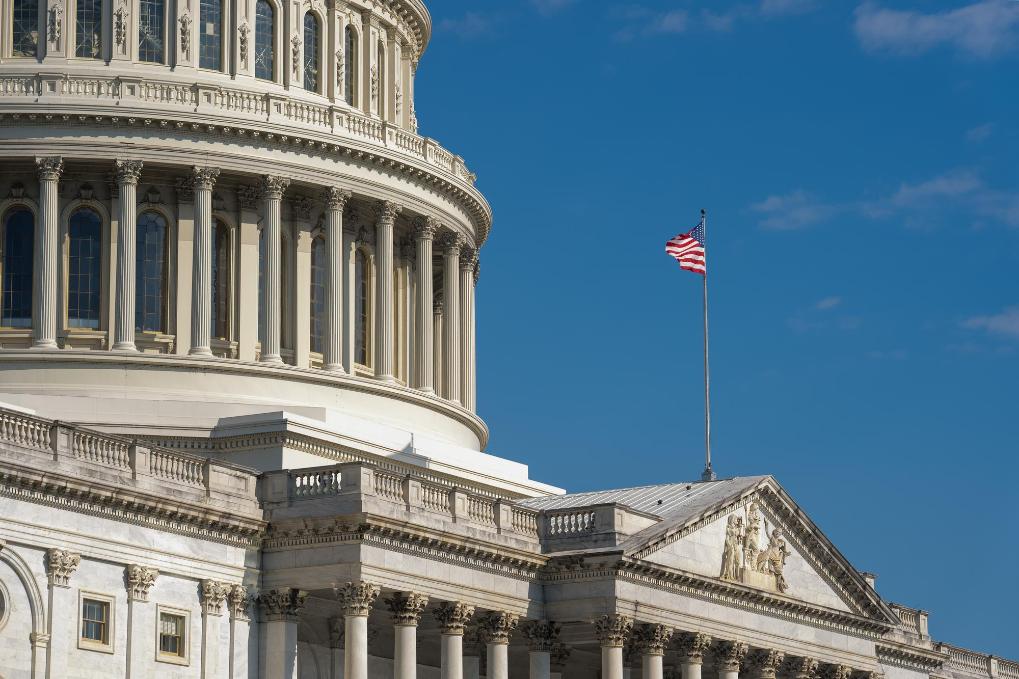
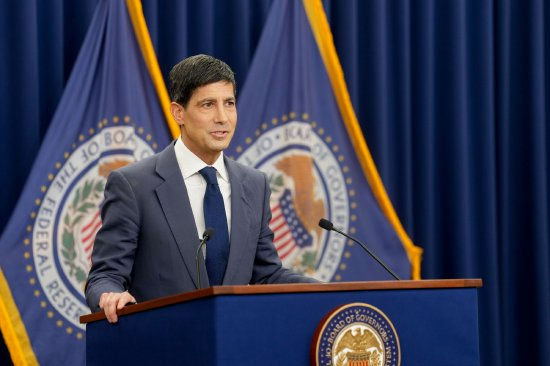
Waller opened by reaffirming the 2% inflation target, stating there is no such thing as a 'soft target.'
At the outset of his press conference, Federal Reserve Chair Waller reiterated the Fed’s firm commitment to achieving its 2% year-over-year inflation target. He stated that the Committee remains steadfast in its pursuit of price stability. In the current environment of heightened uncertainty, refraining from providing forward guidance constitutes a 'prudent' approach, he added.
He emphasized to reporters that the Federal Reserve does not have a so-called 'soft inflation target,' nor does it maintain any other implicit objectives—the sole inflation target is 2%. On the broader economic outlook, Waller noted that the U.S. economy has demonstrated 'impressive resilience,' maintaining a positive trajectory despite recent shocks.
Waller: Closely Monitoring Market Pricing but Not Acting on It
During the press conference, Federal Reserve Chair Waller explained why he referenced financial markets having already priced in tighter monetary policy expectations in the absence of explicit central bank guidance—but stressed this does not obligate the Fed to follow market pricing set by traders and investors.
Waller stated, 'I am encouraged that, during the intermeeting period, markets adjusted their pricing not because of us, but on their own accord to reflect a tighter financial environment.' He added, 'I view this as a beneficial development.' However, he cautioned, 'We do not endorse or support any specific market move, but I would say we are watching market developments very closely.'
Related Reading:The most hawkish split in a decade? The Fed holds steady, reaffirms its inflation commitment, but three voting members support a rate hike.
Following the FOMC statement, the probability of a Federal Reserve rate hike in September has declined.
According to CME Group's 'FedWatch Tool,' the probability that the Federal Reserve will keep rates unchanged through September stands at 36.8%, while the probability of a cumulative 25-basis-point rate hike is 63.2%, and the probability of a cumulative 50-basis-point hike is 0% (prior to the Fed's decision, these probabilities were 17.8%, 60.2%, and 22%, respectively). The probability of unchanged rates through October is 26.2%, with a 55.6% chance of a cumulative 25-basis-point hike, an 18.2% chance of a cumulative 50-basis-point hike, and a 0% chance of a cumulative 75-basis-point hike (prior to the Fed's decision, these probabilities were 11.9%, 46.1%, 34.7%, and 7.3%, respectively).
U.S. Stock Market Update
All three major indices closed lower.
On Wednesday, July 29, all three major U.S. equity indices declined. At the close, the Dow Jones Industrial Average fell 2.19% to 51,594.14; the Nasdaq Composite dropped 1.74% to 24,442.94; and the S&P 500 declined 1.52% to 7,316.15.

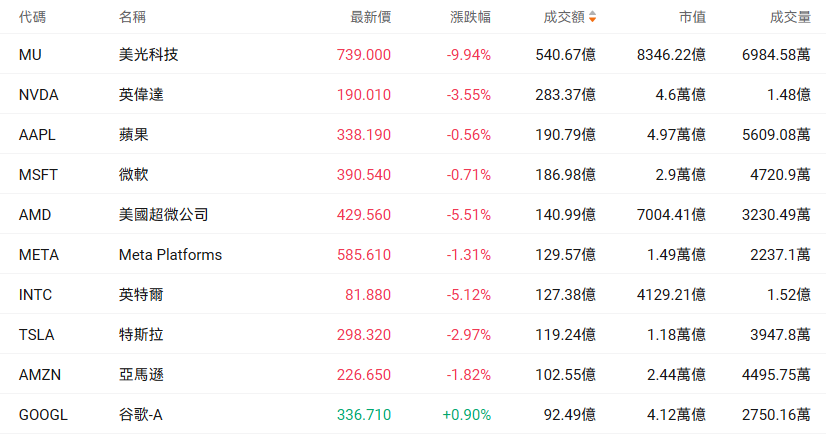
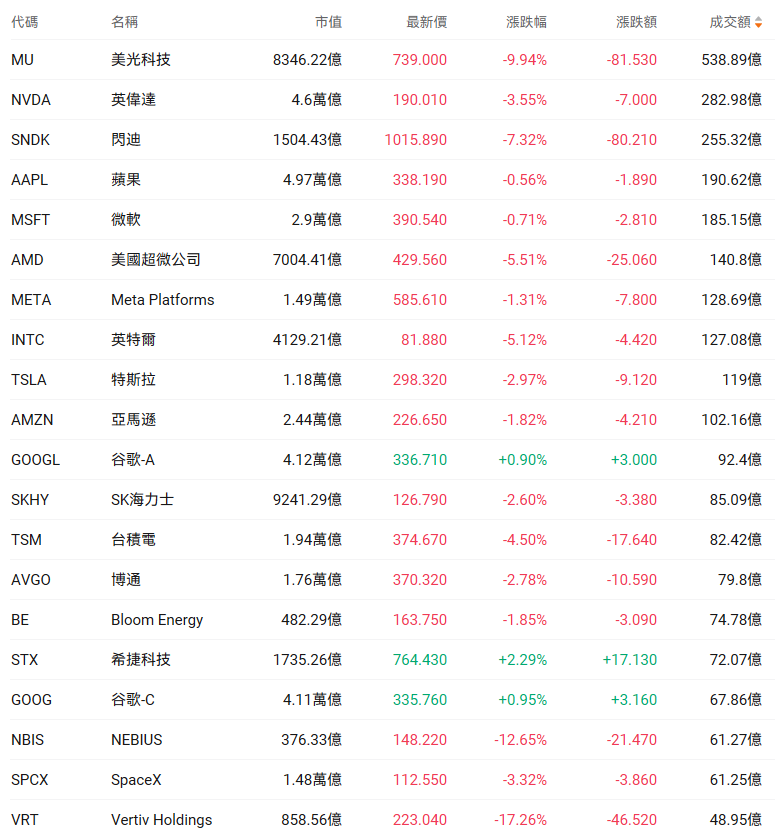
$Star Tech Stocks (LIST2518.US)$Most stocks declined, with Micron Technology down nearly 10%, AMD and Intel each falling over 5%, NVIDIA dropping more than 3%, Tesla sliding nearly 3%, Amazon down almost 2%, Meta Platforms declining over 1%, and Microsoft and Apple each falling nearly 1%. Alphabet Class A shares rose nearly 1%.
$Popular Chinese ADRs (LIST2517.US)$Most rose,$Nasdaq Golden Dragon China Index (.HXC.US)$It rose 1.73% to close at 6,434.96, approaching its June 4 closing level of 6,597.34. It has traded above the 50-day moving average (currently at 6,272.15) for two consecutive sessions and is nearing the 100-day moving average (currently at 6,607.52). The index held steady near 6,440 ahead of the Federal Reserve’s decision to hold rates steady, then exhibited a rally-and-retrace pattern afterward, posting a cumulative gain of 5.41% over the past three trading sessions.
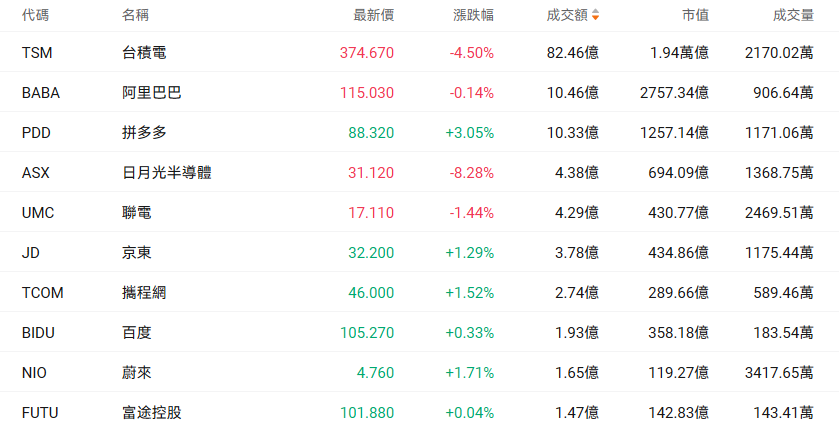
PDD Holdings rose over 3%, Nio gained nearly 2%, JD.com and Trip.com climbed more than 1%, Baidu edged up slightly, while ASE Technology fell over 8% and Taiwan Semiconductor declined more than 4%.
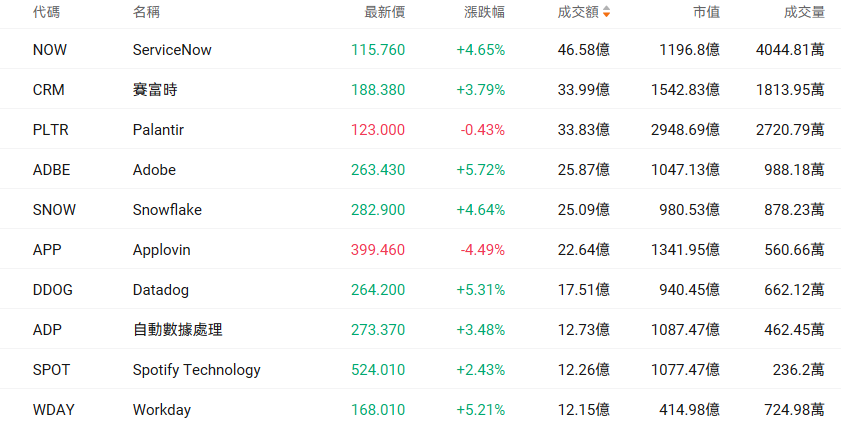
$AI Application Software Stocks (LIST23492.US)$Extending their strong performance, Adobe rose nearly 6%, Workday and Datadog gained over 5%, ServiceNow and Snowflake advanced nearly 5%, and Salesforce increased by almost 4%.
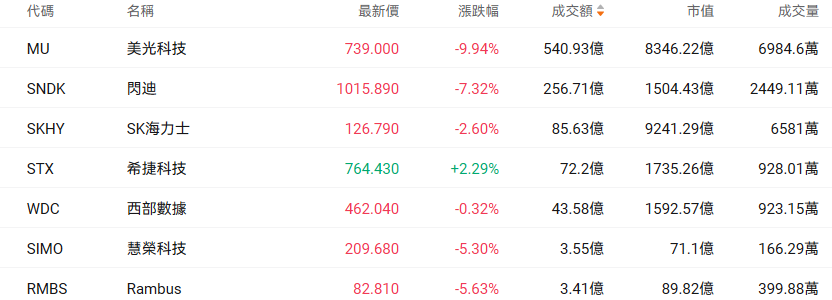
$Storage Concept (LIST23925.US)$Stocks declined,$Roundhill Memory ETF (DRAM.US)$fell over 6%, Micron Technology dropped nearly 10%, SanDisk declined over 7%, SK Hynix fell nearly 3%, while Seagate Technology rose more than 2% against the trend.
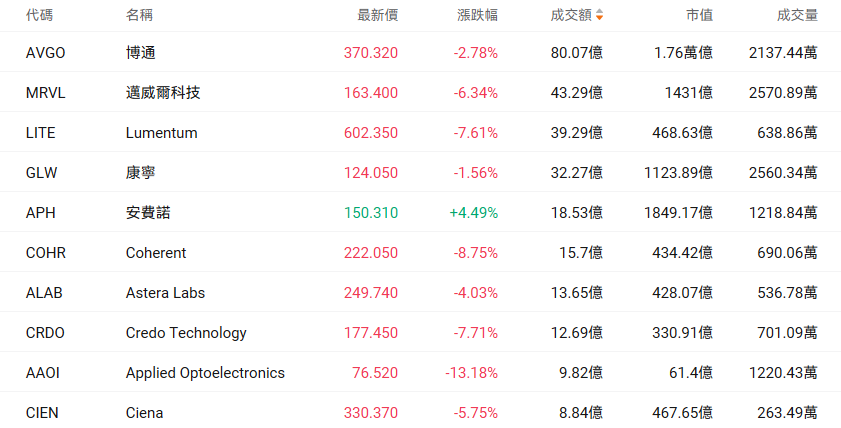
$Optical Communications (LIST23979.US)$Stocks fell across the board, with Applied Optoelectronics plunging over 13%, Coherent dropping nearly 9%, Credo and Lumentum declining nearly 8%, Marvell Technology falling over 6%, and Ciena down nearly 6%.
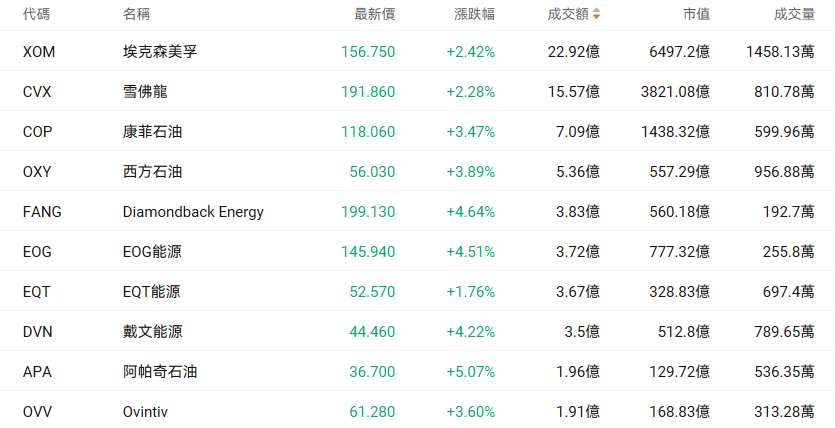
$Shale Oil (LIST2585.US)$Energy stocks rallied broadly, with APA Corporation rising over 5%, Devon Energy gaining over 4%, Occidental Petroleum and ConocoPhillips climbing over 3%, and Exxon Mobil and Chevron advancing more than 2%.
Stock-specific news
Samsung Electronics reported second-quarter net profit of KRW 71.27 trillion, exceeding expectations.
Samsung Electronics (005930.KR)Second-quarter revenue reached KRW 171.50 trillion, up 130% year-over-year; operating profit was KRW 89.49 trillion, surging 1,813.83% year-over-year; net profit for the quarter stood at KRW 71.27 trillion, a 1,344.46% increase year-over-year, versus an estimated KRW 68.36 trillion.
Samsung Electronics stated that server chip demand will remain robust in the second half of the year. The chip supply shortage is expected to persist through the second half. Demand for mobile and PC chips is forecast to slow. The foundry business is projected to achieve double-digit revenue growth this year. The company plans to increase its smartphone market share in the second half. The depreciation of the Korean won positively impacted second-quarter earnings by KRW 3.1 trillion. Profitability is expected to continue growing in the second half.
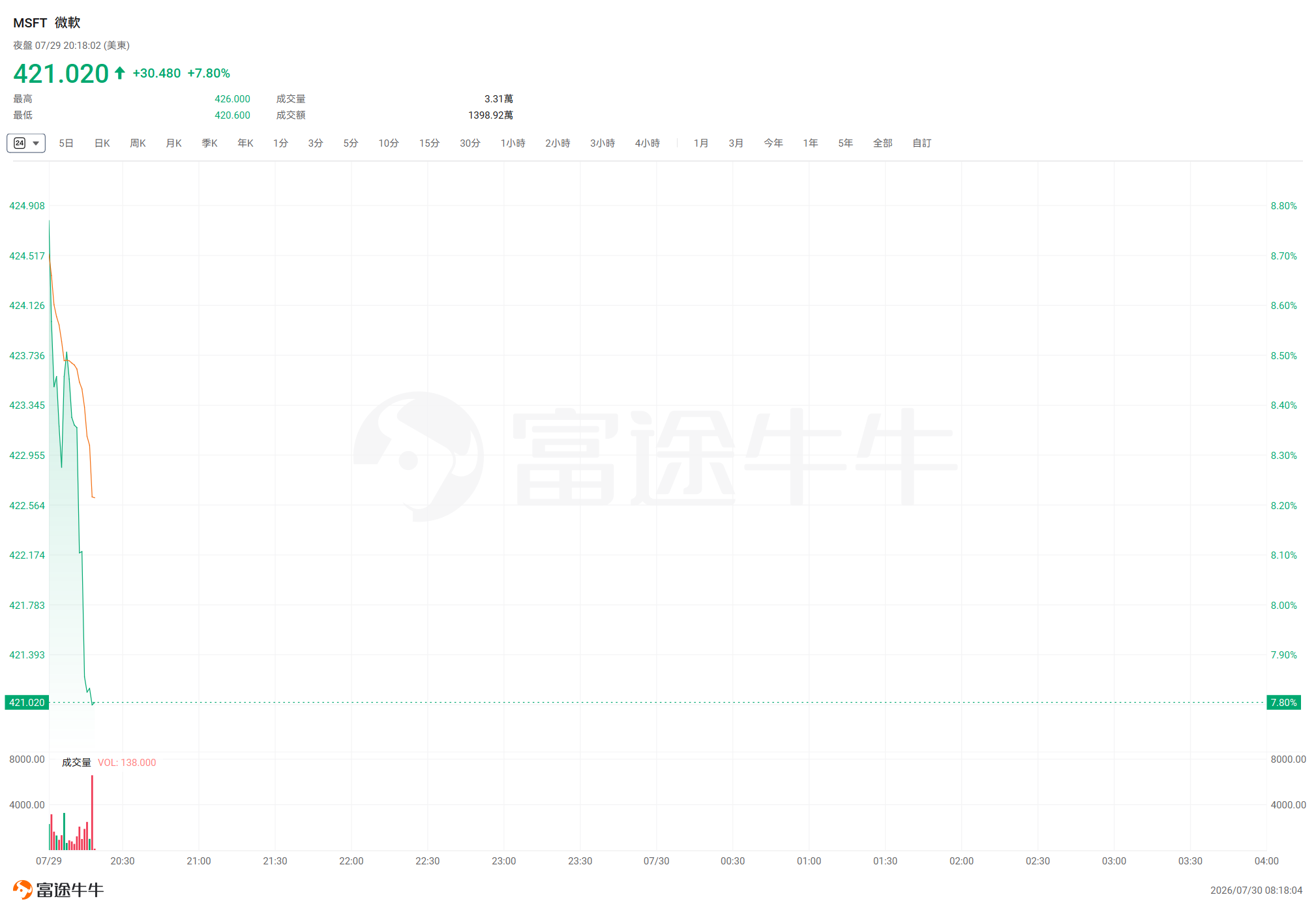
Microsoft surged nearly 8% in after-hours trading after delivering quarterly results that significantly exceeded expectations and lowering its capital expenditure guidance.
$Microsoft (MSFT.US)$Delivered a quarterly performance that comprehensively exceeded Wall Street expectations, demonstrating the resilience of Microsoft’s core business profitability despite a significant increase in AI infrastructure investment.
Microsoft reported that for its fiscal fourth quarter ended June 30, 2026, revenue rose 18% year-over-year to $90.01 billion, surpassing analyst estimates by 2.6%. Non-GAAP adjusted earnings per share (EPS) increased 23% to $4.74, beating expectations by 11.5%. Operating income grew 18% to $40.6 billion, exceeding market forecasts by 4%, indicating that revenue growth was not entirely offset by AI infrastructure spending.
The cloud segment—closely watched by investors—performed even stronger. In the fourth fiscal quarter, Microsoft’s total cloud revenue climbed 27% year-over-year to $59.3 billion, 1% above analyst projections. Azure and other cloud services revenue surged 43%, significantly outpacing the market’s expected growth of 39.6%. The company now forecasts capital expenditures of $175 billion for fiscal 2027, down from its prior estimate of $190 billion, and expects to maintain positive free cash flow throughout the fiscal year.
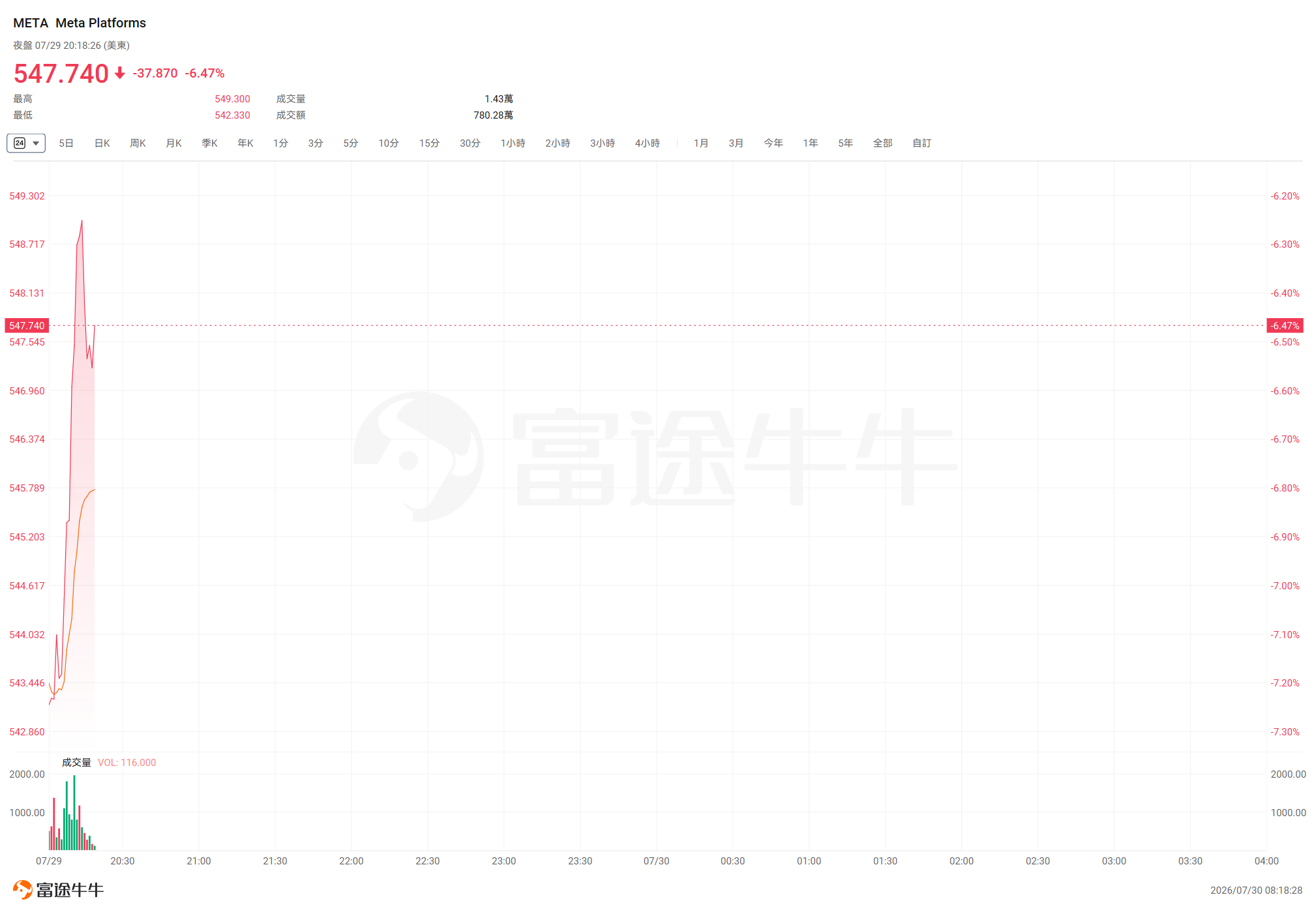
Meta Platforms fell more than 6% in after-hours trading as its Q3 guidance disappointed and free cash flow hit a four-year low.
$Meta Platforms (META.US)$Meta released its second-quarter 2026 financial results, reporting revenue of $60.8 billion, up 28% year-over-year and slightly above the market expectation of $60.3 billion. However, the company’s Q3 revenue guidance of $61–64 billion—with a midpoint of $62.5 billion—fell short of the analyst consensus estimate of $63.2 billion, disappointing investors.
Meanwhile, Meta maintained its full-year capital expenditure plan of $130–145 billion, raising only the lower bound from $125 billion to $130 billion—signaling its intent to sustain the tech industry’s most aggressive pace of AI investment. Meta generated operating cash flow of $31.862 billion in Q2, but with capital expenditures reaching $31.08 billion, free cash flow shrank to just $784 million, a sharp decline from $85.49 billion a year earlier and the lowest level in nearly four years.
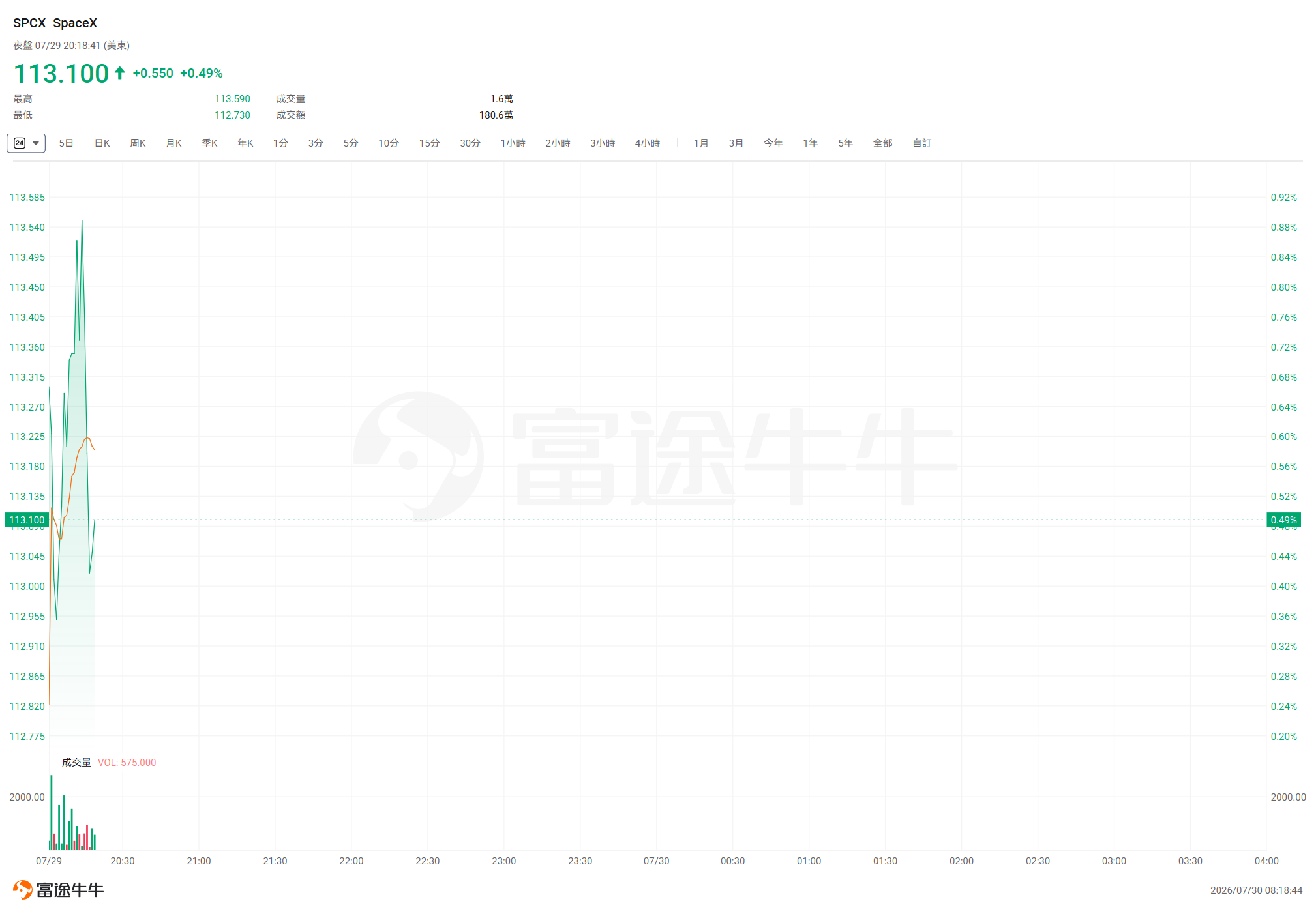
SpaceX awarded $1.6 billion contract by U.S. Space Force
On July 29 local time, the U.S. Space Force announced,$SpaceX (SPCX.US)$it has awarded a new $1.6 billion contract to conduct 18 Falcon 9 rocket launches by the end of 2027, carrying military satellites designed to detect and track airborne targets into orbit.
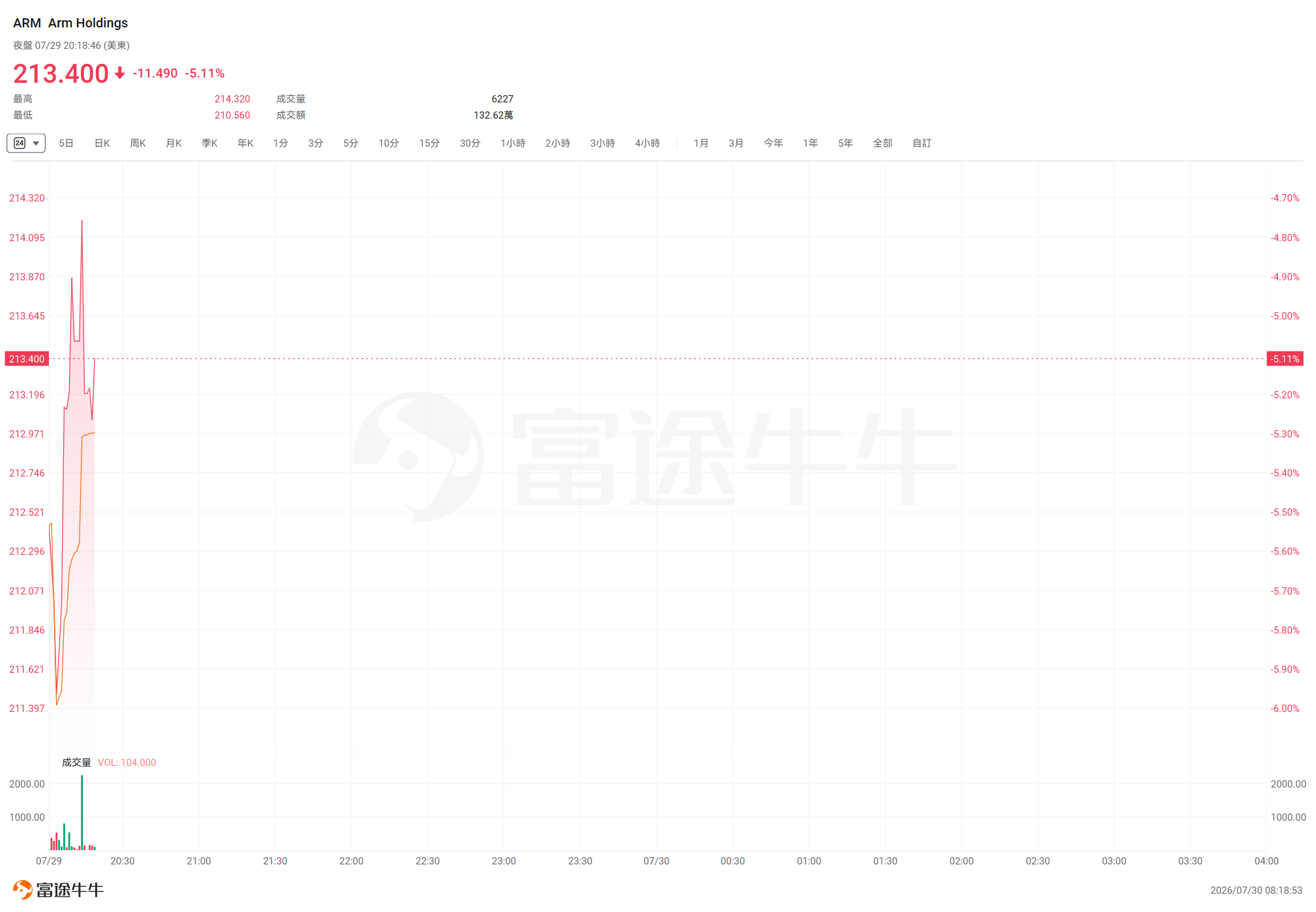
Arm Holdings dropped more than 5% in after-hours trading: despite delivering better-than-expected Q1 results, the stock sold off after its Q2 revenue guidance fell short of the most optimistic market expectations.
Although$Arm Holdings(ARM.US)$The company reported first-quarter fiscal 2027 results that beat expectations, but shares declined in Wednesday’s after-hours trading after it noted that weakness in the smartphone industry is outweighing the substantial opportunities from its expansion into data center technologies, and its second-quarter revenue guidance came in below the market’s most optimistic forecast.
According to the earnings report, Arm’s revenue for the first fiscal quarter of FY2027 rose 22% year-over-year to $1.289 billion, surpassing the analyst consensus estimate of $1.26 billion. Adjusted net income was $480 million, up 28% year-over-year, and adjusted earnings per share increased 29% to $0.45, exceeding the average analyst expectation of $0.40.
Looking ahead, Arm expects second fiscal quarter revenue to reach approximately $1.38 billion. While this exceeds the analyst consensus estimate of $1.35 billion, some forecasts approached $1.5 billion. The company forecasts adjusted earnings per share of $0.47 for the second fiscal quarter, beating the average analyst estimate of $0.45. Royalty revenue for the first fiscal quarter reached $715 million.
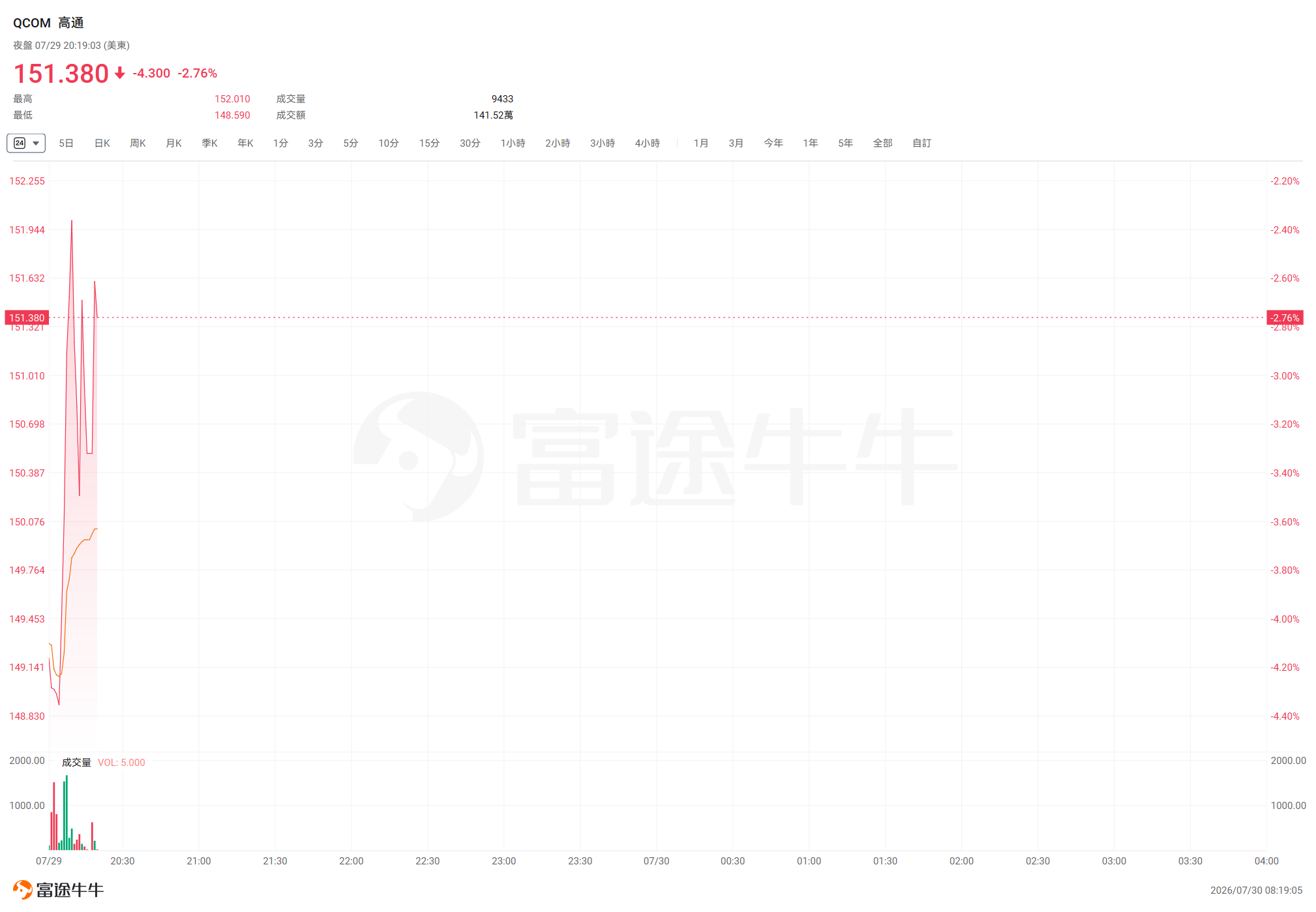
Qualcomm fell nearly 3% in after-hours trading, with Q3 net income declining 25% year-over-year.
Qualcomm released its fiscal third-quarter results, reporting a 25% year-over-year decline in net income, pressured significantly by its mobile chip business amid sharply rising memory prices. Revenue declined 4% year-over-year to $9.95 billion, slightly exceeding Wall Street expectations, but net income for the quarter dropped to $2 billion. For the current fourth fiscal quarter, the company projected adjusted earnings per share (EPS) between $2.05 and $2.25, with revenue guidance ranging from $9.7 billion to $10.5 billion. Even at the high end of the range, the adjusted EPS would fall short of analysts’ prior expectations of $2.36 to $2.38, disappointing investors.
Related Reading:Qualcomm reported a 25% year-over-year decline in net profit for its fiscal Q3, raised product prices, and issued weak earnings guidance.
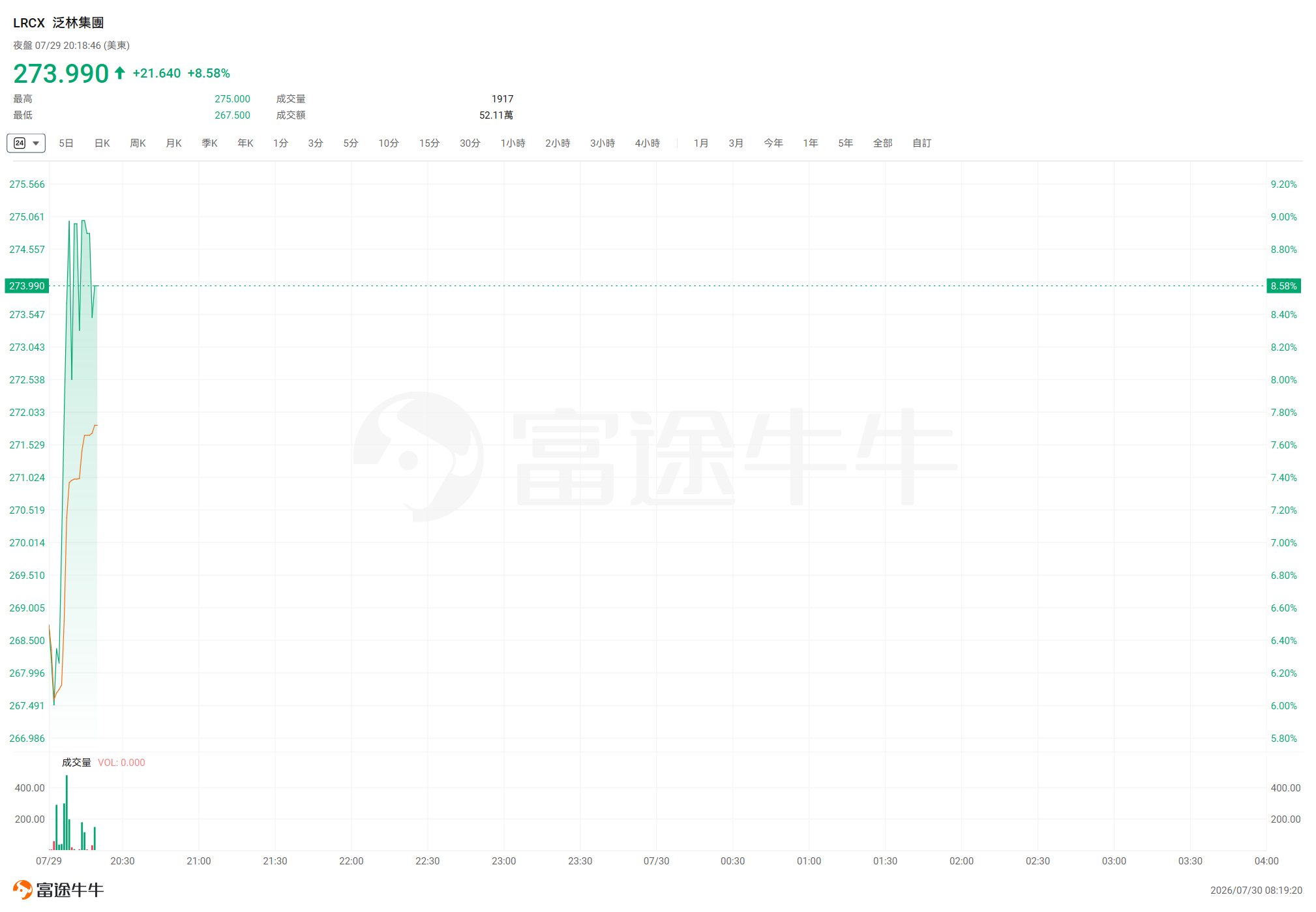
Lam Research rose more than 8% in after-hours trading, reporting Q4 revenue of $6.72 billion for fiscal year 2026, up 15.1% sequentially.
$Lam Research (LRCX.US)$Q4 revenue for fiscal year 2026 was $6.72 billion, up 15.1% sequentially; GAAP gross margin was 51.7% of revenue, GAAP operating margin was 37.4% of revenue, and GAAP diluted earnings per share were $1.81. Non-GAAP gross margin was 52.0% of revenue, non-GAAP operating margin was 38.4% of revenue, and adjusted EPS was $1.82, up 23.8% sequentially.
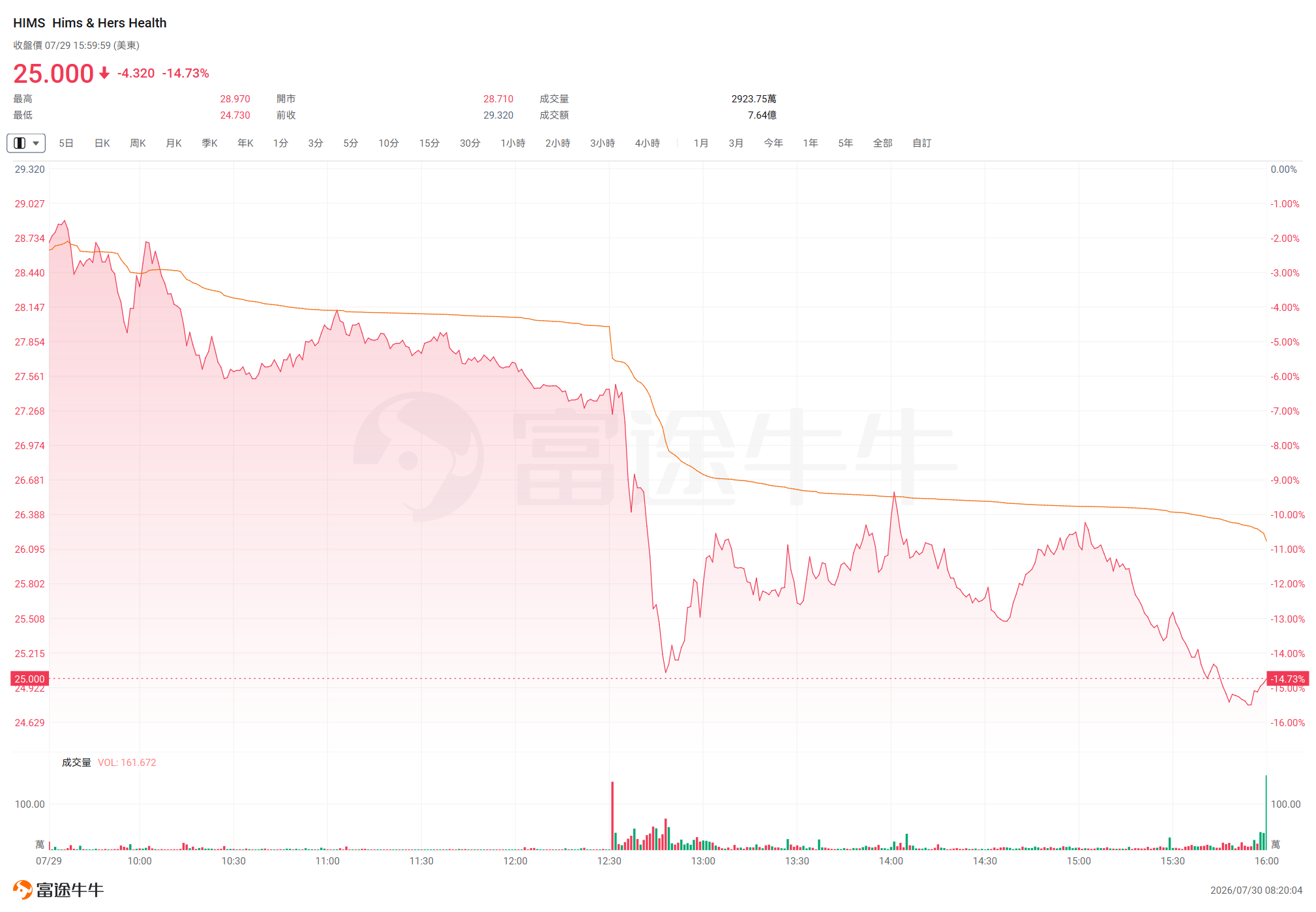
Hims & Hers Health fell nearly 15% in the previous trading session after being sued by the FTC.
The U.S. Federal Trade Commission (FTC) has filed a lawsuit against the online healthcare company.Hims & Hers Health(HIMS.US)The company is accused of violating user privacy regulations by sharing users’ health data with third-party advertisers such as Meta and Snap, as well as engaging in consumer protection violations related to subscription cancellations and billing practices.
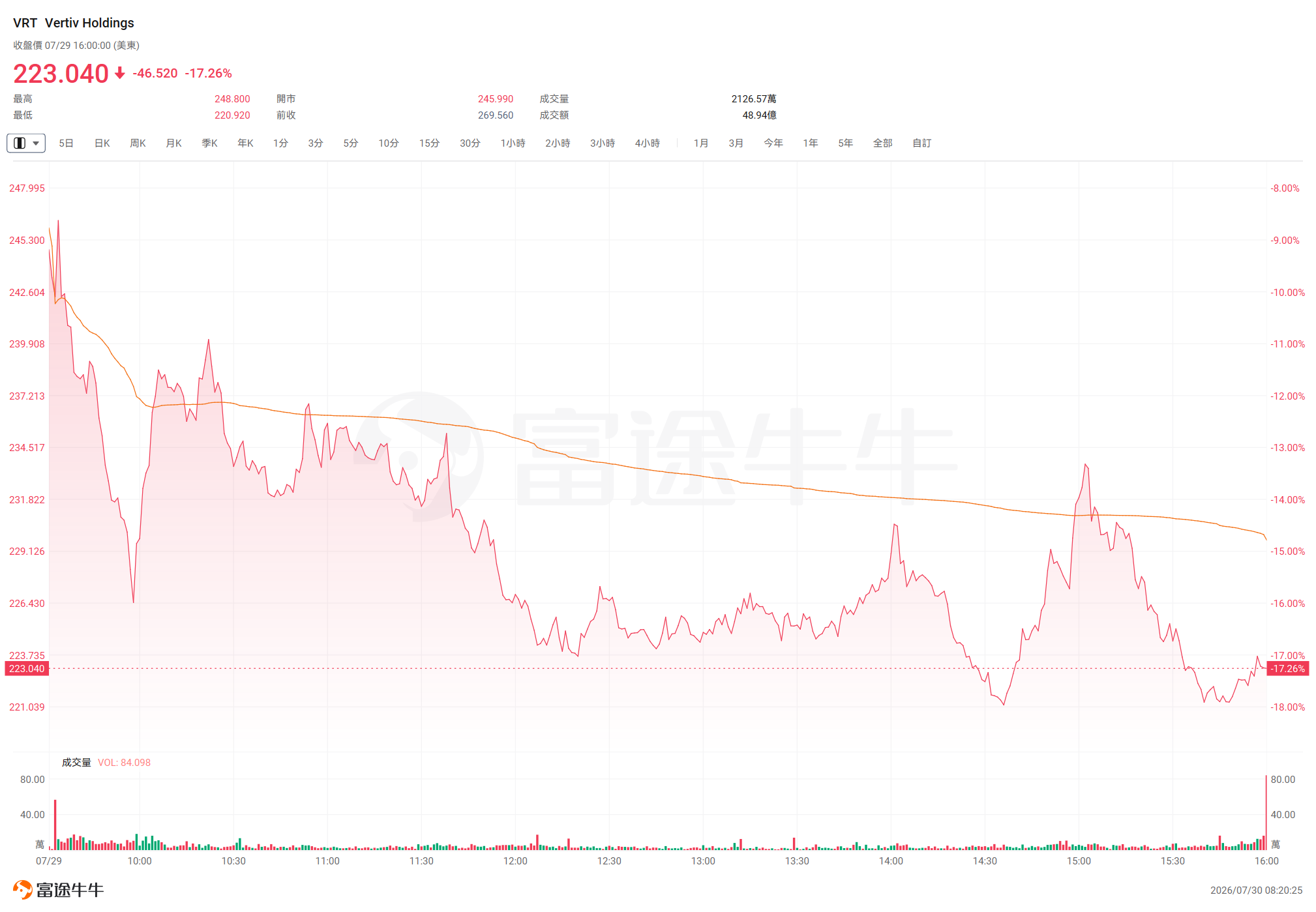
Vertiv Holdings fell more than 17% in the previous trading session, weighed down by revenue that missed expectations.
Data center liquid cooling company$Vertiv Holdings(VRT.US)$Second-quarter revenue reached $3.27 billion, up 24% year-over-year but below the market expectation of $3.38 billion. Given the stock’s substantial year-to-date gains, investor expectations for performance were high, and even this modest shortfall triggered a sell-off.
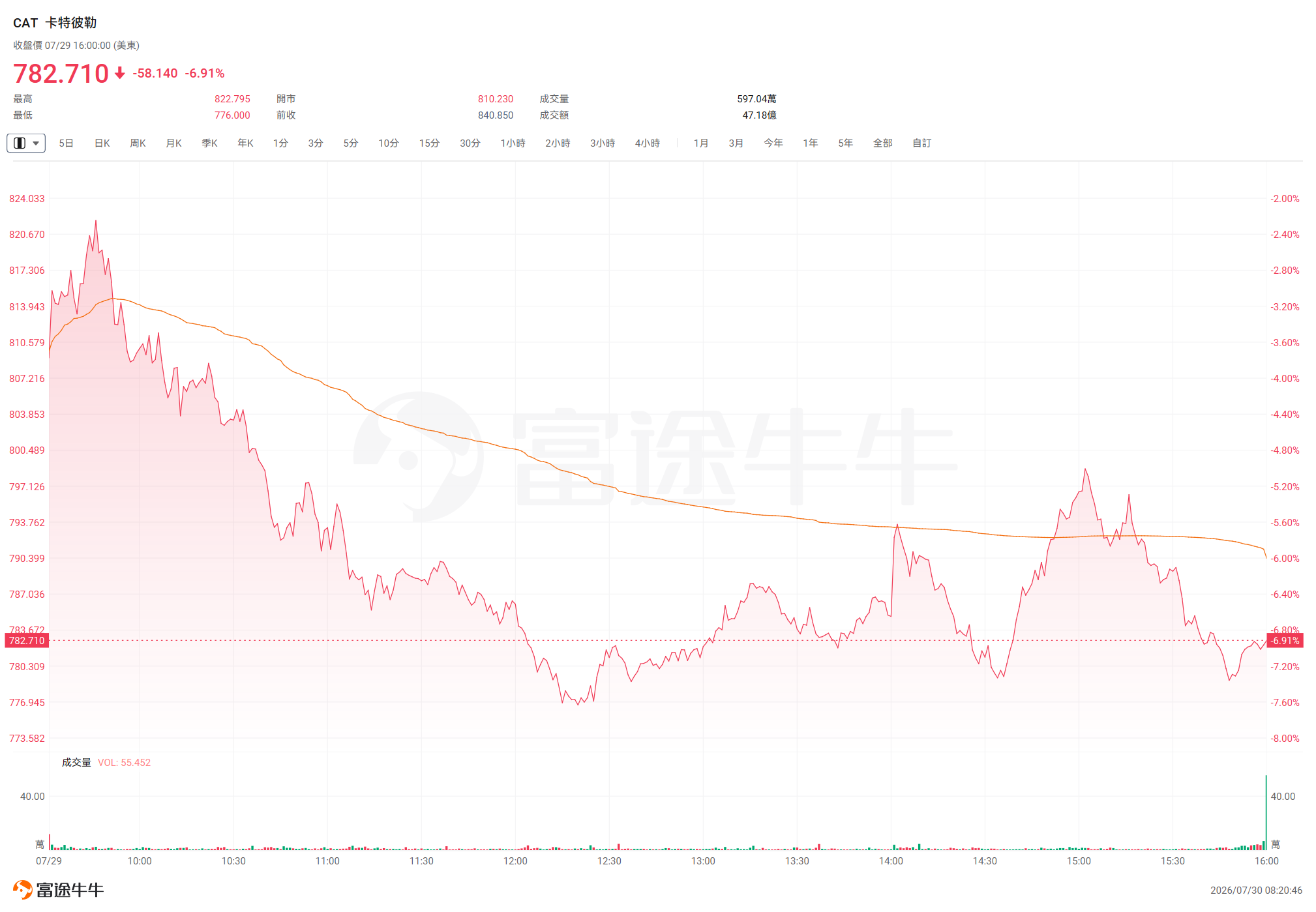
Caterpillar fell nearly 7% in the previous trading session due to the AI selloff and Baird's warning on data centers.
Analyst Mircea Dobre downgraded$Caterpillar(CAT.US)$the stock rating from “outperform” to “neutral,” citing growing calls to restrict data center construction—the key driver behind the industrial giant’s recent growth. Dobre warned that such restrictions could hurt Caterpillar’s order volumes. He noted that political factors pose a potential risk, as local governments are pausing data center projects and several states have already halted tax incentives for these facilities.
OpenAI CEO discusses next-generation AI models with U.S. lawmakers
OpenAI CEO Sam Altman said he has discussed the company’s upcoming artificial intelligence model with U.S. lawmakers and expressed support for congressional AI legislation, highlighting industry calls to ensure the safety of this emerging technology. “We talked about our new model and how the U.S. can continue to stay enthusiastic about AI,” Altman told reporters in Washington.
Top 20 by Trading Volume
Hong Kong Market Outlook
Southbound capital reduced its holdings of Hong Kong-listed stocks by nearly HK$5.6 billion, net buying Alibaba by over HK$1.3 billion and adding to Tencent by more than HK$800 million, while net selling SMIC by over HK$2 billion and offloading Xiaomi Group by more than HK$1.9 billion.
On Wednesday, July 29, southbound capital recorded a net sale of HK$5.589 billion in Hong Kong-listed stocks.
$Alibaba-W (09988.HK)$、$Tencent (00700.HK)$、$Zhipu AI (02513.HK)$received net purchases of HK$1.326 billion, HK$832 million, and HK$492 million, respectively;
$SMIC (00981.HK)$、$Xiaomi Group-W(01810.HK)$、$Meituan-W(03690.HK)$suffered net sales of HK$2.008 billion, HK$1.947 billion, and HK$636 million, respectively.
GigaDevice: Controlling shareholder and actual controller Zhu Yiming voluntarily commits not to reduce his holdings in the company for the next 12 months.
$GigaDevice (03986.HK)$The announcement stated that Zhu Yiming, the company’s controlling shareholder and actual controller, voluntarily committed not to reduce his holdings of the company’s shares through any means for 12 months starting from July 29, 2026. As of the announcement date, Zhu Yiming and his concert party, Hong Kong Win Faith Limited, together held 47,700,900 shares of the company, representing 6.80% of the total share capital. The company’s control remains stable.
Midea Group: Sustained extreme heatwaves in Europe have triggered a surge in local air conditioning demand, resulting in combined new European orders of 200,000 units within one month from Midea’s Wuhu and Guangzhou air conditioner manufacturing bases.
$Midea Group (00300.HK)$On an investor interaction platform, the company stated that sustained extreme heatwaves in Europe have triggered a surge in local air conditioning demand. Within one month, Midea’s dual air conditioner production bases in Wuhu and Guangzhou secured a total of 200,000 new European orders. Orders for the PortaSplit mobile split air conditioners exceeded 160,000 units since June. Of the urgent July order for 30,000 mobile air conditioners from France, 20,000 units have already been shipped.
CSPC Pharma: U.S. FDA Approves Pivotal Clinical Trial of CRB-701 for Second-Line Treatment of Oropharyngeal Cancer
$CSPC Pharma (01093.HK)$In a Hong Kong stock exchange filing, the Group announced that CRB-701 (SYS6002), licensed to Corbus Pharmaceuticals, Inc. for development, has received approval from the U.S. Food and Drug Administration (FDA) to initiate a pivotal clinical trial (trial code: TEMPO-1) for second-line treatment of oropharyngeal squamous cell carcinoma.
Today's Focus
Keywords: Apple and Amazon earnings; Federal Reserve interest rate decision; PCE
On the economic data front, the following U.S. indicators will be released: the year-over-year core PCE price index for June, initial jobless claims for the week ending July 25, the advance estimate of real GDP annualized quarterly growth rate for Q2, and the advance estimate of the core PCE price index annualized quarterly growth rate for Q2.
19:00 Bank of England interest rate decision as of July 30
20:30 U.S. June year-over-year core PCE price index
20:30 U.S. initial jobless claims for the week ending July 25 (in ten thousands)
20:30 U.S. advance estimate of real GDP annualized quarterly growth rate for Q2
On the earnings front, Hong Kong-listed stocks$Budweiser Asia Pacific (01876.HK)$、$Dongpeng Beverage (09980.HK)$and$Yum China Holdings (09987.HK)$Will release financial results.$Shell (SHEL.US)$、$MasterCard (MA.US)$released its earnings report before the U.S. market open,$Apple (AAPL.US)$、$Amazon (AMZN.US)$、$Coinbase(COIN.US)$、$Strategy(MSTR.US)$released its earnings report after the U.S. market close.
In terms of new stocks,$InnoLight Technology (03308.HK)$officially listed on the Hong Kong Stock Exchange.
 Looking to select stocks or analyze your holdings? Want to understand the opportunities and risks in your portfolio? For any investment-related questions,just ask Futubull AI!

Editor/melody