
① The latest news on Thursday revealed that Leopold Aschenbrenner, the 25-year-old ‘AI stock-picking prodigy,’ was forced to liquidate a large portion of his positions in the ‘Situational Awareness’ fund after suffering massive losses from leveraged bets on AI stocks; ② The fund’s assets under management stood at $45 billion as of early July; ③ Following the takeover of its positions by established Wall Street institutions, previously battered AI-related stocks such as SanDisk and SK Hynix rebounded.
Caixin Global, July 31 (Editor: Shi Zhengchen) — Leopold Aschenbrenner, a 25-year-old star fund manager who rose to prominence amid the recent ‘AI trading’ wave, has become the latest casualty of tech stocks’ ‘Black July.’
According to multiple local media reports, the ‘Situational Awareness’ fund, which had assets under management of $45 billion as of early July, incurred substantial losses and was forced to sell most of its secondary market equity holdings under margin call pressure stemming from leverage. As of the end of June, the fund had posted a net return of 439% year-to-date, far exceeding the Wall Street average.
 Following reports of the fund’s forced asset sales, most holdings in its portfolio surged collectively after U.S. markets opened on Thursday.
According to publicly available Form 13F filings and media reports, Ashenbrenner’s heavily weighted public equity positions include $SK hynix (SKHY.US)$ 、 $SanDisk (SNDK.US)$ , fuel cell standout performer $Bloom Energy (BE.US)$ , and emerging data center developer $NEBIUS (NBIS.US)$ 、 $CoreWeave (CRWV.US)$ , among others. Stocks across this entire sector have been cut in half over the past month; for example, prior to reports of a forced liquidation linked to 'situational awareness,' Western Digital’s share price fell from $2,273 at the close on June 30 to $1,015 at Wednesday’s close.
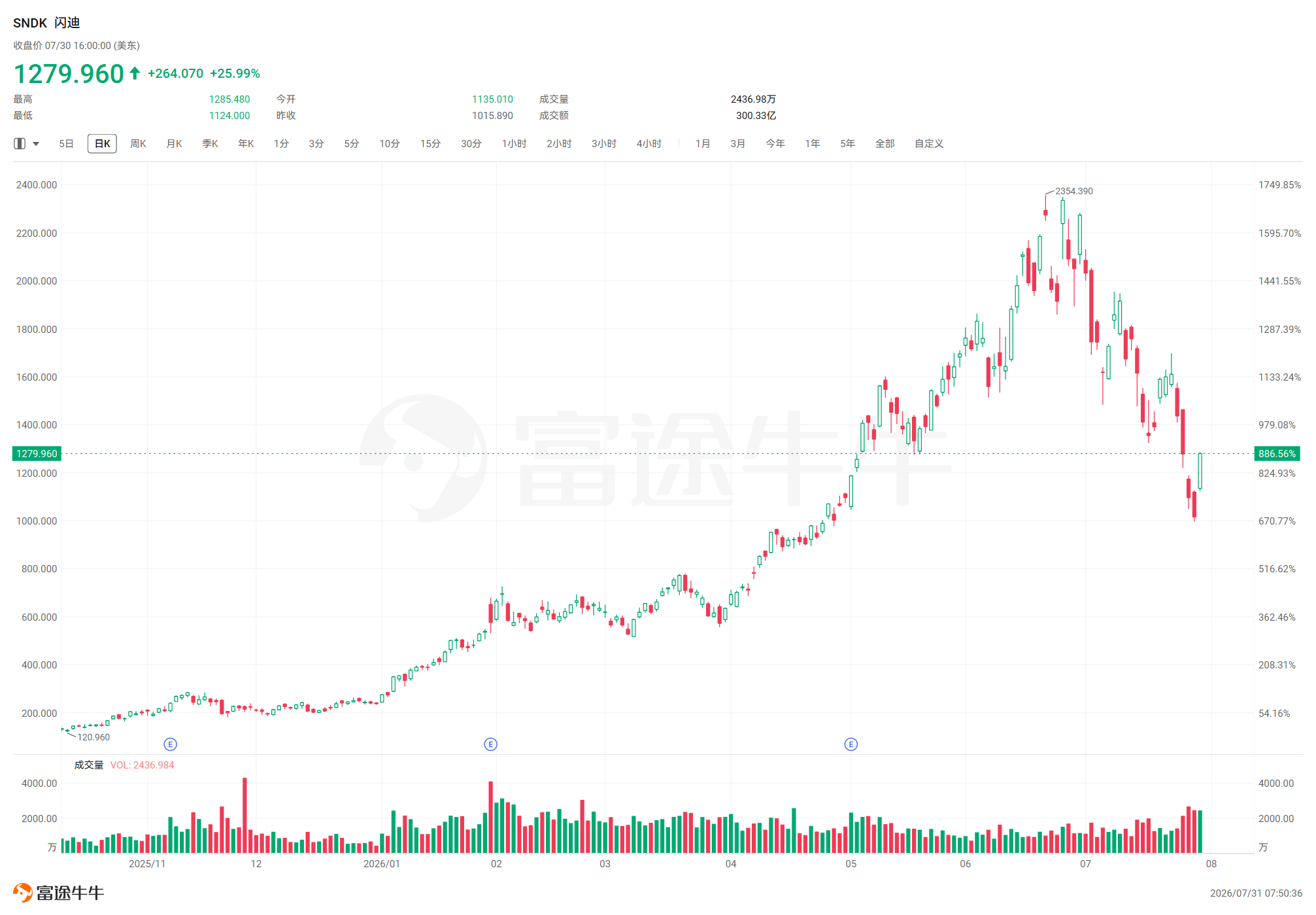
In addition, the fund also established short positions in software companies such as $Adobe (ADBE.US)$ , further exacerbating losses.
Unsurprisingly, leverage was once again the root cause of the problem.
According to informed sources, the ‘Situational Awareness’ fund had borrowed from banks to amplify its equity bets. Consequently, after the broad collapse in tech stocks, prime brokers—including Bank of America, Goldman Sachs, and JPMorgan—have been working with the fund to help it meet margin requirements and execute an orderly deleveraging. It is reported that these banks were still selling the fund’s holdings ahead of Thursday’s market open.
All signs indicate that Leopold Aschenbrenner’s investment story is far from over.
According to the latest reports, Citadel, the investment firm led by Ken Griffin—often dubbed the 'hedge fund king'—has acquired all of the publicly traded equities held by 'Situational Awareness' that were purchased using borrowed capital. The fund retains positions bought with its own capital (including client funds) as well as investments in private companies such as Anthropic.
Earlier on Thursday, it was reported that Ashenbrunner had sent a letter to investors seeking additional capital injections, stating that the recent tech stock sell-off has created 'one of the most attractive investment opportunities since early 2025.'
In the letter, Ashenbrunner wrote that significant advances in artificial intelligence are expected in the second half of the year, and potential catalysts for a market recovery could include Anthropic’s anticipated IPO.
"The Rise of the 'AI Stock Oracle'"
Like many entrepreneurial legends of the AI era, Leopold Ashenbrunner had no background in asset management before becoming known as the 'AI stock oracle.'
Public records indicate that Ashenbrunner graduated from Columbia University at age 19 and subsequently joined OpenAI’s Superalignment team. He was dismissed just one year later for violating OpenAI’s confidentiality agreement.
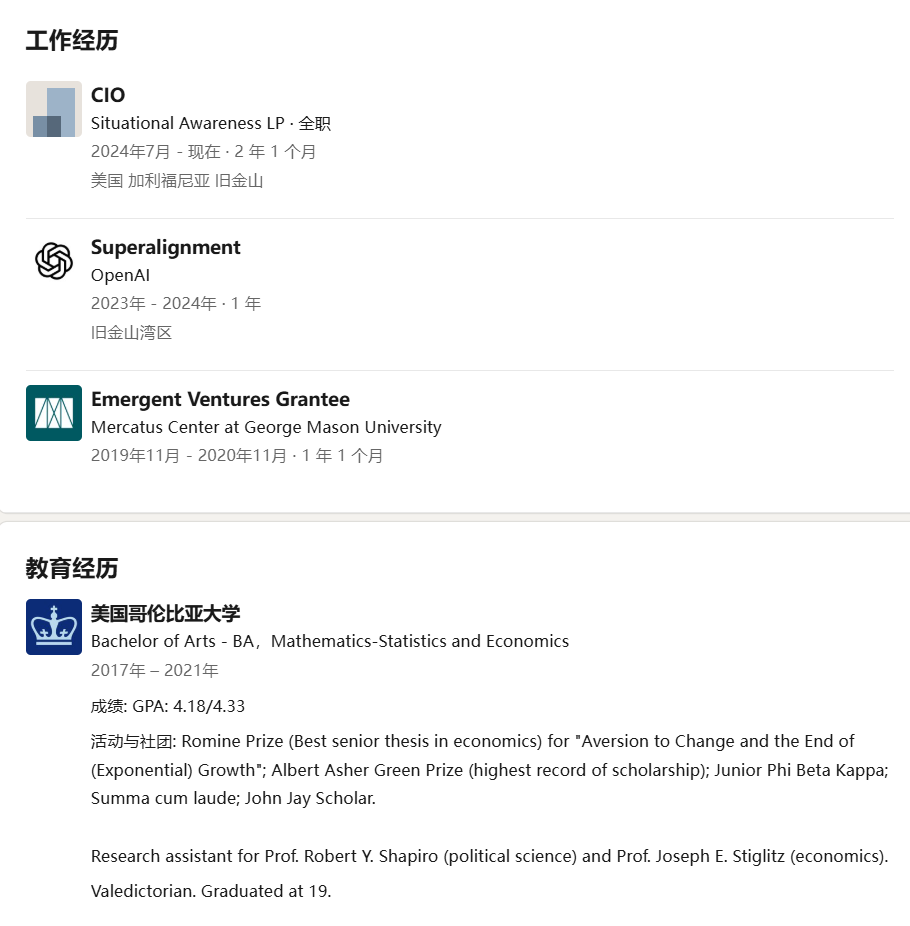
(Ashenbrunner's resume)
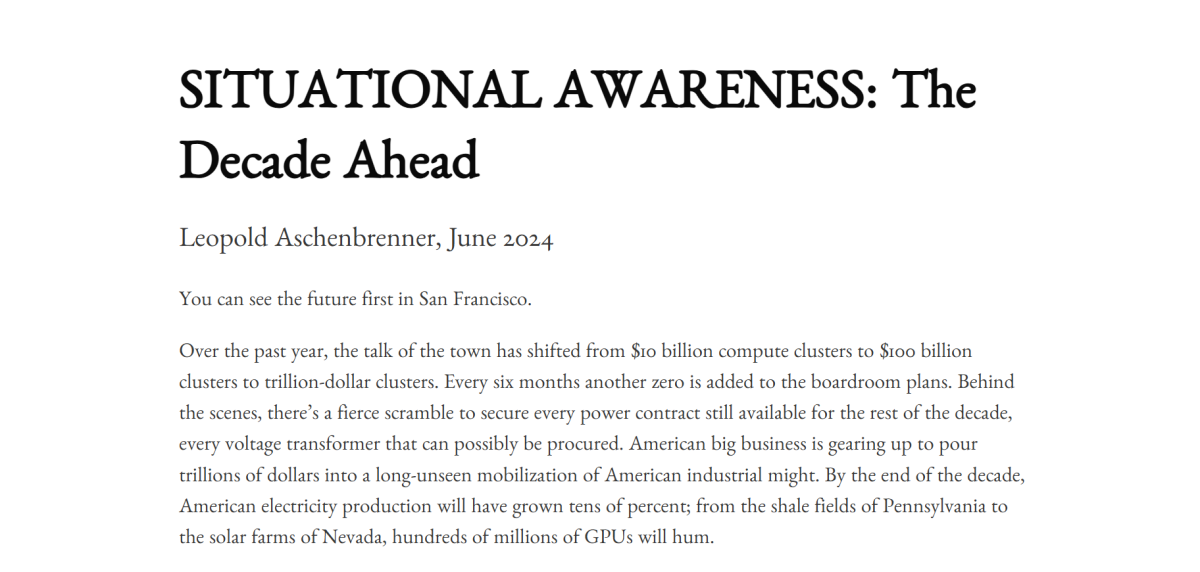
Ashenbrunner then rose to prominence in AI circles with a widely circulated, ambitious essay titled 'Situational Awareness: The Next Decade,' quickly amassing an almost fanatical following online. Riding this wave of attention, he founded the 'Situational Awareness' fund, whose early investors included Stripe co-founders Patrick Collison and John Collison, as well as Meta AI executives Daniel Gross and Nat Friedman.
According to public filings submitted to the SEC, the 'Situational Awareness' fund held slightly more than $2 billion in U.S. equities at the end of 2024, which grew to $5.5 billion by the end of 2025 and reached $13.7 billion as of the end of March this year. Form 13F filings disclose only U.S. equity holdings and do not include private investments, international stocks, derivatives, cash, or other assets.
At the peak of the fund’s success, Jane Street Capital—a leading quantitative trading firm on Wall Street—also invested in it. As one of Wall Street’s most profitable firms, Jane Street rarely allocates capital to external fund managers.
Ashenbrenner's personal life has also seen progress amid this latest AI wave. According to prior reports, he became engaged last year to Avital Balwit, chief of staff at AI giant Anthropic and the only direct report of CEO Dario Amodei.
Editor/KOKO