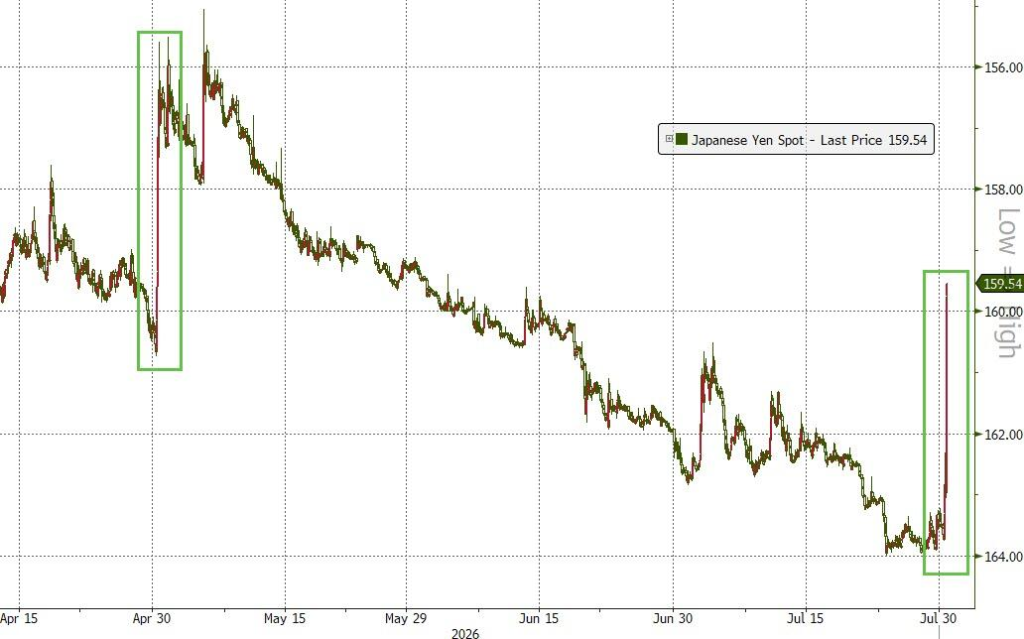
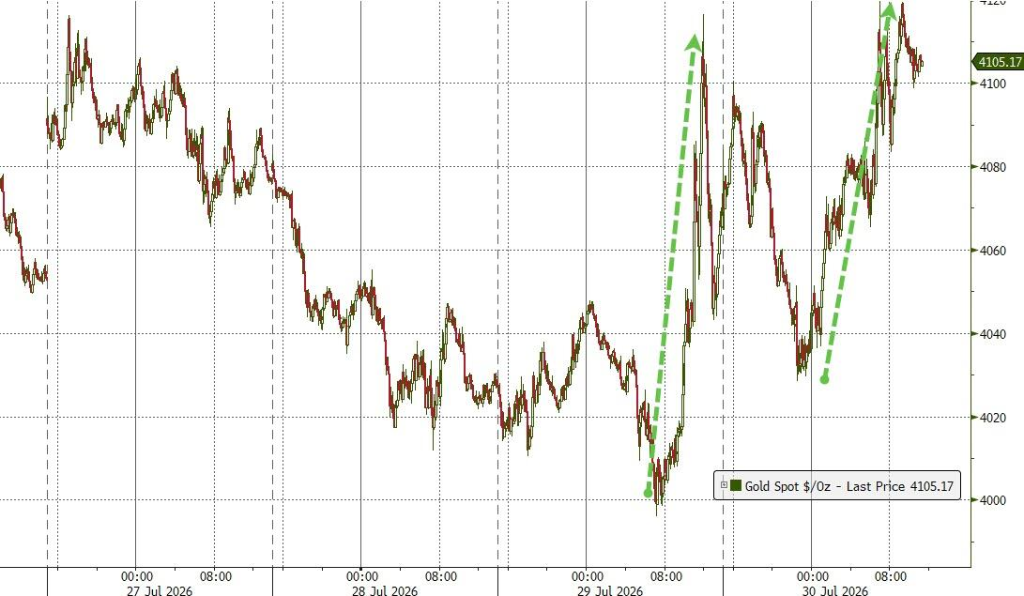
The S&P 500 rose 1.66%, and the Dow Jones Industrial Average gained 1.19%.$Microsoft (MSFT.US)$Surged by 15%.$Amazon (AMZN.US)$Stock prices rallied sharply following earnings announcements, while Apple shares pulled back. The yield on the 10-year U.S. Treasury note declined slightly by 1 basis point to 4.67%, and the 2-year yield fell by 4 basis points to 4.24%.$U.S. Dollar Index (USDindex.FX)$Fell by 0.9%, marking its largest single-day decline since January. The Japanese yen appreciated 2.5% against the U.S. dollar, rising to approximately 159.38. Spot gold prices climbed 1.2%, reclaiming the $4,100 level.
Microsoft’s quarterly results exceeded expectations, with accelerated growth in Azure cloud computing, capital expenditures below forecasts, and limited pressure on cash flow—reinvigorating confidence in the AI investment narrative that had recently come under strain.
All major U.S. equity indices closed higher,$NASDAQ-100 Index (.NDX.US)$Rising 3.4% on the day, its third-largest gain of the year. The semiconductor index surged 8.2%, its biggest single-day advance since April 2025, partially recovering from the over 20% cumulative decline since July.
 Amazon shares jumped sharply after its earnings release, while Apple shares retreated.
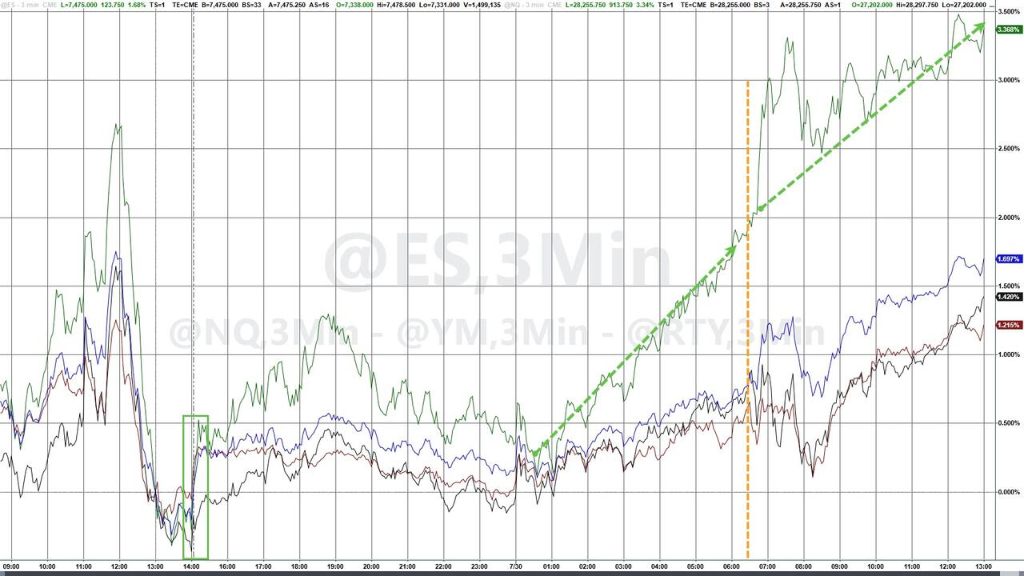
Markets also digested multiple macroeconomic data releases: core PCE inflation for Q2 cooled on a month-over-month basis, while consumer spending remained robust—both factors alleviating concerns about the interest rate outlook to some extent.
However, the internal composition of this rebound warrants caution. Bloomberg macro strategist Michael Ball noted that the recovery in tech and momentum stocks 'appears more like a short squeeze than a sustained return of risk appetite.' The combined effects of a negative gamma environment and diminished Fed credibility will likely keep volatility elevated.
Meanwhile, news emerged that hedge fund Situational Awareness has liquidated its public equity positions and sold a portion of its assets to Citadel, alleviating near-term selling pressure on its heavily weighted stocks and further triggering mechanical short covering.
Microsoft Acts as Catalyst for 'Largest Short Squeeze' in Chip Stocks
Microsoft served as the core engine of this rebound. The company’s earnings revealed accelerating growth in Azure cloud revenue, demand exceeding current capacity, capital expenditures below expectations, and reaffirmed its outlook for positive free cash flow by fiscal year 2027.
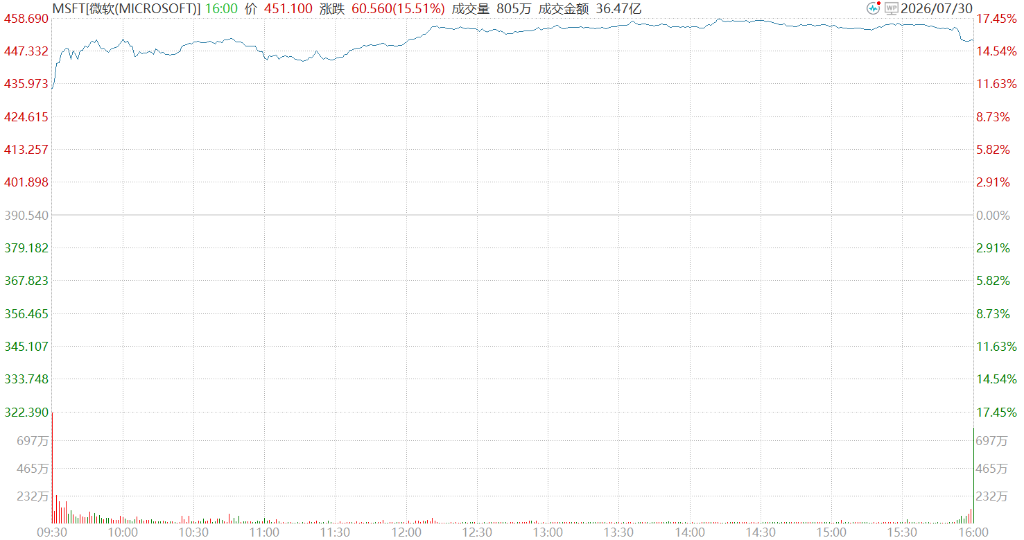
The market interpreted this as a strong signal that returns on AI infrastructure investments are within reach. Microsoft’s share price surged more than 15% in a single day, adding approximately $450 billion in market value—the largest single-day increase in market capitalization for any stock in Wall Street history and the stock’s biggest one-day gain in 18 years.
This performance contrasts sharply with Alphabet’s earlier results and$Tesla (TSLA.US)$In contrast to the market concerns triggered byFree cash flownegative gamma, Jed Ellerbrooke, portfolio manager at Argent Capital Management, stated:
“Microsoft delivered on its promises yesterday and may now graduate from the ‘controversial stock’ category to become a ‘credible AI winner.’”
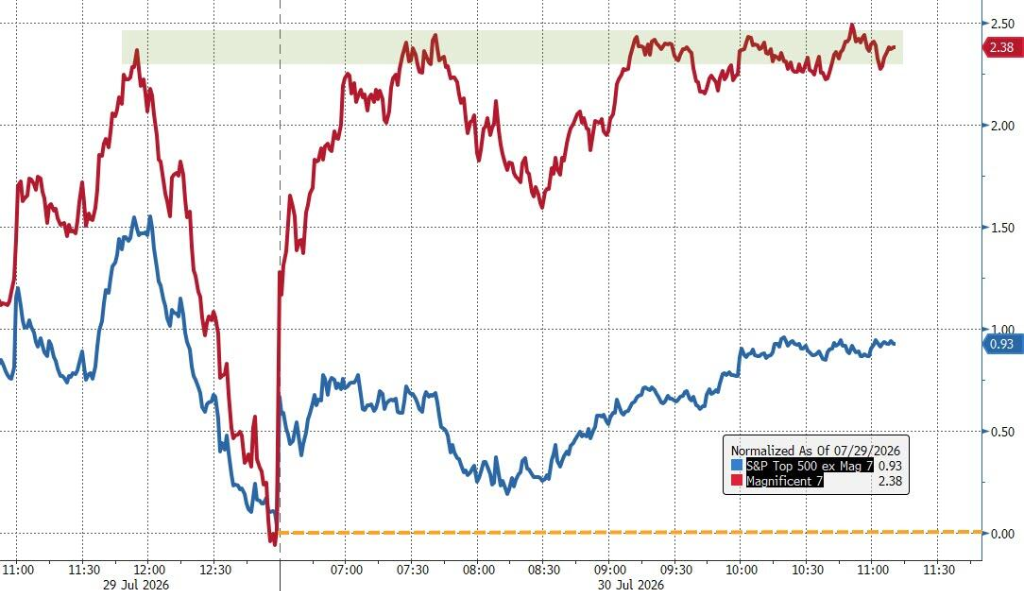
Mag 7 stocks significantly outperformed the broader market, although the S&P 493 index also showed strong performance. Notably, however, Mag 7 stock prices have already retreated from their previous day’s highs.
The memory storage sector rallied broadly. Micron Technology rose 18%,$SanDisk (SNDK.US)$soared 26%, and AMD gained 13%.
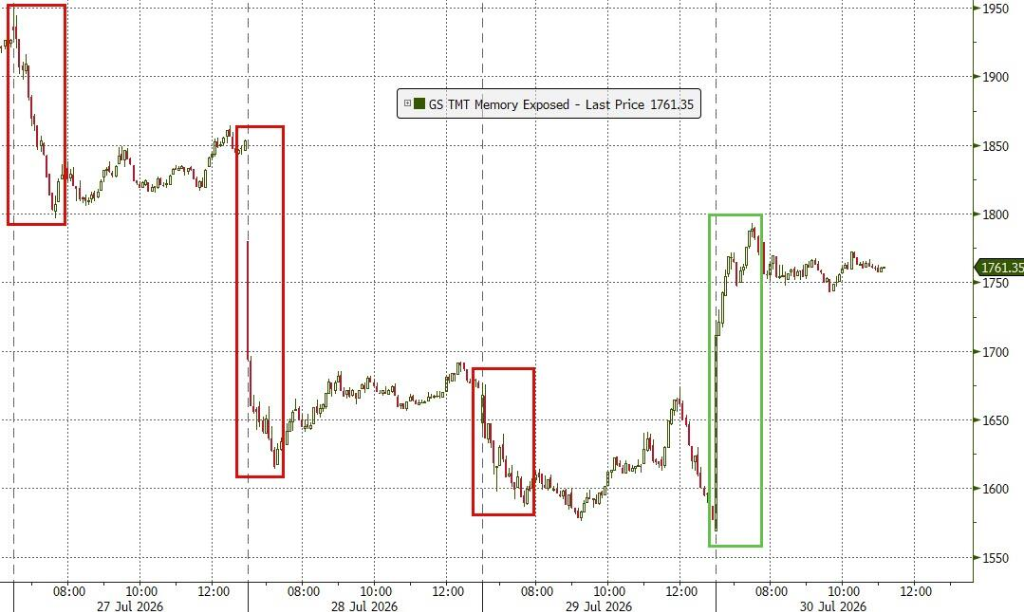
It was also the largest short-covering day for U.S. equities in nearly four months.
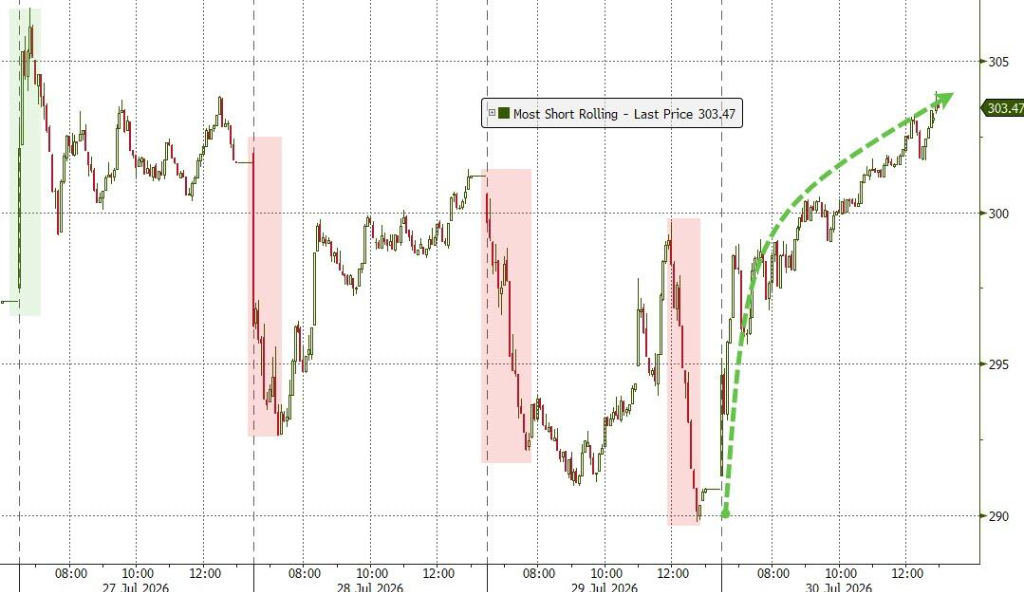
The 'AI Stock Oracle' Fell Just Before Dawn
Leopold Aschenbrenner, hailed as the 'AI Stock Oracle,' faced a crisis on Wednesday as his 'Situational Awareness' fund came under severe margin call pressure due to leverage, forcing it to liquidate significant secondary market holdings.
At the critical moment when a flood of sell orders was about to hit the market, Ken Griffin—dubbed 'Wall Street’s top hedge fund manager'—acted swiftly: Citadel finalized a deal within 24 hours to acquire the majority of the 'Situational Awareness' fund’s secondary market positions.
The intervention by this veteran Wall Street institution not only averted a potential chain reaction of margin calls but also further fueled the market rally.
By market close, SanDisk, a major holding of the 'Situational Awareness' fund, surged 25.99%,$CoreWeave(CRWV.US)$up 21.51%,$NEBIUS(NBIS.US)$up 27.13%,$SK Hynix (SKHY.US)$up 17.52%,$Bloom Energy (BE.US)$up 26.49%.
The rebound structure harbors vulnerabilities, with the equal-weighted S&P diverging from the benchmark index.
Although all major indices closed higher—with the S&P 500 rising 1.66% and the Dow Jones Industrial Average up 1.19%—internal market divergence is sending warning signals.
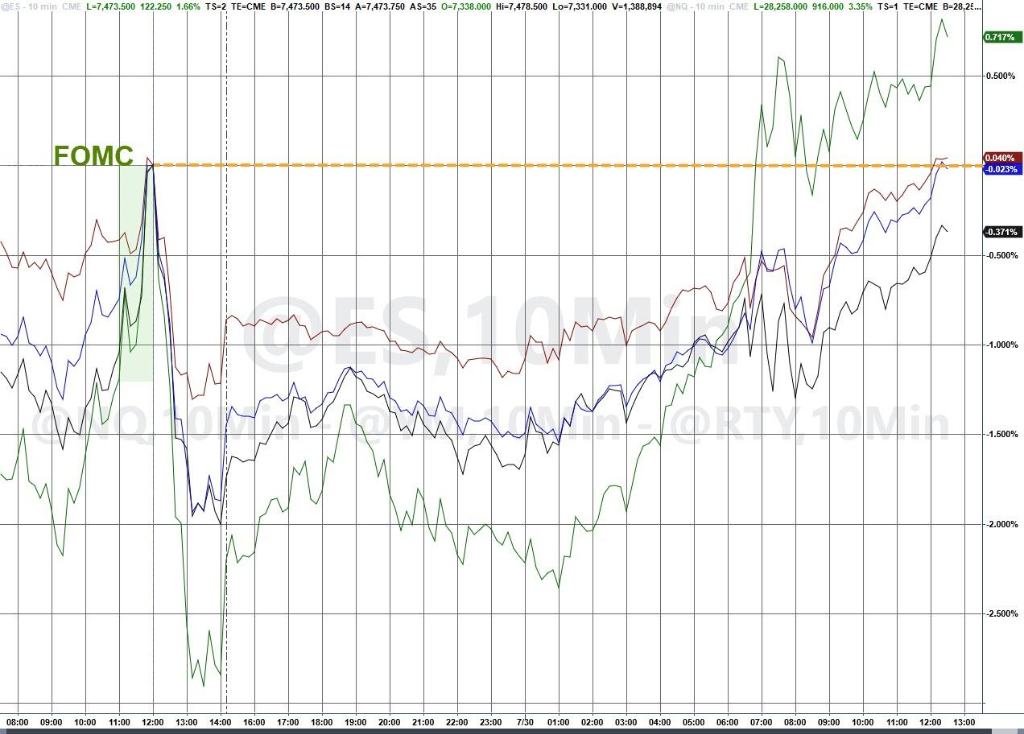
Equal-weighted$S&P 500 Index (.SPX.US)$declined notably, diverging by more than 75 basis points in the opposite direction from the benchmark S&P 500 index on the same day.
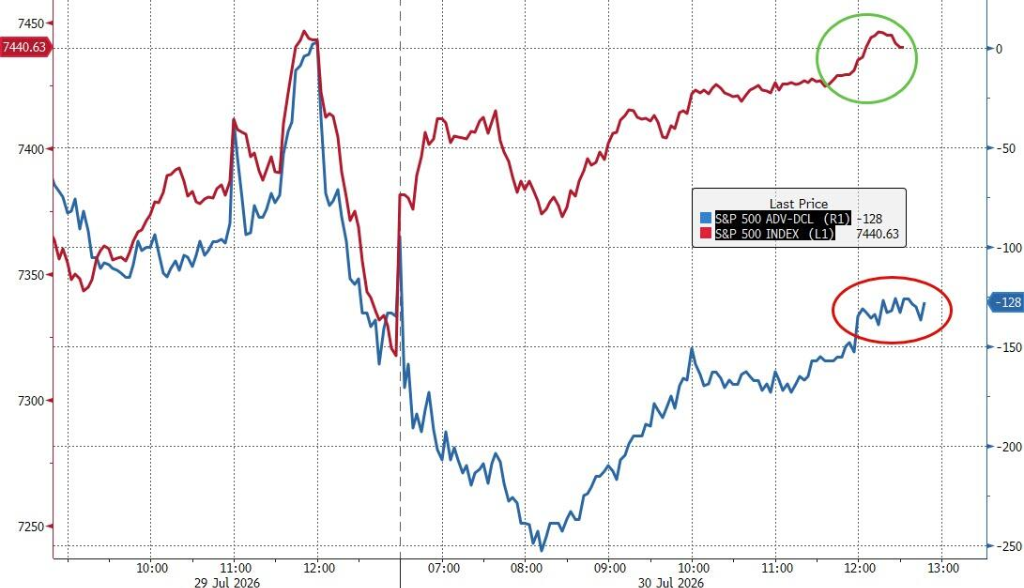
According to Bloomberg macro strategist Cameron Crise, since 1990, there have been only two instances when the S&P 500 rose by at least 75 basis points while its equal-weighted counterpart fell by approximately 75 basis points on the same day:
The first occurred on June 30, 2000, roughly two and a half months after the peak of the Nasdaq tech stock cycle;
The second is the current instance, occurring about one month after the SOX semiconductor index reached its recent AI-driven peak.
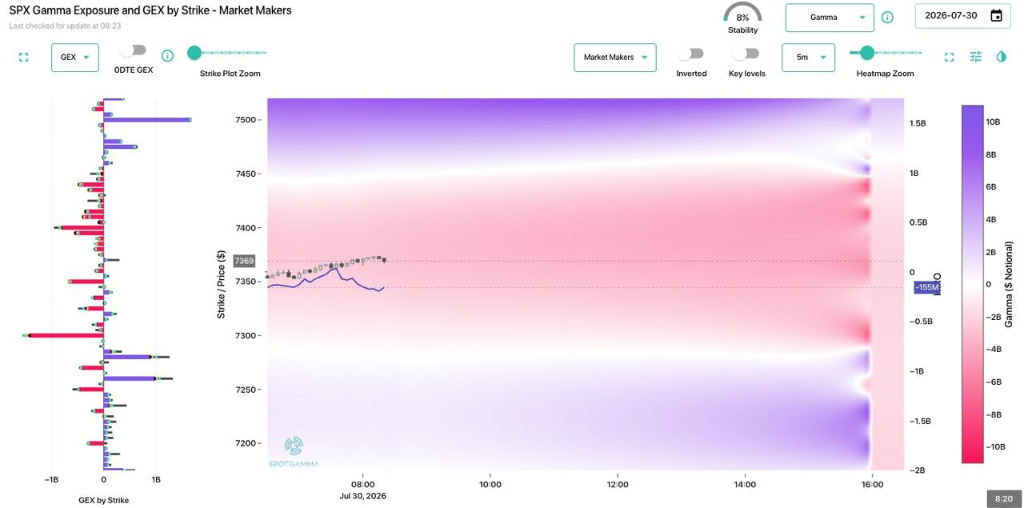
The options market has also failed to deliver optimistic signals. SpotGamma noted that although this rebound feels strong, investors should not let their guard down.
The negative gamma regime continues to dominate the S&P 500, with current resistance at 7,450,support levelsupport near 7,300, and almost no positive gamma support from 0DTE options below 7,300—leaving the range down to 7,000 entirely in negative gamma territory.
Sameer Samana of Wells Fargo & Co’s Investment Institute stated:
Strong corporate earnings, continued AI adoption, a resilient economy, and a supportive financial environment underpin an optimistic medium-term outlook for U.S. equities.
However, Ulrike Hoffmann-Burchardi of UBS Group’s Chief Investment Office advises investors to “maintain conviction in the AI growth thesis while managing concentration risk by diversifying into defensive technology stocks.”
Fed Credibility Eroded; Bond Market Remains Cautious
The bond market has calmed somewhat following Wednesday’s Fed decision-induced panic, but underlying unease has not been fully absorbed.
The yield on the 10-year U.S. Treasury note edged down by 1 basis point to 4.67%, while the 2-year yield declined by 4 basis points to 4.24%.
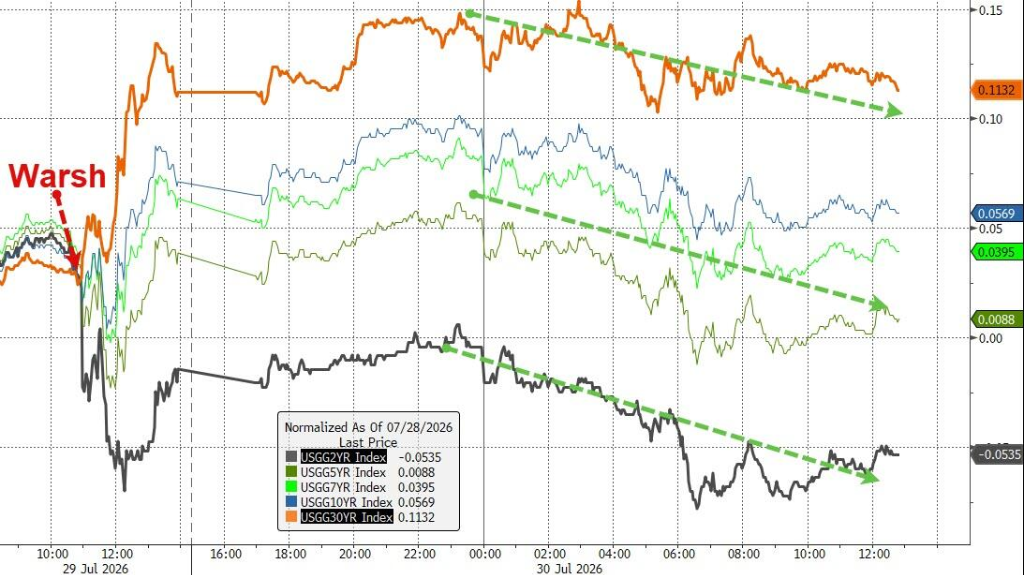
However, the 30-year yield rose by 1 basis point to 5.21%, remaining near its highest level since 2007.
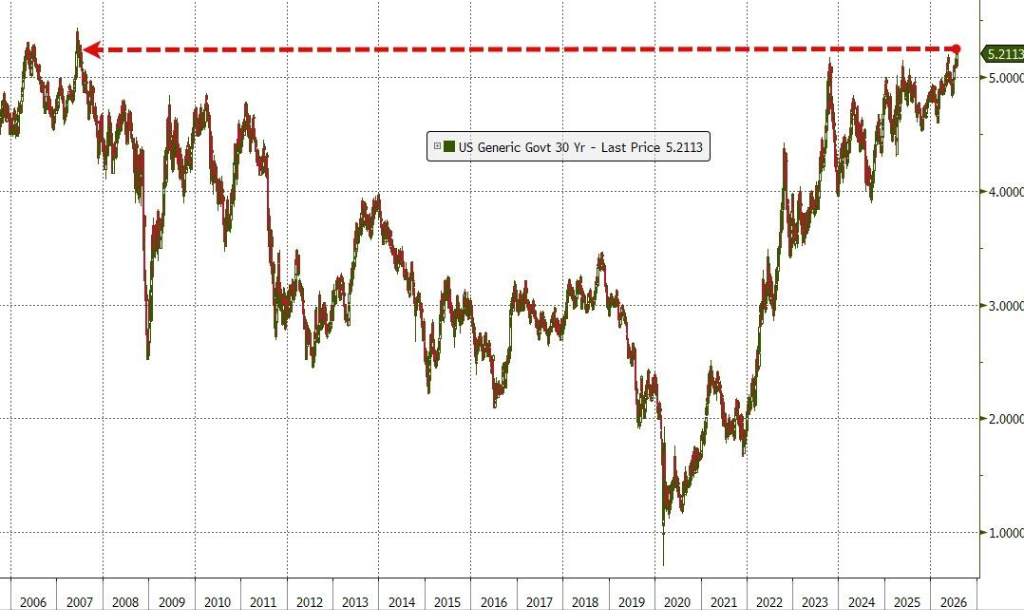
Although new Fed Chair Kevin Warsh’s clear reluctance to tighten policy at his first chaired meeting eliminated the immediate threat of a rate hike, the absence of defined policy triggers has made it more difficult for markets to assess the future interest rate path.
Torsten Slok, Chief Economist at Apollo Global Management, stated:
We need to talk about the Committee’s credibility. Words alone are not enough—it must ultimately be backed by action.
$Danske Bank (DNKEY.US)$Chief analyst Jens Peter Sorensen also warned:
Markets are speculating on both the number and timing of rate hikes, but tightening may come later than expected.
The day’s macroeconomic data overall came in relatively muted: Q2 GDP grew at an annualized rate of 1.5%, below expectations, though robust consumer spending and non-residential fixed investment suggested underlying strength better than headline figures indicated; the Fed’s preferred inflation gauge, the PCE price index, rose 3.7% year-over-year in June, down from 4.1% in May, broadly in line with expectations.
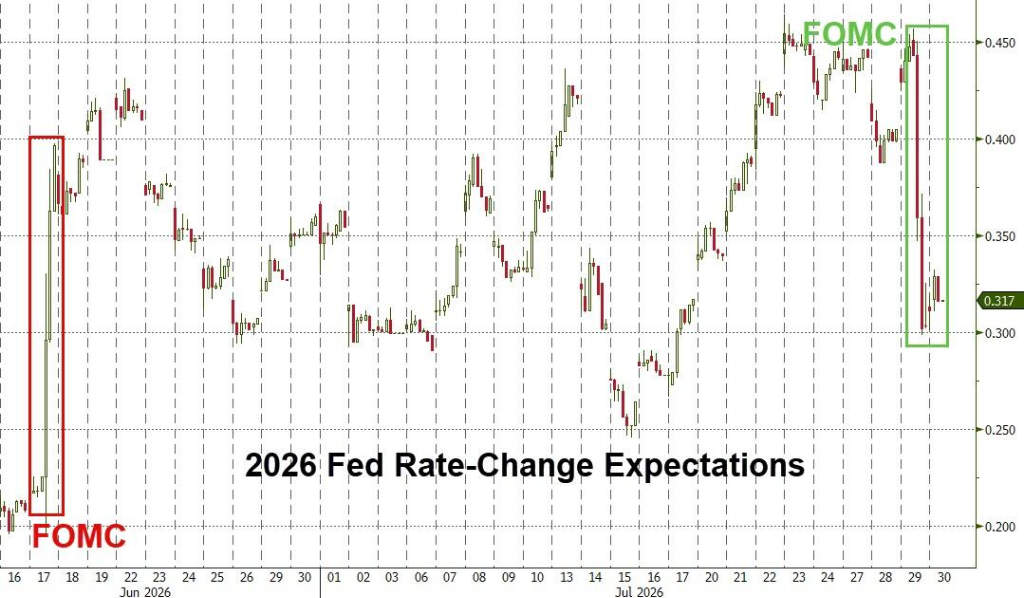
These data cooled bets on rate hikes, with CME FedWatch showing the probability of a September hike declining to 59% from 82% a week earlier.
Dollar plunges, gold strengthens, yen suspected of intervention
The dollar faced multiple pressures, with the dollar index falling 0.9%—its largest single-day drop since January—erasing all gains accumulated since Waller’s debut appearance. It was also one of the steepest declines for the dollar in recent years.
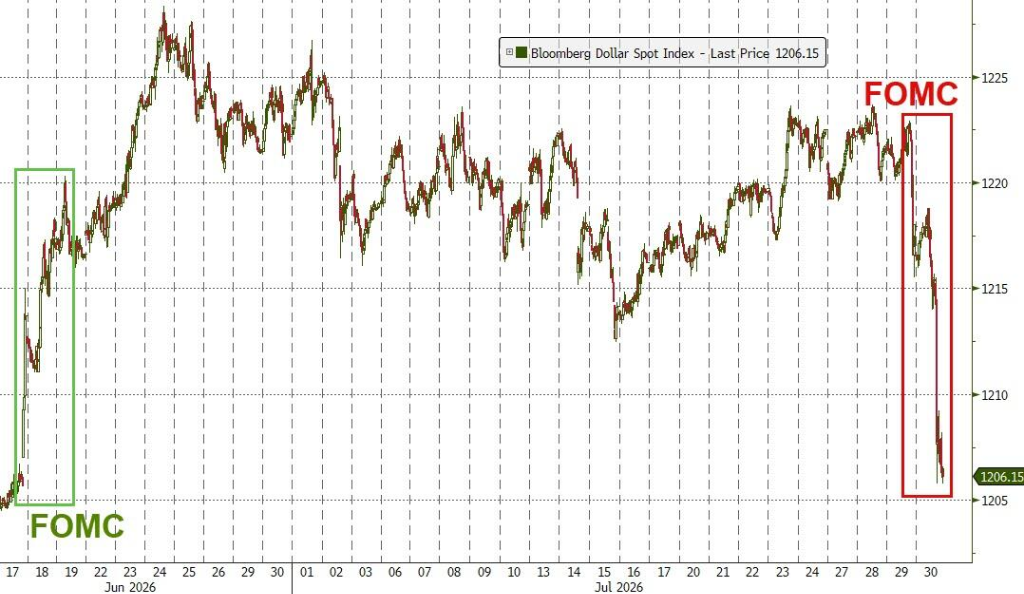
The sharp appreciation of the yen exacerbated the dollar’s decline. The yen rose 2.5% against the dollar, reaching around 159.38. According to Nikkei, Japanese authorities conducted foreign exchange intervention by buying yen, and U.S. regulators carried out interest rate checks, though official confirmation of intervention has not been provided.
A weaker dollar pushed gold higher, with spot gold prices rising 1.2% to reclaim the $4,100 mark, closing at $4,116.73 per ounce.
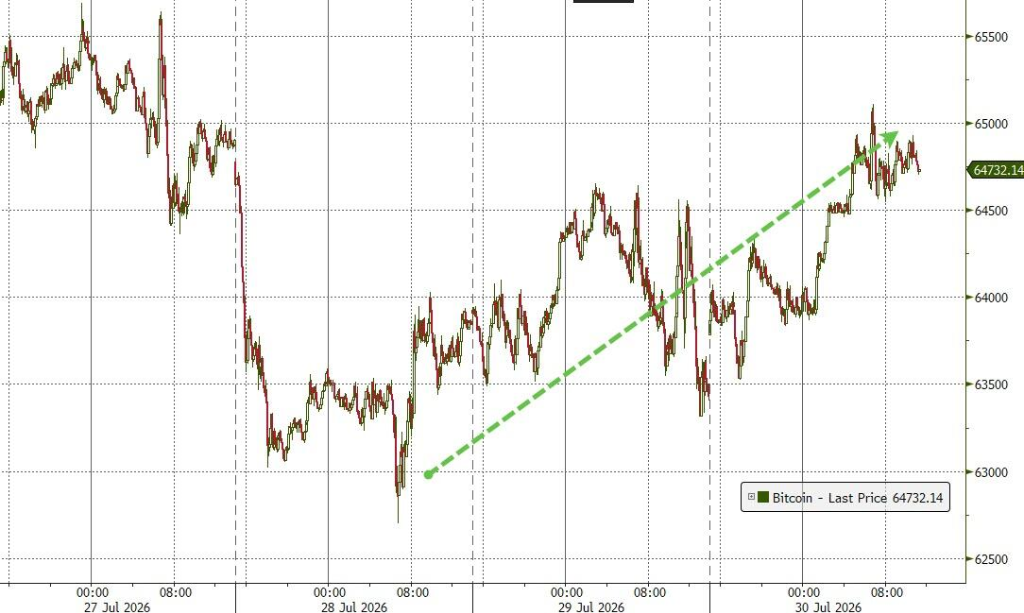
$Bitcoin (BTC.CC)$Following a rebound in tech stocks, it briefly breached the $65,000 level during the session and closed at $64,835, up approximately 2.2% on the day.
Despite ongoing tensions in the Middle East, market attention has shifted to the upcoming OPEC+ meeting this Sunday, where the oil-producing alliance is expected to announce an increase in output of 188,000 barrels per day starting in September. ING strategists noted in a report:
The greatest uncertainty before 2027 lies in the organization's policy direction and whether member countries will resist production quotas.
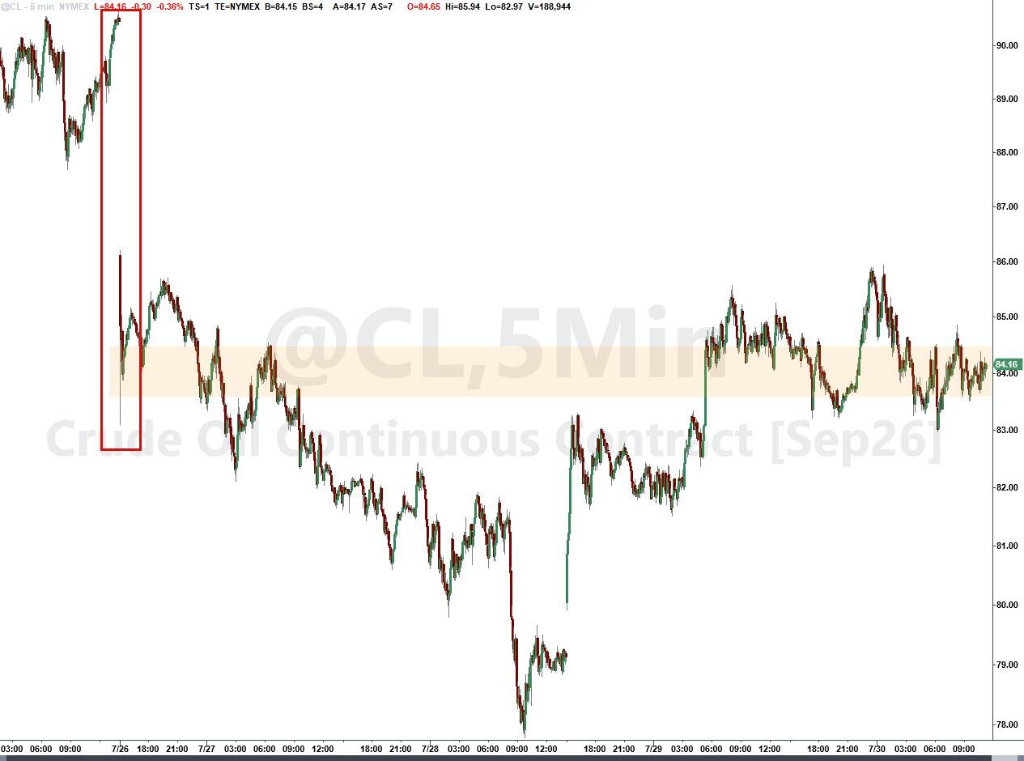
The crude oil market remained relatively calm, with WTI crude prices declining slightly by 0.9% to $83.67 per barrel.
U.S. equity indices rebounded strongly on Thursday, led by the Nasdaq, as the semiconductor index surged 8% and Microsoft jumped 15%. However, the equal-weighted S&P 500 declined, with some AI-focused tech stocks that have high capital expenditures and deteriorating cash flows—such as Meta—plummeting.
U.S. equity benchmark indices:
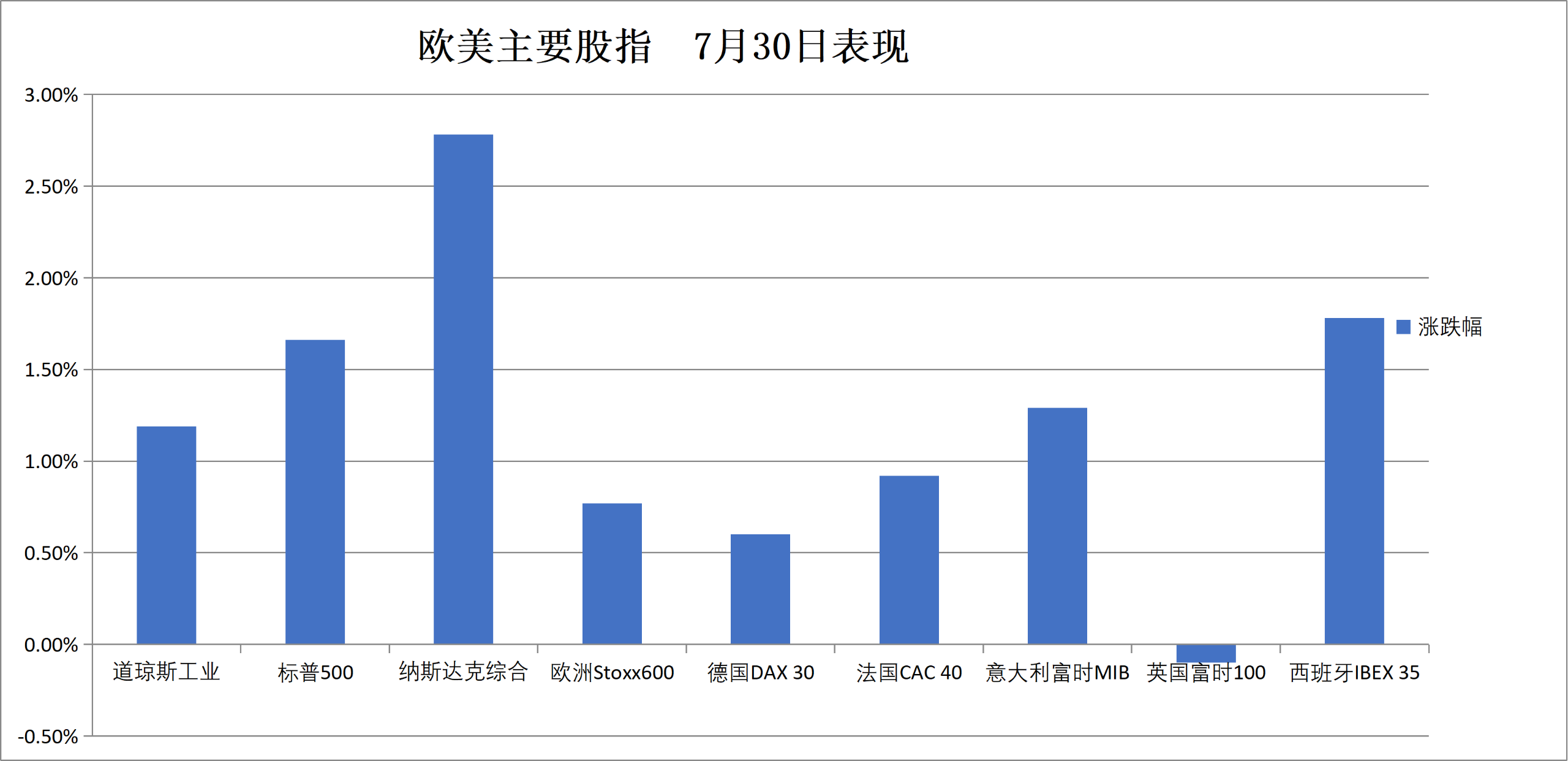
The S&P 500 rose 121.48 points, or 1.66%, closing at 7,437.63.
The Dow Jones Industrial Average gained 613.92 points, or 1.19%, closing at 52,208.06.
The Nasdaq Composite rose 679.235 points, or 2.78%, closing at 25,122.177. The Nasdaq 100 advanced 914.04 points, or 3.36%, closing at 28,106.346.
$Russell 2000 Index (.RUT.US)$It rose 1.37%, closing at 2,946.101.
The CBOE Volatility Index (VIX) fell 17.33% to close at 17.08, while European equities have been declining continuously since the market opened.
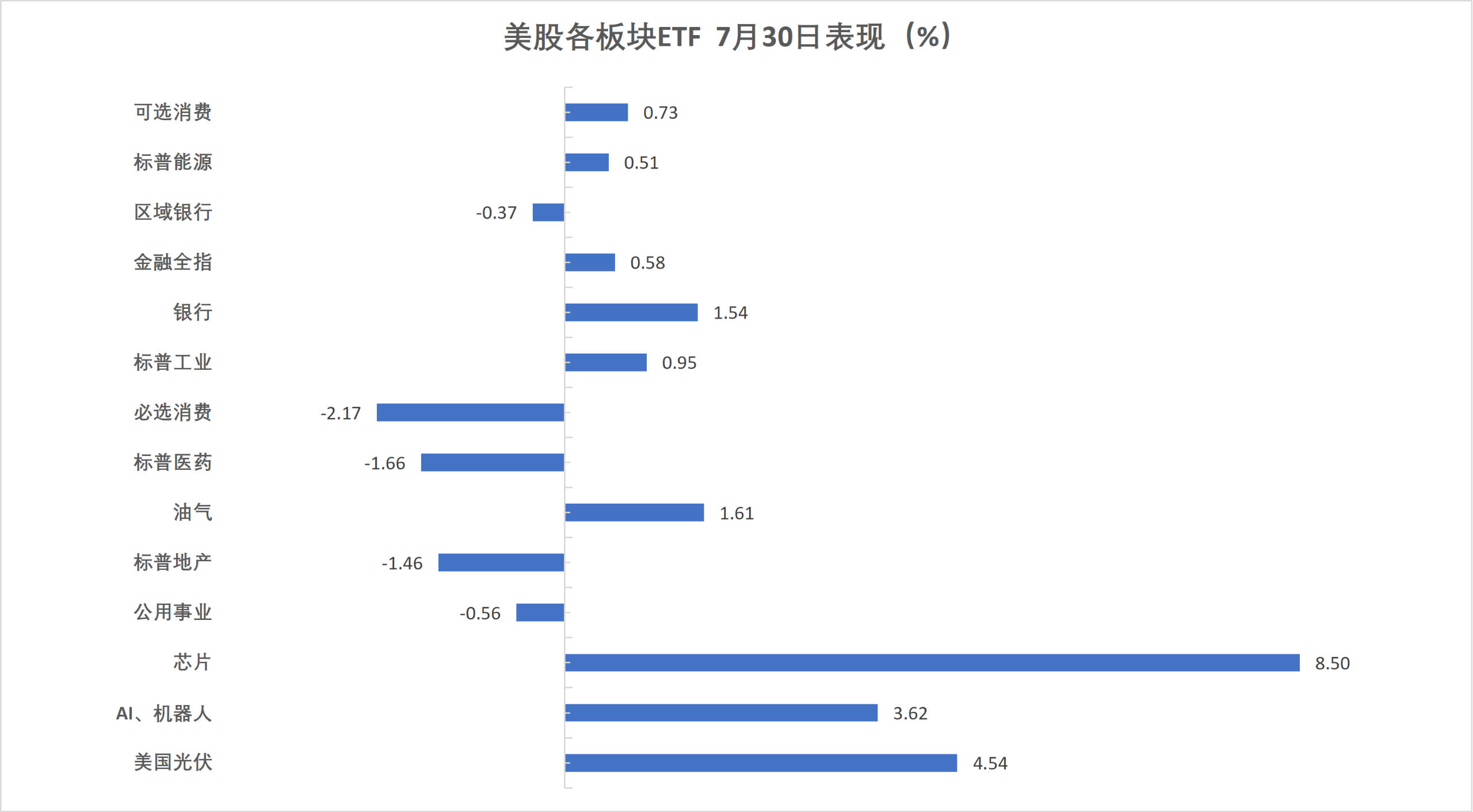
U.S. stock sector ETFs:
Most U.S. sector ETFs closed higher, with the semiconductor ETF up 6.88% and both the global technology equity ETF and the technology sector ETF rising at least 5.5%.
Mag 7:
The Wind U.S. Mag 7 Index rose 2.28%.
Microsoft surged 15.5%, Amazon gained 3.90%, and Tesla rose 3.53%,NVIDIA (NVDA.US)up 2.65%, while Google A fell 0.91%, Apple declined 1.41%, and Meta dropped 7.95%.
Semiconductor stocks:
$PHLX Semiconductor Index (.SOX.US)$closed up 855.499 points, or 8.19%, at 11,302.988 points.
$Taiwan Semiconductor (TSM.US)$ADRs jumped 7.63%, with AMD surging 13%.
U.S.-listed Chinese stocks:
The Nasdaq Golden Dragon China Index closed up 1.05% at 6,502.80 points.
Among actively traded Chinese ADRs,$CenturyLink (VNET.US)$rose 16.7%,$ASE Technology Holding (ASX.US)$rose 12.2%,$GDS Holdings (GDS.US)$gaining 8%,$Canadian Solar (CSIQ.US)$rose 7.7%, and Tencent gained 2.4%.Baiduup 2%,$NetEase (NTES.US)$Up 1.8%, Alibaba rose 1%.
Other stocks:
$Circle(CRCL.US)$Up 4.73%.
Roundhill Storage ETF surged more than 16%, with optical communication and storage sectors collectively rallying sharply,$Kioxia ADR (KXIAY.US)$Up nearly 32%, SanDisk rose over 25%,Micron Technology (MU.US)Surging over 18%,$SK Hynix (000660.KR)$NEBIUS jumped over 17%,$Lumentum (LITE.US)$、$Western Digital (WDC.US)$Up more than 15%, AMD and Credo rose over 13%, and Intel climbed over 11%.
Arm rose over 7%, reporting first-quarter revenue of $1.29 billion, up 22% year-over-year; adjusted net income was $480 million, an increase of 28% year-over-year.
Cloud computing provider Nebius rose over 27%.
Other news
[After-Hours Earnings Snapshot]
Amazon shares rose more than 10% in after-hours trading. The company reported second-quarter net sales of $200.6 billion, up 20% year-over-year versus an expectation of $197.01 billion; North American net sales reached $116.18 billion, up 16% year-over-year. AWS net sales grew 37% in the second quarter, exceeding the estimated 31.3% growth.
Apple shares fell more than 4% in after-hours trading. The company reported third fiscal quarter revenue of $109.42 billion, up 16% year-over-year versus an estimate of $108.85 billion. iPhone revenue totaled $54.25 billion versus an estimate of $53.6 billion; iPad revenue was $6.19 billion versus an estimate of $6.89 billion; Mac revenue reached $10.35 billion versus an estimate of $8.62 billion. Earnings per share for the third fiscal quarter were $2.02, up 29% year-over-year versus an estimate of $1.89.
Cryptocurrency exchange$Coinbase(COIN.US)$Shares fell more than 5% after hours. The company reported total second-quarter revenue of $1.22 billion, down 14% quarter-over-quarter, below analysts' expectation of $1.29 billion. Adjusted EBITDA was $208 million, marking its 14th consecutive profitable quarter.
[Amazon Web Services Revenue Grows for Fifth Straight Quarter Amid Strong AI Services Demand]
Amazon reported cloud computing revenue that exceeded analysts' expectations, with robust demand for artificial intelligence services driving accelerated sales for the fifth consecutive quarter. In a statement released Thursday, Amazon said that for the quarter ended June 30, revenue from its cloud division, Amazon Web Services (AWS), rose 37% year-over-year to $42.2 billion—the fastest growth rate since the fourth quarter of 2021. Analysts had on average expected AWS revenue of $40.6 billion. AWS accounts for approximately one-fifth of Amazon’s total revenue and the majority of its operating profit.
[Taiwan Semiconductor Reportedly Developing New AI Chip Packaging Technology]
According to recent reports, Taiwan Semiconductor is developing a new advanced packaging technology for AI chips, similar to Intel's Embedded Multi-die Interconnect Bridge (EMIB) solution. This technology supports larger multi-chip designs, enabling the production of more powerful AI chips and helping chipmakers diversify their supplier base.
【 $Kioxia ADR (KXIAY.US)$ Began shipping samples of ninth-generation NAND
Japanese memory chipmaker Kioxia announced it has begun providing customers with samples of 512Gb TLC flash memory based on its ninth-generation BiCS FLASH 3D NAND technology. The product employs CMOS Bonded Array (CBA) technology, which combines mature memory cell architecture with advanced CMOS processes to enhance performance and reduce manufacturing costs. Kioxia stated that the new flash memory will be used in enterprise SSDs, particularly targeting data storage requirements that boost GPU efficiency in AI systems.
The eurozone blue-chip index rose more than 1.5%, with Schneider Electric up over 10.8% and Infineon gaining more than 9.1%.$ASML Holding (ASML.US)$Rose 5.7%. The Greek stock market gained over 1.2%, reaching its highest closing level since 2009, while Italy's banking sector rose 1.7% and France’s benchmark index climbed more than 0.9%.
Pan-European Equities:
The STOXX Europe 600 Index closed up 0.77% at 649.95 points.
The EURO STOXX 50 Index closed up 1.53% at 6,344.40 points, continuing its upward trend.
National stock indices:
Germany's DAX 30 Index rose 0.60%, closing at 25,612.03 points.
France's CAC 40 Index rose 0.92%, closing at 8,485.64 points.
$FTSE 100 Index (.FTSE.GB)$It declined 0.10%, closing at 10,897.27 points.
Sector and individual stock performance:
Among Eurozone blue-chip stocks, Schneider Electric gained 10.83%, Infineon rose 9.16%, Siemens Energy climbed 8.12%, and ASML Holding advanced 5.71% to rank fourth; Hermès and L'Oréal each rose at least 2.74%, entering the top ten gainers.
Among all constituents of the STOXX Europe 600 Index, AT&S, DSM-Firmenich AG, Mondi, Schneider Electric, and Omron led gains with increases of 12.75% to 10.72%; ASM International rose 9.53%, Soitec gained 8.36%, and Infineon also entered the top ten gainers.
Want to select stocks or get a stock diagnosis? Curious about the opportunities and risks in your portfolio? For all your investment questions,Just ask Futubull AI!

Editor/Liam