
Apple's revenue guidance for the fourth fiscal quarter is only 9% to 11%, below market expectations. CFO Kevan expects iPhone revenue in the fourth fiscal quarter to be constrained by supply limitations, resulting in growth settling into the low double-digit range of approximately 15%. Meanwhile, services revenue, excluding a 2.5% foreign exchange impact, is expected to grow at a rate roughly in line with the 12% recorded in the third fiscal quarter. Cook announced that this would be his final earnings call as CEO, with incoming CEO John Ternus set to take over.
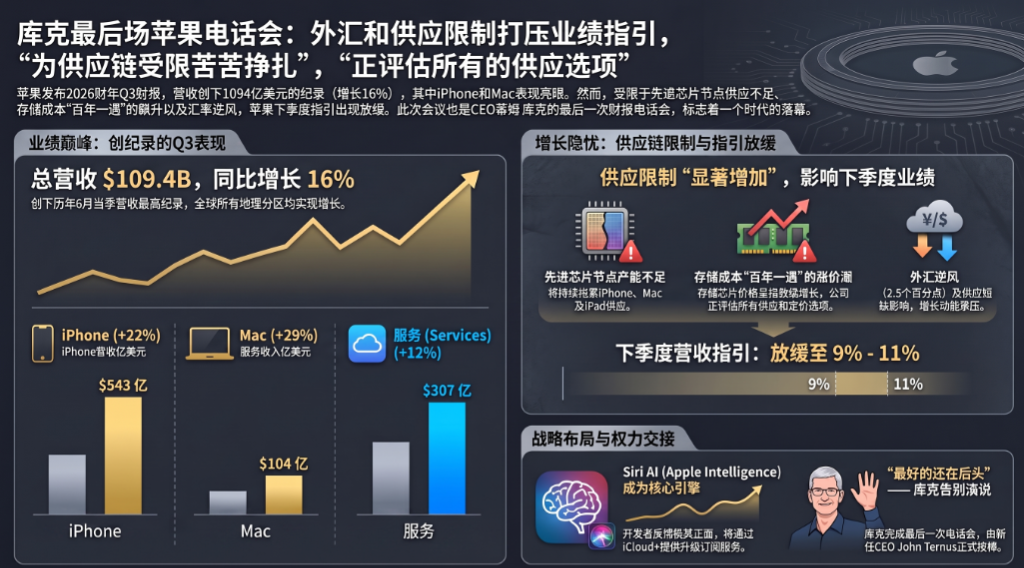
$Apple (AAPL.US)$ The company delivered its strongest June-quarter performance on record, but surging memory prices and tightening supplies of advanced-process chips have emerged as the most significant operational risks, casting doubt on the outlook for the upcoming critical holiday sales season.
On Thursday, July 30, Eastern Time, Apple released its third fiscal quarter earnings report. Total revenue and iPhone revenue for the quarter slightly exceeded expectations, while services and Greater China segment performance fell short of forecasts.
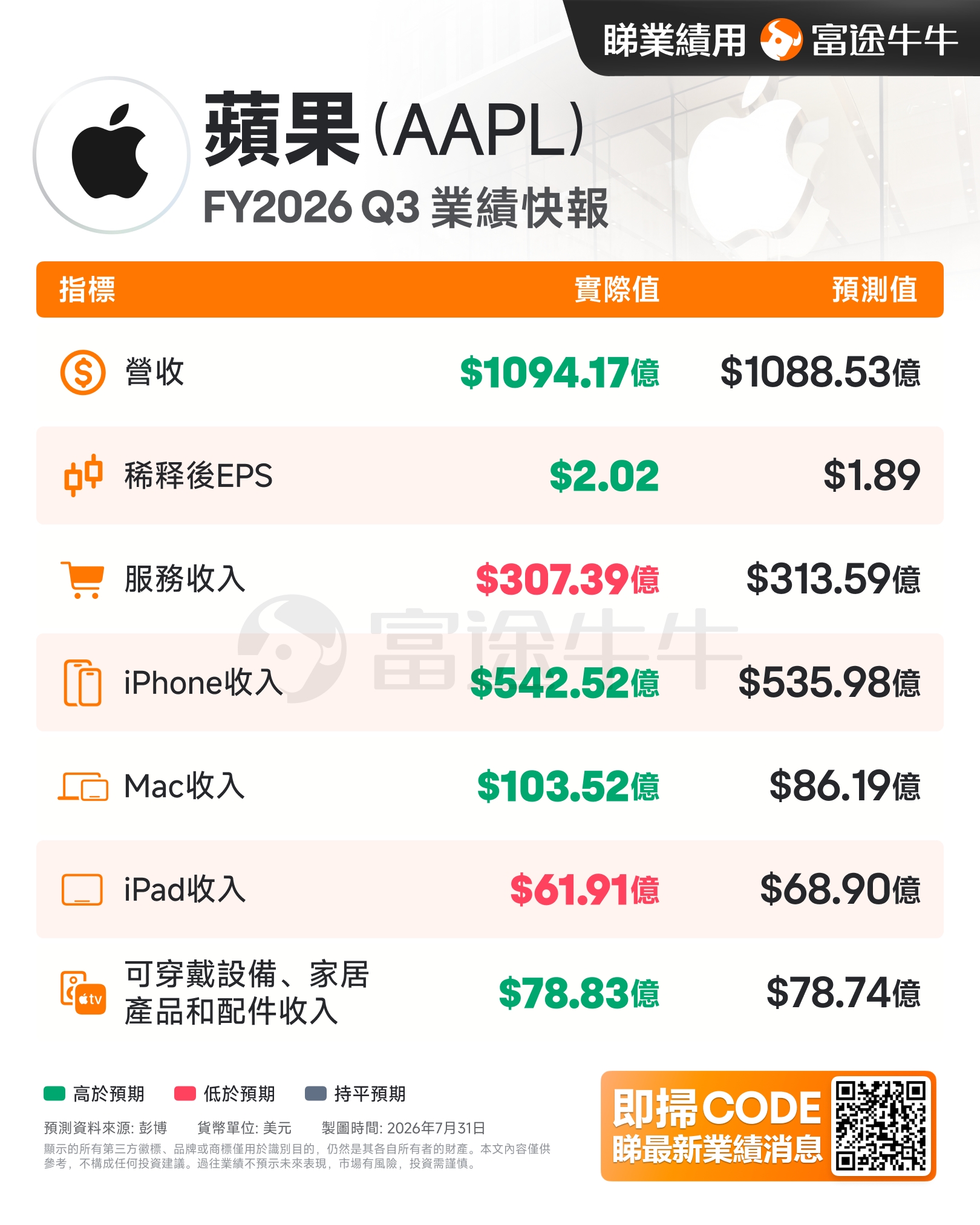
 During the earnings call, Apple executives projected that fourth fiscal quarter—i.e., the current quarter—revenue would grow by 9%–11%. This guidance range is below analysts’ consensus expectation of 12.1% growth. Executives cited foreign exchange headwinds and supply constraints as the two primary drags on performance.
Apple CFO Kevan indicated that iPhone revenue in the fourth fiscal quarter would be constrained by supply limitations, resulting in year-over-year growth settling into the low-teens range at approximately 15%. Meanwhile, services revenue, after adjusting for a 2.5% foreign exchange impact, is expected to grow at a pace roughly in line with the 12% increase recorded in the third fiscal quarter.
In response to questions about Apple product price increases, CEO Tim Cook explained:
“We are in what I would describe as a ‘once-in-a-century flood’ environment for memory pricing—storage costs are rising exponentially, and that’s the reason for the price adjustments.”
To address this crisis, Cook stated that Apple is evaluating all available sourcing options for its supply chain.
Meanwhile, this earnings call also marked the end of an era. Cook announced it would be his final time hosting an Apple earnings conference call.
John Ternus, Apple’s Senior Vice President of Hardware Engineering, attended the call in his capacity as incoming CEO and will lead such meetings starting next quarter. Cook expressed that he has “never been more confident” in the company’s future.
Demand is significantly exceeding expectations—‘We’re struggling to keep up with the supply chain.’
The market is closely watching the reasons behind Apple's slowing growth in the fourth fiscal quarter.
Apple CFO Kevan Parekh explicitly stated during the meeting that the company’s total revenue next quarter would be weighed down by two major factors: foreign exchange and supply constraints.
Foreign exchange is expected to create a headwind of approximately 2.5 percentage points against overall growth on a sequential basis, while the negative impact from supply constraints will 'increase significantly' in the fourth fiscal quarter and affect iPhone, Mac, and iPad.
When asked by analysts whether this indicated weakening demand, Cook offered a very direct rebuttal. He stated that the core issue lies in the capacity for advanced-node system-on-chip (SoC) production. Cook emphasized:
Frankly speaking, this is not a typical supply issue at all—it’s a demand forecasting problem.
He added:
Both iPhone and Mac performed significantly better than we anticipated. Our original expectations were already quite high, but as you’ve seen, iPhone grew by 22% this quarter and is up 22% year-to-date—both are extraordinary figures. However, supply chain flexibility has been much lower than usual. We’ve been pulling supply forward aggressively, but there’s a limit to how far we can go. As a result, we’re heading into a quarter where we’ll be scrambling on the supply side.
Regarding specific business segments for next quarter, CFO Kevan expects reported iPhone growth to land in the 'mid-teens' range—around 15%. Meanwhile, Services revenue, after adjusting for a 2.5% foreign exchange headwind, is expected to grow at a pace broadly consistent with the 12% growth recorded in the third fiscal quarter.
‘A once-in-a-century flood’: Soaring memory costs heavily pressure gross margins
Beyond capacity bottlenecks, the market has also keenly noted recent price increases for Apple products. When questioned about the link between pricing strategy and inflation in memory chips, Cook explained:
We raised prices reluctantly. We did so because we are in what I would describe as a 'once-in-a-century flood' environment for memory pricing, where storage prices are increasing exponentially—that is the reason for the price increase.
CFO Kevan supplemented this with specific data, noting that the gross margin for the third fiscal quarter, excluding tariff rebates, was 48.1%. Regarding the fourth fiscal quarter, he commented on the downward revision of the gross margin guidance—excluding tariff rebates—to an estimated 46.5%:
More than 100% of the reason can be attributed to changes in memory costs.
In response to this crisis, Cook stated that Apple is evaluating all options:
The DRAM market is primarily served by three suppliers. Clearly, having more suppliers would benefit us both on the supply side and the pricing side... We are evaluating all available sourcing options.
The Potential of Apple AI and Global Implementation Challenges
As the area with the greatest potential for future growth, Apple Intelligence—particularly the new Siri AI unveiled at WWDC—has drawn significant attention. Management confirmed that feedback from early developers and the public beta has been “phenomenal.”
Regarding whether AI will alter Apple’s capital intensity, Cook acknowledged that the company is increasing its overall spending on R&D and AI, and has adopted a “hybrid model (on-device + proprietary cloud + third-party cloud).”
He hinted at a future monetization path:
We truly believe many people will want to use it extensively. Therefore, we will offer some kind of upgrade option on iCloud+, allowing users to purchase a higher-tier iCloud+ service.
Regarding the progress of AI implementation in the EU and Chinese markets, which have drawn market attention, Cook provided the latest response:
We would like to launch everything everywhere at the same time, but we were unable to do so in the EU. We are working closely with the European Commission and hope to reach some kind of resolution. As for China, last week we received approval to roll out the initial Apple Intelligence features (such as Clean Up), and we are moving forward with their release. For Siri AI, however, more work remains to be done.
Full Transcript of Apple’s Q3 Fiscal Earnings Call (AI-Assisted Translation):
Suhasini Chandramouli, Director of Investor Relations:
Good afternoon, and welcome to Apple’s third-quarter fiscal year 2026 earnings conference call. I’m Suhasini Chandramouli, Director of Investor Relations. This call is being recorded. Today’s remarks will begin with Tim Cook, Apple’s Chief Executive Officer, followed by Kevan Parekh, Chief Financial Officer. John Ternus, incoming CEO, is also participating in today’s call. After prepared remarks from management, we will open the call for questions from analysts.
Please note that certain information discussed today constitutes forward-looking statements, including but not limited to statements regarding revenue, gross margin, operating expenses, other income and expenses, taxes, and future business outlook. These statements involve risks and uncertainties that could cause actual results or trends to differ materially from those anticipated, including risks related to the macroeconomic environment, tariffs and other measures, and the potential impact of regulatory and legal proceedings on the company’s business and operating results. For additional information, please refer to the risk factors discussed in Apple’s most recently filed Forms 10-Q and 10-K, as well as the Form 8-K and related press release filed today with the U.S. Securities and Exchange Commission (SEC). Additional information will also be included in the Form 10-Q for the quarter ended June 27, 2026, to be filed tomorrow, as well as in other reports and documents filed with the SEC. Apple undertakes no obligation to update any forward-looking statements, which speak only as of the date they are made. Now, I’ll turn the call over to Tim for his opening remarks.
Tim Cook, Chief Executive Officer:
Thank you, Suhasini.
Good afternoon, and thank you all for joining us today. Apple is pleased to announce record June-quarter revenue of $109.4 billion, up 16% year-over-year, despite ongoing supply constraints and persistent foreign exchange headwinds.
Our strongest product lineup ever continues to resonate strongly with consumers: iPhone revenue grew 22% year-over-year, reaching a June-quarter record. Mac revenue surged 29%, also setting a June-quarter record. Services delivered June-quarter revenue of $30.7 billion, another all-time high. We achieved June-quarter revenue records in every geographic segment, including the Americas, Latin America, Western Europe, India, Greater China, Japan, and Southeast Asia. We set June-quarter records in both mature and emerging markets, with double-digit growth in most emerging markets.
This year’s Worldwide Developers Conference (WWDC) brilliantly showcased our latest innovations. We proudly introduced the all-new Siri AI—a comprehensively redesigned version of Siri that is powerful, highly personalized, and seamlessly integrated across our platforms. Feedback from both the developer beta and public beta users has been incredibly encouraging. Early user reviews have been outstanding, and we are deeply gratified to hear how excited users are about the capabilities we’ve built. This validates our core philosophy: privacy-first, context-aware AI can fundamentally transform how users access information and interact with products, truly enriching their lives. We are enthusiastic about what lies ahead and inspired by the impact it will bring.
At WWDC, we also unveiled new tools to help parents safeguard their children’s online safety, and we were heartened by the overwhelmingly positive response to this launch. New child safety features such as 'Ask to Browse' and 'Time Limits' will empower parents to guide their children toward healthy digital habits. These tools incorporate leading clinical and child development research, including guidance from the American Academy of Pediatrics. Our goal is to make it easier for parents to manage what content their children access, who they interact with, and how and when they use their devices. We look forward to delivering these new features alongside exciting updates across our operating systems this fall.
iPhone Business
iPhone revenue for the quarter was $54.3 billion, an increase of 22% year-over-year, setting June-quarter records in every geographic region and achieving a record number of upgraders during the June quarter. According to IDC data, we gained global market share this quarter. As I mentioned previously, this is our most powerful and popular iPhone lineup ever. With the exceptional performance of the A19 and A19 Pro chips, more users than ever are relying on iPhone for AI experiences every day.
The entire iPhone lineup continues to meet users’ everyday needs in performance, battery life, durability, and camera capabilities: whether it’s the exceptional camera system of the iPhone 17 Pro and Pro Max, the ultra-thin design of the iPhone Air, the balanced performance and durability of the iPhone 17, or the exceptional value of the iPhone 17e—there’s an iPhone for everyone.
Mac Business
Mac revenue for the quarter was $10.4 billion, a significant 29% year-over-year increase, marking the best June-quarter performance ever despite notable supply constraints. This growth was driven by strong demand for our latest product lineup, particularly the MacBook Pro and the new MacBook Neo. According to IDC data, we gained global market share and set June-quarter revenue records in mature markets and all-time highs in emerging markets, with Greater China standing out by achieving its highest-ever revenue. Additionally, both upgraders and new Mac customers reached record levels.
Powered by Apple Silicon, the Mac lineup delivers exceptional performance-per-watt efficiency, high memory bandwidth, and next-generation AI capabilities, solidifying its position as the ultimate AI powerhouse—excelling in high-throughput, on-device inference, and diverse AI-driven creative workflows. We are seeing more users actively leveraging these capabilities—from using the Mac mini as a powerful agent-based AI platform to deploying clusters of Mac Studio systems to run cutting-edge models locally.
The MacBook Neo, with its distinctive design and outstanding value proposition, has been enthusiastically embraced by users worldwide, and we continue to work hard to meet demand. The MacBook Air, the world’s best-selling notebook, powered by the M5 chip, remains a favorite for its unmatched combination of portability and performance. The MacBook Pro, equipped with the M5 Pro and M5 Max chips, continues to be the professional’s choice for the most demanding AI development and creative workflows.
iPad Business
iPad generated $6.2 billion in revenue this quarter. With its powerful performance, portability, and versatility, iPad continues to be the ultimate device for students, entrepreneurs, and creators of all kinds—capable of handling any task, anytime and anywhere. The new iPad Air, powered by the M4 chip, delivers a significant performance boost, effortlessly supporting personal productivity, immersive learning, and advanced creative workflows. Combined with the exceptional performance of iPad Pro, the outstanding value and diverse capabilities of iPad, and the extreme portability of iPad mini, we now offer our strongest iPad lineup ever.
Wearables, Home and Accessories
Revenue from Wearables, Home and Accessories was $7.9 billion, an increase of 6% year-over-year, with growth in every geographic segment and setting a June quarter record for Apple Watch upgrade users. Our Apple Watch lineup features the most comprehensive suite of health and fitness capabilities ever offered, delivering research-backed, practical features that help users better understand their health. We are deeply moved by the feedback we receive nearly every day from users around the world, sharing how Apple’s health innovations have profoundly impacted—and even transformed—their lives.
The AirPods lineup continues to raise the bar: AirPods Pro 3 deliver an immersive listening experience, while AirPods Max 2 offer exceptional high-fidelity audio and active noise cancellation. Powered by Apple Intelligence, real-time translation is enabling people to overcome language barriers and connect more deeply than ever before.
Apple Intelligence
As I mentioned earlier, we are excited about our work on the next generation of Apple Intelligence, including Siri AI and the AI features we are developing across our platforms. These experiences are intuitive and easy to use, deeply integrated, and thoughtfully designed to balance personalization with privacy protection—running the latest models on-device and leveraging private cloud computing when needed.
We began laying the foundation for the best AI experiences for our users as early as 2017 with the introduction of the Neural Engine. Since then, we have consistently and deliberately invested in innovation across chips, operating systems, and our scalable unified memory architecture—all centered on AI. What makes Apple unique is the combination of high-bandwidth unified memory, industry-leading power efficiency, and deeply integrated on-device intelligence—all built from the ground up with user experience at the core. This enables Apple to deliver the best AI hardware experience in the world, whether using Apple Intelligence—including Siri AI—or third-party applications. As a result, developers and researchers are increasingly choosing Apple devices to build more advanced tools and models.
Services
Services revenue reached $30.7 billion, setting a June quarter record and growing 12% year-over-year despite significant sequential foreign exchange headwinds. We also achieved record June quarter revenue in emerging markets and set an all-time revenue record in mature markets.
Apple TV+ continues to captivate audiences with exceptional content, featuring new releases like 'Widow's Bay' and 'Cape Fear' alongside returning hits such as 'Silo' and 'Sugar.' Next week, we look forward to the highly anticipated return of 'Ted Lasso' for its fourth season. This year, Apple TV+ made history by winning a Tony Award, joining its previously earned Emmy, Grammy, and Oscar awards to become the fastest streaming platform ever to achieve this milestone. At this year’s Emmys, Apple received a record-breaking 89 nominations—the most of any network—with three nominations each in the two major categories of Outstanding Drama Series and Outstanding Comedy Series. 'Widow's Bay' also earned 19 Emmy nominations, making it the most nominated new program of the year. Since its launch 6.5 years ago, Apple TV+ has won over 850 awards and received nearly 3,800 nominations.
During the FIFA World Cup, we expanded Apple Sports to more than 170 countries and regions worldwide, enabling fans to follow every exciting moment of the tournament more conveniently than ever before. Meanwhile, the Formula 1 season has already passed its midpoint this year, with Apple TV subscribers tracking their favorite drivers and teams throughout the entire season.
On the retail front, we are pleased to announce this week the launch of the Apple Upgrade Program for users in the United States. Developed in partnership with Klarna, this new hardware leasing program makes it easier for customers to acquire the latest Apple products through a plan that best suits their needs.
Responsibility and Social Commitment
In all our work, we serve users and communities with care and focus. This means safeguarding user privacy through innovations in next-generation Apple Intelligence, as well as helping parents protect their children’s online safety, as previously mentioned.
On Global Accessibility Awareness Day, we introduced a suite of new features designed to help users get more value from the products they use every day—VoiceOver, Magnifier, Voice Control, and Reader now feature new intelligent capabilities, making them more practical and intuitive. We will also leverage on-device speech recognition technology to automatically generate captions for video content that lacks subtitles. Additionally, Apple Vision Pro will gain a new feature enabling powered wheelchair users to control their driving systems using only their eyes. All these features stem from Apple’s long-standing commitment to ensuring technology is accessible to everyone.
U.S. Investment and Manufacturing
While continuing to develop new features for users around the world, we are also actively fulfilling our commitment to invest in domestic innovation. Last year, we pledged to invest $600 billion in the U.S. over four years; as previously stated, we also intend to reinvest any tariff refunds we receive back into the U.S. economy. We are pleased with the progress we have made in advancing U.S. supply chains.
Earlier this month, Apple announced a new agreement with Broadcom to jointly design and manufacture custom silicon components and cutting-edge wireless connectivity technologies. This multi-year agreement with Broadcom is a key component of Apple’s U.S. manufacturing initiative and is expected to exceed $30 billion in value—representing our largest-ever U.S. manufacturing commitment to date and a significant step forward in building an end-to-end silicon supply chain in the United States.
We look forward to the opening of Apple’s Advanced Manufacturing Hub in Houston later this year. The facility currently assembles advanced AI servers and will begin producing Mac Mini units there later this year. The hub will teach students, supplier employees, and businesses the same innovative manufacturing processes we use to build our products, with the goal of empowering U.S. manufacturers to elevate their operations and strengthen the broader advanced manufacturing ecosystem.
Looking ahead, we anticipate an exciting fall launch season and an even brighter future. Our product roadmap is inspiring, and we are eager to see the profound impact Siri AI will bring to users’ lives. Throughout this journey, our North Star remains creating the best products and services to empower people to achieve remarkable things. It is a tremendous honor to be woven into people’s lives in enduring and meaningful ways—to help them create, connect, and experience the world. I can’t wait to see this extraordinary journey of innovation continue to unfold, and I have never been more convinced that our best days lie ahead.
Now, I'll turn the call over to Kevan.
Kevan Parekh, Senior Vice President and Chief Financial Officer:
Thank you, Tim. Good afternoon, everyone.
Below is a brief overview of our key financial metrics.
Revenue for the quarter was $109.4 billion, an increase of 16% year-over-year, setting a June-quarter record. Despite supply constraints, we delivered strong performance across all geographic regions, with double-digit growth in each. Product revenue was $78.7 billion, up 18% year-over-year, driven by double-digit growth in both iPhone and Mac, each of which also set June-quarter records.
Our installed base of over 2.5 billion active devices reached an all-time high, spanning all major product categories and geographic regions. Services revenue was $30.7 billion, up 12% year-over-year. We achieved record revenue in every services category, including historic highs for cloud services and payment services.
The company’s gross margin was 50.1%, up 80 basis points sequentially, which includes a favorable impact of approximately two percentage points from tariff refunds. Excluding this benefit, gross margin would have been at the midpoint of our prior-quarter guidance range. Product gross margin was 40.1%, up 140 basis points sequentially, which includes a favorable impact of more than 2.5 percentage points from tariff refunds. Services gross margin was 75.6%, down 110 basis points sequentially due to shifts in business mix. Operating expenses were $19.1 billion, up 23% year-over-year, driven by investments in research and development. Net income was $29.8 billion. Diluted earnings per share were $2.02, up 29% year-over-year, which includes a $0.11 favorable impact from tariff refunds. Operating cash flow was strong at $34.4 billion. All three metrics set June-quarter records, even excluding the favorable impact of tariff refunds.
Segment Details
iPhone: iPhone revenue was $54.3 billion, up 22% year-over-year, driven by the iPhone 17 series. We achieved double-digit growth in the vast majority of markets we track and set June-quarter revenue records in both mature and emerging markets. The iPhone active installed base grew to an all-time high, and upgrade activity reached a June-quarter record. According to recent World Panel surveys, iPhone was the top-selling model in the U.S., urban China, the U.K., France, Australia, and Japan. The iPhone 17 series has received an enthusiastic response, with 451 Research recently reporting U.S. customer satisfaction at 99%.
Mac: Mac revenue was $10.4 billion, up 29% year-over-year, setting a June-quarter record, driven by strong performance from the MacBook Neo and MacBook Pro. We saw growth in both mature and emerging markets, with particularly robust momentum in Latin America, India, and Southeast Asia. The MacBook Neo has been enthusiastically embraced by customers, and we continue to attract new users from around the world. As Tim mentioned, Mac achieved record numbers of new and upgrading customers globally as well as in the U.S., mainland China, and India this quarter. 451 Research recently reported Mac customer satisfaction in the U.S. at 95%.
iPad: iPad revenue was $6.2 billion, down 6% year-over-year, primarily due to the continued impact of a high base from the prior-year launch of iPads featuring the A16 chip. Meanwhile, the iPad installed base reached an all-time high, with over half of iPad buyers being first-time purchasers. 451 Research recently measured U.S. customer satisfaction at 98%.
Wearables, Home and Accessories: Revenue was $7.9 billion, up 6% year-over-year, driven by strong performance in wearables and accessories, with growth achieved in both mature and emerging markets. The wearables installed base reached an all-time high, Apple Watch upgrade sales hit a June-quarter record, and more than half of Apple Watch buyers this quarter were first-time purchasers. 451 Research recently measured Apple Watch customer satisfaction in the U.S. at 95%.
Services: Services revenue was $30.7 billion, up 12% year-over-year, setting a June-quarter record despite significant sequential foreign exchange headwinds. Services delivered double-digit growth across the vast majority of markets we track. We set records in every category: Advertising, the App Store, AppleCare, Music, and Video all achieved June-quarter records, while Cloud Services and Payment Services reached all-time highs. With a massive installed base of over 2.5 billion active devices, we remain highly confident in the long-term outlook for our services business and its exceptionally solid foundation for growth. Our services continue to attract more users, with paid subscriptions now exceeding 1.5 billion. This quarter, both transacting accounts and paid accounts reached all-time highs, with double-digit growth rates in emerging markets for both metrics. We continue to enhance and expand our services offerings—from powerful updates to Creator Studio to exciting new features launching later this year, such as splitting bills with Apple Cash using Visual Intelligence.
Enterprise and Education
Organizations across industries are leveraging the Apple platform to drive AI innovation and empower the next generation of students.
On the enterprise side, Morgan Stanley has deployed over 20,000 iPhone 17 devices globally as part of its shift from employee-owned devices to company-provided devices to enhance reliability and security. An increasing number of enterprises are choosing Mac for on-device AI, citing lower costs, superior performance, and stronger privacy and security protections. At Disney, creative teams are increasingly relying on Macs for on-device AI workflows, reducing overall cloud compute costs while safeguarding intellectual property. Crédit Agricole, France’s largest retail bank, is utilizing the on-device AI capabilities of Mac Pro to optimize regulatory compliance workflows, cutting manual processing time by over 80%. The newest addition to the Mac lineup, MacBook Neo, is gaining traction across diverse enterprise settings—from bank branches to retail stores—continuously expanding Apple’s enterprise user base.
On the education front, MacBook Neo continues to accelerate the adoption of Apple products, with numerous school districts leveraging Apple Financial Services for large-scale deployments. Pinellas County Schools, one of Florida’s largest districts, is transitioning 25,000 students across 18 high schools from Windows devices to MacBook Neo. Peninsula School District 401 in Washington State is migrating over 8,000 students from Chromebooks to MacBook Neo. Midwest City–Del City School District in Oklahoma has purchased more than 6,000 MacBook Neo units, becoming an all-Apple district. In fact, approximately half of the large-volume MacBook Neo orders placed by U.S. educational institutions last quarter involved replacements of Windows and Chromebook devices.
Cash Position and Capital Return
At the end of the quarter, we held $147 billion in cash and marketable securities, with total debt of $84 billion. During the quarter, we returned $33 billion to shareholders, comprising $4 billion in dividends and equivalents, and $25.8 billion in share repurchases.
September Quarter Outlook
Looking ahead to the September quarter, the following outlook includes forward-looking information referenced by Suhasini. Important note: The projections below are based on the assumption that global tariff rates, policies, and their implementation remain unchanged as of this earnings call, and that the global macroeconomic outlook does not deteriorate further from current conditions.
We expect total company revenue in the September quarter to be impacted by two primary factors:
First, foreign exchange is expected to create a continued headwind of approximately 2.5 percentage points against the company’s year-over-year revenue growth (compared to the June quarter).
Second, supply constraints are expected to intensify significantly compared to the June quarter, impacting iPhone, Mac, and iPad during the September quarter.
Taking these factors into account, we anticipate total company revenue to grow by 9% to 11% year-over-year in the September quarter.
For iPhone, we expect demand to remain robust; however, iPhone revenue will be affected by foreign exchange headwinds and supply constraints. We project iPhone revenue growth in the September quarter to reach the low teens on a year-over-year basis.
For Services, we expect year-over-year growth in the September quarter to be broadly in line with that of the June quarter, excluding the aforementioned adverse foreign exchange impact of approximately 2.5 percentage points.
We expect gross margin to be between 47% and 48%, which includes a favorable impact of approximately one percentage point from tariff refunds. Operating expenses are projected to range from $19.1 billion to $19.4 billion. Other income/(expense), net, is expected to be approximately $350 million (excluding potential mark-to-market impacts from minority equity investments), and the effective tax rate is anticipated to be around 16.5%.
Finally, the Company’s Board of Directors today declared a cash dividend of $0.27 per share, payable on August 13, 2026, to shareholders of record as of August 10, 2026.
Before we open the call for Q&A, I’d like to turn it over to Tim.
Tim Cook, Chief Executive Officer:
Thank you, Kevin. Before we move to the Q&A session, I’d like to take this opportunity to express my gratitude—to our shareholders who have trusted us over the years, especially our long-term shareholders, and to the analysts who have closely followed our company.
As many of you know, this will be my last earnings call as host; going forward, John will take over. The transition is progressing smoothly, and I am incredibly excited about John stepping into his new role and leading Apple into a new era. He is truly one of a kind—there is no one better suited to lead this company. As I’ve said before, I have absolute confidence in his leadership, in our management team, and in all the exceptional talent at Apple who are dedicated to enriching the lives of users around the world. Our future is bright, and I have never been more optimistic about what lies ahead.
Thank you all. Kevin and I are now happy to take your questions.
Q&A Session
Suhasini Chandramouli, Director of Investor Relations:
Thank you, Tim. Please limit your questions to two. Operator, please take the first question.
Question 1: Amit Daryanani (Evercore)
Question: Tim, best wishes to you—I’ve had the privilege of working with you over the years. Regarding the September quarter revenue guidance of 9% to 11% year-over-year growth, this represents a deceleration of roughly 500 basis points compared to the June quarter and the overall performance this year. Could you break down how much of this slowdown is attributable to supply constraints versus other factors such as foreign exchange? Have supply constraints expanded beyond the advanced SoC nodes mentioned last quarter to other areas?
Kevan Parekh: As noted in my prepared remarks, we expect September quarter total revenue to grow 9% to 11% year-over-year, primarily driven by two factors: first, foreign exchange is expected to act as a persistent headwind, reducing our full-year revenue growth by approximately 2.5 percentage points; second, supply constraints are anticipated to significantly intensify compared to the June quarter, impacting iPhone, Mac, and iPad. Taken together, these factors result in overall total revenue growth for the September quarter that is broadly in line with the June quarter.
Tim Cook: In the June quarter, we indeed experienced supply constraints, primarily affecting Mac, while iPhone and iPad were relatively less impacted—this was fundamentally due to exceptionally high demand levels. As previously stated, supply chain flexibility remains below normal, with constraints mainly stemming from limited availability of advanced process nodes used in our SoCs. Looking ahead to the September quarter, we expect demand to remain elevated. However, given the limited flexibility in our supply chain, the impact of supply constraints is expected to intensify significantly compared to the June quarter, affecting iPhone, Mac, and iPad. Currently, we face considerable supply constraints, and there is very little room for adjustment within the supply chain.
Follow-up (on memory pricing): Apple has consistently delivered features and value to users without significant price increases. The sharp rise in memory prices poses a challenge to this principle. Reports indicate that Apple is seeking additional sources of memory supply—could you clarify whether this move aims to secure supply stability, alleviate pricing pressure, or uphold the product’s value proposition?
Tim Cook: Let me address the memory issue from a broader perspective. As I mentioned last quarter, we paid higher memory prices in the March quarter compared to the December quarter; in the June quarter, prices rose significantly again, though this was partially offset by benefits from carryover inventory. For the September quarter, we anticipate further increases in memory costs, which we expect to partially hedge through the following measures: first, we will still benefit from some carryover inventory in the September quarter, although we expect this benefit to gradually diminish thereafter; second, we anticipate cost reductions for certain non-memory components in the bill of materials (BOM). Looking beyond the September quarter, we expect market memory prices to continue rising, potentially exerting sustained pressure on our business, and we are conducting a comprehensive assessment of this situation.
Regarding supply sources, the DRAM market is currently dominated by three major suppliers. Increasing the number of suppliers would help improve supply conditions and could influence pricing to some extent, so we are evaluating all viable options.
Question Two: Michael Ng (Goldman Sachs)
First question: What is the expected adoption rate for the Apple Upgrade program? Could this program shorten the iPhone replacement cycle, and will it have a similar impact on Mac and iPad products?
Tim Cook: The core objective of Apple Upgrade is to enable users to access Apple’s latest products more easily through a leasing option best suited to their needs. Apple products generally retain significantly higher residual value than most competitors’, making this offering an affordable way for customers—especially those who prefer regular upgrades—to obtain new devices. The program is currently available only in retail stores and is not yet offered across all channels. Early user feedback has been very positive.
Kevan Parekh added: The program is currently available only in the United States.
Second question: iOS 27 and Apple Intelligence have entered public beta. What key insights have you gained from the public beta? Will the new Siri AI serve as a driver for iPhone sales during the holiday season? How is the current usage of Apple Intelligence in the public beta influencing your considerations around compute costs, and what is the feasibility of recouping part of these costs through iCloud+?
Tim Cook: Our enthusiasm for Siri AI is truly indescribable. Immediately following our WWDC keynote, we released the developer beta, which received overwhelmingly positive feedback from developers. A few weeks ago, we launched the public beta, and the ongoing user feedback has been equally outstanding. AI that combines privacy protection with personal context and is deeply integrated into the operating system represents a truly ambitious vision, and we are extremely pleased with our progress to date.
On compute costs, we are still in the early stages and cannot yet claim to have a complete solution. We do anticipate substantial user adoption of this feature, so we will offer iCloud+ upgrade options allowing users to choose higher-tier plans. We will continue monitoring usage patterns closely.
Question 3: Ben Reitzes (Melius Research)
Question 1: Wall Street previously forecast growth for the September quarter at around 12%, which was not far from the 10% guidance, with the difference roughly attributable to foreign exchange impacts. Meanwhile, Wall Street’s forecast for the December quarter has already been revised down to approximately 8%–9%. To what extent will supply constraints impact the December quarter? Can you provide any related guidance?
Tim Cook: The core issue behind the supply constraints lies in the advanced process nodes used in our SoCs. Frankly speaking, this is not a typical supply-side problem but rather one of demand forecasting—iPhone and Mac performance has significantly exceeded our expectations, which were already quite high to begin with. iPhone sales are up 22% year-to-date, and Mac sales have grown by 29%—both extraordinary figures. Supply chain flexibility is currently below normal levels. We’ve been pulling forward supply as much as possible, but there’s a limit to how much we can do, so we’re facing considerable supply challenges this quarter.
Kevan Parekh: The dynamics Tim mentioned, combined with the foreign exchange impact noted earlier, underpin our September-quarter guidance range of 9% to 11%. Regarding periods beyond the September quarter, including the December quarter you referenced, we are not providing any guidance or additional commentary at this time.
Question 2: It is understood that Taiwan Semiconductor is building a wafer fabrication facility in Arizona. Is it possible to expand silicon chip suppliers within a reasonable timeframe to alleviate these supply constraints?
Kevan Parekh: Again, this is not an issue related to partners or suppliers, but rather stems from exceptionally strong product cycles for iPhone and Mac, with demand exceeding our forecasts. In Arizona, we have already procured over 100 million components this year, which represents a significant part of our $600 billion U.S. investment commitment. We are very pleased with the ramp-up progress and delivery performance of the relevant wafer fabs.
Question 4: Erik Woodring (Morgan Stanley)
Question 1: Does your company intend to enter into multi-year long-term agreements (LTAs) with suppliers to lock in supply and pricing? In your current pricing strategy, is the objective to protect the absolute dollar amount of product gross profit or the product gross margin percentage?
Tim Cook: We adjusted pricing only as a last resort. Memory prices have risen exponentially—an increase I can only describe as a 'once-in-a-century flood'—which prompted our price adjustment. In terms of pricing philosophy, we consider three dimensions holistically: unit shipments, revenue, and profitability. Our business decisions are not driven by a mathematical formula based on any single metric, nor are they focused solely on the next 90 days; instead, we take a long-term perspective.
Question 2: Services growth of 12% came in slightly below guidance, possibly due in part to foreign exchange effects. The guidance for the September quarter appears to imply further deceleration into single-digit growth. Could you explain the drivers behind this slowdown? Is the App Store’s deceleration linked to AI reallocating users’ time?
Kevan Parekh: Foreign exchange was the primary driver behind the sequential decline in year-over-year growth, falling from 16% in the second fiscal quarter to 12% this quarter. Additionally, there are a few other points worth noting: First, the theatrical release of the movie 'F1'—one of the highest-grossing sports films in history—occurred in the same period last year, contributing positively to both last year’s June and September quarters; there is no comparable theatrical revenue this year. Second, the App Store business faced certain headwinds, including downward pressure in the mobile gaming industry and adjustments we made to the App Store business model in certain countries. Furthermore, in the U.S., we remain subject to court rulings related to 'external link transactions,' though we are encouraged that the Supreme Court has agreed to hear our appeal. Despite these challenges, the App Store still achieved a record revenue for the June quarter.
Overall, the services business continues to show multiple positive trends: this quarter, categories such as cloud services, video, payment services, and advertising all delivered strong double-digit growth. We set new records in each of these categories—Apple TV viewership reached an all-time high, and Apple Pay user numbers hit record levels in both mature and emerging markets. Looking back at our expectations for the March quarter, the June quarter’s overall performance largely met our outlook, although the App Store’s mobile gaming segment slightly underperformed. Looking ahead to the September quarter, foreign exchange will continue to act as a headwind, with a greater impact on the services segment than on the company as a whole. From the March to the September quarter, foreign exchange will weigh down year-over-year services growth by approximately five percentage points; from the June to the September quarter, it will create an additional sequential headwind of about 2.5 percentage points.
Question 5: Aaron Rakers (Wells Fargo & Co)
Question 1: Considering current dynamics in memory pricing, how do you assess whether there is any front-loading of demand in current consumption? Has this factor been incorporated into your forward outlook?
Tim Cook: We have maintained 22% growth for multiple consecutive quarters, and iPhone growth year-to-date in this cycle also stands at 22%. The data shows no clear evidence supporting the notion of front-loaded demand. We have adjusted pricing for iPad and Mac, but the impact of price elasticity will require more time to evaluate, as channel inventory digestion and consumer response take time. We expect to gain clearer insights in the coming weeks.
Question 2: As AI becomes increasingly pervasive and widely adopted by consumers, does Apple see new addressable market opportunities arising from AI?
Tim Cook: Yes, I believe Apple has significant opportunities in AI. I am very excited about the current state and future direction of Siri AI, and user feedback has been highly encouraging. Of course, the strategic value of processing a meaningful portion of requests on-device is substantial and represents an important competitive advantage. I am deeply enthusiastic about these opportunities.
Question 6: Wamsi Mohan (Bank of America)
Question 1: Will Siri AI alter Apple’s capital intensity? While Apple has the capability to handle a large volume of differentiated workloads on-device, some requests still need to be routed to backend infrastructure, including our own first-party cloud and third-party platforms. Will Apple’s capital intensity change as a result of Siri AI going forward?
Tim Cook: We employ a hybrid model that combines third-party cloud services with our own data centers. Broadly speaking, our operating expenses have been increasing, and our investments in AI have grown significantly. On the P&L, AI-related expenditures appear not only in operating expenses but also in other cost of goods sold (OCOGS) and similar line items. We will continue to evaluate the ultimate cost impact of Siri AI. Meanwhile, users who heavily utilize this feature can choose to upgrade their iCloud storage plans, though the balance between these factors remains somewhat uncertain at this stage.
Question 2 (John Ternus): Is the competitive landscape changing? In particular, companies like OpenAI are developing AI hardware devices, and SpaceX AI may launch phones that bypass traditional carriers. How do you view the evolution of the competitive landscape and Apple's positioning?
John Ternus: Thank you for your question. As Tim mentioned, there is tremendous opportunity in this space right now. We remain focused on our own roadmap and are very confident about the future.
Question 7: Samik Chatterjee (JPMorgan)
Question 1: When announcing Siri AI at WWDC, you noted it might not initially be available in China and Europe. What is the latest progress on this front, and what hurdles must be overcome to launch in these regions?
Tim Cook: Let me address each region separately:
In the European Union, we are working closely with the European Commission. We have always aimed to launch all features simultaneously across all regions, but we have not yet been able to achieve that in the EU. We are actively engaged with the Commission to find a viable path forward to bring Siri AI to the region. Notably, because Macs are not subject to the same regulatory constraints as iPhones and iPads, Siri AI will be available on Mac platforms in the EU. Overall, we are collaborating with the Commission and hope to reach a solution as soon as possible.
In China, we received approval last week to launch initial Apple Intelligence features, such as Clean Up in Photos, and are currently rolling out these capabilities. For Siri AI, additional work remains, but we have taken our first step.
Question 2: Excluding the impact of tariff refunds, gross margin in the June quarter was approximately 48%, while the midpoint of guidance is around 46.5%. What are the drivers behind this sequential change? How much of the impact stems from foreign exchange versus commodity costs?
Kevan Parekh: From 49.3% in the March quarter to 48.1% in the June quarter—after excluding the impact of tariff refunds—the decline of roughly 120 basis points was more than fully explained by rising memory costs, with foreign exchange having a relatively minor effect. Partial offsets included carryover inventory benefits, lower non-memory component costs, and a favorable product mix. Similarly, the decline from 48.1% in the June quarter to the September quarter midpoint guidance of 46.5%—a drop of approximately 160 basis points—is also primarily driven by memory cost changes, with similar partial offsetting factors. Overall, foreign exchange has had a limited impact on gross margin fluctuations; memory costs have been the key driver of the sequential gross margin decline from the March to the September quarter.
Suhasini Chandramouli, Director of Investor Relations:
Thank you, Samik. A replay of today’s call will be available on Apple Podcasts and apple.com/investor. Thank you all again for participating.
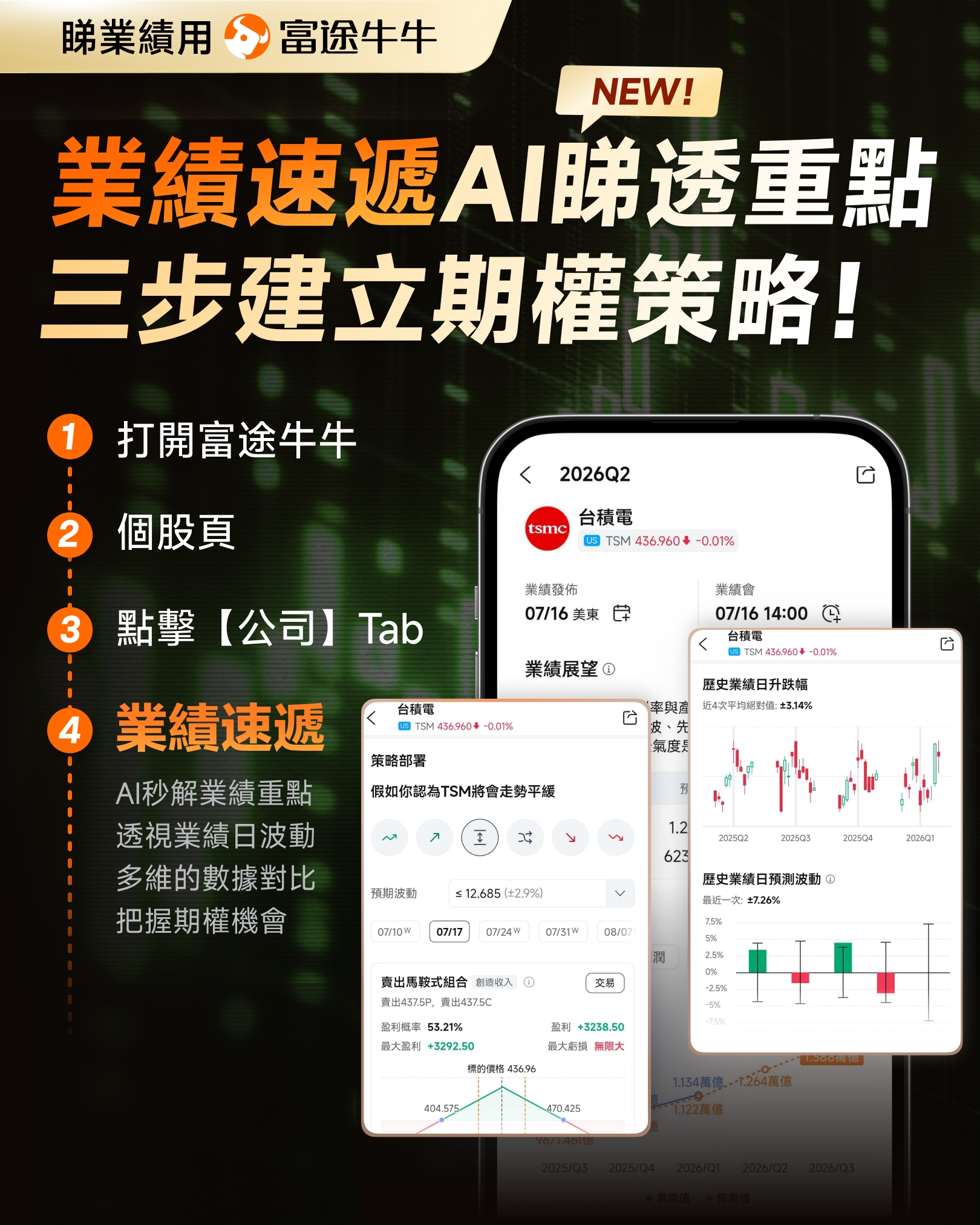
 AI-powered earnings snapshot highlights key takeaways—build your options strategy! Open Futubull > Stock Page > Click [Company] >Earnings Update
Editor/rice