Macro News
Trump announced that Hamas has agreed to fully disarm, and Israel will withdraw its troops.
Former U.S. President Trump announced on a social media platform that the Peace Committee has reached a historic agreement to fully disarm Hamas and all armed groups in Gaza. The agreement represents a critical step toward Gaza ultimately being governed by a new Palestinian government, which will work closely with the Peace Committee to assist the Palestinian people.
Meanwhile, Israel will receive the security guarantees it deserves, and Gaza will no longer be used as a base for 'terrorist attacks.' This marks a significant milestone in the implementation of Trump’s 20-point plan. The agreement will proceed through carefully designed phases. As disarmament is completed, Israeli forces will withdraw, and an international stabilization force will collaborate with the new Palestinian police force to ensure Gaza’s security for its residents and neighboring countries. Trump stated, 'We have achieved historic progress, but much work remains to be done.'
 Iranian military forces claimed they struck a U.S. Air Force base in Bahrain, causing significant damage to its equipment and facilities.
On the evening of July 30 local time, the Iranian military issued a statement announcing that its forces had used drones to attack generators, navigation systems, and administrative and logistical support buildings at the U.S. Sheik Isa Air Base in Bahrain. The statement noted that despite the U.S. base’s extensive defensive systems and equipment, recent strikes against U.S. military installations in the region have inflicted substantial damage on their equipment and facilities.
Saudi Arabia: Discussions underway to establish a maritime defense alliance; delegations from 43 countries and the European Union attended the meeting.
According to a statement from Saudi Arabia’s Ministry of Defense, the Kingdom hosted an international conference to discuss the formation of a maritime defense alliance. The ministry stated that delegations from 43 countries and the European Union participated in discussions regarding the proposed alliance, including Saudi Arabia’s role as a founding and leading member and its commitment to hosting the alliance’s headquarters.
The Saudi Ministry of Defense stated that the alliance will enhance defense cooperation in the Bab al-Mandeb Strait, the Red Sea, and the Gulf of Aden. It was reported that 14 countries—including Turkey, Pakistan, Egypt, Sudan, and Djibouti—issued a joint statement expressing support for the proposed multinational maritime defense alliance. The Ministry of Defense added that the alliance aims to strengthen collective capabilities to address threats and safeguard global freedom of navigation and trade. Any country wishing to join the maritime defense alliance may apply at any time.

Following a sharp decline in South Korea’s stock market, the government plans to inject USD 14 billion into its sovereign wealth fund to invest in artificial intelligence.
South Korea plans to inject KRW 20 trillion (approximately USD 13.9 billion) into its sovereign wealth fund for strategic investments in artificial intelligence, data centers, and related infrastructure. Following a sharp drop in technology stocks, the fund’s investment mandate has been expanded for the first time to allow allocations to domestic assets.
An announcement released on Friday indicated that the South Korean government will establish a dedicated account within the Korea Investment Corporation. According to the announcement, the account will initially hold at least KRW 20 trillion, funded through equity contributions from policy banks and other public institutions. Although the announcement did not directly link this initiative to current market volatility, the news followed a significant market downturn earlier in the week, during which the South Korean government had already introduced several measures to stabilize the stock market.
South Korea Reportedly Conducts Rare Dollar Sale; Traders Suspect Japan-South Korea Joint FX Intervention
According to reports, South Korea's foreign exchange authorities conducted a rare dollar-selling intervention on Thursday, pushing the won to a nine-month high. This move coincided with Japan’s yen-buying, dollar-selling intervention in the New York market on the same day, which pulled the yen back from a four-decade low. The won appreciated by 2% against the U.S. dollar on Thursday, reaching KRW 1,418.0 per USD—the strongest level since October 20 of last year. The won had hit a 17-year low of KRW 1,561.50 last month and has risen more than 8% this month, on track for its largest monthly gain since March 2009.
A foreign exchange official at South Korea’s Ministry of Finance declined to confirm the intervention. A South Korean foreign exchange trader noted that market participants suspected coordinated action between South Korea and Japan, given prior statements from both countries indicating close coordination. On July 2, South Korea’s Vice Minister of Finance stated at a press briefing that Seoul was maintaining close communication with Japan and other key allies on foreign exchange matters. Japan’s top foreign exchange official followed up on July 7, saying Tokyo was in close contact with Seoul’s foreign exchange authorities, citing the fact that financial markets in both countries sometimes exhibit similar volatility patterns.
Japanese Media: Japan and U.S. Jointly Intervene to Curb Yen Depreciation
According to Nikkei, during Thursday's U.S. trading session, the yen surged sharply against the dollar, briefly reaching JPY 157.80 per USD. Market sources indicated that the Japanese government and the Bank of Japan conducted foreign exchange intervention by buying yen and selling dollars, while U.S. monetary authorities carried out a 'rate check'—a preliminary step preceding intervention. This signifies coordinated action by Japan and the United States to curb yen depreciation.

Citi: Waller's Focus on Broader Inflation Metrics Could Reduce Likelihood of Near-Term Rate Hike
Citigroup economists Andrew Hollenhorst and Veronica Clark stated that Federal Reserve Chair Waller signaled that inflation indicators beyond the Personal Consumption Expenditures (PCE) price index would play a greater role in monetary policy decisions, reducing the likelihood of a near-term rate hike by the Fed. Core PCE inflation fell to 3.3% in June from 3.4%. By comparison, core Consumer Price Index (CPI) inflation stood at 2.6%, closer to the Fed’s 2% inflation target.
Hollenhorst and Clark said, “In the coming months, it should become increasingly evident that the broader set of inflation indicators watched by Waller does not show signs of troubling inflation acceleration.” Markets currently price in a 59% probability of a Fed rate hike in September. However, the two economists believe this market expectation may be misplaced.
The probability of the Federal Reserve raising interest rates by 25 basis points in September is 63.4%.
According to CME's 'FedWatch Tool,' the probability that the Federal Reserve will keep rates unchanged through September is 36.6%, while the probability of a cumulative 25-basis-point rate hike is 63.4%. The probability of rates remaining unchanged through October is 26.9%, the probability of a cumulative 25-basis-point hike is 56.3%, and the probability of a cumulative 50-basis-point hike is 16.9%.
He Lifeng held a video call with U.S. Treasury Secretary Bessent and U.S. Trade Representative Greer.
On the evening of July 30 Beijing time, He Lifeng, Vice Premier of China’s State Council and China’s lead representative for China-U.S. economic and trade affairs, held a video call with U.S. Treasury Secretary Bessent and U.S. Trade Representative Greer, the U.S. counterparts. The two sides engaged in candid, in-depth, and constructive discussions on implementing the important consensus reached by the two heads of state during their Beijing meeting, and on maintaining stability in bilateral economic and trade relations, expanding practical cooperation, and properly addressing each other’s concerns in the next phase.
China expressed serious concerns regarding recent U.S. economic and trade restrictions against China. Both sides agreed that, under the strategic guidance of their respective heads of state, they would further leverage the China-U.S. economic and trade consultation mechanism, enhance communication, build mutual trust, clarify misunderstandings, expand cooperation, and promote steady improvement in China-U.S. economic and trade relations, thereby supporting the development of a constructive and strategically stable relationship between the two countries.
Multiple U.S. lawmakers obstruct Apple’s procurement of Chinese-made chips
According to a Bloomberg report on July 30, several U.S. senators wrote a joint letter to Apple CEO Tim Cook stating that Apple should not use memory chips produced by these two Chinese companies in its products—even if those products are sold exclusively in the Chinese market. They emphasized that ChangXin Memory Technologies and Yangtze Memory Technologies have been included in the U.S. Department of Defense’s recently updated “Chinese military company” list. Apple has been seeking to source memory chips from China due to insufficient capacity, supply tightness, and persistently surging prices.
In response, Chen Jing, a researcher at the Science and Strategy Trends Society, said on July 30 that, from a legal standpoint, Apple is currently not prohibited from purchasing chips from Chinese companies. Chen noted that the global supply chain is a mutually beneficial, interconnected ecosystem. U.S. companies rely on Chinese supply chains to reinforce their competitive advantages, and global consumers benefit from the dividends of industrial upgrading and technological innovation driven by Made-in-China products. However, certain forces in the United States are swimming against the tide by deliberately erecting political barriers, which will undoubtedly disrupt normal industrial collaboration between Chinese and American enterprises.
U.S. Stock Market Update
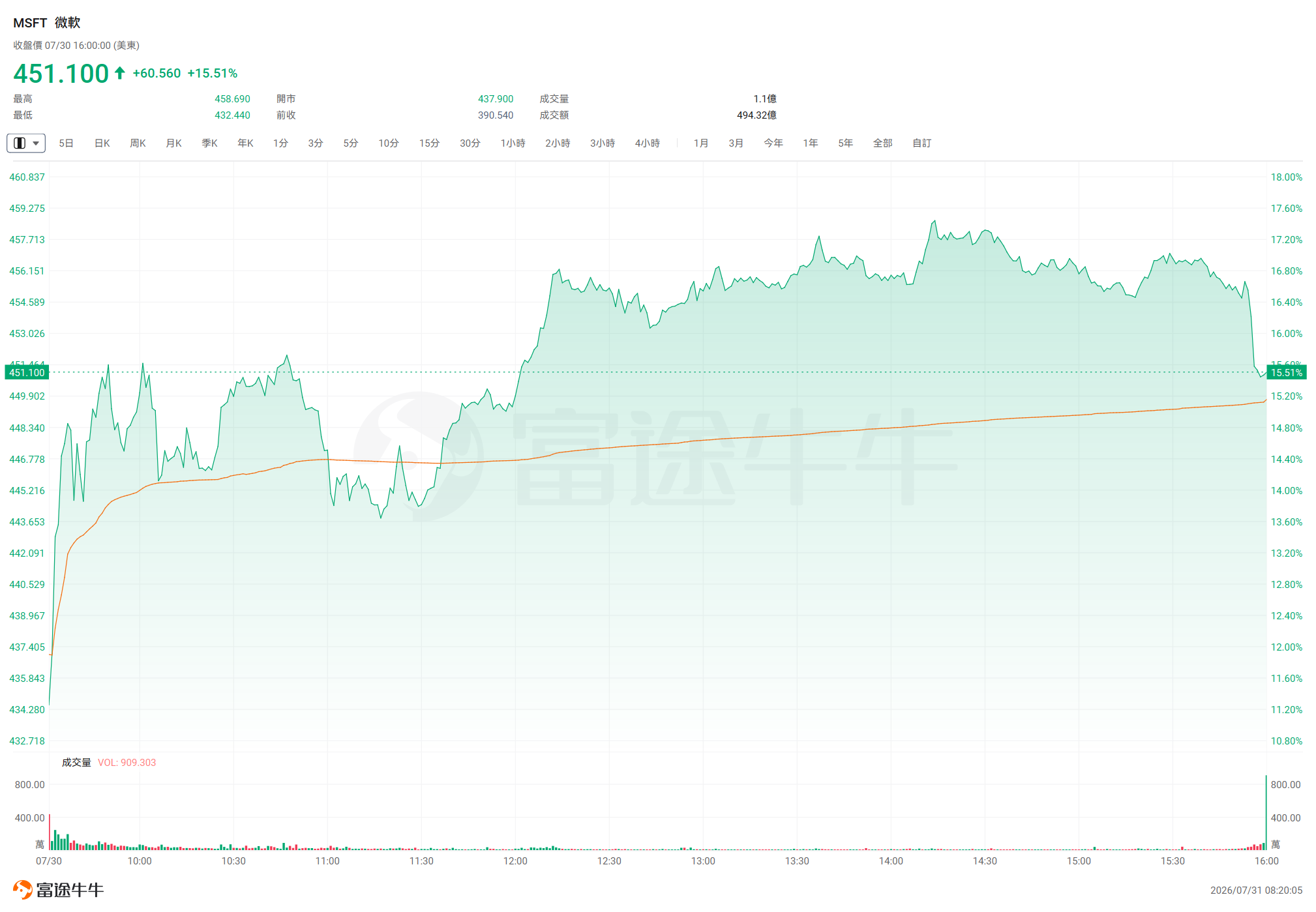
All three major indices closed higher, with Microsoft surging over 15% in the previous trading session.
On Thursday (July 30), Microsoft reported quarterly results that exceeded expectations, with accelerated growth in its Azure cloud computing segment, capital expenditures below forecasts, and limited pressure on cash flow—reinvigorating confidence in the AI investment narrative that had recently come under strain. All three major U.S. equity indices closed higher: the Dow Jones Industrial Average rose 1.19% to 52,208.06 points; the Nasdaq Composite surged 2.78% to 25,122.18 points; and the S&P 500 gained 1.66% to 7,437.63 points.

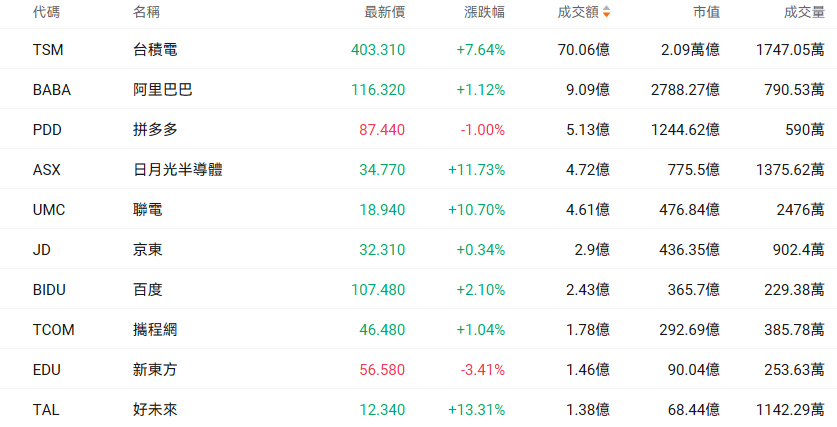
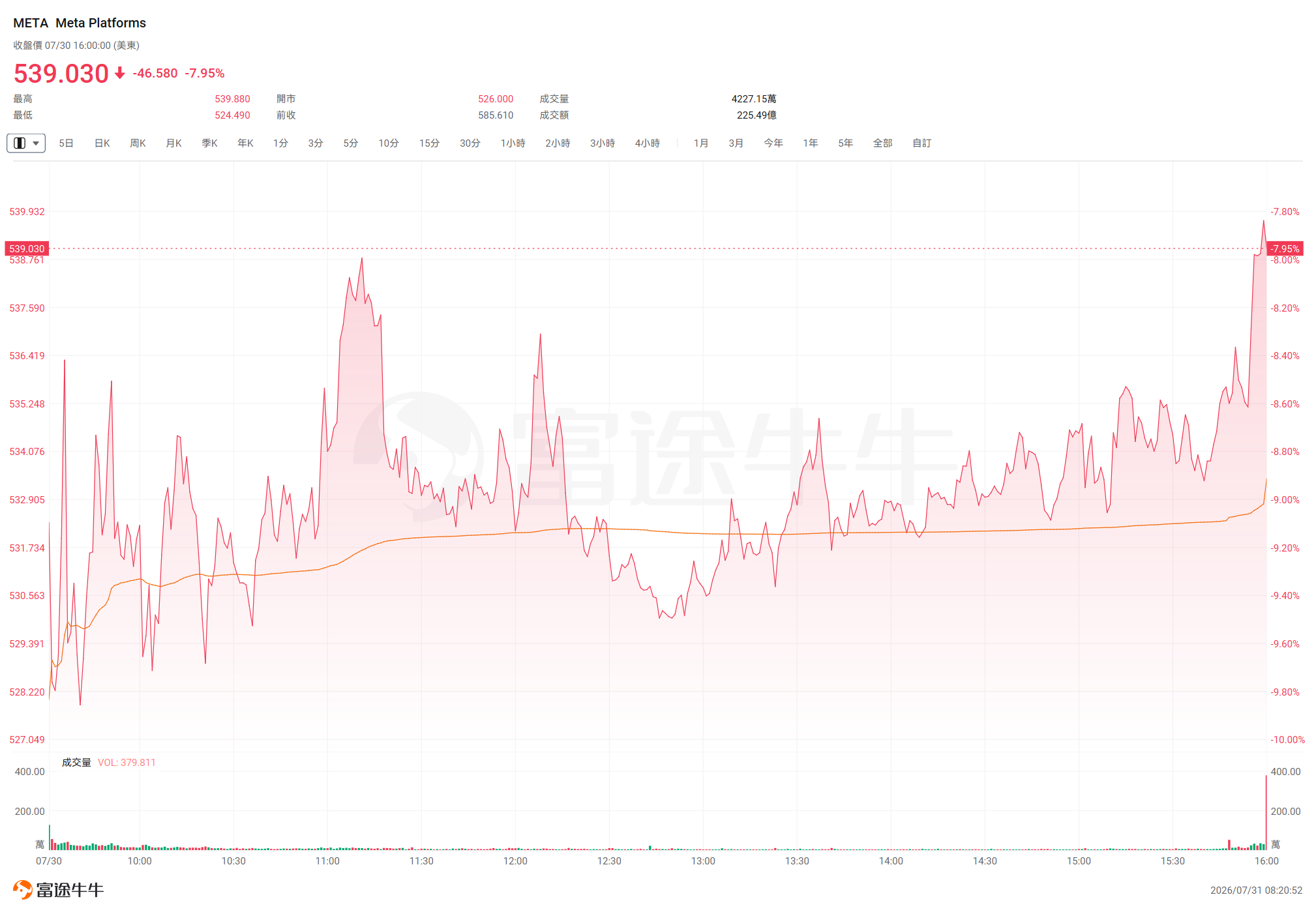
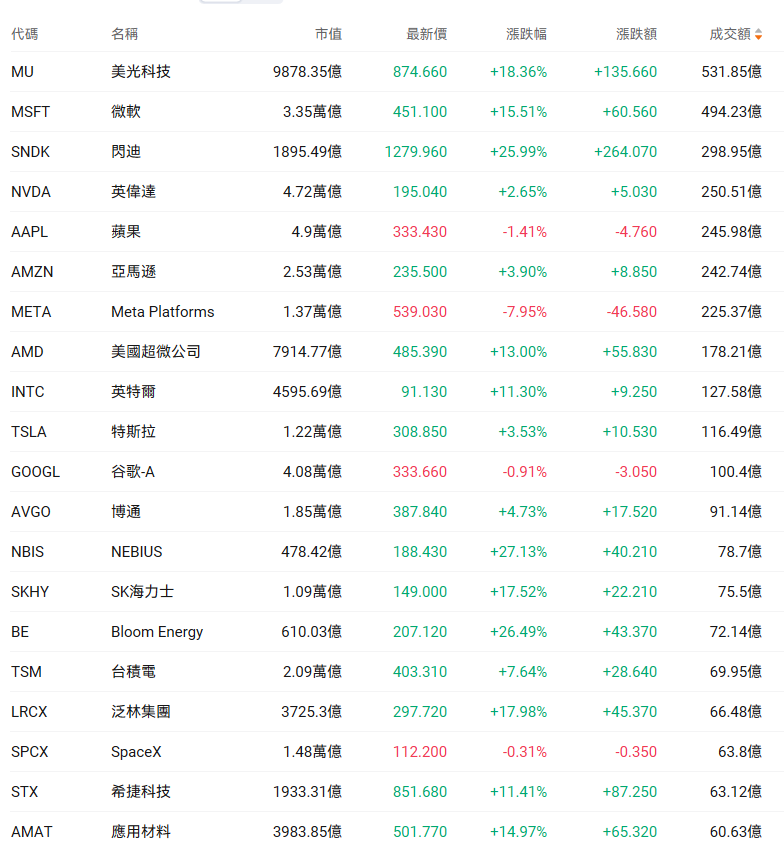
$Star Tech Stocks (LIST2518.US)$Stocks diverged: Micron Technology jumped more than 18%, Microsoft climbed over 15%, AMD rose 11%, Intel gained over 11%, Amazon advanced nearly 4%, Tesla rose over 3%, NVIDIA increased by nearly 3%, while Meta Platforms fell nearly 8%, Apple declined over 1%, and Google dropped nearly 1%.
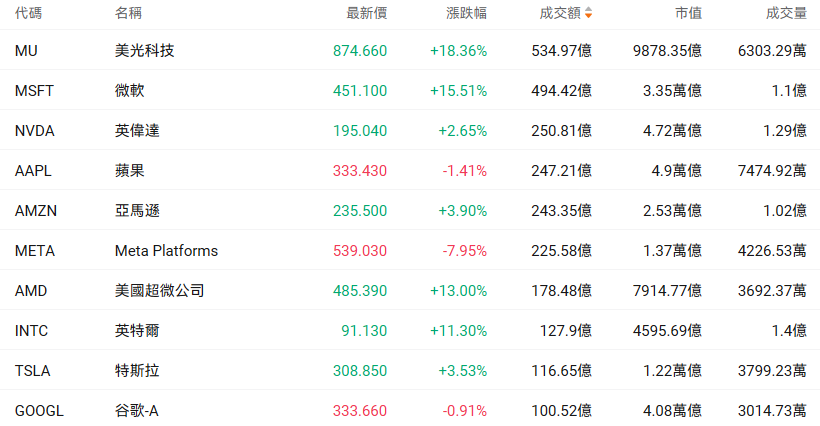
$Popular Chinese ADRs (LIST2517.US)$Most Chinese stocks listed in the U.S. advanced, with the Nasdaq Golden Dragon China Index rising 1.05% to 6,502.80 points. TAL Education surged over 13%, ASE Technology gained nearly 12%, Baidu rose over 2%, and Alibaba and Trip.com each climbed over 1%. New Oriental fell over 3%, and PDD Holdings declined 1%.
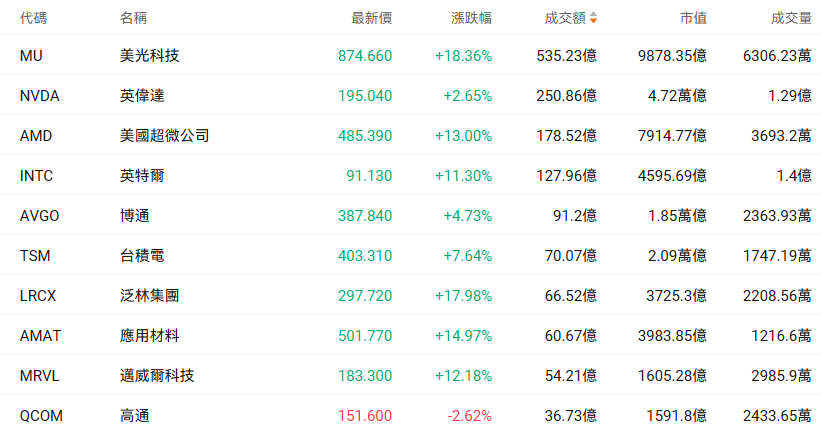
$PHLX Semiconductor Index (.SOX.US)$Semiconductor equipment stocks rallied sharply, ending a five-day losing streak. Micron Technology soared over 18%, Lam Research gained nearly 18%, Applied Materials rose nearly 15%, Marvell Technology jumped over 12%, and Broadcom increased by nearly 5%.
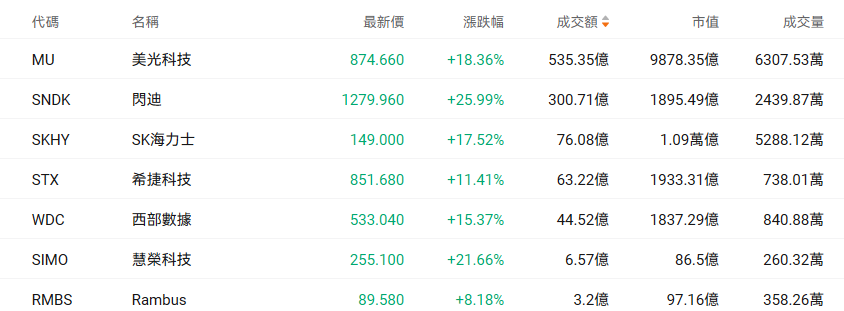
$Storage Concept (LIST23925.US)$Semiconductor stocks rose against the broader market trend,$Roundhill Memory ETF (DRAM.US)$Memory-related stocks surged: SanDisk spiked nearly 26%, Micron Technology rose over 18%, SK Hynix gained over 17%, Western Digital climbed over 15%, and Seagate Technology advanced over 11%.
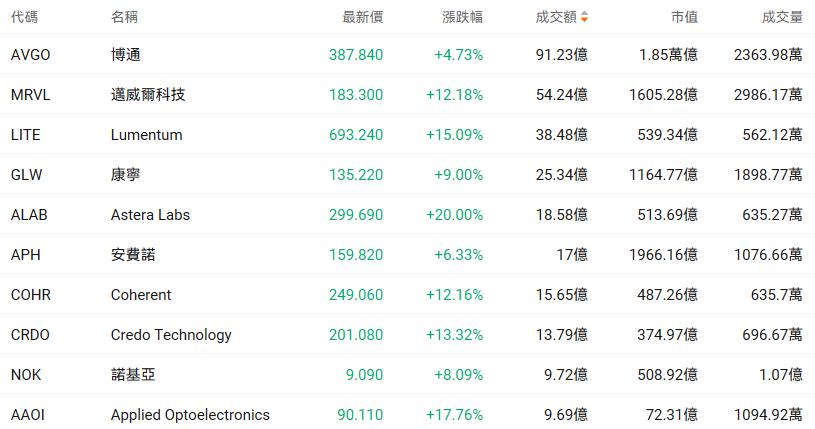
$Optical Communications (LIST23979.US)$Optical component stocks collectively rallied: Applied Optoelectronics gained nearly 18%, Lumentum rose over 15%, Credo jumped over 13%, Coherent climbed over 12%, Corning increased by 9%, and Nokia rose over 8%.
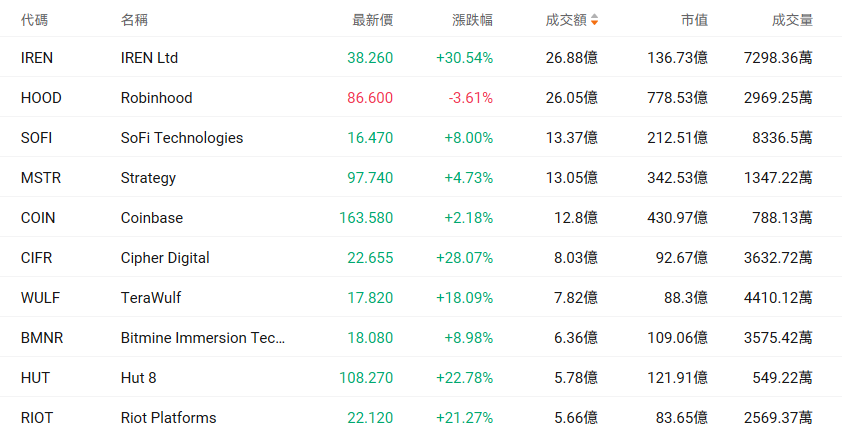
$Cryptocurrency-related stocks (LIST20010.US)$Bitcoin mining stocks showed strong performance: IREN surged over 30%, Cipher Mining rose over 28%, Hut 8 gained nearly 23%, Riot Platforms climbed over 21%, TeraWulf advanced over 18%, and SoFi rose 8%. Morgan Stanley recently initiated coverage of several Bitcoin miners that have pivoted to become AI infrastructure providers, noting that companies with large-scale grid-connected power assets are well-positioned to benefit from the rapidly escalating demand for AI data centers.
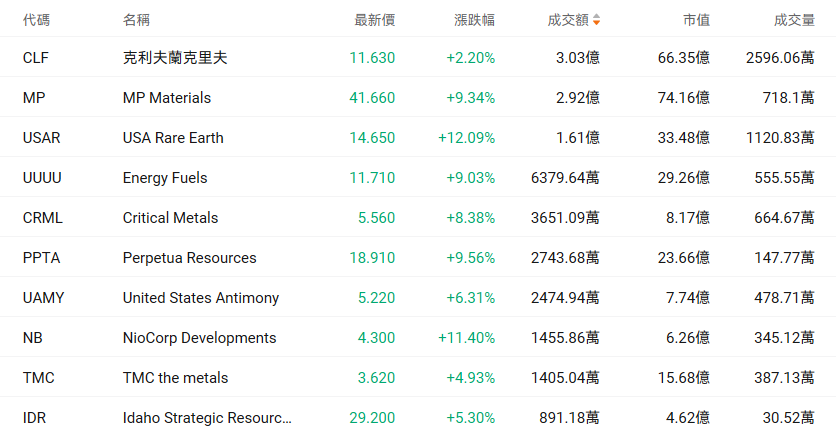
$Rare Earth Concept (LIST23700.US)$Rare earth-related stocks rose across the board: US Rare Earths (USAR) gained over 12%, NioCorp (NB) climbed over 11%, and UUUU, MP, and PPTA each rose over 9%, while TMC advanced nearly 5%.
Stock-specific news
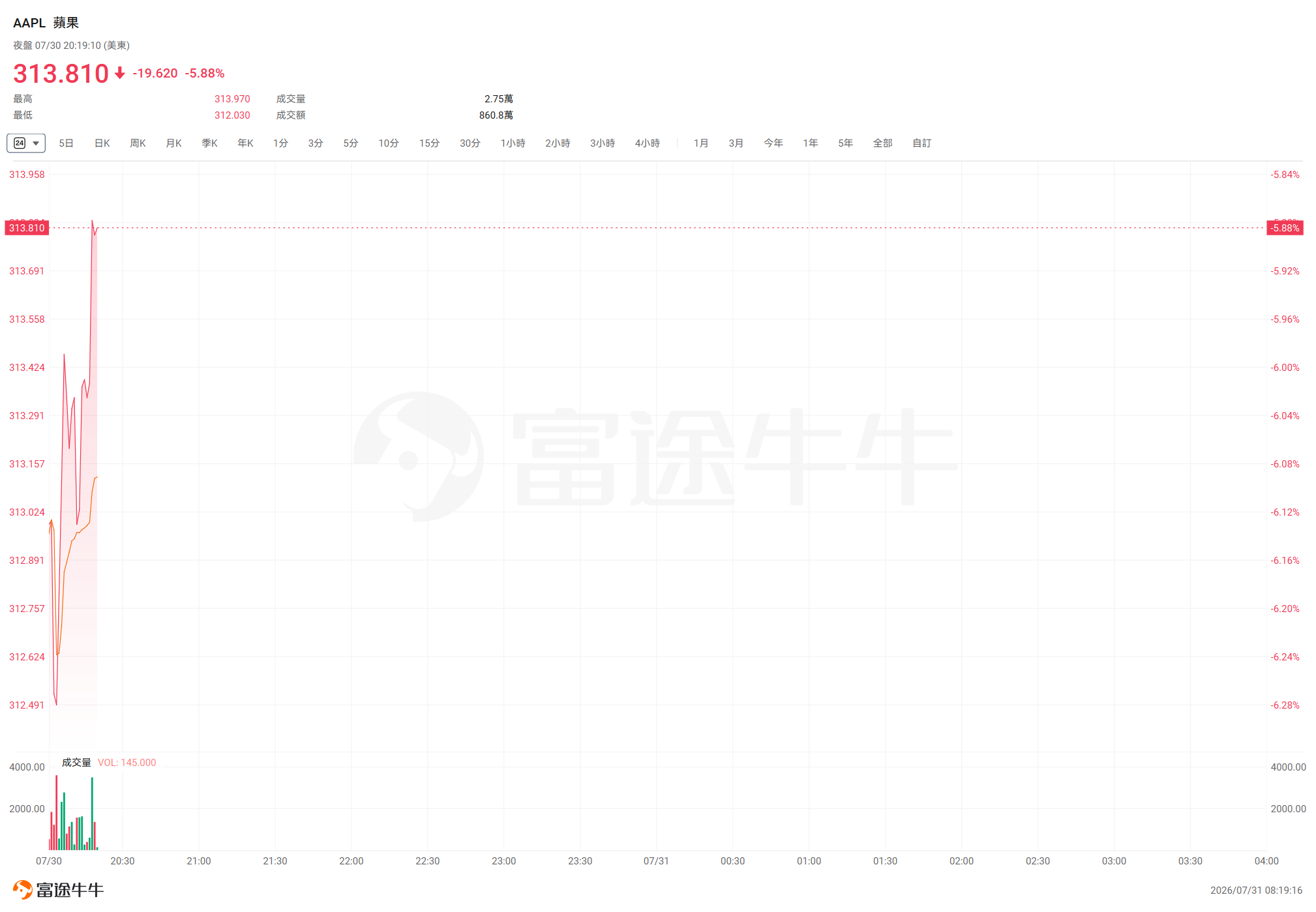
Apple's total revenue slightly exceeded expectations, but Greater China revenue underperformed, sending its after-hours share price down nearly 6%.
$Apple (AAPL.US)$On Thursday, Apple reported third fiscal quarter revenue and profit that both surpassed Wall Street expectations, driven by strong demand for iPhones and MacBooks amid a wave of consumer electronics price increases. The company’s third-quarter revenue rose 16.4% year-over-year to $109.42 billion, slightly above the market’s forecast of $108.65 billion. Earnings per share came in at $2.02, which included $0.11 from tariff rebates; excluding this, EPS still beat the expected $1.89.
iPhone sales surged 21.7% to $54.25 billion, exceeding analysts’ estimate of $53.86 billion, making it the primary driver of Apple’s earnings growth and setting a new record for the third quarter—a period that typically sees slower sales as consumers await fall product launches. This year, global memory chip shortages pushed up prices for Macs and iPads, prompting users to purchase iPhones earlier than usual.
Apple has not yet raised prices on its flagship iPhone, but Wall Street widely expects a price adjustment at the September fall launch event. Additionally, Apple reported Greater China revenue of $18.82 billion for the third fiscal quarter, below the market expectation of $19.67 billion.
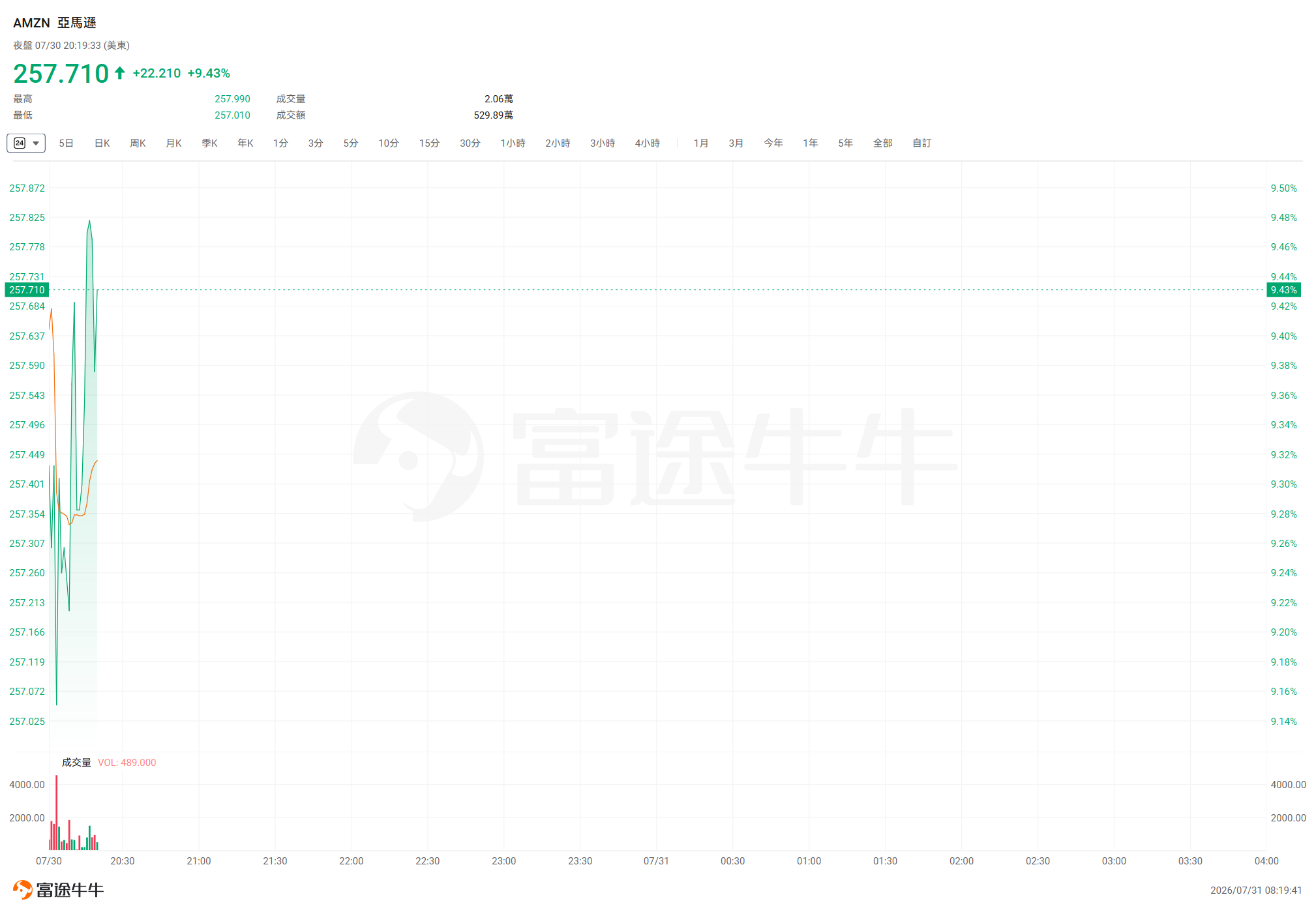
Amazon’s Q2 cloud revenue beat expectations, driving its after-hours stock price up more than 9%.
fueled by a surge in enterprise artificial intelligence spending,$Amazon (AMZN.US)$Second-quarter cloud revenue exceeded market expectations, indicating that the company’s substantial investments are beginning to pay off. According to its earnings report, Amazon Web Services (AWS), the company’s cloud computing division, saw revenue jump 37% to $42.2 billion, surpassing analysts’ consensus forecast of a 31.21% increase.
This upbeat performance may help ease some market concerns about tech giants’ continued heavy investment in artificial intelligence—projected to exceed $700 billion globally this year—which has strained cash flows at these traditionally cash-rich companies and raised worries about potential overbuilding of capacity. In terms of overall revenue, Amazon reported $200.6 billion for Q2, beating the market’s estimate of $196.42 billion; however, its Q3 revenue outlook of $197–202 billion fell short of the consensus forecast of $204.07 billion.
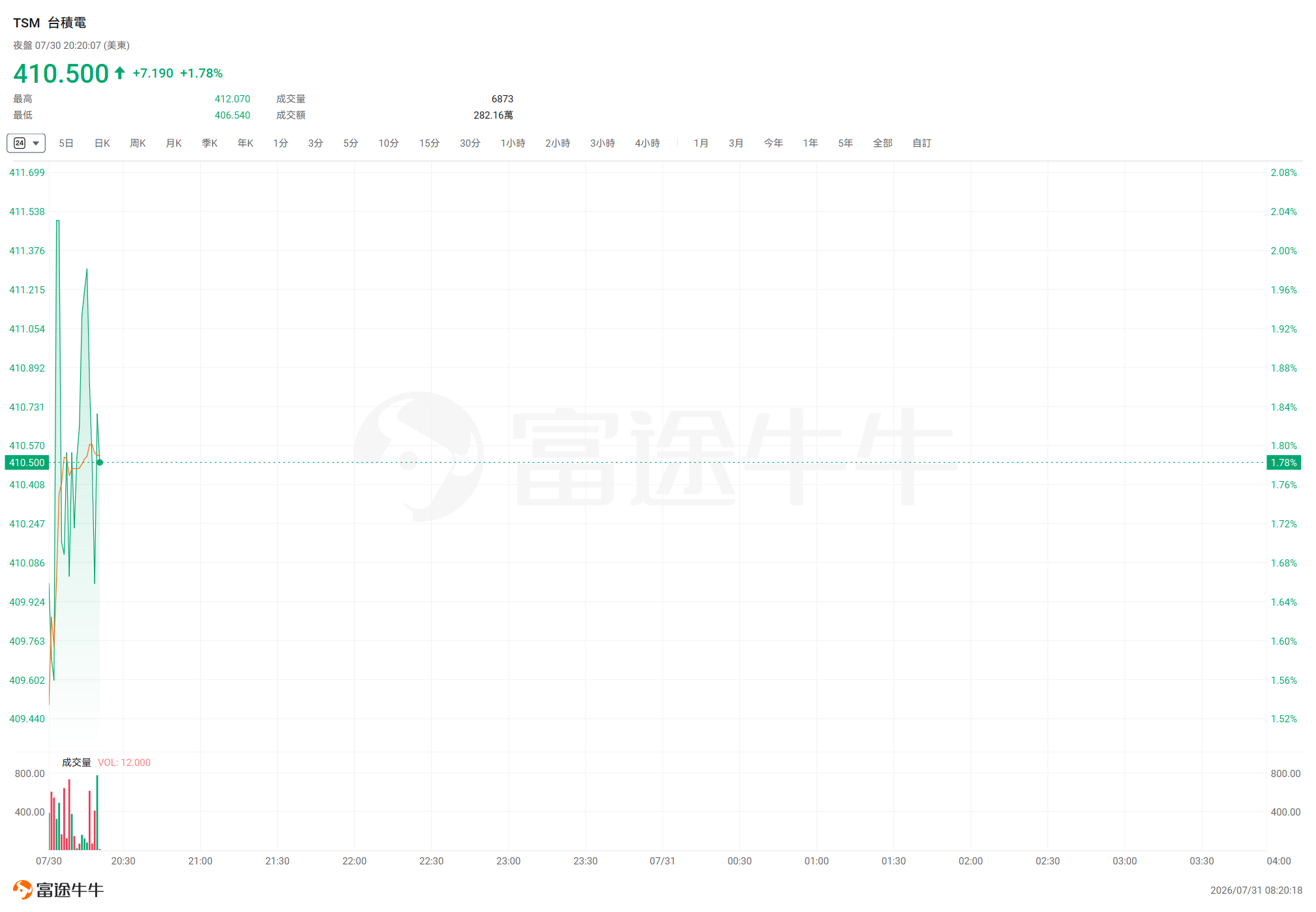
Taiwan Semiconductor develops AI chip packaging technology to compete with Intel
according to two people directly familiar with the project,$Taiwan Semiconductor (TSM.US)$An advanced chip packaging technology similar to Intel's existing offerings is under development. This suggests that the world’s leading chipmaker is concerned about challenges from distant competitors. Chip packaging is the final stage of chip production, during which individual silicon dies are assembled into a single unit and interconnected so they can function cohesively and interface with other components of a computer system.
Microsoft surged more than 15% in the previous trading session, adding $450 billion to its market capitalization in a single day—the largest such increase in history.
$Microsoft (MSFT.US)$Microsoft’s stock closed over 15% higher on Thursday, marking its fourth-largest single-day gain in company history and recording the largest single-day increase in market capitalization ever for a U.S. publicly traded company. Investors welcomed its strong earnings report, which broke the recent slump in market sentiment toward artificial intelligence–related firms. The stock’s year-to-date decline narrowed from approximately 19.3% at Wednesday’s close to 5.8%.
Data analysis shows that this rally added $450 billion to Microsoft’s market capitalization, surpassing NVIDIA’s previous record single-day gain of $440 billion set on April 9, 2025, making it the largest single-day market cap increase in U.S. equity history.
Google DeepMind launches Gemini Robotics 2, a robotic AI model.
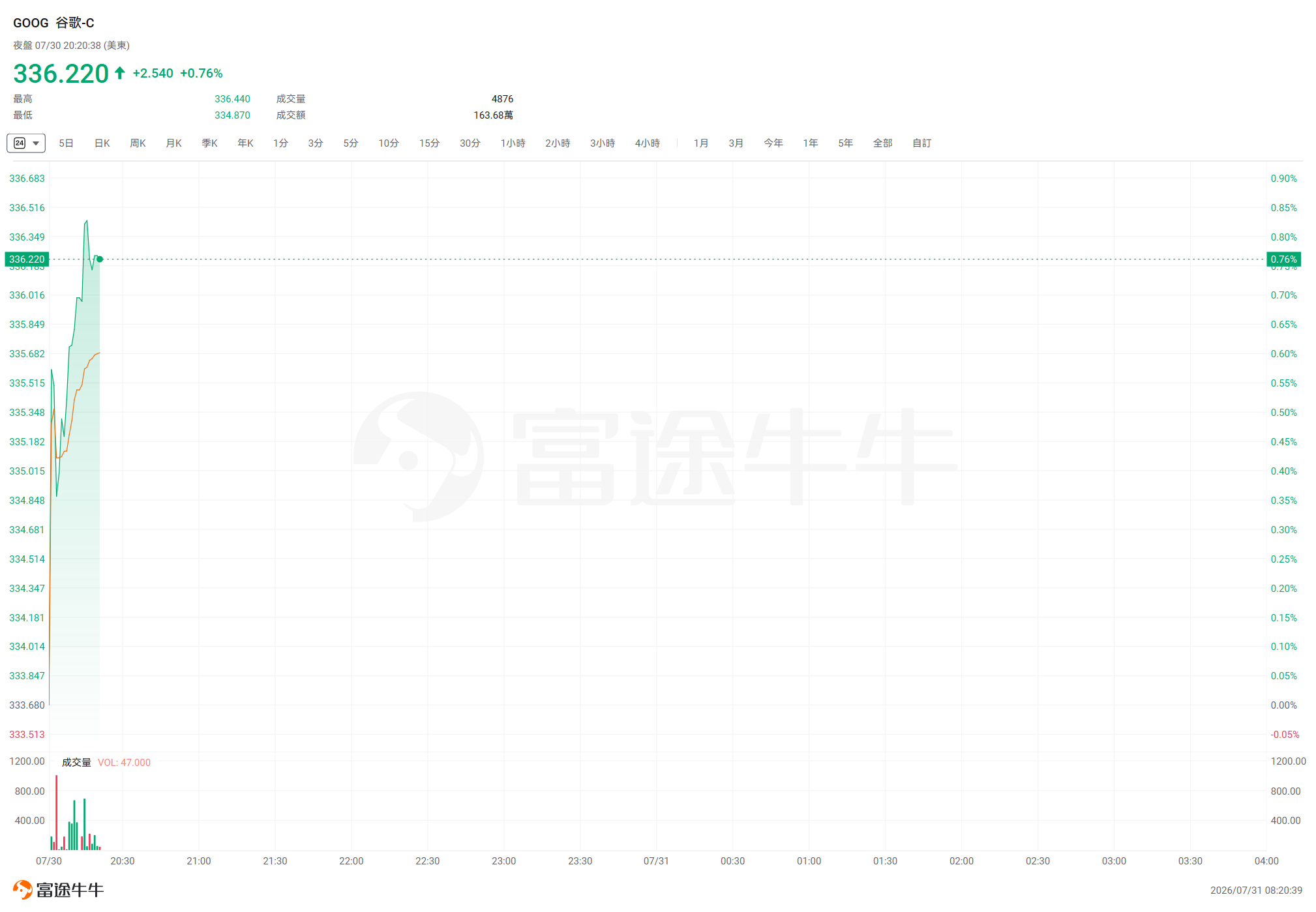
Google-C (GOOG.US)DeepMind has launched the Gemini Robotics 2 model. According to the company, Gemini Robotics 2 enables robots to reason through every action, unlocking a broad range of tasks. For example, it allows a humanoid robot to walk, squat, stretch, and manipulate objects to tidy up a cluttered room. It can even collaborate with other robots to complete tasks more quickly.
This deep intelligence can also run locally on devices and seamlessly adapt to entirely new robotic bodies within just a few hours. Additionally, Google DeepMind released two other robotics AI models—Gemini Robotics ER 2 and On-Device 2.
Gemini Robotics ER 2 is the most powerful embodied reasoning (ER) model to date—a vision-language model (VLM) that enables robots to communicate with humans, understand the physical world, and plan multi-step tasks lasting several minutes. On-Device 2 is the most efficient vision-language-action (VLA) model, optimized to run locally on robotic hardware. This model can now rapidly adapt to entirely new robot embodiments using only a few hours’ worth of data.
Multiple banks are in talks to provide a $15 billion loan to a data center developer partnering with Anthropic, with Google offering financial guarantees and chip support.
It has been reported that multiple banks are negotiating to provide a $15 billion loan to a data center developer collaborating with Anthropic.Google-C (GOOG.US)Google will provide financial guarantees and chip support. Situational Awareness did not sell its stake in Anthropic as part of its portfolio sale transaction with Citadel.
Sources indicated that Anthropic’s newly leased data center campus in Texas will use Google TPU chips. Anthropic plans to lease a new campus in Texas with a capacity of 1.6 gigawatts, with Google providing guarantees for both lease and power costs.
Meta Reports Future Spending Commitments Approaching $700 Billion
$Meta Platforms (META.US)$It stated that it has committed nearly $700 billion in future expenditures through long-term and short-term agreements, covering areas such as AI data centers and cloud computing. In a regulatory filing on Thursday, Meta reported $349.3 billion in irrevocable contractual commitments, primarily related to third-party cloud service agreements, servers, and network infrastructure.
The company also has $347 billion in future lease commitments that have not yet commenced and are not reflected on its balance sheet. Of this amount, $68 billion was added in July alone, with payments scheduled to begin in 2027 and 2028. These costs are in addition to existing active leases and cover data centers, colocation facilities, and “certain network infrastructure.”
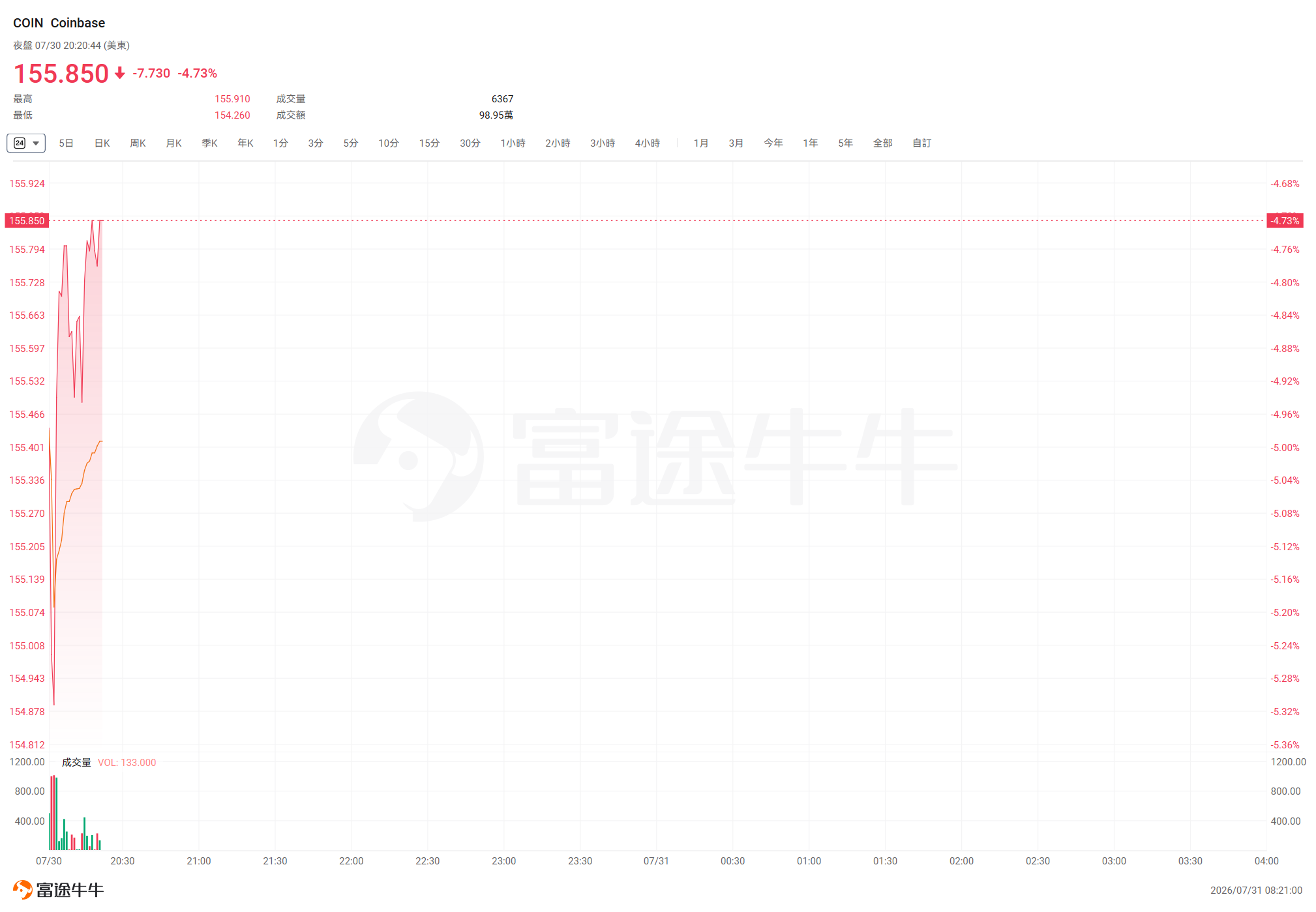
Coinbase fell nearly 5% in after-hours trading; Q2 total revenue was $1.22 billion, down 14% quarter-over-quarter.
Cryptocurrency exchange$Coinbase(COIN.US)$Q2 total revenue was $1.22 billion, down 14% quarter-over-quarter, compared to an analyst expectation of $1.29 billion. Adjusted EBITDA was $208 million, marking the 14th consecutive quarter of profitability. The company executed a 14% workforce reduction in May and lowered its full-year 2026 adjusted expense guidance to $4.2–$4.45 billion, reducing the midpoint by $100 million.
For the third quarter of 2026, the company provided cautious guidance: as of July 26, trading revenue for the quarter-to-date stood at approximately $130 million, while subscription and services revenue was projected to be between $500 million and $580 million. The company will continue investing in derivatives, prediction markets (which have already surpassed $100 million in annualized revenue), and on-chain infrastructure, including the Base blockchain and agent-based financial capabilities.
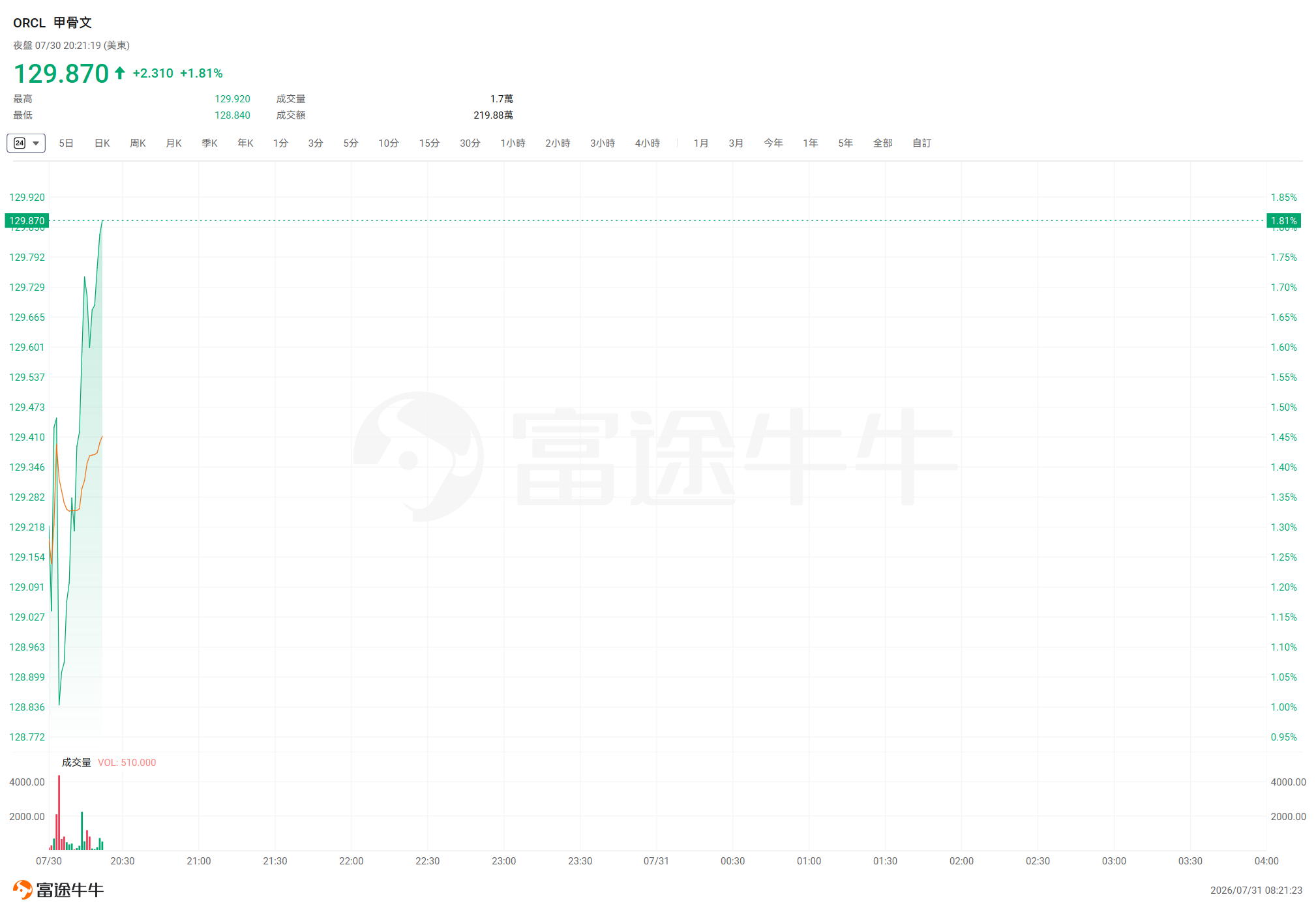
Oracle expands partnership with Google Cloud to add Gemini options for enterprise customers.
Oracle (ORCL.US)It announced an expansion of its collaboration with Google Cloud to integrate the Gemini model into its enterprise application portfolio. According to a joint statement, this partnership builds upon existing customer access to the Gemini model via Oracle Cloud Infrastructure’s (OCI) enterprise AI platform.
Google’s Gemini model will now be formally integrated into Oracle’s comprehensive development platform, Oracle AI Agent Studio for Fusion Applications. This platform enables enterprises to build, connect, execute, and run AI automation and agent-based applications using reusable Oracle, partner, and external agents.
Additionally, Oracle plans to broadly deploy the Gemini model across embedded AI scenarios in Oracle Fusion Applications and Oracle NetSuite. Satish Thomas, Vice President at Google Cloud, stated that this expanded collaboration aims to make it easier for enterprises to leverage Gemini within the applications and agent workflows they rely on, enabling workflow automation, accelerating decision-making, and driving business outcomes.
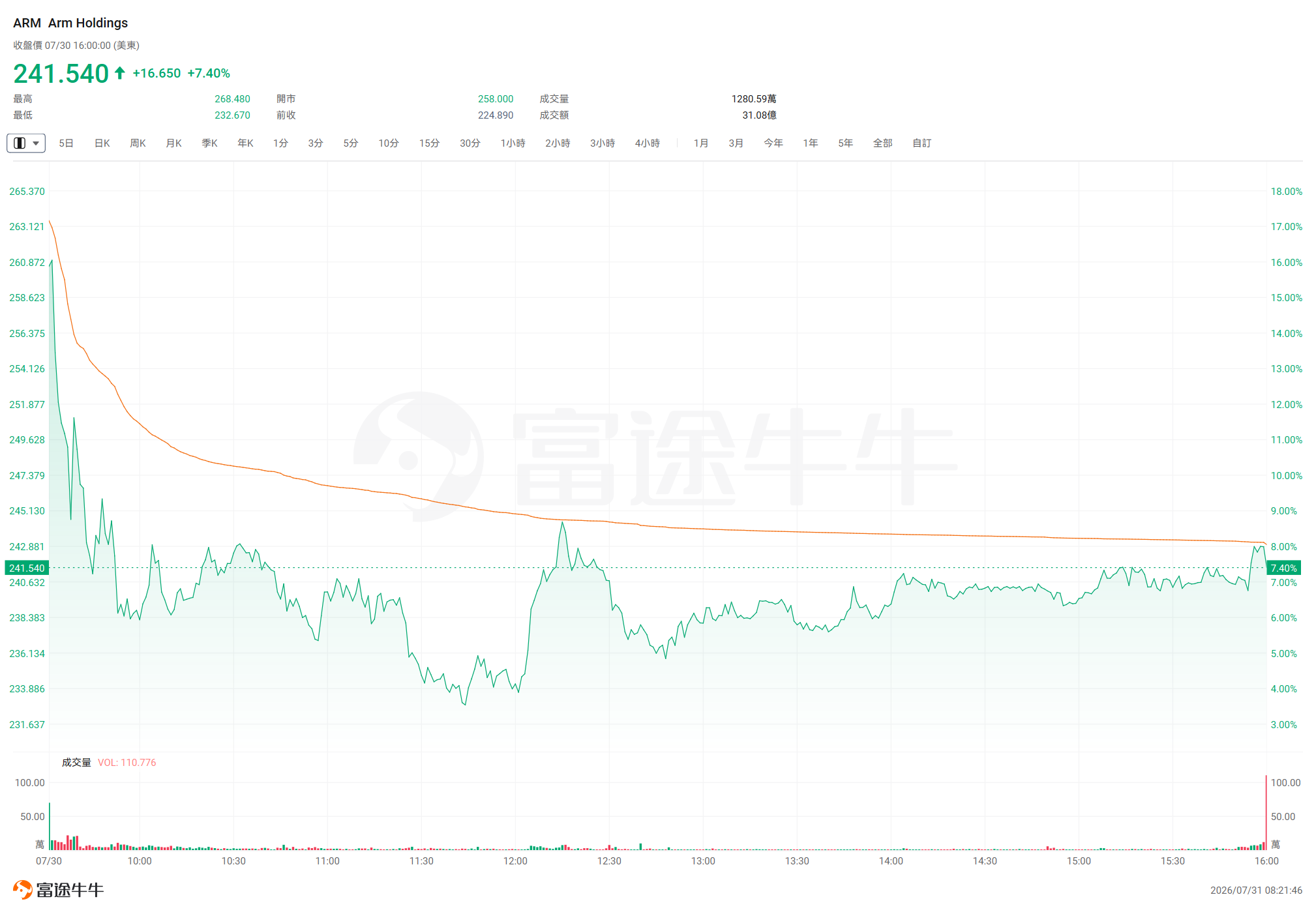
Arm rose more than 7% in the previous trading session, reporting first-quarter revenue of $1.29 billion, up 22% year-over-year; adjusted net profit was $480 million, an increase of 28% year-over-year.
$Arm Holdings(ARM.US)$Revenue for the first fiscal quarter of FY2027 increased by 22% year-over-year to $1.289 billion, surpassing the analyst consensus estimate of $1.26 billion; adjusted net profit was $480 million, up 28% year-over-year; adjusted earnings per share rose 29% year-over-year to $0.45, beating the analyst consensus estimate of $0.40.
Looking ahead, Arm expects second fiscal quarter revenue to reach approximately $1.38 billion. While this exceeds the analyst consensus estimate of $1.35 billion, some forecasts approached $1.5 billion. The company forecasts adjusted earnings per share of $0.47 for the second fiscal quarter, beating the average analyst estimate of $0.45. Royalty revenue for the first fiscal quarter reached $715 million.
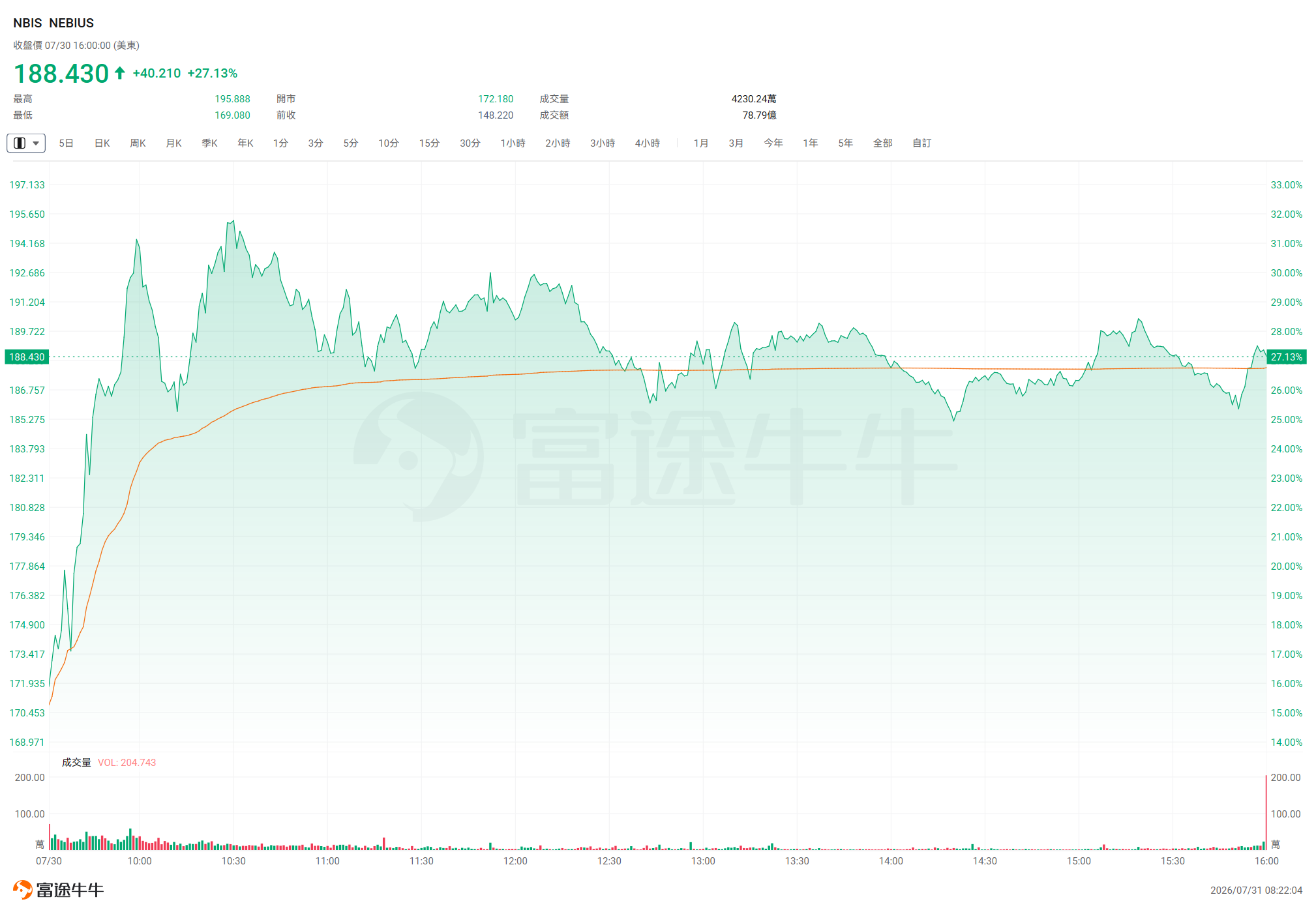
Cloud computing provider NEBIUS surged over 27% in the previous trading session, buoyed by stronger-than-expected performance from Microsoft’s cloud business, which lifted sentiment across the neocloud market.
$NEBIUS(NBIS.US)$As a neocloud provider, it offers GPU-based AI computing capacity to enterprises and AI-native companies—positioning it as a smaller peer to hyperscale cloud providers such as Microsoft Azure. The accelerated growth of Microsoft’s cloud business indicates that demand for AI infrastructure remains robust, a trend that could also extend to$NEBIUS(NBIS.US)$smaller providers, as customers continue seeking computing capacity across the broader cloud ecosystem.
OpenAI has reduced the price of GPT-5.6 Luna by 80% and the price of GPT-5.6 Terra by 20%.
OpenAI has reduced the price of GPT-5.6 Luna by 80% and the price of GPT-5.6 Terra by 20%. LUNA API is priced at $0.20 per million input tokens and $1.20 per million output tokens; Terra API is priced at $2 per million input tokens and $12 per million output tokens. SOL pricing, ChatGPT and Codex subscription fees, and quota budgets remain unchanged. Usage of Terra and Luna now consumes fewer credits.
Top 20 by Trading Volume
Hong Kong Market Outlook
Southbound capital sold HK$8.6 billion worth of Hong Kong-listed stocks, recording net purchases of over HK$1 billion in Tencent and net sales of nearly HK$1.3 billion in SMIC, while reducing its position in Alibaba by more than HK$1.1 billion.
On Thursday, July 30, southbound capital recorded net sales of HK$8.571 billion in Hong Kong-listed equities.
$Tencent (00700.HK)$、$GigaDevice (03986.HK)$、$CNOOC Limited (00883.HK)$received net purchases of HK$1.012 billion, HK$381 million, and HK$331 million, respectively;
$Ying Fu Fund (02800.HK)$、$SMIC (00981.HK)$、$Alibaba-W (09988.HK)$recorded net sales of HK$1.972 billion, HK$1.273 billion, and HK$1.122 billion, respectively.
KBT Laminate: H1 2026 net profit expected to exceed HK$2.8 billion, up over 200% year-on-year
$KBTL (01888.HK)$announced in a Hong Kong filing that it expects to report net profit exceeding HK$2.8 billion for the six months ended June 30, 2026, representing an increase of over 200% compared to the same period in 2025. The significant rise in net profit is primarily attributable to sustained supply-demand imbalances in the market for copper-clad laminates and their upstream materials—including electronic glass fiber yarn, electronic glass fiber cloth, and copper foil—which have driven broad-based and notable price increases. Additionally, sales volumes of copper-clad laminates rose compared to the same period in 2025, and the company’s robust and fully integrated vertical business model further contributed to the profit growth.
HSBC is considering selling billions of pounds of UK pension assets to insurance companies.
According to informed sources, multiple insurers have proactively approached the bank.$HSBC Holdings (00005.HK)$, HSBC has initiated preliminary discussions on divesting billions of pounds worth of UK pension assets. Sources familiar with the matter said the European lender is exploring the transfer of assets from its £18.7 billion (USD 25.1 billion) UK pension pool. As the negotiations remain confidential, the sources requested anonymity.
According to HSBC’s UK annual report, as of December 2025, the pension fund had a surplus of £5.26 billion. One of the sources indicated that the discussions originated from inquiries by insurance firms, and HSBC has not yet launched a formal sale process. A spokesperson for HSBC declined to comment.
The rear-facing all-solid-state LiDAR for the Xiaomi Pengcheng N90 Max is exclusively supplied by RoboSense.
On July 30, $Xiaomi Group-W(01810.HK)$Xiaomi Auto has officially launched the SkyNomad Pengcheng intelligent, variable large-space SUV. Among them, the flagship seven-seater model, the Xiaomi Pengcheng N90 Max, is equipped with a rear-facing all-solid-state digital LiDAR exclusively supplied by RoboSense,$Suteng Juchuang (02498.HK)$making it the first mass-produced Xiaomi vehicle to feature a rear-mounted solid-state LiDAR.
This LiDAR primarily enhances near-field and side-rear three-dimensional perception around the vehicle’s rear end, delivering high-precision point cloud data to detect curbs, steps, overhangs, irregular obstacles, as well as pedestrians and vehicles approaching from the side-rear. It complements other sensors such as cameras and ultrasonic radars.
YOFC: Plans to Acquire 25% Equity Stake in YOFC Shanghai to Achieve Full Ownership
$Yangtze Optical Fibre and Cable Joint Stock Limited Company (06869.HK)$The announcement stated that the company intends to acquire Draka's 25% stake in Yangtze Optical Fiber and Cable (Shanghai) Co., Ltd. for €12 million (approximately RMB 92.61 million). Upon completion of the transaction, the company will hold 100% of Yangtze Shanghai and will consolidate it into its financial statements. Yangtze Shanghai engages in the production and sale of optical fiber cables and related components and materials, which demonstrates strong synergy with the company’s optical communications business segment. This acquisition will help the company integrate upstream and downstream capacity resources across its industrial chain and support sustainable growth of its core business.
Today's Focus
Keyword: PMI
On the economic data front, China's official Manufacturing PMI for July, the U.S. Chicago PMI for July, and the final reading of the University of Michigan's Consumer Sentiment Index for July in the U.S. will be released.
09:30 China's official Manufacturing PMI for July
21:45 U.S. Chicago PMI for July
22:00 Final reading of the University of Michigan's Consumer Sentiment Index for July in the U.S.
Regarding major events, Bank of Japan Governor Kazuo Ueda will hold a monetary policy press conference at 14:30 Beijing time.
On the earnings front, Hong Kong-listed stocks$Hushang Ayi (02589.HK)$、Xinyi Solar (00968.HK)Will release financial results.
AbbVie Inc. (ABBV.US)、$Chevron (CVX.US)$、$Moderna(MRNA.US)$、$Exxon Mobil (XOM.US)$Moderna released its earnings report during U.S. pre-market trading.
Additionally, the Japanese storage giant$Kioxia (285A.JP)$will release its latest financial results on July 31 at 14:30.
 Looking to select stocks or analyze your holdings? Want to understand the opportunities and risks in your portfolio? For any investment-related questions,just ask Futubull AI!

Editor/melody