$NASDAQ-100 Index (.NDX.US)$Giving back the initial 1.8% gain at the open, the S&P rose 0.41%, the Dow Jones Industrial Average climbed 0.53%, and the semiconductor index edged up 0.07% after surging nearly 5% at the open. Iran’s 'Persian Gulf Strait Administration' announced a suspension of transit through the Strait of Hormuz, pushing Brent crude up 2% to above $88.60.
On the second trading day following a surge in AI-related stocks, U.S. equities entered a phase of 'divergent unwinding.'
Facing a sharp post-earnings decline in Apple—the world’s most valuable public company—as well asMicron Technology (MU.US)a pullback in high-flying 'AI darling' stocks, the three major U.S. equity indices opened higher but trended lower before rebounding sharply on gains from mega-cap heavyweights, ultimately staging a 'V-shaped' recovery to reclaim their opening highs.
 $Amazon (AMZN.US)$After reporting quarterly results, its shares surged more than 15% in a single day, providing the strongest boost to the market and driving$S&P 500 Index (.SPX.US)$the S&P 500 up 0.7%, the Nasdaq up 1%, and the Dow Jones Industrial Average up 0.53%, with the Mag 7 posting a collective gain of 3.2%.
$Microsoft (MSFT.US)$up 3%, extending its strong performance following Thursday’s surge of over 15%. Strong earnings reports from two hyperscale cloud computing giants have somewhat alleviated market concerns about whether investments in AI infrastructure can yield returns.
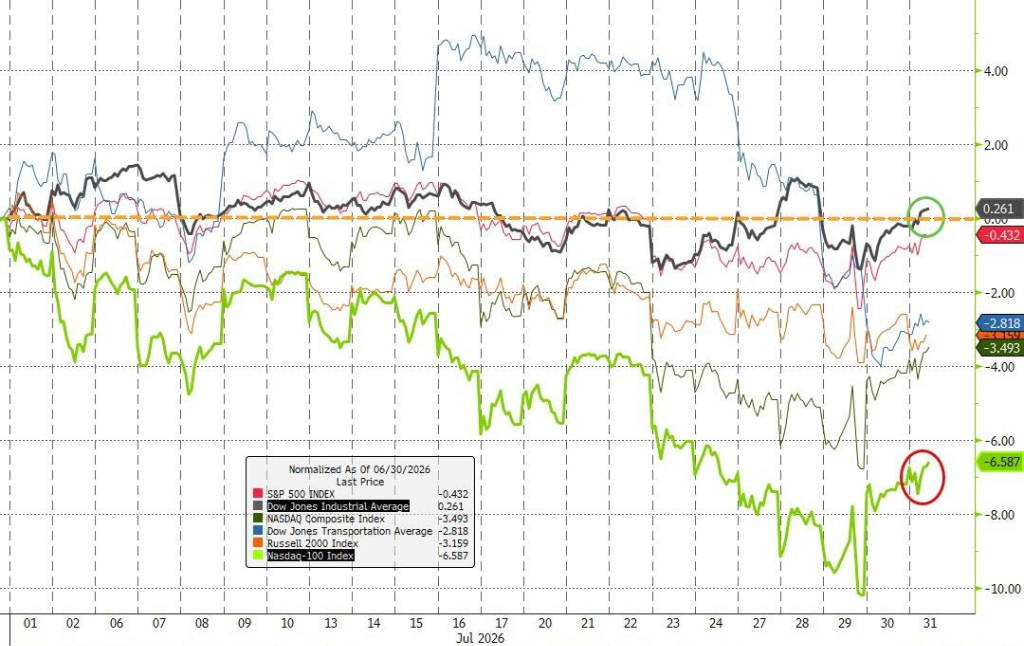
However, a single-day rebound could not mask the broader market collapse throughout July. The S&P 500 ended the month essentially flat, while the Nasdaq declined 3.2%—its worst July performance since 2004.
The yield on the 10-year U.S. Treasury note jumped more than 30 basis points during the month, marking its largest July increase since 2005; WTI crude oil rose over 20% for the month, its biggest July gain in 30 years. An energy shock triggered by the renewed escalation of Middle East conflict served as the dominant narrative throughout the month.
Amazon leads tech rebound, while Apple’s sharp decline drags down indices
Amazon’s Friday earnings report showed its quarterly revenue growth was the highest in over four years, prompting its stock to surge more than 15% immediately thereafter.
CEO Andy Jassy’s clear articulation of AI data center investments dispelled earlier market fears of 'Moonstone-style reckless spending,' effectively reinforcing the positive signal sent by Microsoft on Thursday. Microsoft demonstrated accelerated Azure growth, stable cloud margins, and early evidence of Copilot monetization.
Jake Dollarhide, CEO of Longbow Asset Management, stated:
“The market was worried that Amazon’s spending was just reckless gambling, but Andy Jassy addressed those concerns with solid results.”
Meanwhile, Apple’s shares fell 7.4% in a single day following warnings about supply constraints and a pessimistic outlook that iPhone price hikes could dampen demand.
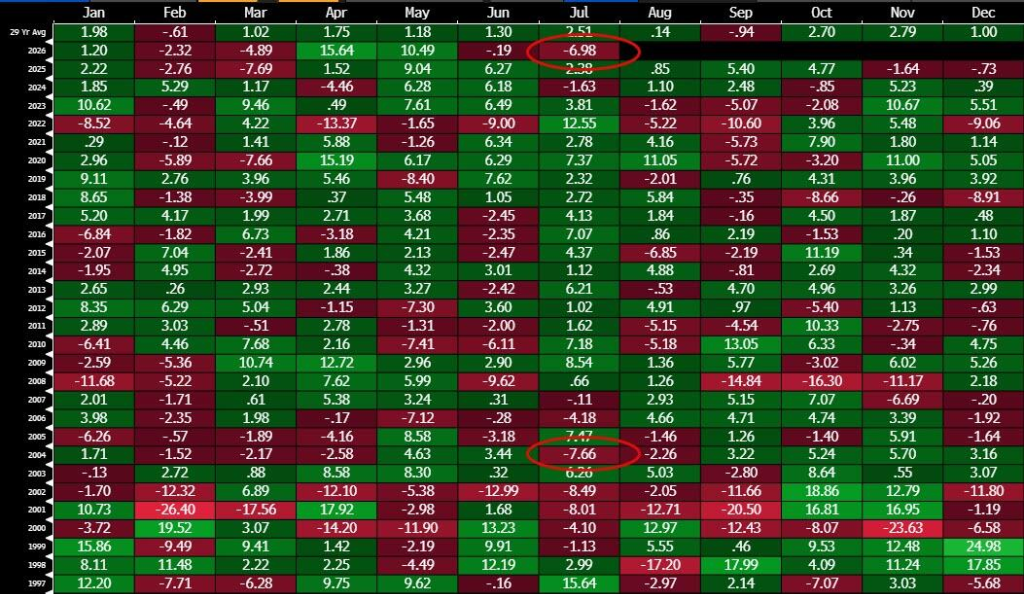
The S&P 500 posted its worst July performance since 2014, while the Nasdaq recorded its worst July since 2004.
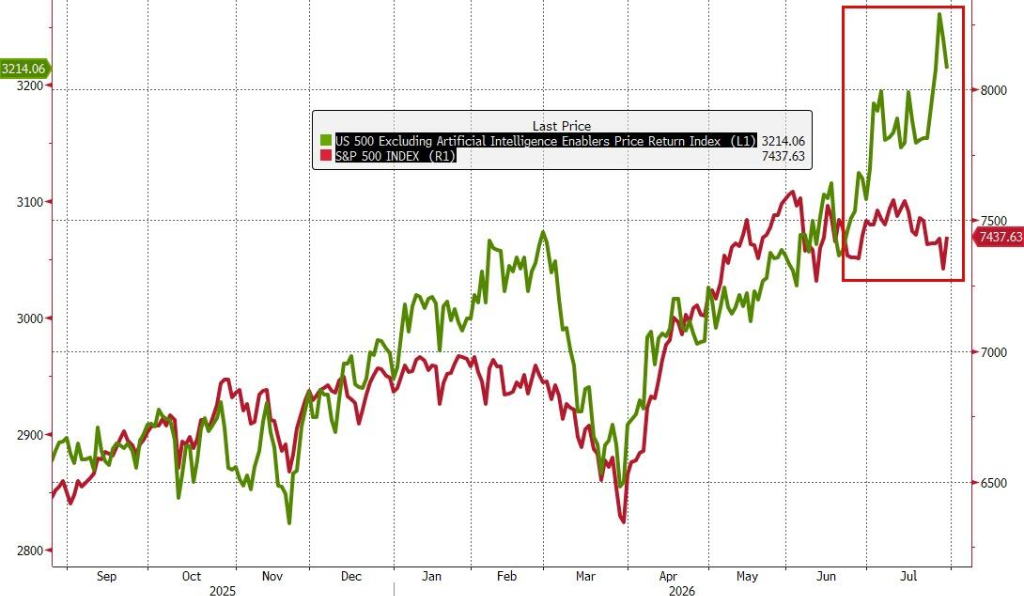
The equal-weighted S&P 500 index, as well as the index excluding artificial intelligence-related stocks, hit record highs.
Semiconductor stocks overall performed modestly,$PHLX Semiconductor Index (.SOX.US)$edging up just 0.07%, yet still down more than 20% from their all-time high reached on June 22.
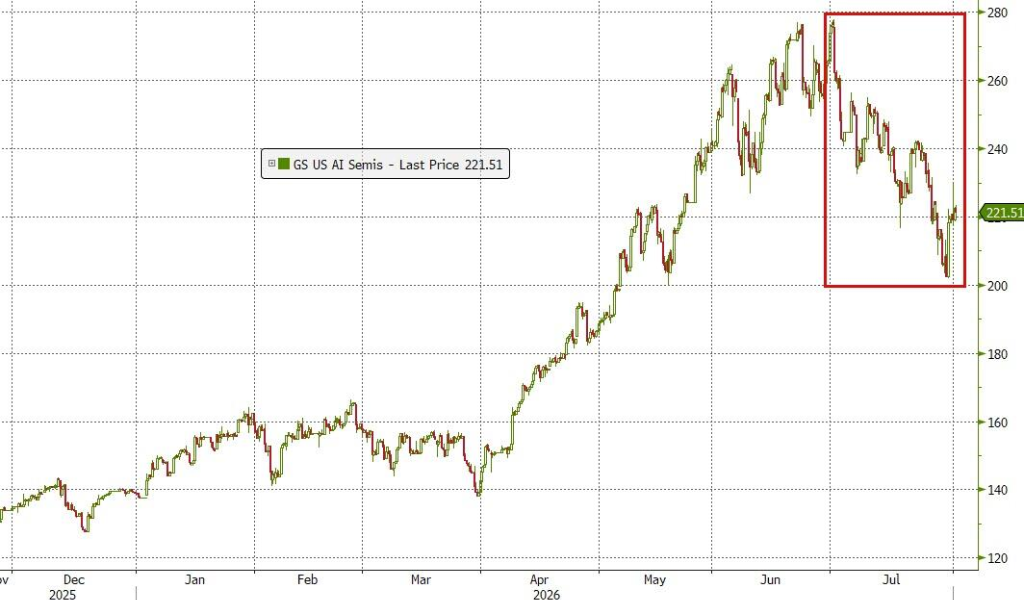
Mark Hackett of Nationwide characterized the recent tech sector turbulence as a 'positioning event rather than the beginning of deteriorating AI fundamentals,' but cautioned that high leverage in the sector acts like an amplifier, exacerbating price volatility.
The energy sector was the biggest winner in July, while technology and materials led the declines; interest-rate-sensitive utilities and real estate sectors also came under pressure.
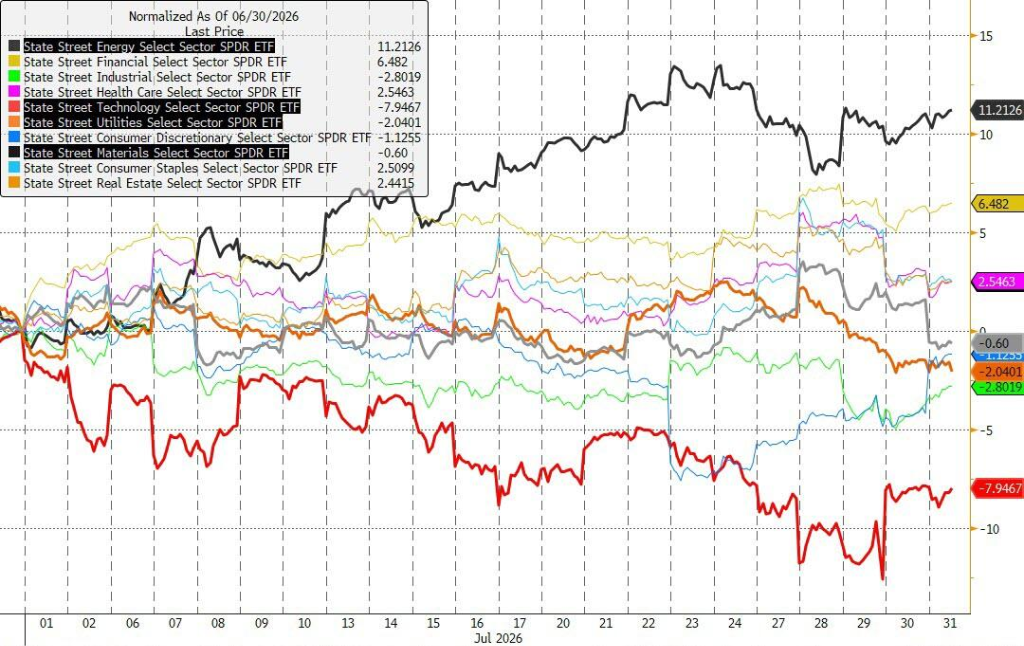
With August approaching, historical seasonal patterns are already unfavorable for equities, and unresolved Middle East tensions, growing divergence over the Federal Reserve’s policy path, and uncertainty over whether deleveraging of highly leveraged capital has concluded will all be key variables for investors to monitor closely.
Momentum Collapse, Leverage Unwinding: The Market’s 'Washing Machine' Effect
Although major equity indices posted limited losses, significant turbulence occurred within the indexes themselves.
The momentum factor plunged 25% in July, marking its worst monthly performance since May 2009, with the high-momentum stock portfolio falling 21% during the month.
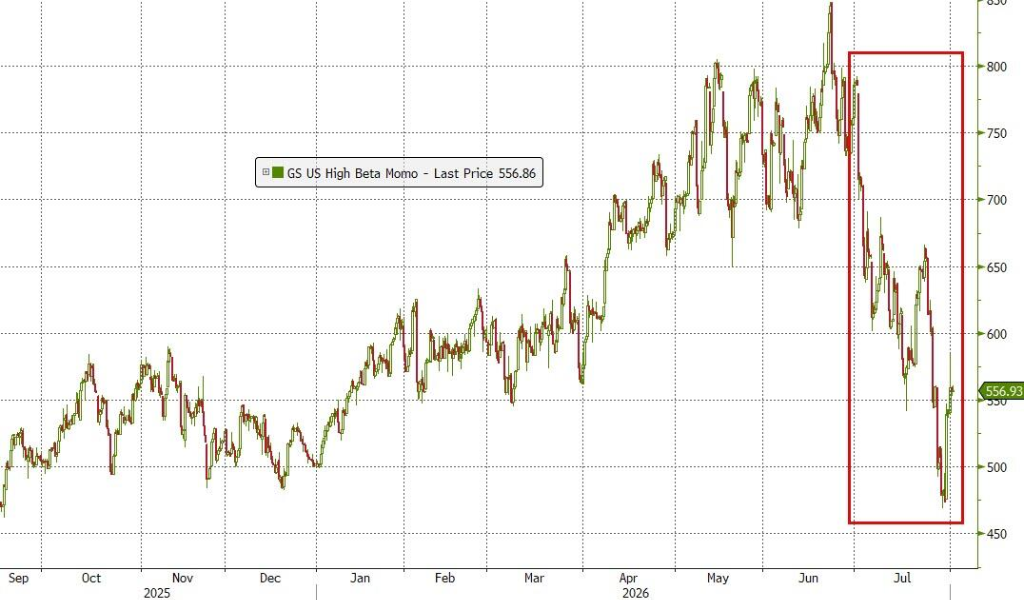
According to Goldman Sachs Prime Brokerage data, the past three trading days have seen the largest one-sided deleveraging since November 2022, as funds are aggressively unwinding leveraged positions built between April and May, particularly concentrated in memory chip and semiconductor holdings.
Goldman Sachs’ hedge portfolio of AI winners versus laggards has experienced a significant drawdown this month, with optical networking and data center segments leading the decline.
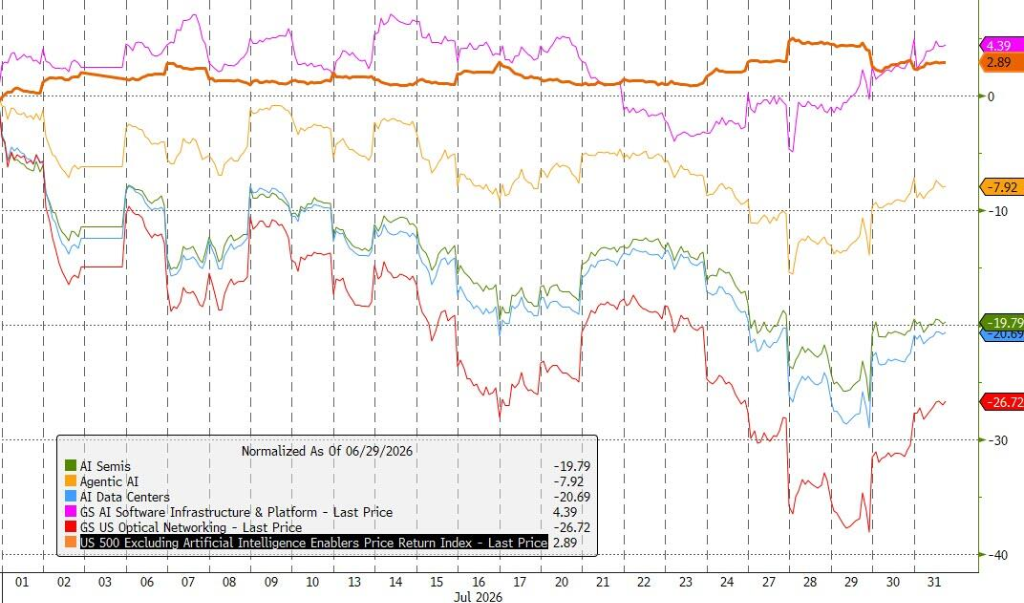
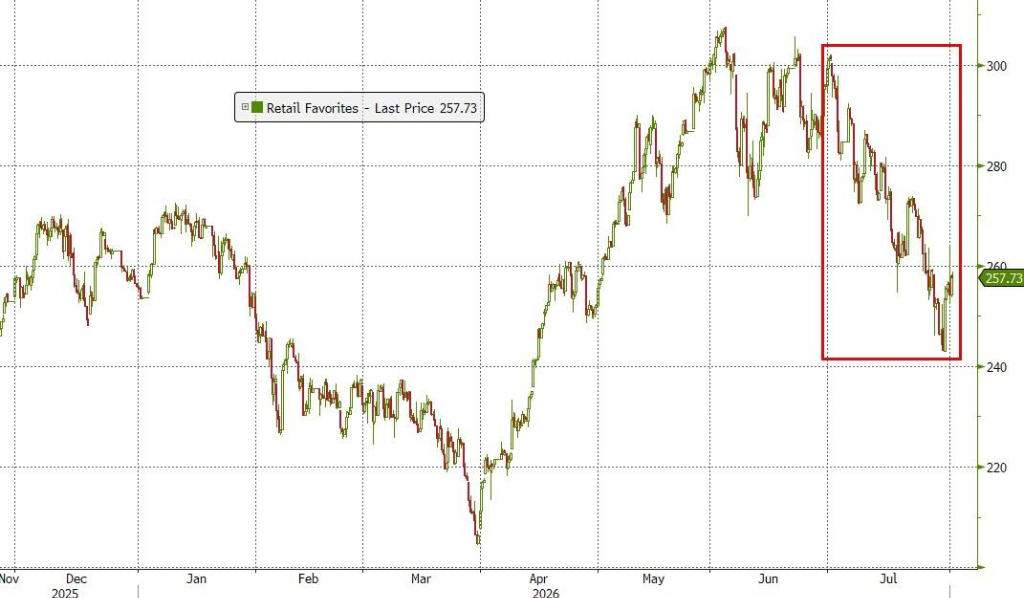
Retail favorites have been severely hit.
Cloud computing stocks rallied on the back of Amazon’s earnings report.
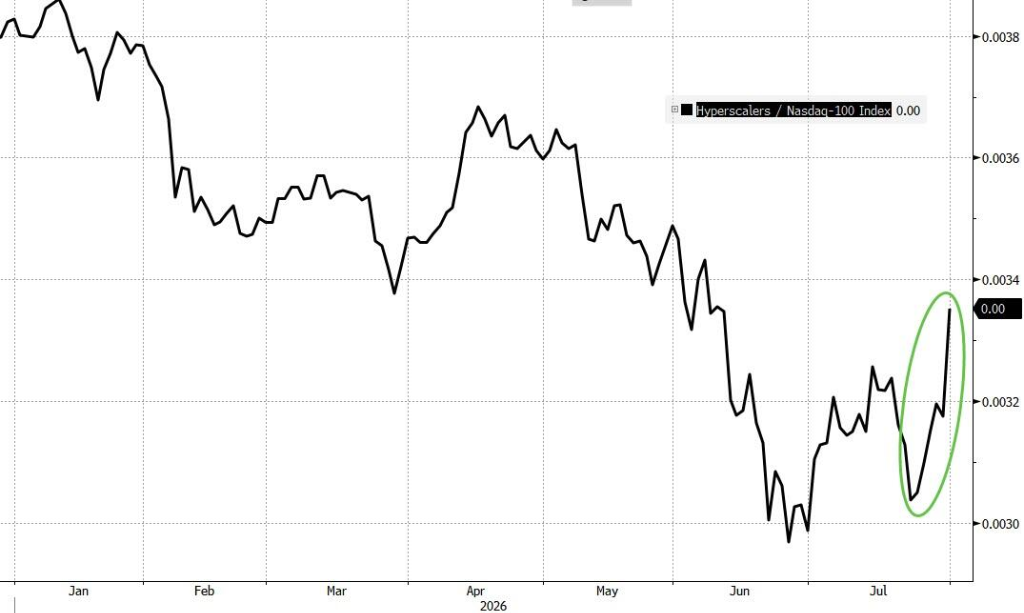
However, hyperscale cloud stocks posted this week the largest weekly outperformance relative to the Nasdaq 100 Index in history, driven significantly by strong earnings reports from Microsoft and Amazon, which recorded monthly gains of over 20% and over 13%, respectively.$Alibaba (BABA.US)$rose more than 5%, as Meta broke an 11-day losing streak to close up 3%. Google climbed nearly 7%, fully recouping its post-earnings losses.
Strategists at Bespoke Investment Group caution that investors currently face a core question:
Is the weakness in AI-related sectors signaling a long-term inflection point, or merely a portfolio rebalancing?
Currently, Goldman Sachs estimates that AI-driven alpha strategies accounted for 85% of the total alpha generated by long/short equity hedge funds in the first half of 2026, but this dominance is reversing. Memory stock positioning remains near record highs, and any disappointing guidance from hyperscale cloud providers regarding capital expenditures would introduce further downside risk.
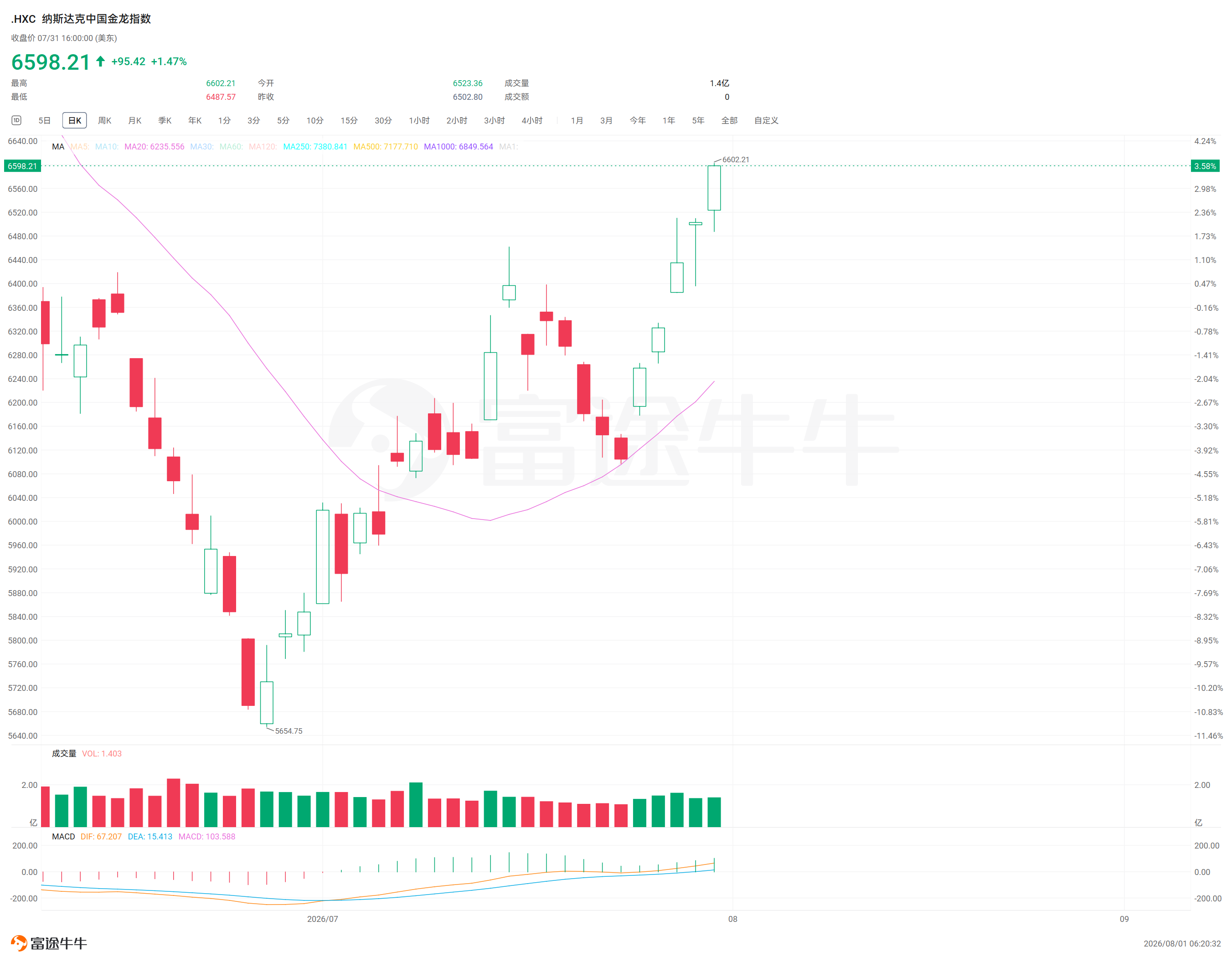
$Nasdaq Golden Dragon China Index (.HXC.US)$The market posted five consecutive days of gains this week.
It rose 1.47% on Friday, bringing its weekly gain to 8.09% and its monthly increase to over 12%.
July’s core narrative: An energy shock triggers a chain reaction.
The market turbulence in July stems from the sharp re-escalation of U.S.-Iran tensions.
The ceasefire agreement reached in June collapsed completely in early July, after Iranian forces attacked commercial vessels in the Strait of Hormuz. Trump subsequently declared the ceasefire terminated around July 7–8, prompting the U.S. military to launch a new round of airstrikes targeting Iran’s coastal defenses, missile sites, and naval assets.
Iran retaliated with missiles and drones, severely disrupting traffic through the Strait of Hormuz—the world’s most critical chokepoint for energy trade—and causing intermittent blockages.
From mid- to late-month, Yemen’s Houthi forces announced a blockade on Saudi ports and shipping through the Bab el-Mandeb Strait, attacking Saudi oil tankers and Aramco facilities at the ports of Al-Jubail and Jazan, thereby placing the alternative export route from the Persian Gulf under similar strain.
Meanwhile, Ukraine’s long-range drone strikes on Russian refineries destroyed approximately 30% to 45% of Russia’s operational refining capacity, driving European diesel refining margins above $60 per barrel and pushing global refined product prices close to wartime highs.
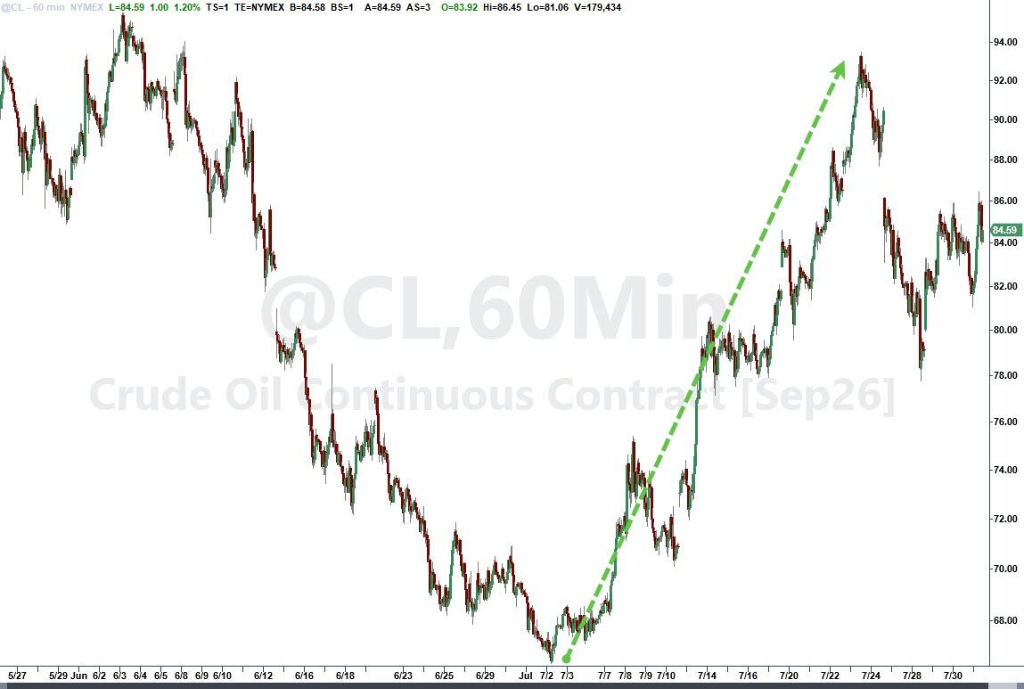
Driven by these shocks, the front-month WTI crude contract surged from its mid-June low of around $65 to a peak of $94. After retreating somewhat this week, it closed Friday at $84.55, marking a monthly gain of over 20%. Brent spot prices similarly rebounded above $91.
Bonds suffer heavy losses as the Federal Reserve’s policy path remains uncertain
The energy shock has fueled inflation expectations, severely damaging the U.S. Treasury market.
The yield on the 10-year U.S. Treasury rose by more than 30 basis points during the month, briefly touching 5.27% this week—the highest level since 2007—before closing Friday at 4.71%, up 3 basis points on the day.
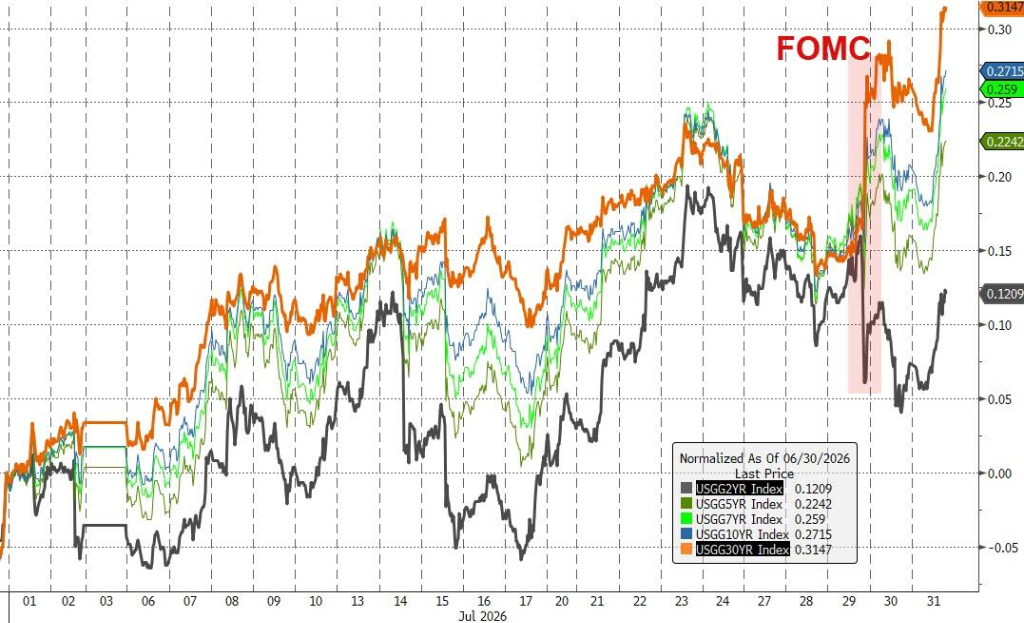
$German 10-year government bond yield (DE10Y.BD)$It rose by 5 basis points on the day to 3.21%,$UK 10-Year Government Bond Yield (GB10Y.BD)$rising by 7 basis points to 5.05%.
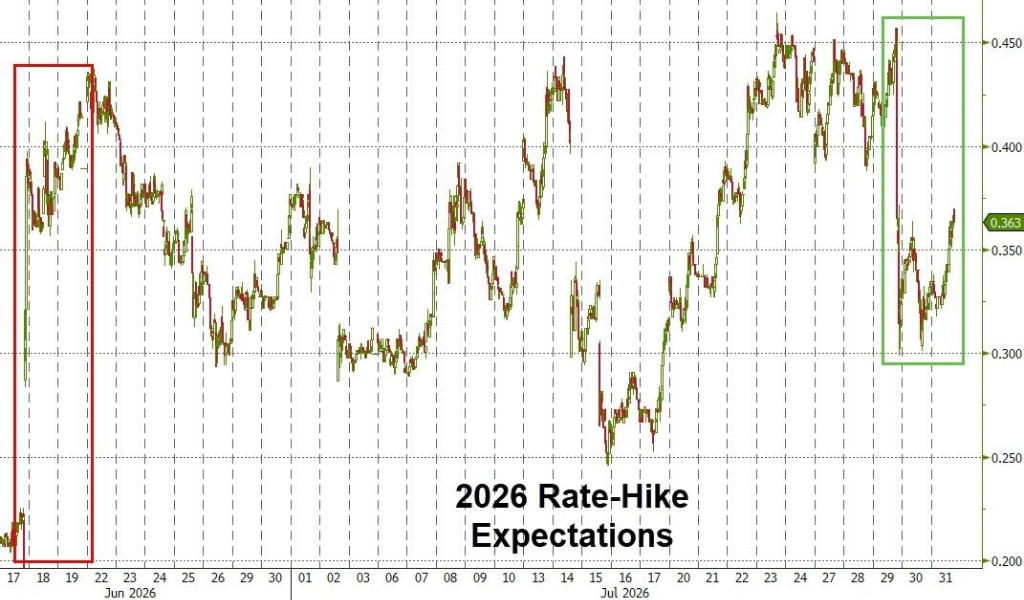
Federal Reserve Chair Waller held rates steady this week, though three officials dissented, advocating for an immediate rate hike to counter persistent inflation risks.
Katharine Neiss, Deputy Global Chief Economist at PGIM Credit, stated that Waller’s press conference performance was "weaker than expected" and expects the Federal Reserve’s "hawkish pivot" to materialize in September, potentially involving three consecutive rate hikes.
Elias Haddad of Brown Brothers Harriman noted:
The support for the U.S. dollar from resilient economic activity has been offset by Waller’s failure to translate tough inflation rhetoric into credible policy action, raising the risk that the Federal Reserve falls behind the curve.
Meanwhile, according to the CME FedWatch Tool, markets currently price in a 65% probability of a rate hike in September, down from 82% a week ago.
Elon Musk’s net worth has declined by USD 600 billion.
According to statistics, among the top ten U.S. companies by market capitalization, only Apple—which released disappointing earnings—and Elon Musk’s$SpaceX (SPCX.US)$ended the day lower. Following a single-day loss of nearly USD 358 billion in market value, Apple relinquished its title as the world’s most valuable public company toNVIDIA (NVDA.US)。
SpaceX's situation is rather unique. The company will release its earnings report next week, followed by the potential unlocking of up to 911.5 million shares (compared to the current 640 million shares outstanding).
According to S3 Partners, as of July 29, short interest in SpaceX had reached 219.3 million shares, representing approximately 34% of the company’s publicly tradable shares. The market value of this short position amounts to roughly $24.6 billion, surpassing the short bets placed against another publicly traded company owned by Musk.$Tesla (TSLA.US)$in terms of short bet size.
Following SpaceX’s post-IPO closing price low on Friday, Musk’s net worth—now slightly above $680 billion—has fallen back to its pre-SpaceX IPO level. His wealth peaked at approximately $1.33 trillion on June 16, but has since declined by over $600 billion in just over a month. SpaceX has dropped 46% from its post-IPO high, while Tesla has fallen 17% since reporting earnings on July 22.
Other assets: The Japanese yen emerges as a key variable,$Bitcoin (BTC.CC)$weakened
The U.S. dollar was largely flat on Friday, having given back all gains made since Waller’s first FOMC meeting as chair over the past six trading days.
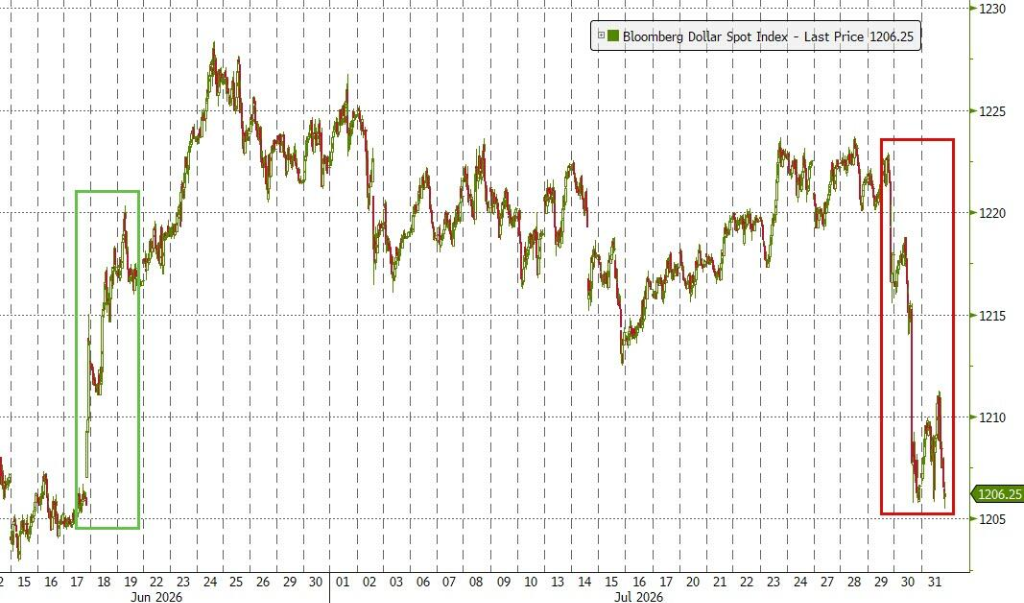
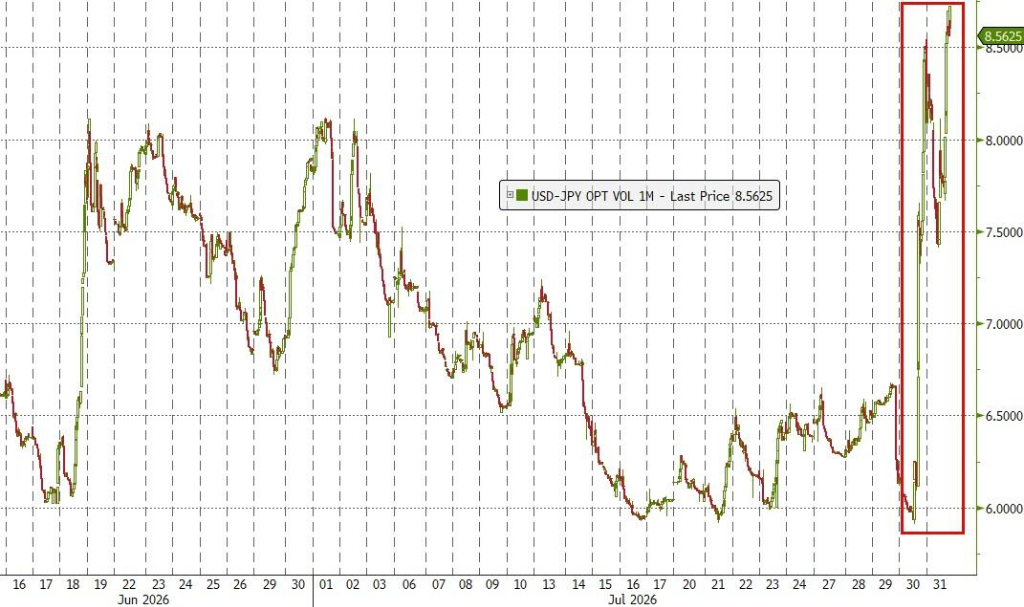
The yen rose 0.4% to 158.82 on Friday, as markets speculated that Japanese authorities might intervene again, coupled with expectations that the Bank of Japan could accelerate its pace of rate hikes by September—posing a potential threat to global carry trades.
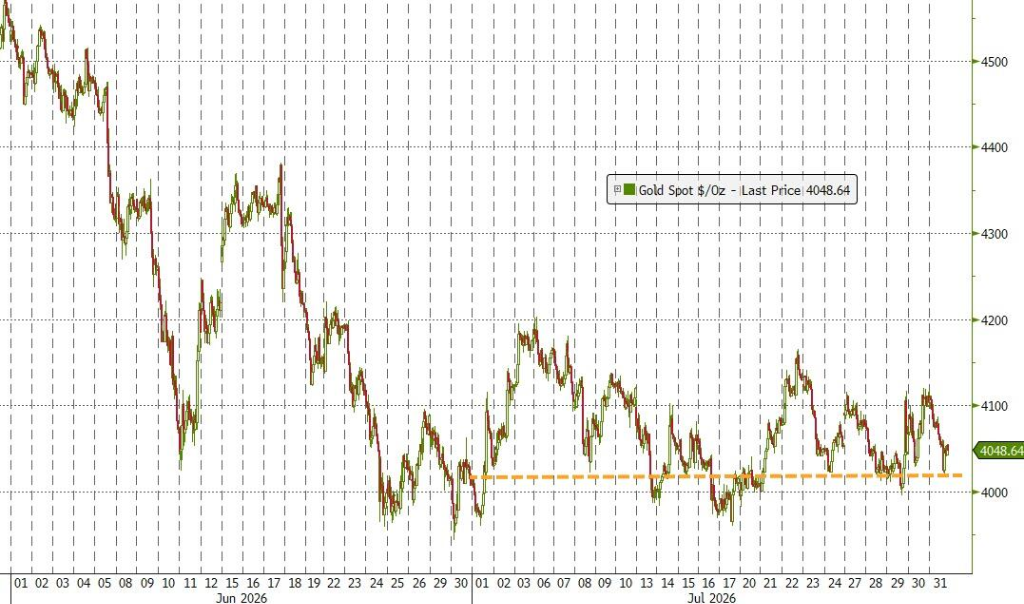
Gold fell 1.4% to $4,046.96 per ounce on Friday, ending July essentially unchanged.
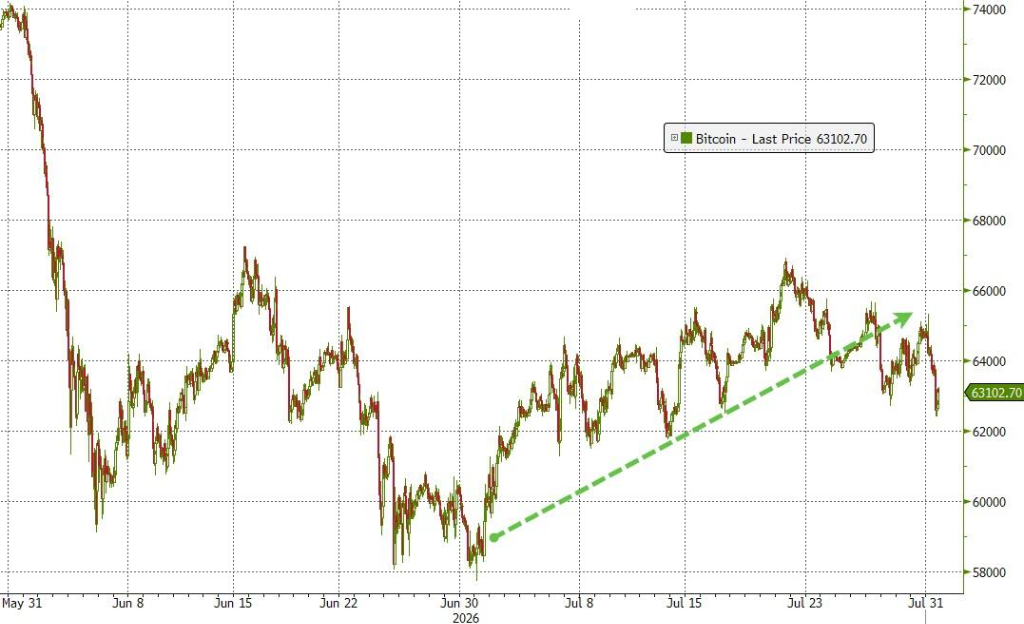
Bitcoin declined 2.8% to $62,930, ending a brief rally during the month that had briefly pushed it above $66,000.
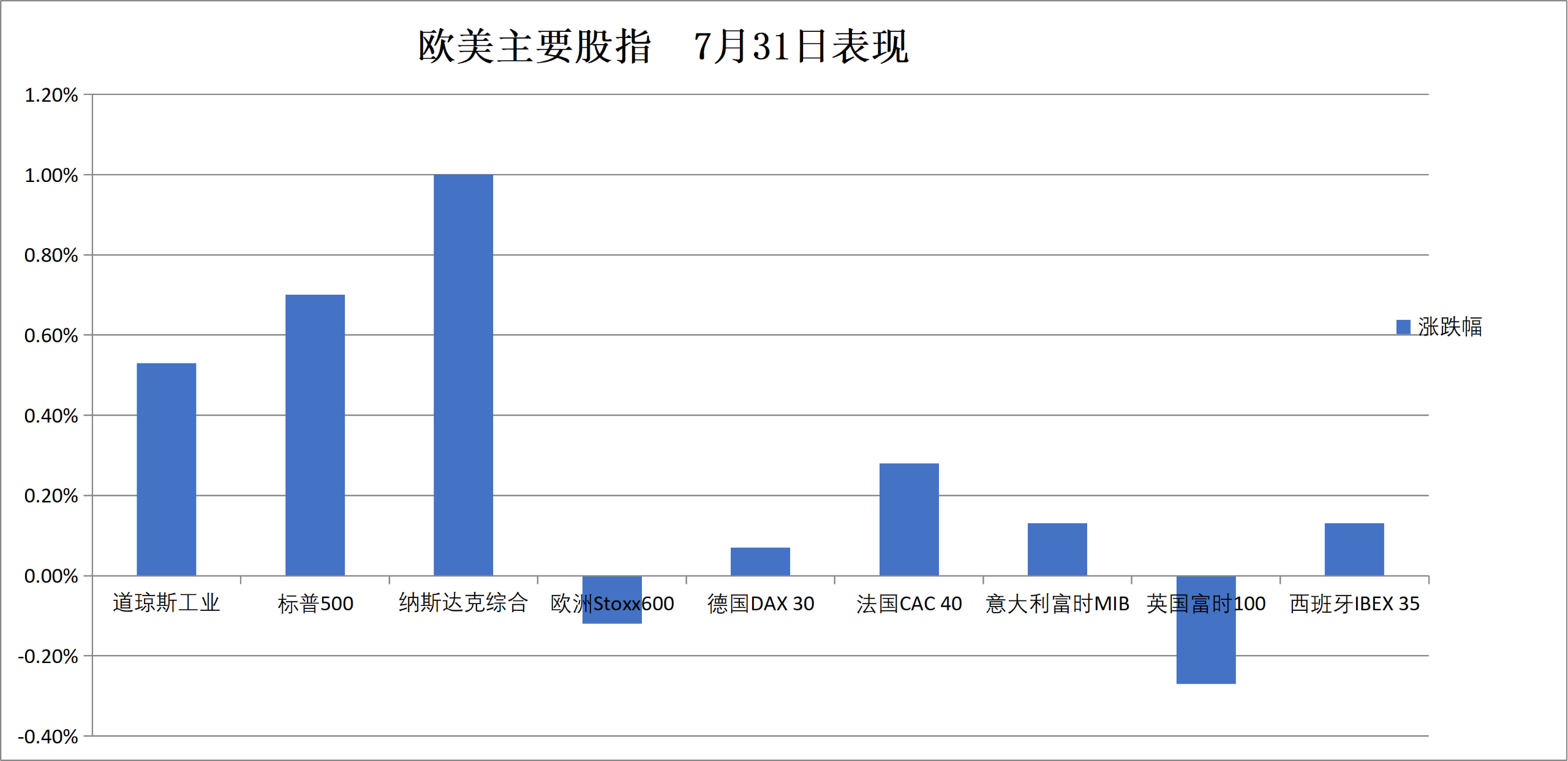
The three major U.S. equity indices closed higher on Friday. The S&P 500 rose 52.09 points, or 0.70%, to 7,489.72. The Nasdaq Composite gained 251.676 points, or 1%, to 25,373.853.
U.S. equity benchmark indices:
The S&P 500 rose 52.09 points, or 0.70%, closing at 7,489.72.
The Dow Jones Industrial Average gained 276.97 points, or 0.53%, closing at 52,485.03.
The Nasdaq Composite rose 251.676 points, or 1%, to close at 25,373.853. The Nasdaq 100 increased by 167.849 points, or 0.60%, ending at 28,274.195.
$Russell 2000 Index (.RUT.US)$closed down 0.50% at 2,931.34 points.
U.S. stock sector ETFs:
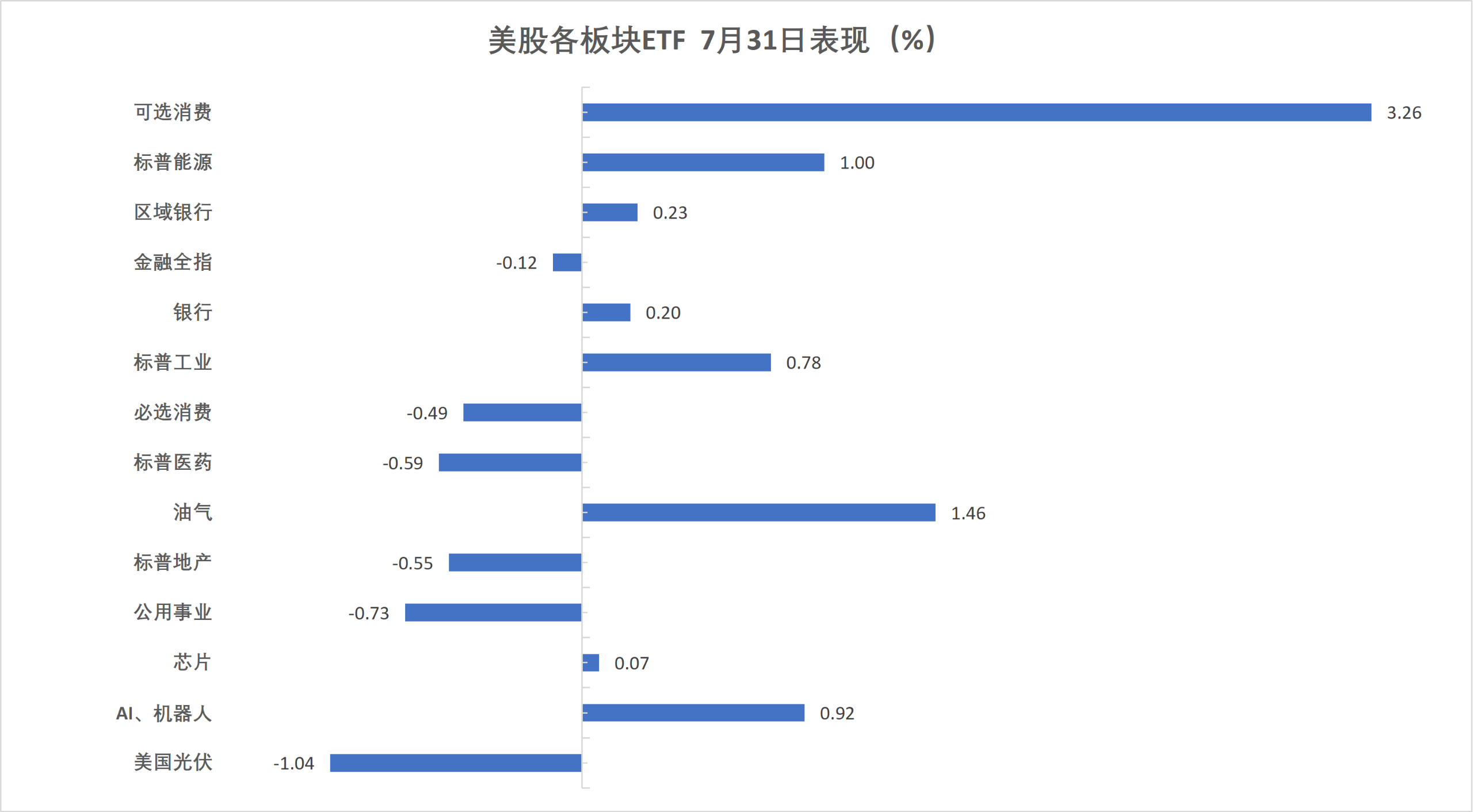
U.S. equity sector ETFs posted mixed performance: the Consumer Discretionary Select Sector SPDR Fund rose 3.29%, the Internet Index ETF gained 2.59%, the Energy Select Sector SPDR Fund advanced 1%, the Semiconductor ETF climbed 0.3%, while the Technology Select Sector SPDR Fund fell 0.22%, the Health Care Select Sector SPDR Fund dropped 0.59%, and the Biotechnology Index ETF declined 1.87%.
From January to July 2026, the Semiconductor ETF has risen 50.09% cumulatively, the Energy Select Sector SPDR Fund gained 35.03%, and both the Global Technology Index ETF and the Technology Select Sector SPDR Fund have each posted gains of at least 22.09%, while the Consumer Discretionary Select Sector SPDR Fund declined 2.39% over the same period.
Mag 7:
The Wind Mag 7 Index rose 2.73%.
Amazon surged 15.32%, Alphabet A gained 6.73%, Meta rose 3.28%, Microsoft advanced 3.02%, NVIDIA climbed 2.93%, Tesla increased 0.76%, while Apple plunged 7.35%.
Semiconductor stocks:
The Philadelphia Semiconductor Index edged up 0.07%, closing at 11,311.08 points, but posted a weekly loss of 4.30%.
$Taiwan Semiconductor (TSM.US)$ADRs edged up 0.25%, while AMD fell 1.90%.
U.S.-listed Chinese stocks:
The Nasdaq Golden Dragon China Index closed up 1.47% at 6,598.21 points, marking a weekly gain of 8.09% and continuing its upward trend, with a cumulative increase of 12.84% in July.
Among popular Chinese ADRs, $Kingsoft Cloud (KC.US)$ rose 9.9%, Alibaba gained 5.2%,New Oriental Education (EDU.US) rose 4.1%,$Yum China (YUMC.US)$、Baidurising more than 3%.
Other stocks:
$Circle(CRCL.US)$ fell 2.59%.
AI-related stocks that surged dramatically the previous day posted mixed results on Friday. Among them, memory chip概念股 Micron Technology dropped 5.9%,$SanDisk (SNDK.US)$ fell 5.09%,$SK Hynix (SKHY.US)$ U.S. stocks declined 3.54%,$Western Digital (WDC.US)$ rose 2.21%,$Seagate Technology (STX.US)$ gained 0.52%. In addition to profit-taking after sharp gains, the memory sector was also affected by$Kioxia (285A.JP)$ earnings that fell short of expectations,$Kioxia ADR (KXIAY.US)$ closed down 10.1%.
Top-performing stocks in the semiconductor equipment sector, which surged yesterday,Applied Materials (AMAT.US)、$Teradyne (TER.US)$、$Aehr Test Systems (AEHR.US)$, along with Lumentum and Credo from the optical communications sector,$Lumentum (LITE.US)$)、$Coherent (COHR.US)$、$Ciena(CIEN.US)$all continued to rise on Friday.
Other news
[The Big Three Cloud Providers Added Nearly $1.5 Trillion in Market Value This Week]
Following strong post-earnings rallies by Microsoft and Amazon this week—and a rebound in Google, which had weakened after its earnings last week—the combined market capitalization of the world’s three leading cloud computing companies increased by nearly $1.5 trillion this week. Microsoft added $616.5 billion in market value, while Amazon and Google added $425.6 billion and nearly $445 billion, respectively.
[Amazon Completes $50 Billion Investment in OpenAI]
A regulatory filing submitted by Amazon on Friday showed that the company has completed its previously announced $50 billion investment commitment to OpenAI. Amazon initially announced the investment at the end of February, immediately contributing $15 billion, with the remaining $35 billion originally scheduled to be injected upon OpenAI’s IPO or achievement of specific milestones. According to the filing, Amazon invested $13.7 billion in the second quarter and an additional $21.3 billion after the end of June. Amazon did not disclose the specific reason for accelerating the full investment ahead of schedule.
[IBM CEO Says Quantum Computing Expected to Contribute Meaningful Profitability by 2028–2029]
IBM CEO Arvind Krishna stated on Friday that the company’s quantum computing business is expected to begin delivering a “measurable impact” on profitability between 2028 and 2029. IBM is accelerating the commercialization of quantum computing and plans to invest over $10 billion in related R&D, manufacturing expansion, ecosystem development, and acquisitions over the next five years. The company previously outlined a roadmap targeting the launch of its first large-scale, fault-tolerant quantum computer by 2029.
[“Spider-Man” Breaks North American Box Office Record for Preview Screenings]
According to statistics,$Sony (6758.JP)$The superhero film Spider-Man: Fresh Start, co-produced by Sony Pictures and Marvel Studios, has already grossed $72 million from early previews and advance screenings, setting a new record in Hollywood history. The previous record was held by Avengers: Endgame (2019), which earned $60 million from early previews prior to its opening weekend.
[U.S. 'Snoring Oral Therapy' Company Surges on IPO Debut]
A biopharmaceutical company focused on late-stage clinical development$Apnimed (APMD.US)$The company’s shares rose 56.25% on their first day of trading on the U.S. stock market, closing at $25. In its IPO, Apnimed issued 12 million shares of common stock, exceeding its initial plan of 10 million shares; the offering price range was set at $14 to $16 per share, with final pricing at the top end of the range at $16 per share.
[U.S. Nuclear Power Giant Launches IPO]
Westinghouse Electric Company, a leading U.S. nuclear power firm, announced on its website Friday that it has filed a draft registration statement on Form S-1 with the U.S. Securities and Exchange Commission (SEC) for an initial public offering (IPO) of common stock. According to statistics, more than half of the 417 nuclear reactors currently in operation worldwide utilize Westinghouse technology.
【$Novo-Nordisk A/S (NVO.US)$[Key Cardiovascular Drug Trial Fails]
Danish pharmaceutical giant Novo-Nordisk A/S fell 8.78% on Friday after disclosing that a late-stage cardiovascular drug trial failed to meet its primary endpoint, as the drug did not significantly reduce the rate of major adverse cardiovascular events (MACE) compared to placebo.
Novo-Nordisk A/S fell approximately 7.4% on Friday. European equities rose more than 1.1% in July, with the energy sector gaining over 9.1% while the technology sector dropped about 7.3%. The Danish stock market closed down roughly 3.1% on Friday. German equities climbed more than 2.5% in July, defense ETFs rose 9.2%, and Italian banking stocks gained 6%.
Pan-European Equities:
The STOXX Europe 600 Index closed down 0.12% at 649.19 points, posting a weekly gain of 0.73% and a July increase of 1.16%.
The EURO STOXX 50 Index closed up 0.21% at 6,358.01 points, rising 1.23% for the week and 0.47% in July.
National stock indices:
The DAX 30 Index closed up 0.07% at 25,629.24 points, with a weekly gain of 2.11% and a July increase of 2.53%.
The CAC 40 Index closed up 0.28% at 8,509.64 points, posting a weekly gain of 1.64% and a July increase of 1.26%.
$FTSE 100 Index (.FTSE.GB)$It closed down 0.27% at 10,868.05 points, posting a weekly gain of 1.23% and a July gain of 3.53%.
Sector and individual stock performance:
Among Eurozone blue-chip stocks, Saint-Gobain rose 6.89%, Infineon gained 3.7%, and Santander advanced 2.34%.$Anheuser-Busch InBev (BUD.US)$up 1.95% to rank fourth, while L'Oréal fell 1.79%, marking the third-largest decline, Inditex dropped 1.81%, and Volkswagen declined 1.94%.
Among all constituents of the STOXX Europe 600 Index, Teleperformance surged 13.15%, Zabka Group rose 8.68%, Aker gained 7.42%, Saint-Gobain ranked fourth, Aixtron climbed 5.28%, and Infineon posted the tenth-largest gain.
By sector, the STOXX 600 Oil & Gas Index rose 9.14% in July, the Banks Index gained 6.43%, the Financial Services Index increased by 5.16%, and the Personal Care, Pharmaceuticals & Food Retailers Index advanced 5.13%.
Want to select stocks or get a stock diagnosis? Curious about the opportunities and risks in your portfolio? For all your investment questions,Just ask Futubull AI!

Editor/Liam