
Since 2026, amid persistent yen weakness and a renewed widening of the U.S.-Japan interest rate differential, yen carry trade activity has risen again. Non-commercial net short positions in the yen against the U.S. dollar are now approaching the extreme levels seen in July 2024. This week, the yen appreciated sharply following intervention by Japanese authorities. How significant is the risk of a reversal in yen carry trades? We believe that given the continued resilience of the U.S. economy, a second rebound in oil prices adding pressure to inflation moderation, and the Federal Reserve’s hawkish stance, the U.S. dollar is likely to remain strong in the near term, and U.S. Treasury yields may stay elevated. Under these conditions, the yen’s scope for sustained appreciation in the short run appears limited, and the risk of a carry trade unwind remains relatively low. Moreover, the current yen weakness may not be primarily driven by carry trades but rather by heightened concerns over Japan’s fiscal expansionary tilt—raising doubts about debt sustainability and the Bank of Japan’s independence. However, given that net short positions in the yen have already risen to elevated levels, any subsequent trigger that leads to yen appreciation could significantly impact financial markets. Close attention should be paid to developments in the U.S. economic outlook, the effectiveness of Japanese authorities’ foreign exchange interventions, and whether the technology sector continues to undergo adjustments. In July, central banks in the U.S., Eurozone, Japan, and the U.K. all held policy rates unchanged. Among them, the Fed exhibited notable internal divergence, while the Bank of Japan adopted a relatively hawkish tone, showing heightened vigilance on inflation and potentially delivering another rate hike this year. The ECB also retains the possibility of a rate hike in September.
Yen Carry Trades: How Significant Is the Risk of Reversal?
Yen carry trade volumes may have risen again since 2026. Since 2026, due to the yen’s persistent weakness and a renewed widening of the U.S.-Japan interest rate differential, yen carry trade activity has rebounded. As of May 2026, Japan’s offshore financial account net assets have surpassed the December 2024 peak, reaching JPY 95 trillion. From the derivatives market perspective, non-commercial net short positions in the yen against the U.S. dollar have also risen markedly since 2026 and are now approaching the extreme levels observed in July 2024, reflecting intense sentiment toward shorting the yen.
The Japanese government may have intervened in the currency market, causing USD/JPY to drop sharply from a high of 163 to around 157. According to Bloomberg’s analysis of the Bank of Japan’s accounts, as cited by Wall Street Wire, the scale of Japan’s intervention may have amounted to approximately JPY 8.45 trillion. Nevertheless, the yen remains broadly weak, and the risk of a near-term reversal in carry trades appears relatively low.
 First, even if the Bank of Japan raises rates further this year, the Fed’s tightening expectations for the year remain strong—a stark contrast to August 2024, when weaker-than-expected non-farm payroll data fueled expectations of Fed rate cuts. In the short term, with the U.S. economy still resilient, a second oil price rebound increasing inflation moderation pressures, and the Fed maintaining a hawkish stance, the U.S. dollar is likely to remain strong, and U.S. Treasury yields may stay elevated. Under these conditions, the yen’s room for sustained appreciation is limited, and both the interest rate differential and currency gains supporting yen carry trades may persist.
Second, unlike the panic-driven sell-off in August 2024 triggered by a sharp deterioration in non-farm payroll data, the current tech sector correction appears largely driven by valuation adjustments and portfolio rebalancing following earlier excessive gains, rather than weakening U.S. economic fundamentals or a collapse in the AI investment narrative. Market participants generally view the U.S. economy as being in a recovery phase, and the shift in risk appetite has not been severe enough to trigger concentrated and forceful unwinding of carry trades—at least for now.
Third, the current yen weakness may not be primarily driven by carry trades, but rather by rising concerns over Japan’s fiscal expansionary stance—which has intensified market worries about debt sustainability and raised questions about the Bank of Japan’s independence.
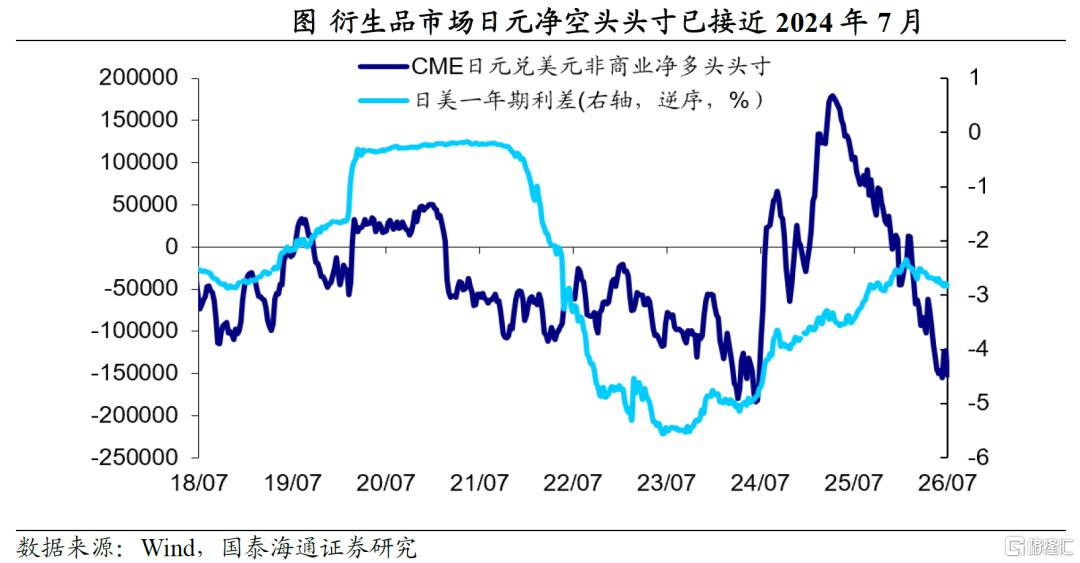
However, given that net short positions in the yen have already risen to elevated levels, any subsequent trigger that genuinely drives yen appreciation could deliver a significant shock to financial markets. Key potential catalysts to monitor include the following:
First, if U.S. economic data significantly underperforms expectations, leading to a marked decline in U.S. Treasury yields, this could exert substantial reversal pressure on yen carry trades;
Second, it will be important to observe whether AI-related trades experience sustained and significant corrections, keeping volatility in high-yielding assets persistently elevated.
Third, attention should be paid to whether Japan’s Ministry of Finance will implement more forceful intervention measures if the exchange rate moves into an extreme range.
Tensions between the U.S. and Iran continue to fluctuate. This week, U.S. officials stated that Trump had ordered a new round of strikes against Iran, with related actions potentially commencing as early as the weekend and lasting several days. However, Trump later posted that Iran and other Middle Eastern countries had requested a delay in the attacks, and he agreed to cancel the military strike on Iran. The involved parties have preliminarily reached a framework agreement, which includes the immediate, comprehensive, and complete reopening of the Strait of Hormuz and the elimination of Iran’s nuclear threat. Nevertheless, Iran subsequently denied having requested a ceasefire and claimed that plans to reopen the Strait of Hormuz were entirely fabricated.
The Federal Reserve kept interest rates unchanged, with significant internal divergence persisting. In the early hours of July 30 Beijing time, the Fed maintained the target range for the federal funds rate at 3.5%–3.75% by a 9–3 vote during its policy meeting. The statement’s wording was nearly identical to that of June, reflecting no notable shift in the Fed’s assessment of economic conditions. However, the three dissenting votes underscore the substantial internal disagreement within the Fed.
The Bank of Japan adopted a relatively hawkish stance, suggesting a potential further rate hike this year. On July 31, the Bank of Japan kept its policy rate unchanged at the current level of 1.0%, in line with market expectations. Notably, board member Soichiro Takada voted against the decision, advocating for consecutive rate hikes. Importantly, the central bank expressed heightened concerns about inflation in this meeting, noting that underlying inflation in Japan risks exceeding its 2% target. BOJ Governor Kazuo Ueda stated that if financial conditions remain excessively accommodative, the Bank of Japan could accelerate its pace of tightening. Additionally, Ueda emphasized that the impact of the exchange rate on inflation is becoming increasingly pronounced and warrants closer monitoring.
The European Central Bank (ECB) may raise rates in September. In July, the ECB, as expected, left its three key interest rates unchanged: the deposit facility rate, the main refinancing rate, and the marginal lending facility rate remained at 2.25%, 2.40%, and 2.65%, respectively. In its statement, the ECB noted that the full impact of energy shocks on inflation has not yet fully materialized and affirmed its readiness to adjust its policy tools as needed. It reiterated its data-dependent, meeting-by-meeting approach to determining the appropriate monetary policy stance and declined to commit to any specific rate path. Currently, markets maintain strong expectations for a rate hike at the ECB’s September meeting. ECB Governing Council member Kocher stated that the September meeting will involve a choice between raising rates and maintaining the status quo.
Risk Warning: Recurrent volatility in U.S.-Iran relations and unexpectedly hawkish Federal Reserve monetary policy