
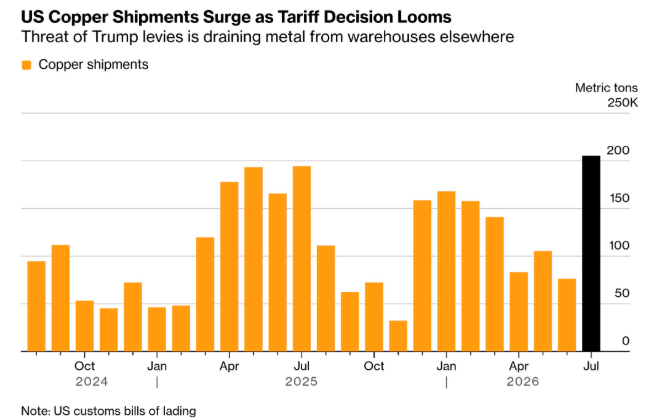
① Last month, refined copper flooded into the United States at the fastest pace in at least 12 years; ② global traders are rushing to position themselves ahead of President Trump’s decision on import tariffs for refined copper.
Refined copper is flooding into the United States at the fastest pace in at least 12 years as global traders rush to position themselves ahead of President Trump’s decision on import tariffs for refined copper.
According to maritime trade data from IHS Markit dating back to 2014, more than 200,000 metric tons of copper arrived in the U.S. in July this year, setting a new record for the highest monthly inflow on record. This surge in imports will further swell the already substantial U.S. copper inventories built up over the past year.
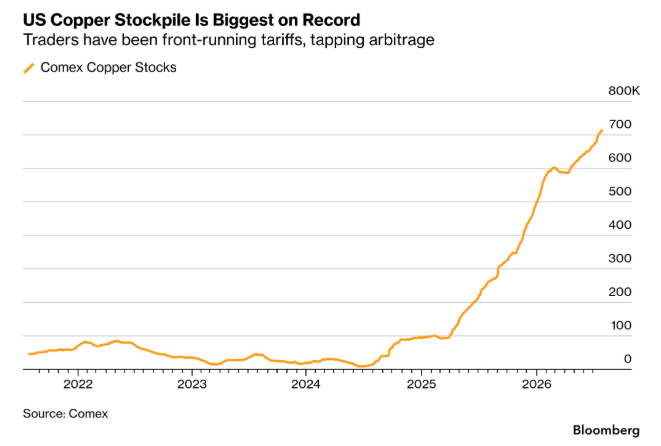
 Currently, combined inventories at the Commodity Exchange (Comex) and the London Metal Exchange (LME) in the U.S. have surpassed 740,000 metric tons. Furthermore, LME data released last Friday showed that approximately 110,900 metric tons of copper are stored at U.S. ports outside the LME warrant system.
As this inventory buildup comes at the expense of supply elsewhere in the world, markets are closely watching this wave of imports—this year, LME warehouse stocks outside the U.S. have plummeted sharply as traders redirect metal to U.S. ports in pursuit of higher prices.
This flow of material continues to accelerate even though the June 30 deadline—by which Commerce Secretary Lutnick was to submit recommendations on copper tariffs—has passed without any announcement. As the White House weighs whether to extend protective measures for copper semi-finished products to primary metal, global producers, consumers, and traders await clear guidance.
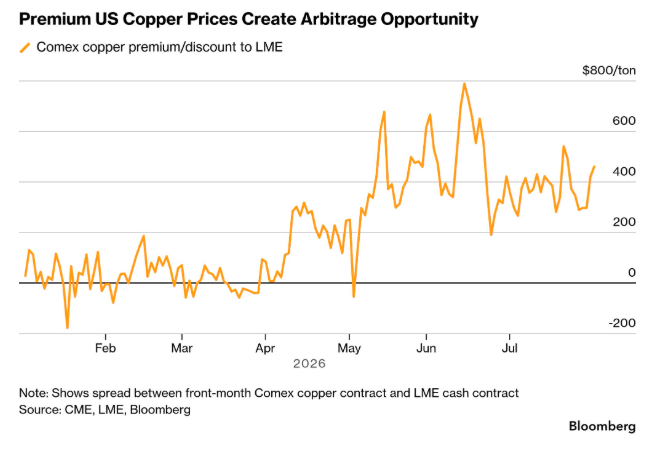
Meanwhile, Comex copper futures continue to trade at a significant premium to LME copper, and this arbitrage opportunity keeps incentivizing traders to ship copper into the United States.
“Tariff-driven arbitrage is dominating the market—even more so than actual demand growth,” said Michael Cuoco, head of metals at StoneX Financial. “Those who believe they’re closer to the core decision-makers are convinced that getting copper into the U.S. today is far wiser than waiting until tomorrow.”
This year, official Comex copper inventories have risen by more than 40%, reaching a record high. Total copper stockpiles across the United States are widely estimated to exceed one million metric tons. The looming threat of tariffs has ironically created the perfect opportunity for the U.S. to build strategic reserves—after all, copper has become an essential strategic material in critical sectors such as power grids, artificial intelligence, electric vehicles, and defense.
Uncertainty over copper tariffs continues to loom
The White House has not yet disclosed when Trump will make a decision on tariffs for refined copper.
Proponents argue that imposing tariffs would encourage investment in domestic U.S. mining and processing, while opponents contend that it would raise costs for manufacturers reliant on imported copper and undermine the competitiveness of U.S.-made products. Notably, this debate unfolds against the backdrop of existing U.S. tariffs of up to 50% on semi-finished copper and its derivatives.
Analysts note that if the White House ultimately decides to impose tariffs, it could trigger a final wave of shipments before the tariffs take effect; conversely, if the proposal is abandoned, trade flows could reverse as traders unwind positions accumulated over the past 18 months.
Over the past year, the threat of tariffs has dominated the copper market, repeatedly pushing New York futures prices above those in London. In July last year, Trump instructed Lutnick to examine whether phased tariffs should be imposed on imports of refined copper, starting at a rate of 15% from January 2027.
In July, the Comex-LME arbitrage spread—the difference between the Comex near-month copper contract and the LME spot contract—averaged more than $350 per tonne, a highly lucrative margin sufficient to draw a steady influx of overseas metal across the ocean into the United States.
Meanwhile, the London market is showing signs of tightening supply, with the nearby contract trading at a premium of approximately $65 over the three-month futures contract—the highest level since January. This price structure, known as 'cash premium,' signals an imminent tightening in the market.
Editor/rice