NVIDIA announced a $3.5 billion investment in MediaTek via convertible bonds, formally establishing a partnership to co-build AI factories. MediaTek will introduce NVIDIA’s data center interconnect technologies, such as NVLink Fusion, to accelerate its transition into the data center sector, aiming to capture a 15% share of the $80 billion market next year. Meanwhile, NVIDIA seeks to deepen its ecosystem layout and consolidate its core dominant position in AI infrastructure.
$NVIDIA (NVDA.US)$ It is extending the reach of its AI data center ecosystem to more chip partners and reinforcing this strategic layout with substantial capital investment.
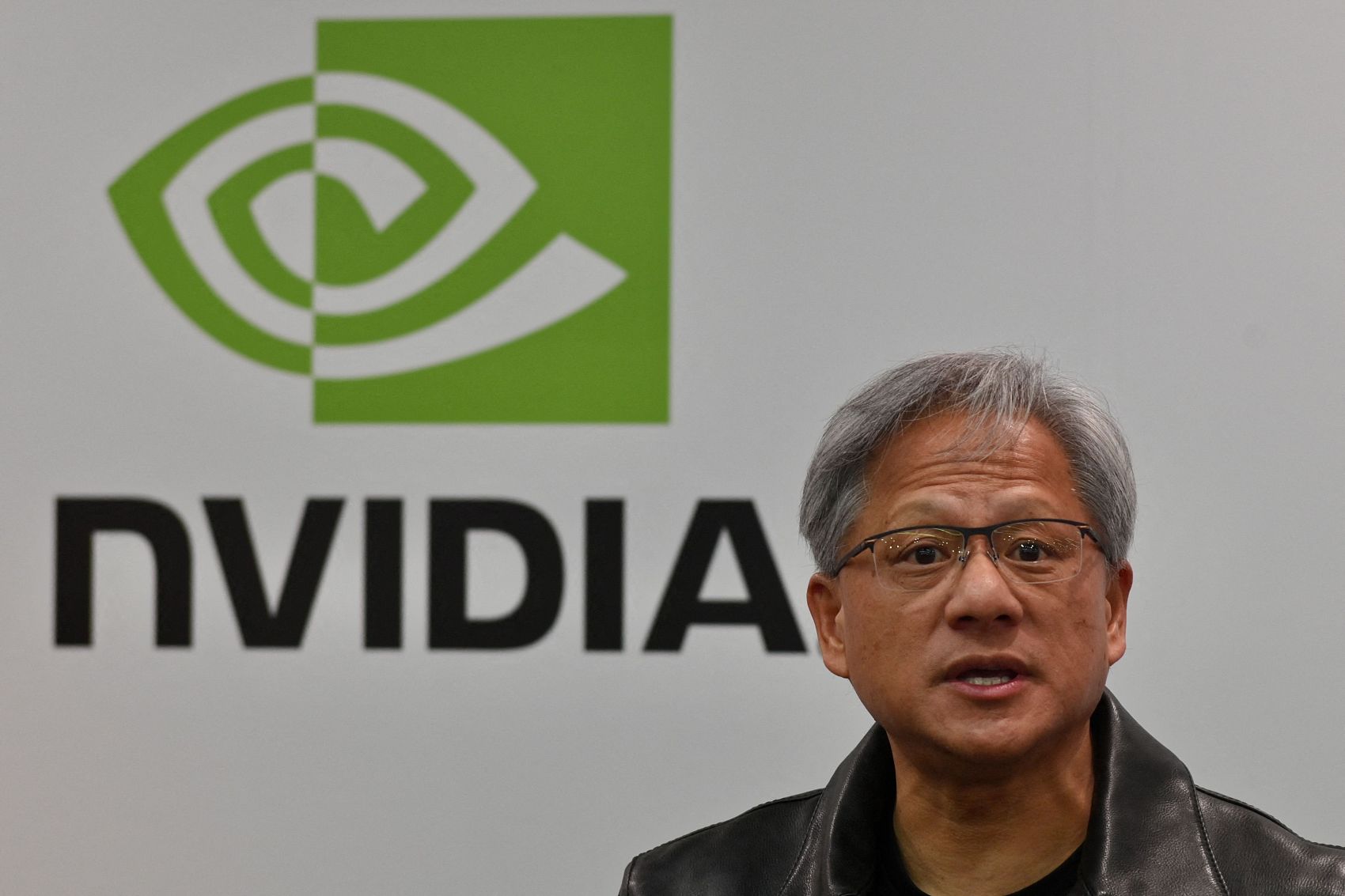
NVIDIA will invest $3.5 billion in MediaTek by purchasing shares in the form of convertible bonds, a move confirmed by a joint statement released by both parties on Monday. Jensen Huang, CEO of NVIDIA, stated that the company is "significantly expanding" the scale of its collaboration with MediaTek, characterizing this investment as the formal establishment of a partnership to jointly build AI factories. He described MediaTek as one of NVIDIA's "largest partners."
 This investment further deepens the cooperation between the two chip design companies. MediaTek will incorporate NVIDIA's NVLink Fusion and the newly released NVHBM technology into its technology portfolio to enhance communication efficiency among various components within data centers. For the market, this deal reaffirms NVIDIA's consistent strategy of ensuring its hardware platform and technical standards become the core of AI infrastructure, providing further support for MediaTek's stock price, which has nearly doubled over the past few months.
NVIDIA Secures Dominance in Data Centers Through Interconnect Technology
For NVIDIA, this agreement with MediaTek represents the latest step in ensuring that the future of AI is built around its own hardware platform. In recent years, NVIDIA has continuously developed data center interconnect systems such as NVLink Fusion and broadly sought partnerships, aiming to maintain a core position throughout the entire hardware chain rather than relying solely on its leading AI accelerator chips.
Under the cooperation arrangement, MediaTek processors will also serve as the foundation for new Windows PCs. The two companies already have a basis for collaboration in the laptop market, with MediaTek participating in the development of NVIDIA's RTX Spark products targeted at this segment. Jensen Huang described this collaboration as "large-scale engineering synergy."
This agreement with MediaTek follows closely on the heels of a similar pact signed between NVIDIA and Amazon. According to Bloomberg, Amazon agreed to deploy an additional 2 million NVIDIA components and committed to integrating NVIDIA's interconnect technology with its self-developed chips. Together, these two agreements indicate that NVIDIA remains dedicated to preserving its central role in the wave of AI data center construction, even as major customers accelerate their efforts to develop proprietary chips.
MediaTek's AI Ambitions: From Mobile Chip Vendor to Data Center Player
MediaTek is actively working to reduce its dependence on the smartphone market and accelerating its transformation into the AI data center sector. Earlier this year, the company partnered with Google, a subsidiary of Alphabet, building considerable credibility in assisting large technology firms in designing their own AI chips, which subsequently drove a significant surge in its market capitalization over the past few months.
In terms of business layout, MediaTek is attempting to compete with Broadcom and Marvell by helping data center operators develop custom components. The company expects its AI chip revenue to reach approximately $2 billion this year and has set a target to capture up to 15% of the roughly $80 billion data center segment next year. MediaTek also stated that it plans to aggressively expand its talent recruitment to better seize the business opportunities presented by the AI wave.
Controversy Over Circular Investment: NVIDIA Emphasizes Accelerating Technology Adoption
NVIDIA's substantial investments in customers, competitors, and companies across the AI supply chain have raised investor concerns about whether it is creating artificial demand. In response to this controversy, NVIDIA management has strongly denied such allegations, maintaining that these investments are merely another means of accelerating the adoption of its technology and helping to drive the development of the entire AI industry.
At present, there are no signs that NVIDIA's dominant position is weakening. Although its largest customers, including Amazon, Google, and Microsoft, have accelerated their efforts to develop proprietary chips, NVIDIA remains the primary beneficiary of massive global spending on AI data centers, as its accelerator chips deliver superior performance in training and inference for AI tools and services. The company forecasts a 70% surge in revenue next year and continues to expand its business scope from accelerator chips to broader technological domains, including complete computer systems and networking interconnects.