
Pulai Pharmaceutical (Jiangsu) Co., Ltd. (hereinafter referred to as "Pulai Pharmaceutical") has submitted an application for listing on the Main Board of the Hong Kong Stock Exchange, with CITIC Securities serving as its sole sponsor.
Zhitong Finance APP has learned that, according to disclosures by the Hong Kong Stock Exchange (HKEX) on August 31, Pulai Medicine (Jiangsu) Co., Ltd. (hereinafter referred to as "Pulai Medicine") has submitted an application for listing on the Main Board of the HKEX, with CITIC Securities serving as its sole sponsor. The company had previously submitted a listing application to the HKEX on February 13.
Company Overview
 The prospectus indicates that Pulai Medicine is an antimicrobial peptide (AMP) biopharmaceutical company established in April 2009, focusing on two core therapeutic areas: anti-infection and metabolic diseases. As of the Latest Practicable Date (August 24, 2026), the company has (i) a core product, PL-5 (Peilaijianan), administered as a topical spray for the treatment of secondary infections in first-degree or superficial second-degree burn wounds caused by Staphylococcus epidermidis, Staphylococcus haemolyticus, or Acinetobacter baumannii (secondary infection of burn wounds) and diabetic foot infections (DFI); and (ii) three other candidate drugs in its pipeline.
According to Frost & Sullivan, the company's core product, PL-5 Spray (Puyike), is the world's first first-in-class (FIC) ganlan drug approved via a New Drug Application (NDA). Based on the membrane differentiation mechanism theory first jointly proposed by the company's founders in 2006, PL-5 represents a novel mechanism of action where the peptide's secondary structure folds to disrupt the integrity of microbial membranes, addressing challenges related to antibiotic resistance.
In June 2026, the company's core product received NDA approval from the National Medical Products Administration (NMPA) for the treatment of secondary infections in burn wounds. Leveraging key advantages such as resistance to drug resistance, broad-spectrum activity, and high efficacy, PL-5 provides a breakthrough solution for treating multidrug-resistant infections. The company plans to seek additional indications through further clinical trials in China, such as for the treatment of DFI, and for the treatment and prevention of infections in wounds caused by physical trauma. It has been continuously selected for the National Major Science and Technology Special Project for Significant New Drug Development during both the 12th and 13th Five-Year Plan periods.
The company's main product, PL-3301, is a temperature-sensitive peptide gel for the treatment of oropharyngeal candidiasis (OPC). Another main product, PL-18, is an AMP drug for the treatment of vulvovaginal candidiasis (VVC) and may also be used to treat a range of gynecological infections, including bacterial vaginosis, fungal vaginitis, and mixed vaginitis. Both main products are based on the membrane differentiation mechanism and aim to fill clinical gaps in their respective therapeutic areas.
According to Frost & Sullivan, the company's preclinical asset, PL-MD-333, is an oral FGF19/FGF21 inducer and lipid metabolism regulator. Preclinical studies indicate that PL-MD-333 can reduce fat mass, increase the percentage of lean muscle mass, and exhibit synergistic effects when used in combination with glucagon-like peptide-1 (GLP-1) receptor agonists such as semaglutide, making it a potential candidate drug poised to transform the treatment paradigm for metabolic diseases.
The prospectus cautions that there is no guarantee that the company will ultimately succeed in developing and commercializing its core products or any products under development.
Financial Information
Other income
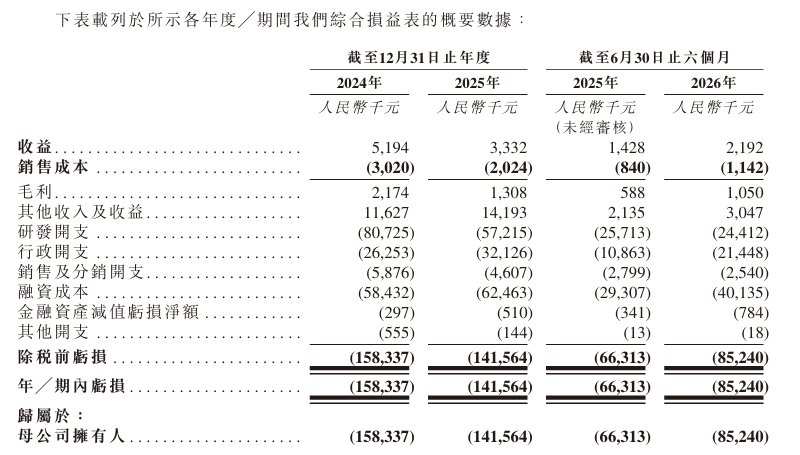
For the years 2024 and 2025, and for the six months ended June 30, 2026, the company generated revenue of approximately RMB 5.194 million, RMB 3.332 million, and RMB 2.192 million, respectively.
Gross Profit
For the years 2024 and 2025, and for the six months ended June 30, 2026, the company recorded gross profits of approximately RMB 2.174 million, RMB 1.308 million, and RMB 1.050 million, respectively.
Loss for the period
For the years 2024 and 2025, and for the six months ended June 30, 2026, the Company recorded net losses of approximately RMB 158 million, RMB 142 million, and RMB 85.24 million, respectively.
Industry Overview
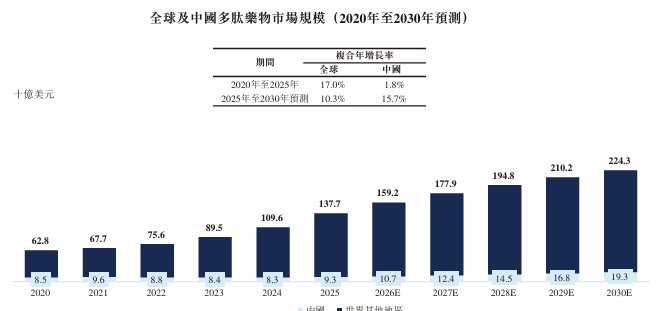
The global peptide drug market has continued to expand, growing from USD 62.8 billion in 2020 to USD 137.7 billion in 2025. The market is projected to grow at a compound annual growth rate (CAGR) of 10.3% from 2025 to 2030, reaching USD 224.3 billion by 2030.
In 2025, diabetes accounted for the largest share of the global peptide drug market by therapeutic area, at 59.6% (USD 82.1 billion), followed by weight management at 24.8% (USD 34.1 billion), oncology at 8.2% (USD 11.3 billion), other therapeutic areas at 5.9% (USD 8.1 billion), and peptide anti-infectives at 1.5% (USD 2.0 billion).
The Chinese peptide drug market grew from USD 8.5 billion in 2020 to USD 9.3 billion in 2025, and is expected to grow at a CAGR of 15.7% from 2025 to 2030, reaching USD 19.3 billion by 2030. In 2025, diabetes accounted for the largest share of the Chinese peptide drug market by therapeutic area at 47.4% (USD 4.4 billion), followed by growth and development (15.9%, USD 1.5 billion), immunomodulation (10.4%, USD 1.0 billion), weight management (8.3%, USD 0.8 billion), cardiovascular diseases (6.3%, USD 0.6 billion), other therapeutic areas (4.8%, USD 0.4 billion), and neurological disorders (4.3%, USD 0.4 billion), while peptide anti-infectives accounted for 2.7% (USD 0.2 billion).
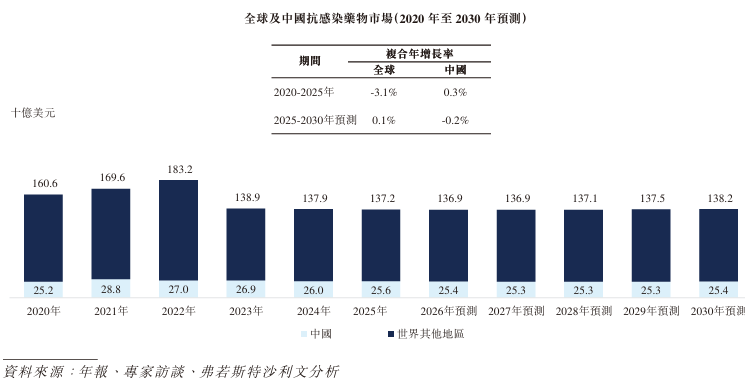
The global anti-infective drug market was valued at USD 137.2 billion in 2025 and is projected to reach USD 138.2 billion by 2030. The recent decline stems from a sharp drop in demand for anti-COVID-19 drugs and vaccines in the post-pandemic era, as well as generic competition triggered by patent expiries for HIV medications. The global anti-infective drug market exhibits similar phased dynamics, primarily driven by pandemic-related demand fluctuations and long-term structural market characteristics.
The negative compound annual growth rate observed between 2020 and 2025 was mainly attributable to the high base effect resulting from increased use of anti-infective drugs during the COVID-19 pandemic, followed by a normalization of demand as the pandemic subsided. From 2025 to 2030, the market is expected to remain relatively stable, as it continues to be dominated by generic antibiotics facing sustained pricing pressure, while innovative anti-infective therapies have yet to achieve large-scale commercialization.
In China, the market reached USD 25.6 billion in 2025 and is expected to decline slightly to USD 25.4 billion by 2030. This contraction is driven by a pandemic-related decrease in patient visits, price reductions resulting from multiple rounds of volume-based procurement (VBP), and stricter antibiotic regulatory policies. The historical growth pattern of China's anti-infective drug market has been shaped by both policy-driven controls and pandemic-related demand fluctuations. In recent years, the state has intensified efforts to combat antimicrobial resistance (AMR), including the implementation of antibiotic stewardship policies, leading to more rational and restricted use of antimicrobial agents. Furthermore, the inclusion of key antibacterial drugs such as ceftazidime and vancomycin in the VBP program has led to significant price declines, exerting downward pressure on market value. Additionally, the use of anti-infective drugs remained at elevated levels during the COVID-19 pandemic, and the subsequent normalization of demand post-pandemic has resulted in a decline from this high base.
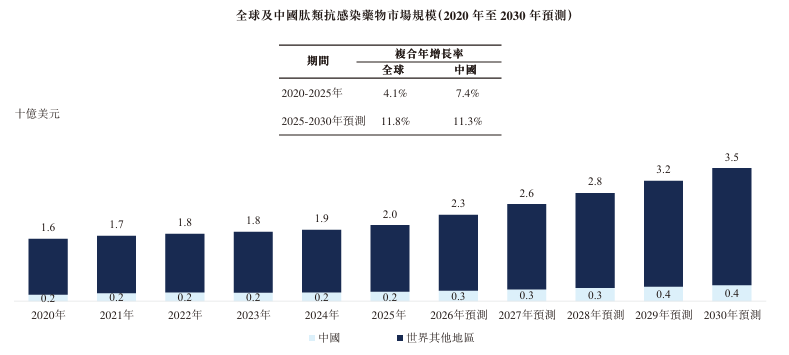
In 2025, the global peptide anti-infective drug market reached USD 2.0 billion. Driven by the increasingly severe global challenge of antimicrobial resistance (AMR) and the urgent need for last-line defenses against multidrug-resistant pathogens, the market is expected to expand to USD 3.5 billion by 2030, representing a CAGR of 11.8%. Continuous breakthroughs in peptide synthesis and stabilization technologies have further underpinned this robust growth; these technologies significantly broaden the therapeutic window of these highly effective drugs and improve patient compliance, enabling them to capture a larger share of the global anti-infective sector.
Meanwhile, the Chinese market for peptide anti-infective drugs was valued at USD 0.2 billion in 2025. As China shifts its focus toward high-quality domestic innovation and clinical value-oriented healthcare, this market is projected to grow to USD 0.4 billion by 2030, at a CAGR of 11.3%. This upward trend is driven by the deeper penetration of innovative therapies under the National Reimbursement Drug List (NRDL) and a strategic emphasis on import substitution. As domestic companies overcome technical barriers to large-scale peptide production, the Chinese market is poised to transition from reliance on conventional antibiotics to an era of high-barrier, precise peptide-based anti-infective drugs.
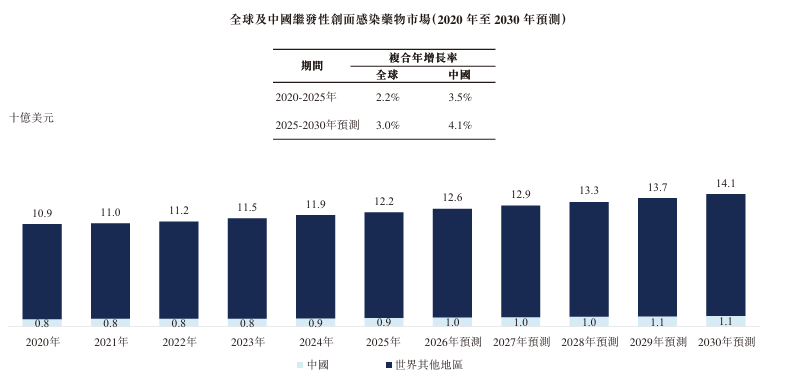
The global market for drugs treating secondary wound infections reached USD 12.2 billion in 2025 and is expected to expand to USD 14.1 billion by 2030, at a CAGR of 3.0%. This growth is primarily attributed to the rising global prevalence of metabolic diseases, particularly diabetes, which often leads to chronic complications such as diabetic foot ulcers that are highly susceptible to persistent secondary infections. Furthermore, the increasing volume of complex surgical procedures, along with a growing clinical emphasis on infection control protocols in postoperative care, is driving sustained demand for advanced anti-infective therapies aimed at accelerating wound healing and preventing systemic complications.
In China, the market for pharmaceuticals treating secondary wound infections reached USD 900 million in 2025 and is projected to grow to USD 1.1 billion by 2030, representing a compound annual growth rate (CAGR) of 4.1%. This upward trend is primarily driven by demographic shifts associated with an aging population, which have increased the clinical burden of non-healing wounds and compromised immune responses. Further market expansion has been facilitated by the structural optimization of clinical treatment guidelines and improved accessibility of innovative anti-infective drugs through the National Reimbursement Drug List (NRDL). As healthcare infrastructure continues to modernize, the market is visibly shifting towards specialized wound management solutions that offer superior clinical efficacy compared to traditional therapies.
Board Information
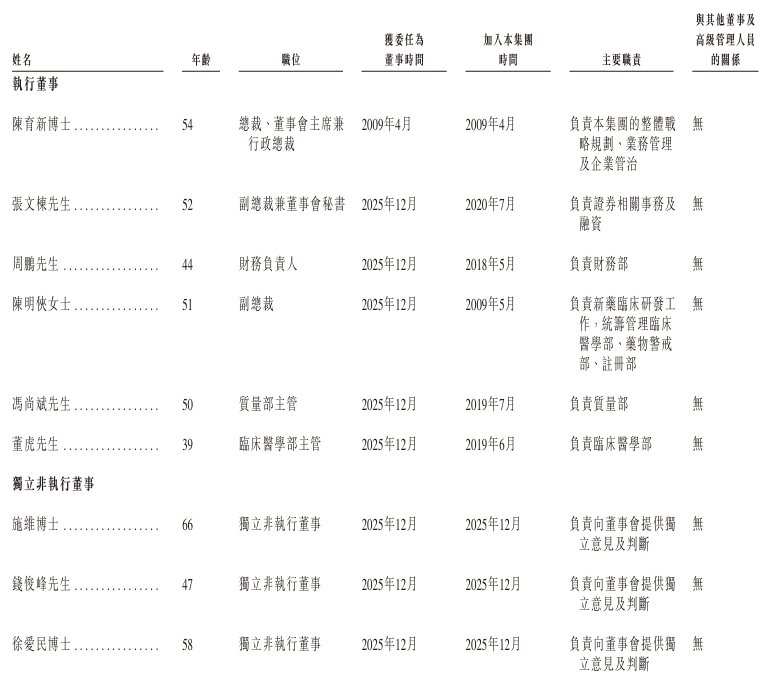
Following the [Listing], the Board of Directors will comprise nine members, including six executive directors and three independent non-executive directors. The term of office for the Company's directors is three years, and they are eligible for re-election upon expiry of their term.
Equity Structure
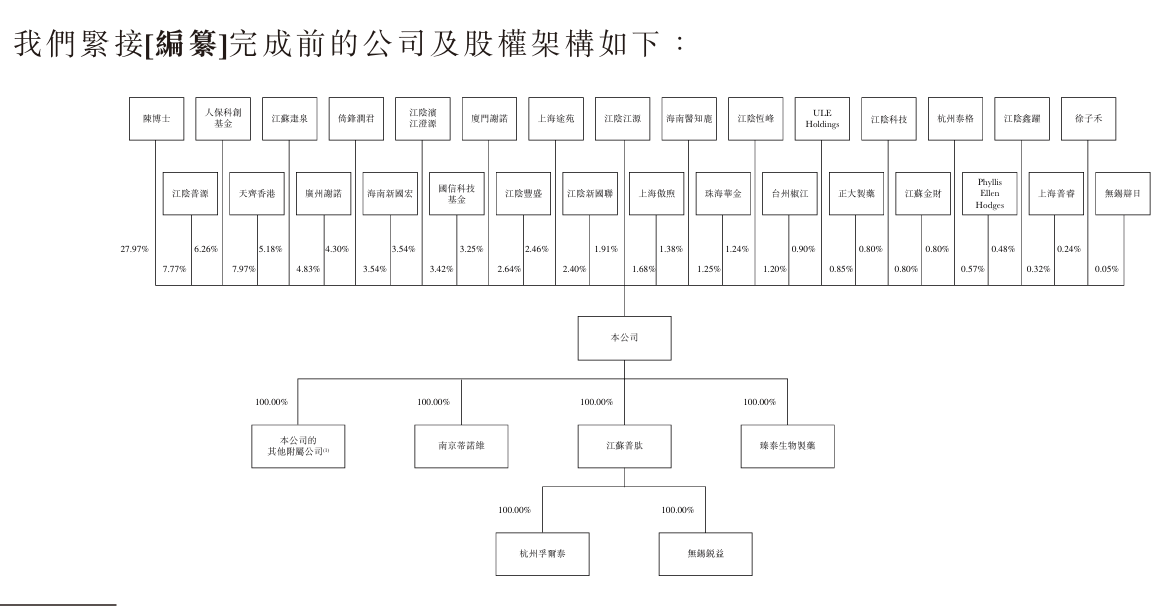
As of the Latest Practicable Date, Dr. Chen Yuxin, the Chairman of the Board, Executive Director, Chief Executive Officer, and President of the Company, was entitled to exercise voting rights in respect of (i) approximately 27.97% of the total issued shares of the Company held directly by him; and (ii) approximately 7.77% of the total issued shares of the Company held directly by Jiangyin Puyuan (of which Dr. Chen is the executive and general partner). Pursuant to the partnership agreement of Jiangyin Puyuan, all management and voting rights of Jiangyin Puyuan are vested in its executive partner and general partner, Dr. Chen. Accordingly, as of the Latest Practicable Date and immediately prior to the completion of the [Listing], Dr. Chen controlled approximately [35.74]% of the total issued share capital of the Company (directly and indirectly through Jiangyin Puyuan) and, together with Jiangyin Puyuan, constituted a group of controlling shareholders of the Company.
Intermediary Team
Sole Sponsor: CITIC Securities (Hong Kong) Limited;
Legal Advisors to the Company: Jia Yuan Law Offices for Hong Kong and U.S. laws; AllBright Law Offices for PRC laws;
Legal Advisors to the Sole Sponsor: Sullivan & Cromwell LLP (Hong Kong) for Hong Kong and U.S. laws; Commerce & Finance Law Offices for PRC laws;
Reporting Accountant and Independent Auditor: Ernst & Young;
Industry Consultant: Frost & Sullivan (Beijing) Consulting Co., Ltd. Shanghai Branch;
Compliance Advisor: Kaisheng Capital Limited.