
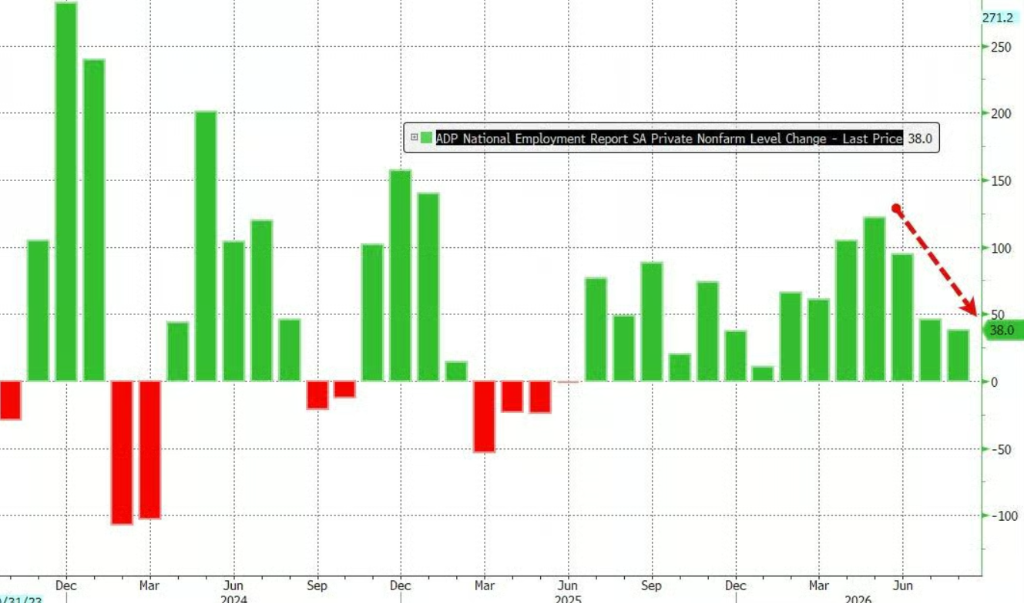
The U.S. labor market continues to cool, with ADP reporting only 37,000 new private-sector jobs in August—the lowest level since January this year—while wage growth also weakened. The soft data led markets to lower expectations for Friday’s non-farm payrolls report and reignited debate over the Federal Reserve’s policy path, shifting focus to the trade-off between employment objectives and inflation control.
U.S. private sector job growth slowed further in August, marking the weakest monthly performance of the year and reigniting market concerns about a cooling labor market.
According to data released by the ADP Research Institute on Wednesday, the private sector added 37,000 jobs in August, down from the previous figure of 46,000 (with July's initial estimate of 44,000 revised up to 46,000). This represents the lowest monthly increase since January of this year.
 Dr. Nela Richardson, Chief Economist at ADP, stated that "wage growth largely reflects the current uneven hiring landscape," noting that "previously predictable wage growth has been disrupted by demographic shifts, persistent inflation, and the impact of artificial intelligence on employment."
Following the data release, market attention shifted to the Federal Reserve's monetary policy trajectory. The continued sluggishness in job growth has led to diverging expectations regarding further policy tightening. Meanwhile, the official non-farm payrolls report due this Friday is drawing significant attention; markets anticipate an increase of 55,000 non-farm jobs in August, potentially reversing the decline of 23,000 seen in July.
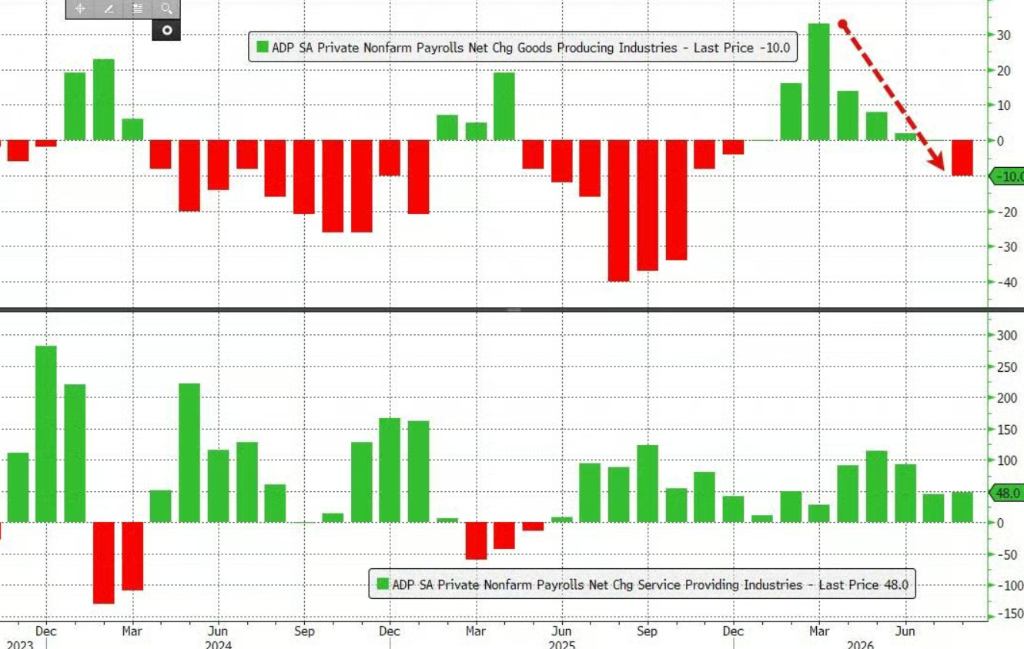
Sectoral divergence is pronounced, with manufacturing continuing to shed jobs.
August job growth showed clear structural divergence. The education and health services sector led gains, while leisure and hospitality, as well as construction, also recorded solid growth. In contrast, manufacturing, professional services, and information sectors experienced layoffs.
In terms of firm size, job additions this month were primarily concentrated in large enterprises with 500 or more employees. The goods-producing sector overall reduced employment, marking the largest decline since October of last year.
Wage growth slows, and the job-switching premium narrows.
Wage data also signaled a cooling trend. According to a report jointly released by ADP and the Stanford Digital Economy Lab, the year-over-year wage growth for job-switchers fell to 7.3% in August, a decline from the previous month, while the year-over-year wage increase for stayers remained unchanged at 4.4%.
Dr. Nela Richardson pointed out that understanding current hiring patterns requires an in-depth analysis of how wage growth accelerates or decelerates across different industries and demographic groups. ADP's wage data now covers 56 major metropolitan areas across the United States and can be disaggregated by demographic characteristics, industry, and firm size.
Wallsh: The labor market remains broadly at full employment
Despite weak monthly data, Federal Reserve officials remain relatively optimistic about the overall state of the labor market. Speaking last week at the annual central bank symposium in Wyoming, Fed Chair Wallsh acknowledged certain localized concerns within the labor market but stated that, on the whole, it remains consistent with full employment.
"When labor supply growth is nearly stagnant, monthly job additions will naturally be low," Wallsh said. "However, overall, most people who wish to work are still able to retain or find jobs."
According to Bloomberg, tighter immigration restrictions, declining birth rates, and an aging population have jointly constrained the growth of the U.S. labor force. Government data also show that the unemployment rate remains near historic lows, which somewhat supports the Fed officials' assessment that the labor market is basically in balance, allowing policy focus to shift more toward curbing inflation.
Friday's non-farm payrolls report serves as a key validation window
ADP data has historically been viewed as a leading indicator for the official non-farm payrolls report, although there is no stable linear correlation between the two. The market expects the August non-farm payrolls report, to be released on Friday, to show an increase of 55,000 jobs, marking a significant rebound from the decline of 23,000 in July.
If the official data also show sluggish growth, it will further heighten uncertainty regarding the Fed's policy path. Against the backdrop of persistently weak employment data, whether the Fed will continue to tighten policy to uphold its anti-inflation credibility will become a core issue for the market.
 Stay ahead of major financial events and spot investment opportunities early! Open Futubull > Market > US Stocks >Economic Calendar/Featured Macro Data, seize the investment opportunity ahead of the curve!

Editor/lambor