$S&P 500 Index (.SPX.US)$Rose 1.07%, marking the largest single-day gain since August 4.$Philadelphia Semiconductor Index (.SOX.US)$Traded in a V-shape, closing with a slight gain of 0.11%.$Tesla (TSLA.US)$Surged 5.42%, leading the gains among the Mag 7. In optical communications,$Ciena(CIEN.US)$Fell 10.36%. Following earnings,Snowflake (SNOW.US)Soared 16.55%,$Broadcom (AVGO.US)$Closed down 2.74%.$Bitcoin (BTC.CC)$Jumped 5.33%, hitting the highest closing level since May 14.
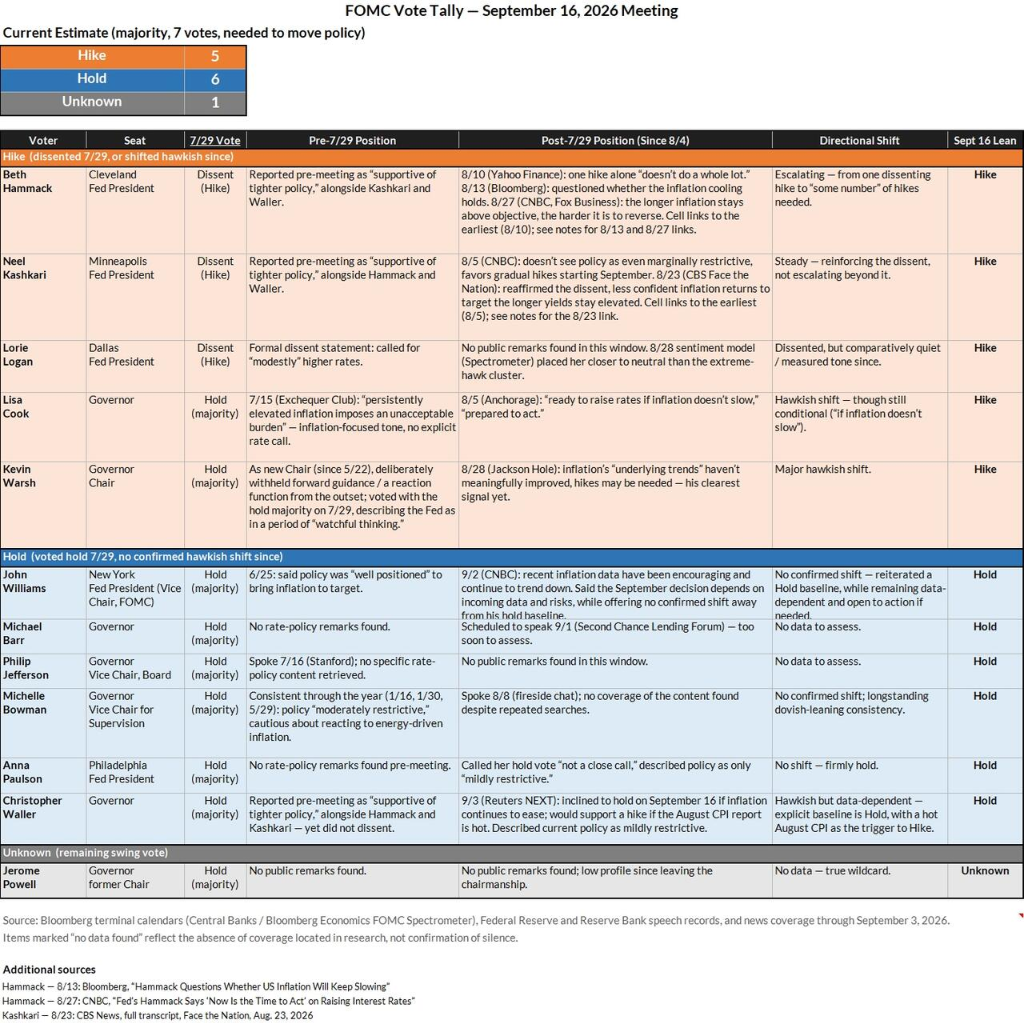
Federal Reserve Governor Waller stated that recent data finally shows signs of slowing inflation. If this trend continues in the coming two weeks, he would lean toward supporting keeping the federal funds rate target in the current range of 3.50% to 3.75%. These remarks quickly cooled expectations for a September rate hike, sending U.S. stocks, Treasuries, gold, and Bitcoin higher.
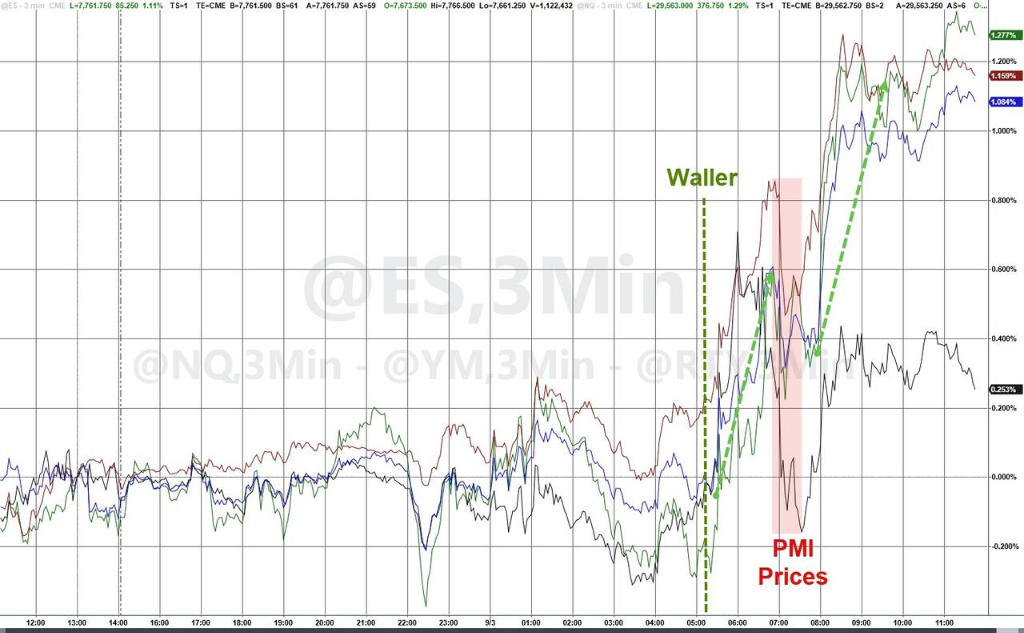
The S&P 500 Index rose 1.07% to close at 7,748.27 points, marking its largest single-day gain since August 4;$Nasdaq Composite Index (.IXIC.US)$Rose 1.40%, while the Dow Jones Industrial Average gained 1.18%. The three major indices closed higher for the second consecutive trading day.
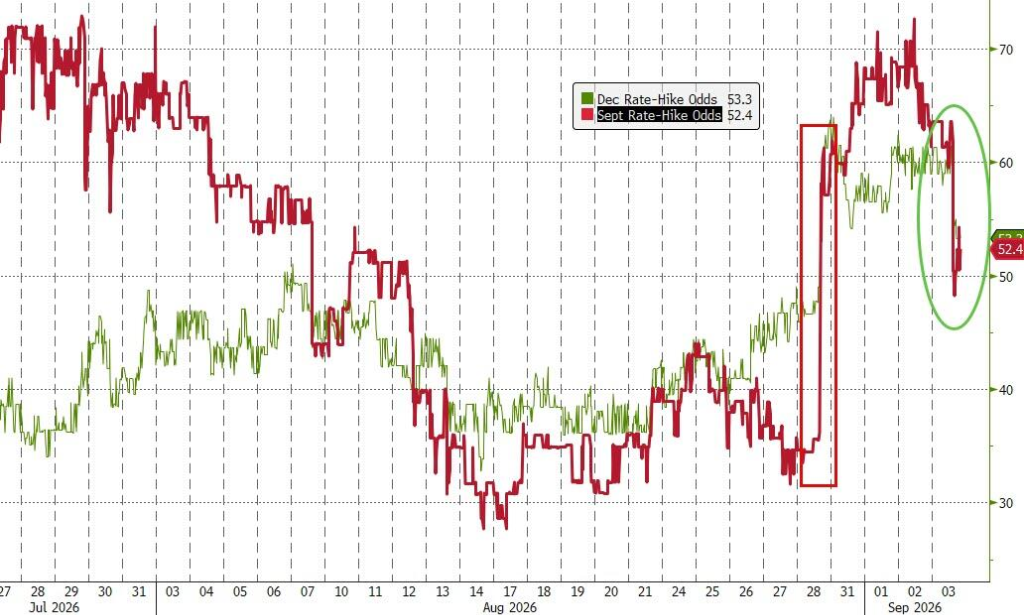
 CME Group's FedWatch tool showed that the probability of a 25-basis-point rate hike in September fell to 52% from about 63% on the previous trading day, while Polymarket's figure was even lower at just 41%.
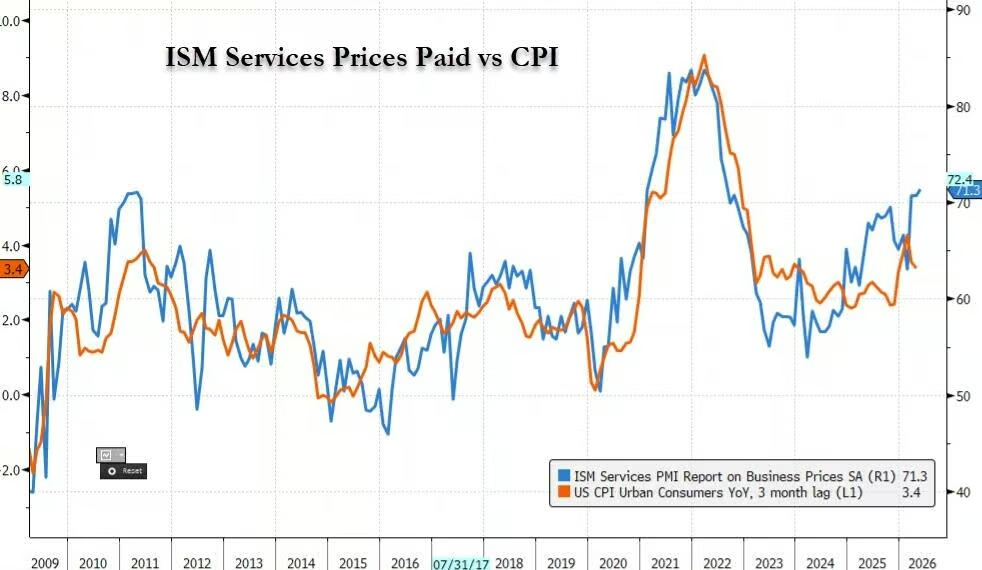
Inflationary pressures have not subsided alongside fading rate-hike expectations. The ISM Services Prices Paid Index rose to 72.6 in August, the highest level since August 2022. Market attention is focused on the August nonfarm payrolls report to be released on September 4, which serves as the first key data point in what Waller referred to as the "coming two weeks of data."
Rate-hike bets collapse as U.S. stocks post largest single-day gain since August 4
Waller offered three reasons for his stance. He noted that actual core inflation performance is better than the headline core data suggests, with roughly half of the increase in July's core Personal Consumption Expenditures (PCE) price index attributed to non-market service prices; he also no longer views elevated energy prices and tariffs as persistent sources of inflationary pressure.
However, he left room for flexibility, stating that the next decision will largely depend on the August inflation data to be released next week; if the data runs hot, he would consider supporting a rate hike.
Jim Bianco of Bianco Research wrote that following Waller's comments, the voting lineup for the September meeting stands at six votes for holding rates steady and five for raising them, with one vote still undecided. That remaining vote belongs to current Governor and former Federal Reserve Chair Powell, who could become the key deciding figure.
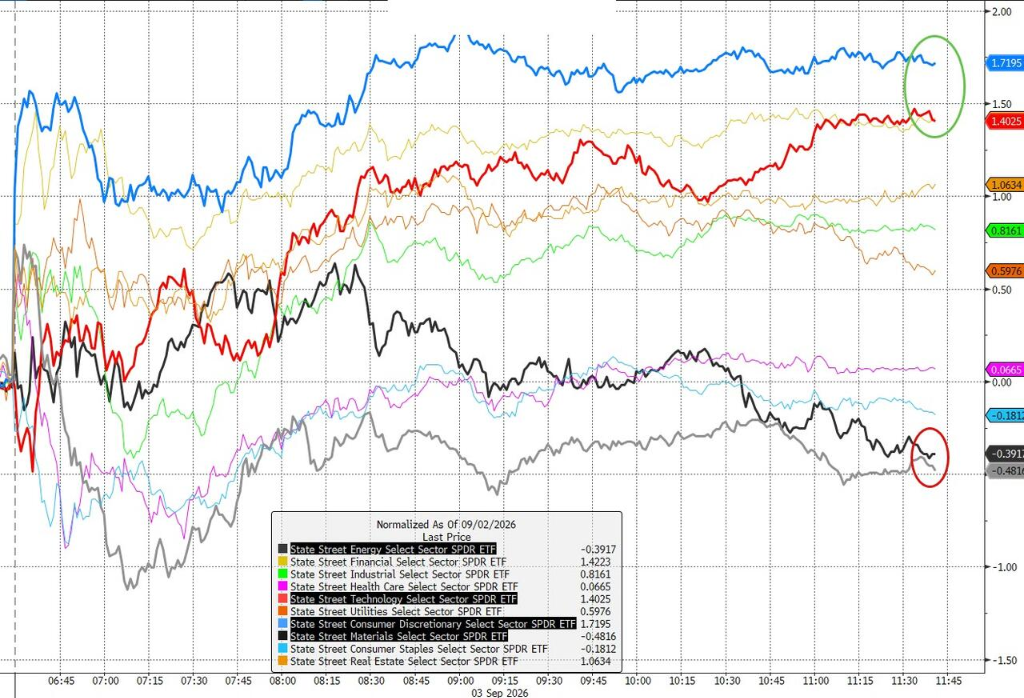
On Thursday, the Dow Jones Industrial Average rose by 624.16 points. By sector, the Technology Select Sector rose 1.30%, Utilities gained 0.84%, while Energy was one of the few sectors to decline, falling 0.69%. Small-cap stocks underperformed,$Russell 2000 Index (.RUT.US)$Rose 0.51%. The VIX fell 5.92% to 14.30.
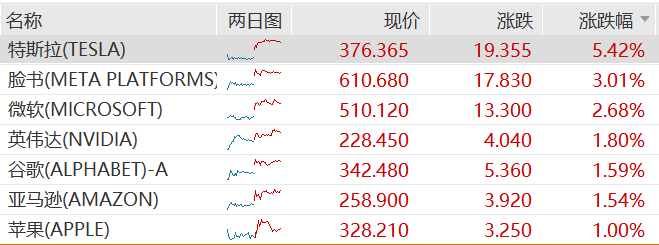
At the individual stock level, large-cap technology stocks generally rose. Tesla gained 5.42%, Meta rose 3.01%,$Microsoft (MSFT.US)$rose 2.68%, Google gained 1.59%,$Amazon (AMZN.US)$rose 1.54%, Apple gained 1.00%,NVIDIA (NVDA.US)rose 1.78%.
The upward momentum in Bitcoin also drove related concept stocks higher. Online brokerages $Robinhood(HOOD.US)$surged 16.57%, Strategy, the largest corporate holder of Bitcoin, jumped 17.56%, cryptocurrency exchanges$Coinbase(COIN.US)$gained 10.14%,$Canaan (CAN.US)$soared 27.82%.
Innovative drug companies$Summit Therapeutics (SMMT.US)$Rose 17.33%, driven by its partner$Akeso Biologics (09926.HK)$achieving positive results in the Phase III study of ivonescimab;$Hutchmed (HCM.US)$rose 17.19%, boosted by an innovative drug licensing deal with GSK valued at up to approximately $1.3 billion.
Electric vehicle charging network operator$ChargePoint (CHPT.US)$surged 74.95%, primarily due to quarterly revenue exceeding guidance, gross margin hitting a record high, and a significant narrowing of losses.
AI server concept stock$HPE Inc. (HPE.US)$opened more than 10% lower but rallied throughout the session to close up 5.04%. The company’s quarterly results released on Wednesday exceeded expectations, with both revenue and profit surpassing market estimates, and it raised its full-year guidance for fiscal years 2026 and 2027.
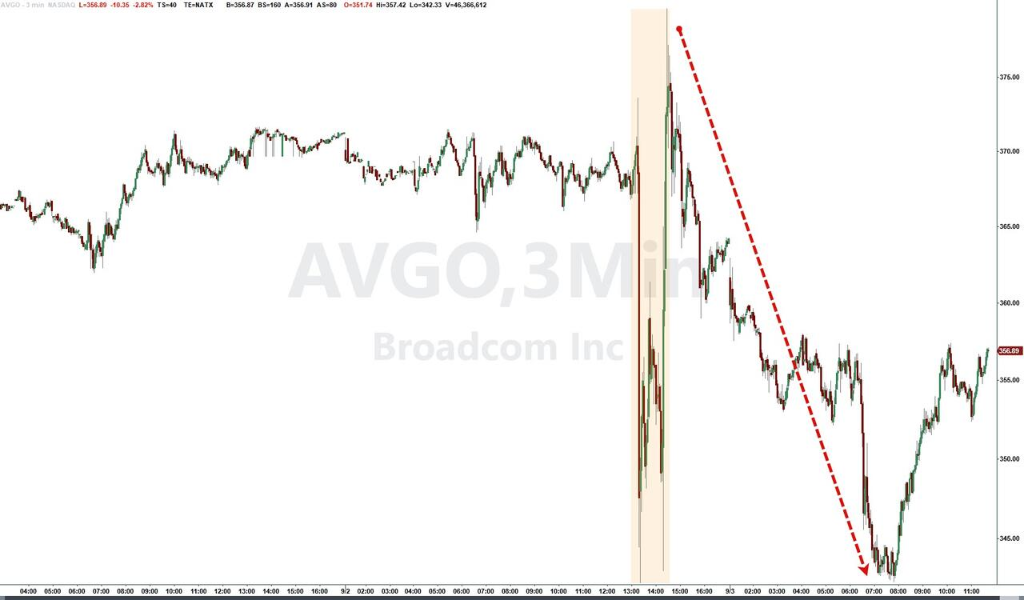
Meanwhile, Broadcom fell 2.74% on Thursday. The company's third-quarter earnings exceeded Wall Street expectations, but its fourth-quarter guidance failed to meet market expectations for high growth in its AI business. Ciena, a stock associated with optical communications, dropped 10.36%; although its earnings beat expectations, its forward guidance and gross margin did not satisfy the market's high expectations.
$Nasdaq Golden Dragon China Index (.HXC.US)$Closed down 0.81% on Thursday. As of the close,$Alibaba (BABA.US)$unchanged,$PDD Holdings (PDD.US)$down 0.75%,$NetEase (NTES.US)$down 1.63%, JD.com down 0.32%,Baiduup 1.31%, Trip.com down 5.11%,$Li Auto(LI.US)$up 0.42%,$Bilibili (BILI.US)$up 0.32%.
Snowflake's surge rewrites the software narrative, while Broadcom is sold off due to insufficient guidance
High-beta U.S. stocks surged on Thursday. Beyond Federal Reserve Governor Waller signaling a relatively dovish policy stance,$Dell Technologies (DELL.US)$Snowflake also reported better-than-expected earnings, reinforcing market confidence in AI infrastructure and enterprise AI demand.
Snowflake rose 16.55%, hitting an all-time high of $384.56 during intraday trading. Second-quarter revenue reached $1.547 billion, a 35% year-on-year increase, with product revenue—a better reflection of actual usage—amounting to $1.492 billion, up 37% year-on-year.
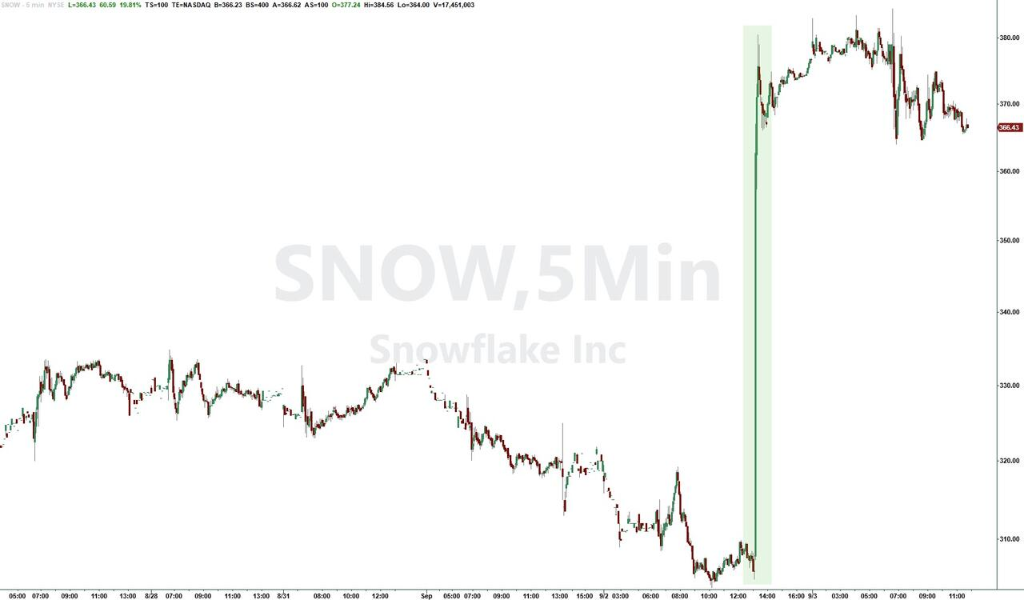
This marks the third consecutive quarter of accelerating product revenue growth. The company raised its full-year product revenue guidance from $5.84 billion to $6.07 billion, corresponding to an increase in the growth rate from 31% to 36%.
Beneficiaries of the AI infrastructure boom$Bloom Energy (BE.US)$Tesla shares rose nearly 10%, and climbed almost 8% ahead of its Cybercab launch event. Bitcoin holders and cryptocurrency-related stocks such as Strategy surged by double digits.
OpenAI officially released the GPT-6 Astra model, further fueling the narrative around AI spending. Goldman Sachs' US Broad AI Index outperformed the non-AI segment of the S&P 500, with gains of 1.24% and 0.64% respectively on the day.$Palantir (PLTR.US)$Rose 7.71%,$Oracle (ORCL.US)$Rose 5.69%,$Salesforce (CRM.US)$Rose 2.92%.
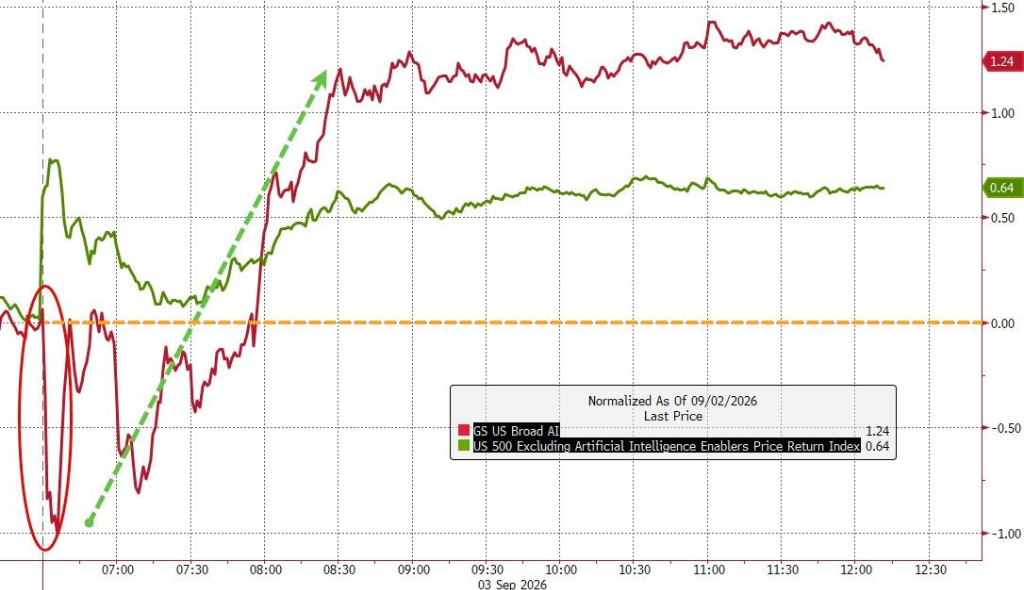
However, the benefits of the AI trade were not evenly distributed. Broadcom's financial report showed that although third-quarter AI semiconductor revenue surged 221% year-on-year and overall results exceeded expectations, its fourth-quarter revenue guidance was slightly below market expectations, and AI revenue guidance was only marginally above expectations. Consequently, its stock price fell nearly 6.8% at one point during the session, finally closing down 2.74%.
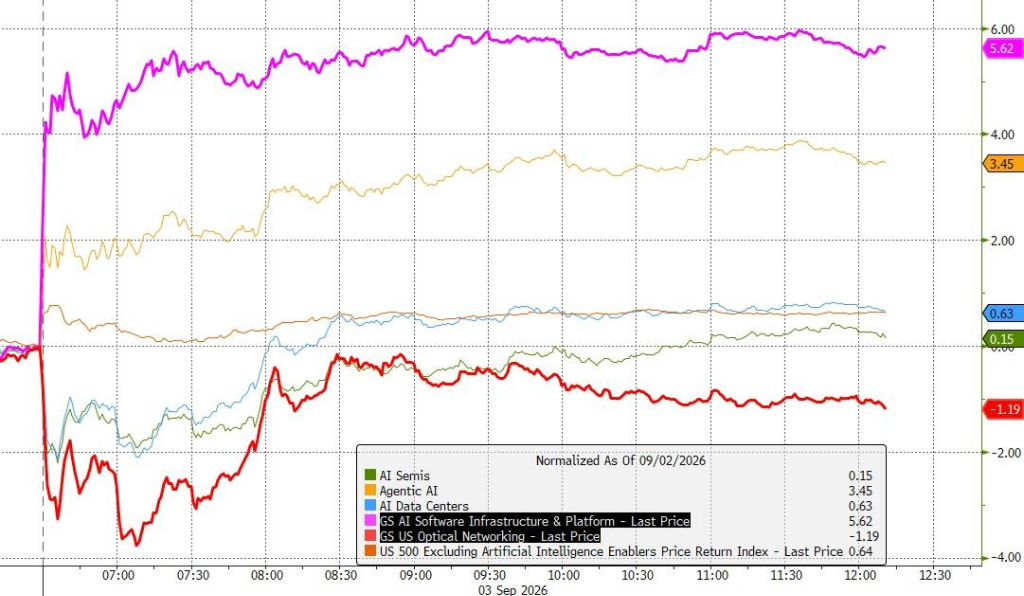
Rich Privorotsky of Goldman Sachs believes that valuation peaks may have already been set during the second-quarter rebound. The market now needs to prove whether the durability of AI spending can outweigh economic compression. Broadcom has validated the demand side, and Snowflake has validated the downstream application side; the question is whether this is sufficient to restart a round of valuation expansion.
Divergence continued within the semiconductor sector. The Philadelphia Semiconductor Index initially fell 2.36% but recovered losses by the end of the session, closing with a slight gain of 0.11%. NVIDIA rose 1.78%, and Micron Technology increased by 0.22%.
The storage sector saw deeper declines at the open, with Seagate and$Western Digital (WDC.US)$falling more than 5% intraday before closing down 1.23% and 1.63% respectively. Ciena, in optical communications, dropped 10.36%, making it one of the biggest decliners among tech stocks for the day.
Short-end yields lead the rally while the long end remains stagnant; the bond market sets a speed limit for equities.
U.S. Treasury prices rose on the day, but gains were concentrated in the short end, which is more sensitive to policy rates.
The 10-year yield fell 3.4 basis points to 4.761%, dipping as low as 4.732% intraday before closing well above its daily low. The 2-year yield stood at 4.336%, and the 30-year yield at 5.2518%. The TLT, which tracks Treasuries with maturities of 20 years or more, rose only 0.15%, indicating that the long end remained virtually unchanged.
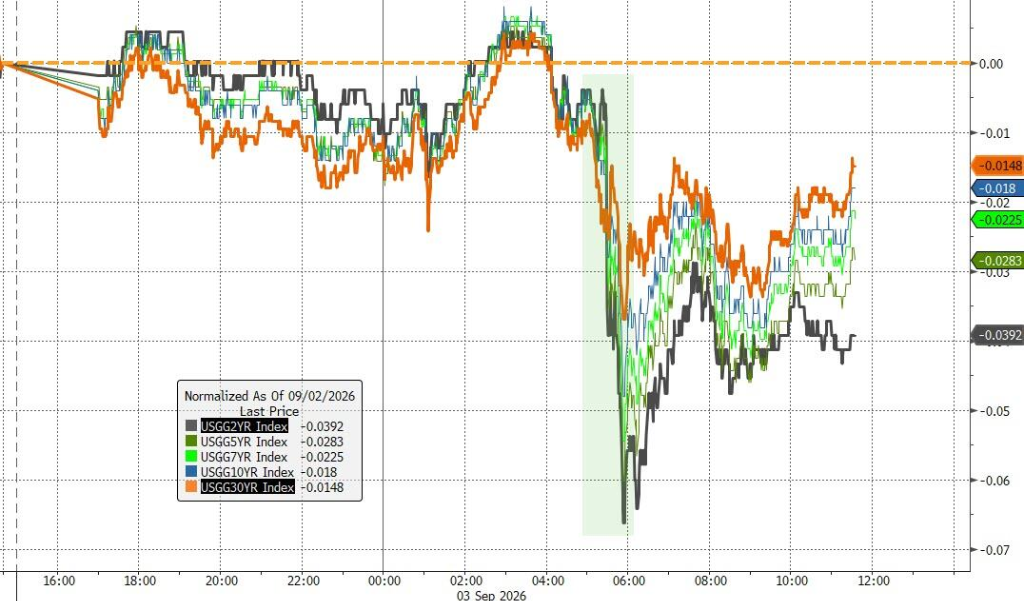
Pressure on the long end stems from fiscal concerns and supply dynamics. Di Galoma of U.S. broker Mischler noted that despite weak employment data, gains in the bond market were limited because the resumption of U.S. trading after the Labor Day holiday next week will see a concentrated auction of 3-year, 10-year, and 30-year Treasuries, alongside a rebound in corporate bond issuance.
A chart comparison by Zerohedge shows the significant divergence between short- and long-term bond yields since Bessent introduced the U.S. Treasury buyback policy, with the 20-year Treasury yield rising sharply while the 30-year yield remained largely flat.
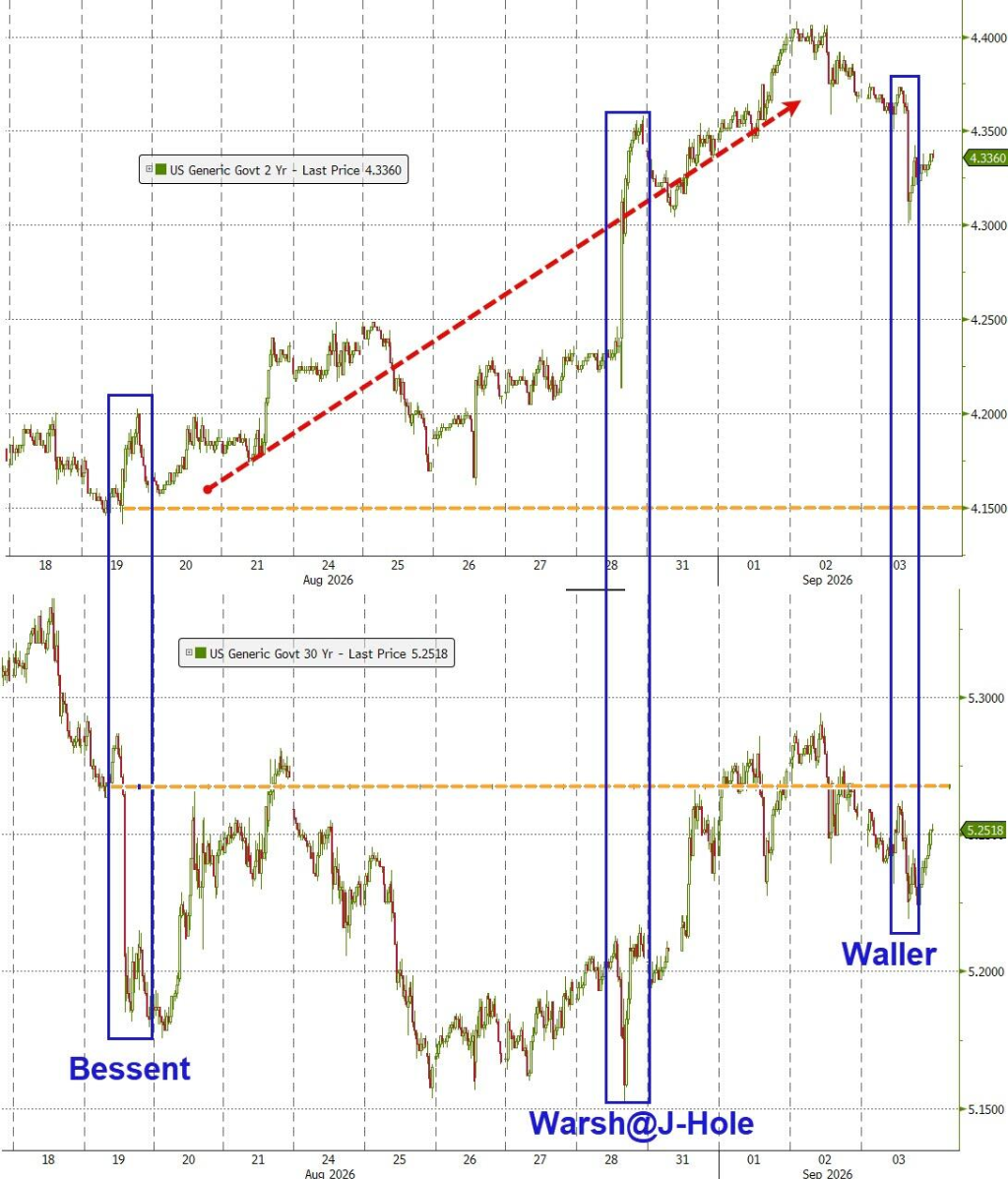
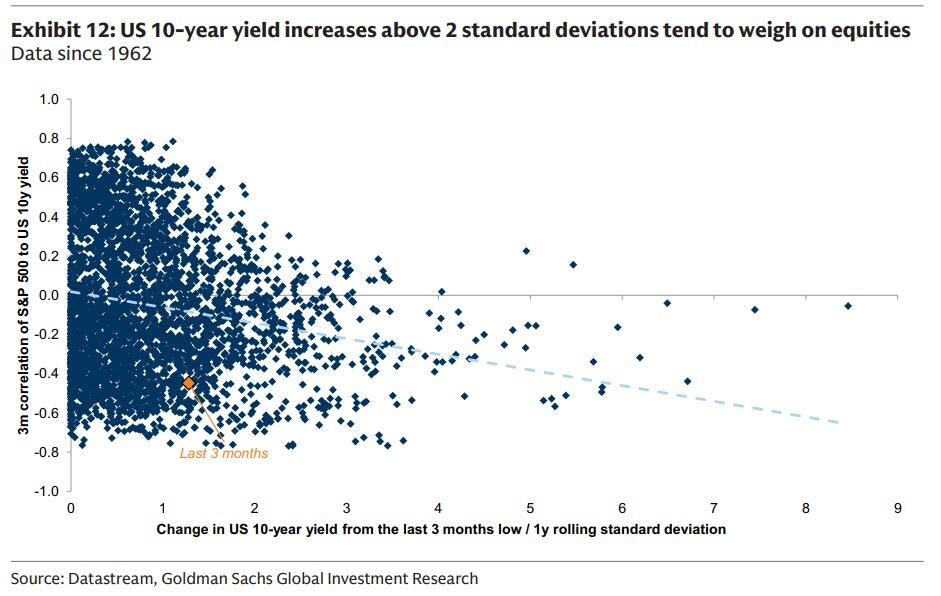
Christian Mueller-Glissmann, Chief Strategist at Goldman Sachs, wrote in a report on the day that the bond market has become a speed limiter for equities. Long-duration bonds are facing triple pressure from fiscal worries, competition for capital from AI investments, and sticky inflation, thereby compressing the room for central bank easing.
He added that the equity market's reaction to rising yields depends on the cause, speed, and starting point of the yield movement. A rise exceeding two standard deviations within three months causes greater harm to stocks.
The mortgage market has already felt the transmission effects.$Freddie Mac (FMCC.US)$Data shows that the 30-year fixed mortgage rate rose to 6.71%, the highest level since July 2025.
Krimmel from Realtor.com stated that August was the month when higher mortgage rates truly caught up with housing demand, with pending home sales contracts falling 0.2% year-on-year, marking the first negative reading since November 2025.
The yen flash-crashed to intervention levels,$U.S. Dollar Index (USDindex.FX)$Fell below 99
The yen was the focal point of the foreign exchange market on the day. The USD/JPY pair fell 1.83% to close at 155.759, sliding from an intraday high of 158.97 to a low of 155.29. Over two trading sessions, the cumulative decline reached 2.96%, marking the largest two-day drop since August 2024.
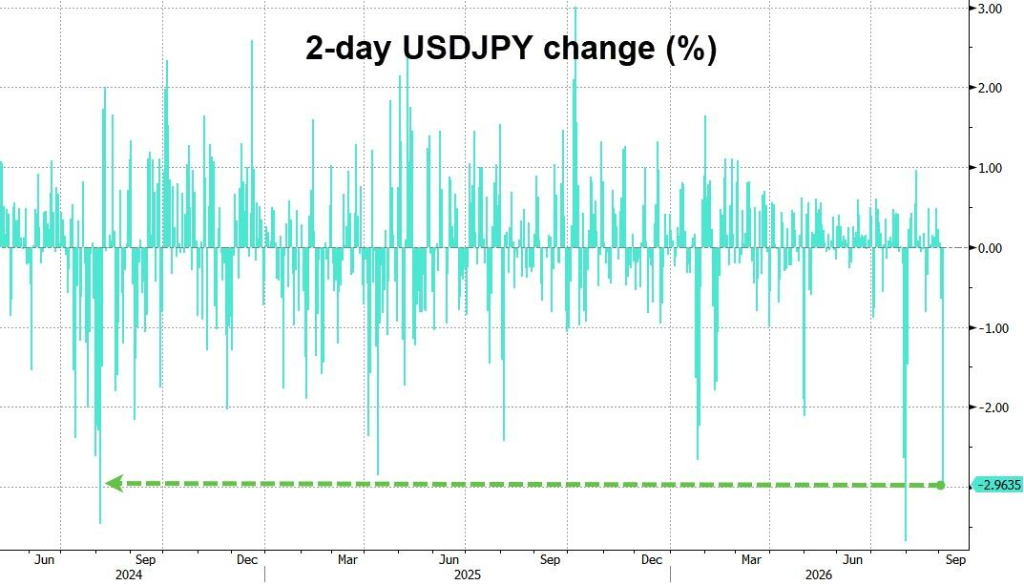
Market scrutiny has turned toward the Bank of Japan (BOJ), after Policy Board member Hajime Takada suggested this week the possibility of implementing unconventional or consecutive interest rate hikes. Overnight Index Swaps (OIS) have now fully priced in a 25-basis-point rate hike at the BOJ’s September meeting.
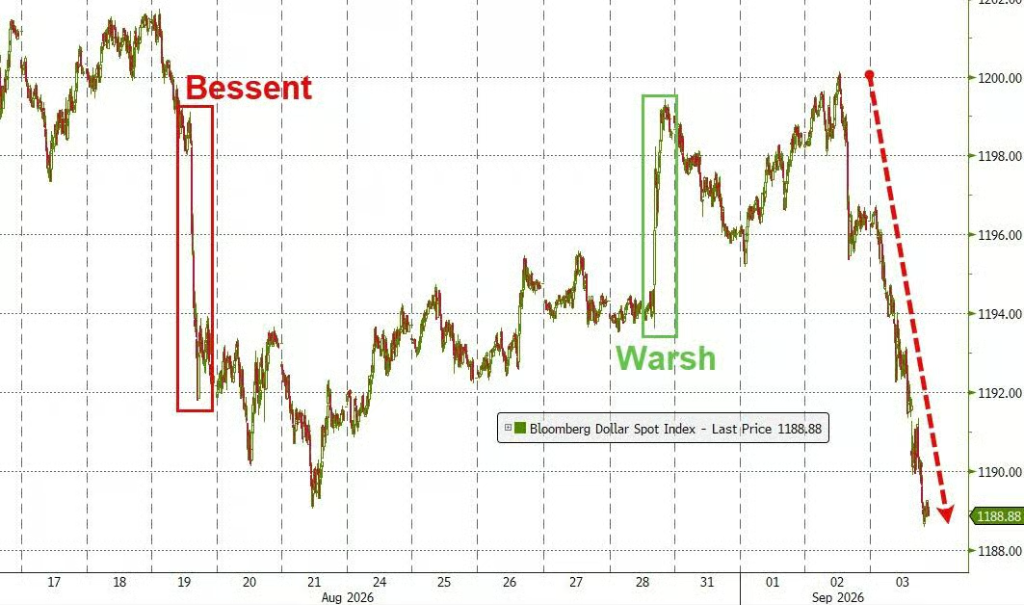
U.S. Treasury Secretary Bessent previously stated that he expects BOJ Governor Kazuo Ueda to take the right steps regarding monetary policy, describing recent yen volatility as quite manageable. He also defended his support for the yen, arguing that extreme fluctuations in the currency could transmit upward pressure to U.S. interest rates.
Traders remain divided on whether intervention occurred. Marito Ueda of SBI FX Trade in Japan stated that he does not believe this was an instance of intervention or a rate check, but noted that the market is highly cautious around the 160 level.
Nathan Thooft of Manulife Investment Management believes this round of moves indicates that positioning has become quite sensitive, with the market interpreting signals that authorities desire a stronger yen.
The U.S. Dollar Index fell 0.58% to 98.95, briefly dipping below 99 during the session. The EUR/USD pair rose 0.30% to 1.1626.
Gold breaks through $4,500; Bitcoin surges to $81,000; oil prices remain elevated while diesel hits a four-year high.
Gold has been the primary beneficiary of the reversal in interest rate expectations. Spot gold closed at $4,491.85 per ounce, up 2.37%, after briefly surpassing the $4,500 mark and reaching a high of $4,510.97. This follows a session where gold prices were at their lowest level since August 7.
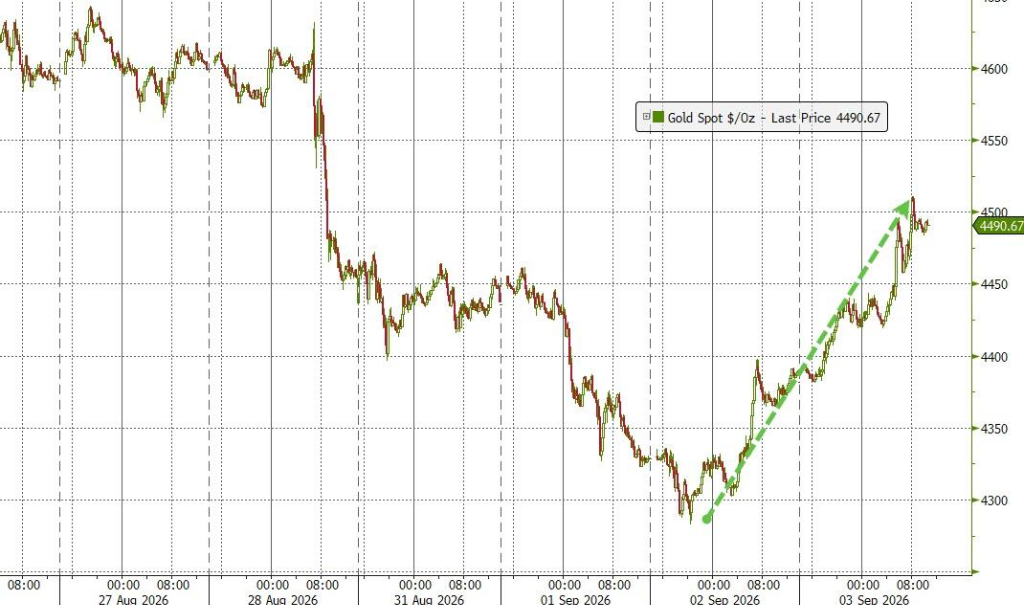
Spot silver rose 2.52% to $66.79, hitting an intraday high of $67.32. Bob Haberkorn, Senior Market Strategist at StoneX, noted that traders are repositioning to bet on a more dovish stance from the Federal Reserve.
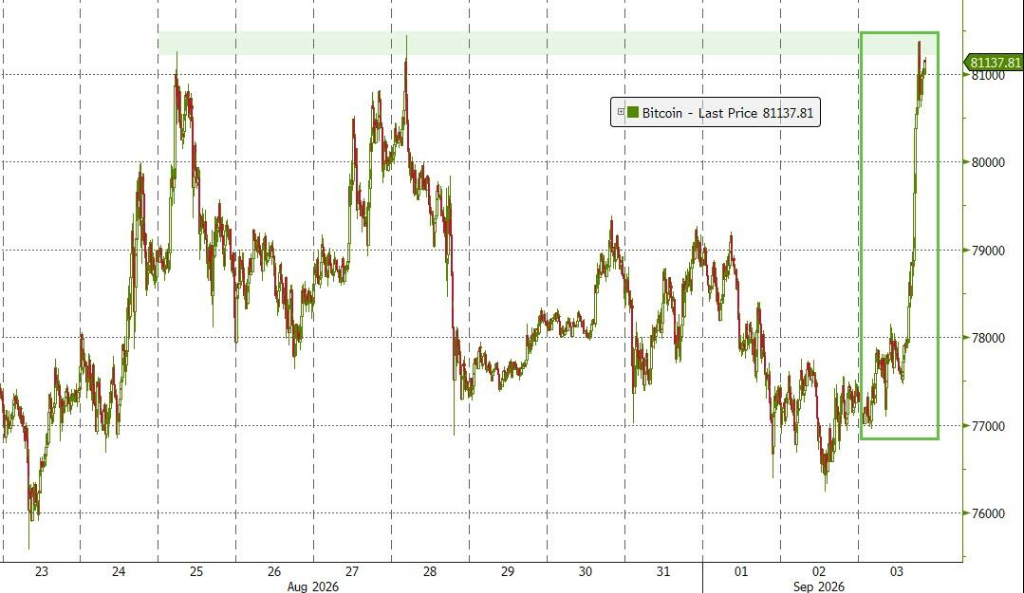
Bitcoin surged 5.33% to $81,429.53, marking its highest close since May 14. Like tech stocks, Bitcoin is highly sensitive to expectations for interest rates and global liquidity. As bets on rate hikes diminish and the U.S. dollar weakens, capital is flowing back into higher-volatility assets.
Crude oil performance was considerably more subdued. WTI crude rose overnight to a high of $93.13 before retracing, hitting an intraday low of $89.60 and settling at $91.30, up 0.32%; Brent crude settled at $95.52, down slightly by 0.12%.
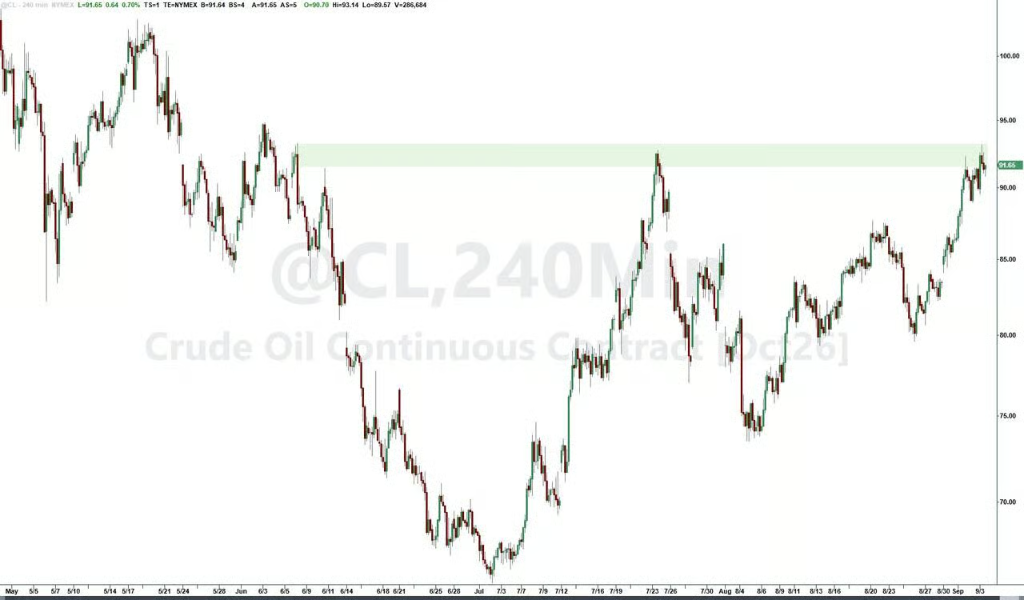
Saudi Aramco set the official selling price for October shipments of Arab Light crude to the U.S. at a premium of $4.60 per barrel over Argus Sour Crude, leading the market to conclude that tightness in physical supplies is less severe than previously anticipated.
Ryan McKay, Senior Commodity Strategist at TD Securities, believes that Iran will not relinquish control over the Strait of Hormuz, keeping the probability of further escalation elevated.
The tight supply situation for refined oil products has not eased.$ING Groep (ING.US)$Analysts wrote in their report that the escalation of tensions in the Middle East has dashed hopes for a recovery in refined oil product flows, keeping the market under strain.
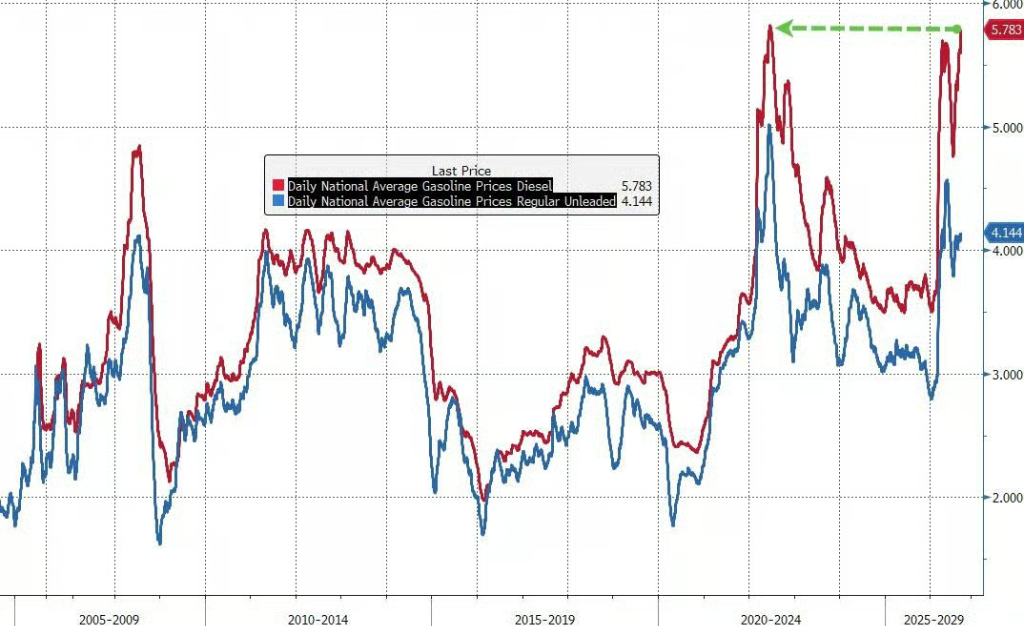
Data from the American Automobile Association showed that the national average retail price of diesel rose to $5.783 per gallon on Wednesday, surpassing the wartime peak recorded in April and marking a four-year high, while the average price for regular gasoline stood at $4.144 per gallon.
Company News
[OpenAI Releases GPT-6]
In the early hours of Friday (Beijing time), OpenAI officially released GPT-6 Astra, describing it as "the most intelligent and best-aligned model globally to date." It achieves state-of-the-art performance in computer operation, web browsing, software engineering, cybersecurity, scientific research, and professional workflows.
[NVIDIA N1X Device to Launch in October]
NVIDIA announced on Thursday that the NVIDIA RTX Spark device will begin shipping in October this year. The core selling point of this PC is NVIDIA's N1X chip. Designed to run AI locally, the chip supports up to 128GB of unified memory, and its integrated Blackwell GPU delivers up to one petaflop of floating-point computing power per second.
[NVIDIA to Acquire Hugging Face for $12.9 Billion]
NVIDIA announced it will acquire the open-source AI development platform Hugging Face for $12.93 billion, marking one of the largest acquisitions in the company's history. Approximately $11.9 billion will be paid to Hugging Face shareholders, with an additional equity incentive package of up to $1 billion established for employee retention.
[Volkswagen Plans to Double Layoffs to 100,000 Jobs]
Volkswagen's Supervisory Board unanimously approved the "Future 2030" restructuring plan proposed by CEO Oliver Blume on Thursday. The plan doubles the previously announced job cuts to approximately 100,000 positions and reduces the number of vehicle models by about half.
[Lululemon Lowers Full-Year Performance Guidance Again]
Lululemon shares plunged more than 17% in after-hours trading on Thursday after the company lowered its full-year performance guidance again. It now expects fiscal 2026 revenue to decline by 5%-7% year-over-year, compared to the previous forecast of flat to a 1% decline. Full-year earnings per share are projected at $9.48-$9.73, down from the prior estimate of $10.95-$11.15. Second-quarter revenue fell 4% year-over-year to $2.42 billion, with comparable-store sales declining 9%.
[Smart Ring Manufacturer Oura Files for U.S. IPO, Plans Nasdaq Listing]
Smart ring manufacturer Oura filed for an initial public offering (IPO) with U.S. regulators on Thursday, planning to list on the Nasdaq. Oura primarily monitors health metrics such as heart rate, sleep stages, and activity through its Oura Ring. The company reported net income of $60.8 million for the nine months ended June 30, compared to $1.6 million in the same period last year, while revenue surged 74% to $1.21 billion.
【$Thomson Reuters (TRI.US)$[Cybersecurity Incident Disclosed: Court Data in Multiple U.S. States Affected]
Thomson Reuters disclosed a cybersecurity incident involving its C-Track court case management platform, where unauthorized parties accessed certain files in March of this year. The breach affected courts in 11 U.S. states, the U.S. Virgin Islands, and parts of Canada. Some of the affected court records contained personal information, including names.
Want to select stocks or get a stock diagnosis? Curious about the opportunities and risks in your portfolio? For all your investment questions,Just ask Futubull AI!

Editor/Liam