
U.S. Vice President Vance publicly urged the Federal Reserve again on Thursday, stating that cutting interest rates is the "correct and responsible" choice to address current inflation data, and expressed his "hope for assistance from the Fed." This stance directly conflicts with recent hints from Kevin Warsh, the Fed Chair personally nominated by Trump, who suggested the possibility of raising rates. With less than two weeks remaining until the September 15 FOMC meeting, market expectations regarding a rate hike are nearly evenly split.
U.S. Vice President Vance has once again publicly pressured the Federal Reserve to cut interest rates, even as the Fed Chair personally nominated by Trump begins to adopt a more hawkish stance.
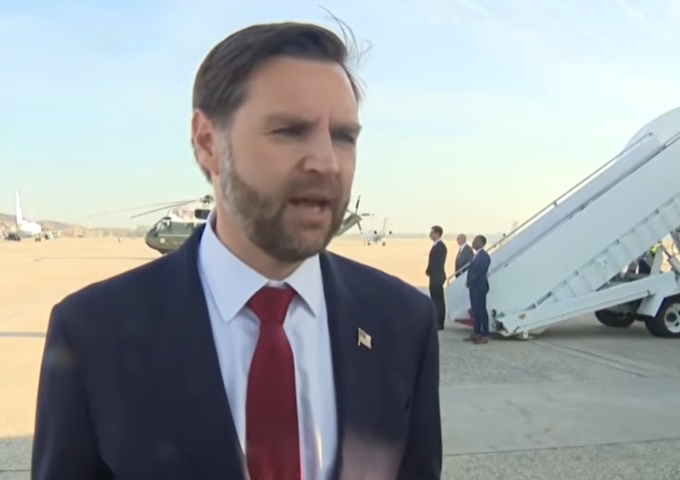
On Thursday, September 3, Vance stated at a White House press briefing, "We believe the Federal Reserve should cut interest rates," describing this as the "correct and responsible" response to recent inflation data. He added, "We are doing many things to push down rates, but it would be better if we could get some help from the Federal Reserve."
 Vance directly linked the call for rate cuts to housing affordability. He stated, "The President is very concerned about interest rates, partly because he wants Americans to be able to afford homes; higher interest rates mean higher borrowing costs."
According to CNBC, Vance made these remarks when asked about the Trump administration's views on volatility in the U.S. bond market.
These comments come less than two weeks before the Federal Open Market Committee (FOMC) meets on September 15–16 to decide on interest rates. According to CME Group's FedWatch tool, traders' expectations for a rate hike at this meeting are currently nearly evenly split, indicating high uncertainty in market direction.
Direct Confrontation with Warsh's Stance
Vance's remarks create significant tension with the latest signals from within the Federal Reserve.
Less than a week ago, Kevin Warsh, the Fed Chair personally nominated by Trump, delivered a speech in Jackson Hole, Wyoming, explicitly affirming his commitment to bringing inflation back to the 2% target and characterizing short-term interest rates as the "primary tool" for achieving the dual mandate—a move interpreted by the market as hinting at the possibility of a rate hike.
There are also diverging views within the Federal Reserve. On Tuesday, Fed Governor Michael Barr stated that he was prepared to support a rate hike if inflation remains persistently high; however, on Thursday morning, Governor Waller indicated that he prefers to keep interest rates unchanged.
This is not the first time such pressure has been applied; similar actions were taken in June.
This is not the first time Vance has publicly pressured the Federal Reserve.
In June this year, after the U.S. Bureau of Labor Statistics released the May CPI data, Vance joined Trump on platform X to simultaneously call on the Federal Reserve to cut interest rates. At that time, the May CPI rose by only 0.1% month-on-month, and the core CPI also increased by just 0.1% month-on-month, with annual rates of 2.4% and 2.8%, respectively, still above the Federal Reserve’s 2% target.
Vance used stronger language at the time, writing directly: “The President has long said this, but it is now clearer than ever: the Federal Reserve’s refusal to cut interest rates constitutes a dereliction of duty in monetary policy.”
During the same period, Trump also posted on Truth Social, urging the Federal Reserve to lower interest rates by a full percentage point and emphasizing that “this is very important,” arguing that rate cuts would save substantial interest expenses on U.S. debt nearing maturity.
Controversy over independence continues to intensify
According to CNBC, Vance’s latest remarks may further exacerbate concerns about the erosion of the Federal Reserve’s independence.
Trump had previously persisted in pressuring Powell, Warsh’s predecessor, to implement significant rate cuts and is currently seeking to dismiss Federal Reserve Governor Lisa Cook.
The Federal Reserve last cut interest rates in December 2024. Since then, officials have continued to express concern over the risk that tariff policies could drive up future prices, leaving rates unchanged to date.
Editor/melody