
Market Snapshot
At 20:30 Beijing time, the United States released its non-farm payrolls data. The seasonally adjusted non-farm employment change for August came in at 162,000, marking the highest level since March and significantly exceeding the market expectation of 56,000. The unemployment rate for August stood at 4.1%, in line with both the forecast and the previous value. Following the data release, the three major U.S. stock index futures dipped briefly.

The following shows market conditions prior to the release of non-farm payrolls data:
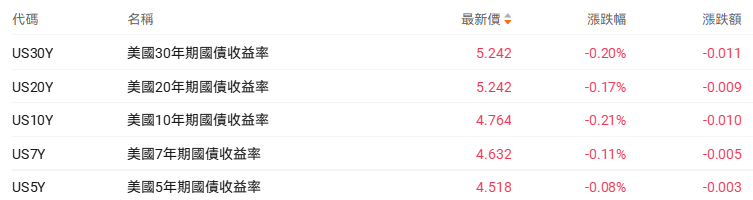
U.S. Treasury yields remained volatile.
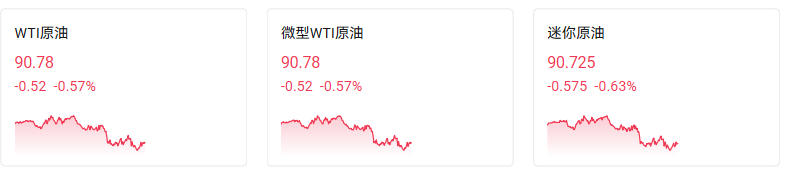
 Oil prices edged lower.
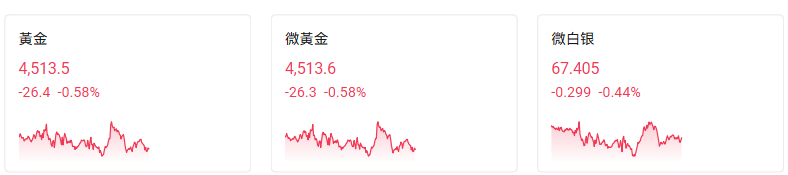
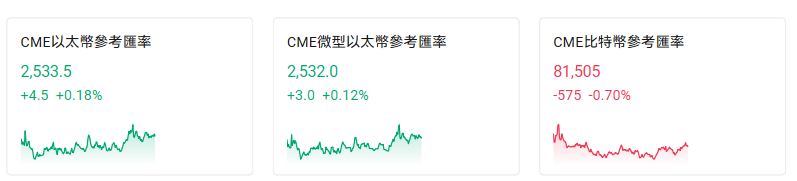
Gold, silver, Bitcoin, Ethereum, other precious metals, and crypto assets traded with mixed movements.
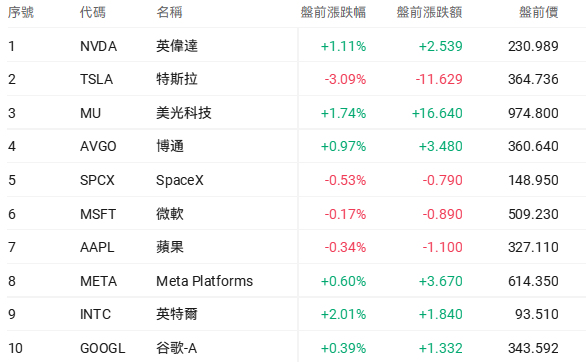
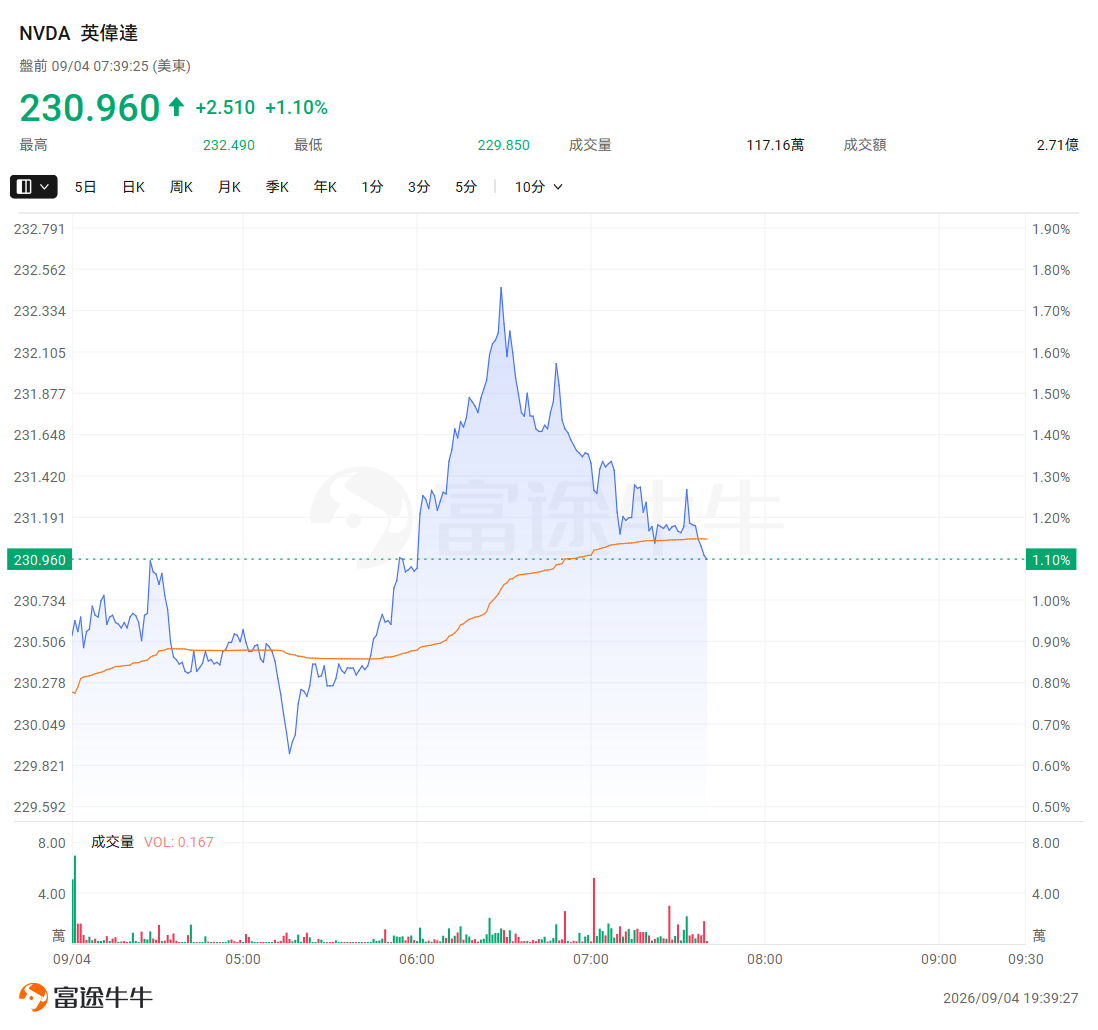
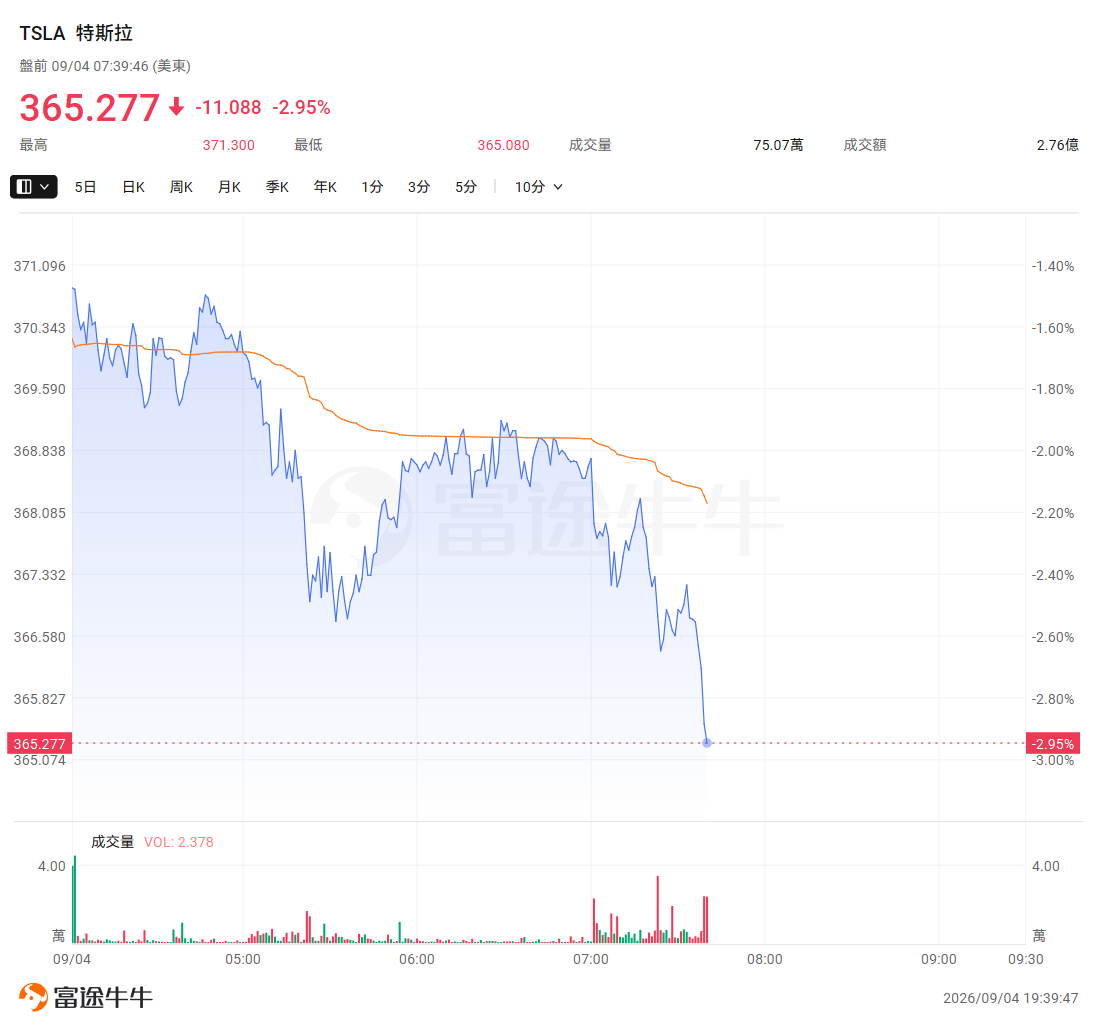
$Star Tech Stocks (LIST2518.US)$Performance was mixed, with Tesla dropping more than 3% and NVIDIA rising over 1%.
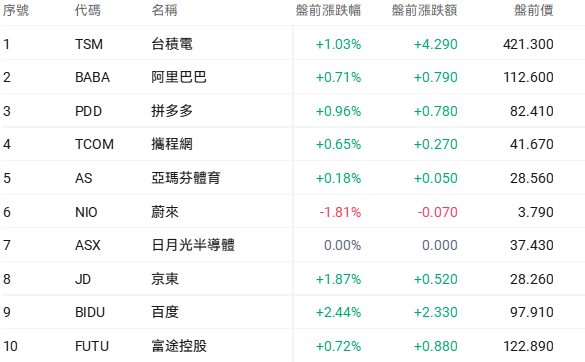
$Popular Chinese ADRs (LIST2517.US)$PDD Holdings rose nearly 1% and JD.com gained close to 2% in pre-market trading.
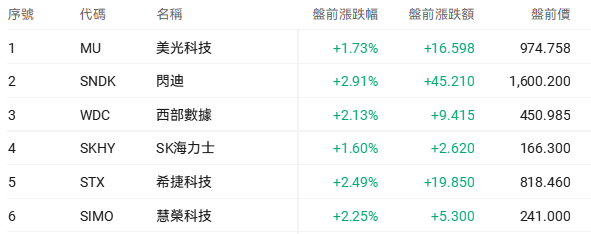
$Storage Concept (LIST23925.US)$ The sector strengthened in pre-market trading, with SanDisk up nearly 3%, while Western Digital and Seagate Technology both rose more than 2%.
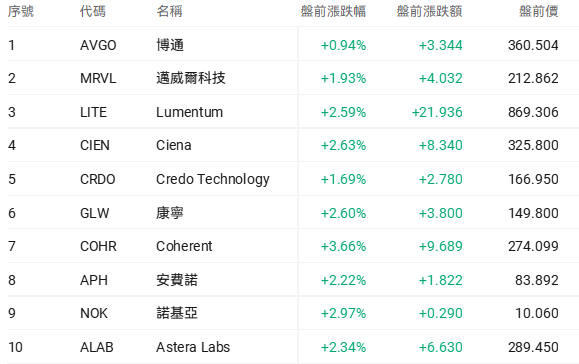
$Optical Communications (LIST23979.US)$Coherent and Ciena also saw gains, each rising nearly 3%.
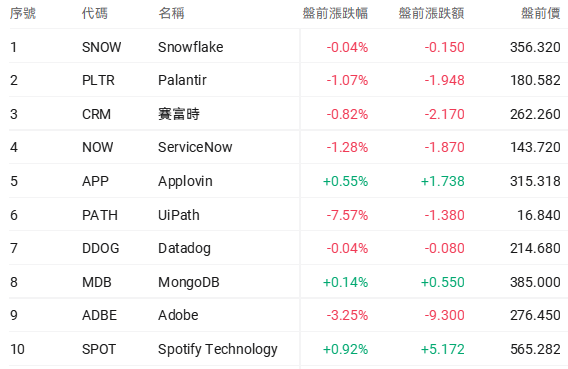
$AI Application Software Stocks (LIST23492.US)$ Most stocks fell in pre-market trading. UiPath dropped more than 7% following its earnings release, while Palantir declined 1%.
Individual Stock News
NVIDIA to acquire Hugging Face for $12.9 billion, pledges to maintain open platform
NVIDIA (NVDA.US) NVIDIA announced it has agreed to acquire the open-source AI platform Hugging Face for approximately $12.93 billion. The two companies will jointly scale up the platform and strengthen infrastructure and model deployment capabilities. Currently, Hugging Face serves over 18 million developers, researchers, and creators, hosts more than 3 million models, and supports over 200,000 enterprises. Jensen Huang stated that the platform will continue to support open-source and open-weight models from various vendors, maintaining multi-cloud and multi-accelerator compatibility, meaning developers will not be required to use NVIDIA hardware. According to Reuters, the deal includes approximately $11.9 billion in consideration for shareholders and up to $1 billion in employee equity retention arrangements.
Tesla Cybercab launches in Austin as U.S. regulators assess deployment
$Tesla (TSLA.US)$ Tesla launched the mass-produced version of the Cybercab in Austin and began offering ride-hailing services in limited local areas. The vehicle features a two-seat design, eliminating the steering wheel, pedals, and rearview mirrors, and achieves autonomous driving through cameras and neural networks. The National Highway Traffic Safety Administration (NHTSA) stated that it is in contact with Tesla and assessing the deployment but did not disclose further details. Reports indicate that Tesla has registered 45 Cybercabs in Texas. The company is also gauging interest in corporate fleet purchases and supporting infrastructure, although the vehicles are not yet officially available for public sale.
Goldman Sachs believes that if the Cybercab achieves scaled production costs of $20,000 to $30,000, its unit economics will offer a clear advantage; however, the ability of its software to support cross-regional expansion is more critical. Barclays points out that Tesla’s current fleet comprises fewer than 100 vehicles and that the launch event did not provide new growth targets. Although safety data for Full Self-Driving (FSD) and accident rates for Robotaxis continue to improve, scalability remains to be verified.
Micron's HBM production capacity is expected to double by year-end, closing the gap with Samsung and SK Hynix.
$Micron Technology (MU.US)$ Micron Technology is aggressively expanding its High Bandwidth Memory (HBM) production capacity, aiming for a larger share of the global AI memory market. Citing industry insiders, Yonhap News Agency reported on the 4th that Micron plans to increase its monthly HBM production capacity to approximately 100,000 wafers by the end of this year, nearly doubling last year's level. At that point, the capacity gap between Micron and Samsung Electronics and SK Hynix is expected to narrow to about half of its current size. Meanwhile, the company is accelerating the production ramp-up of its latest generation 12-layer HBM4 products to meet the demand for NVIDIA's new generation of AI accelerators.
Apple's foldable iPhone daily production stands at only 'a few hundred' units, potentially leading to supply shortages at launch
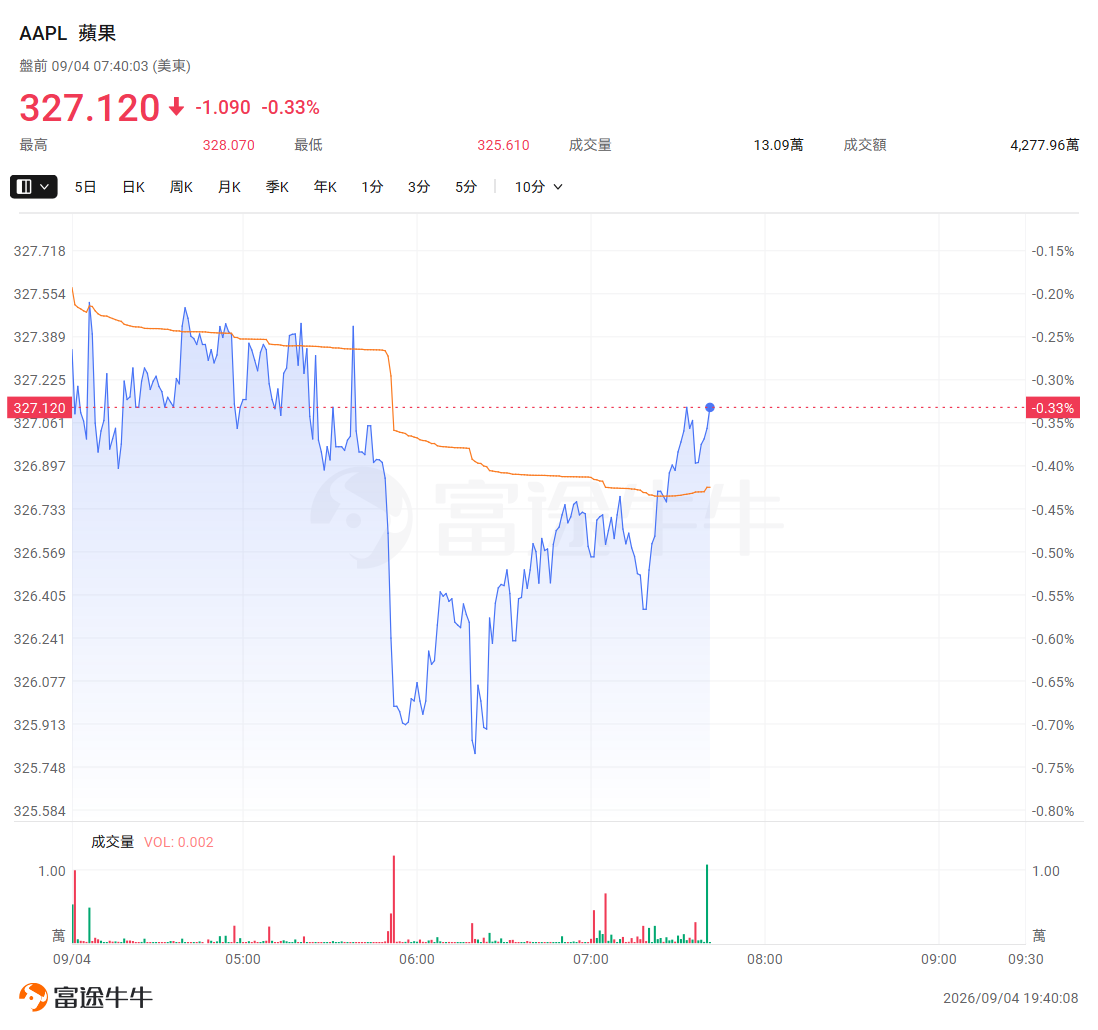
$Apple (AAPL.US)$ The mass production progress of Apple's first foldable iPhone is far below expectations, with supply chain issues threatening its market performance during the initial launch phase. According to Nikkei Asia, citing informed supply chain sources, Apple's strict quality control standards have limited the daily production of the foldable iPhone to only 'a few hundred' units, falling well short of the tens of thousands per day required for large-scale commercial shipments. Apple and its suppliers are making every effort to ramp up capacity, but if production cannot be significantly increased in the short term, the model will face severe channel inventory shortages upon its official release.
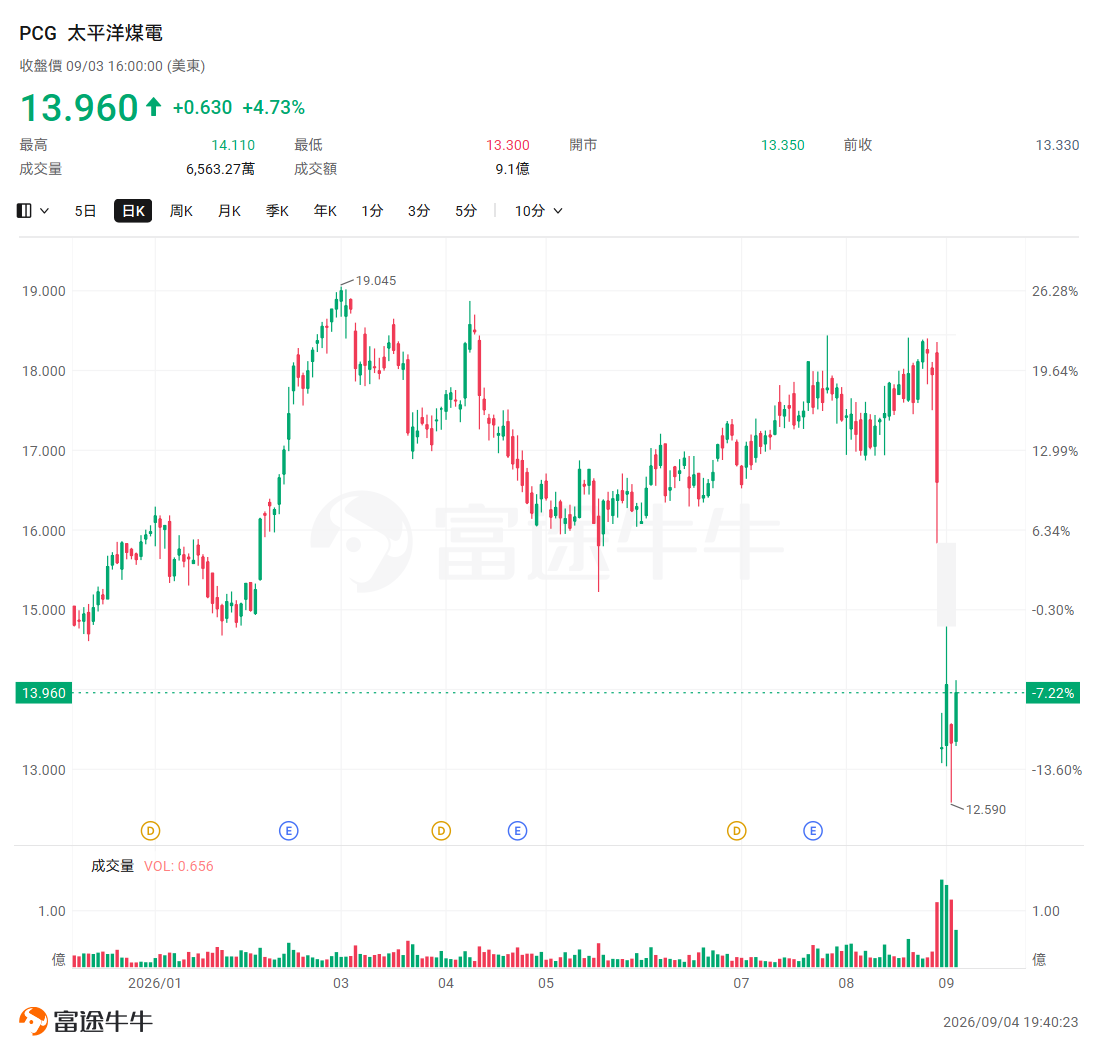
Pacific Gas and Electric, together with Google and Tesla, launches virtual power plant pilot in the Bay Area
$Pacific Gas & Electric (PCG.US)$ Announced the launch of the SHARE virtual power plant proof-of-concept project, in collaboration with $Alphabet-C (GOOG.US)$ 、 $Tesla (TSLA.US)$ and $Sunrun (RUN.US)$ In collaboration with partners such as Sunrun, the project plans to integrate over 20,000 smart home devices in the San Francisco Bay Area to increase grid dispatchable capacity by coordinating household energy usage. The initiative will combine existing equipment with new electrification infrastructure supported by private capital, aiming to improve power supply reliability and reduce consumer costs. Carrier will participate in the deployment of new equipment, providing heat pumps and associated systems with adjustable electricity consumption schedules. Pacific Gas & Electric is responsible for planning, analysis, and performance verification; related electricity bill savings and grid benefits remain subject to pilot evaluation and are not yet realized outcomes.
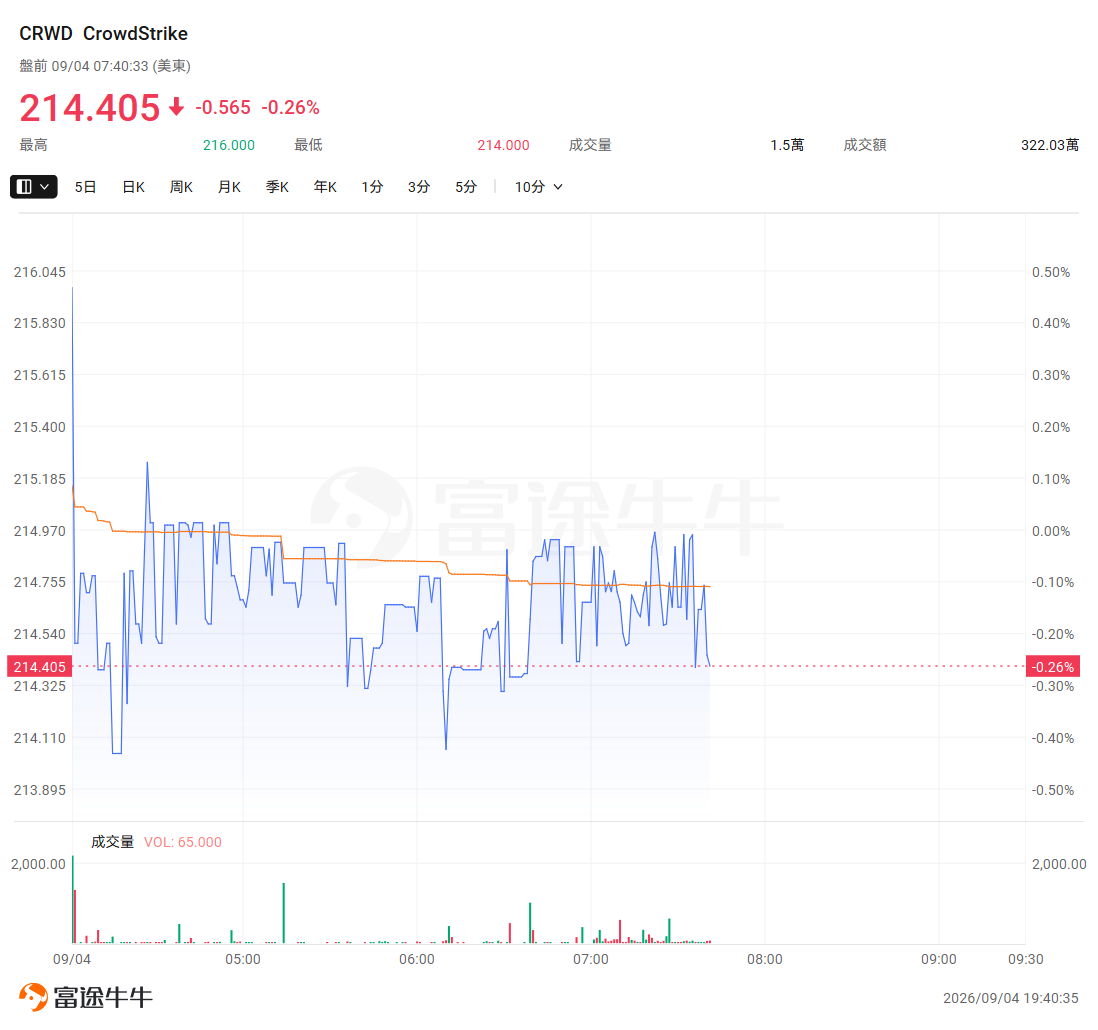
CrowdStrike releases growth outlook for the new fiscal year; AI security demand becomes focal point of conference
$CrowdStrike (CRWD.US)$ At the Fal.Con conference, the company unveiled several AI security products, partnership arrangements, and its growth outlook for fiscal year 2028. Jefferies analyst Joseph Gallo stated that the company expects net new Annual Recurring Revenue (ARR) to grow more than 20% year-over-year in fiscal 2028, exceeding the market expectation of 11%, corresponding to a total ARR growth rate of approximately 24.6%. Susquehanna analyst Shyam Patil noted that the company has observed security detections triggered by AI agents to be 2.5 times those triggered by humans, and the number of agent-based attackers detected in the past month has approached the total recorded in the preceding six months.
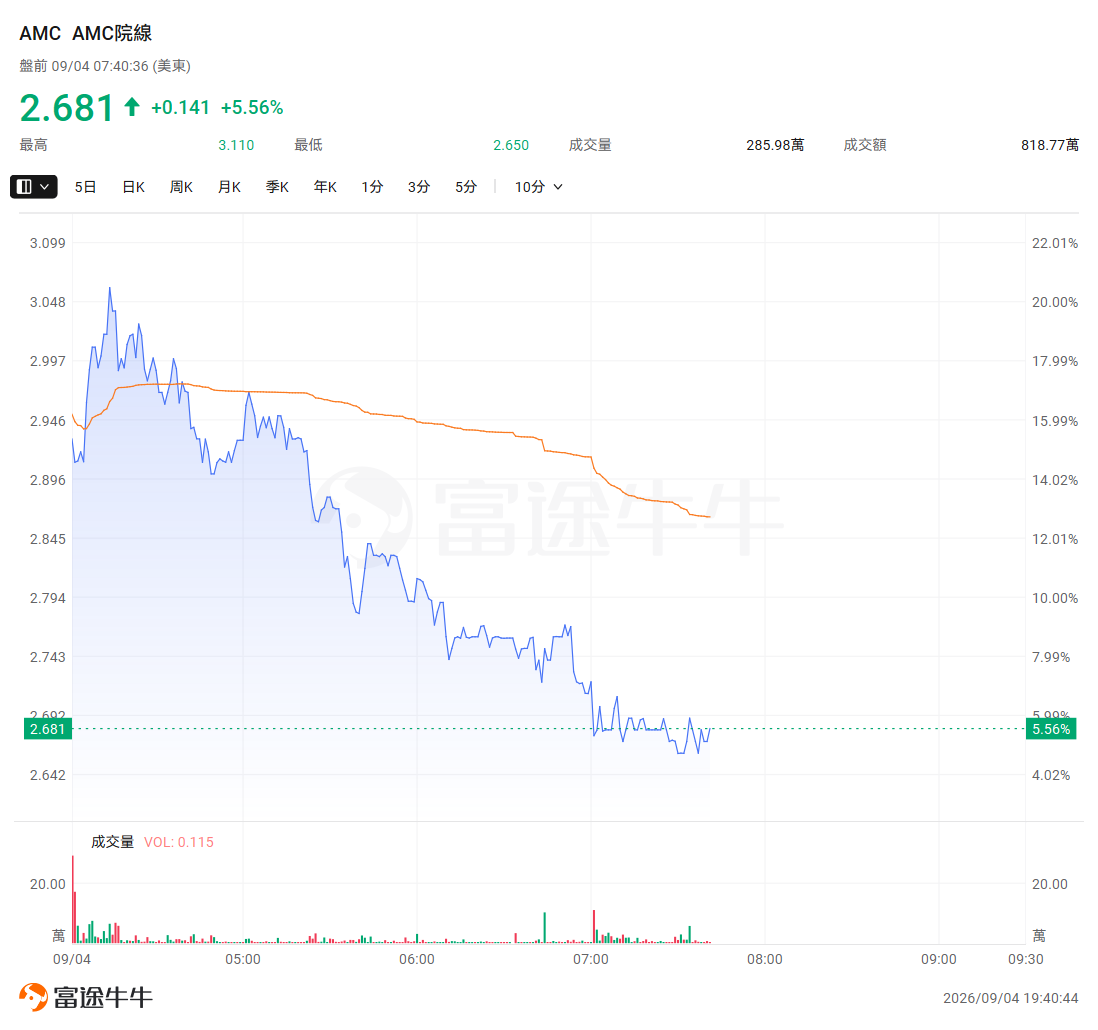
AMC Entertainment criticizes Robinhood's stock token, plans to report to the U.S. SEC
$AMC Entertainment (AMC.US)$ CEO Adam Aron stated that the company was not involved in $Robinhood(HOOD.US)$ the launch of the AMC stock token, demanded that the platform cease related trading, and intends to report the matter to the U.S. Securities and Exchange Commission (SEC). He argued that the product could confuse the distinction between price exposure and actual share ownership, deprive investors of voting rights, and impair the company's financing capabilities. Robinhood CEO Vlad Tenev responded to inquiries regarding these specific concerns. According to platform disclosures, the token is a tokenized debt security issued by a Jersey subsidiary, offering economic exposure to U.S. stocks but conferring no legal or beneficial rights in the underlying companies, and it is not registered under U.S. securities laws. AMC shares rose approximately 20% in pre-market trading on Friday.
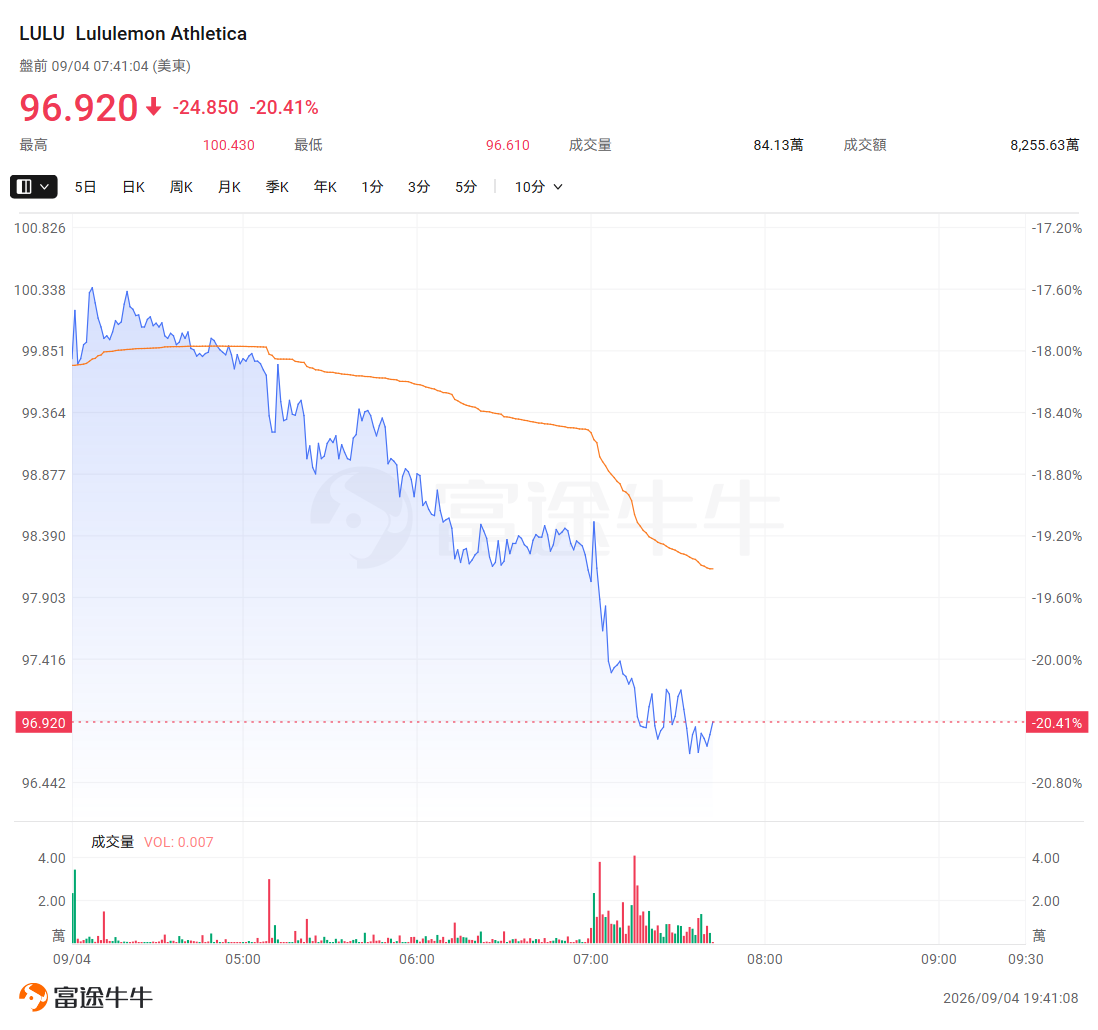
Lululemon reports first decline in comparable sales since the pandemic; prominent short seller states he will actively add to positions if price falls below $100
$Lululemon Athletica (LULU.US)$ Second-quarter revenue was approximately $2.42 billion, down 4% year-over-year, while comparable sales declined 9%, marking the first negative turn since the pandemic. Comparable sales in the Americas fell 12%, and yoga pant sales dropped by about 20%. The company lowered its full-year revenue guidance to a range of $10.35 billion to $10.5 billion and reduced its earnings per share (EPS) forecast to $9.48–$9.73, marking the second consecutive quarter of downward revisions. Quarterly EPS stood at $2.92, including $0.86 from tariff refunds and related interest. Incoming CEO Heidi O’Neill will assume her role next week, with management indicating strengthened focus on product, marketing, and expense management.
Michael Burry, the inspiration for 'The Big Short,' stated in his column 'Cassandra Unchained' that Lululemon Athletica is currently the largest holding in his portfolio. Burry described LULU as the 'troublemaker' in his portfolio and hinted that he would actively buy if the stock price falls below $100. He has previously added to his position multiple times, with an average cost around $120, and has continued to describe the stock as 'ear-piercingly cheap.' Additionally, Burry had earlier pointed out that, at current valuations, Lululemon could become a takeover target for its founders or private equity firms as one potential long-term outcome.
Global Macro
August non-farm payrolls to be released tonight: consensus forecasts 56,000 new jobs, with significant divergence among institutional predictions
At 20:30 Beijing time tonight, the United States will release its August non-farm payroll report. A Reuters survey expects job additions of 56,000, reversing July's decline of 23,000. The unemployment rate is projected to hold steady at 4.1%, while the year-over-year growth in average hourly earnings is expected to slow from 3.2% to 3.0%. Institutional forecasts range from a loss of 25,000 jobs to a gain of 121,000. Goldman Sachs projects an increase of 40,000, JPMorgan forecasts 50,000, and both UBS Group and Morgan Stanley expect 65,000. Economists suggest that local government education positions and the leisure and hospitality sector may rebound, but changes in immigration policy could still constrain employment recovery.
Waller’s “no hike” stance creates a “6-to-5” split! Is Powell the key determinant for the Federal Reserve’s September rate decision?
Jim Bianco, founder of Bianco Research, estimates based on public statements by Federal Reserve officials that the current vote count favoring holding rates steady versus raising them may stand at 6 to 5, with the stance of Governor Powell, who remains in office, still unclear. Bianco believes that following Waller’s inclination to maintain current interest rates, Powell’s choice has become a critical variable for the September meeting. Continued pressure from Trump has also prompted some committee members to express their policy positions more explicitly. He notes that a final 6-to-6 tie could imply maintaining the status quo or continuing voting until a majority is reached. These vote counts and procedures for handling ties are Bianco’s personal assessments and do not reflect official Federal Reserve results or procedural guidelines.

Anthropic reportedly close to finalizing $15 billion pre-IPO credit facility
According to Bloomberg, citing sources familiar with the matter, pre-IPO AI company Anthropic is nearing the completion of a $15 billion revolving credit facility, exceeding its previous fundraising target of approximately $10 billion and significantly surpassing the $2.5 billion five-year facility secured last year. Morgan Stanley is leading the arrangement, with participation from Goldman Sachs, JPMorgan, and Citi; these four banks are also undertaking major underwriting roles for its IPO. The report indicates that companies typically finalize such financing arrangements before formally determining IPO underwriting allocations. Anthropic aims for an IPO fundraising scale comparable to or exceeding that of SpaceX, although credit arrangements and listing details remain subject to adjustment. The company and some related banks declined to comment.
Price per million tokens falls below $1; Goldman Sachs: “Volume surge amid price collapse” shakes AI capital expenditure logic
Rich Privorotsky, head of the One-Delta trading desk at Goldman Sachs, noted that Silicon Data’s token usage-weighted price index fell 29% in August to approximately $0.97 per million tokens, dropping more than 50% from its May peak. Data from JPMorgan shows that OpenRouter’s token usage grew by about 47% during the same period, while dollar spending increased by only around 7%. Privorotsky argues that demand growth does not necessarily translate into proportional revenue growth, as open-source competition and local inference are eroding pricing power based on token fees, while data center depreciation, interest costs, and capital commitments continue to rise. The decline in this price index may reflect price cuts or users shifting to lower-cost models, rather than a contraction in AI usage.

Geothermal energy regains attention: AI electricity demand may serve as a key catalyst for industry takeoff
The demand for stable, round-the-clock power supply from AI data centers is driving increased interest in Enhanced Geothermal Systems (EGS). Traditional geothermal power accounts for less than 1% of U.S. generation, primarily limited by the distribution of natural reservoirs. EGS leverages horizontal drilling and hydraulic fracturing technologies to artificially construct circulation channels in deep hot rock formations, potentially expanding developable areas. An article by Wall Street Insights points out that geothermal energy’s independence from weather conditions aligns well with data center power needs, but significant uncertainties remain regarding the large-scale commercialization of next-generation technologies. Issues such as deep drilling costs, subsurface geological variations, water resource depletion, induced seismicity risks, and the long-term stability of reservoir temperature and flow rates all require resolution.
Trump seeks to be the "protagonist" of the midterm elections, but Republicans worry about being too closely tied to him.
Trump has urged Republican candidates to highlight his administration's achievements and pledged to campaign vigorously for them ahead of the November midterms, but this strategy has sparked divisions within the party. Representative Don Bacon advised candidates in competitive districts to distance themselves from the president on issues such as tariffs, while House Republican Leader Steve Scalise argued that Trump remains key to mobilizing the base. Reports indicate that Democrats need a net gain of only three House seats and four Senate seats to regain control of both chambers. Some Republican lawmakers are concerned that the president's low approval ratings and voter fatigue could drag down electoral prospects, with gasoline prices, cost of living, and tensions with Iran remaining top concerns for voters.

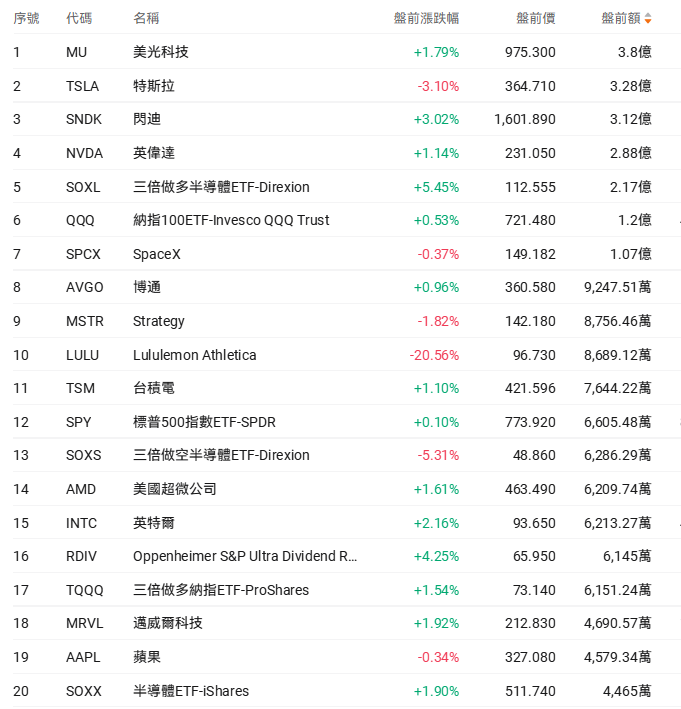
Top 20 U.S. Stocks by Premarket Trading Volume
U.S. Equity Market Macro Calendar Reminder
(All times listed below are in Beijing Time)
20:30 U.S. August seasonally adjusted non-farm payrolls (in thousands) and U.S. August unemployment rate
22:00 U.S. Global Supply Chain Pressure Index for August
Next day 01:00 Total U.S. oil rigs for the week ending September 4
Next day 03:30 CFTC releases weekly Commitments of Traders report
 Looking to select stocks or analyze your holdings? Want to understand the opportunities and risks in your portfolio? For any investment-related questions,just ask Futubull AI!

Editor / Rocky