Rich Privorotsky, head of trading desks at Goldman Sachs, believes that Astra’s leap in capabilities could be the long-awaited breakthrough for AI bulls. Rather than mere price cuts, enhanced model intelligence is expected to unlock new application scenarios, expand the AI demand curve, and drive continued industry investment in computing power. This may reignite the AI capital expenditure cycle, with further catalysts anticipated from September earnings reports, including those of Oracle, and industry conferences.
OpenAI has released its next-generation Astra model, sparking widespread market attention regarding a leap in AI capabilities and reigniting the investment narrative around the AI spending cycle.
Rich Privorotsky, head of the Delta One trading desk at Goldman Sachs, stated in his latest market briefing that Astra appears “pivotal”—it has indeed pulled ahead of its peers, and this may well be the type of capability breakthrough that AI bulls have been awaiting.
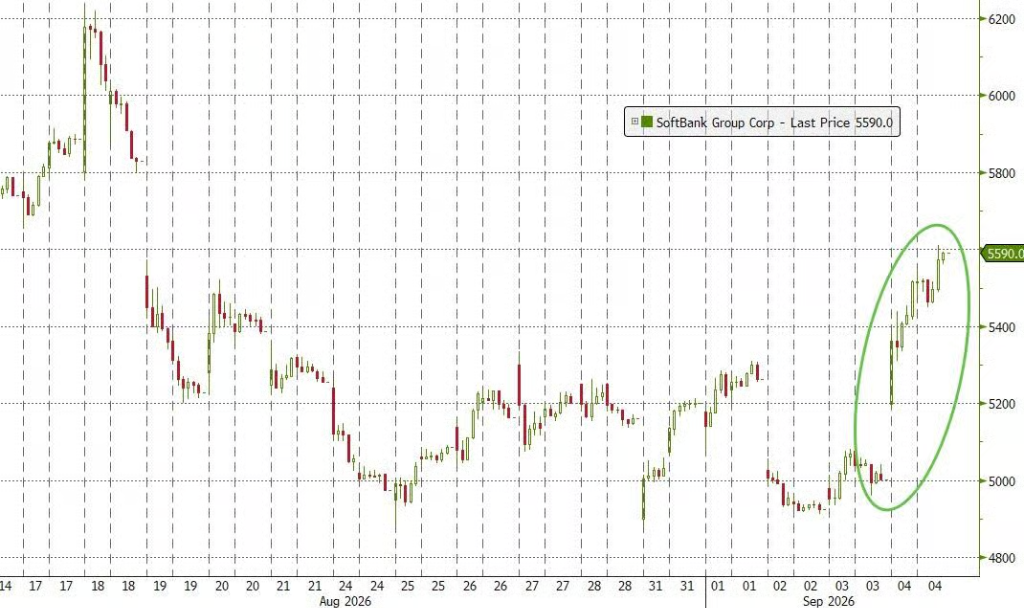
 This assessment was quickly reflected in market trading: SoftBank surged more than 10% overnight. As a major investor in OpenAI, its stock price is seen as a key proxy for changes in OpenAI’s valuation; Oracle also rose by approximately 5.5%. However, in Privorotsky’s view, the rise in share prices is actually the “least interesting part” of the entire story.
More notably, internal evaluations of Astra at OpenAI are equally aggressive. OpenAI President Greg Brockman described it as a “generational leap,” suggesting that this moment could be regarded as a landmark node marking the arrival of AGI (Artificial General Intelligence). At the conclusion of the conference call, he directly declared, “Welcome to the AGI era.”
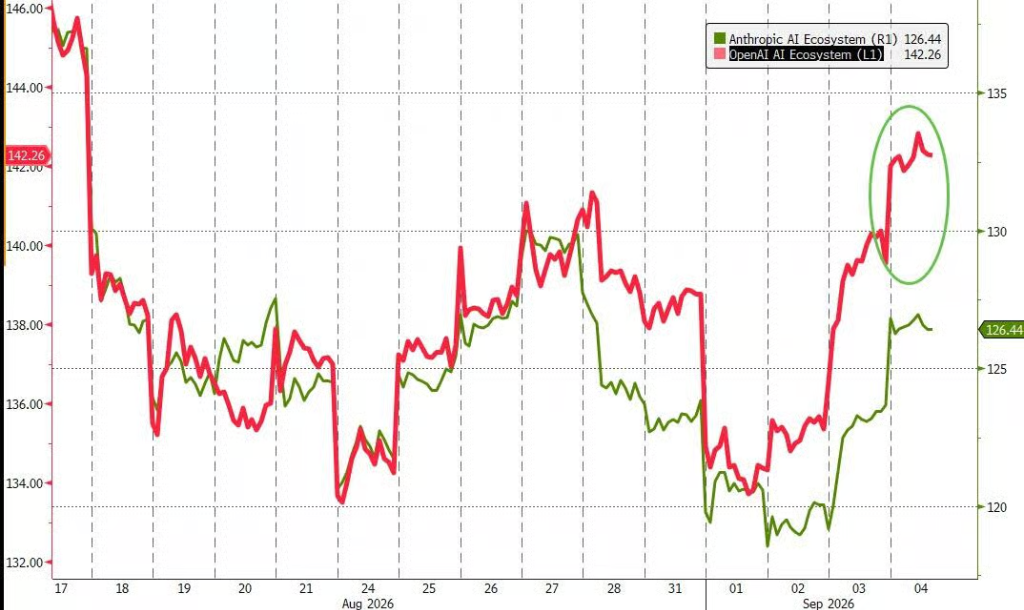
From Wall Street to within OpenAI itself, Astra is being attributed not merely with the significance of a model upgrade, but as a signal that a leap in AI capabilities could reshape a new round of capital expenditure cycles. This expectation has also driven the OpenAI ecosystem to significantly outperform the Anthropic camp this week.
Capability Breakthroughs, Not Price Cuts: The Demand Curve Is Reshaped Once Again
In his briefing, Privorotsky highlighted a distinction between two markedly different market signals: declining token prices and substantial leaps in model capabilities.
His core logic is that when model prices fall, enterprises simply use the same amount of AI at a lower cost; however, when models become “truly smarter,” enterprises discover new application scenarios previously unattainable, thereby expanding the scope of AI demand.
“Price declines are one thing, but a true breakthrough in intelligence will reshape the demand curve once again,” Privorotsky wrote. “It forces all other laboratories to catch up, sustains the vitality of the spending cycle, and reactivates the belief that ‘there are still better things worth building.’”
He also clarified that previous remarks stating “the growth rate of token demand is failing to keep pace with the decline in token costs” had been taken out of context by some. His complete logic is that compute oversupply only becomes a problem if model capabilities fail to achieve a fundamental leap; the emergence of Astra points precisely in the opposite direction.
Astra Targets AGI: AI Competition Shifts from Price Wars to an "Intelligence War"
Astra’s performance in certain AGI-related benchmarks has bolstered OpenAI’s confidence to claim that it has surpassed Anthropic on specific metrics.
Although the industry currently lacks a universally accepted definition of AGI and unified testing standards, and Greg Brockman has stated that the ultimate judgment should rest with users, his remarks during this media conference call were quite clear. When asked whether Astra meets the definition of AGI, he replied, “I believe this is the model.”
This statement further reinforces the market’s interpretation of the launch: competition among leading model providers is shifting from battles over price and efficiency to direct contests of intelligence capabilities. For AI bulls, this is the long-awaited signal—if competitive advantages can be reflected in the intrinsic intelligence of models, the sustainability of the AI capital expenditure cycle will gain new support.
September AI Calendar: Dense Catalysts May Sustain Bullish Sentiment
Privorotsky points out that the September market calendar is constructive for the AI sector, with multiple potential catalysts providing a sustained window for bullish sentiment to propagate.
Oracle is scheduled to release its earnings report next week, at which time the market will focus closely on the latest developments in its cloud infrastructure and AI-related businesses. Meanwhile, the technology conference season will provide additional catalysts, further spreading the positive impact of Astra across the broader AI industry chain.
“The return of breakthrough intelligence is precisely the key to reigniting the willingness and necessity for continued spending,” Privorotsky summarized. However, he also cautioned that energy price trends and next week’s CPI data remain major potential disruptors to current market sentiment and warrant close monitoring.
Editor/melody