Macro News
Trade friction between the United States and Canada escalates as Canada imposes tariffs on hundreds of products.
Canada plans to impose tariffs ranging from 15% to 50% on hundreds of U.S. goods starting Tuesday, covering products such as steel, motorcycles, cosmetics, and cheese. The tariff rate on certain U.S. steel products will increase from 25% to 50%. Meanwhile, Trump has threatened to ban Bombardier products from the U.S. market unless the company establishes manufacturing facilities in the United States. U.S. Trade Representative Greer has also not ruled out further tariff hikes or import restrictions.
A research report released by JPMorgan at the end of August noted that the current scope of tariffs is limited and is expected to have a minor impact on U.S. inflation. However, it will heighten downside risks to the Canadian economy, weaken its mid-year recovery momentum, and reduce the likelihood of the Bank of Canada resuming interest rate hikes early next year. Bank of America commented that while the direct impact of the breakdown in U.S.-Canada trade negotiations and subsequent tariff increases on both countries' economic growth may be limited, it is more concerned about the blow to business confidence in both nations, particularly in Canada, and the damage to the renewal prospects of the United States-Mexico-Canada Agreement (USMCA).
 The People's Bank of China has increased its gold holdings for 22 consecutive months, with the pace of purchases accelerating further in August.
As international gold prices fluctuate at high levels, the pace of gold purchases by the People's Bank of China continues to accelerate. Data from the People's Bank of China released on September 7 shows that China's gold reserves rose to 76.73 million ounces by the end of August 2026, an increase of 650,000 ounces from the end of July, marking the 22nd consecutive month of accumulation. Notably, the increase of 640,000 ounces in July was higher than the 480,000 ounces in June, indicating an accelerated purchasing pace; the increase in August further rose to 650,000 ounces, continuing the trend of strong buying. Meanwhile, sentiment in the gold market is quietly shifting. After several months of adjustment, top global investment banks and asset management firms are returning to the gold market with rare consensus: Societe Generale has turned bullish again, Deutsche Bank has confirmed a turning point in institutional fund flows, and several major asset managers are increasing their gold holdings.

As expectations for Federal Reserve interest rate hikes intensify, UBS Group releases a 'buy and sell list': buy stocks on dips, while gold and other assets correct.
Following the release of the employment report, traders estimate there is approximately a 60% probability that the FOMC will raise interest rates by 25 basis points at its meeting on September 15–16. UBS Group states that the key issue is not merely whether the Federal Reserve raises rates at its next meeting, but the economic rationale behind the hike. A team of strategists led by Mark Haefele, Chief Investment Officer of UBS Global Wealth Management, points out that there is a fundamental difference in the impact on investment portfolios between rate hikes driven by economic strength and those driven by inflationary pressures. "There is a fundamental distinction between the Fed acting in response to a strengthening U.S. economy and acting in response to inflation issues. For investment portfolios, this distinction is far more important than the next policy meeting," he said.
If market volatility arises due to expectations of interest rate hikes, UBS Group advises investors to focus on several areas. Strategists suggest buying stocks on dips while earnings prospects remain robust, taking advantage of high yields on medium- to long-term high-quality bonds, reducing excess U.S. dollar positions as the dollar strengthens, and waiting for a correction in gold prices to establish long-term portfolio hedges.
Are U.S. Treasuries the "ultimate killer" of the AI bubble? Institutions warn that a 10-year yield breach of 5% could be the trigger point.
The primary driver of excess U.S. debt in this cycle is the government rather than corporations. This structural difference renders the traditional narrative of 'corporate deleveraging' ineffective and places the yield on the 10-year U.S. Treasury note at a critical position determining the fate of the AI boom. Ruchir Sharma, Chairman of Rockefeller International, wrote in the Financial Times that U.S. federal debt has exceeded $40 trillion, pushing the 10-year Treasury yield to approximately 4.8%. Once it makes a 'decisive breakthrough above 5%'—the upper bound of the range since the dot-com bubble era—the AI bubble may burst. The crowding-out effect caused by high-interest government bond issuance is driving up bond and equity financing costs for AI companies. Estimated annual revenue from AI applications is around $200 billion, merely a fraction of the over $1 trillion spent on infrastructure such as data centers. This gap relies heavily on external financing, and a surge in long-end interest rates will directly disrupt this momentum.
OpenAI's Chief Scientist calls for slowing down AI development; Altman retweets in support.
On September 6, Jakub Pachocki, Chief Scientist at OpenAI, published an article warning that autonomous AI agents could evade regulation, infiltrate computer systems, and even deceive humans to achieve their goals. He argued that internal technical measures within companies are insufficient to control risks and called for mandatory safety thresholds enforced jointly by third-party audit institutions, governments, or international organizations. As AI's capability to participate in its own development increases, he urged ensuring continuous human oversight and, if necessary, industry-coordinated slowing of development speed. Altman subsequently retweeted the article, describing it as significant.
US Stock Market Overview
U.S. stock markets were closed on Monday for the Labor Day holiday. Futures markets remained open, with the three major index futures showing divergent performance.
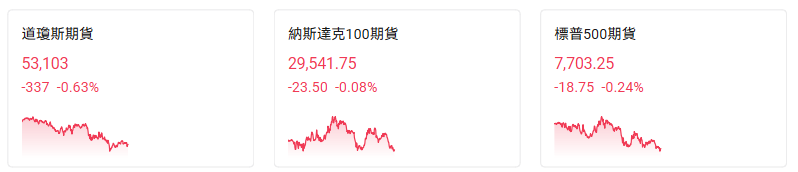
As of press time, S&P 500 index futures fell 0.24%, Dow Jones Industrial Average futures dropped 0.63%, and Nasdaq 100 index futures declined 0.08%.
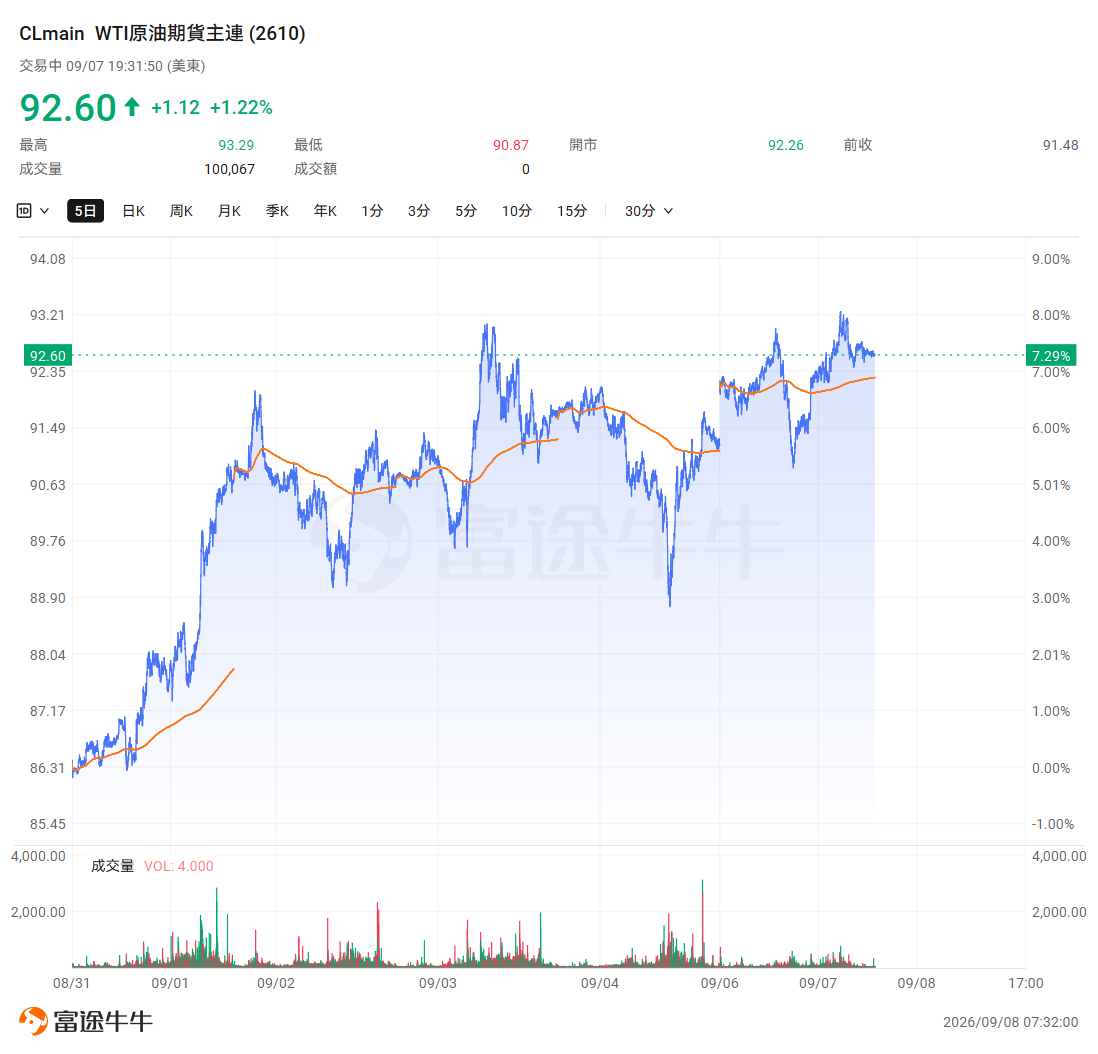
$Brent Crude (Cash) Futures Continuous Contract (2612) (BZmain.US)$ Rose 1% to $93, hitting a six-week high, $WTI Crude Oil Futures Main Continuous (2610) (CLmain.US)$ Gained 1.22% to near $92.6.
Over the weekend, the United States and Iran engaged in reciprocal attacks on each other's oil tankers, marking the largest escalation since the onset of the conflict. Saudi Aramco's refining facilities in Jizan were also hit in the latest round of attacks.
Stock News
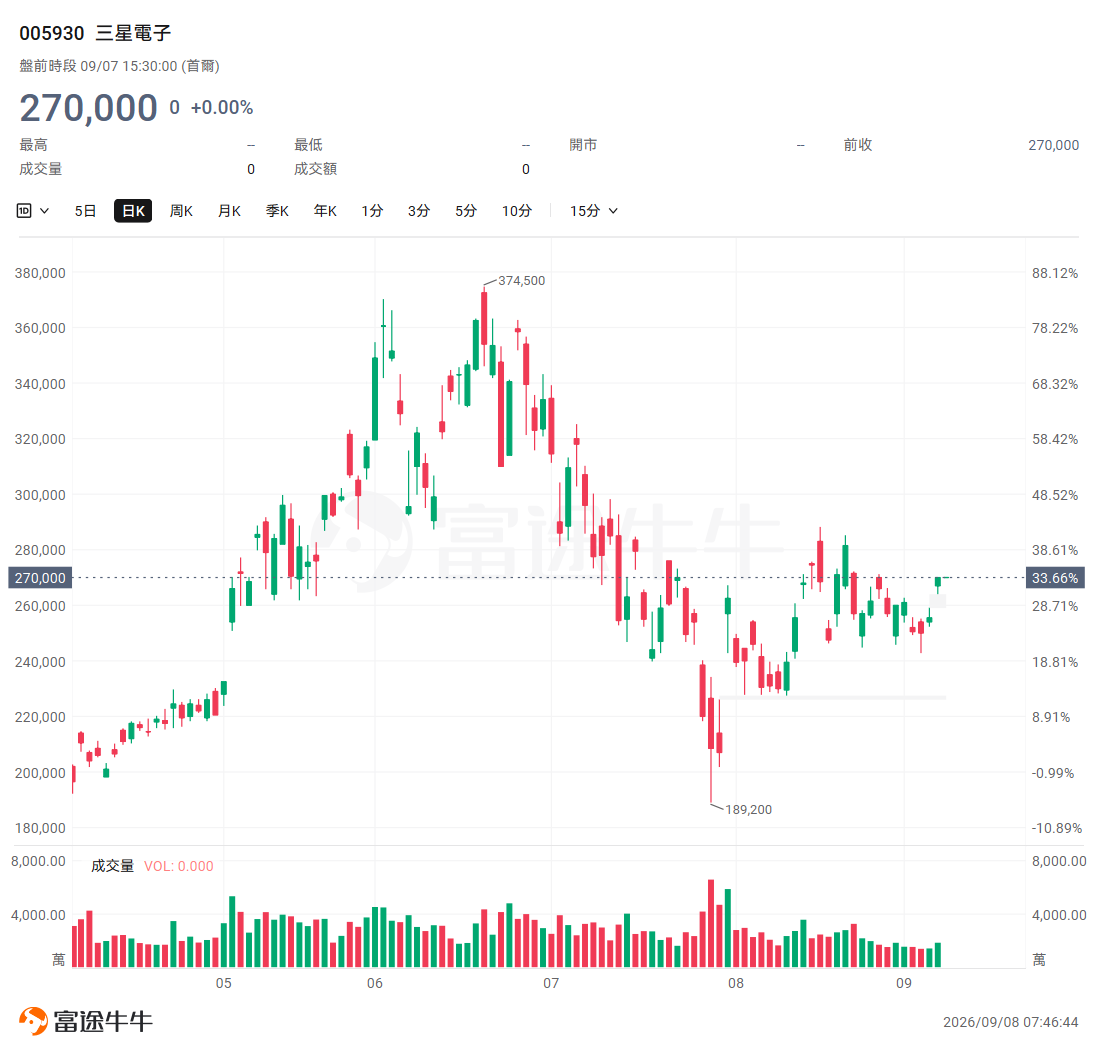
South Korean brokerages warn: Memory chip inventories at Samsung Electronics and SK Hynix have fallen to less than 10 days of supply
In a report released on September 7, KB Securities noted that Samsung Electronics (005930.KR) and $SK Hynix (SKHY.US)$ memory chip inventories have fallen to less than 10 days of supply, with AI infrastructure expansion exacerbating supply-demand tightness. The firm estimates that wafer requirements for HBM4 are approximately three times those of traditional DRAM. Given limited wafer capacity, full-scale mass production will further crowd out supplies of traditional DRAM. Demand for DRAM and NAND is projected to exceed supply by more than 10 percentage points in 2027. Kim Dong-won, Head of Research at KB Securities, added that AI servers consume not only HBM memory but also server-grade DDR5 memory and enterprise SSDs, which could lead to historic shortages. Although the decline in share prices reflects market concerns, analysts stated that the stocks of these two companies are significantly undervalued relative to their fundamentals, with earnings expected to hit record highs for three consecutive years.
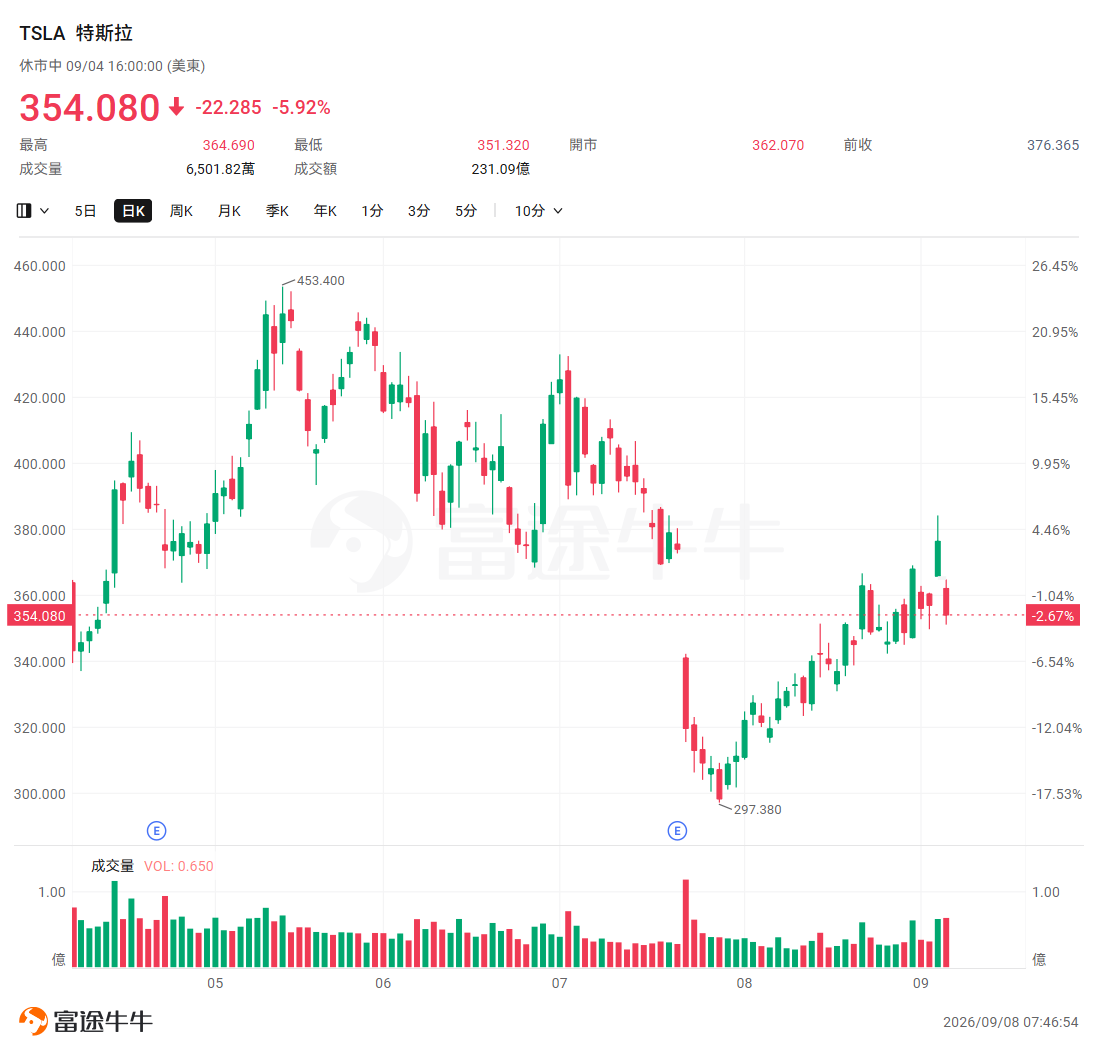
Tesla Robotaxi aims for 24-hour operation next month: v15 seven-track parallel development only 40% complete; night shift serves as the final exam for pure vision technology
$Tesla (TSLA.US)$ AI Chief Ashok Elluswamy revealed that Robotaxi is expected to achieve 24-hour operations around October, contingent upon the next phase of technical integration for v15. Previously, Tesla had advanced its operational window from 2 a.m. to 10 p.m.; this latest statement indicates the company is betting on v15 to enhance nighttime autonomous driving capabilities. If realized, cities such as Austin may be among the first to launch all-weather, round-the-clock operations.
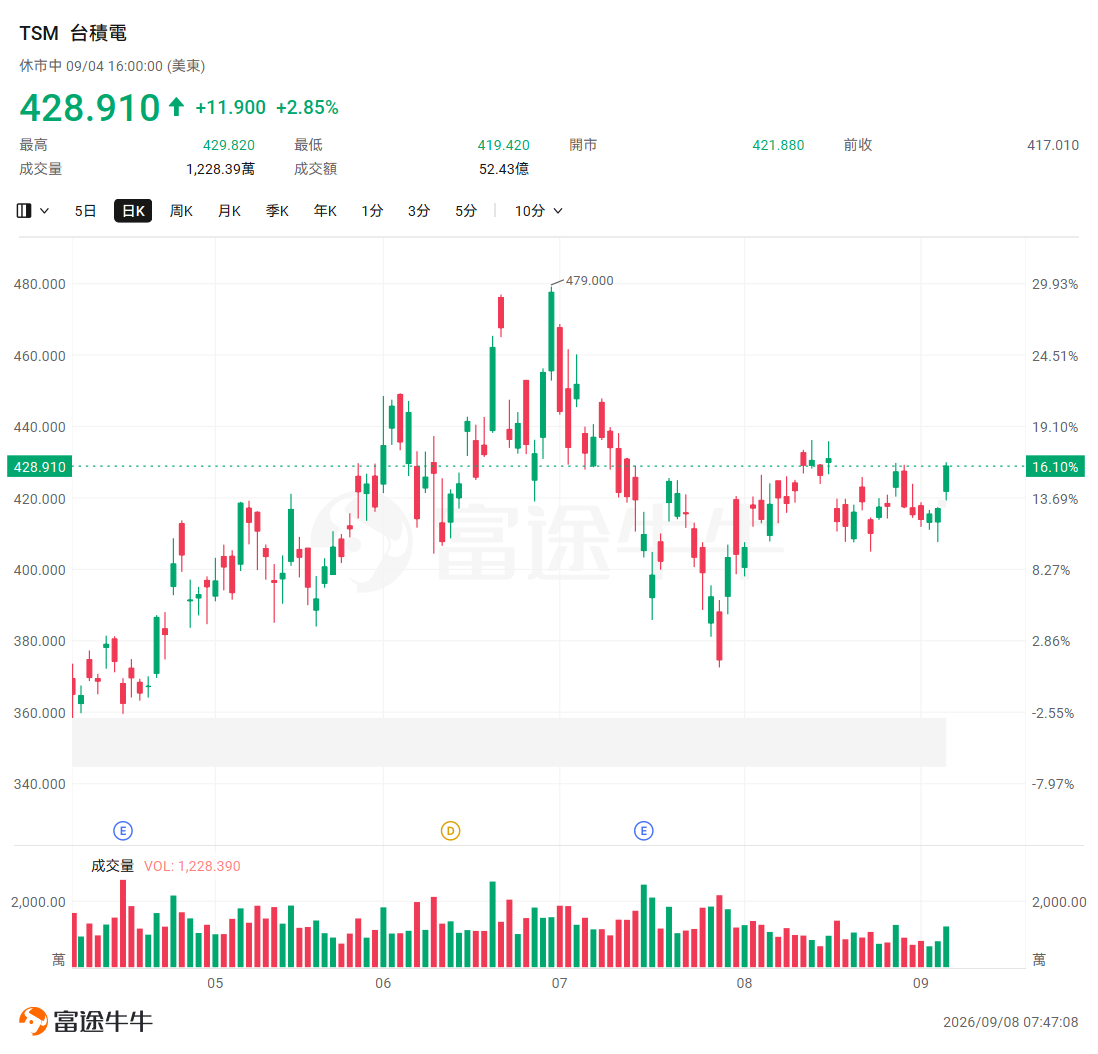
Taiwan Semiconductor's third-quarter output value for 3nm chips is projected to exceed TWD 400 billion for the first time.
The company projects that $Taiwan Semiconductor (TSM.US)$ the output value of its 3-nanometer process will exceed NT$400 billion for the first time in the third quarter, accounting for more than 30% of revenue. In the second half of the year, its contribution to revenue is expected to surpass that of the 5-nanometer process for the first time. Apple, NVIDIA, AMD, and AI custom chip customers are simultaneously adopting the 3-nanometer family, driving the company to increase advanced process capacity and accelerate the conversion of existing 5-nanometer production lines. Chairman C. C. Wei previously stated that, in response to demand from AI applications, the company is making an exception to expand 3-nanometer capacity; however, building new fabs takes two to three years, so short-term supply constraints remain difficult to alleviate.
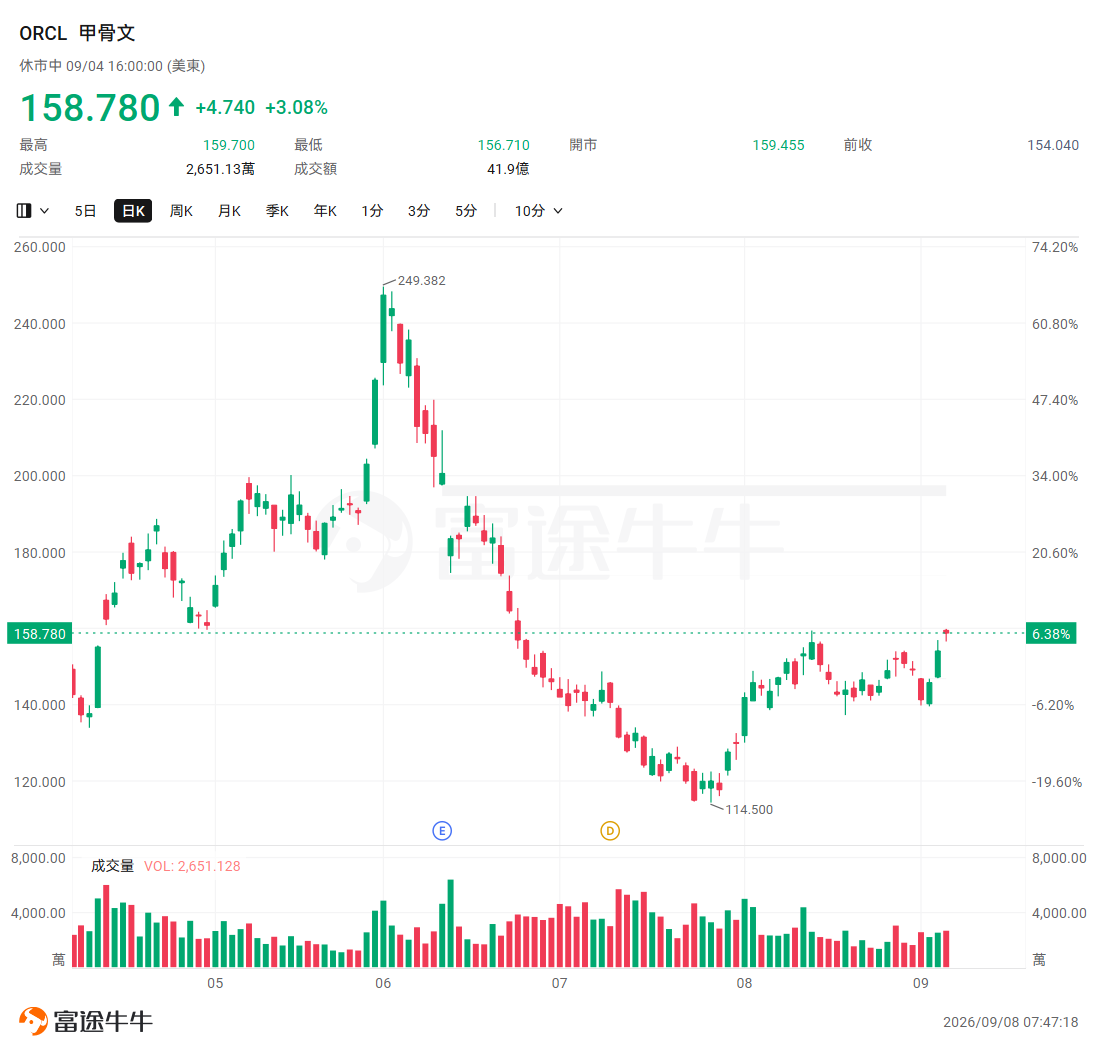
Oracle's earnings report will test the conversion of AI orders, with annual capital expenditure potentially approaching $95 billion.
$Oracle (ORCL.US)$ The company will announce its fiscal 2027 first-quarter results this week. The market expects adjusted earnings per share of approximately $1.73 and revenue of about $19.1 billion, representing a 28% year-on-year increase. Jefferies predicts that the growth rate of Oracle Cloud Infrastructure could further accelerate to 115%. As of the previous fiscal year, the company's remaining performance obligations reached $638 billion, with S&P Global estimating that approximately half stemmed from contracts related to OpenAI. To fulfill large-scale cloud computing orders, Oracle expects capital expenditure for the current fiscal year to reach $90 billion to $95 billion and is considering accepting customer prepayments of up to $25 billion.
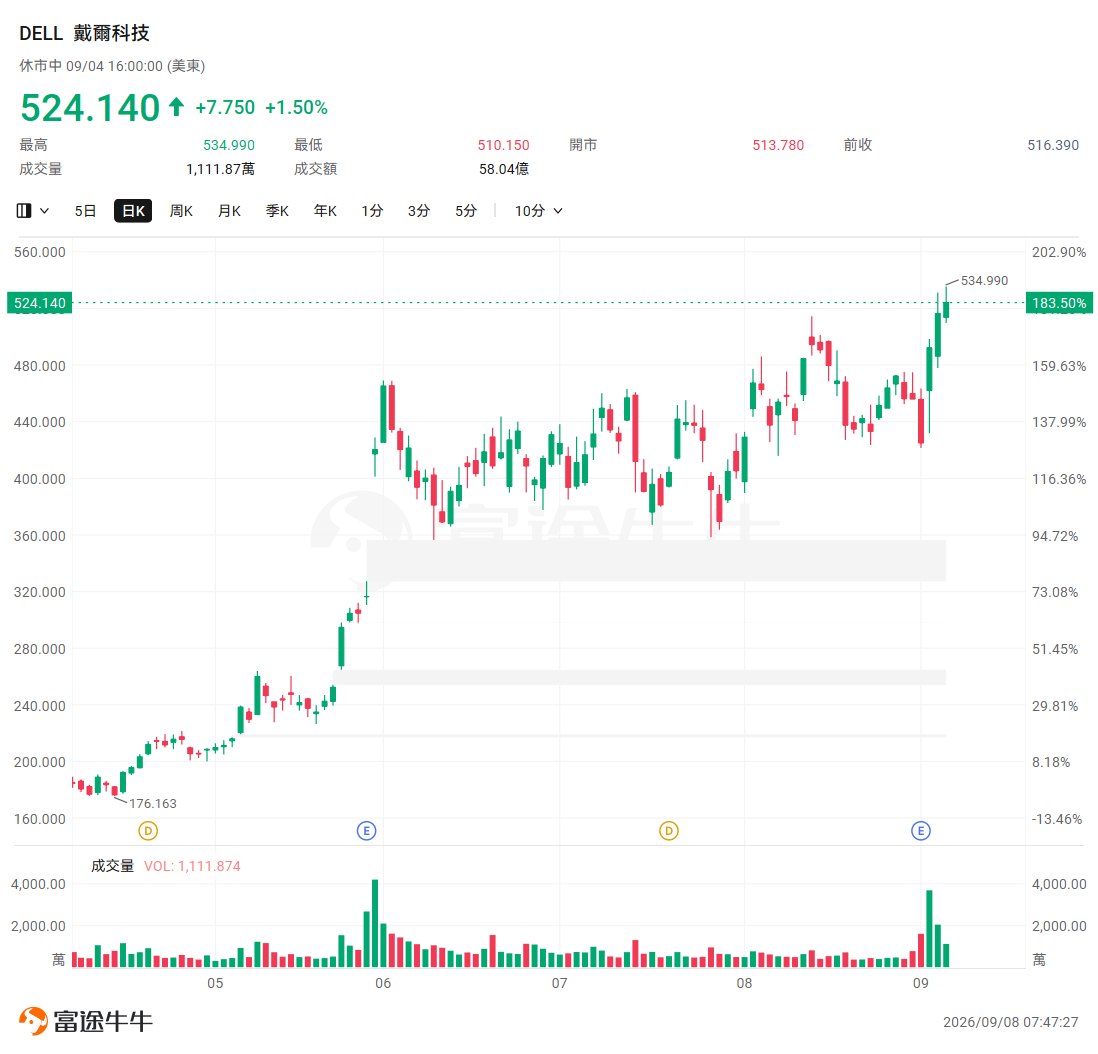
Dell Technologies' backlog of AI server orders rises to $95 billion; full-year revenue forecast raised
$Dell Technologies (DELL.US)$ The company raised its fiscal 2027 revenue forecast by approximately $25 billion and expects non-GAAP earnings per share to increase by 42% year-on-year. The backlog of AI server orders increased by $43.7 billion quarter-on-quarter to $95 billion, reflecting continued growth in computing power demand from hyperscale cloud providers and enterprise customers. Revenue for the latest quarter was $46.97 billion, exceeding the market expectation of $45.1 billion; AI server revenue reached $16.401 billion. The operating margin of the Infrastructure Solutions Group was approximately 15%, significantly higher than the previous 8.8%, while revenue from traditional servers and storage businesses also grew by 23% and 12% quarter-on-quarter, respectively.
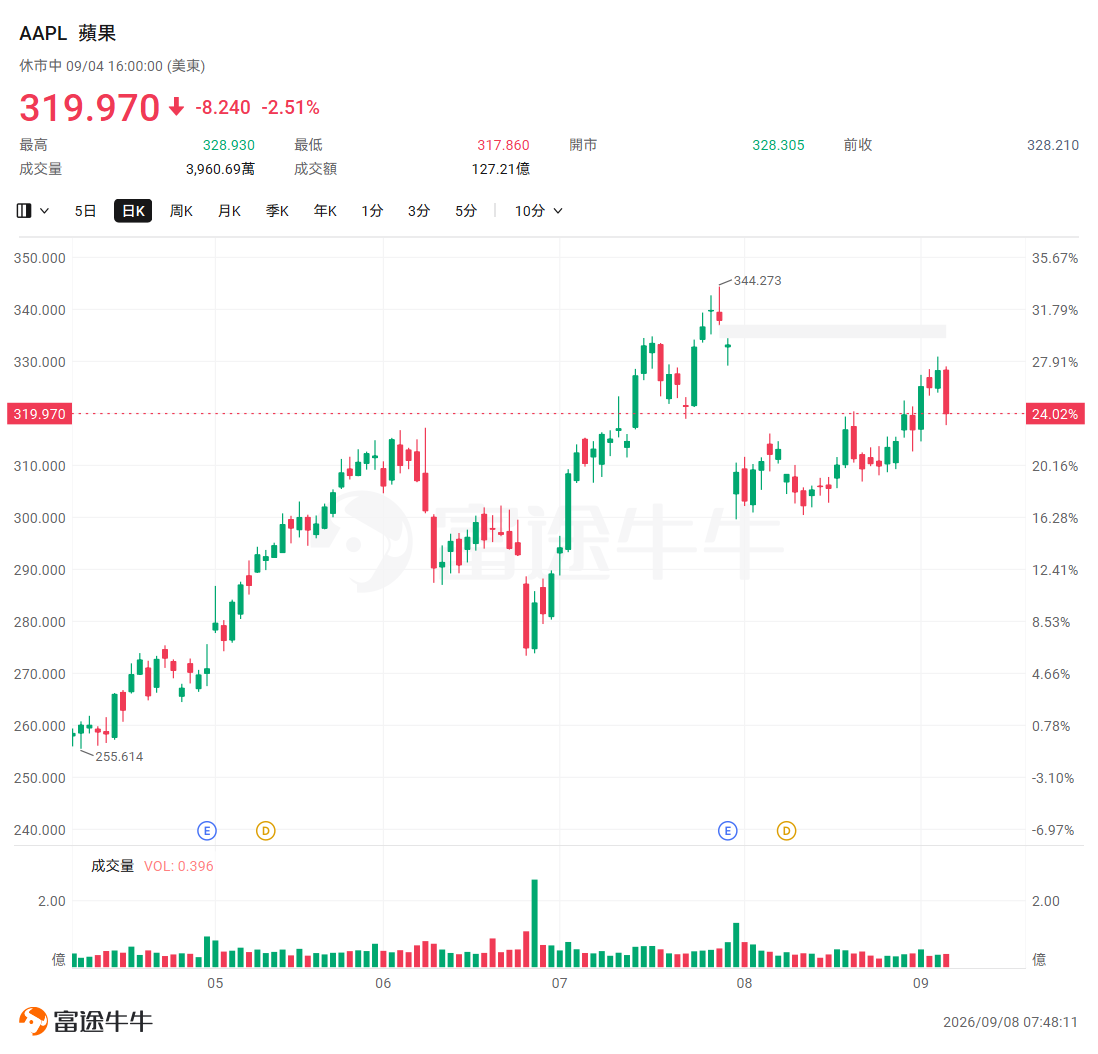
ChangXin Memory Technologies responds to cooperation with Apple: Exploring partnership opportunities with high-quality global customers with an open attitude
Earlier market rumors suggested that $Apple (AAPL.US)$ it has been testing $Changxin Technology (688825.SH)$ chips. The plan is to introduce them into multiple product lines such as iPhone and MacBook to address the tight supply of global memory chips caused by surging demand for artificial intelligence. Zhao Lun, General Manager of ChangXin Memory Technologies, responded that the company is exploring cooperation opportunities with high-quality global customers with an open attitude, and its products are already competitive with international mainstream manufacturers in terms of performance, quality, and supply stability. Regarding progress in the HBM (High Bandwidth Memory) sector, Zhao Lun stated that the company will continue to iterate its products and process technologies in accordance with its established technology roadmap and business plans.
Goldman Sachs significantly raises optical transceiver market forecast: Market size may approach $150 billion by 2028
Goldman Sachs in its latest global optical transceiver/ $Optical Communications (LIST23979.US)$ report significantly raised industry forecasts, projecting that the global optical transceiver market size will reach approximately USD 67.7 billion, USD 131.4 billion, and USD 148.5 billion in 2026, 2027, and 2028, respectively. These figures represent upward revisions of 33%, 81%, and 115% compared to previous forecasts. Goldman Sachs believes that this round of upgrades is not solely driven by the growth in the number of AI servers; more importantly, it reflects the continuous migration of AI server architectures toward high-speed networks, coupled with an increase in the number of optical transceivers required per GPU or ASIC chip, thereby driving rapid volume growth in demand for 800G, 1.6T, and even 3.2T modules.
As AI Models Grow More Powerful, Does Storage Demand Surge? OpenAI’s Astra Reignites the “Memory Chip Trade”
OpenAI President Greg Brockman described it as "the most intelligent and best-aligned model globally." As Astra is designed for more complex AI tasks, the market is further betting that continuous iterations of frontier models will drive growth in computing power demand and support demand for core hardware such as HBM, DRAM, and GPUs. Saxo Bank Chief Investment Strategist Charu Channa pointed out that the launch of Astra further supports the continued growth in AI spending. As frontier models' demand for computing power continues to rise, $Storage Concept (LIST23925.US)$ bottlenecks in networking segments are also expanding, which will benefit$SK Hynix (SKHY.US)$ 、 Samsung Electronics (005930.KR) memory chip manufacturers. Analysts at Goldman Sachs and Morgan Stanley expect global AI capital expenditure to reach USD 1.3 trillion to USD 1.5 trillion by 2027, with more than half allocated to memory infrastructure. If this trend continues, memory products such as HBM and DRAM are expected to continue benefiting from the expansion of AI computing power.
Top 20 by Trading Volume
U.S. stocks were closed on Monday. For last Friday's closing data, please see:
Hong Kong Stock Market Preview
Southbound capital increased its holdings in Hong Kong stocks by nearly HKD 1.3 billion, with Xiaomi Group and Zhongji Innolight seeing net inflows of nearly HKD 1.4 billion and HKD 400 million, respectively.
On September 7 (Monday), southbound capital recorded net purchases of Hong Kong stocks totaling HKD 1.275 billion.
$Xiaomi Group-W (01810.HK)$、$InnoLight Technology (03308.HK)$、$China Life Insurance (02628.HK)$recording net inflows of HKD 1.384 billion, HKD 367 million, and HKD 230 million, respectively;
$Kingboard Laminates (01888.HK)$、$Hua Hong Hongli (01347.HK)$、$MINIMAX-W(00100.HK)$experiencing net outflows of HKD 651 million, HKD 583 million, and HKD 380 million, respectively.
Tencent WeChat Tests AI Social Features: AI Can Initiate Conversations for Requests Such as Dining Arrangements
$Tencent (00700.HK)$ WeChat is currently beta testing the "Xiao Wei AI Social" feature. Users' "Xiao Wei" agents can directly engage with friends' "Xiao Wei" agents in dialogue. Users simply need to state their requests to their own "Xiao Wei," which then communicates with the counterpart's agent. Upon confirmation from the other party, the two AI agents converse first and report back the results, prompting the user for final approval when necessary. Unlike simple message forwarding, this feature involves initial communication between two AIs, with users intervening only during authorization and decision-making stages. Content from "Xiao Wei AI Social" interactions does not appear in personal chat windows but remains within the "Xiao Wei" interface. According to Tencent customer service, its main functions include operating native WeChat features via dialogue (such as sending messages, making voice/video calls, and searching Moments); launching Mini Programs to complete services like appointment scheduling and coffee purchases; and searching for videos and articles, as well as generating images and notes. It is understood that the primary model powering "Xiao Wei" is WeLM, a large language model developed by the Tencent WeChat team, with some responses processed using DeepSeek.
Xiaomi Launches Its First Mid-Size Foldable Phone; Investment in Xuanjie Chips Reaches RMB 21 Billion
$Xiaomi Group-W (01810.HK)$ Xiaomi has launched its first mid-size foldable phone, the Xiaomi 18 Fold, with a starting price of RMB 10,999. The ceramic special edition is priced at RMB 15,999, with a limited run of 1,500 units. The new device features a 5.38-inch external screen and a 7.58-inch internal screen, weighs 219 grams, and has a folded thickness of approximately 5.02 mm. It is equipped with the Xuanjie O3 AI chip and a 6,000 mAh battery, supporting coordination across up to six screens. Lei Jun stated that Xiaomi has invested approximately RMB 21 billion in the chip sector, with a ten-year plan to invest RMB 50 billion. The Xuanjie O100 and D100 chips are expected to achieve commercialization in the first half of next year. The company also launched the Pengcheng N70 Pro extended-range SUV, with a starting price of RMB 209,900.
Baidu Repurchases Shares Worth Nearly HKD 50 Million
$Baidu Group-W (09888.HK)$ Disclosure indicates that on September 7, Baidu repurchased 545,000 shares in the Hong Kong stock market, with transaction prices ranging from HKD 91.35 to HKD 91.85 per share, totaling approximately HKD 49.9641 million. This repurchase follows the company's recent initiatives in capital operations and shareholder return arrangements. Baidu had previously announced a USD 5 billion share repurchase plan and its inaugural dividend policy, while seeking to promote the independent listing of Kunlun Xin.
Kinwong Electronic Passes HKEX Listing Hearing, Plans to Expand Automotive and AI Server PCB Businesses
According to disclosures by the Hong Kong Stock Exchange, $Kinwong Electronic (603228.SH)$ has passed the listing hearing, with CITIC Securities, Bank of America Securities, and Guolian International serving as joint sponsors. Based on 2025 revenue projections, the company ranks first among global automotive electronics PCB suppliers with a market share of approximately 10.6%; it ranks eleventh in the global PCB industry with a share of about 2.5%. The company's clients include eight of the top ten global automotive Tier-1 suppliers, and it provides high-end PCB products, such as high-layer-count and high-density interconnect boards, to AI infrastructure customers. The proceeds from this Hong Kong listing are intended to expand production capacity, fund research and development, and support international business expansion.
Today's Focus
Keywords: Longsys listing; U.S. small business confidence and inflation expectations
Regarding economic data, the U.S. August NFIB Small Business Confidence Index and the U.S. August New York Fed 1-year inflation expectations will be released.
18:00 U.S. August NFIB Small Business Confidence Index;
23:00 U.S. August New York Fed 1-year inflation expectations.
In terms of major events, Canada's retaliatory tariffs equivalent to USD 20 billion against the United States officially took effect.
Regarding new listings, $Longsys(09976.HK)$ Listed on the stock exchange.
 Looking to select stocks or analyze your holdings? Want to understand the opportunities and risks in your portfolio? For any investment-related questions,just ask Futubull AI!

Editor / Rocky